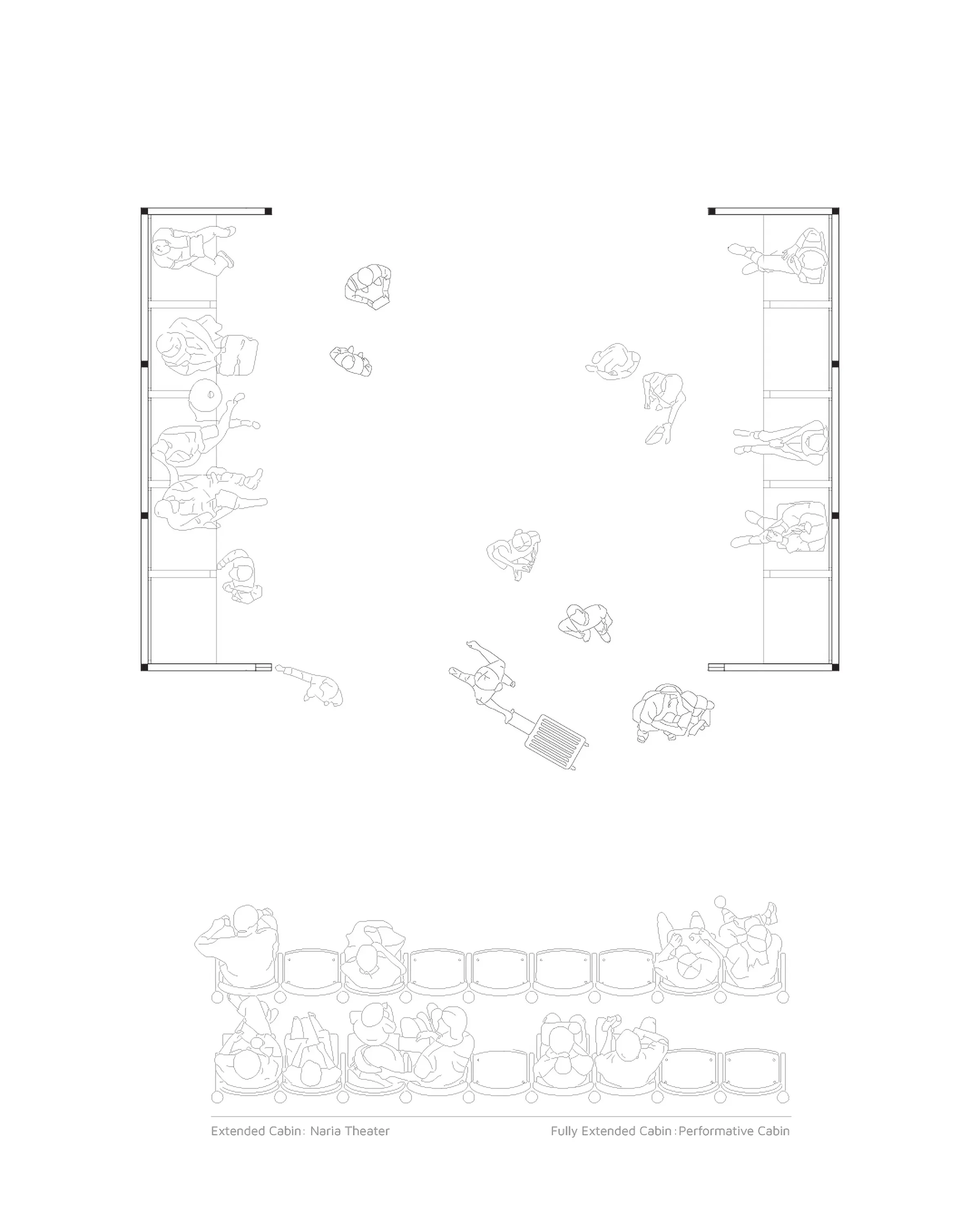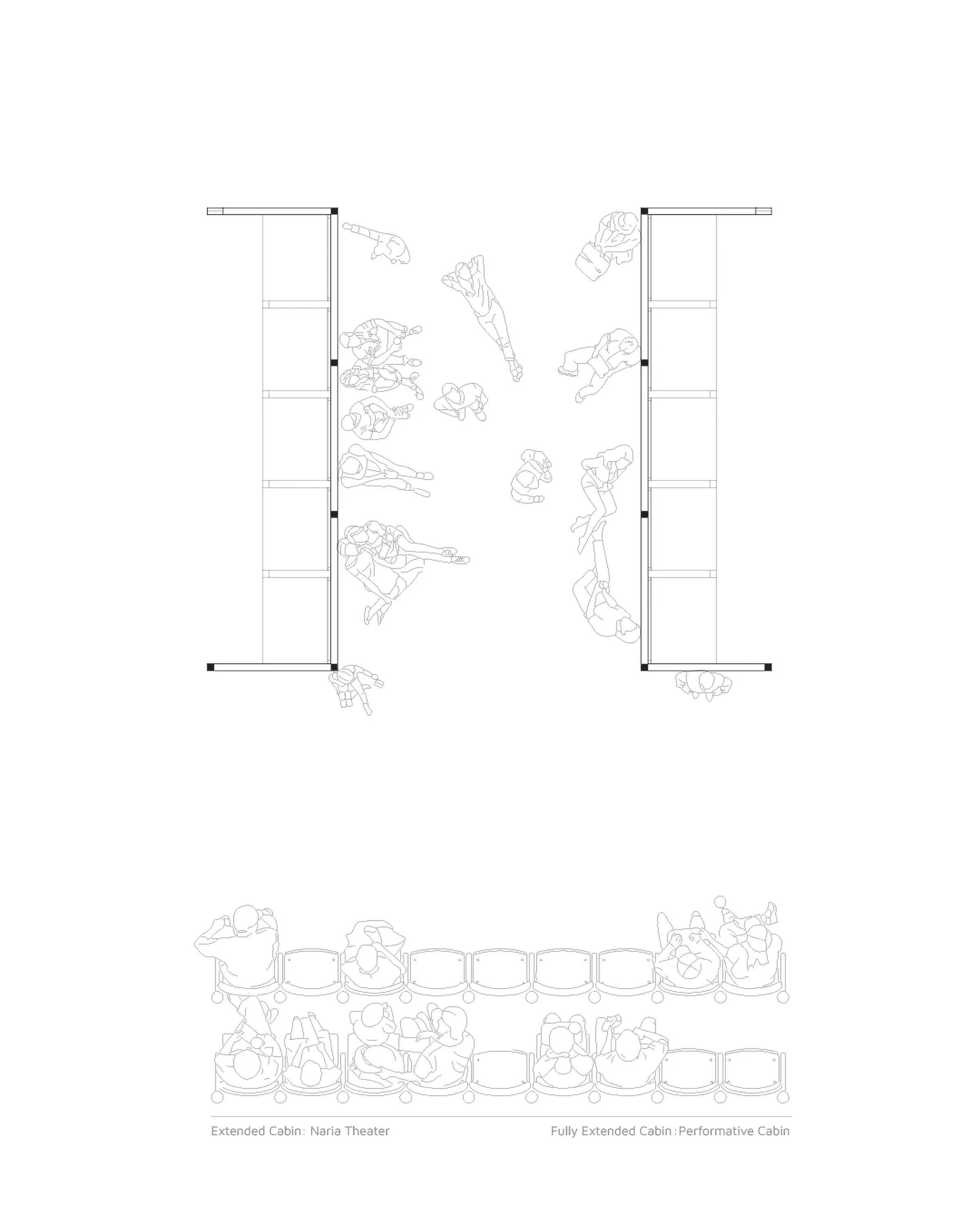
How can architecture become performative and emerge as one of the main characters of the theatrical stage?
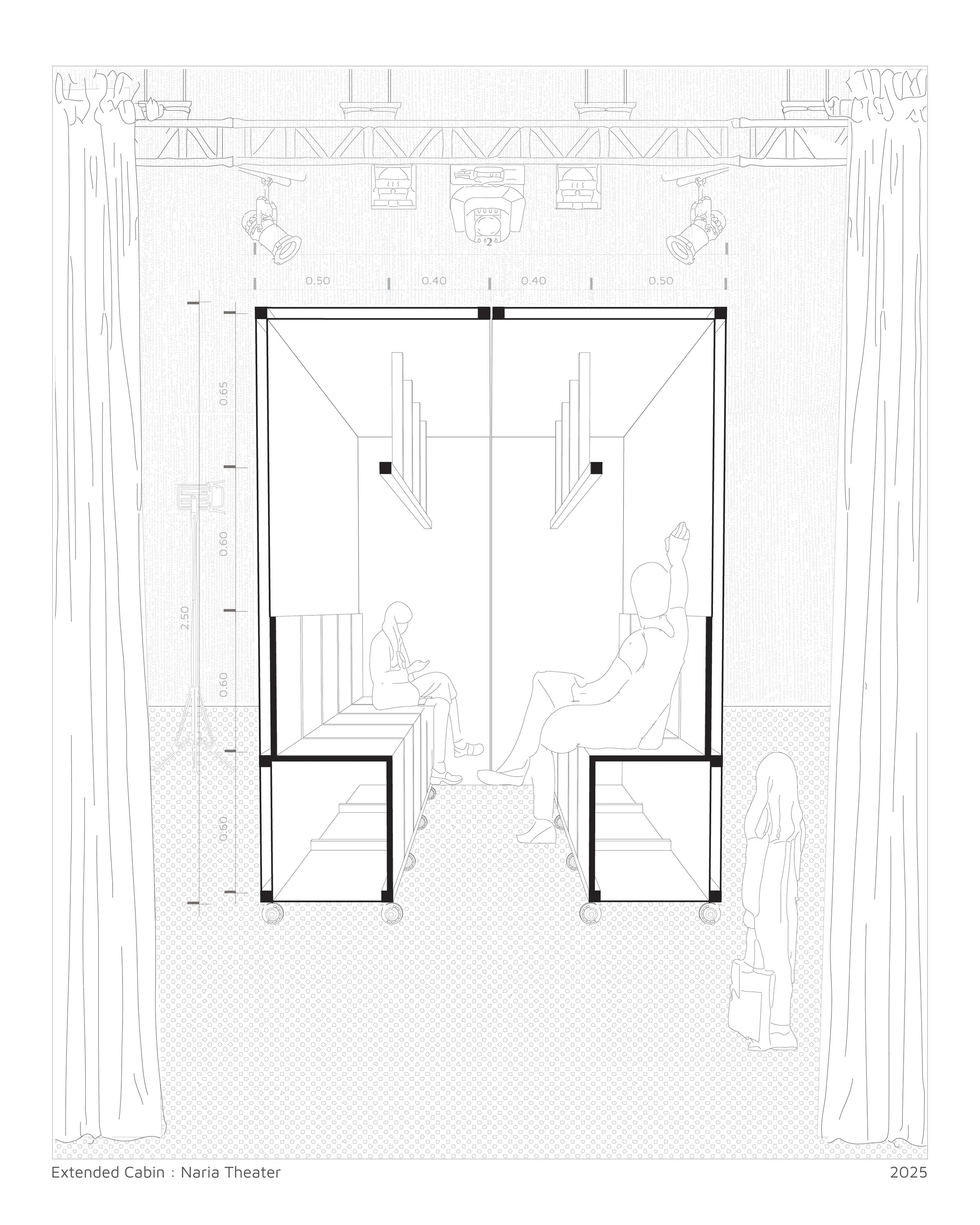
Extended Cabin begins with the question of how an architectural work can be presented to a theatrical audience without reducing it to a fixed and static object. The narrative of the performance unfolds within the confined space of a metro cabin, a familiar urban environment that becomes the setting for an architectural investigation. Rather than functioning simply as the backdrop for theatrical action, the cabin becomes the primary medium through which architecture and performance are brought together. Accordingly, the project proposes that the representation of an architectural section on stage should no longer function merely as a static image of a space in the background of the performance, but instead become a dynamic process and the central subject of the work itself.
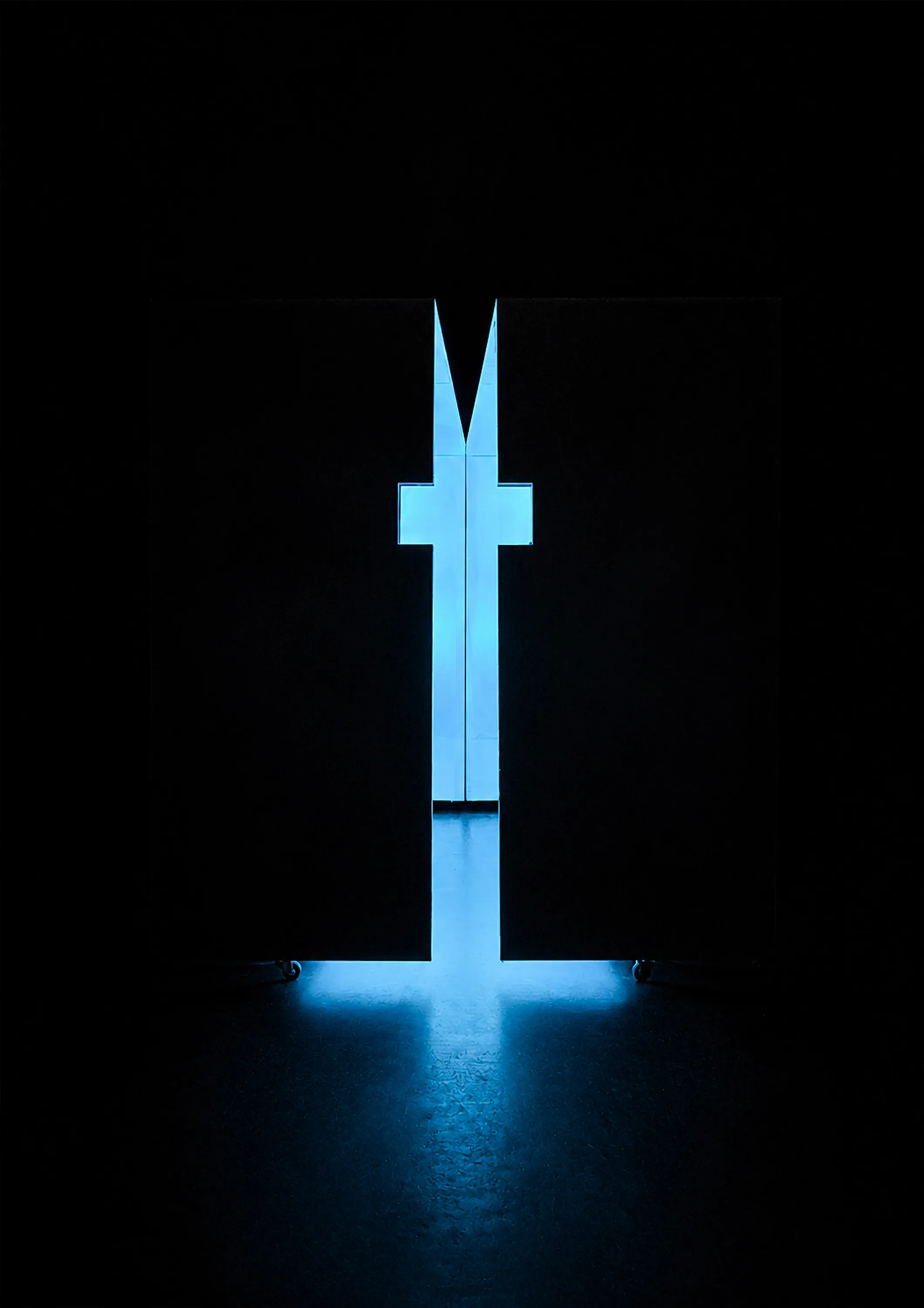
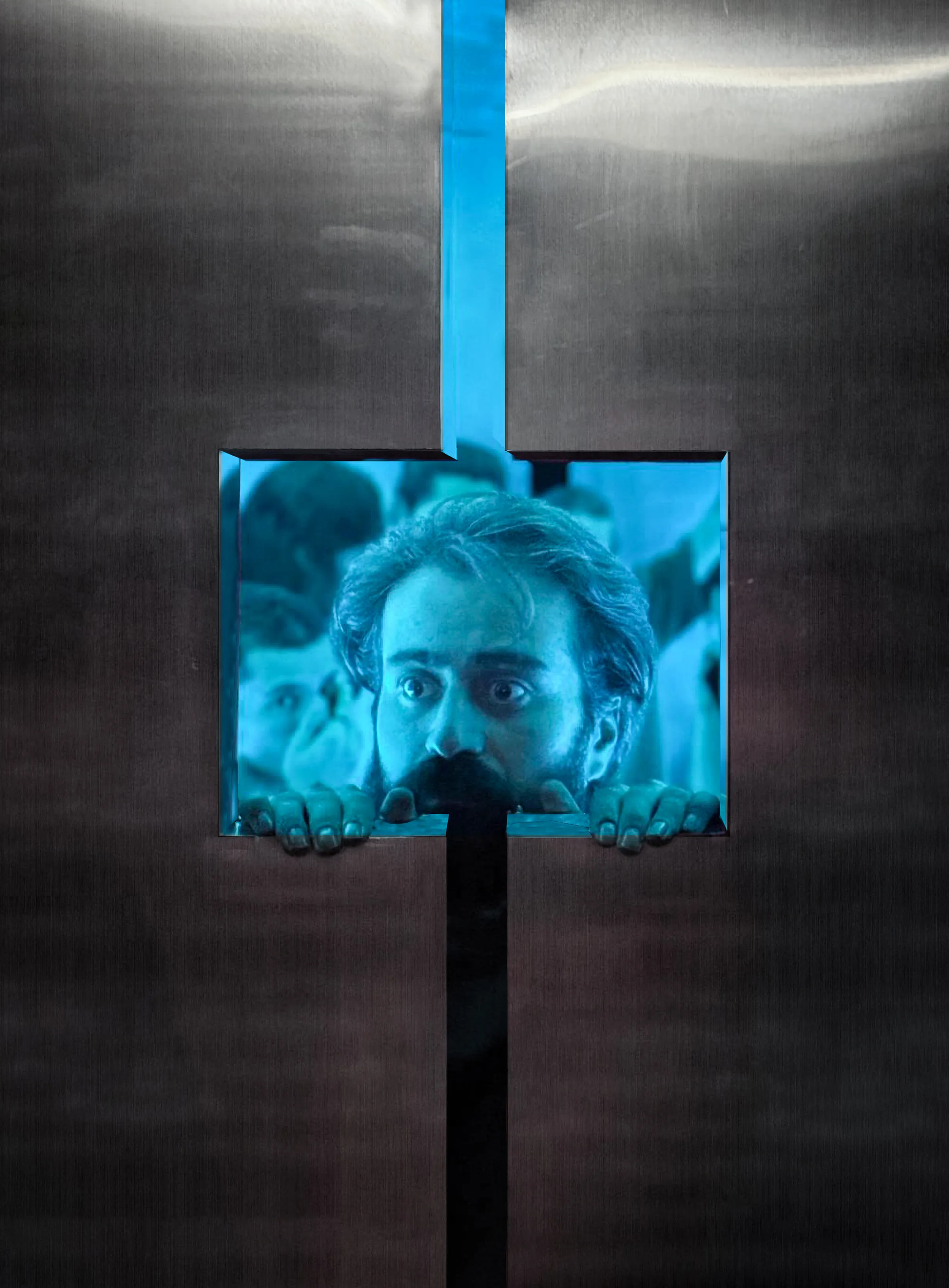
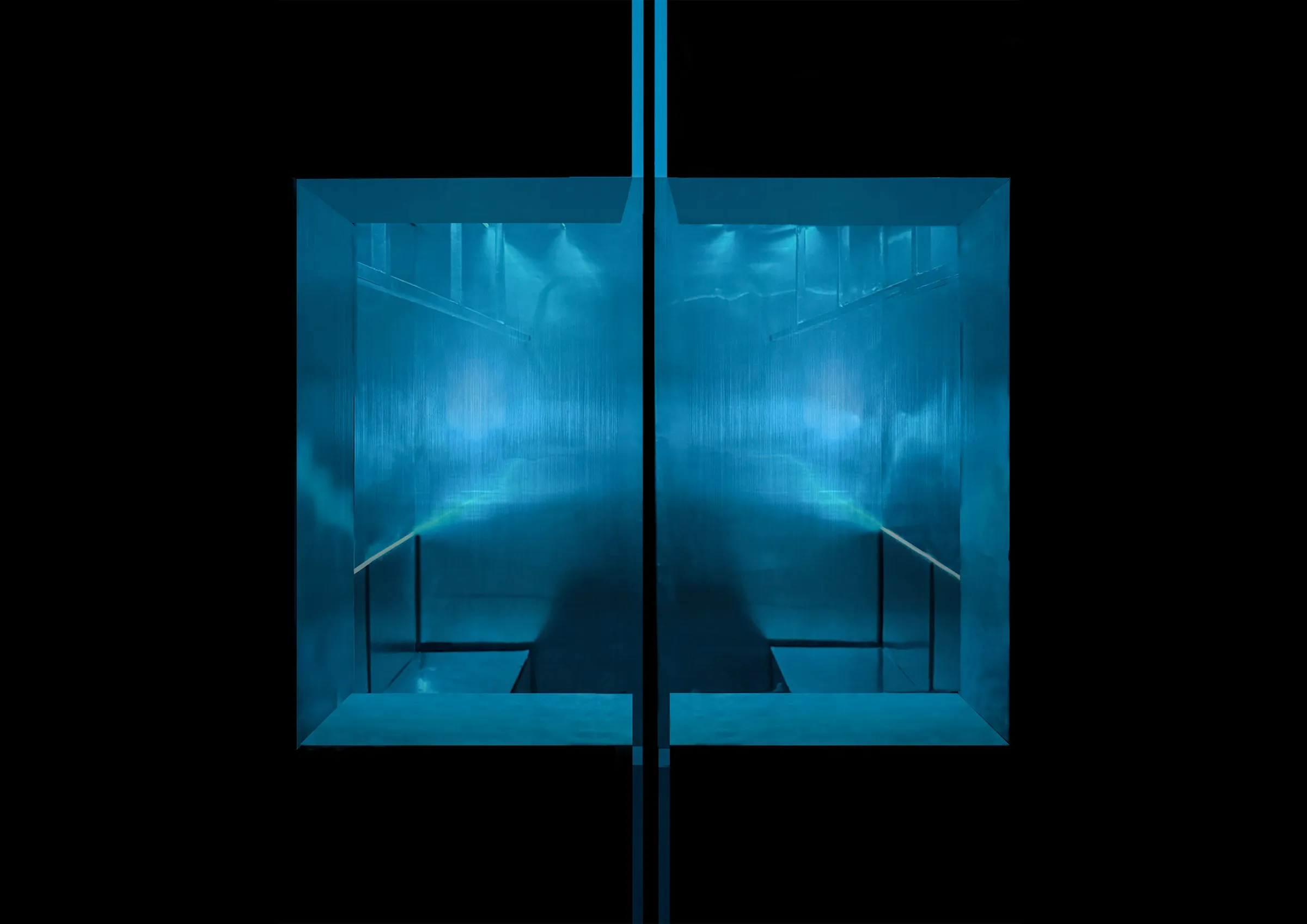
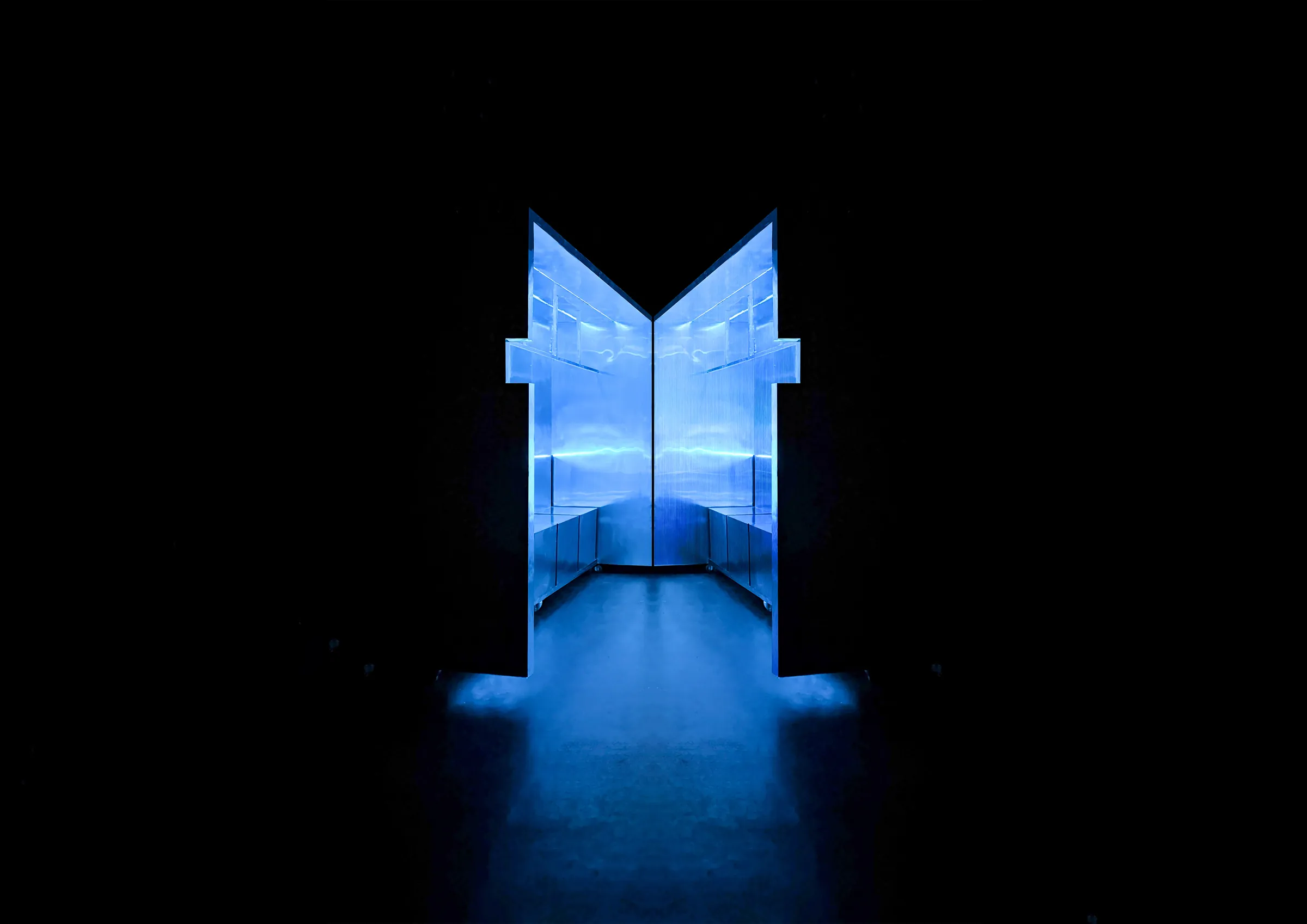
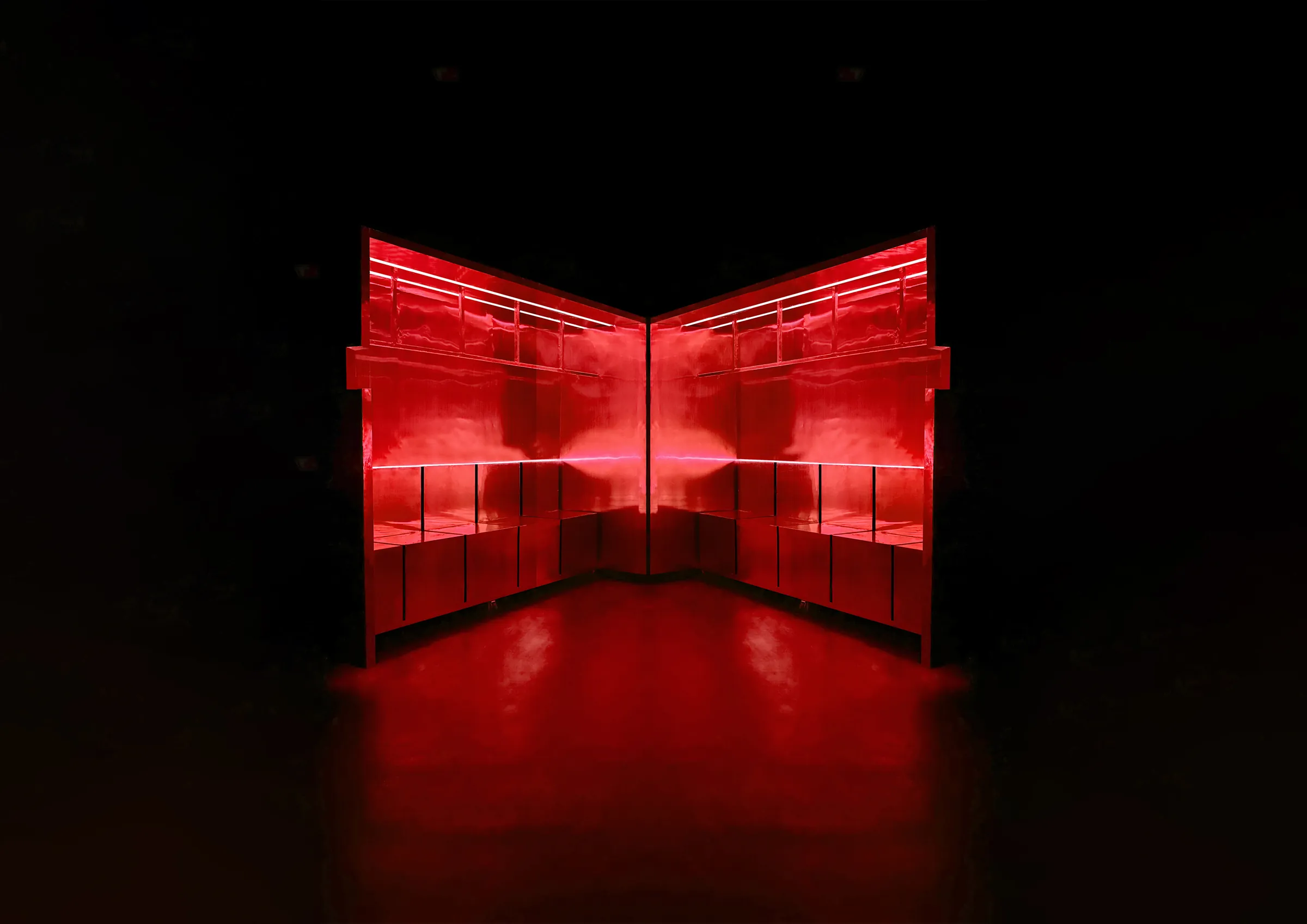
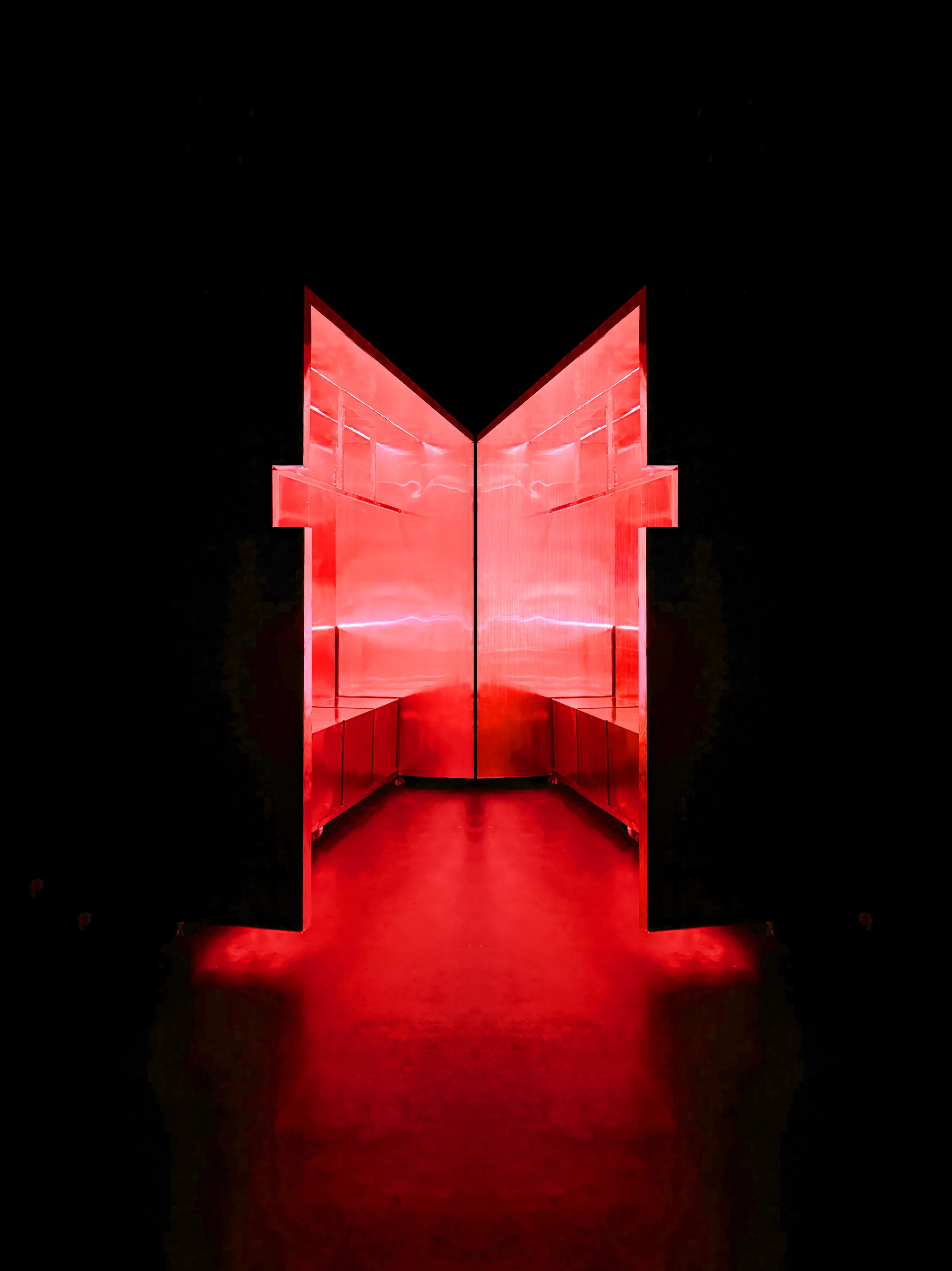
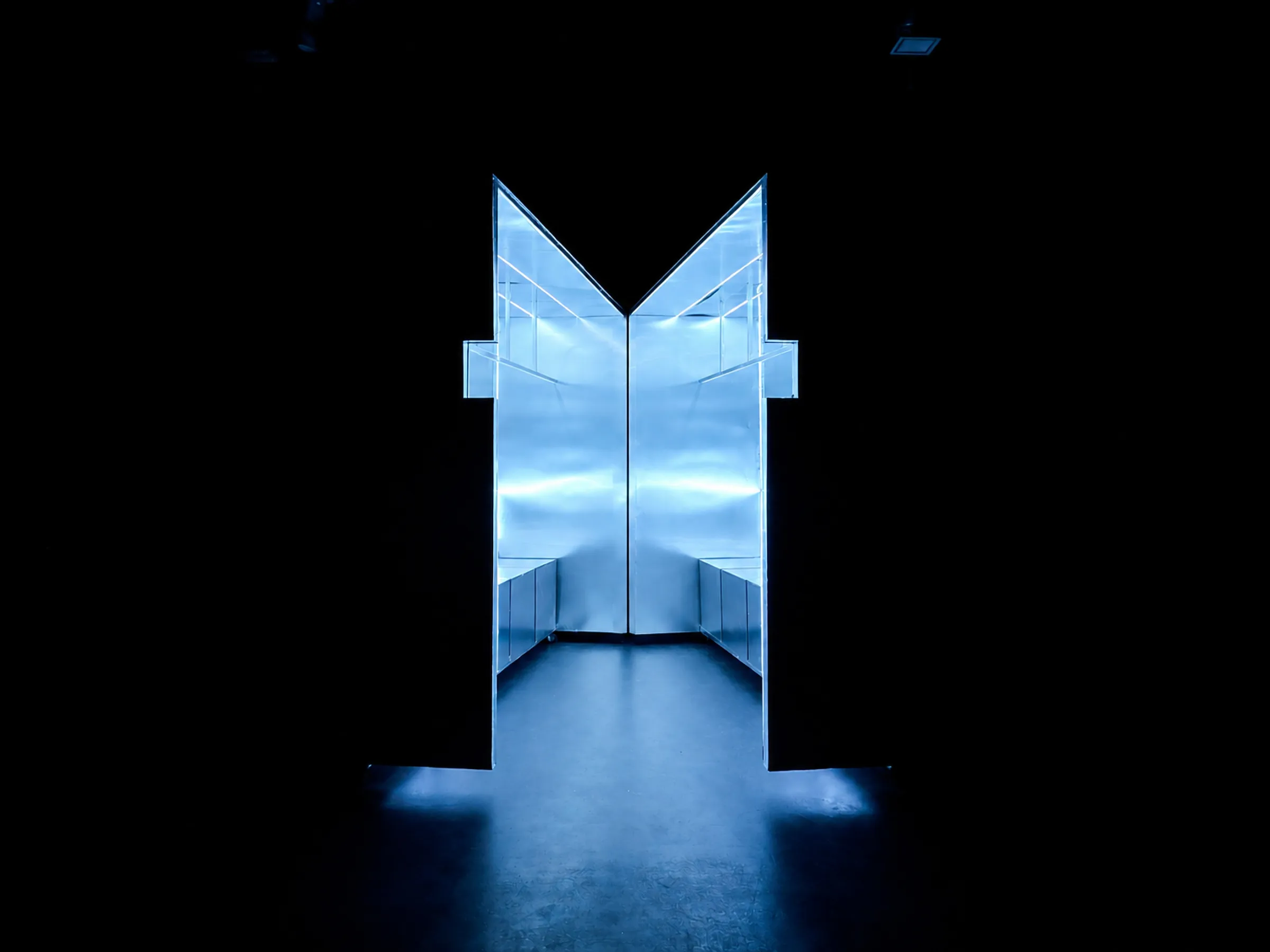
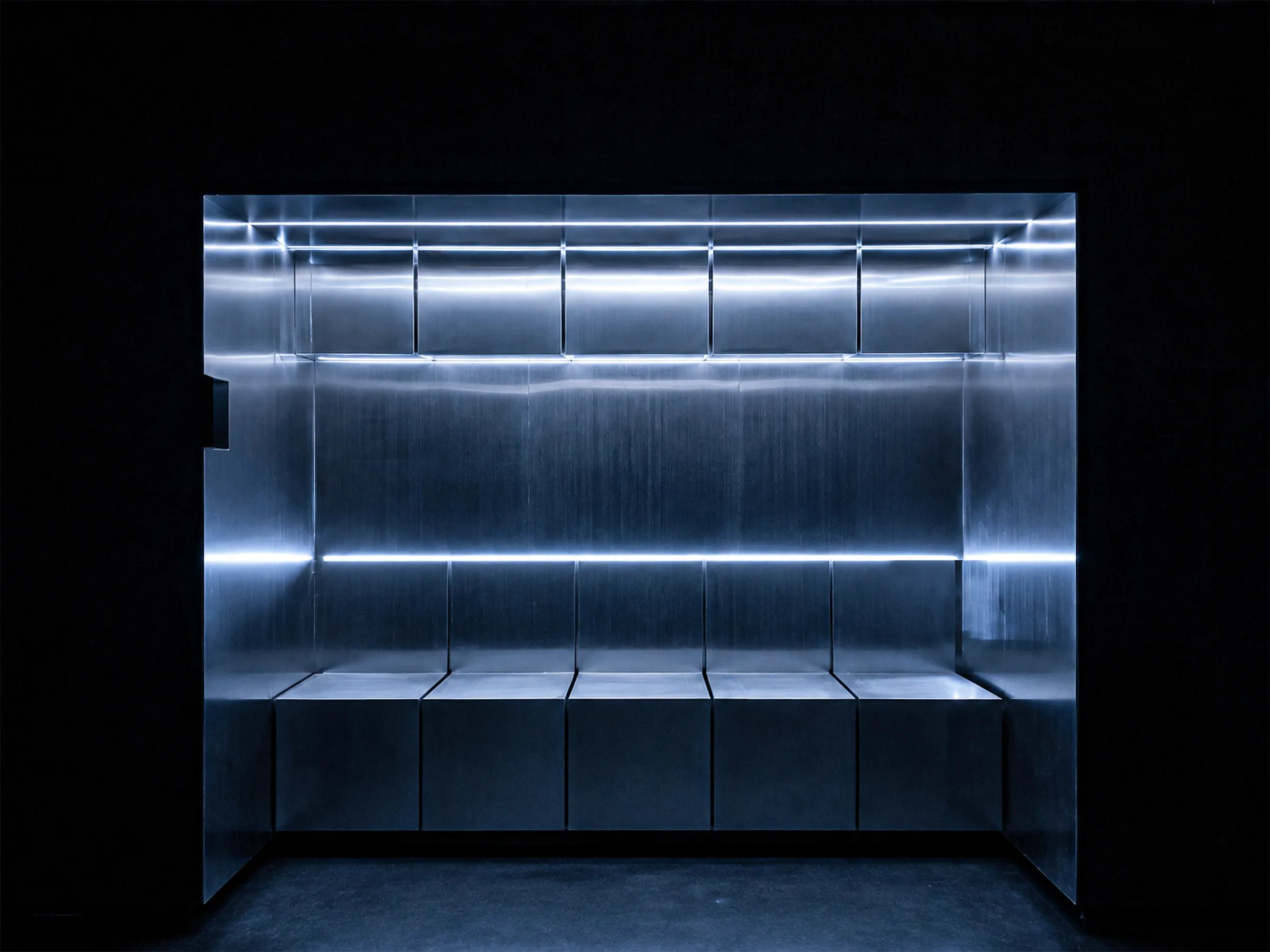
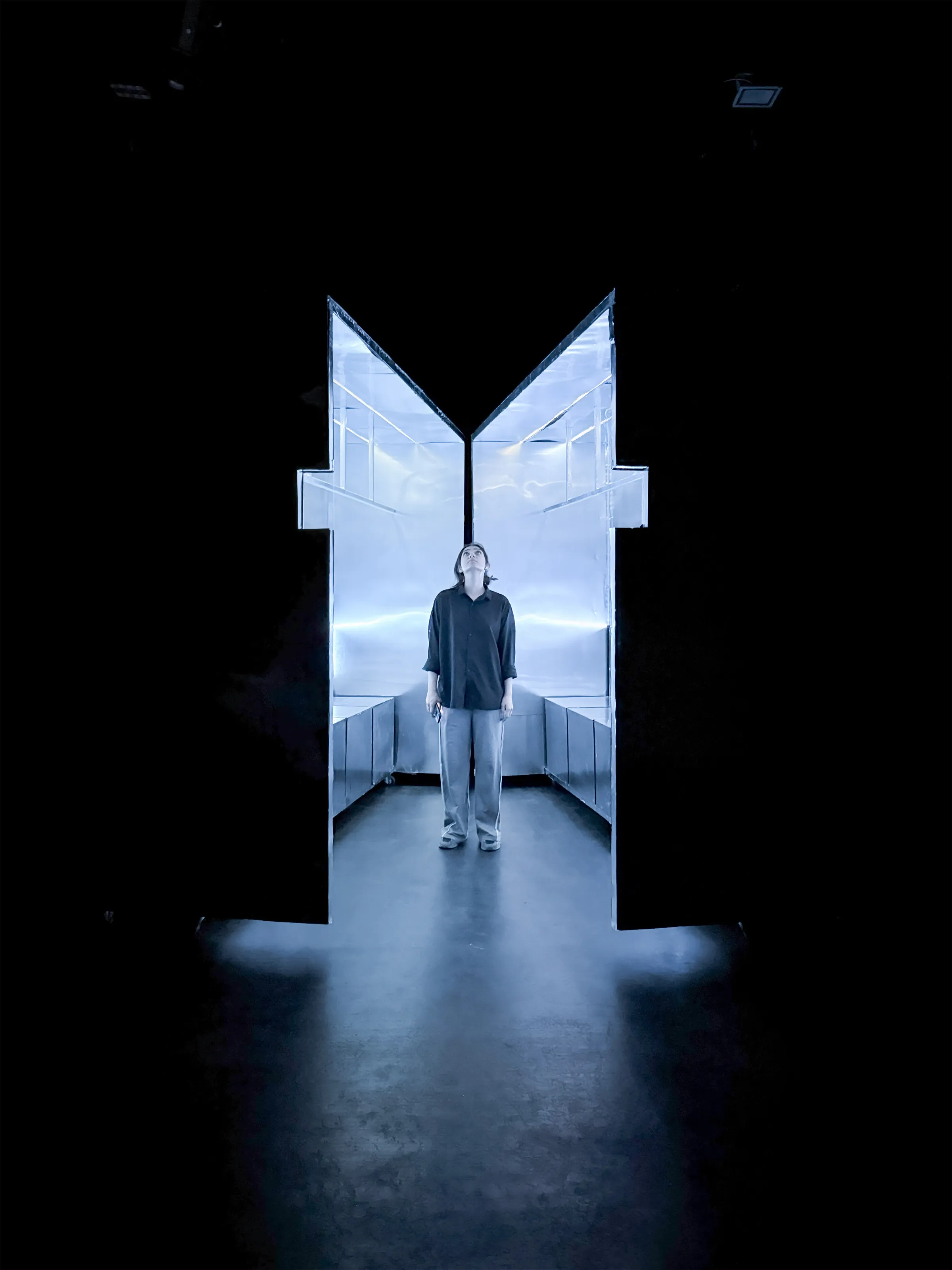
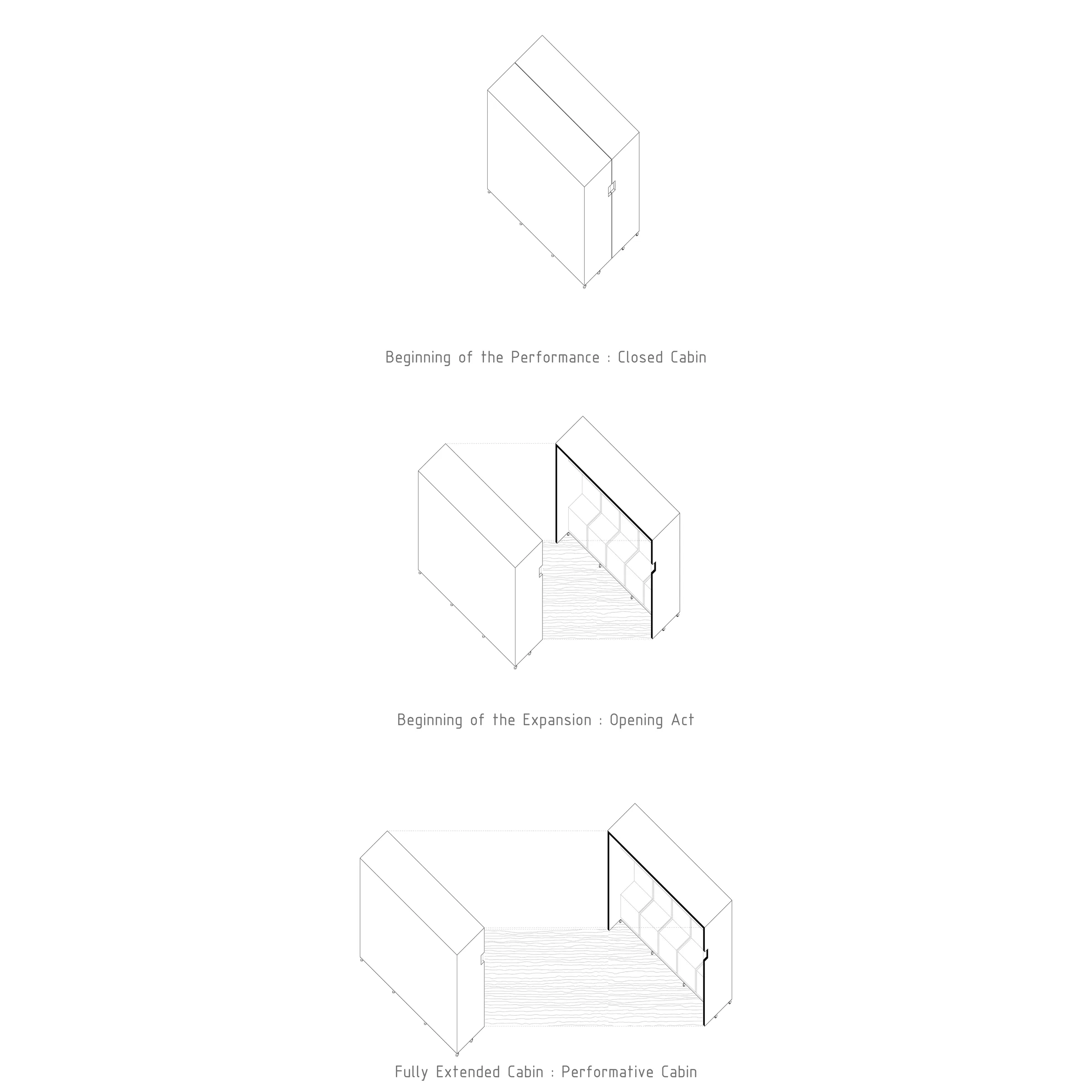
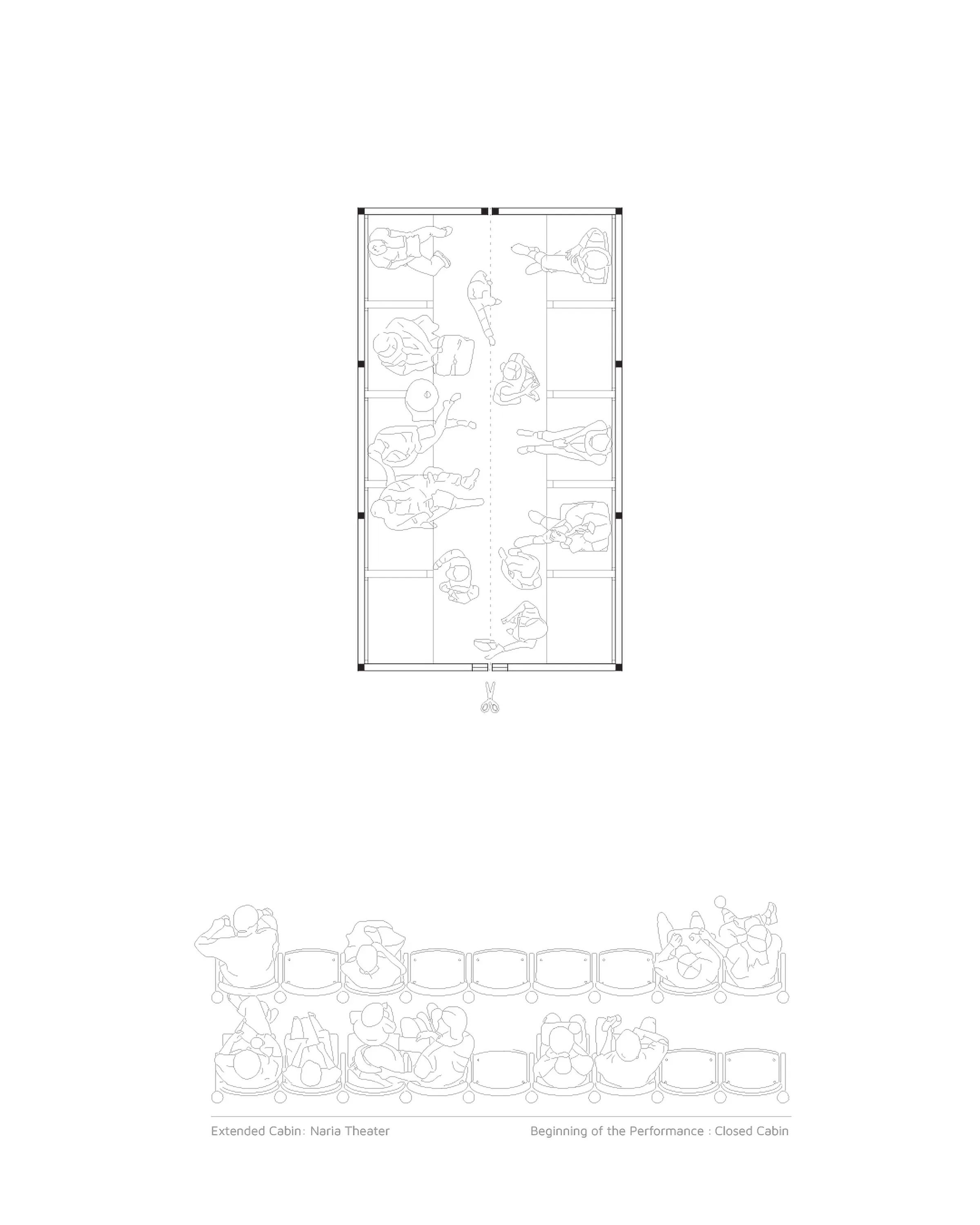
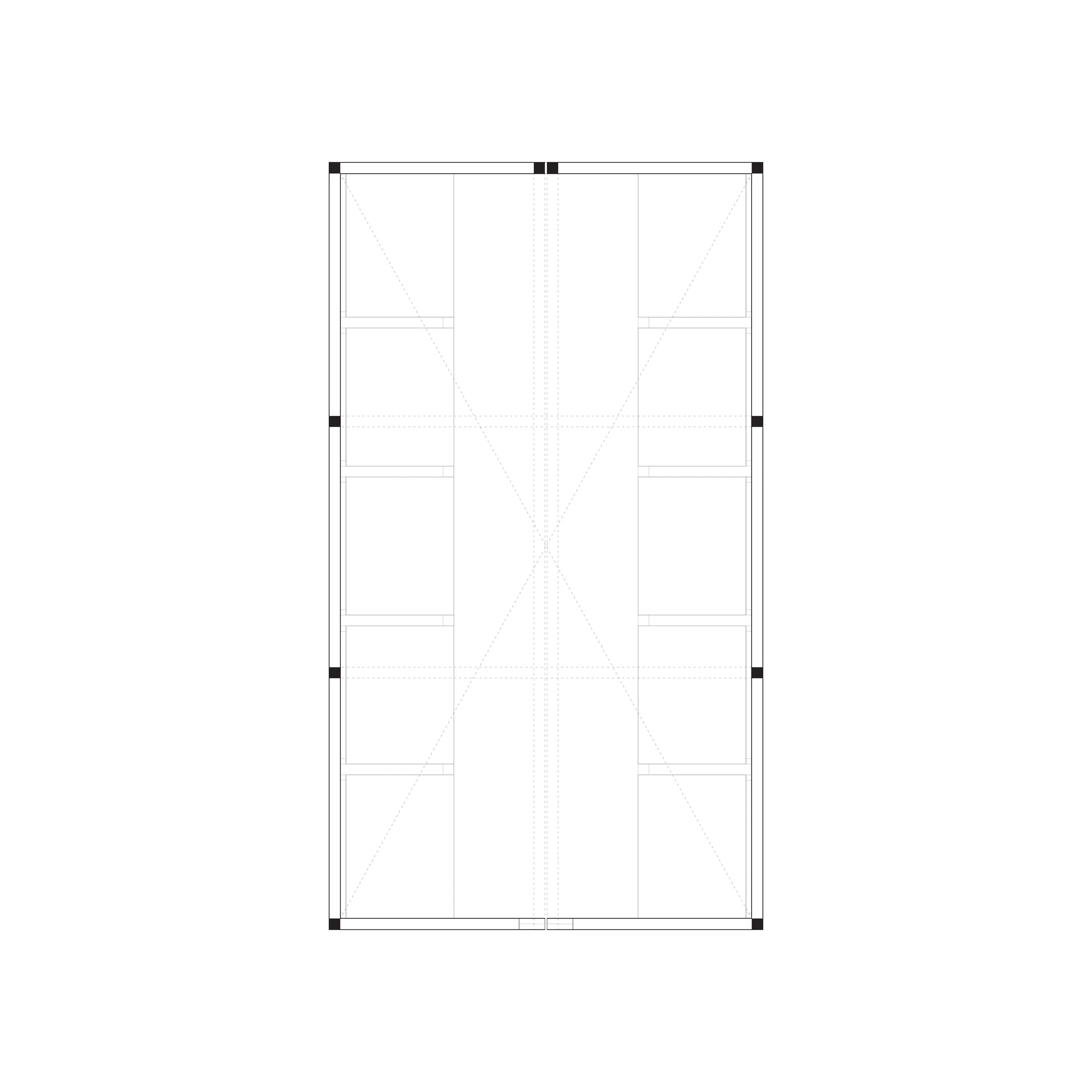
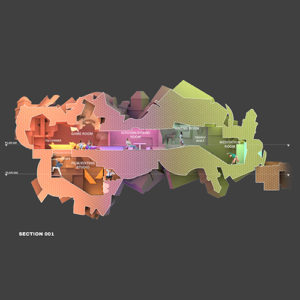
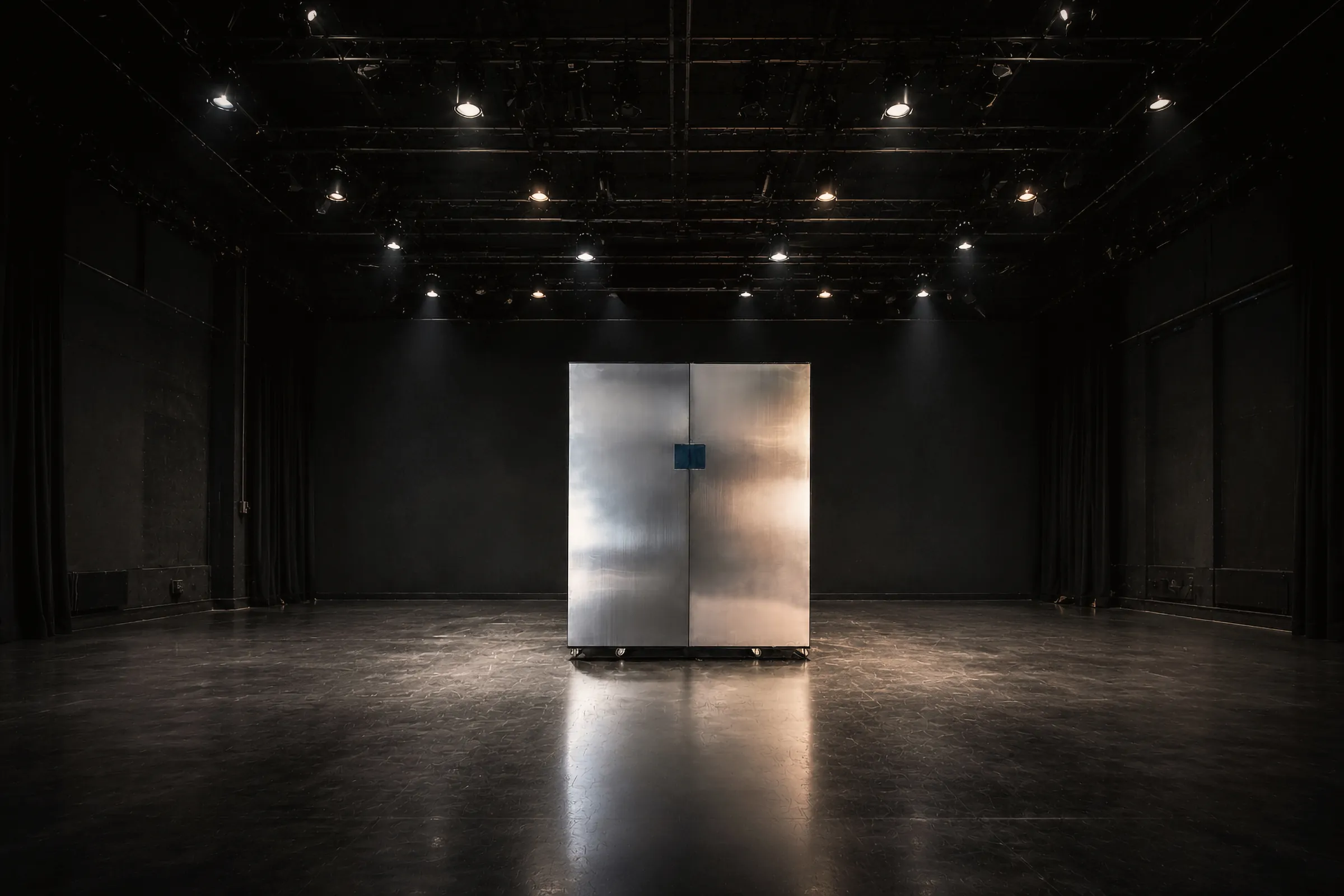
Rather than being conceived as a final section, Extended Cabin is imagined as architecture becoming a section—a form of architecture that is continuously cut, transformed, and set into motion throughout the performance, gradually becoming part of the narrative itself. Rather than representing a section, the architecture performs the act of becoming one throughout the performance. In this way, the architectural object is understood not as a finished composition but as an evolving spatial condition whose identity is produced through continuous transformation. The body of the cabin is opened by a continuous longitudinal cut that establishes a direct relationship between the interior space, the performers, and the audience. By removing its floor, the cabin dissolves the conventional boundary between inside and outside, producing a dynamic spatial condition in which these distinctions become unstable. The cabin floor extends across the entire stage until the stage itself becomes the floor of the cabin, allowing theatrical space and architectural space to merge into a single continuous environment.
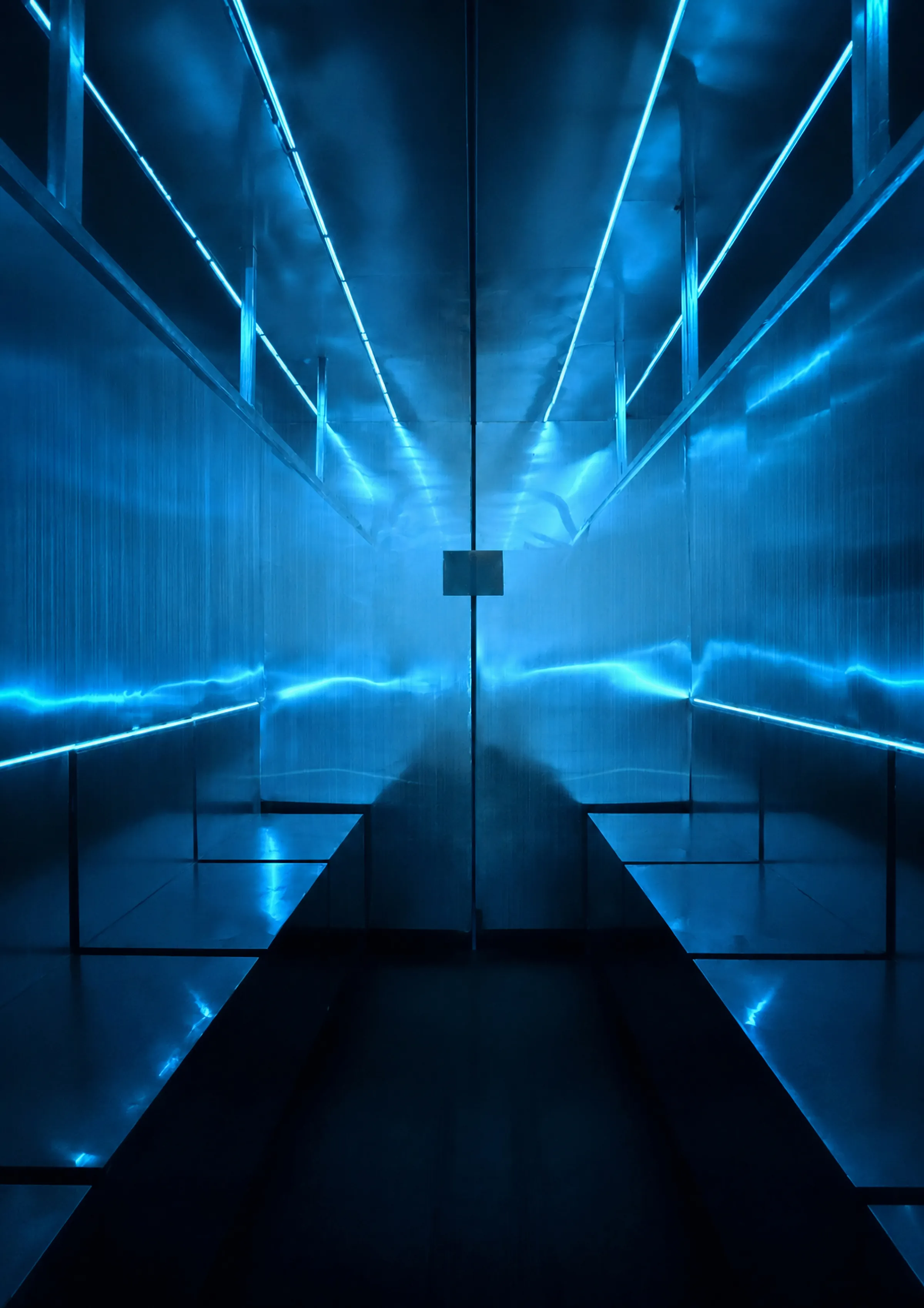
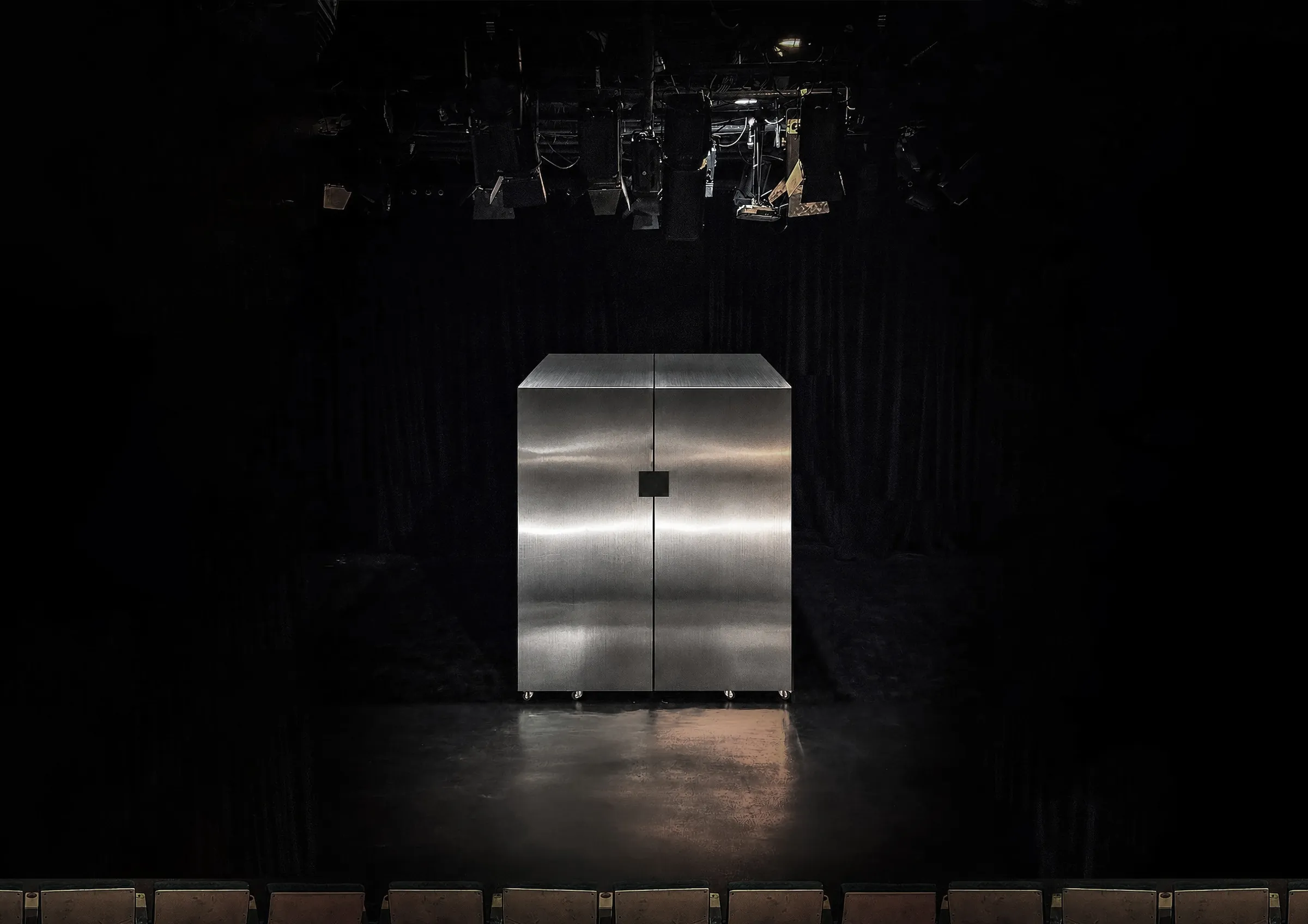
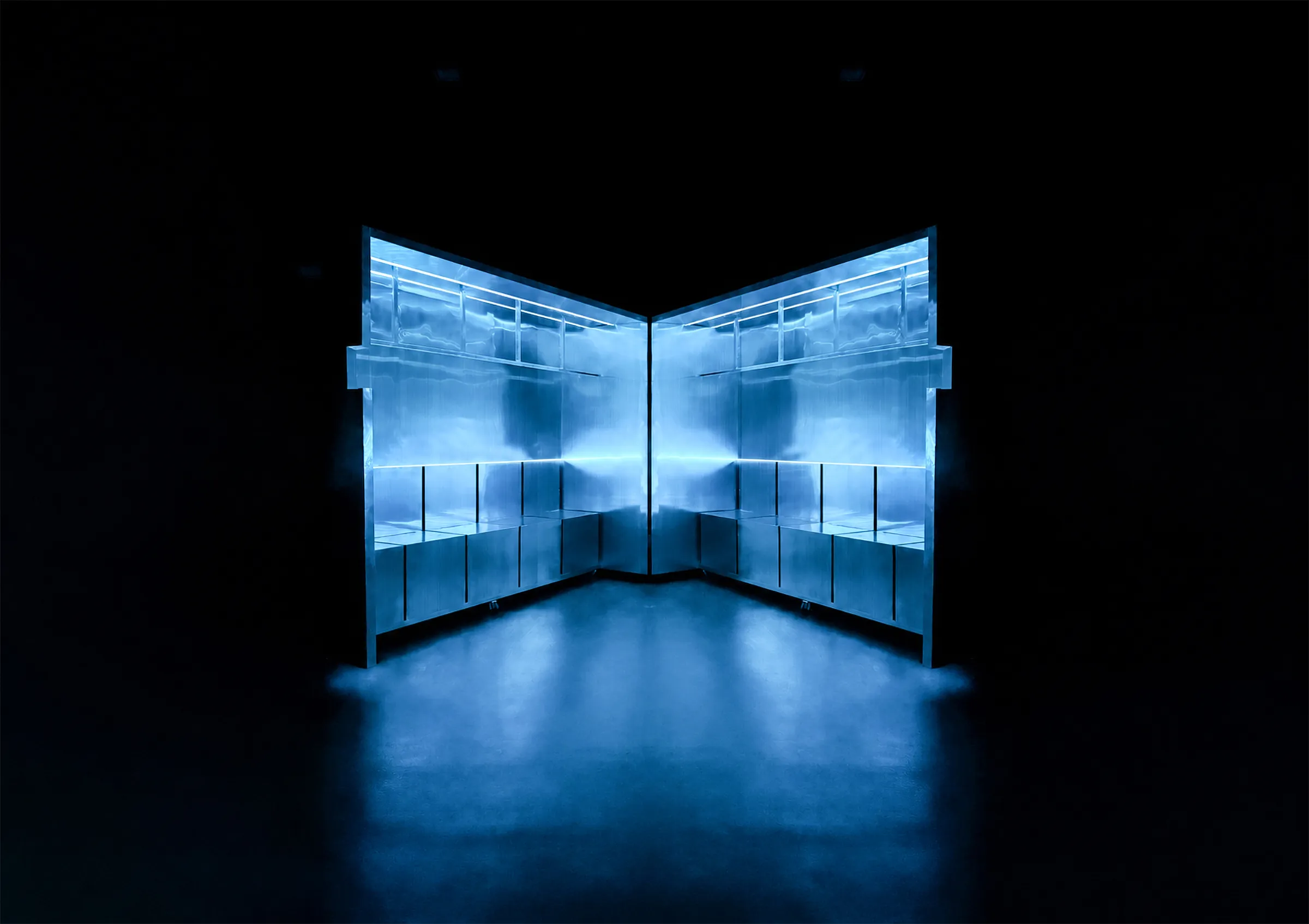
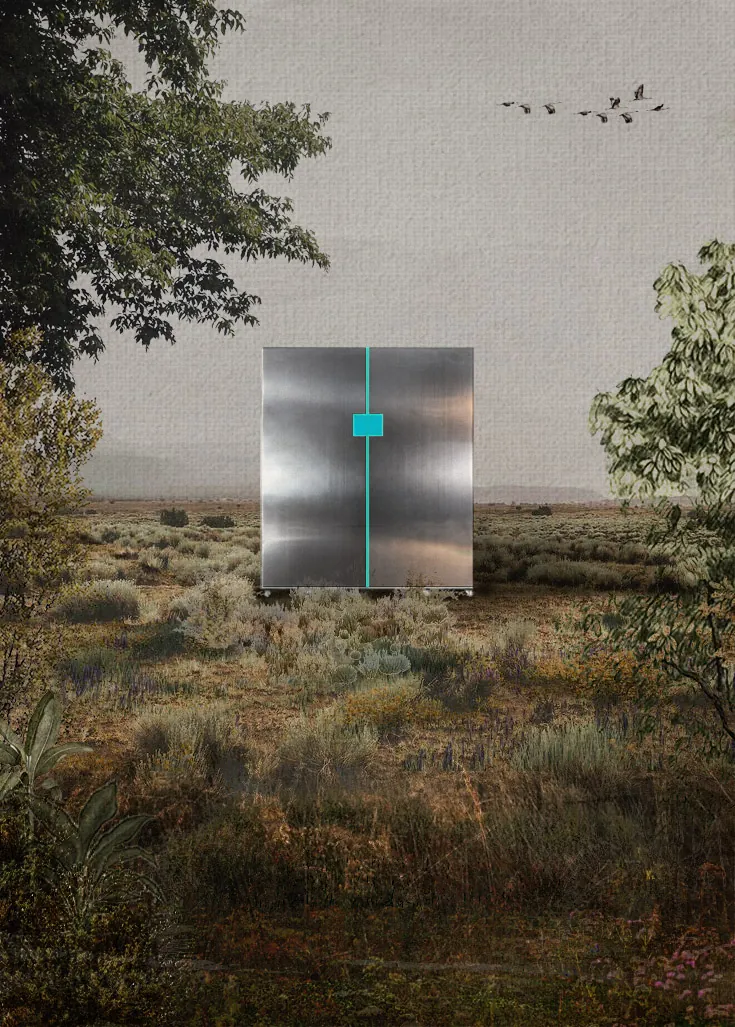
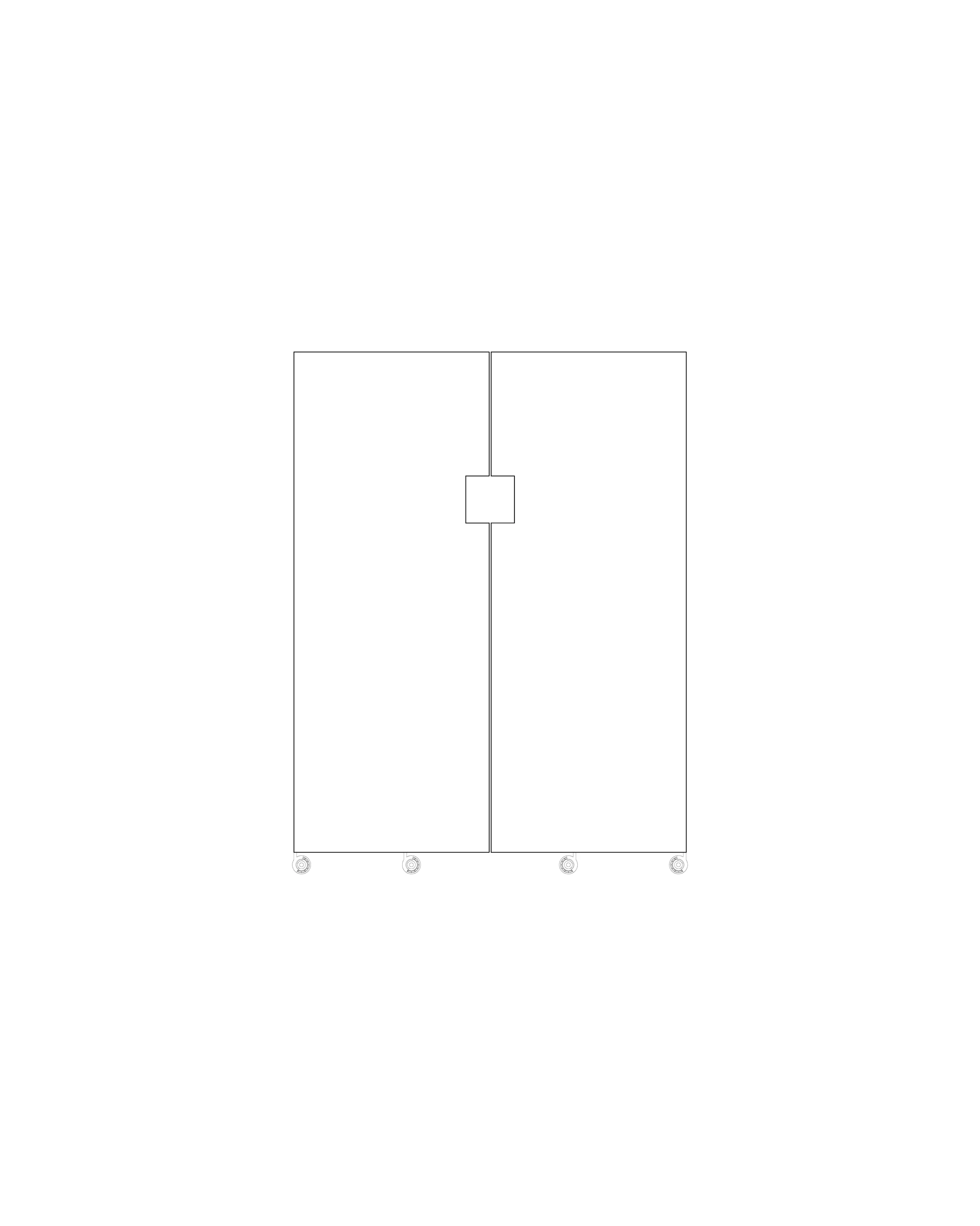
The cabin is constructed from a steel framework clad in reflective stainless-steel sheets, creating a structure that appears simultaneously solid and visually unstable. Wheels integrated beneath the structure allow it to move freely across the stage, making architectural mobility an essential part of the spatial experience rather than a secondary technical feature. The reflective stainless-steel skin continuously captures and distorts both the stage lighting and the movement of the performers, reinforcing the cabin’s constantly changing spatial presence. As reflections shift throughout the performance, the surface of the cabin continuously redefines its relationship with the surrounding environment, emphasizing the temporary and performative nature of the architecture.
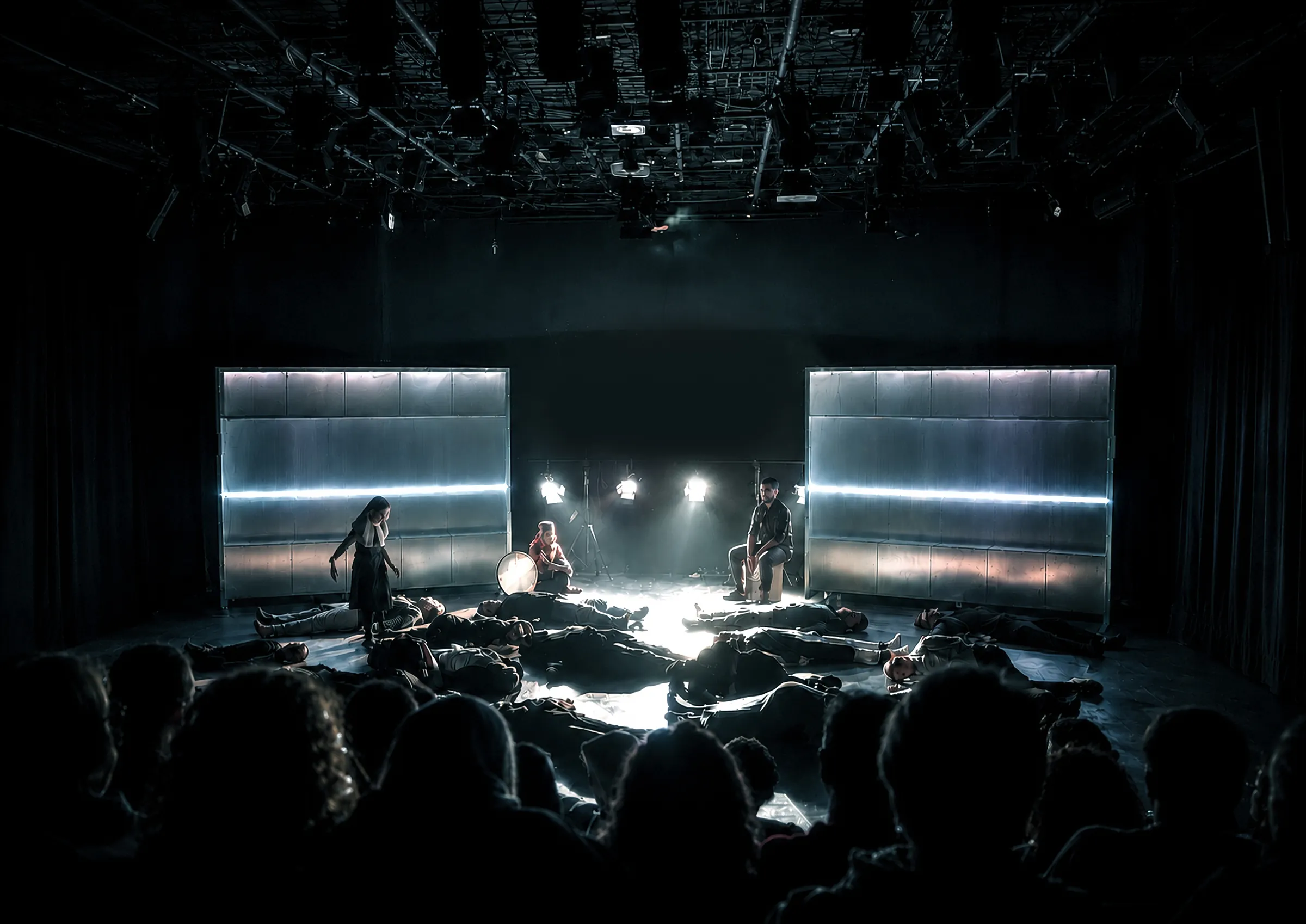
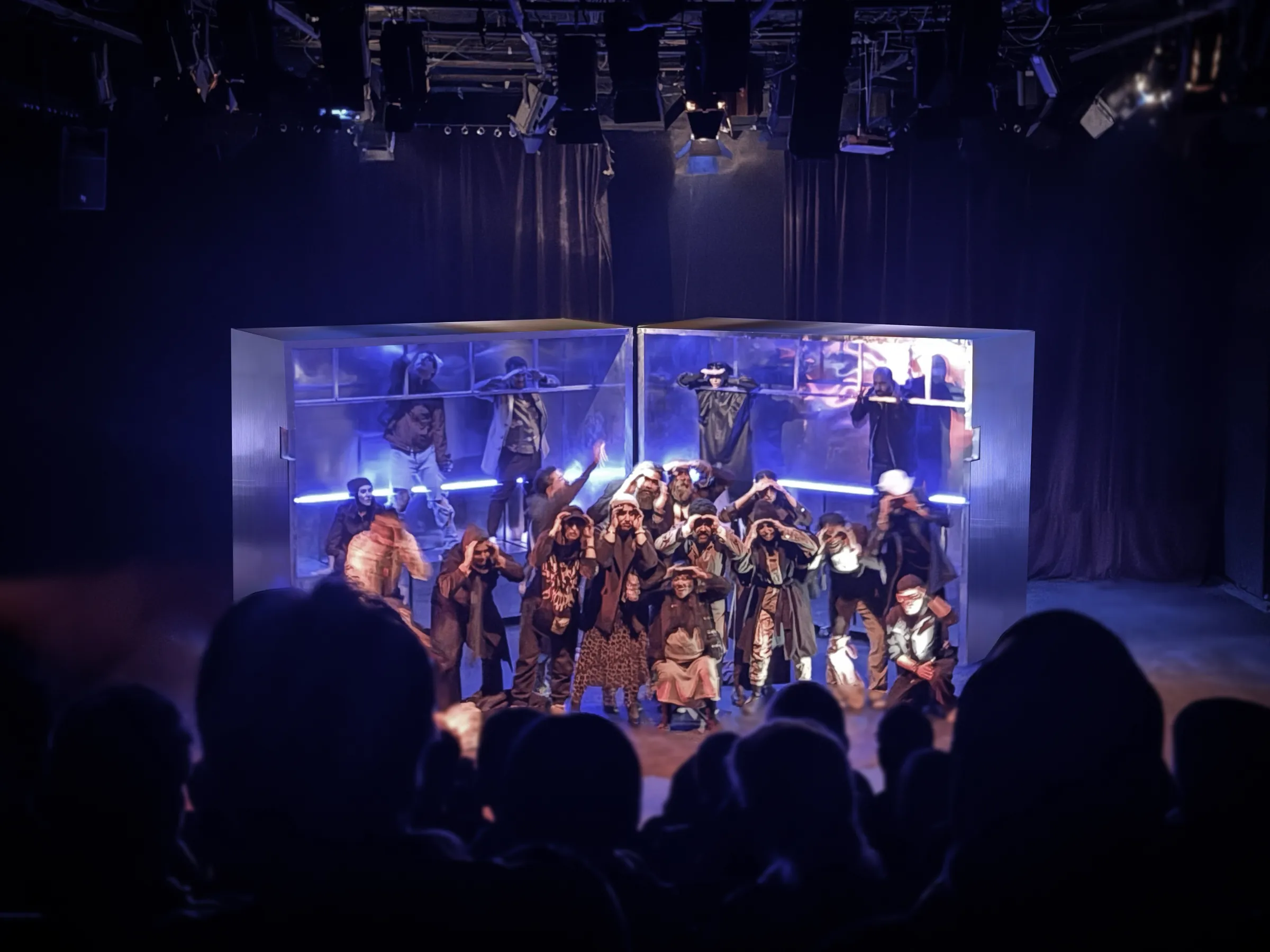
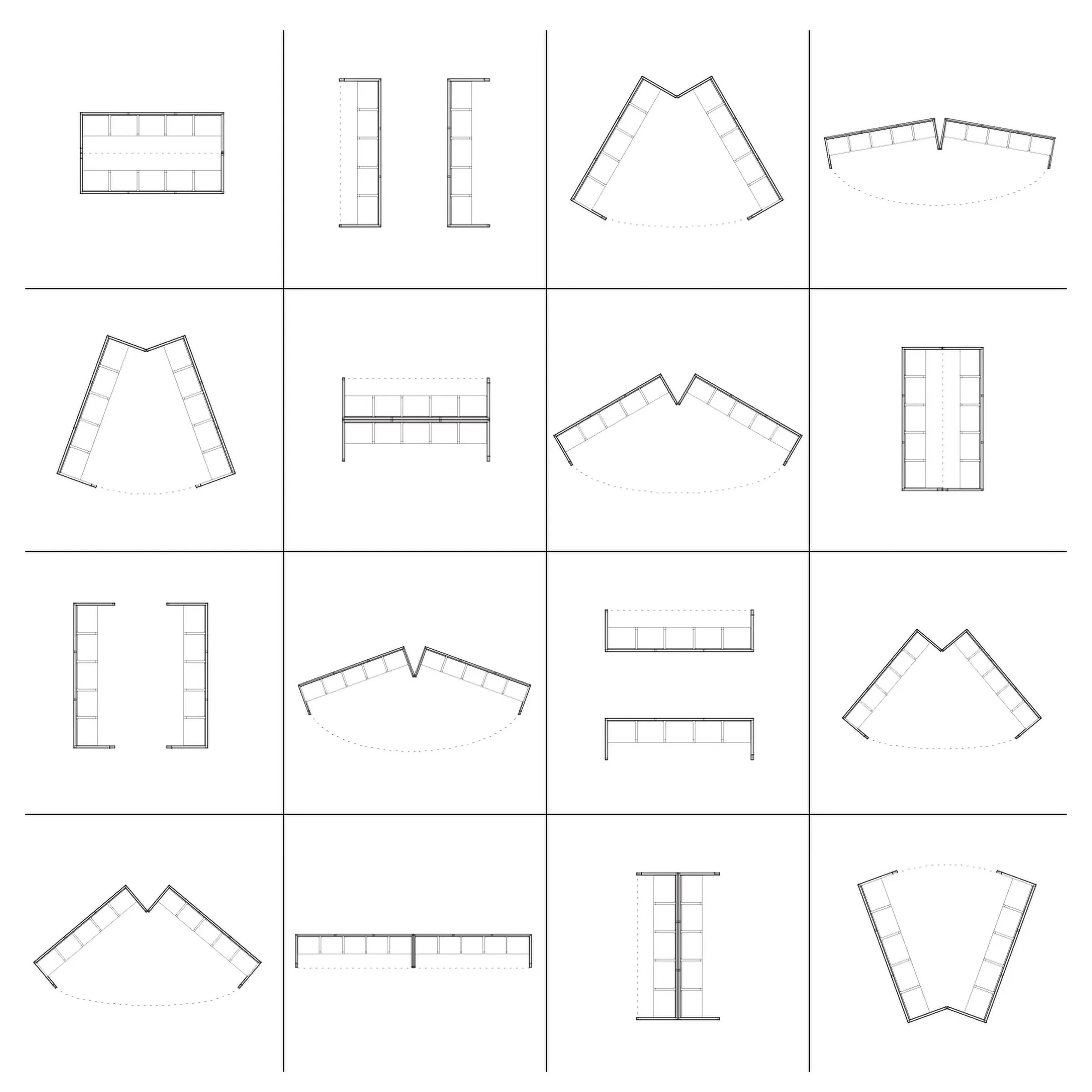
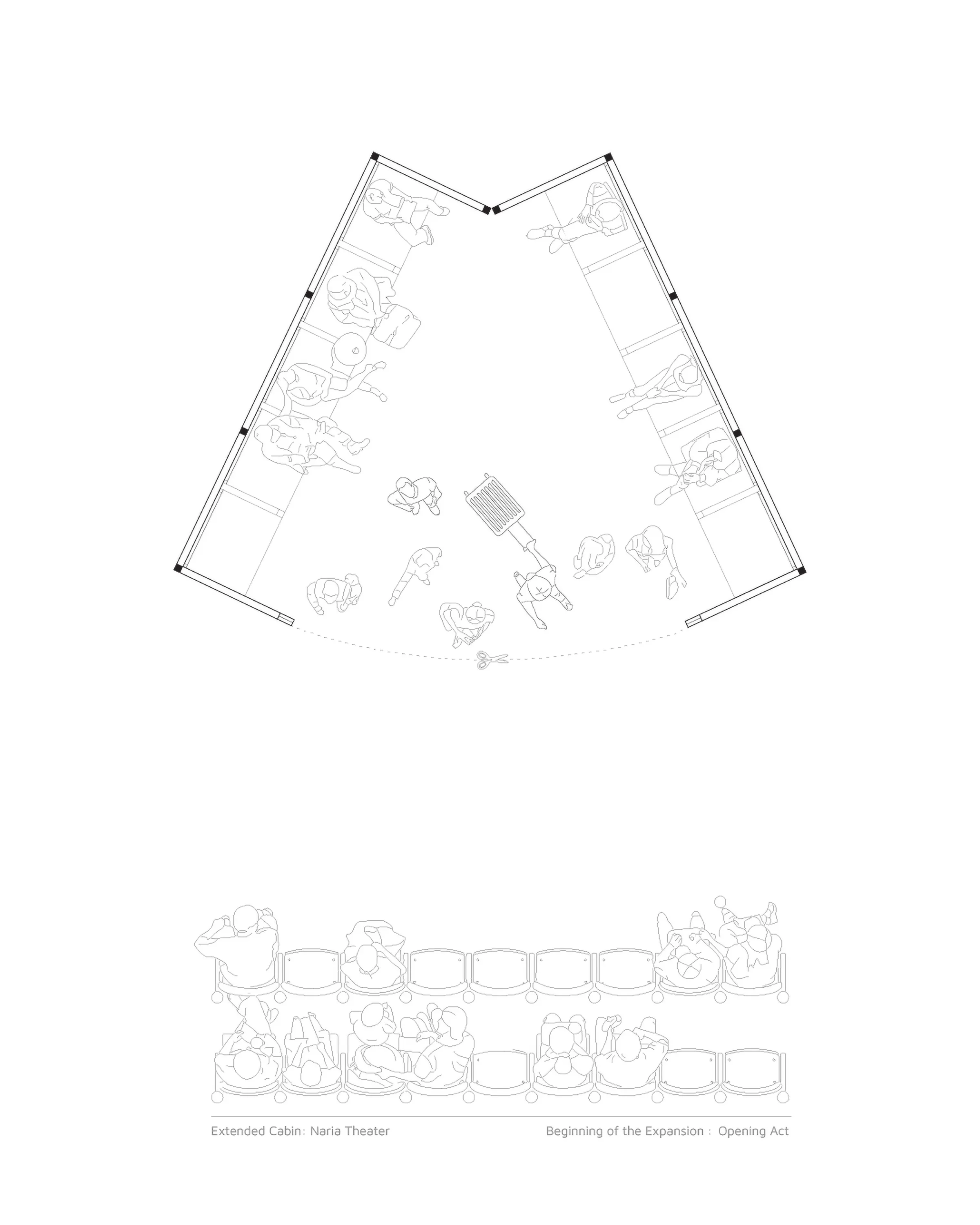
At the beginning of the performance, the cabin gradually begins to take shape through the force generated by the performers from within. Throughout the performance, they push, move, extend, and continually reconfigure the structure, transforming what initially appears to be a fixed architectural object into a dynamic entity. Every movement simultaneously alters the physical form of the cabin, the spatial organization of the stage, and the audience’s perception of the unfolding narrative. In this process, architectural space, performance, and the audience’s perception are produced simultaneously through a shared spatial experience in which no single element exists independently of the others.
The cabin is therefore not a static stage set, but an active spatial entity that continuously transforms throughout the performance. Rather than simply moving through space, it actively reshapes the spatial and narrative conditions of the stage while continuously redefining the relationships between architecture, performers, and spectators. This ongoing process of extension transforms the stage from a passive architectural object into an active narrative element that participates directly in the dramatic structure of the work. Rather than representing the enclosed space of a metro cabin, Extended Cabin constructs a framework for experiencing spatial dualities—movement and stillness, inside and outside, compression and release. These oppositions are not presented as fixed conditions but emerge through the continual transformation of the architectural form itself.
The project explores the moment when architecture moves beyond being a container for performance and becomes a performative act in itself.