[context]
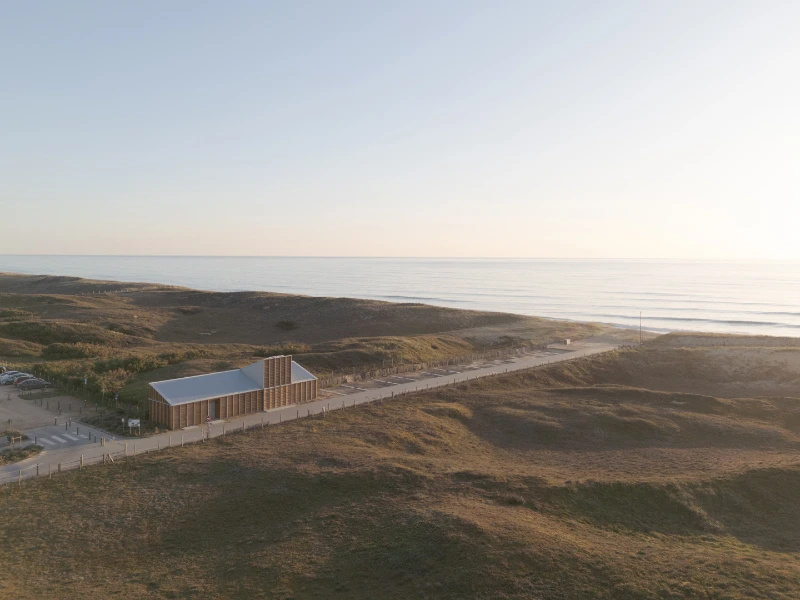
Set within the dunes of La Gâchère – an ecologically rich and protected landscape along the Vendée coastline – this Project responds to a paradox: how to protect a fragile ecosystem while accommodating the everyday needs of its growing number of visitors.
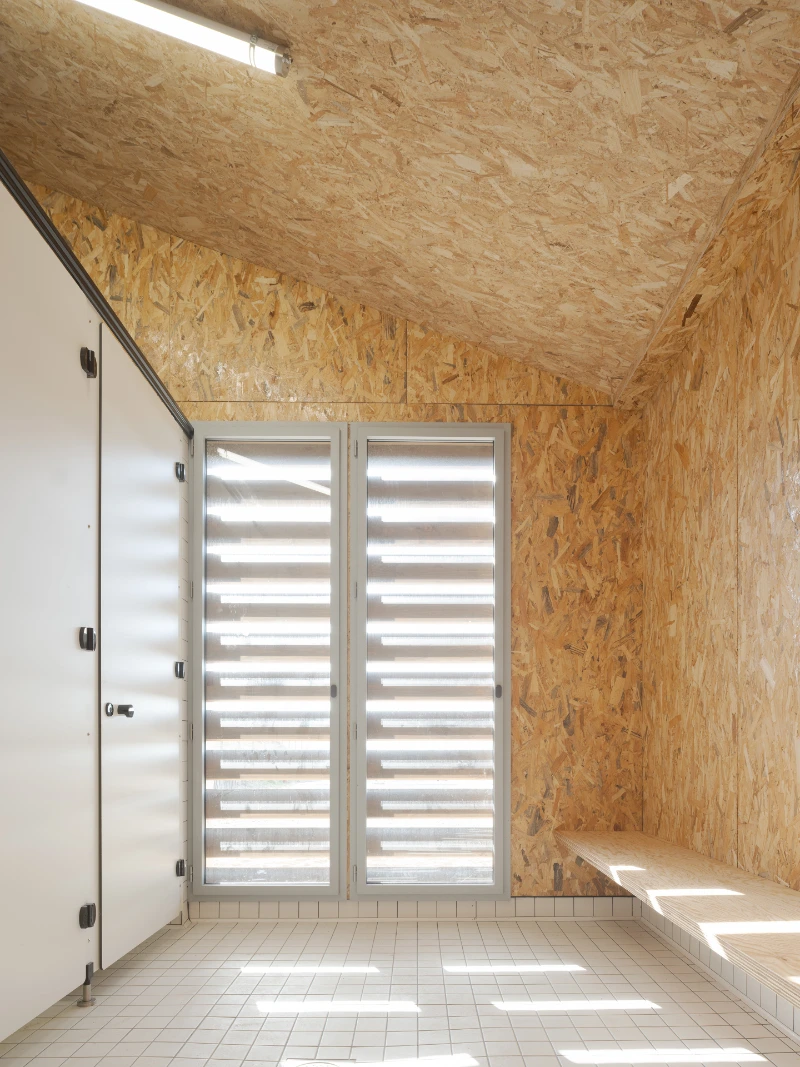
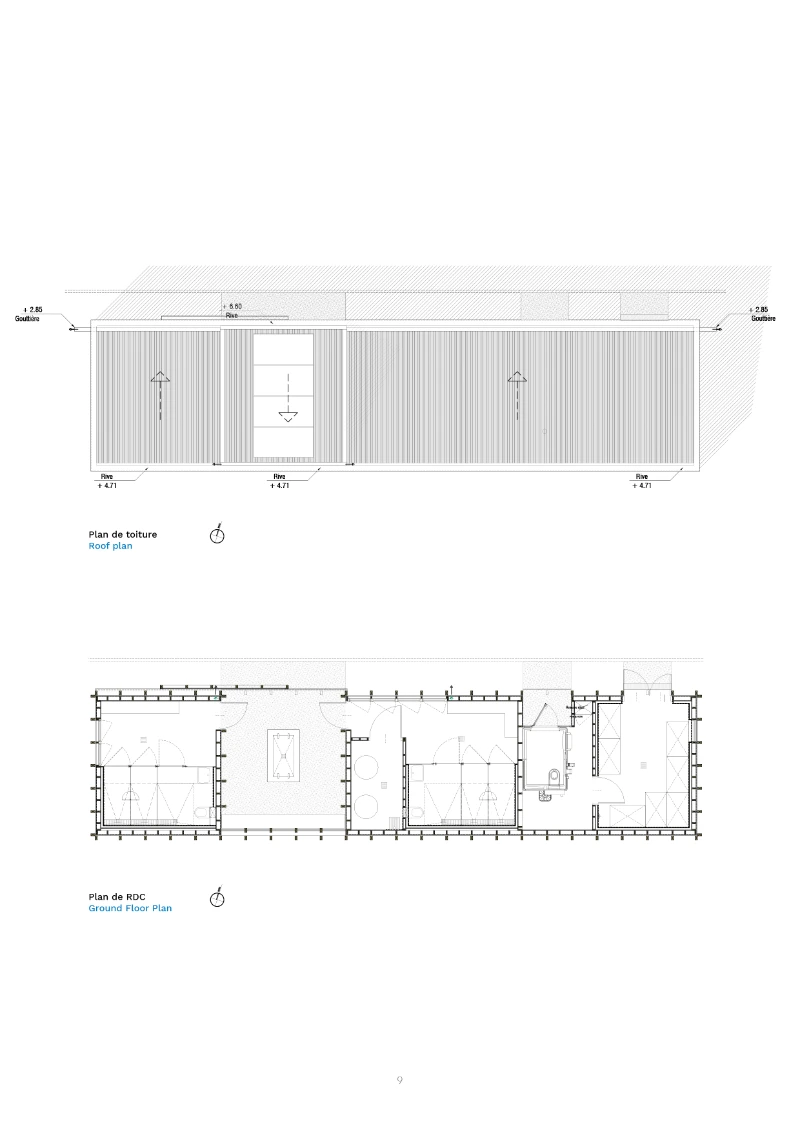
Building in such an environment is, in itself, a contradiction. Yet, faced with the visible impacts of tourism, a discreet intervention became necessary. The new facility, modest in scale and function, offers essential amenities – changing rooms, restrooms, and waste management – in a compact, singular structure.
Rather than disrupting the site, the building is designed as a discreet support system for the landscape. It allows for controlled, respectful public use of the beach while safeguarding the natural integrity of the dunes.
[approach]
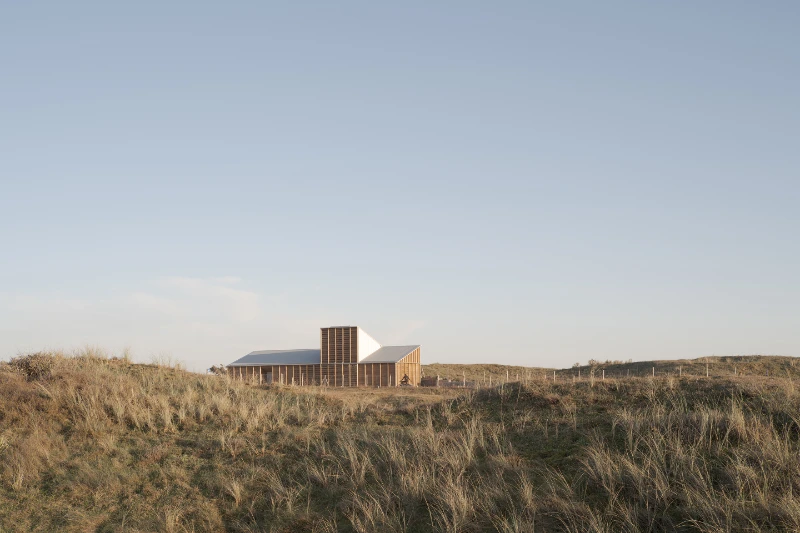
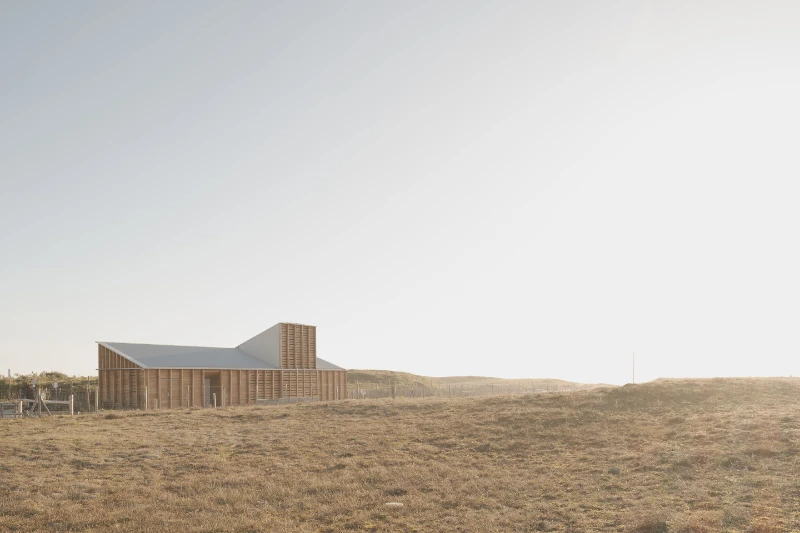
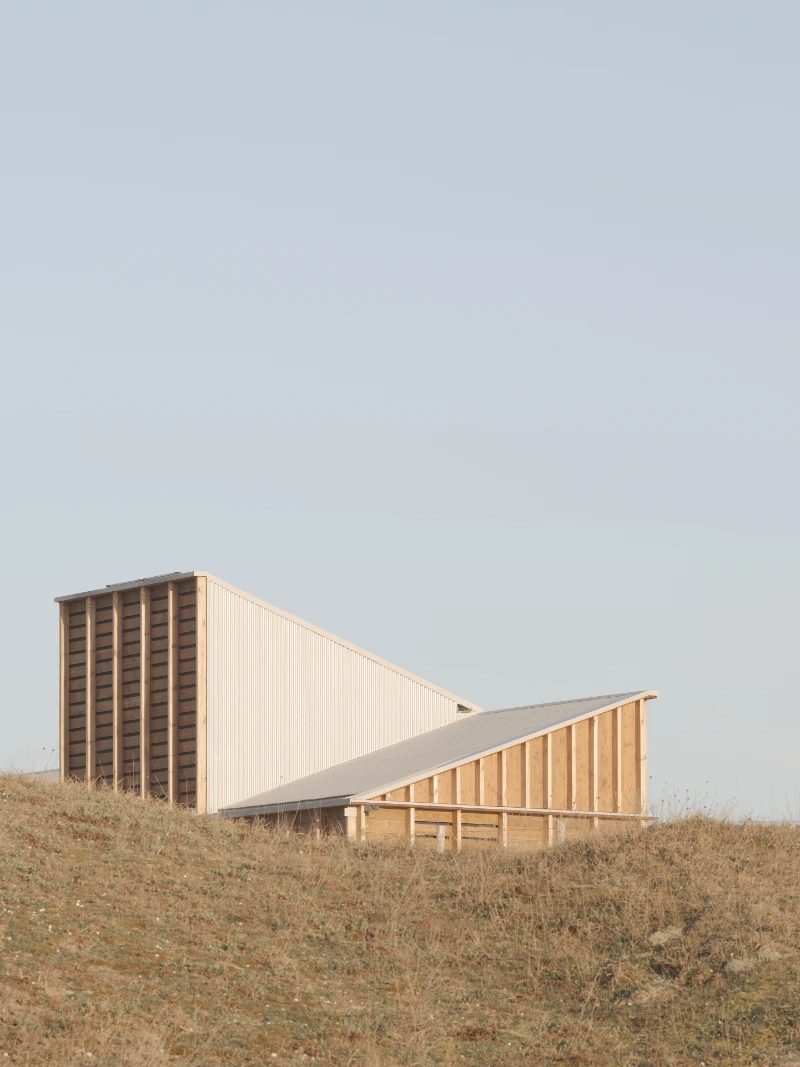
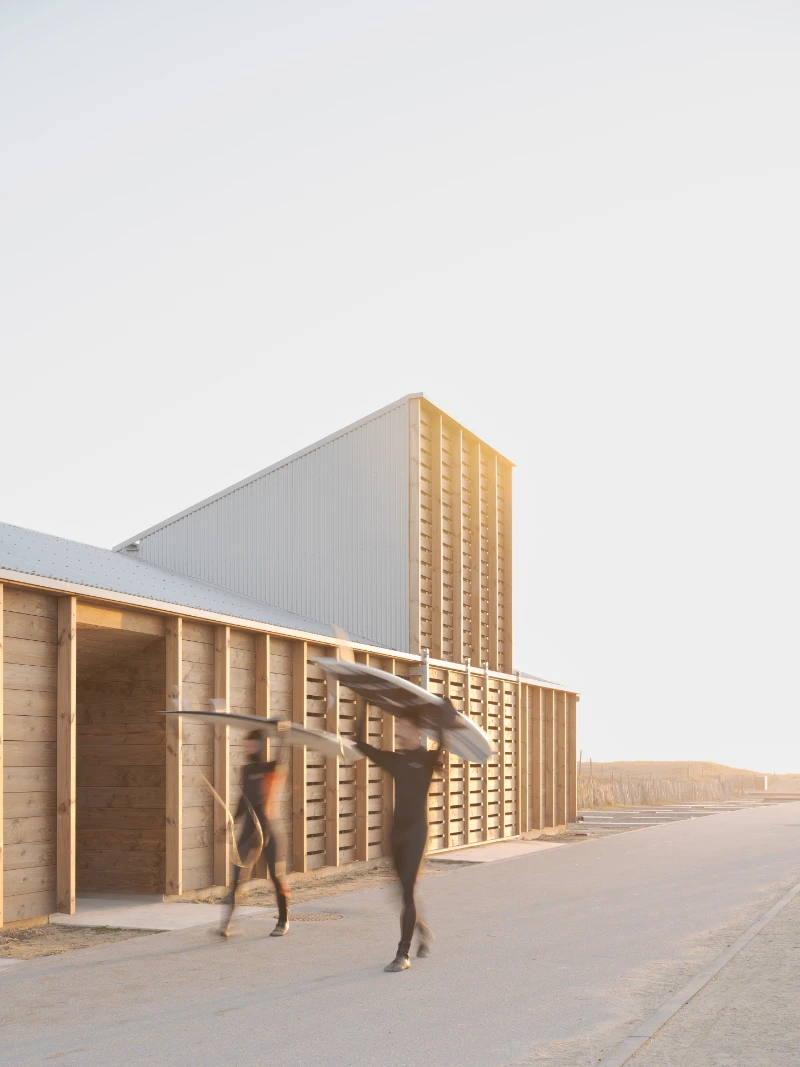
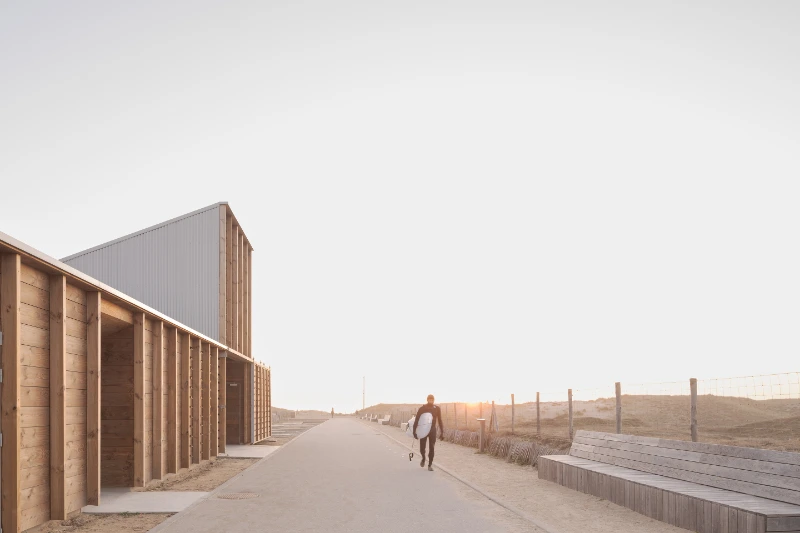
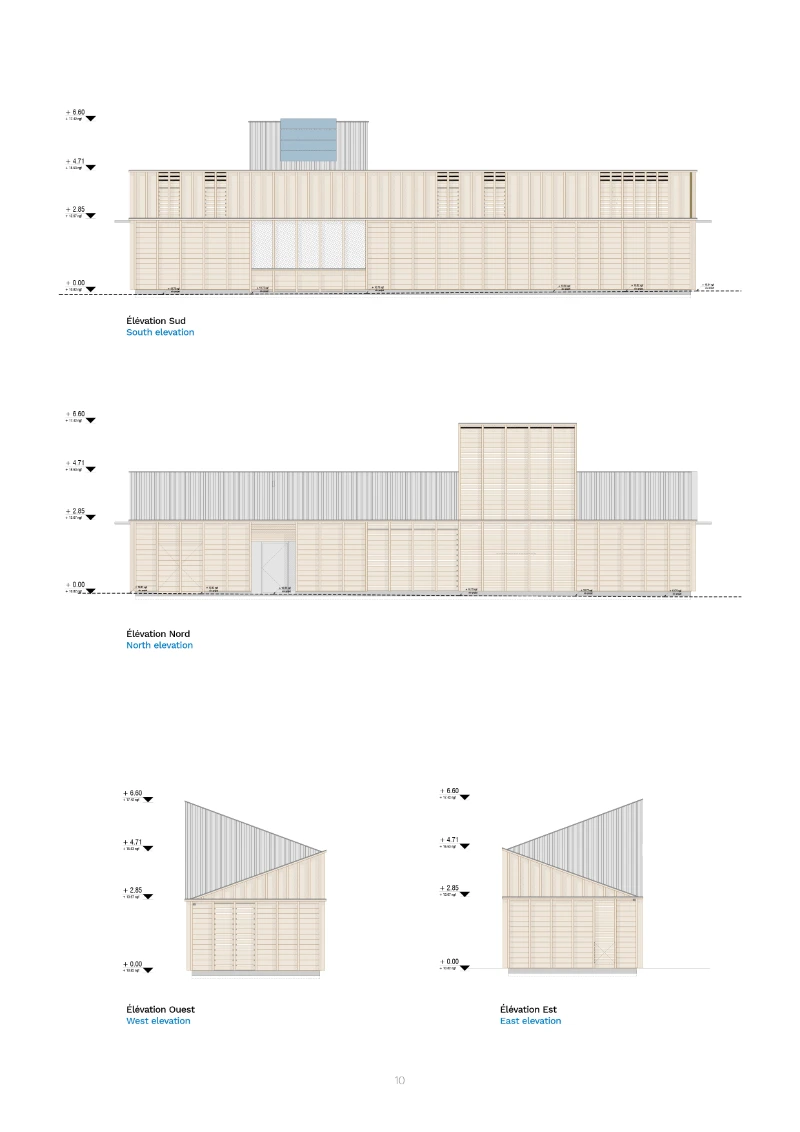
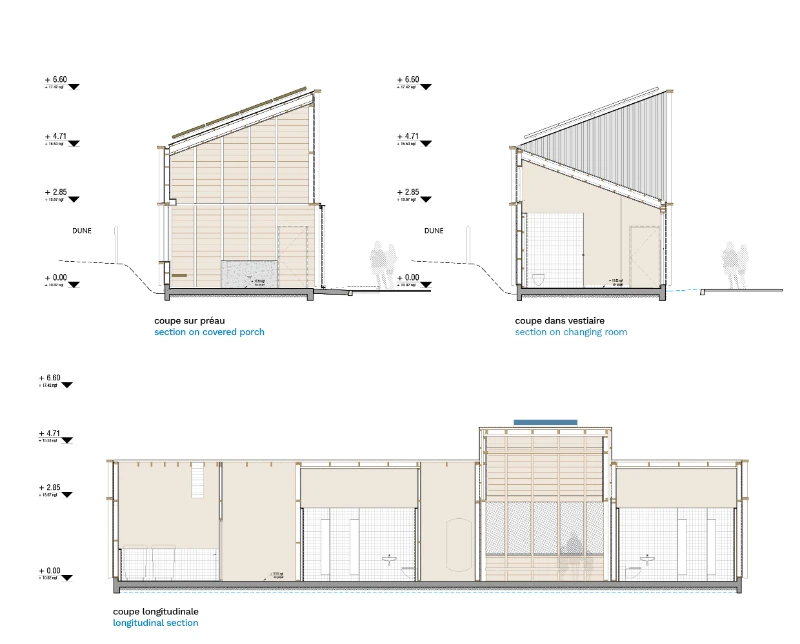
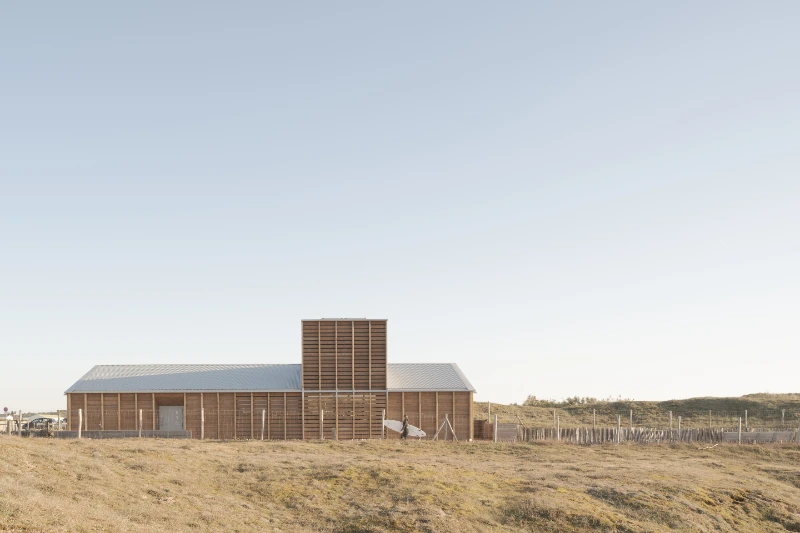
The architecture is guided by restraint. The structure is linear and low-slung, aligning with the dune formations and drawing on local vernacular typologies. Its position at the entry to the beach marks a clear threshold while maintaining a minimal footprint.
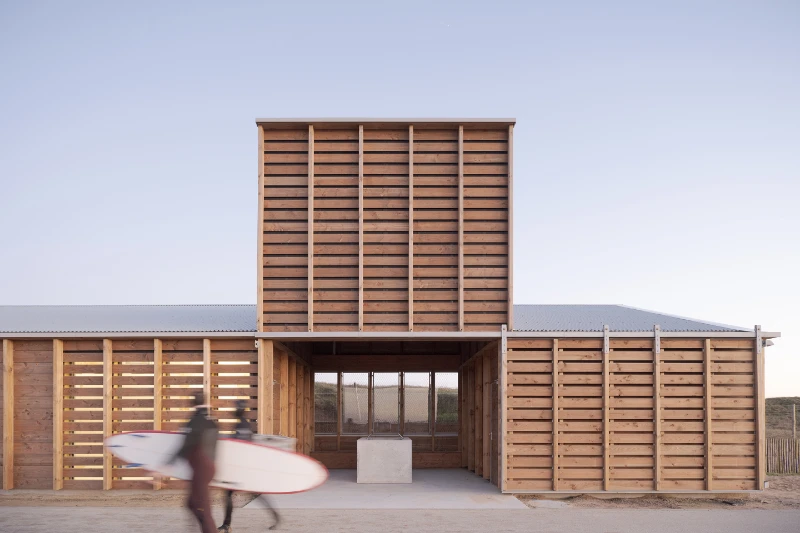
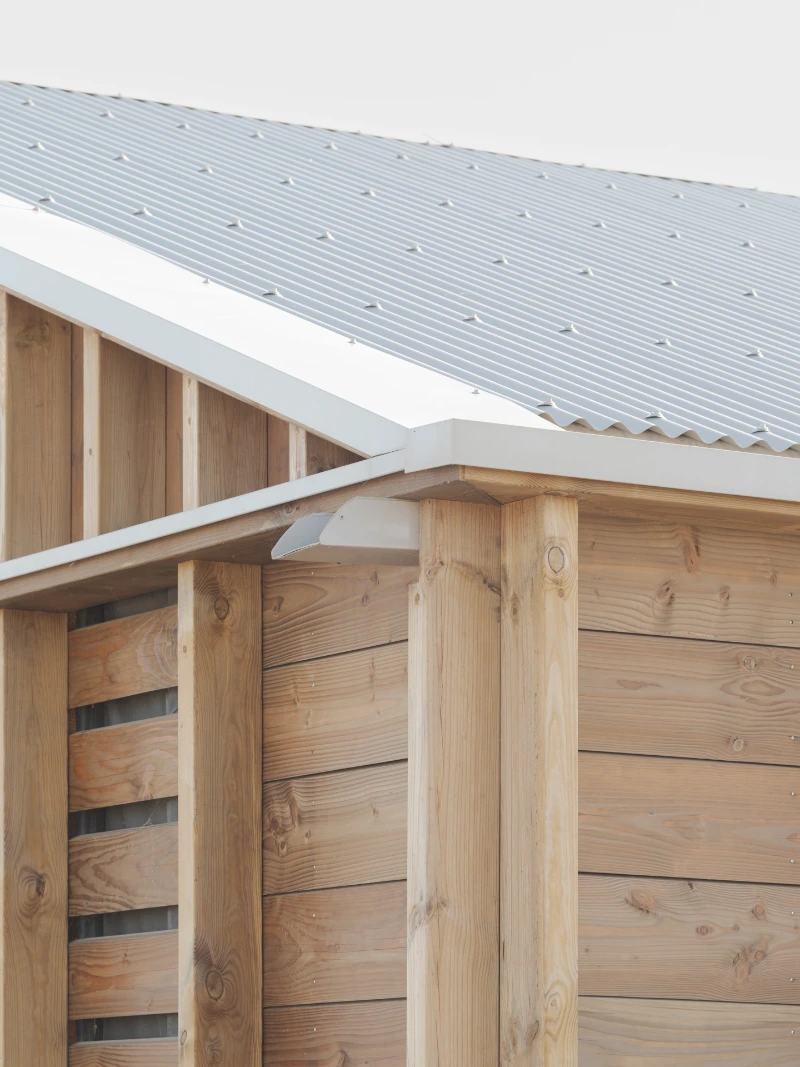
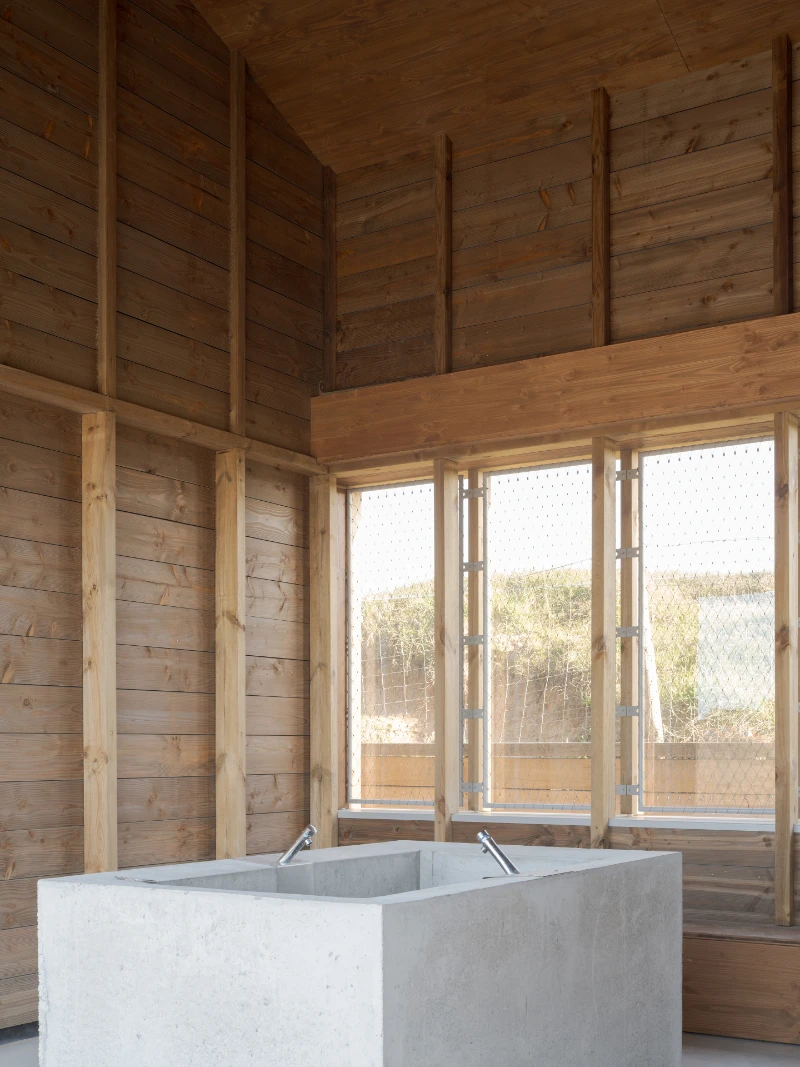
A single-pitch roof and a slight central emergence lend it a subtle presence in the landscape. This central volume provides both visual orientation and sheltered space—a windbreak on stormy days, a shaded spot under the summer sun.
[Materiality]
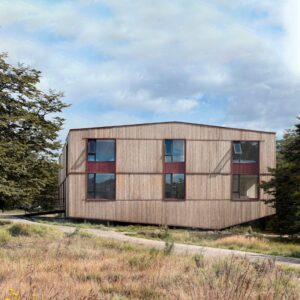
The building envelope is clad in horizontal timber, referencing the region’s oyster shacks and coastal sheds. Vertical slats introduce a finer, more contemporary rhythm, providing both modulation and privacy.
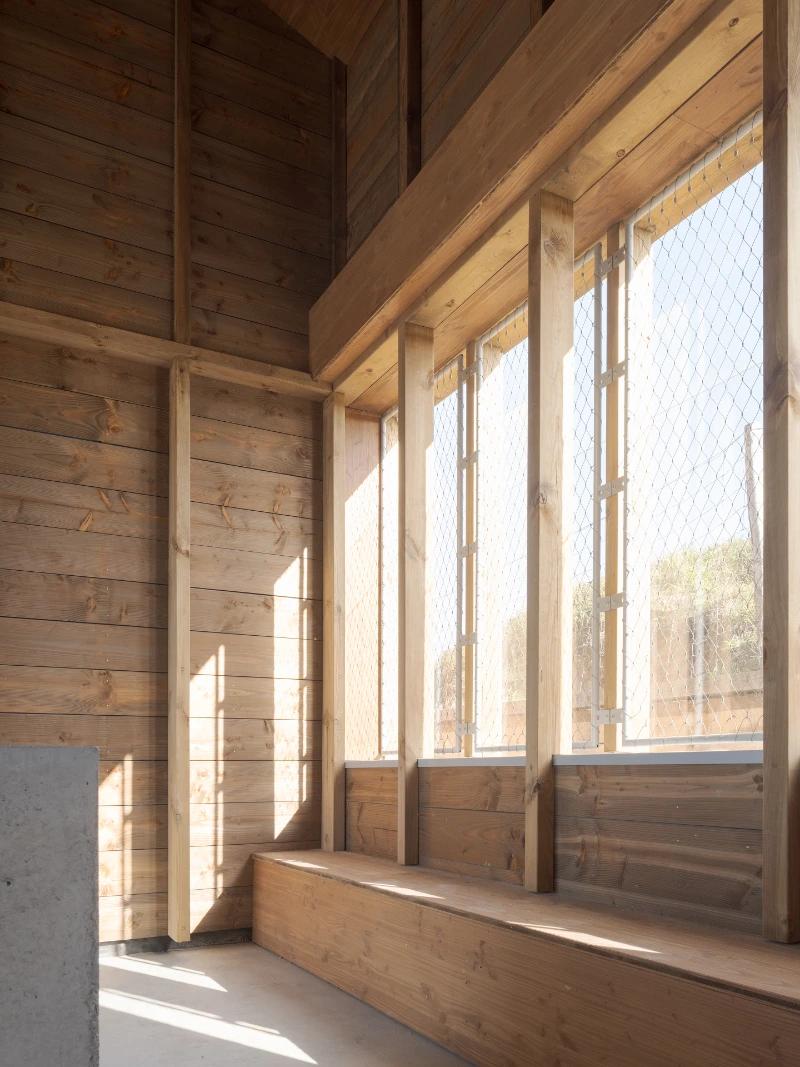
Selective perforations in the timber skin let daylight pass through while shielding users from direct view. These voids also allow for cross-ventilation and wind buffering, particularly in the service yard. A sliding timber screen secures the building when closed, offering protection from coastal weather conditions.
The construction reflects an ethic of reversibility. Located within a sensitive ecosystem, the pavilion was conceived to be potentially disassembled. The entire structural and interior system (excluding tiling) is composed of locally sourced timber. Dry construction techniques allow for future dismantling and material reuse.
During its operational season, the facility is self-sufficient, powered by photovoltaic panels discreetly integrated into the design.