—Dad, will you read Jack and the Beanstalk to me again?
And so it goes, almost every night. It is Claudia’s favorite story. Jack, a poor family, a bean planted in the ground, a stalk that grows up to the clouds, giants chasing him, the final race, the cut just in time… and in the end, everything turns out well.
—Will you read it to me again, please?
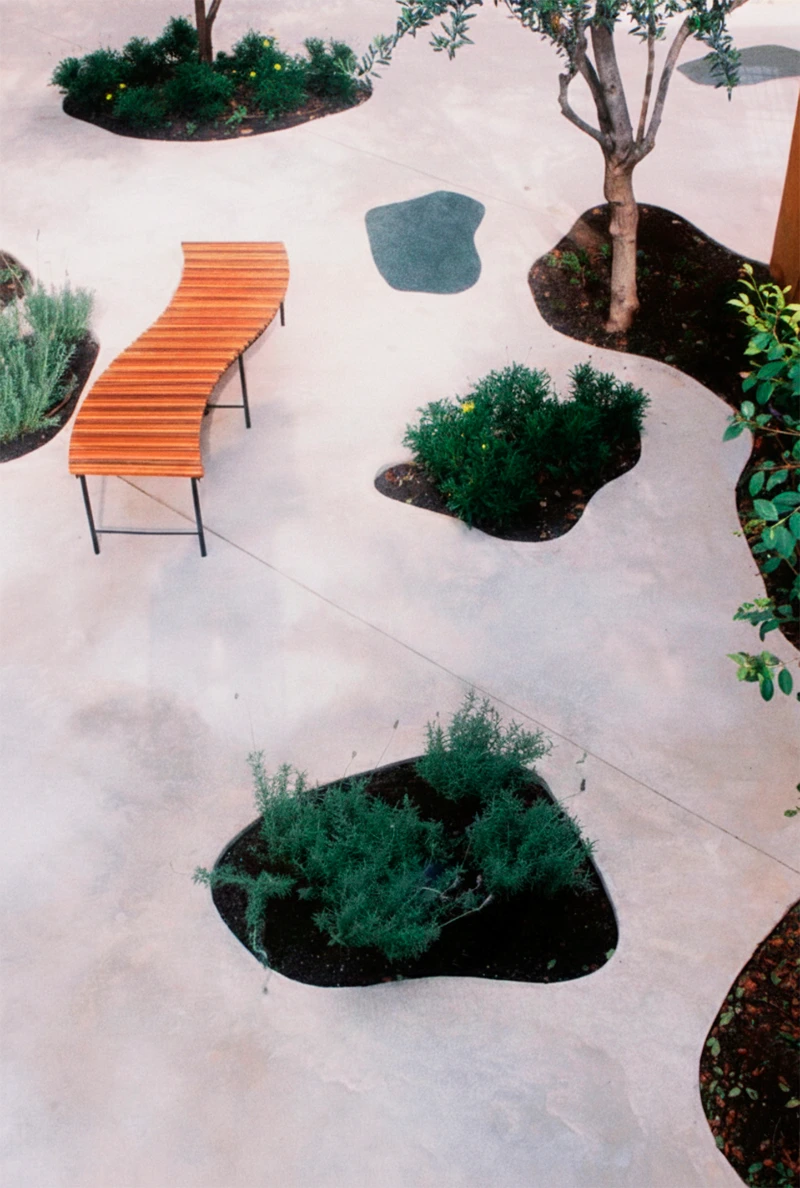
The renovation of the small front garden of this house in Gràcia, Barcelona, coincides with the birth of Claudia. The garden ceases to be merely an outdoor space and becomes also a place to play and grow: a setting for her first adventures. Jack and the Beanstalk, her favorite story, thus becomes the starting point of the project—not as a literal narrative, but as a symbolic universe capable of transforming the garden into a territory of everyday fantasy.
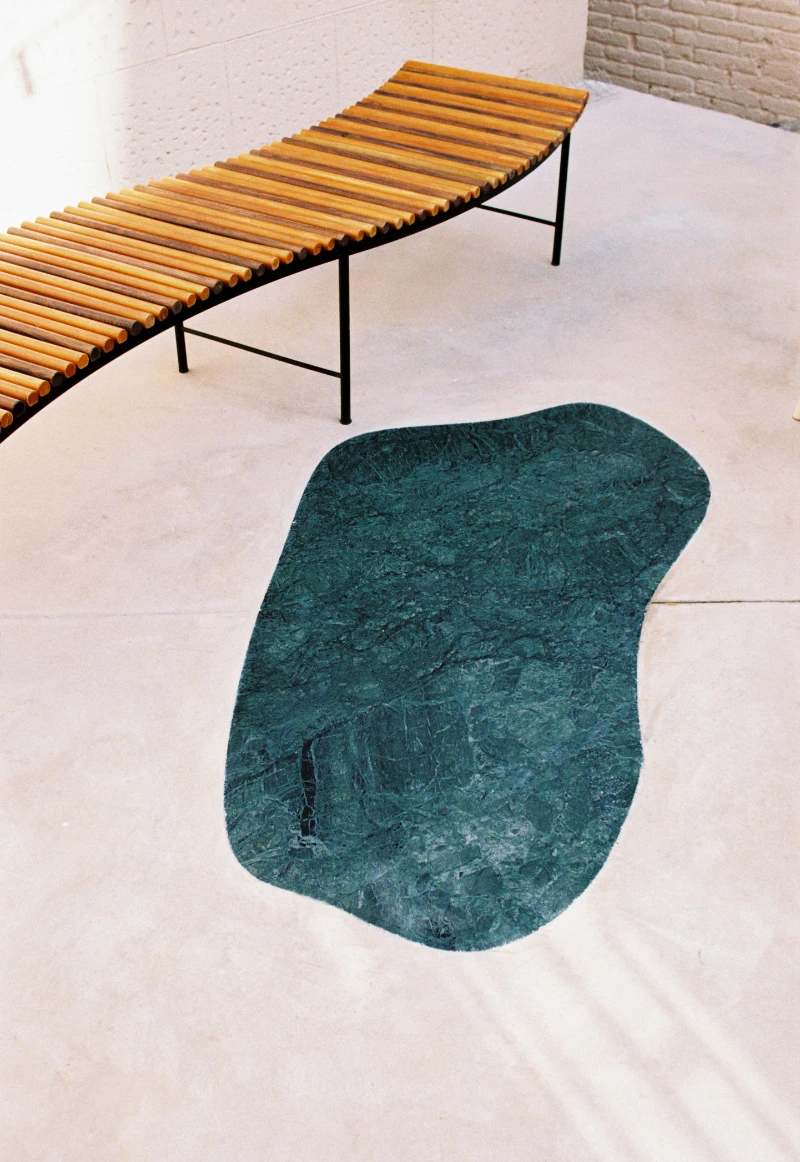
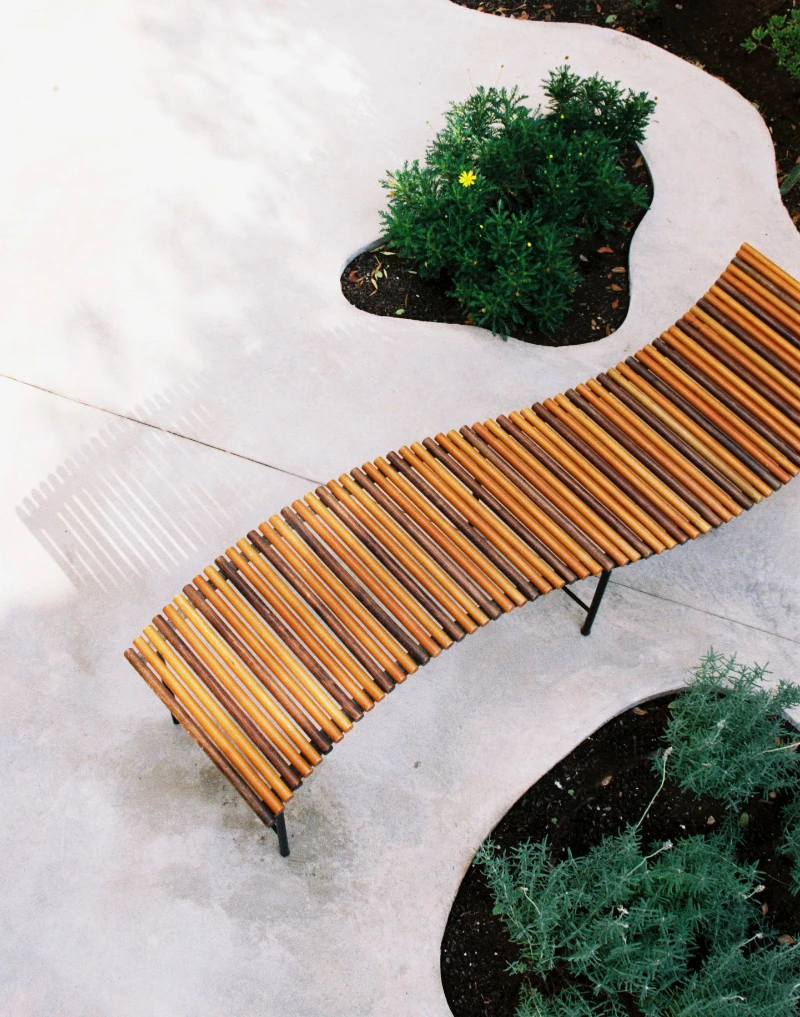
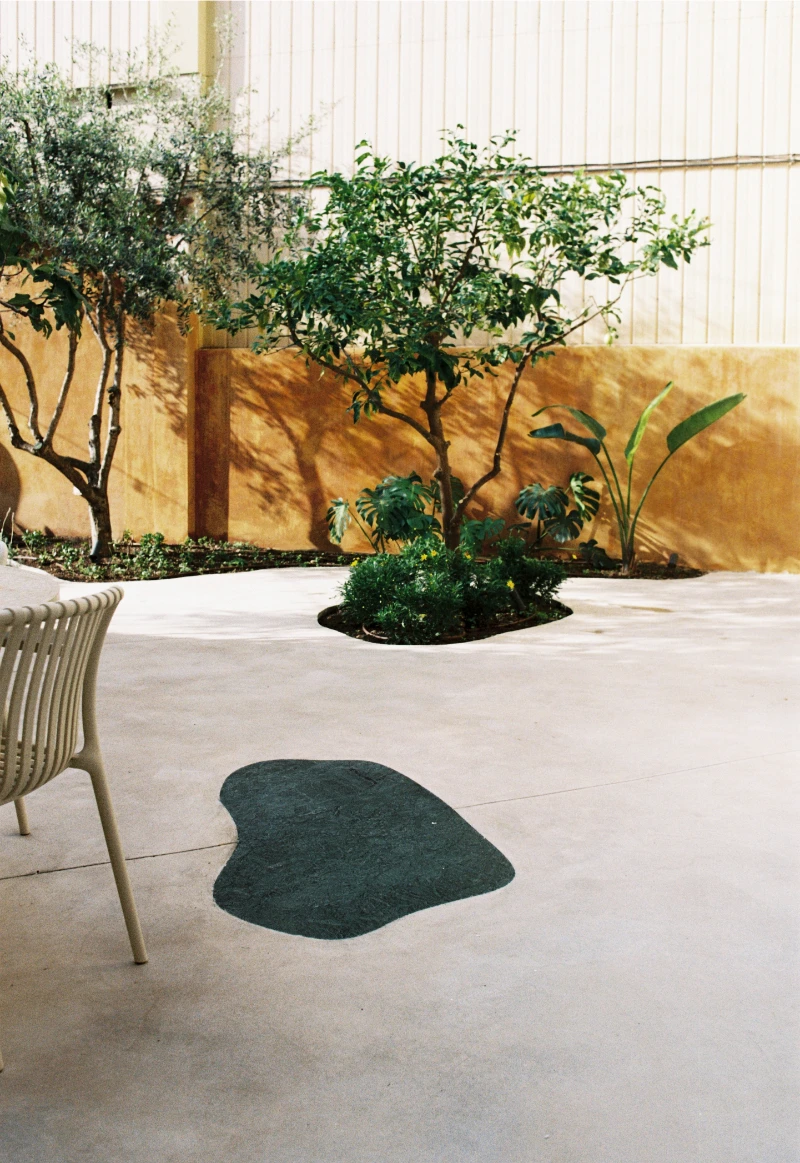
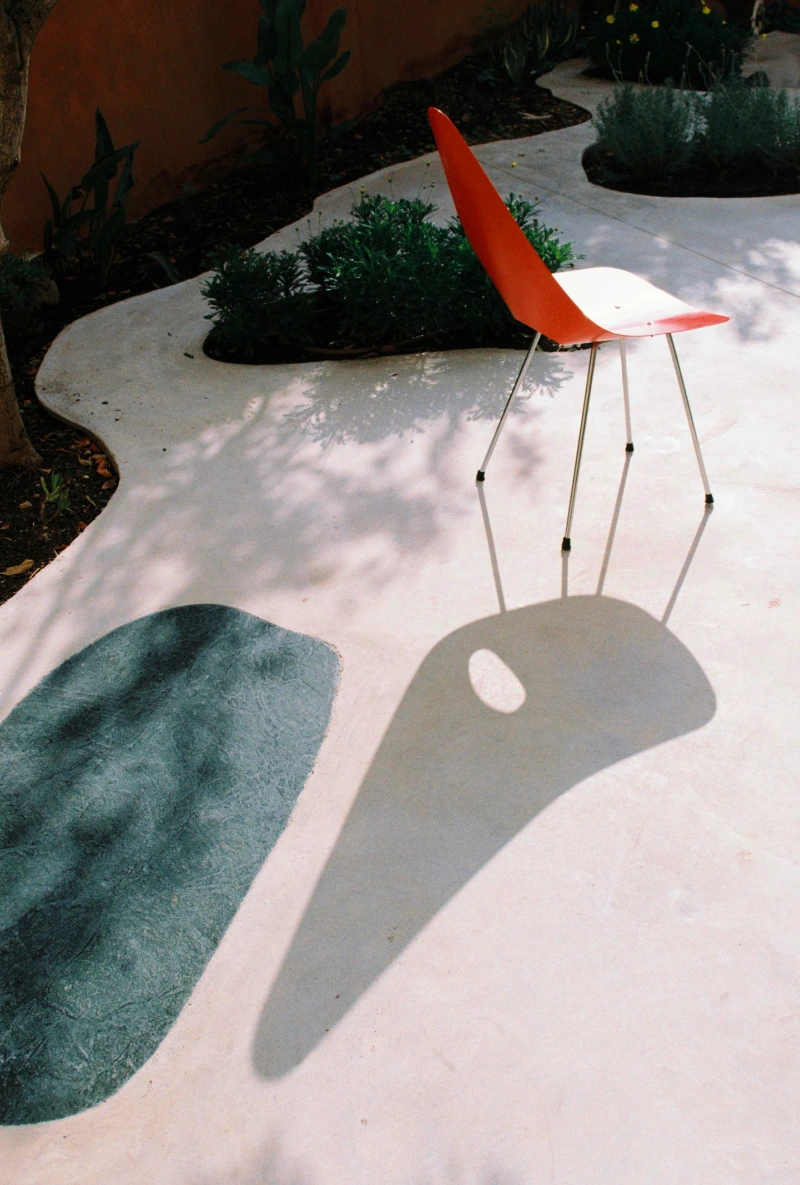
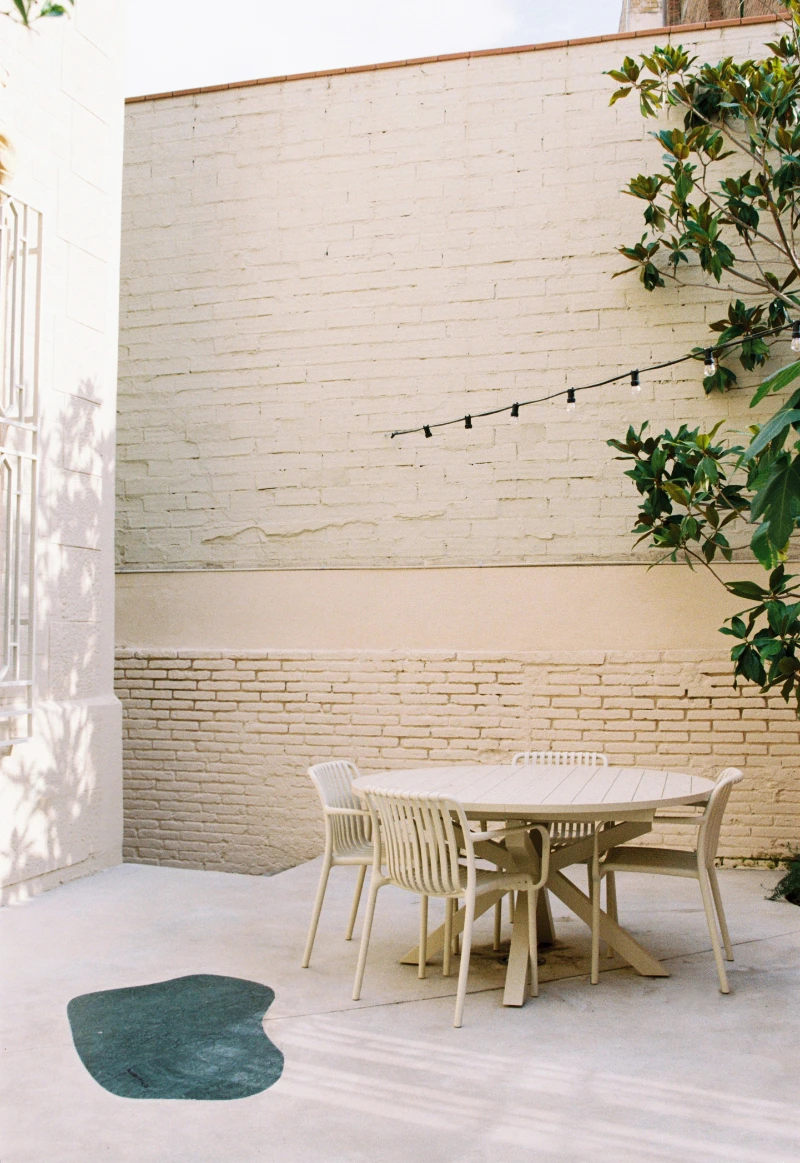
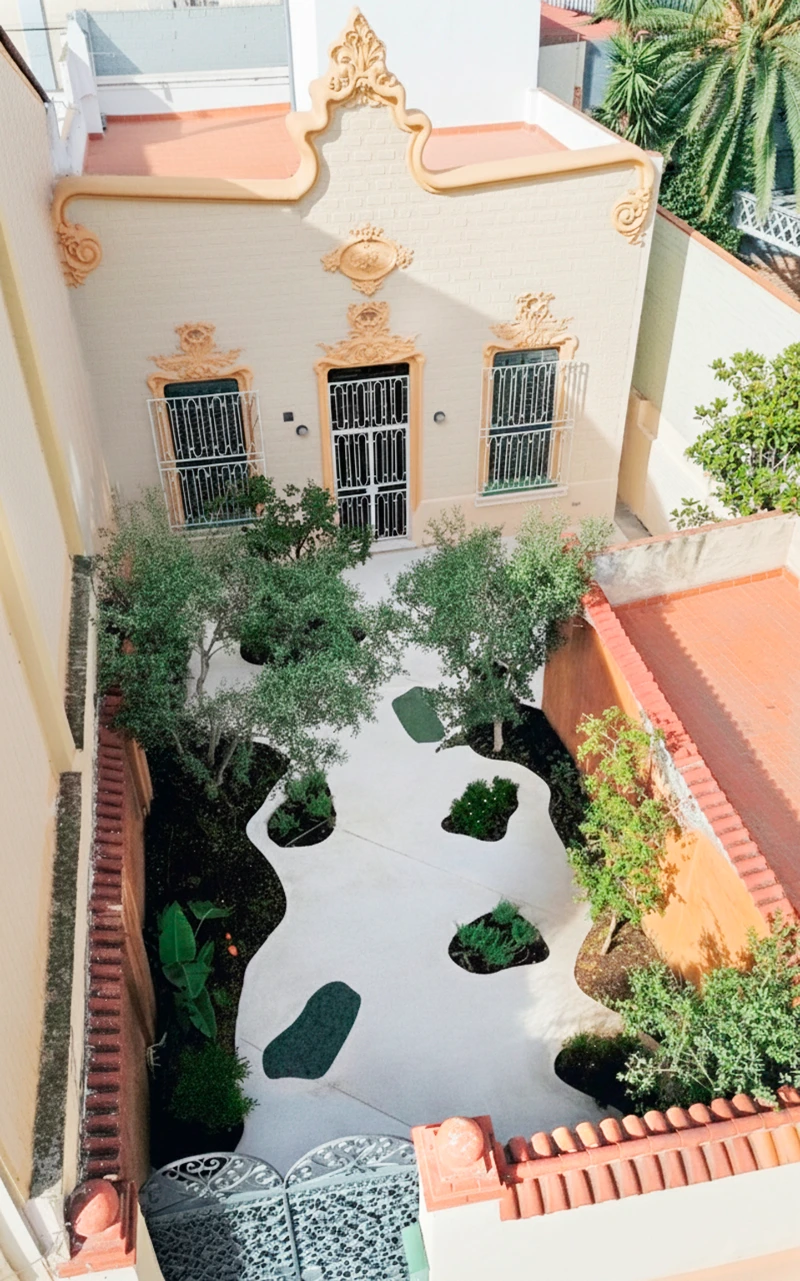
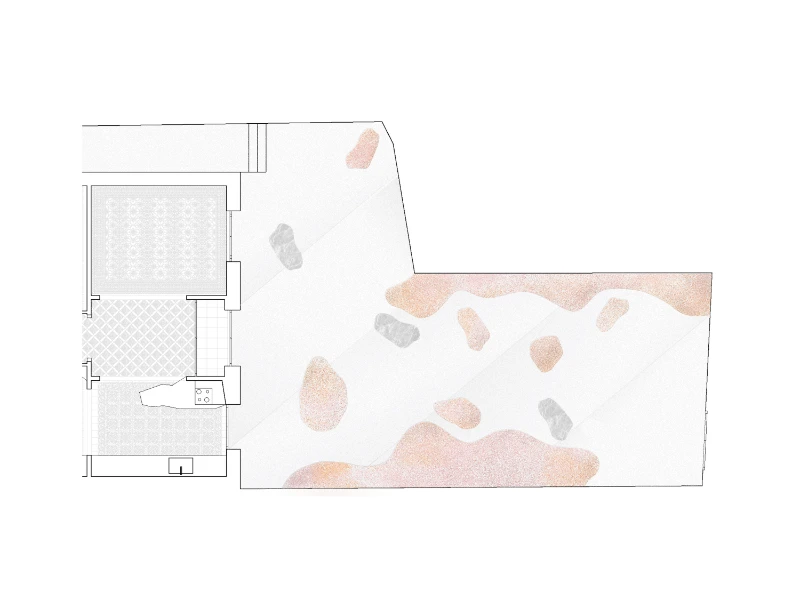
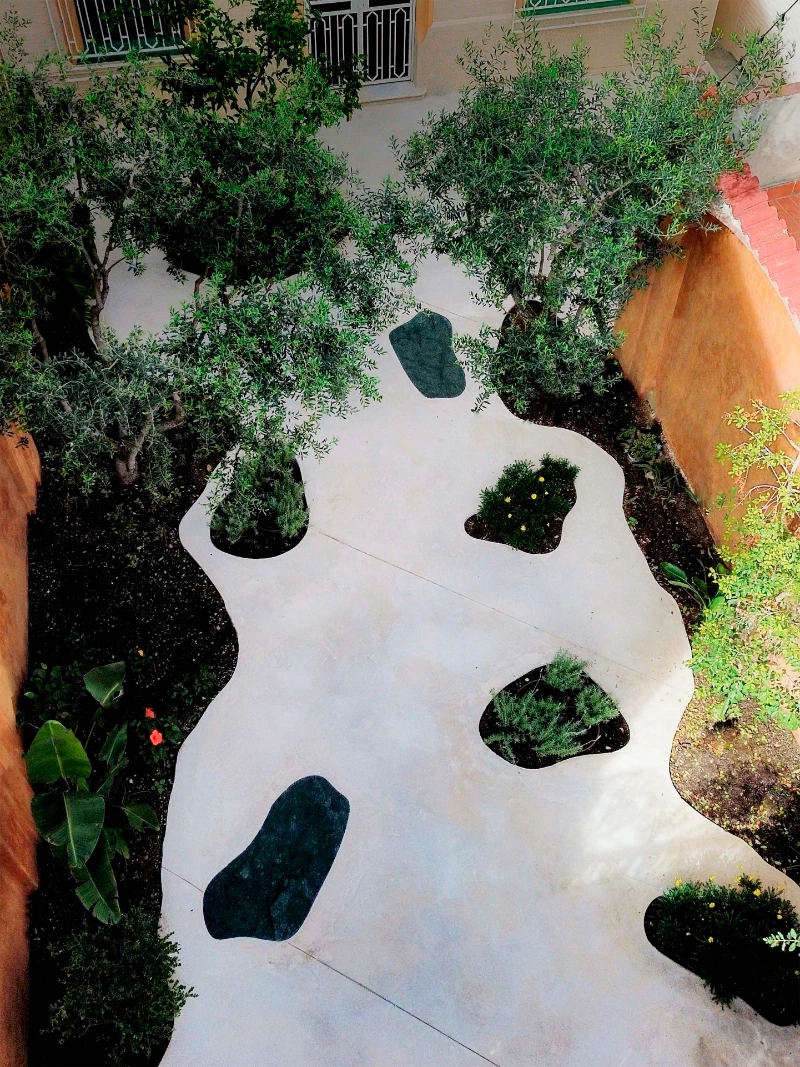
The project embraces this condition and constructs a space that can be read, experienced, and reinterpreted as a large children’s game. The new ground finish is conceived as a cloud: a continuous, light-colored, gently curved surface that seems to hover above the ground. Embedded within this cloud are pieces of green marble, reinterpreting the footprints of the giant who lives among the clouds, introducing a narrative reading and an imaginary scale into the space.
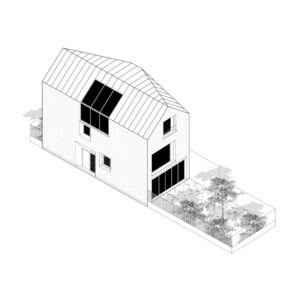
The façade of the house, as seen from the garden, also takes on a new role. It is no longer merely the domestic boundary, but is read as a castle in the clouds: Claudia’s castle. A backdrop that reinforces the garden as a stage, as a place where everyday life and fantasy coexist.
Beyond this initial symbolic layer, the project is built from a deeply landscape-oriented perspective. The garden is not conceived as a fixed image, but as a living system in constant transformation, where the passage of time becomes another material of the project. In this sense, the proposal engages in dialogue with the thinking of Piet Oudolf, for whom the garden is not an exercise in punctual flowering, but a structure capable of maintaining interest, texture, and beauty throughout the year.
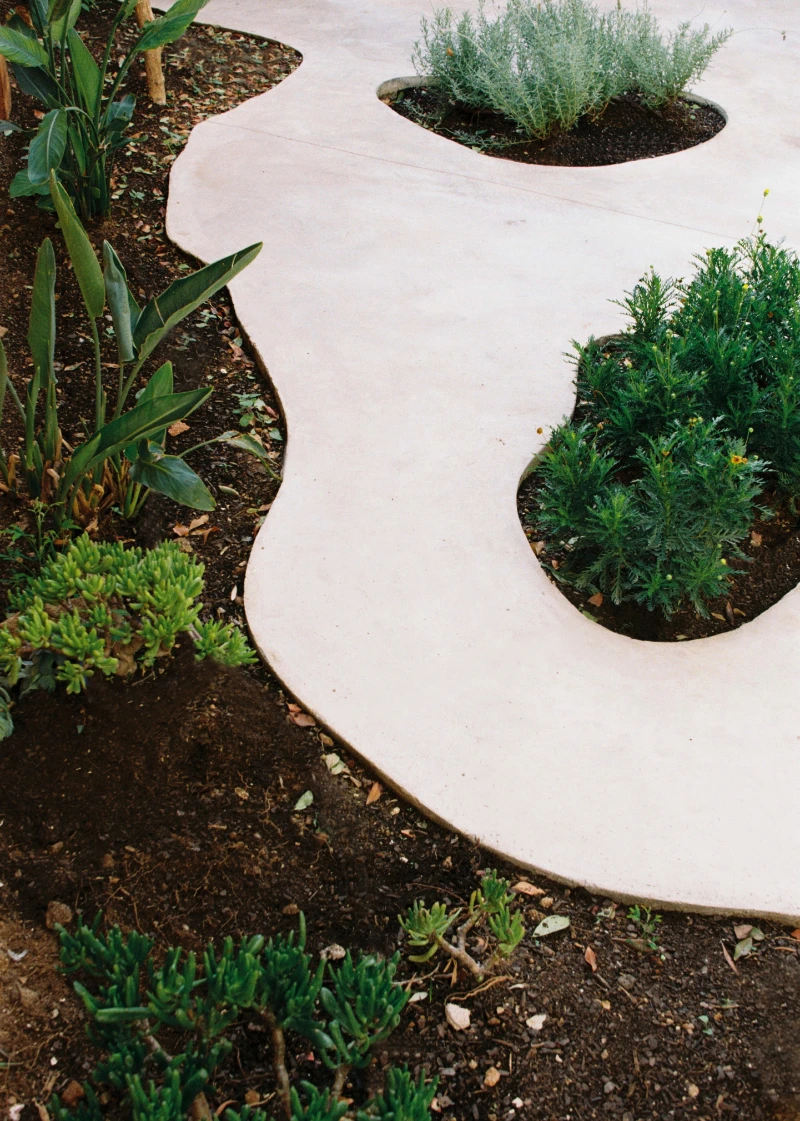
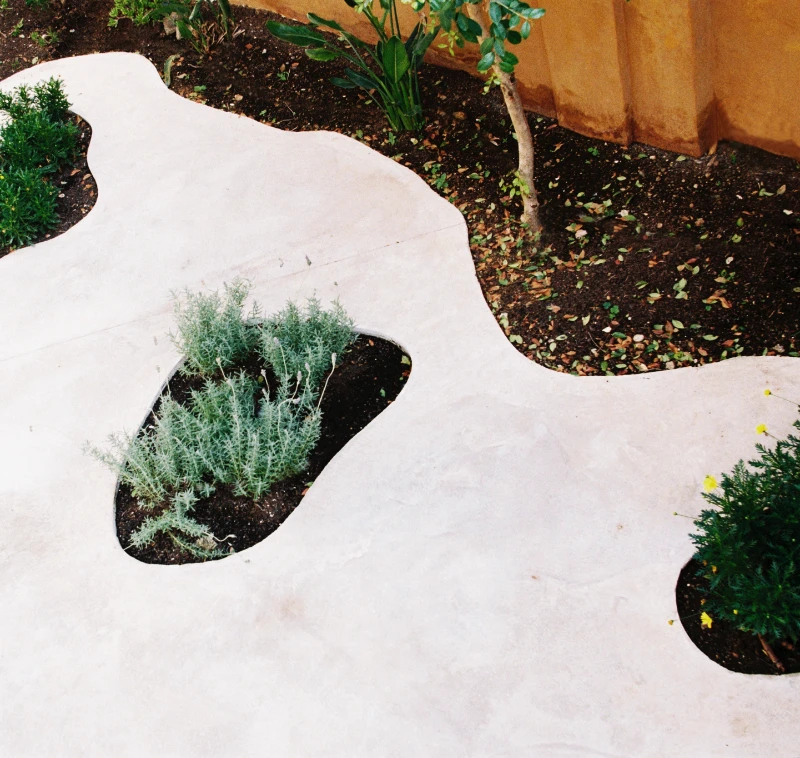
The previous condition of the garden consisted of a completely paved, hard, impermeable surface. The intervention reverses this logic: the paving is removed, fragmented, and curved, allowing the soil to reappear and vegetation to regain prominence. Ground permeability thus becomes both a technical and a conceptual decision.
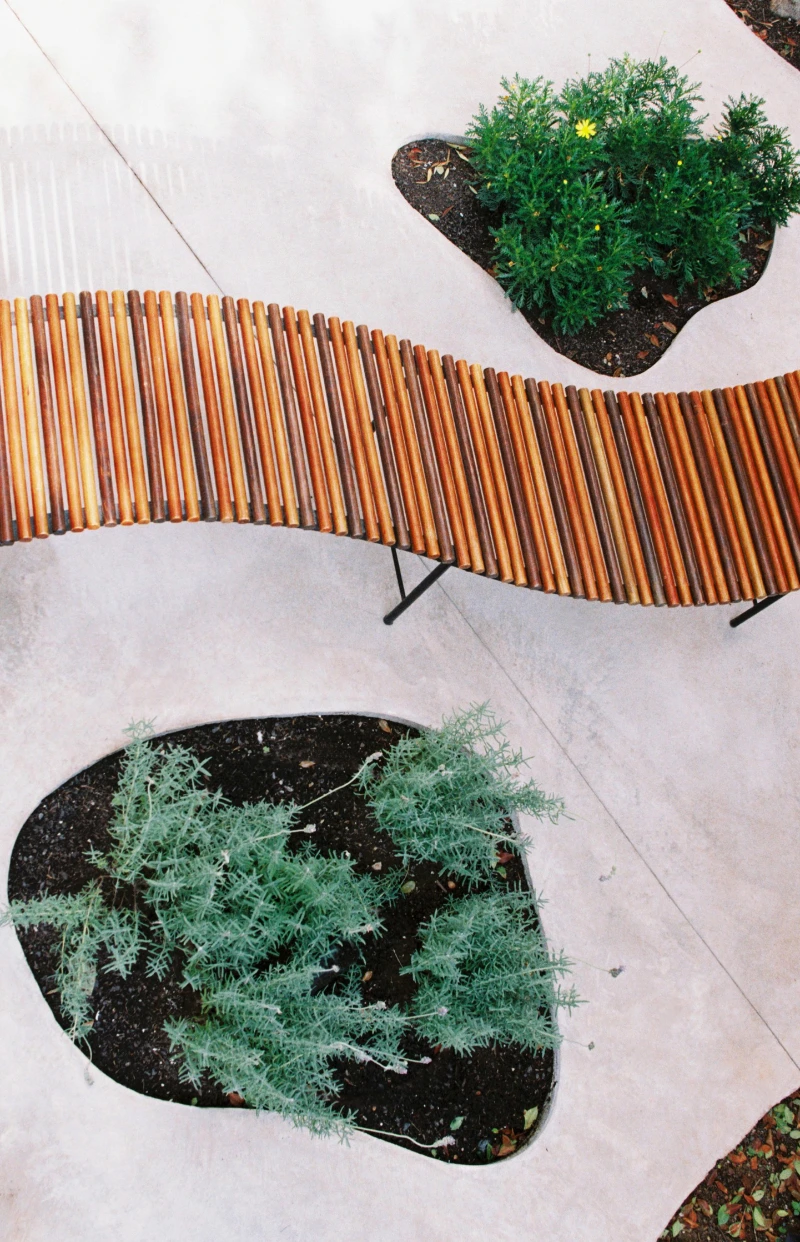
Openings in the paving define islands of low vegetation composed of aromatic and Mediterranean species, selected not for spectacular flowering, but for their ability to maintain structure, texture, and presence across all seasons.
All existing trees are fully preserved. Wild olive trees, orange trees, and lemon trees constitute the permanent structure of the place, both physically and emotionally. The paving does not impose a geometry upon them; instead, it adapts to them: it withdraws, curves, and embraces them. Like the bean in the story, the garden takes root in the earth but looks upward, letting time and life do the rest.
—Will you play with me in my new garden?