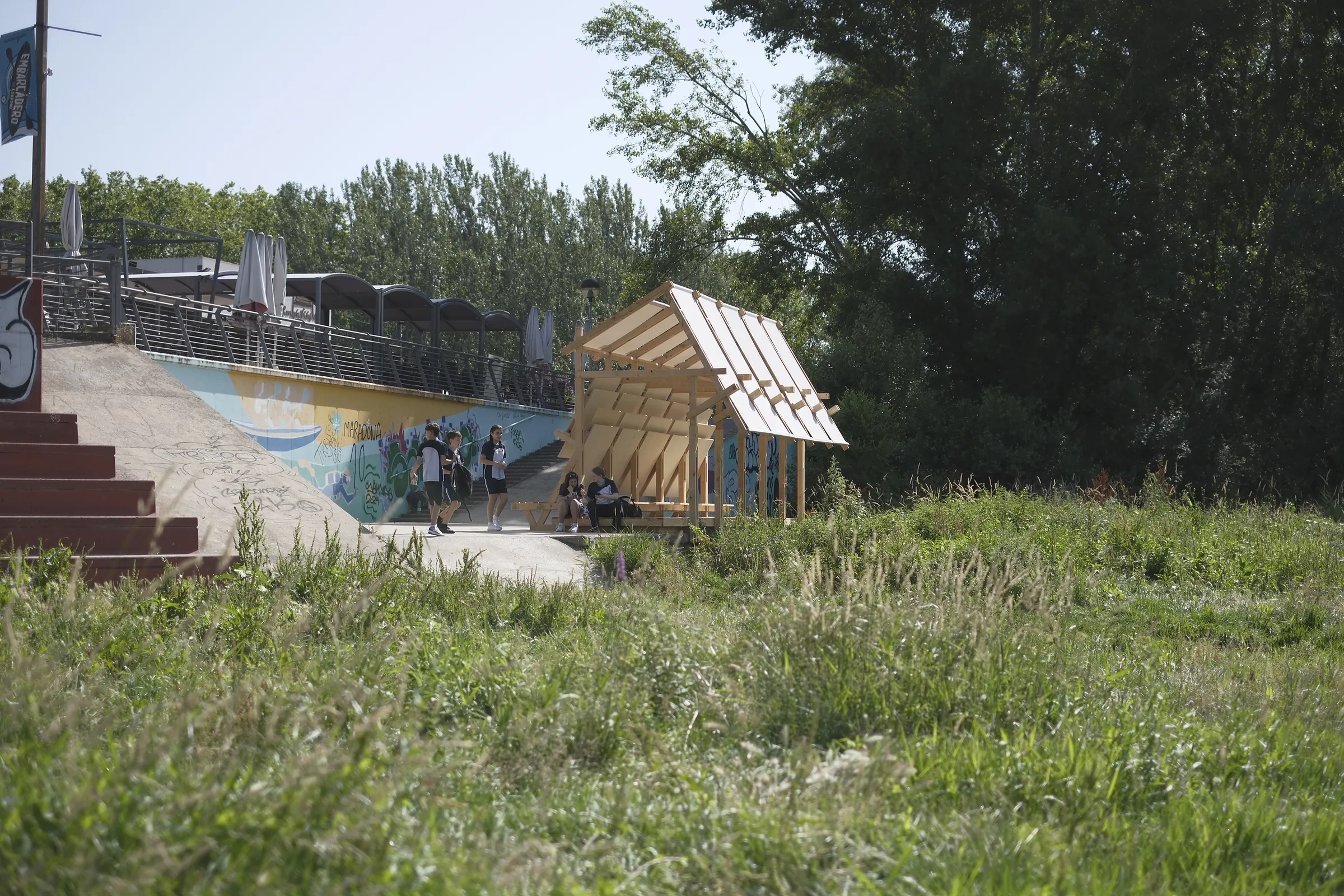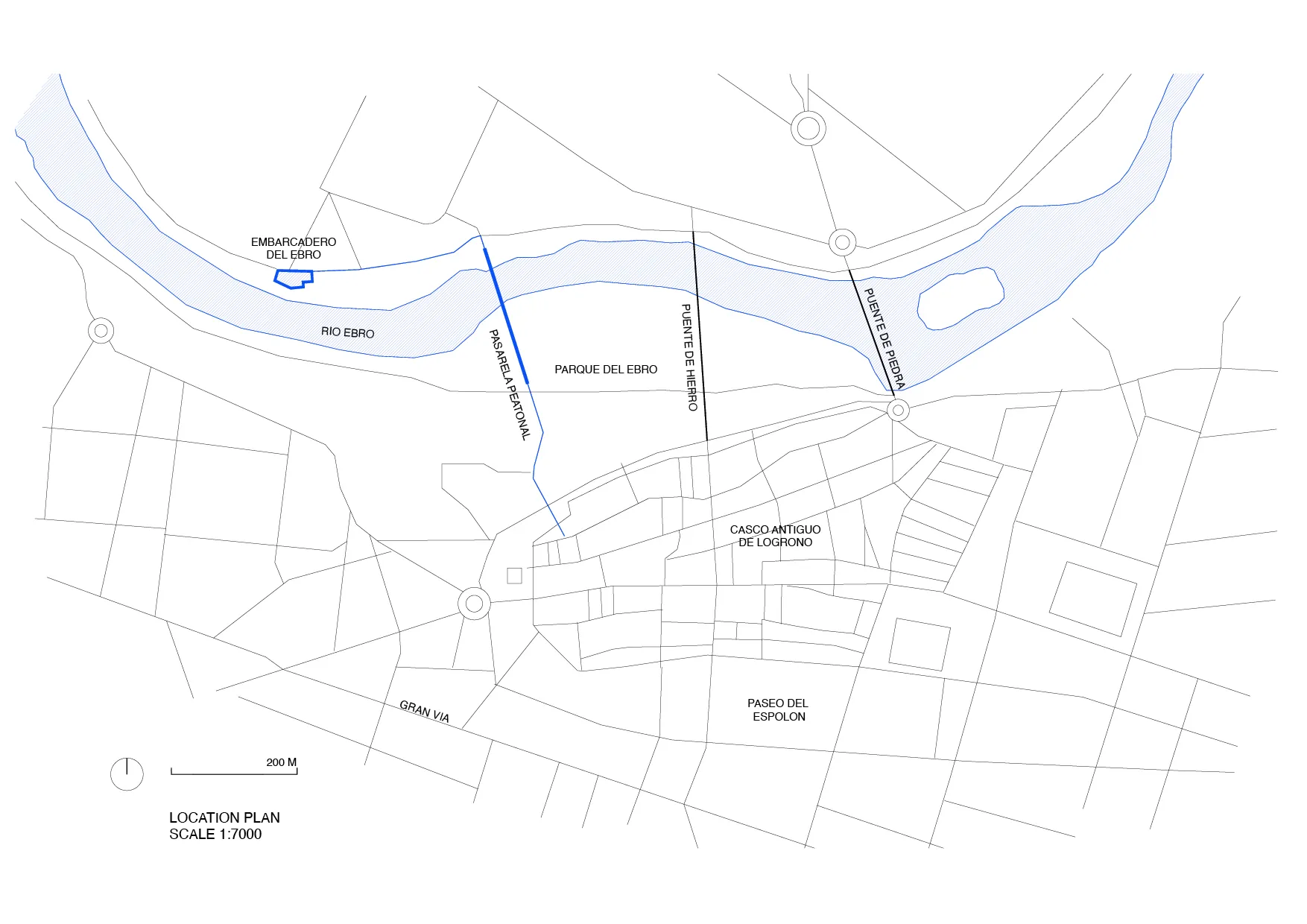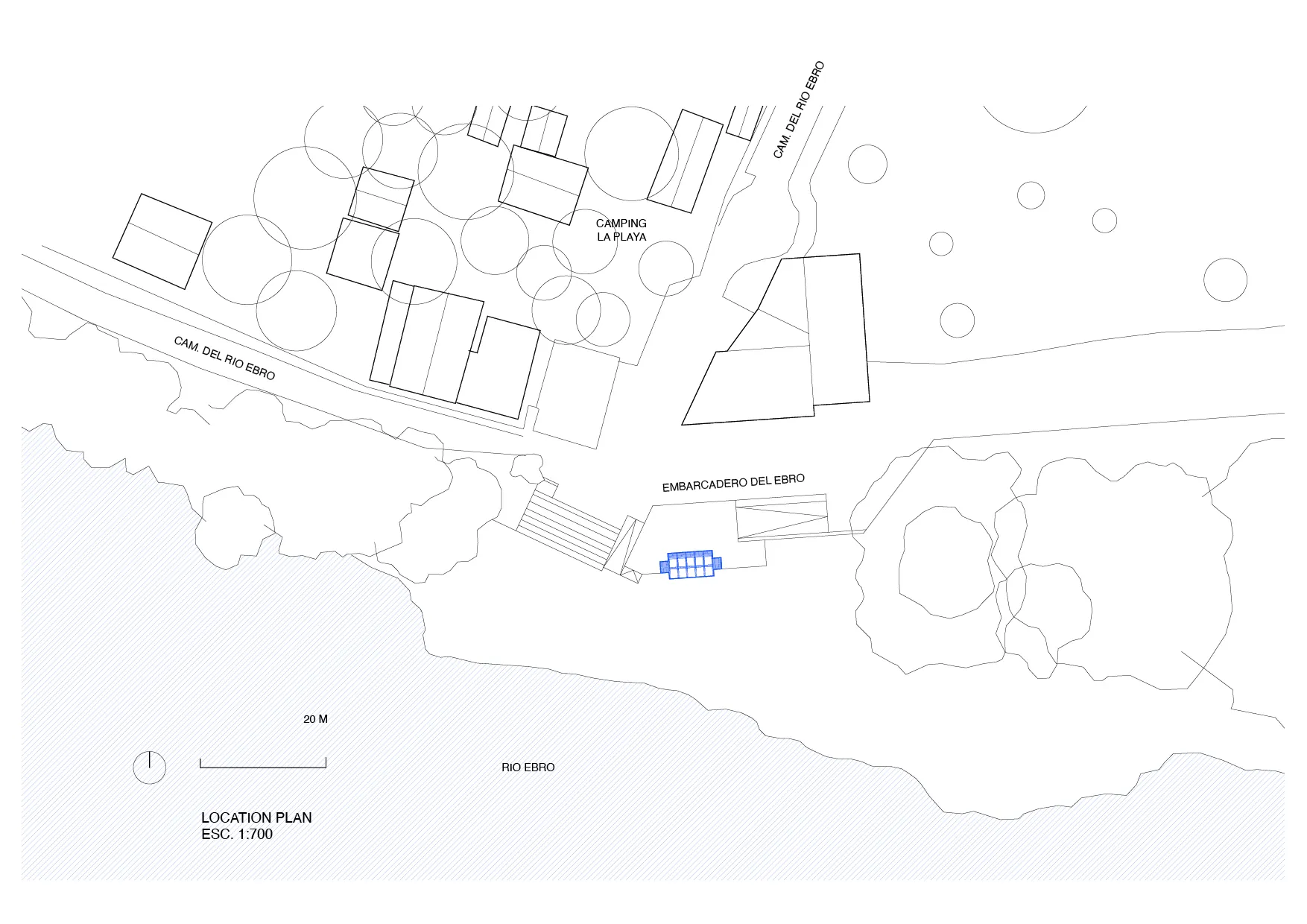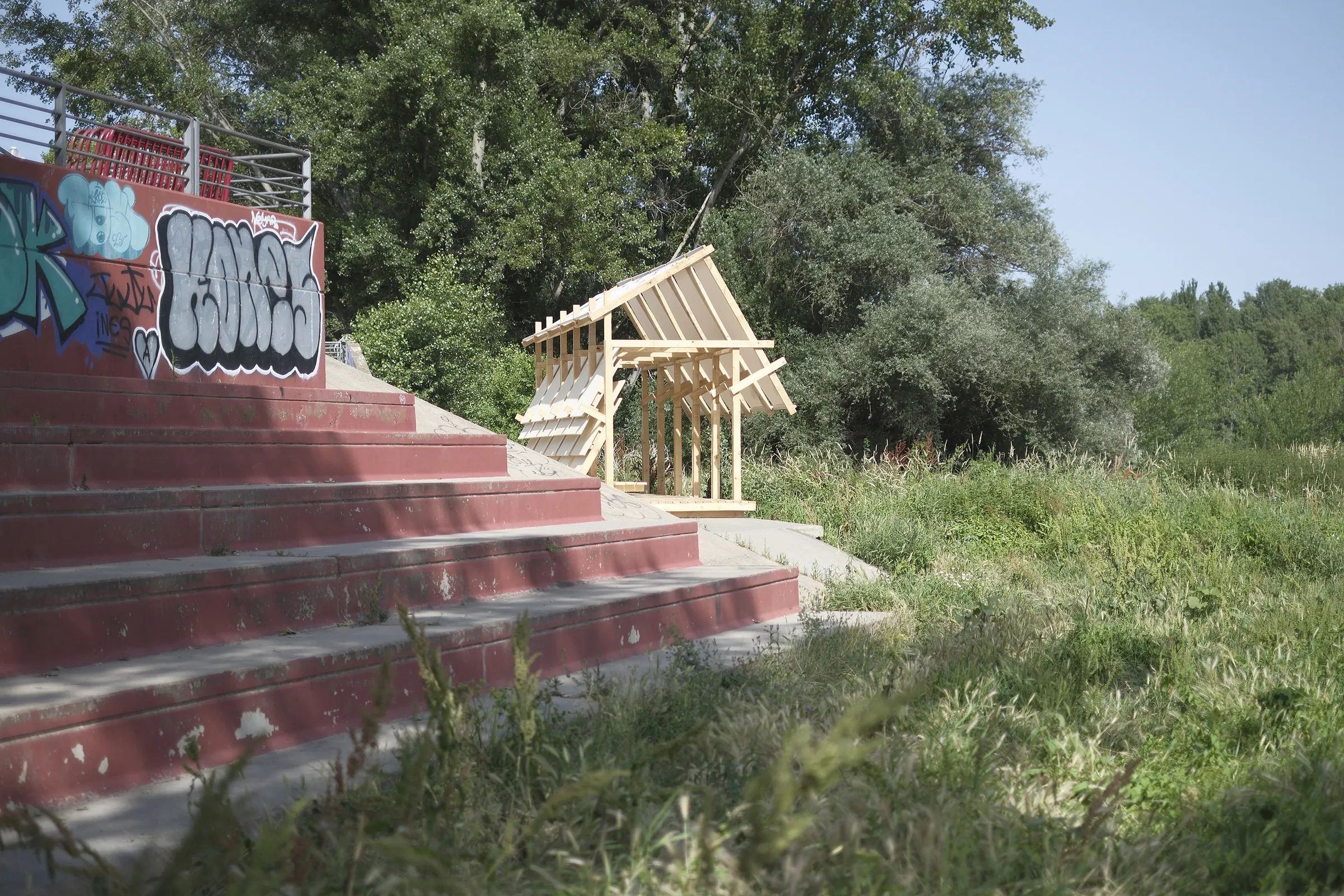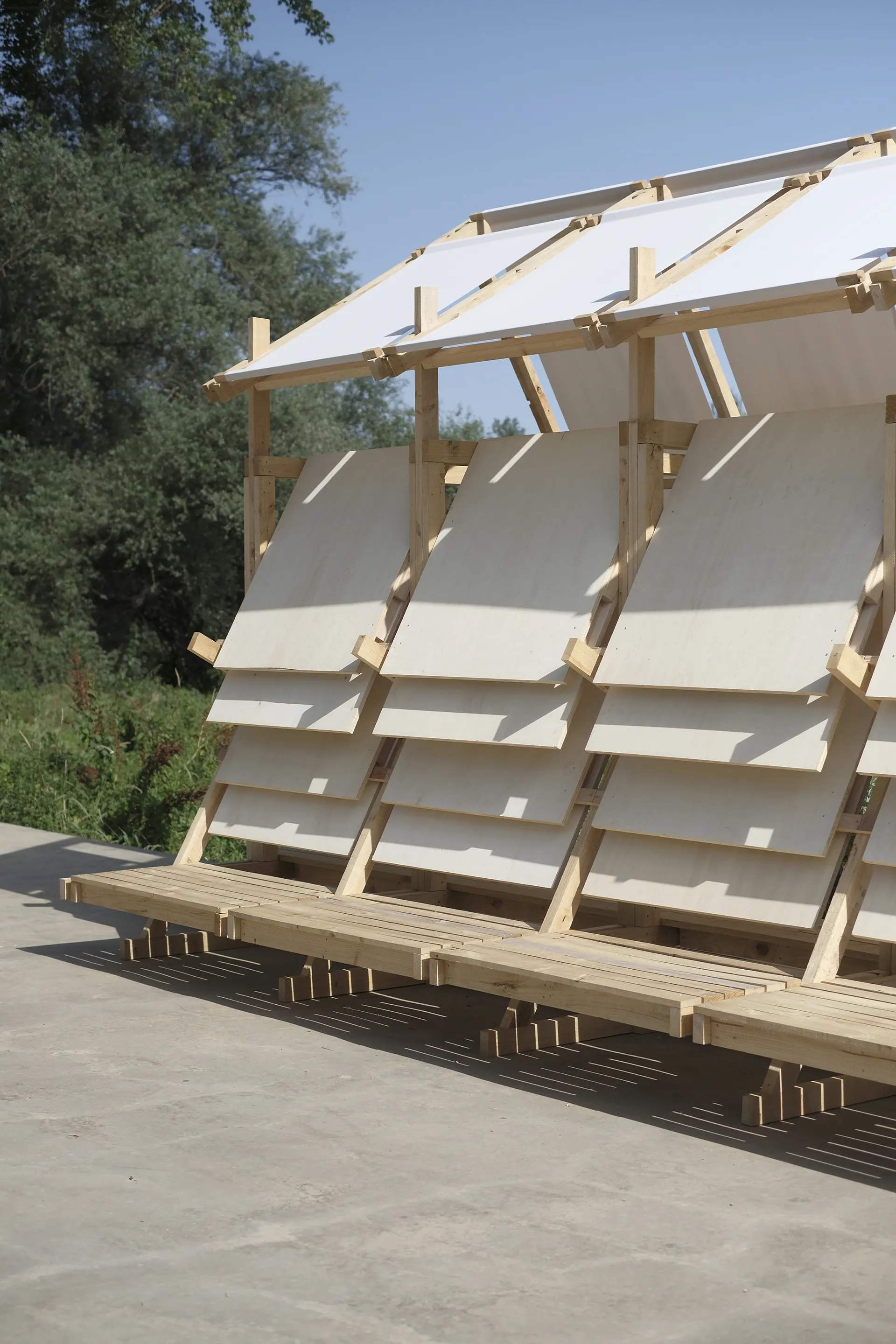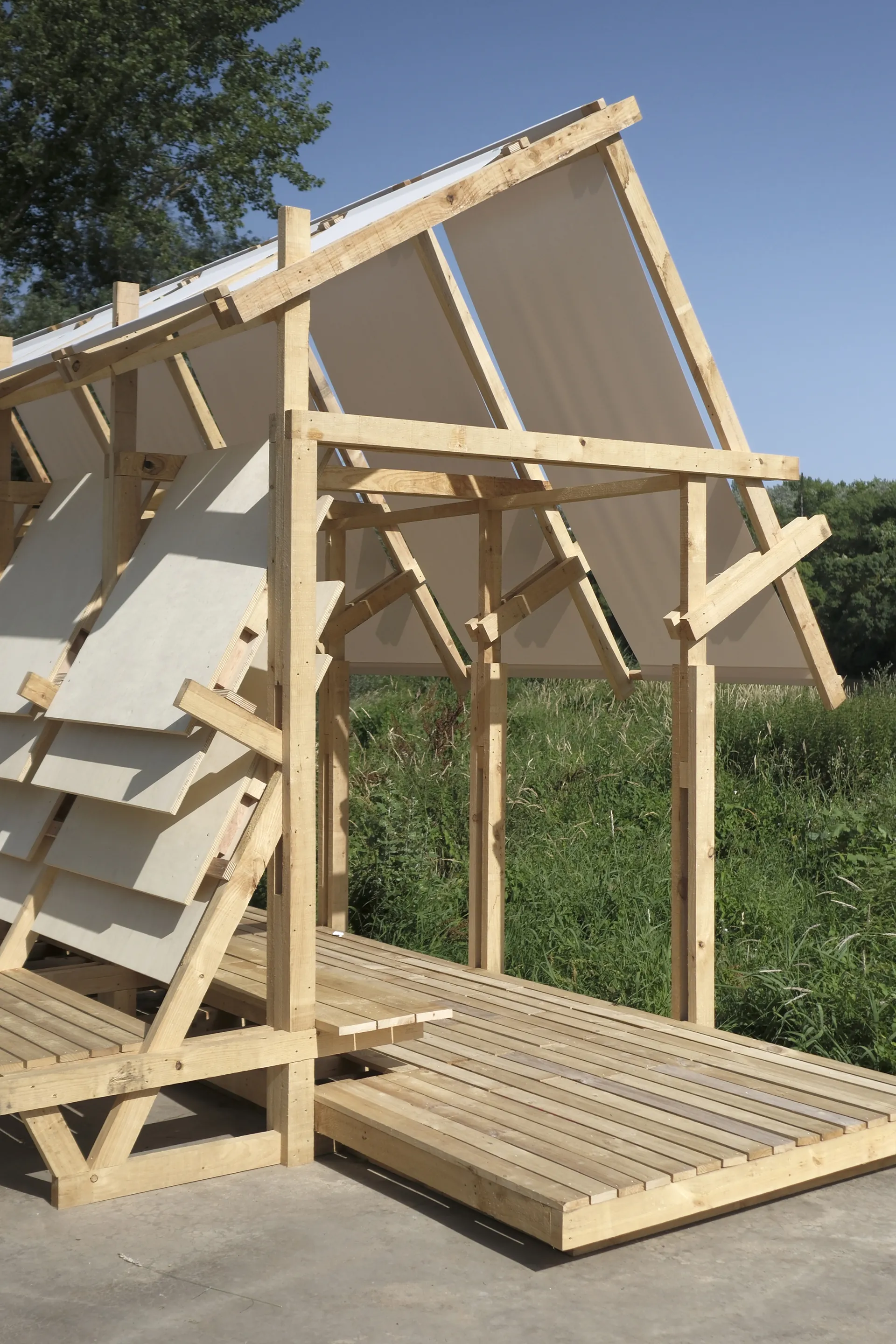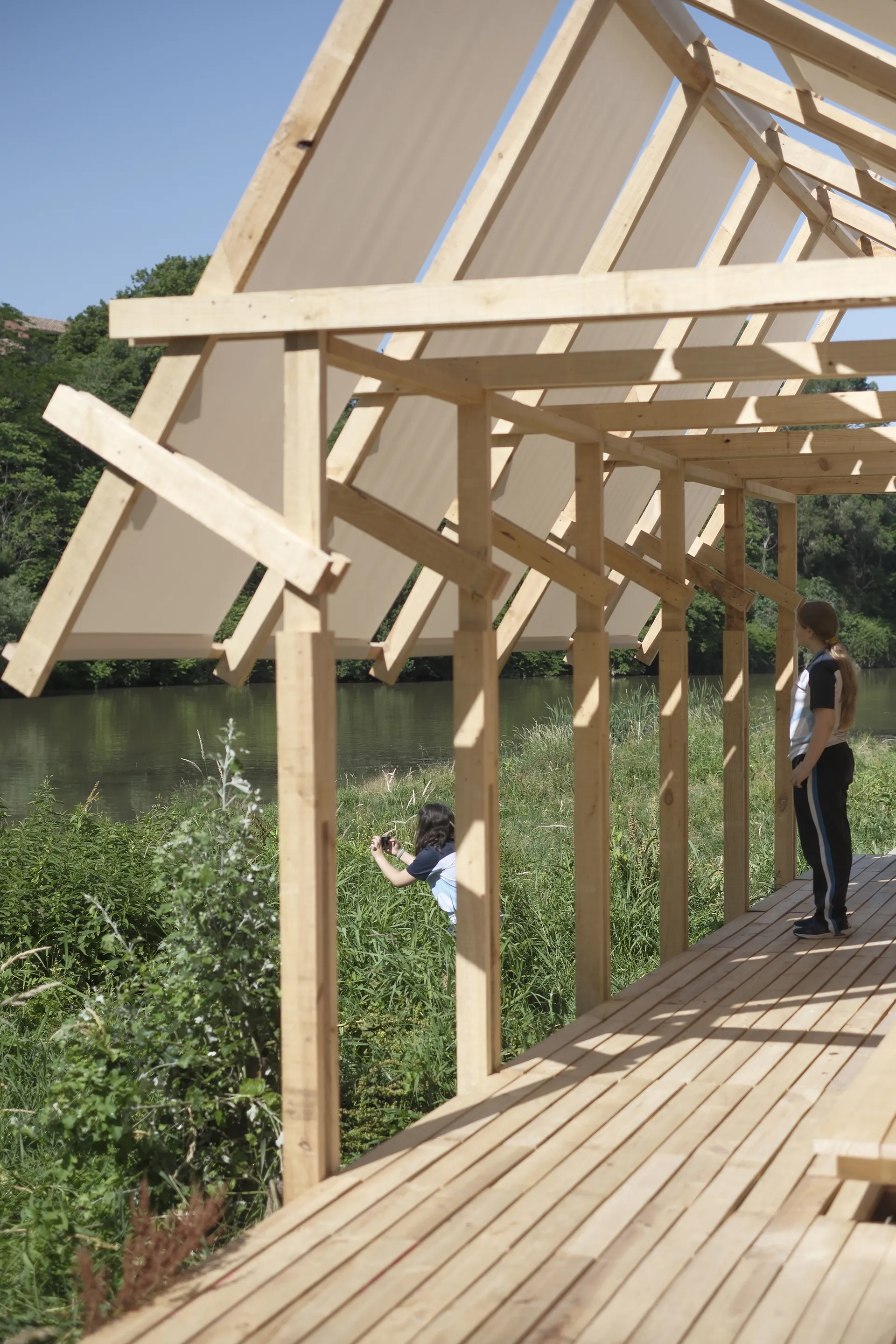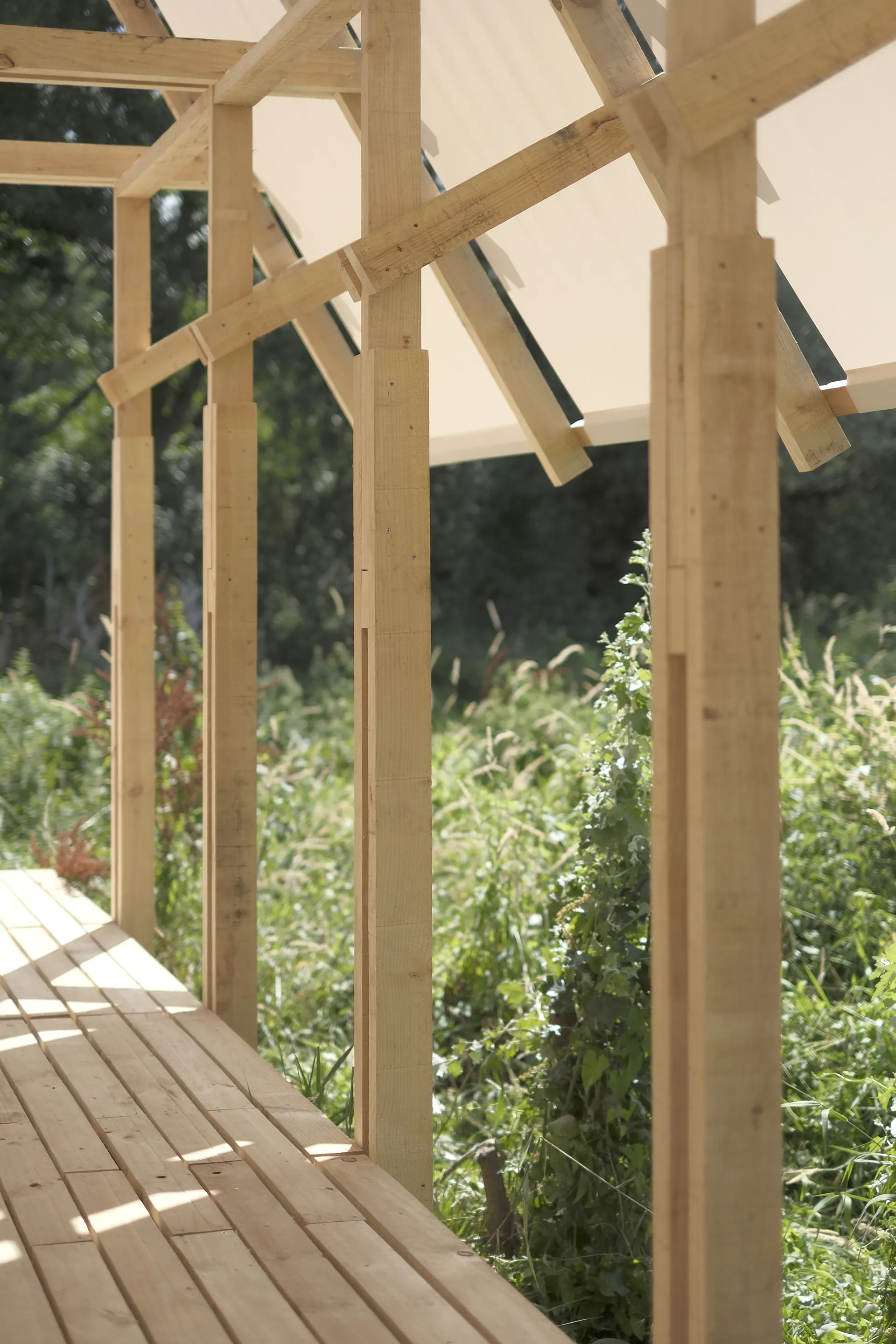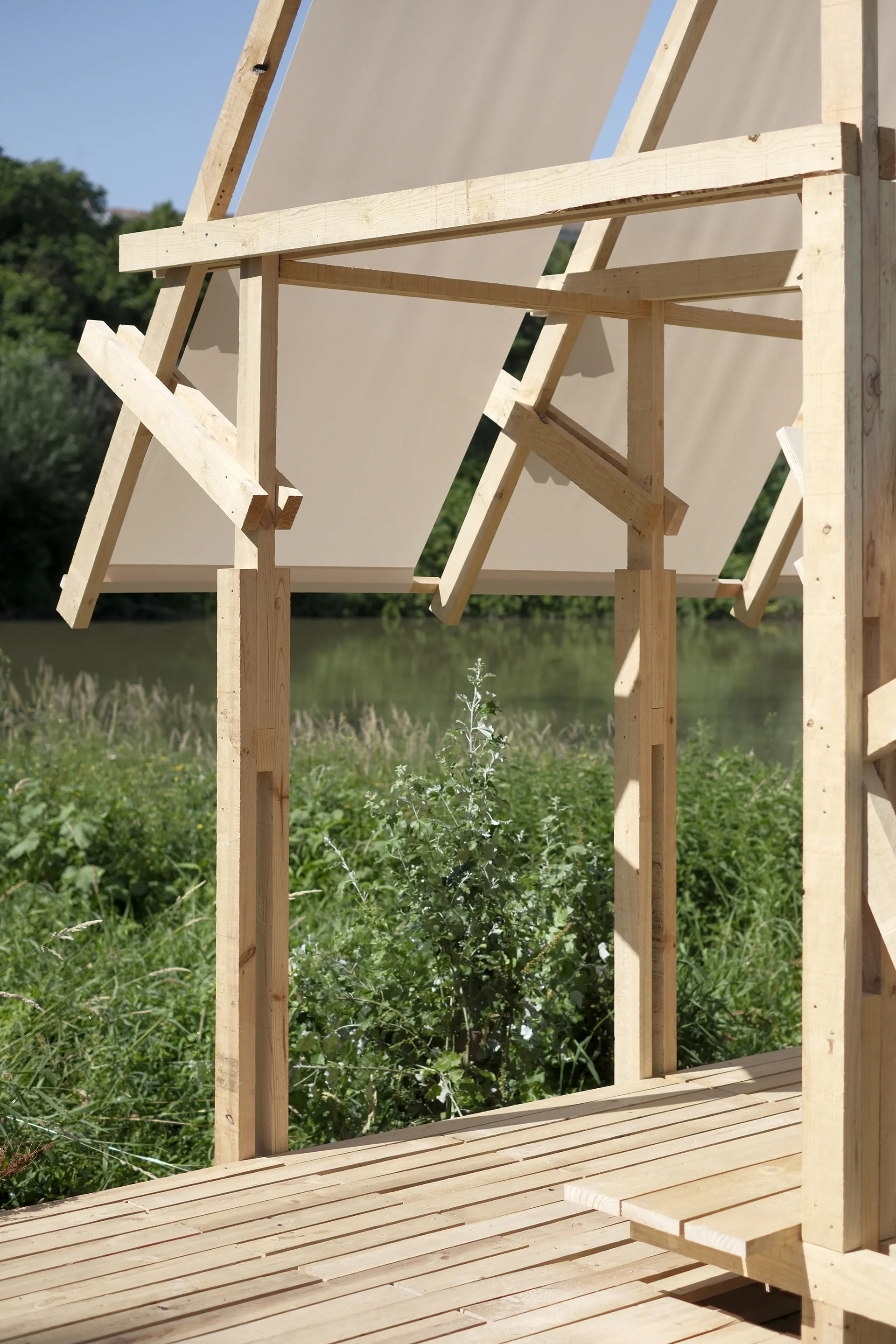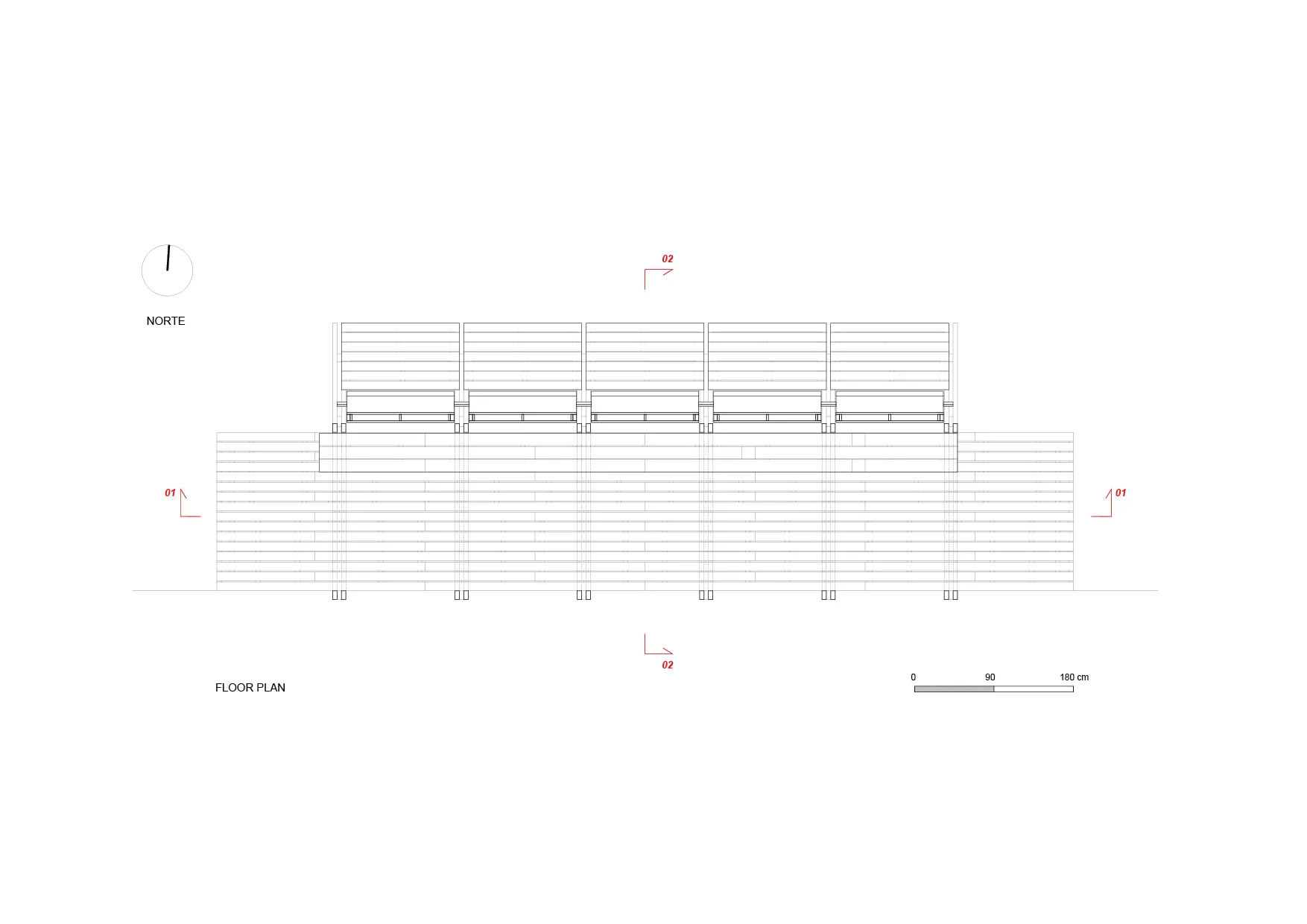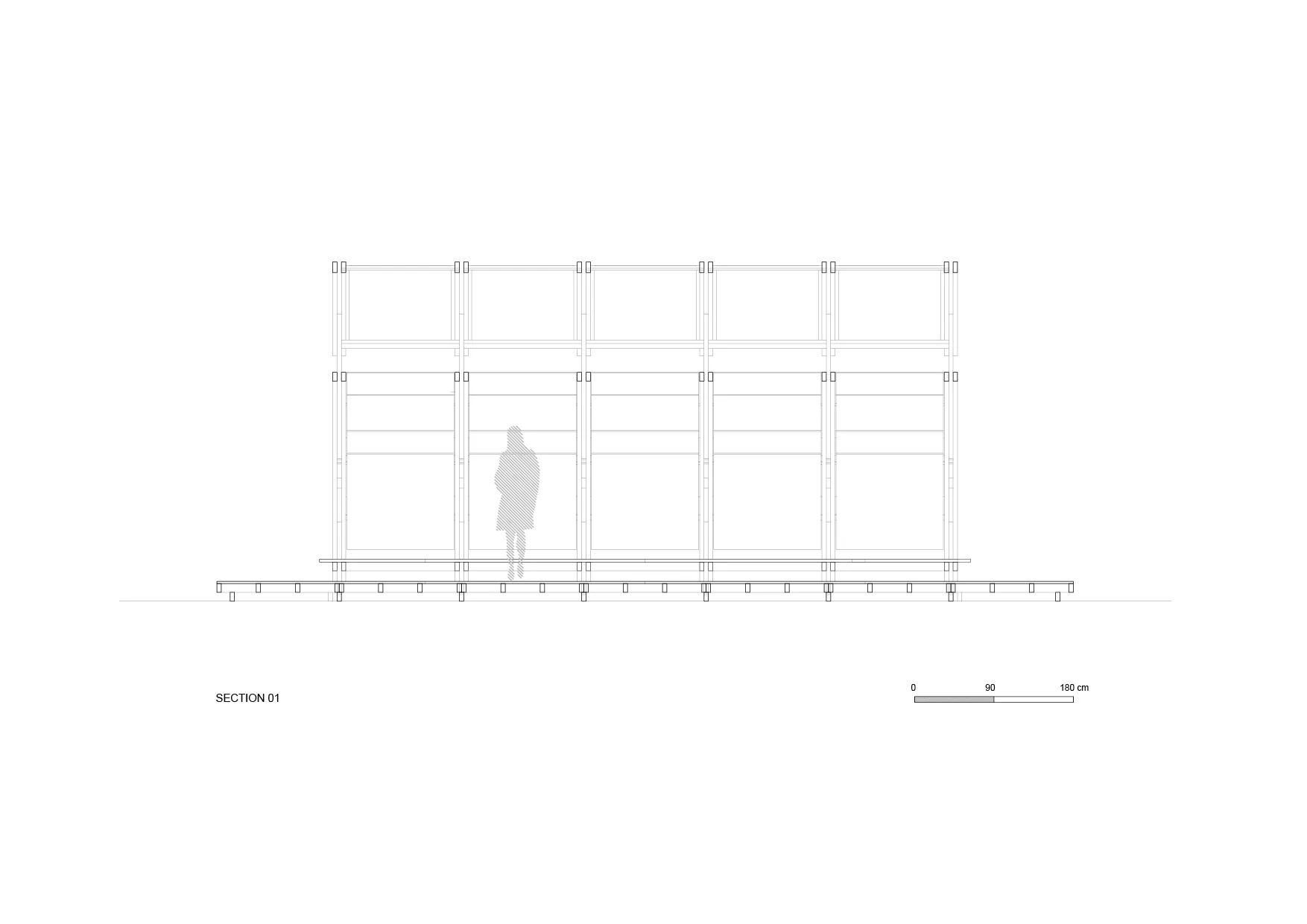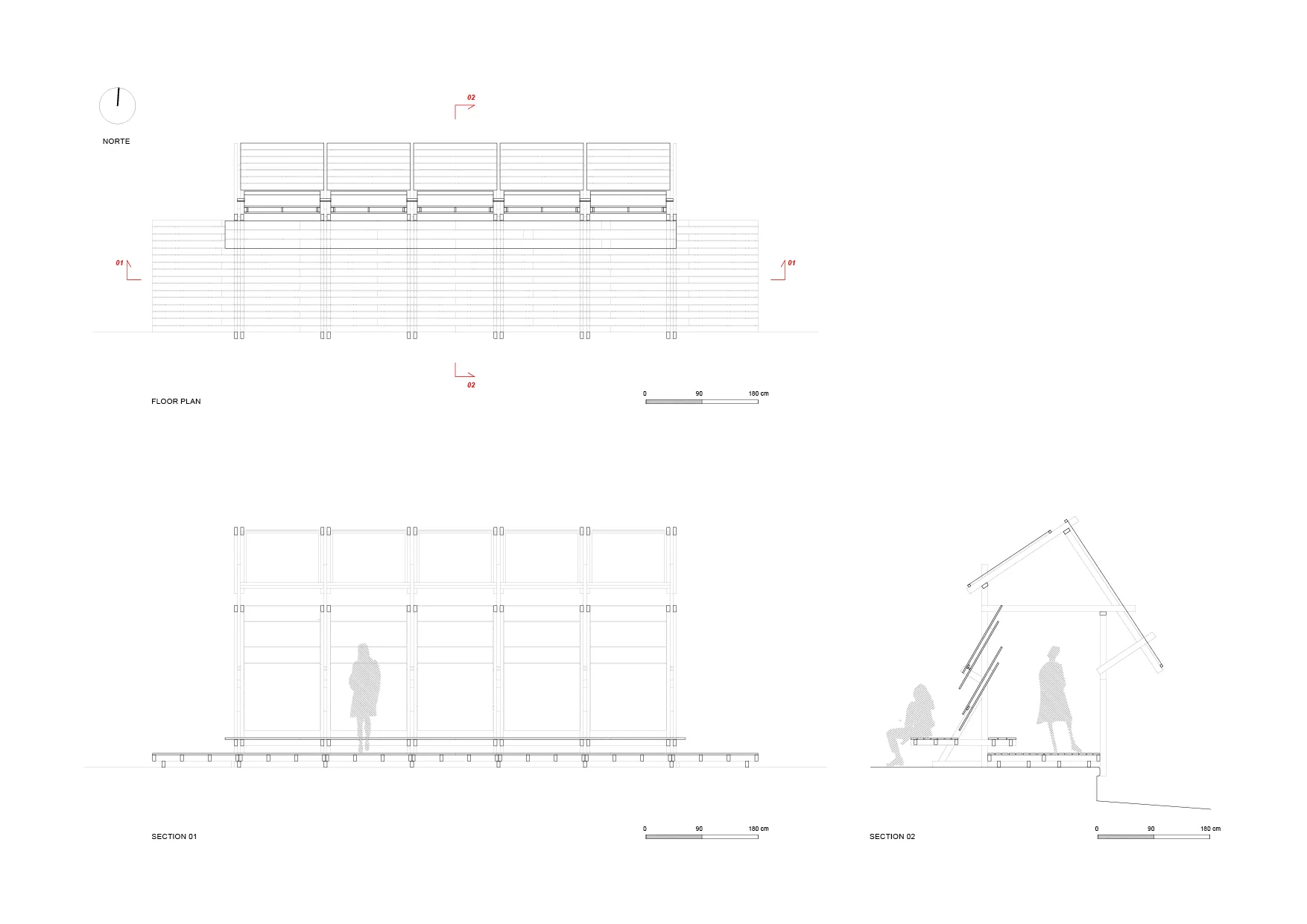
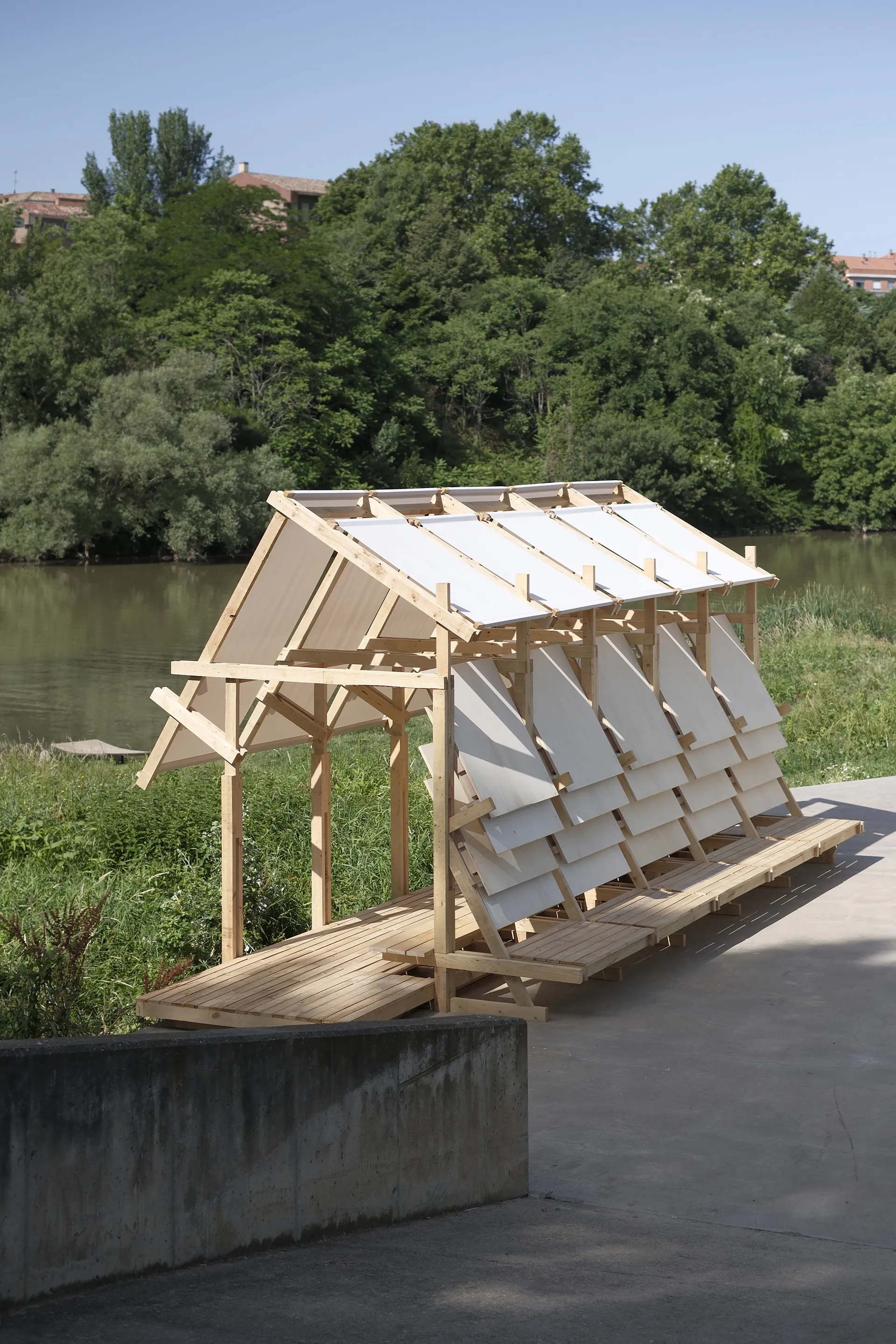
Habitar el Río was installed on the north bank of the Ebro river in Logroño, on a neglected concrete dock caught between the city and the season-shifting water levels of the river. Created for Concéntrico 2025 — the International Festival of Architecture and Design — the project responded to the festival’s emphasis on ecological awareness and collective inhabitation by reactivating a forgotten riverfront edge: once a bathing area, now reduced to a passageway.
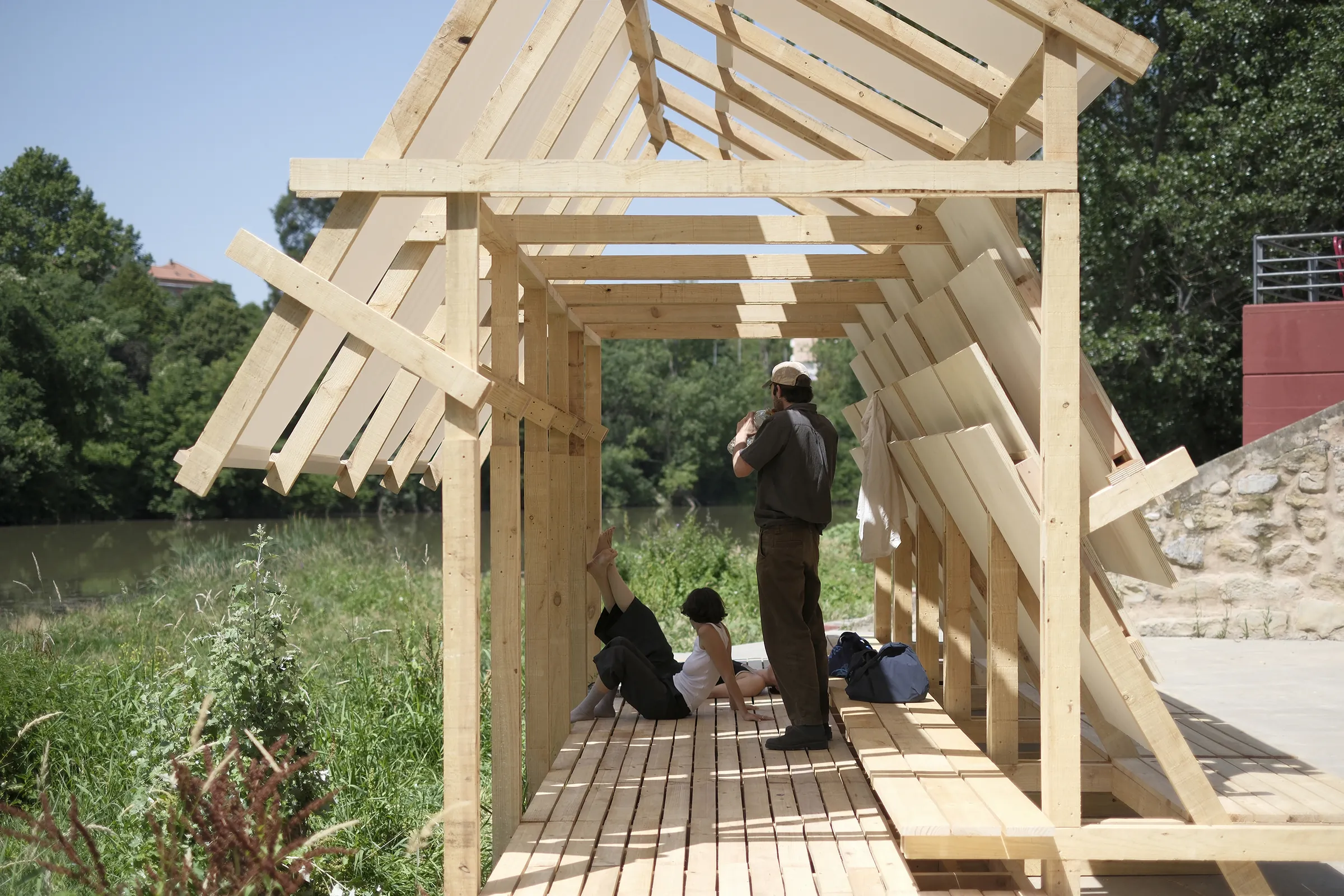
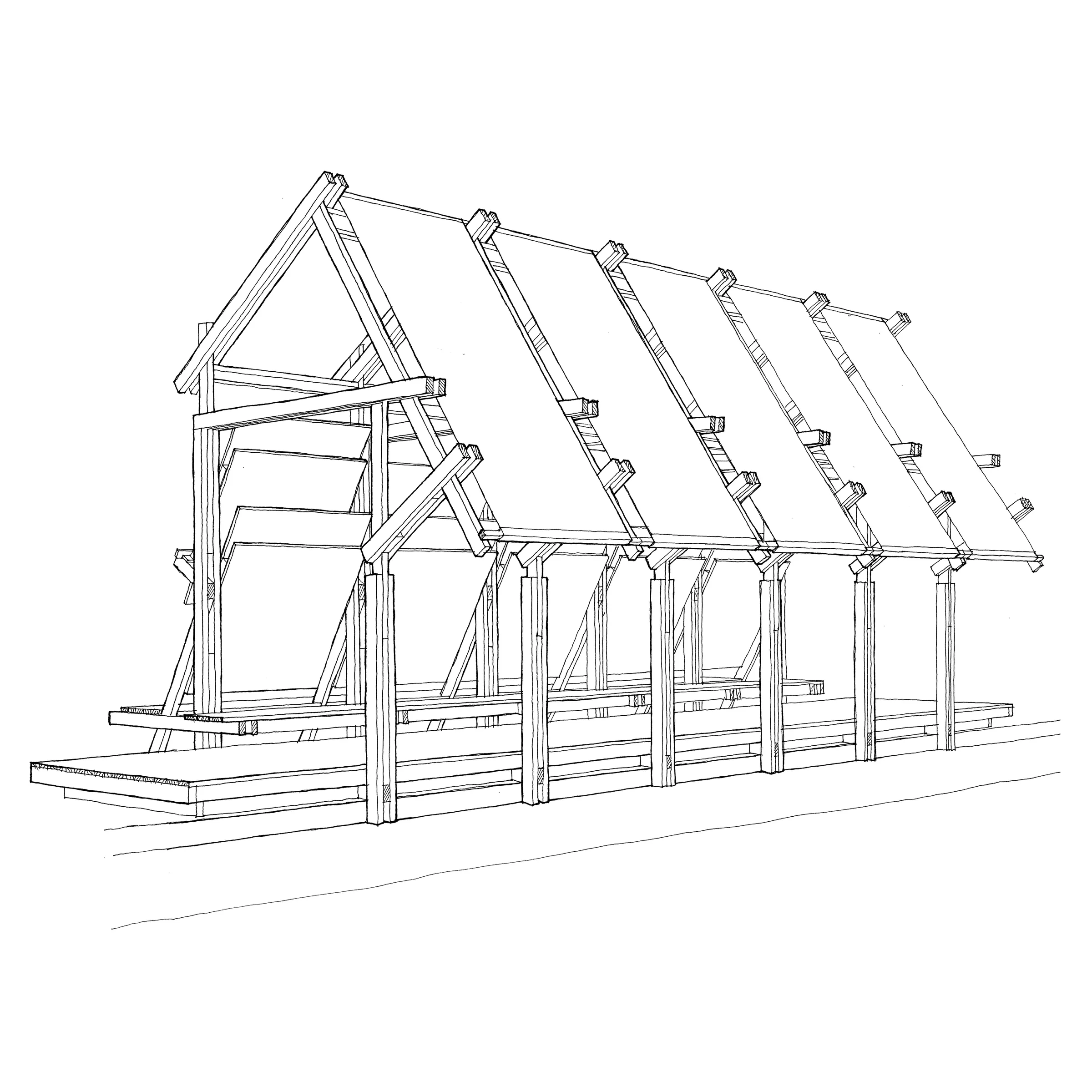
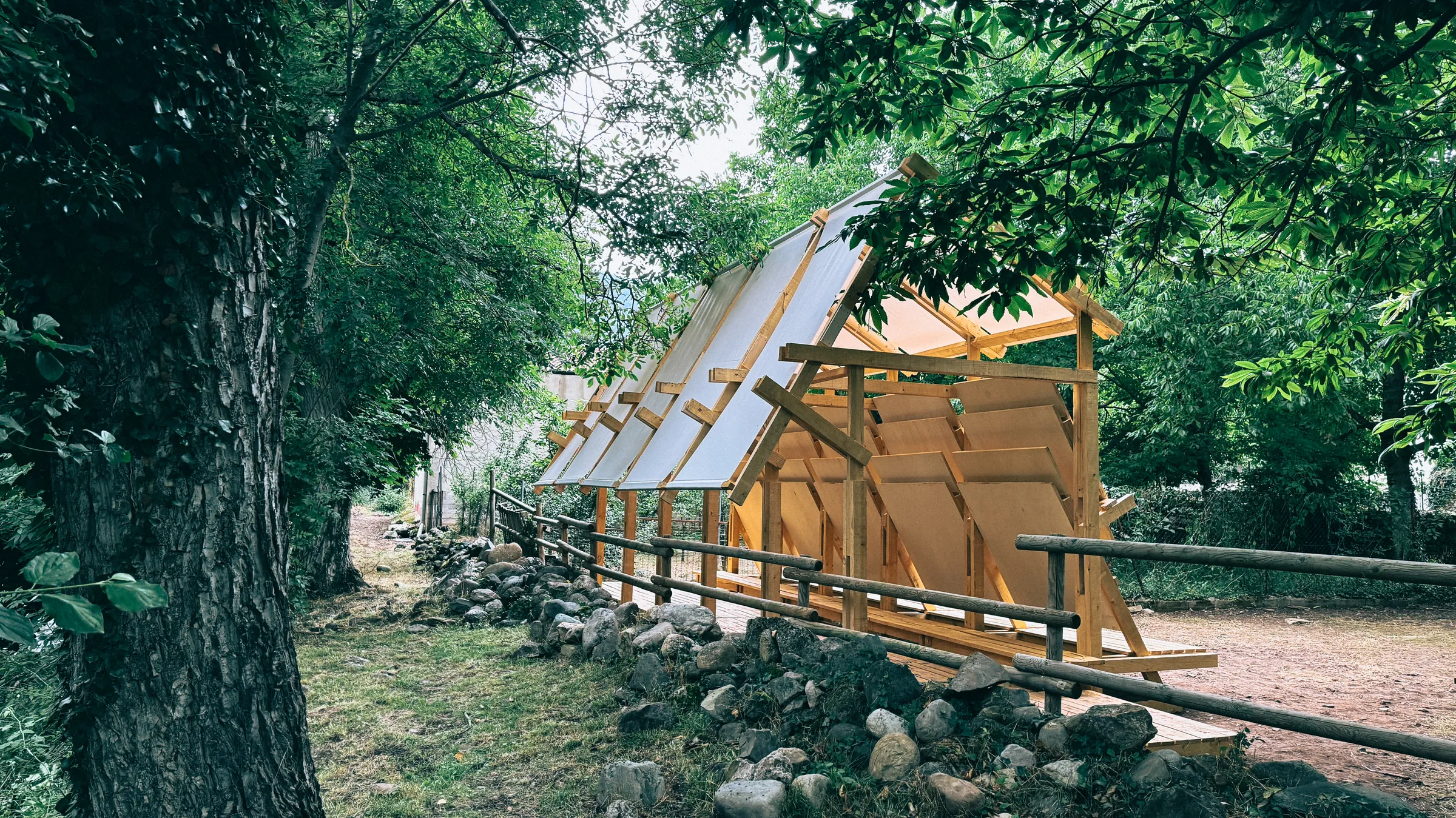
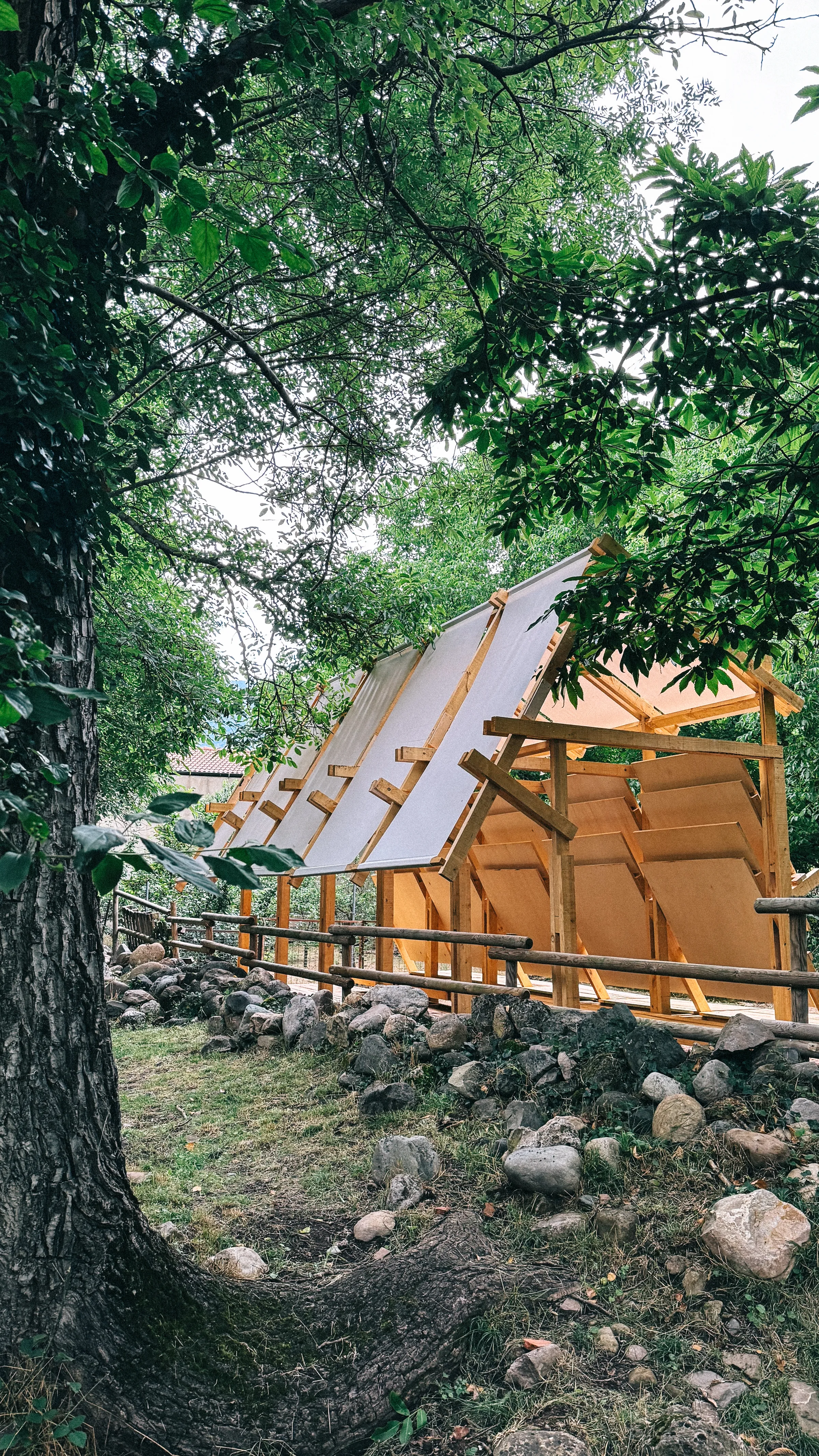
The installation proposed a handmade shaded wooden space that encouraged both environmental responsiveness and social exchange — pausing, learning, contemplating, and dwelling at the threshold between the man-made city and the natural environment.
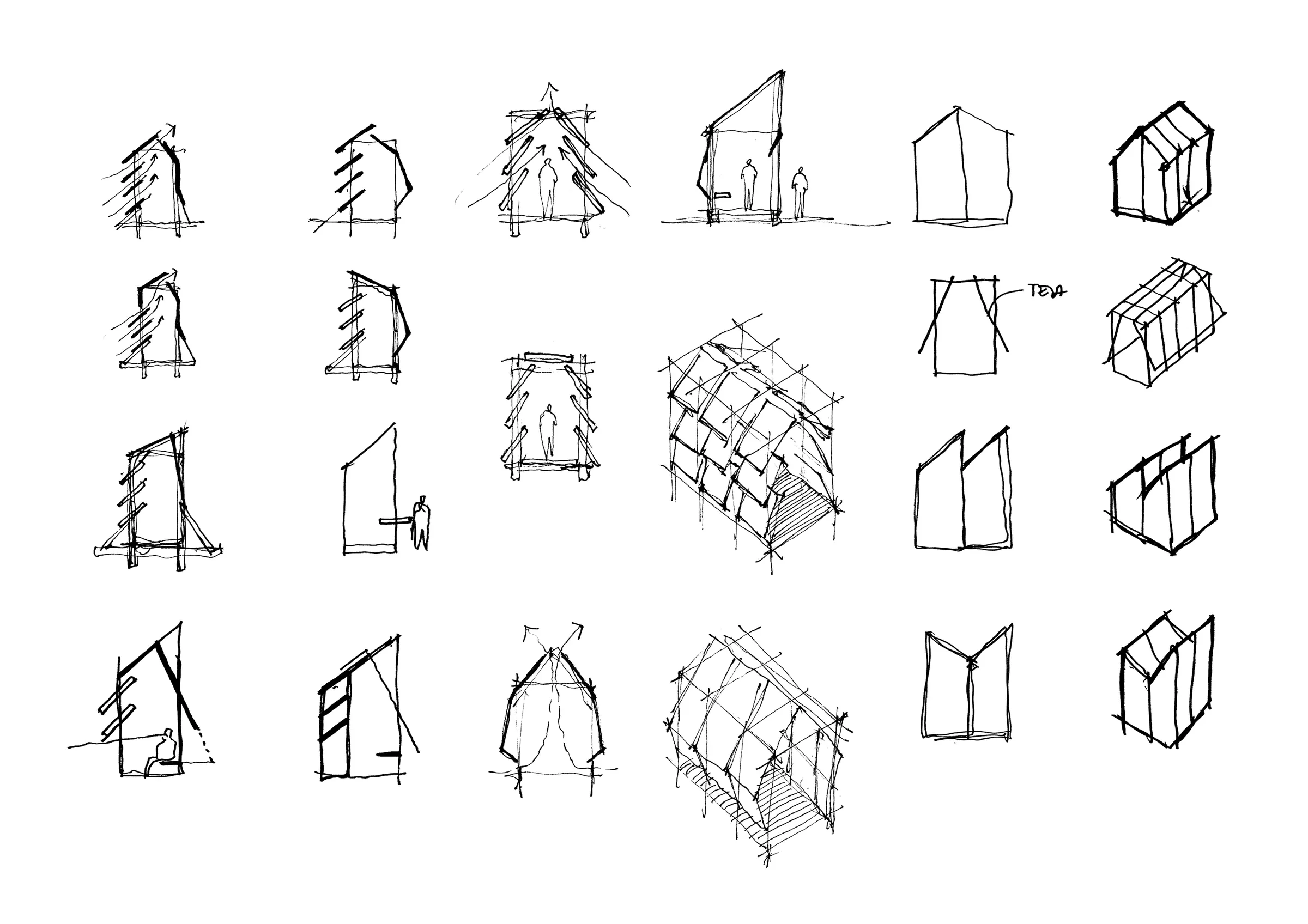
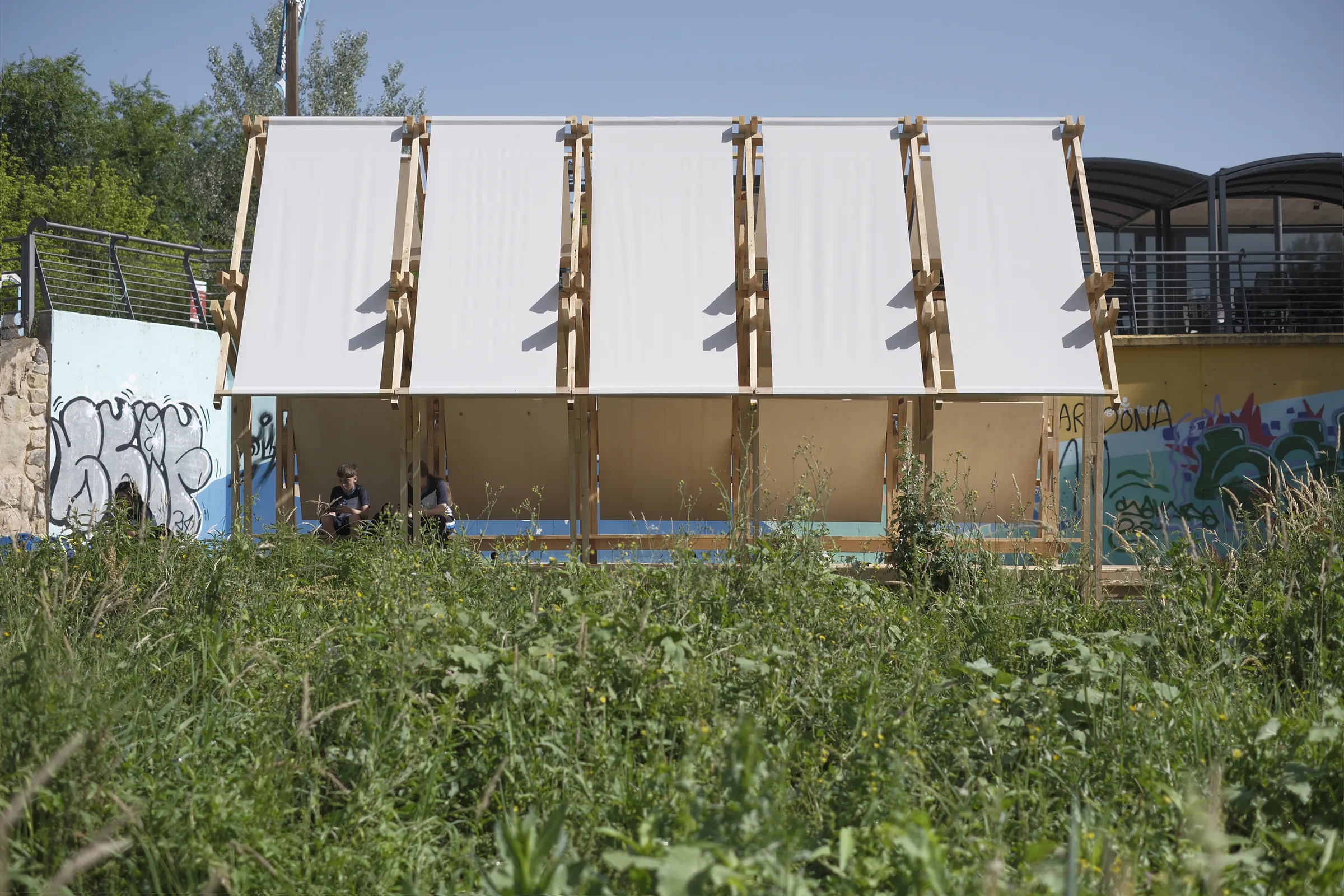
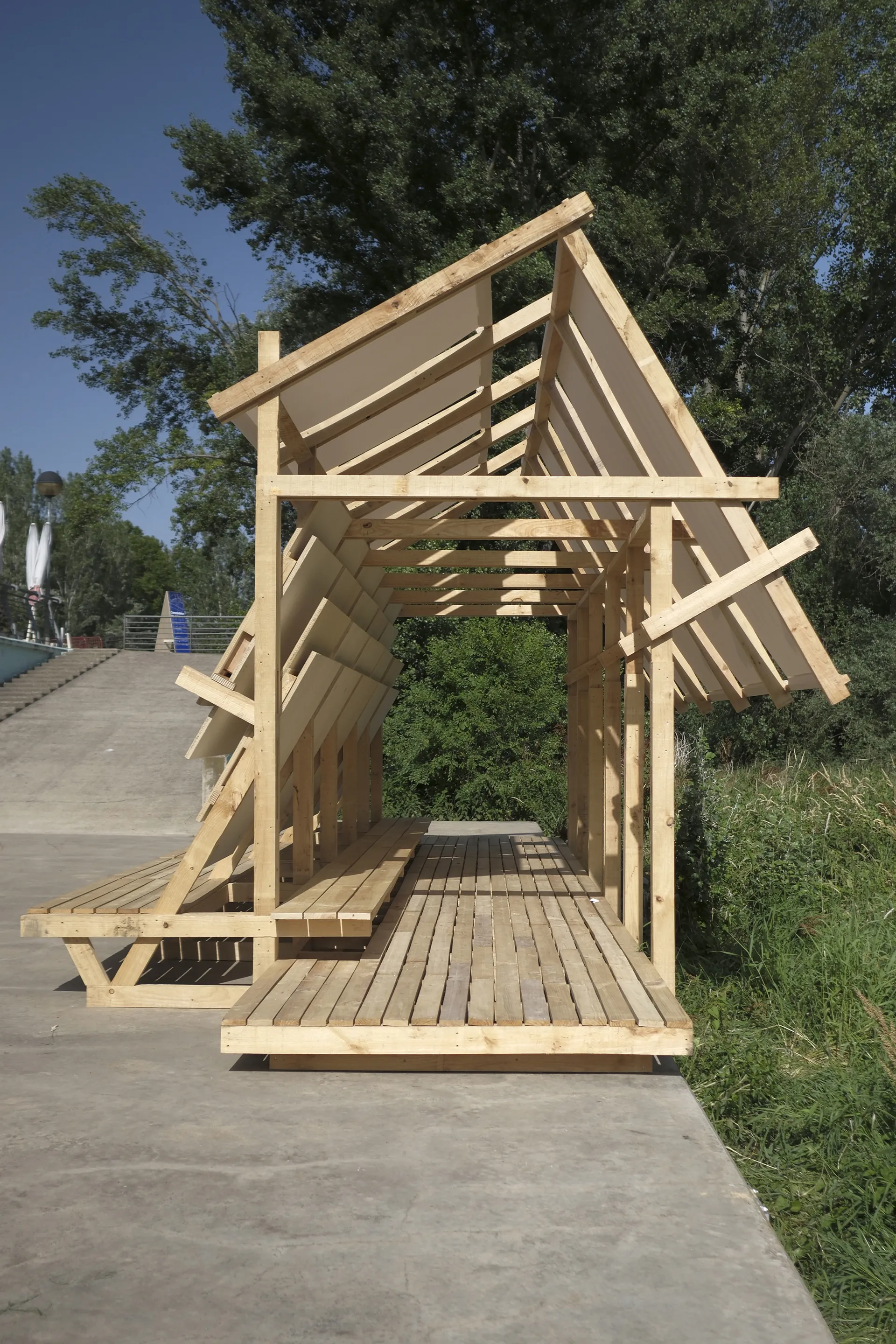
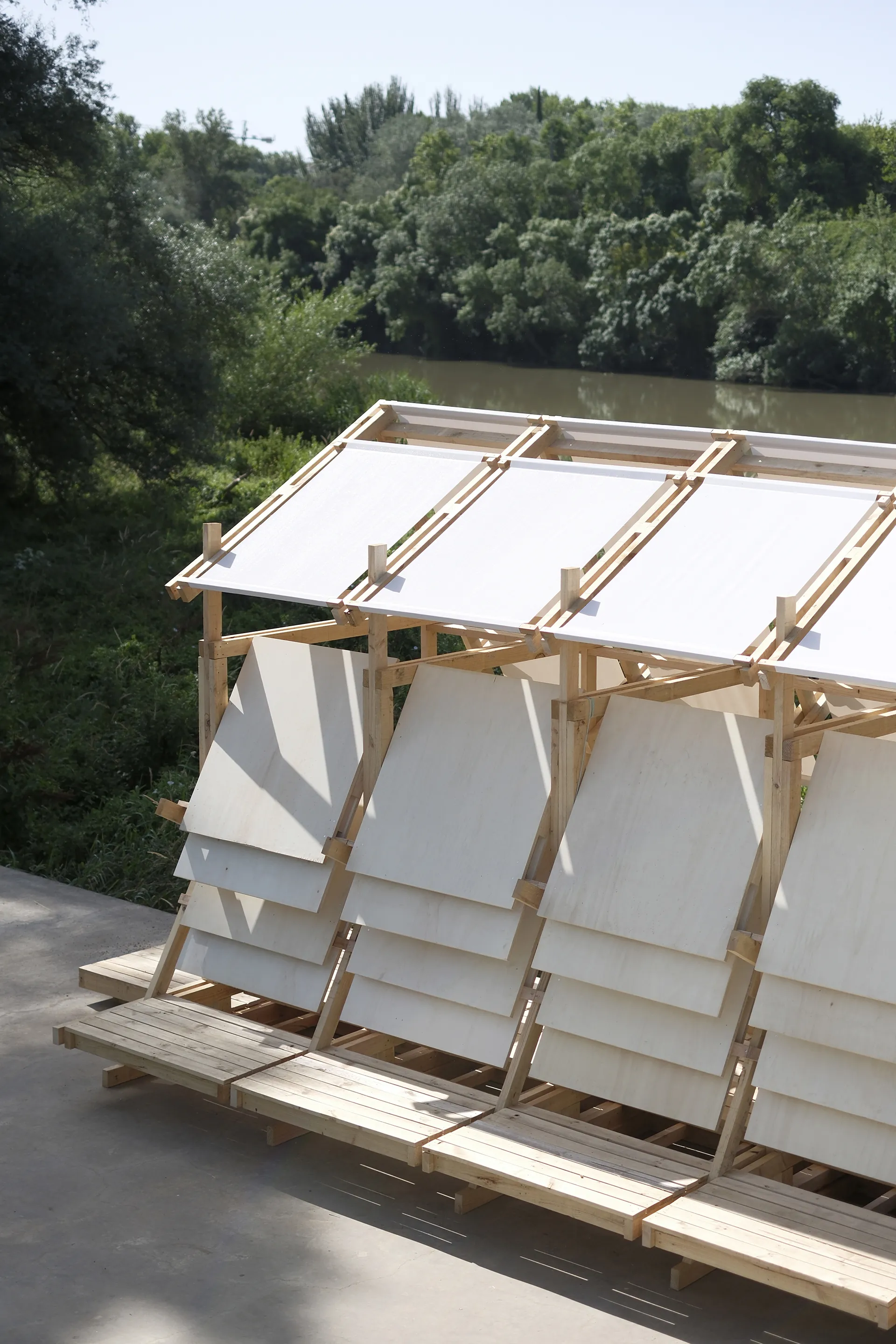
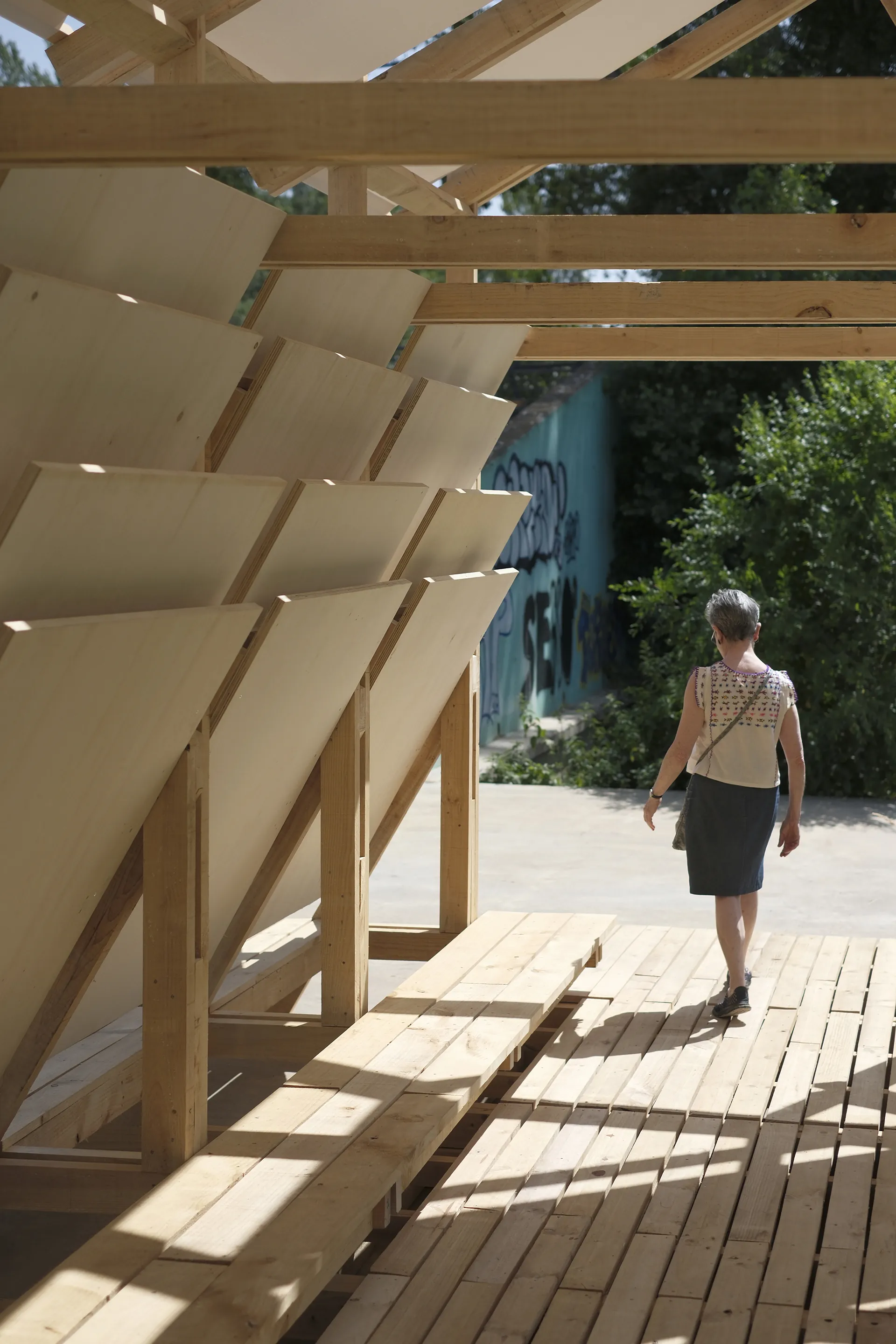
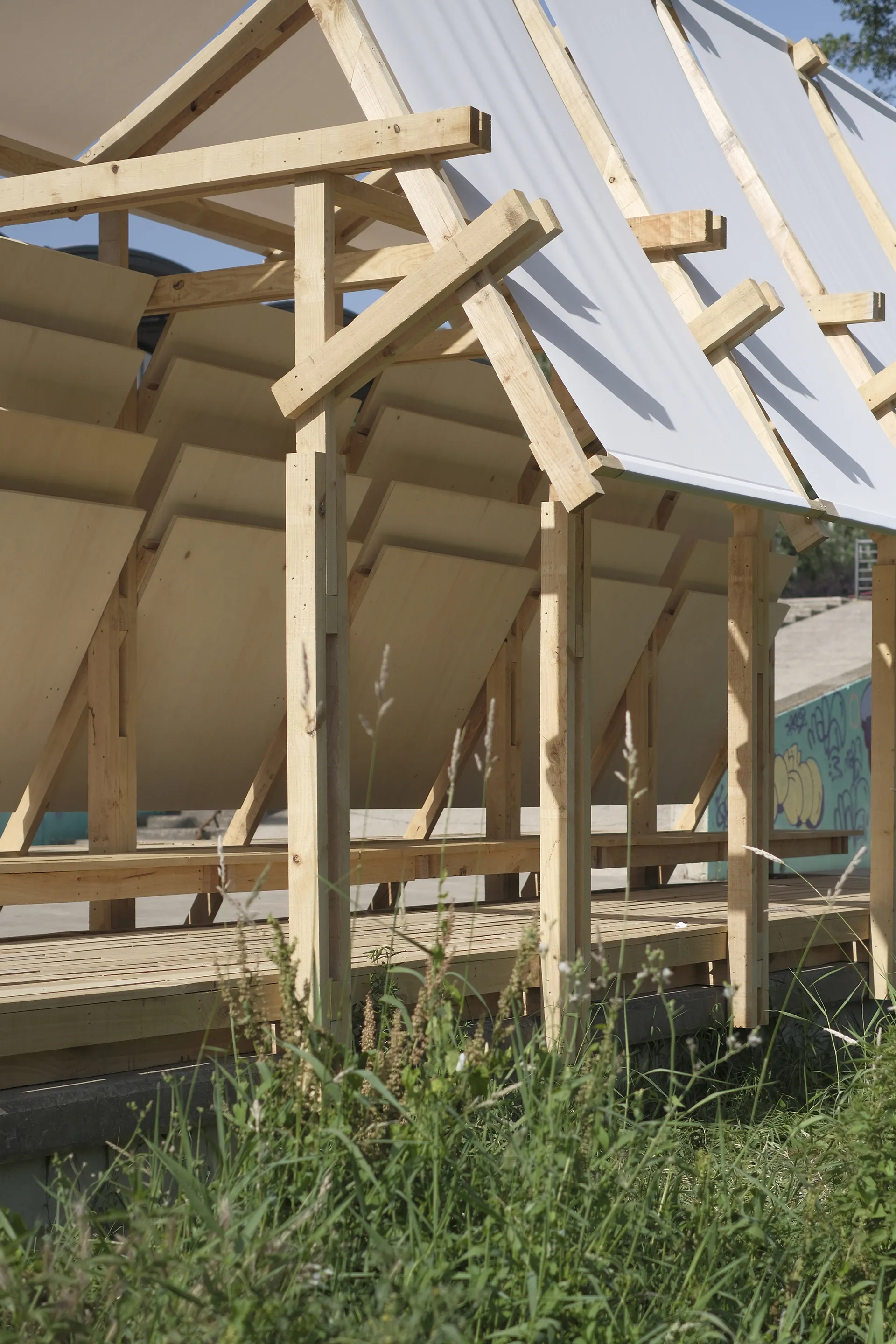
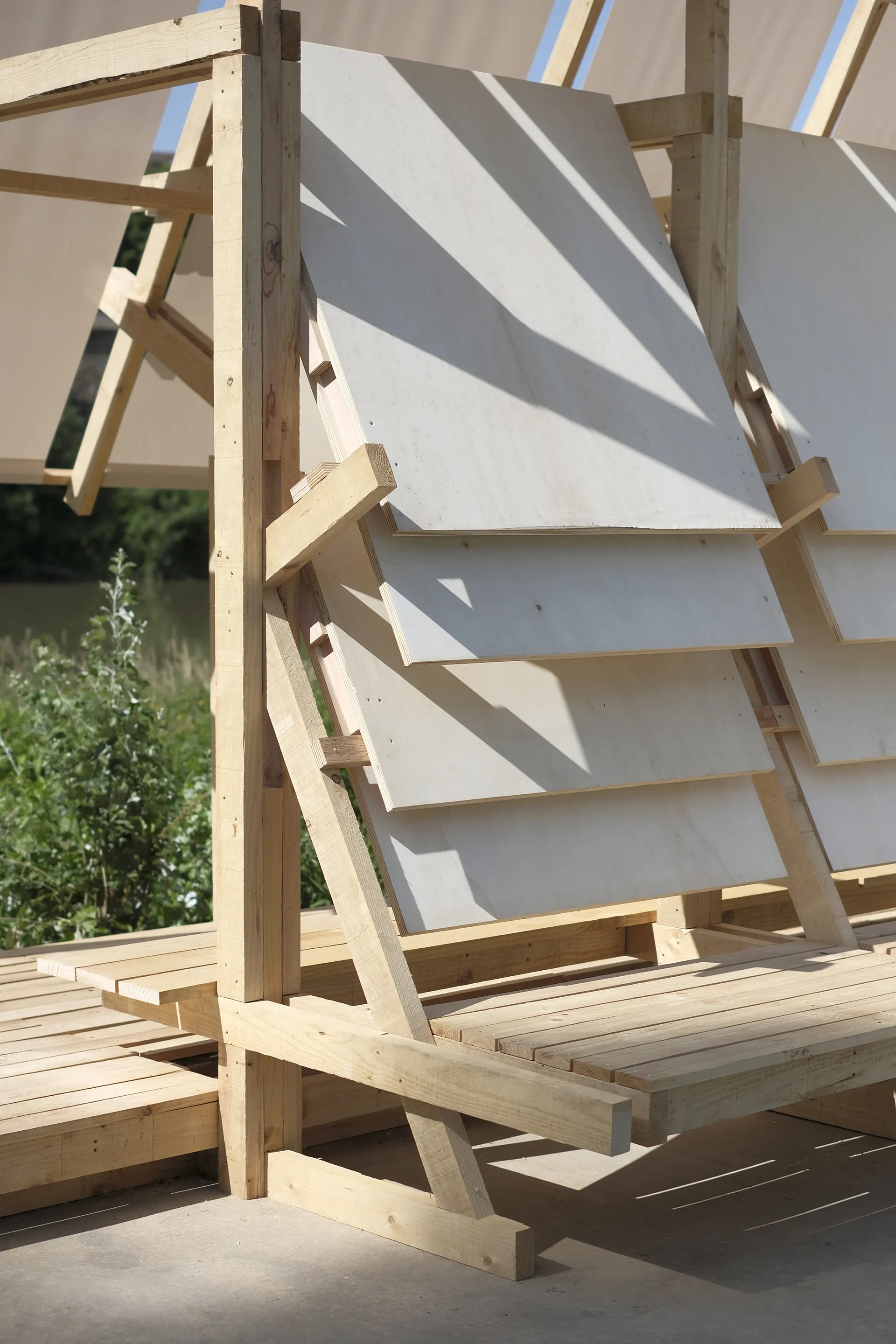
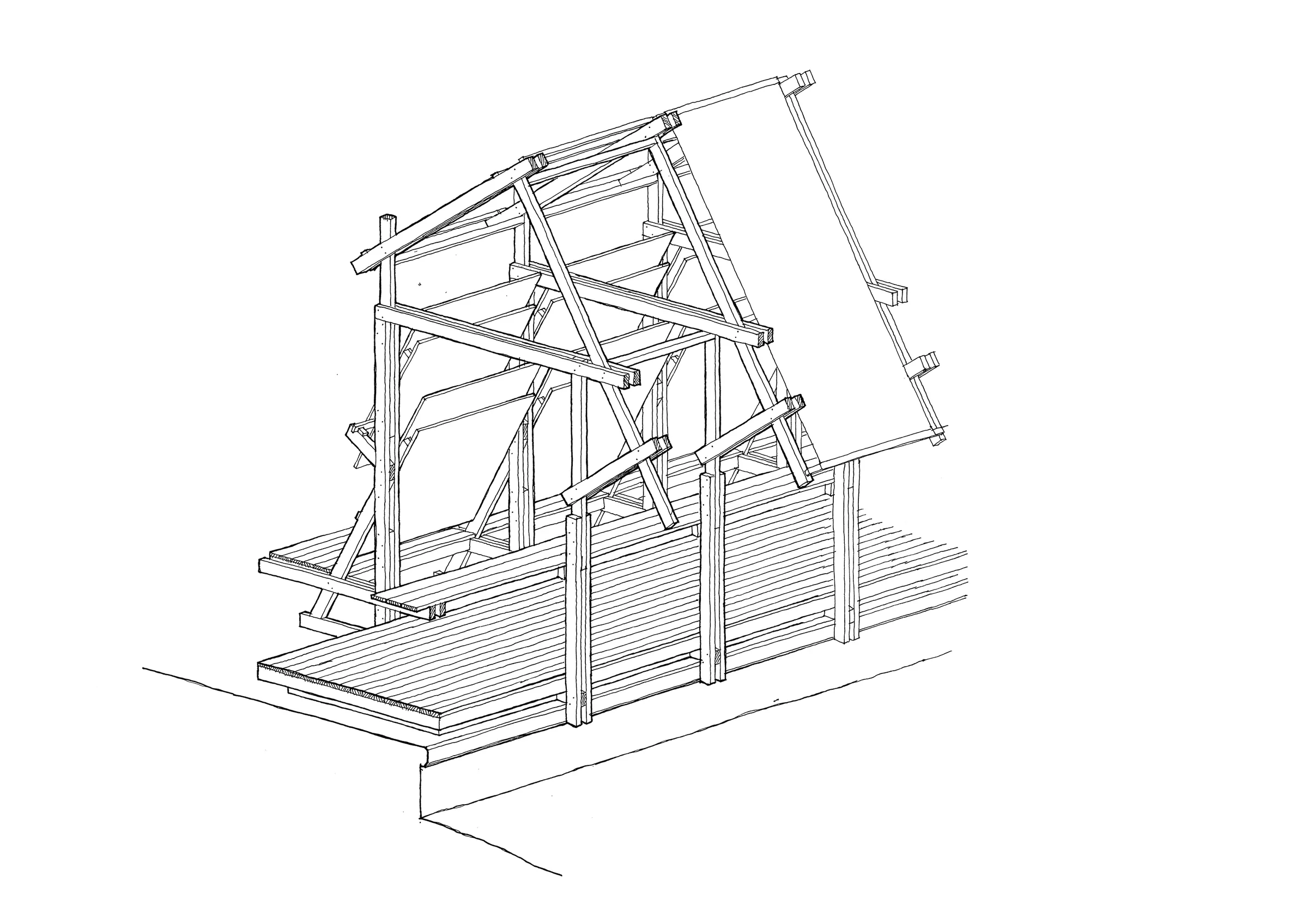
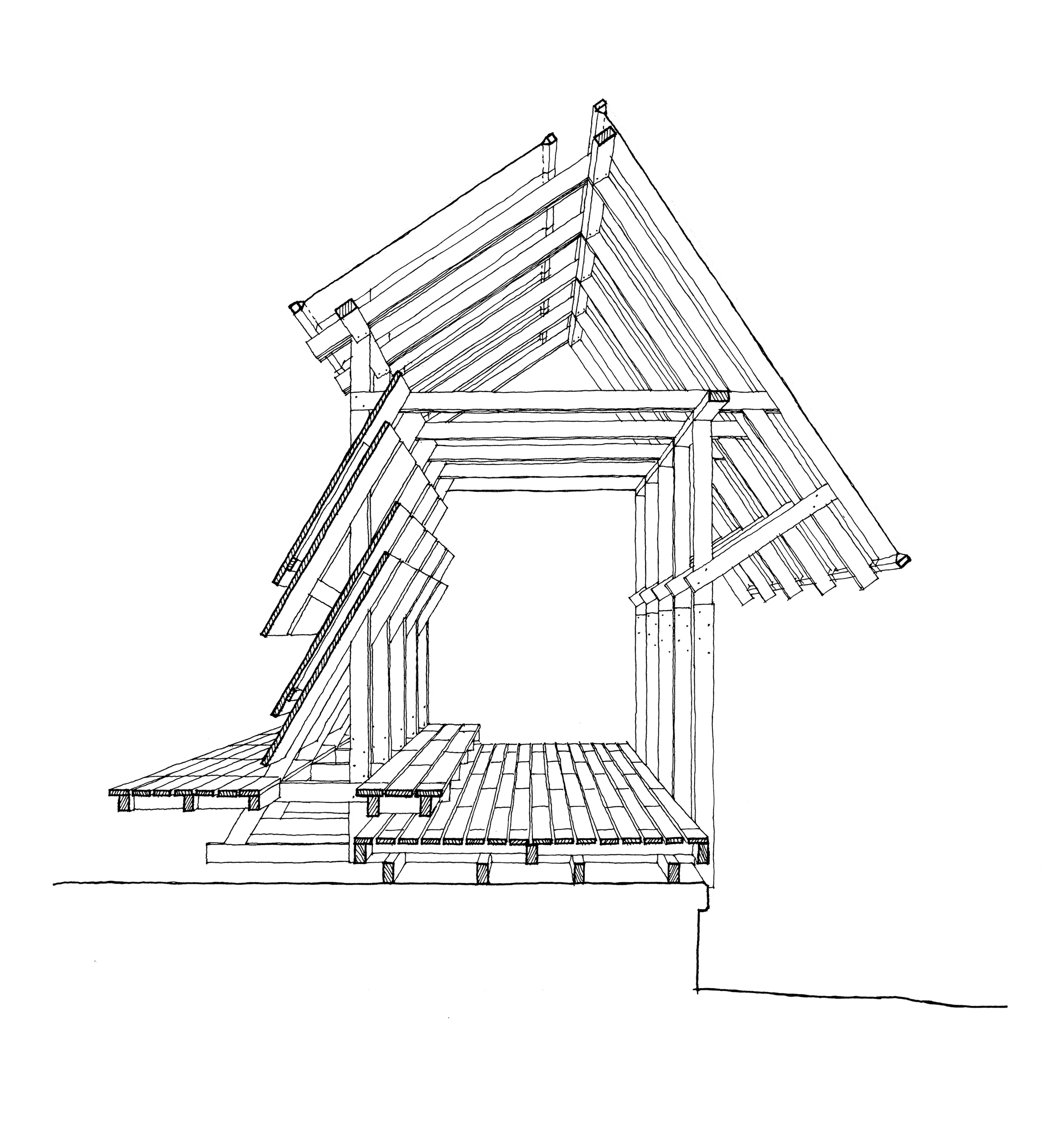
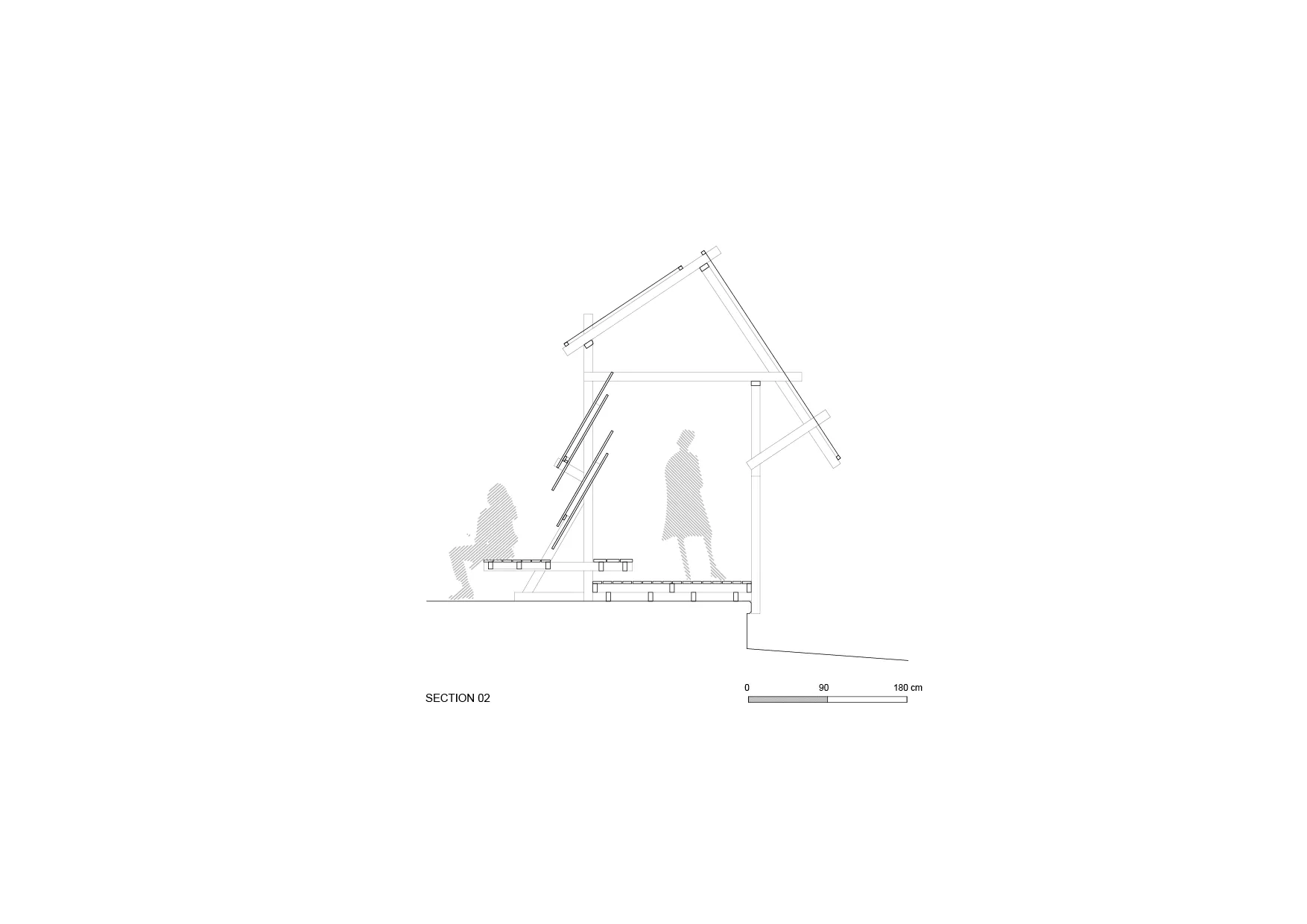
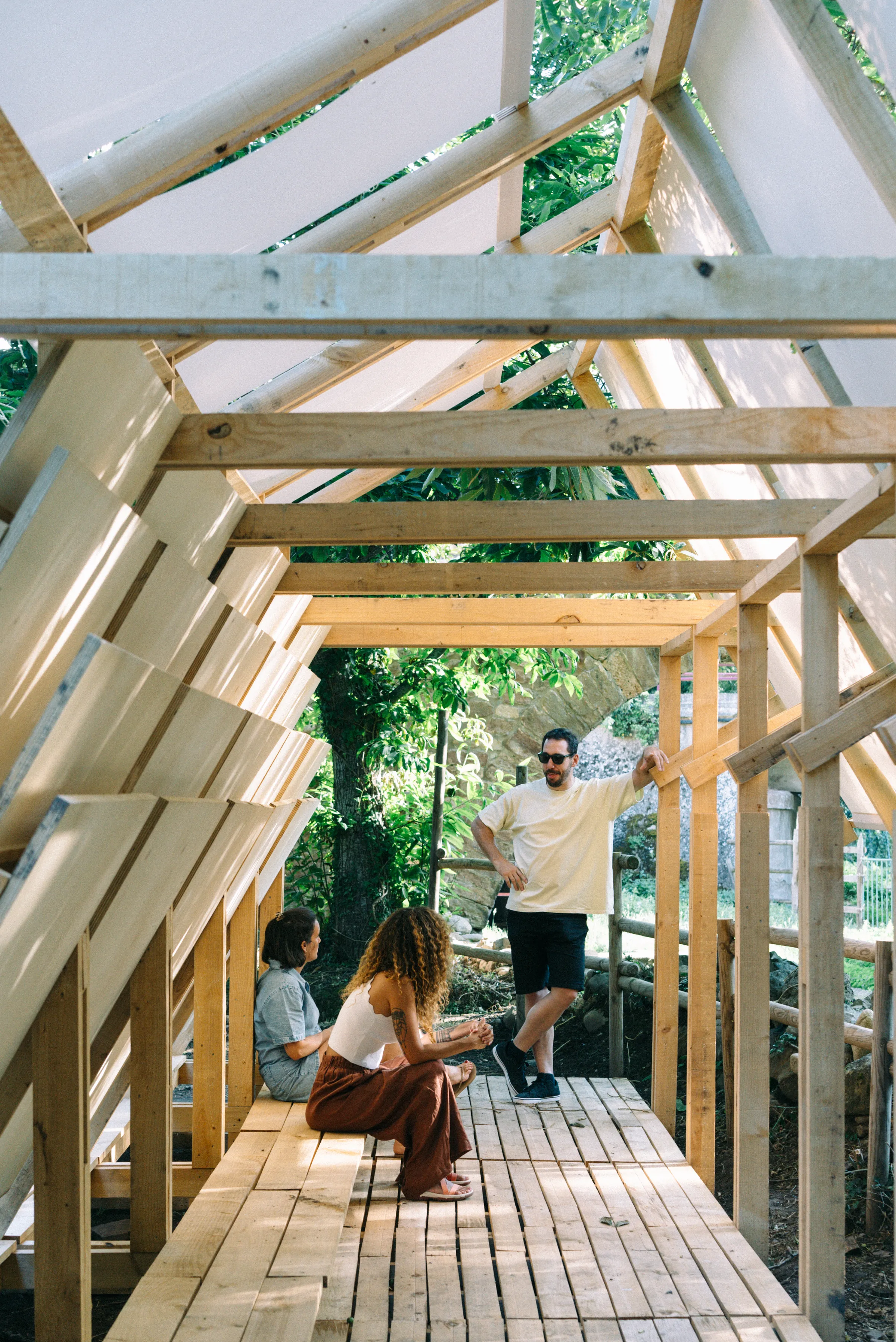
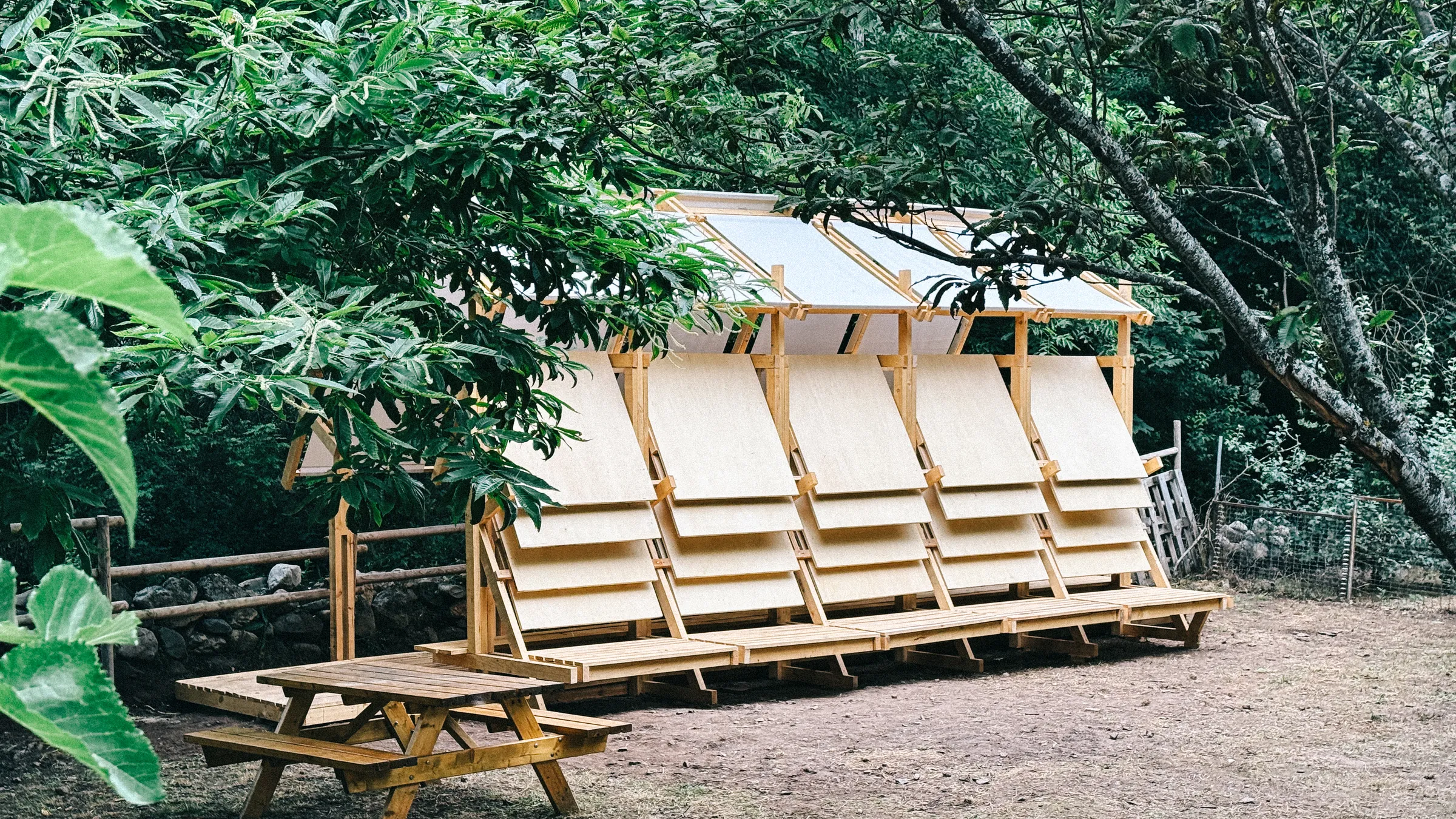
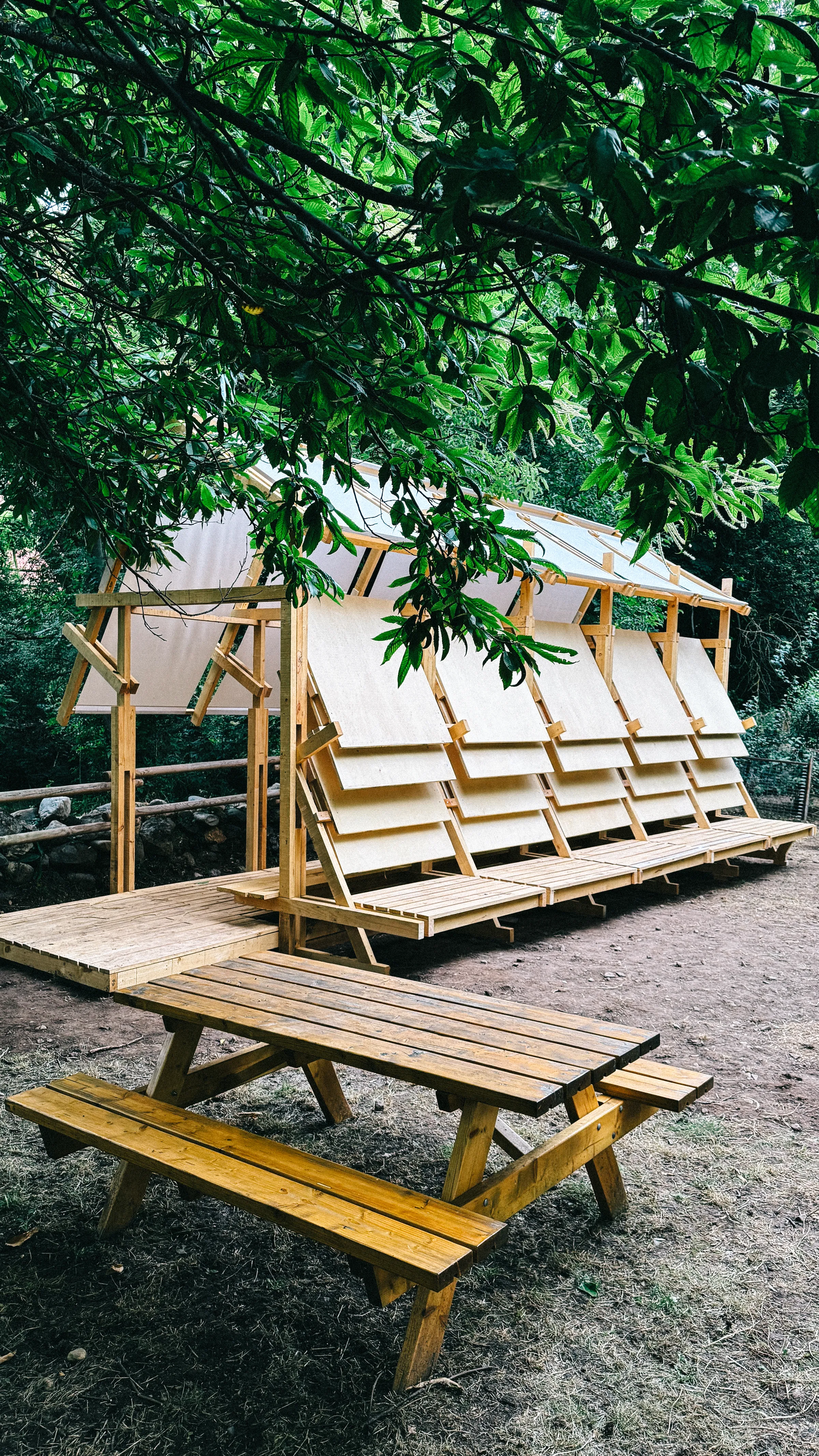
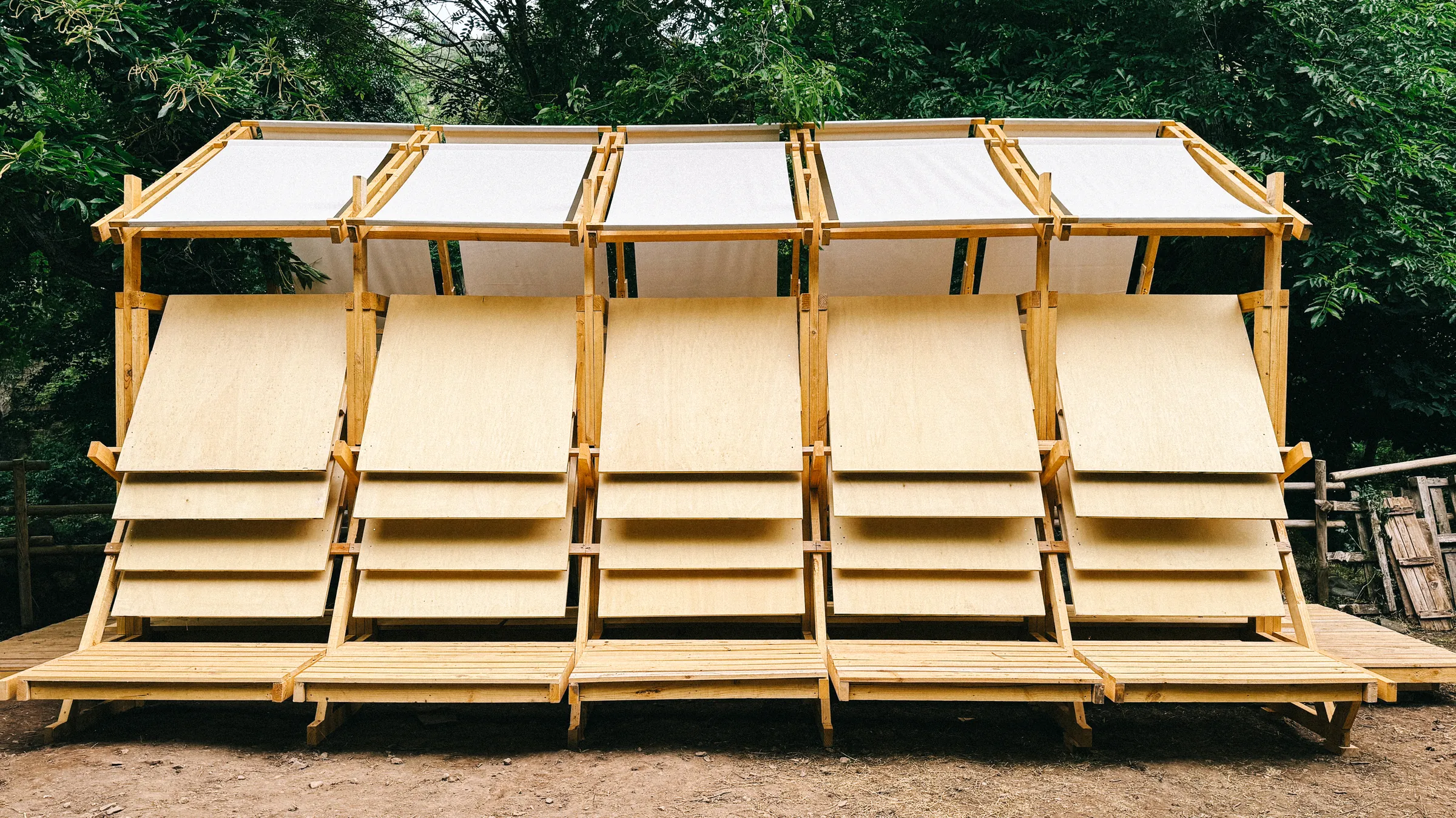
The southern façade opened fully to the river while remaining protected from direct sunlight. On the north, plywood panels block glare from the adjacent concrete wall and facilitate passive ventilation by directing hot air upward, helping to dissipate the heat absorbed by the slab throughout the day.
This new ‘Place’ became a calm, protected retreat where visitors could sit, lie down, or pass through while watching the river’s daily life unfold — canoeists rowing, birds singing, trees shifting in the wind, currents flowing, dogs barking on their morning walks.
During construction, a second bench was added on the northern side in response to activities already happening on site: canoeists regularly used the platform to prepare equipment or teach beginners the techniques and theory of the sport. This addition completed the project’s aim of connecting river and city through a transitional space — a new ‘infrastructure’ that looked toward and served both.
The structure was built collaboratively with students from the Faculty of Architecture at CESUGA (Centro de Estudios Universitarios de Galicia), combining prefabrication in A Coruña with on-site assembly in Logroño. The project was supported by Maderas Besteiro, Bandalux, Xunta de Galicia, and the Spanish Association for Forestry Sustainability (PEFC).
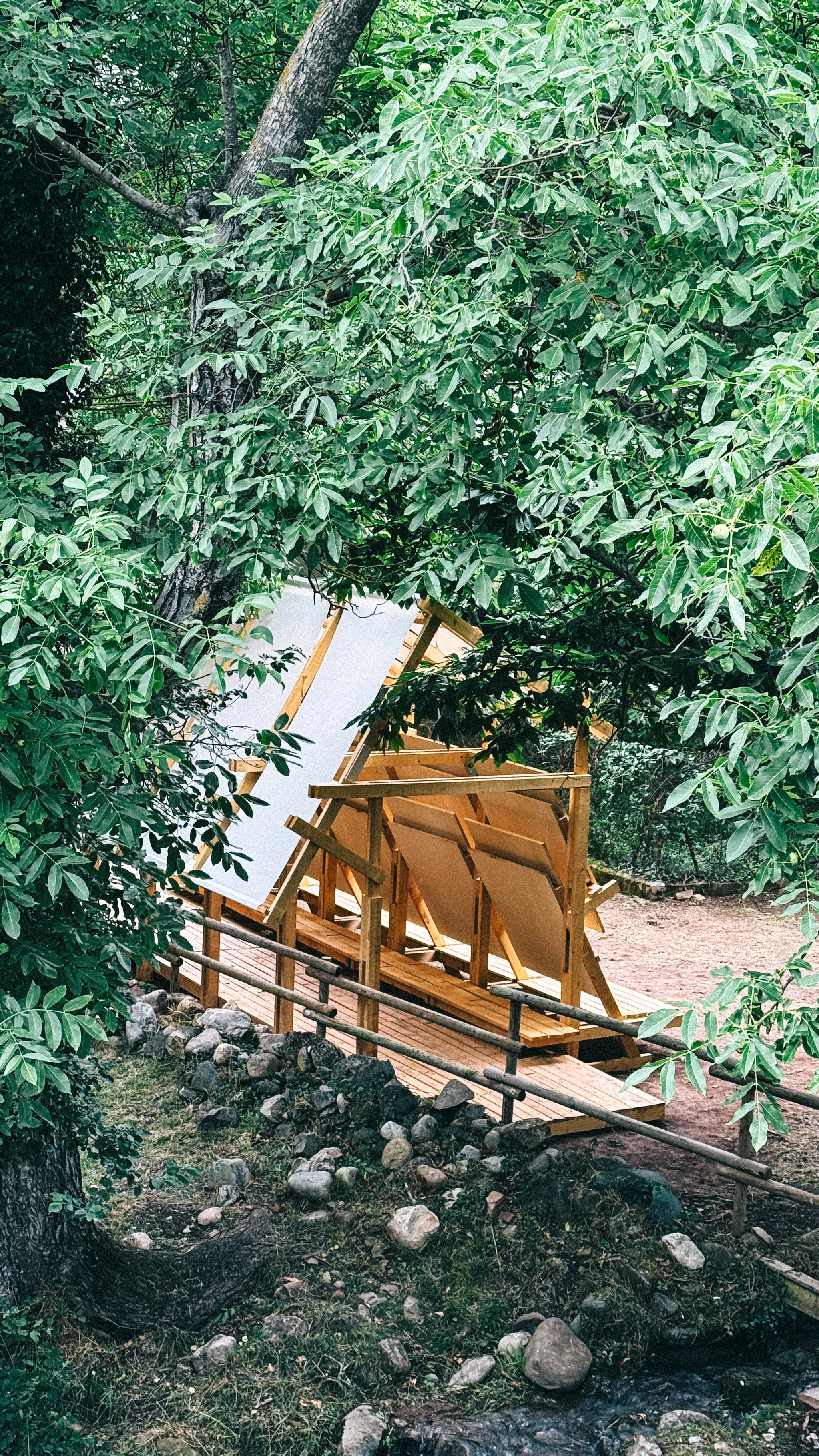
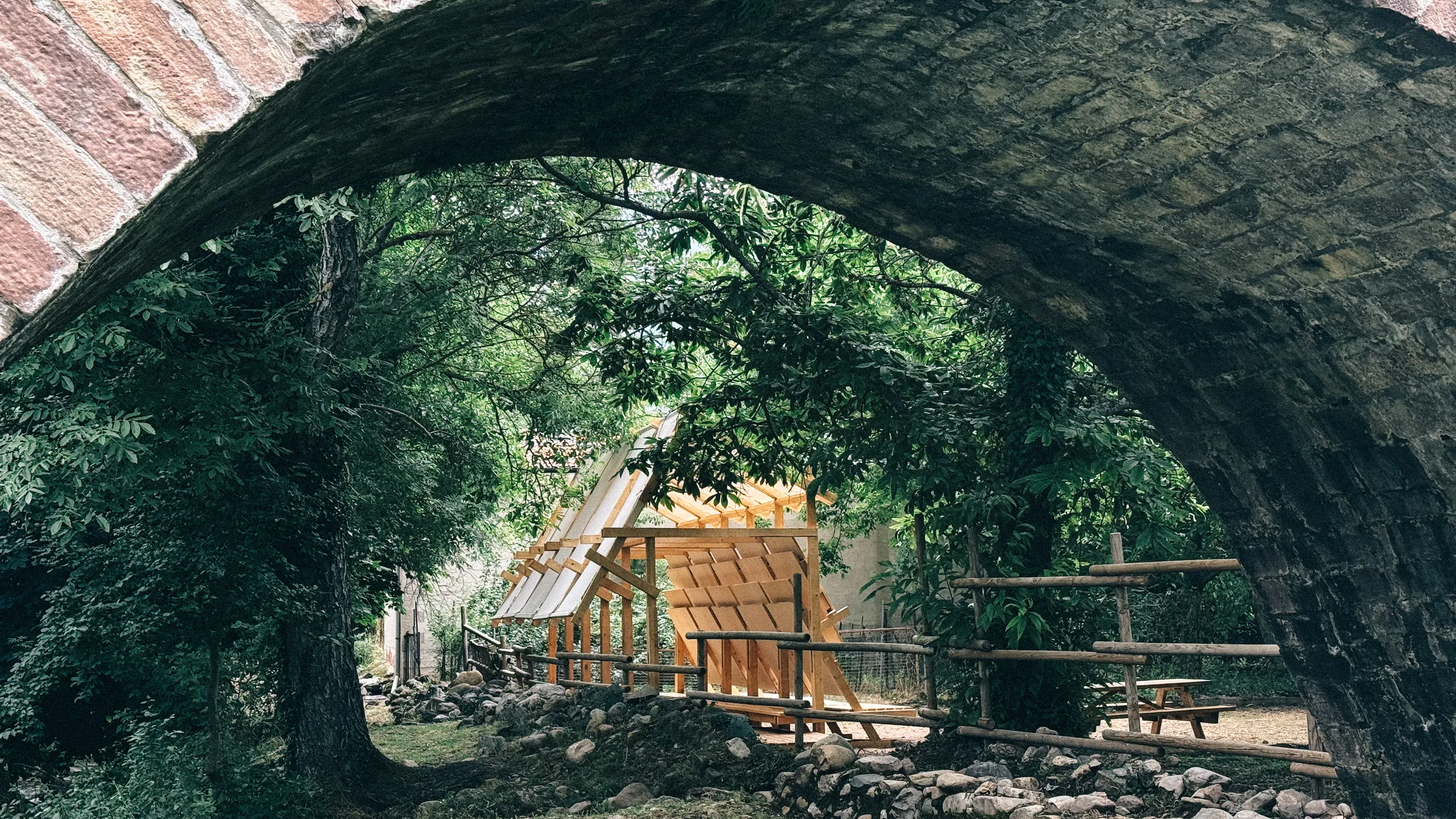
After Concéntrico’s closure and the removal of all installations, Habitar el Río was dismantled, transported, and rebuilt in the mountains near Logroño — in the town of Viniegra de Abajo, beside the river Urbión — where it will remain indefinitely.