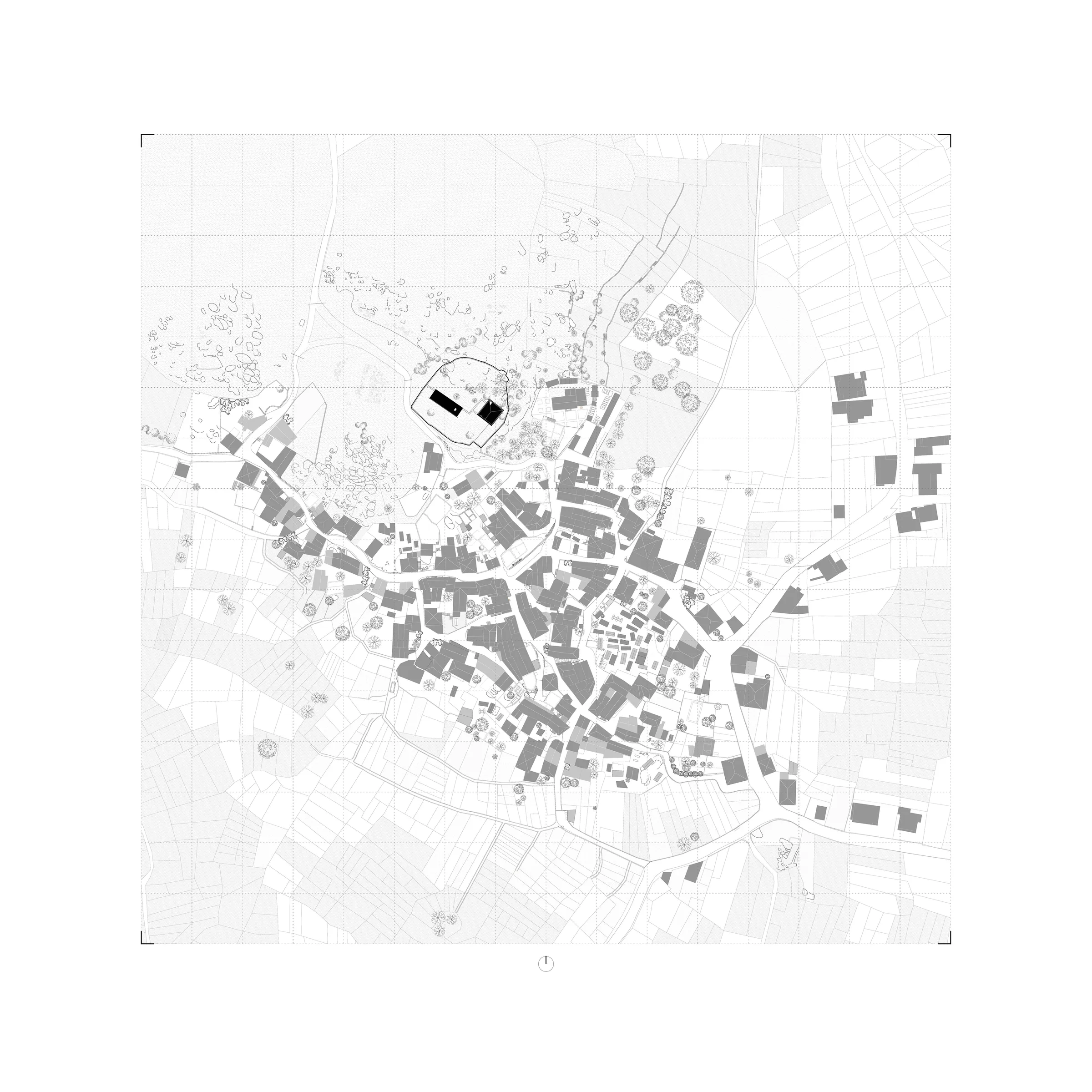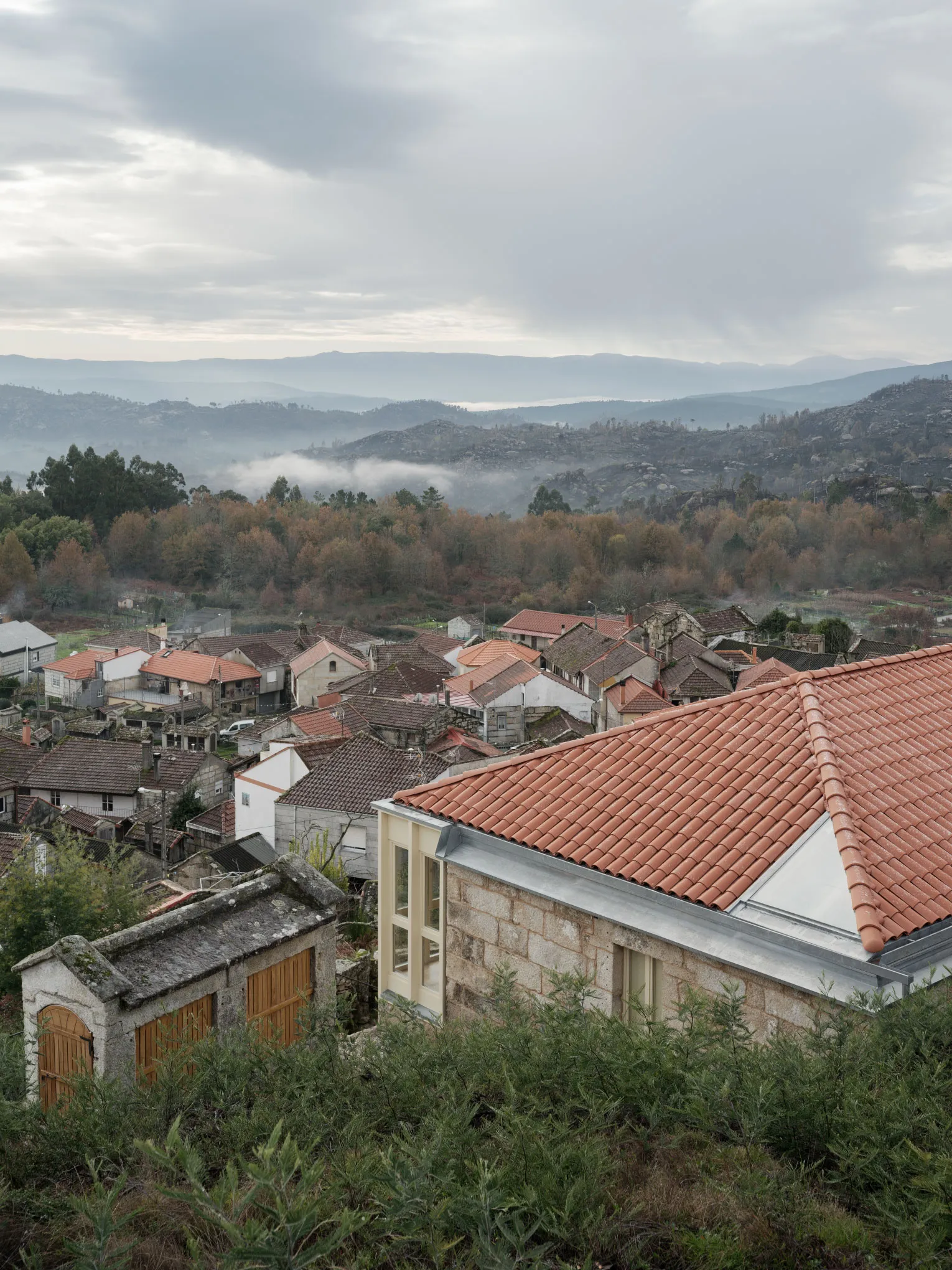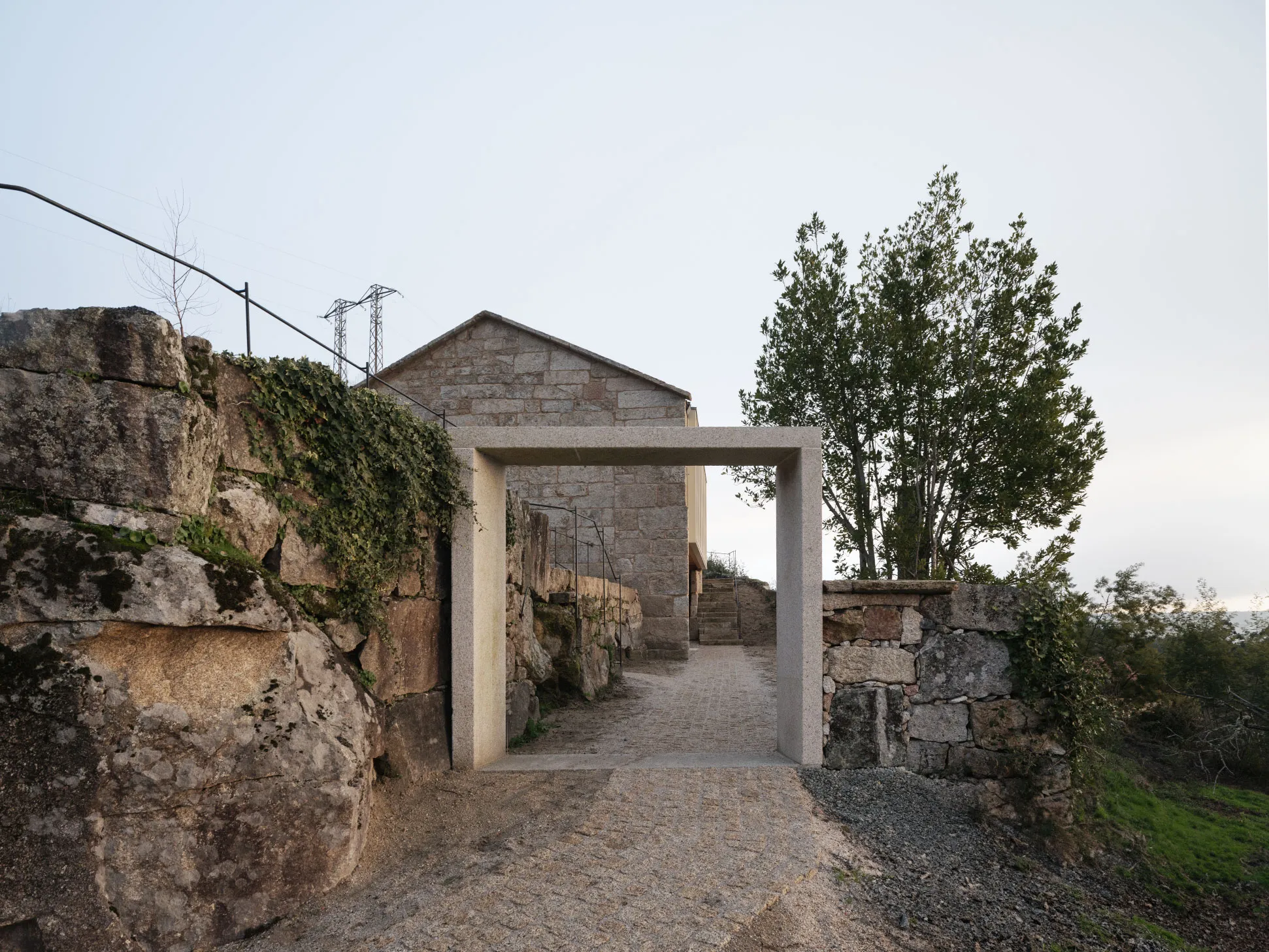
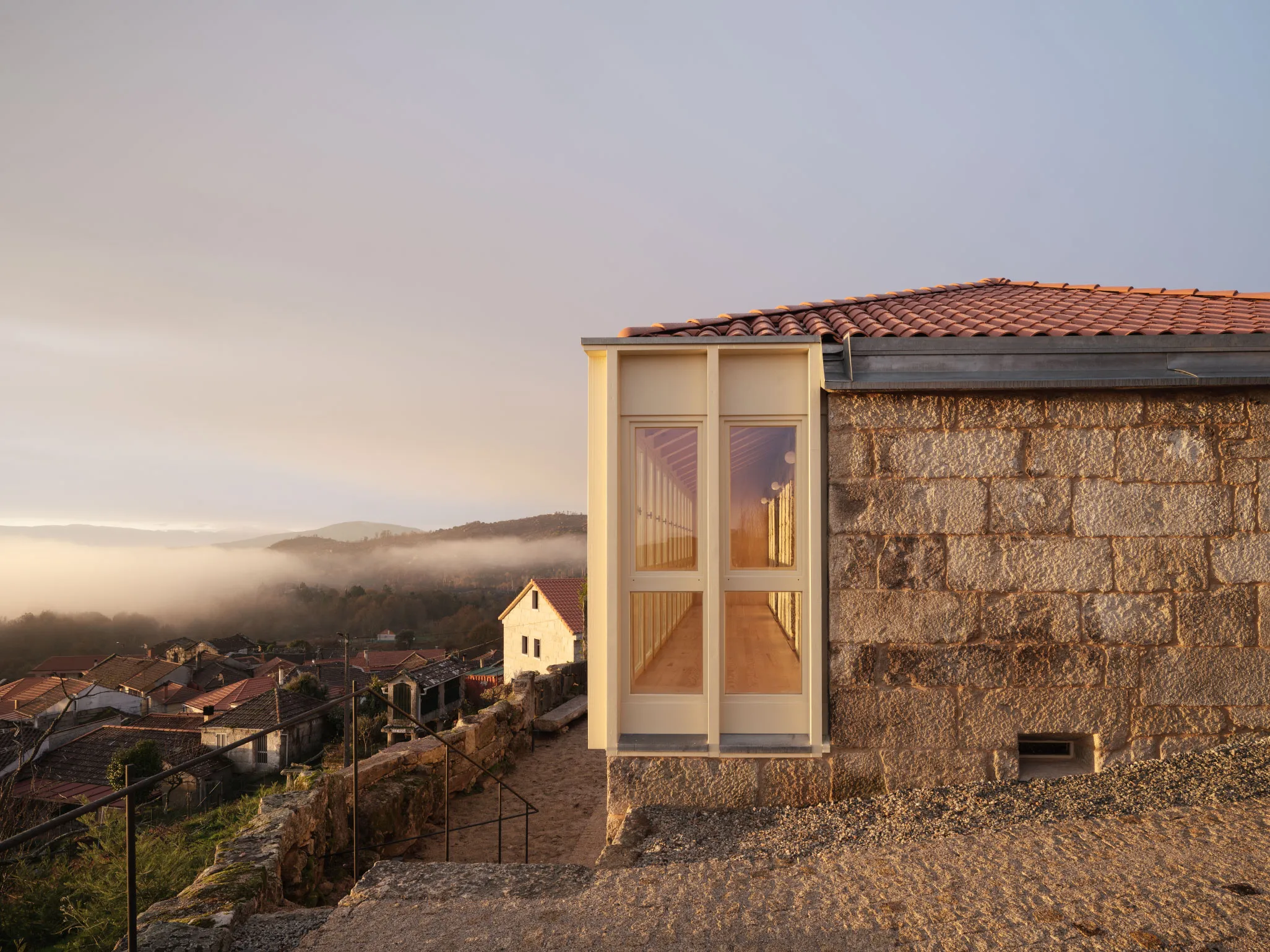
The Multipurpose Social Center is an initiative promoted by the Municipality of Carballeda de Avia within an ambitious rural development plan for the Model Village of Muimenta. The initiative seeks to activate a rural nucleus in the process of abandonment through the recovery of adjacent high-productivity agricultural lands, as well as the rehabilitation of its built environment. Through this new governance model, the aim is to improve the quality of life of its inhabitants, encourage the younger population to remain, and attract new settlers, promoting economic activity on the land, the recovery of traditional crafts, the provision of affordable housing, and the improvement of technological services. In this regard, the Social Center, located on a plot in the highest part of the village, just above the church, is inserted within a sequence of previous interventions, including a communal kitchen and laundry, the creation of temporary public accommodation, or the urbanization of certain unique spaces within the nucleus. The program is very elemental: the creation of three spaces capable of hosting both neighborhood activities and celebrations, a small day center, or workshops in which potential entrepreneurs can develop their activity.
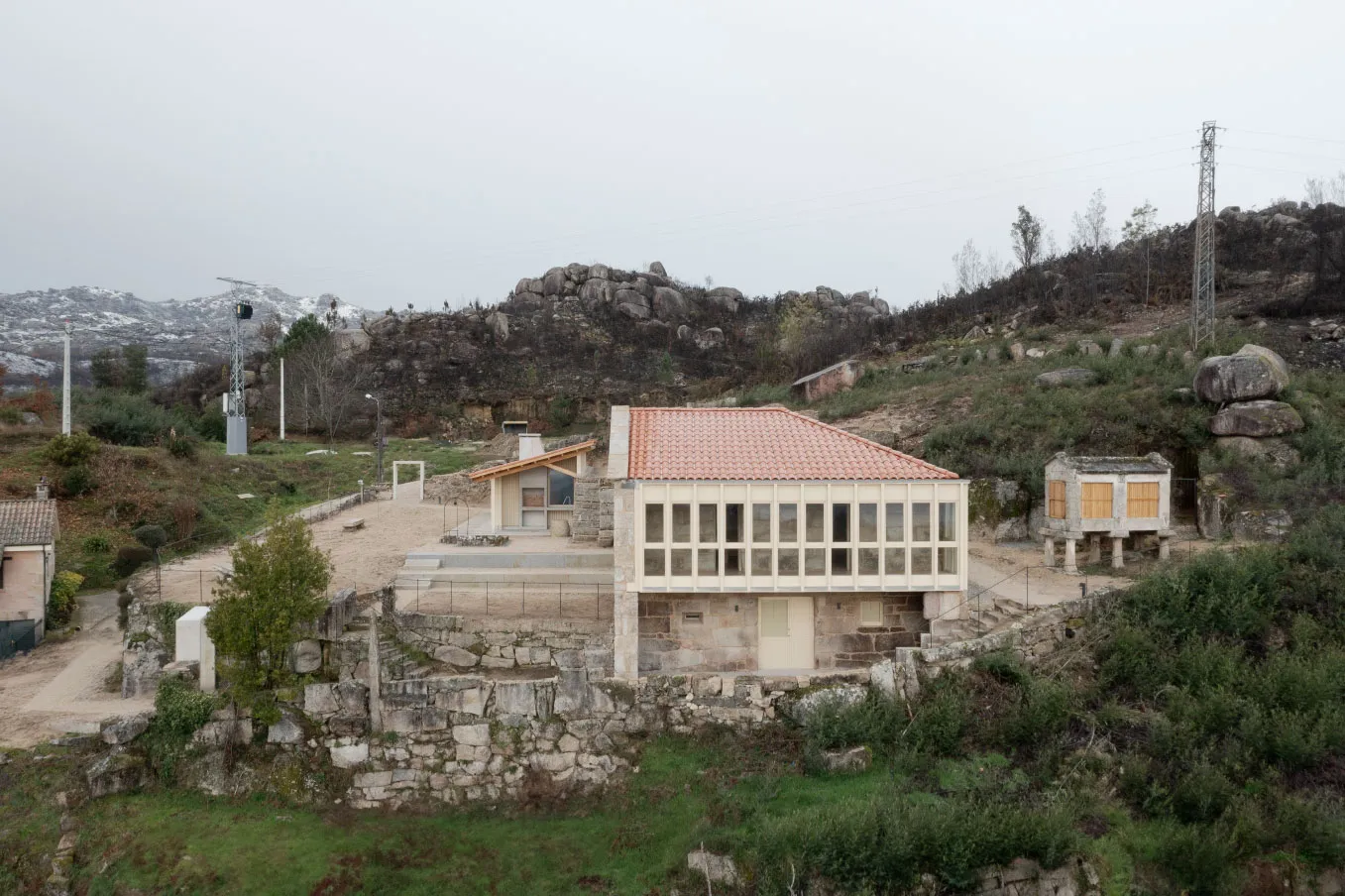
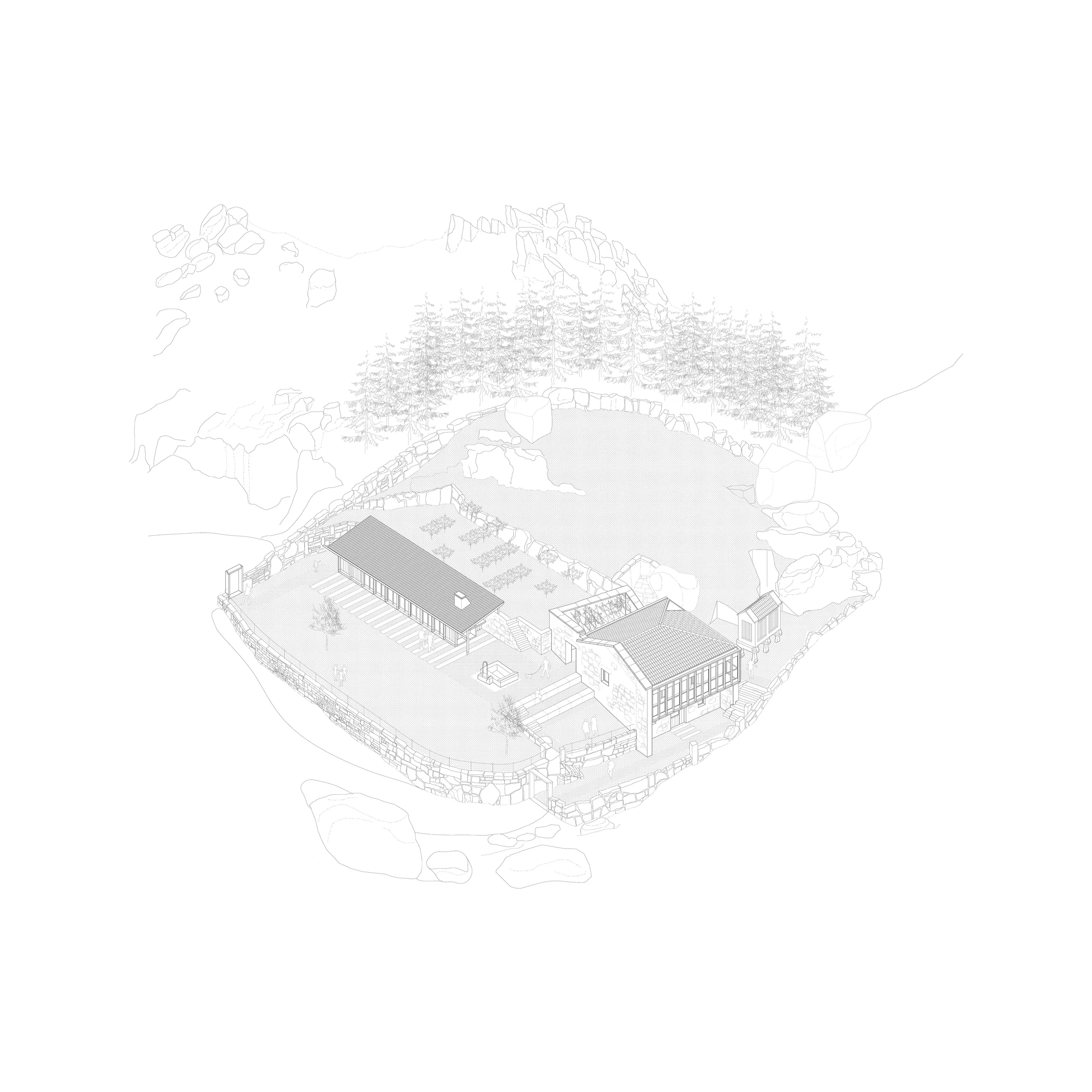
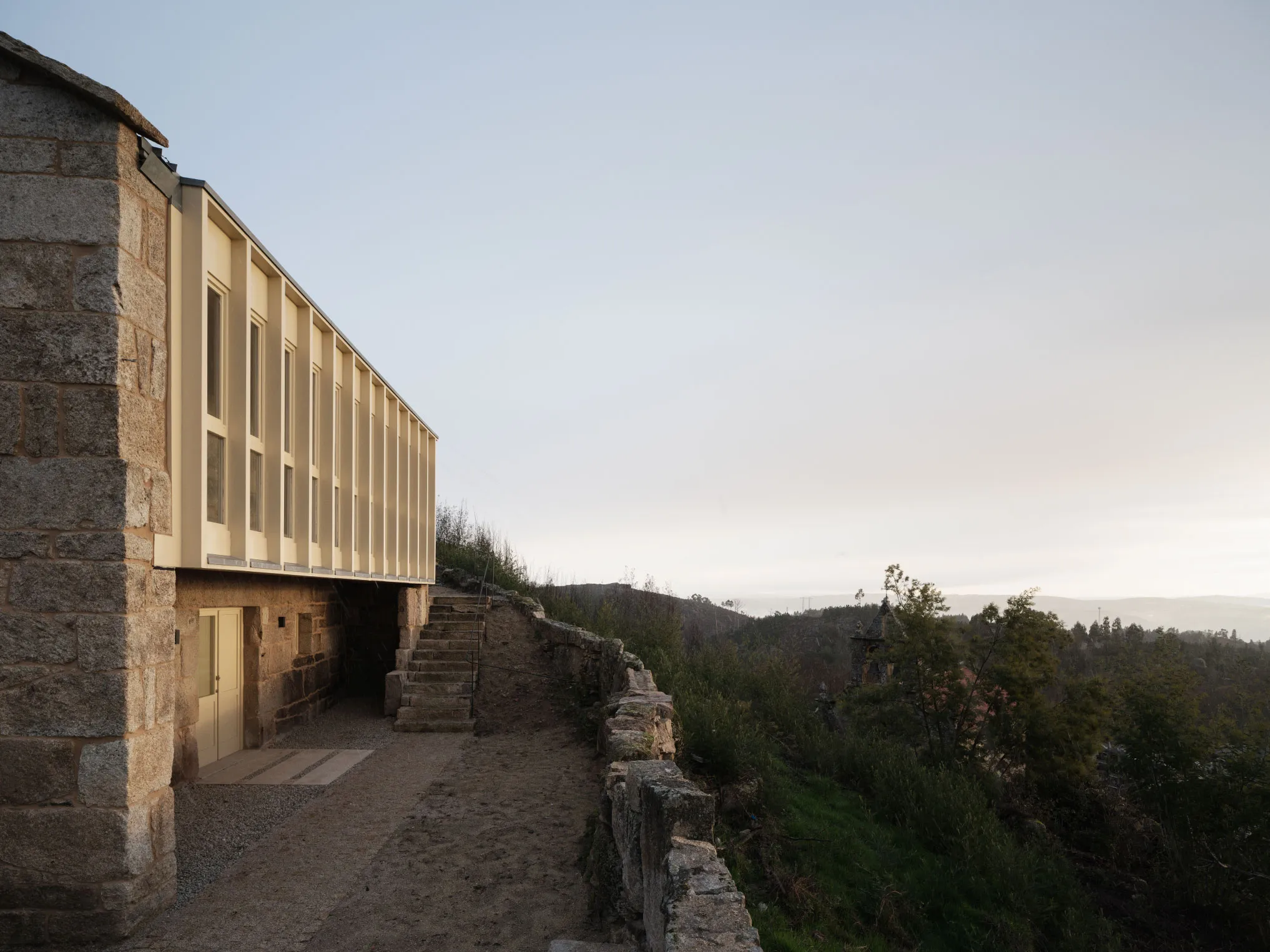
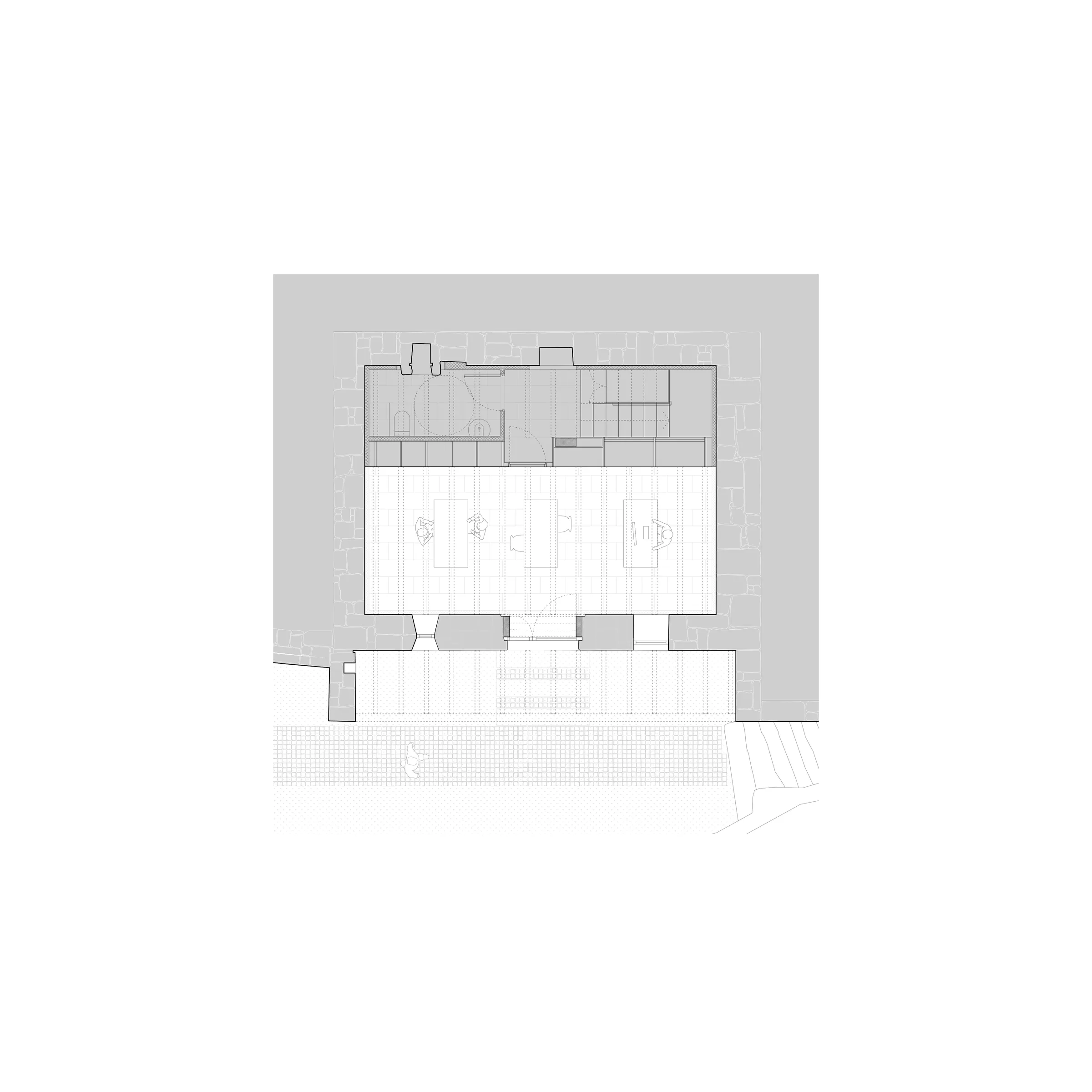
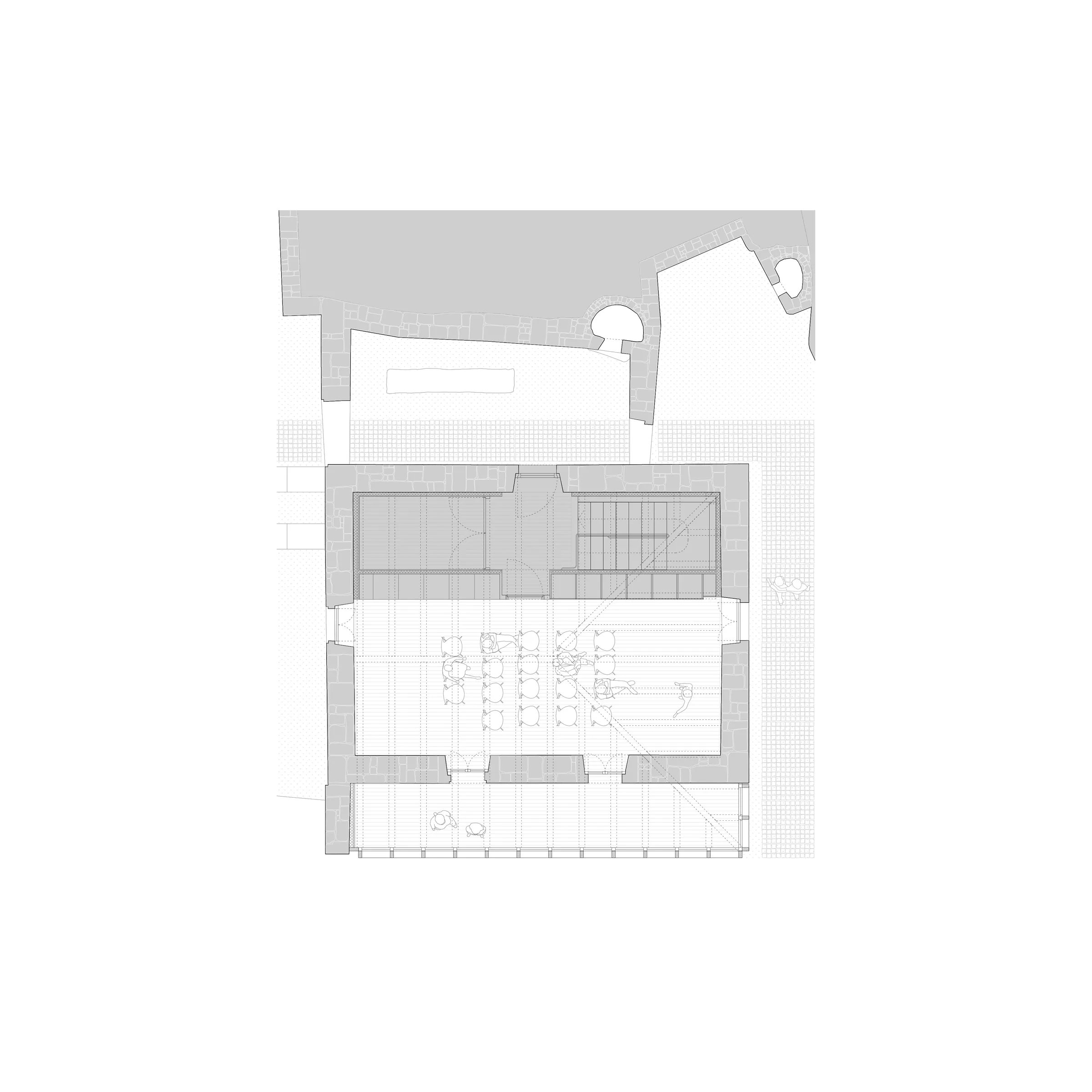
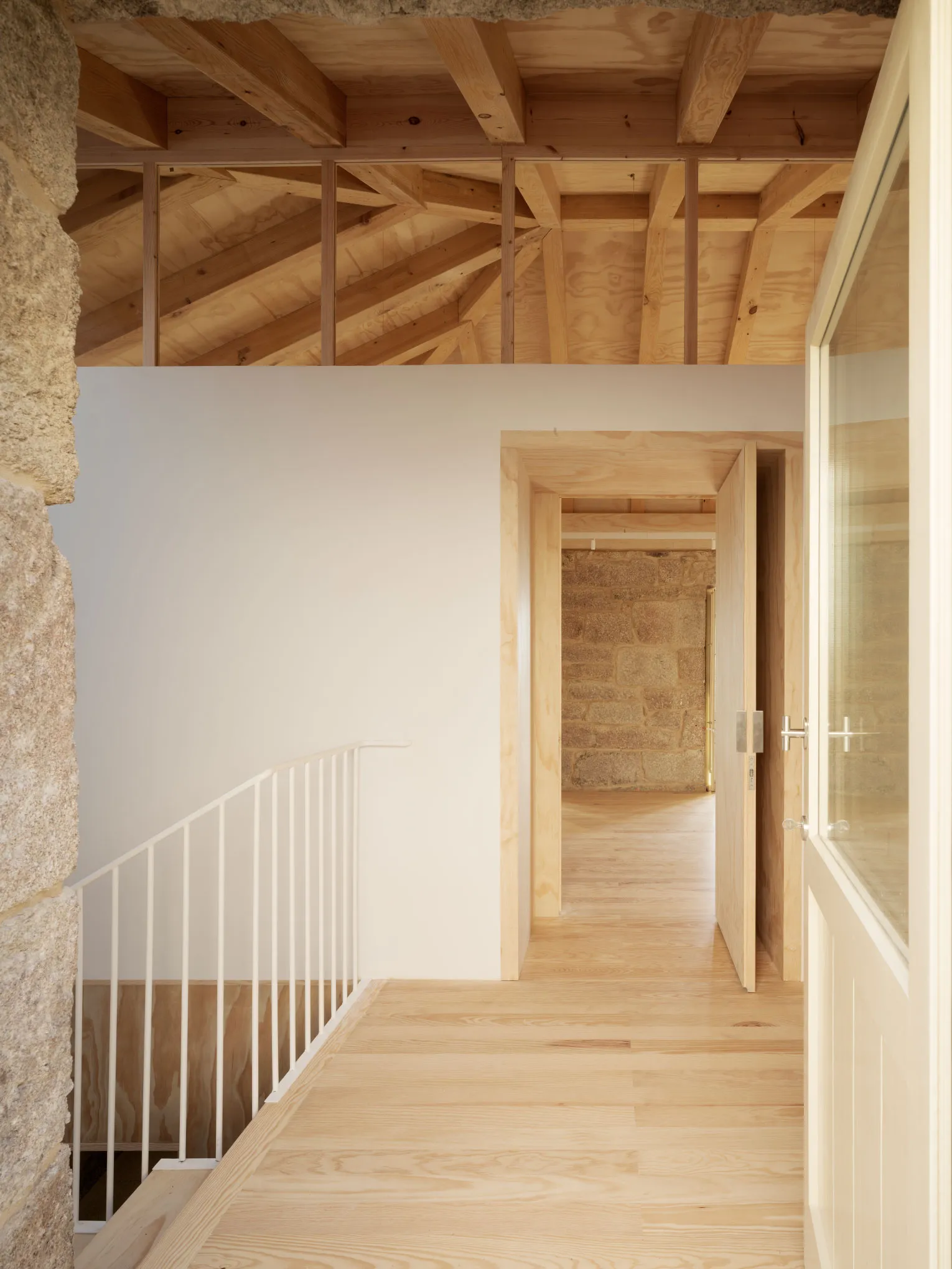
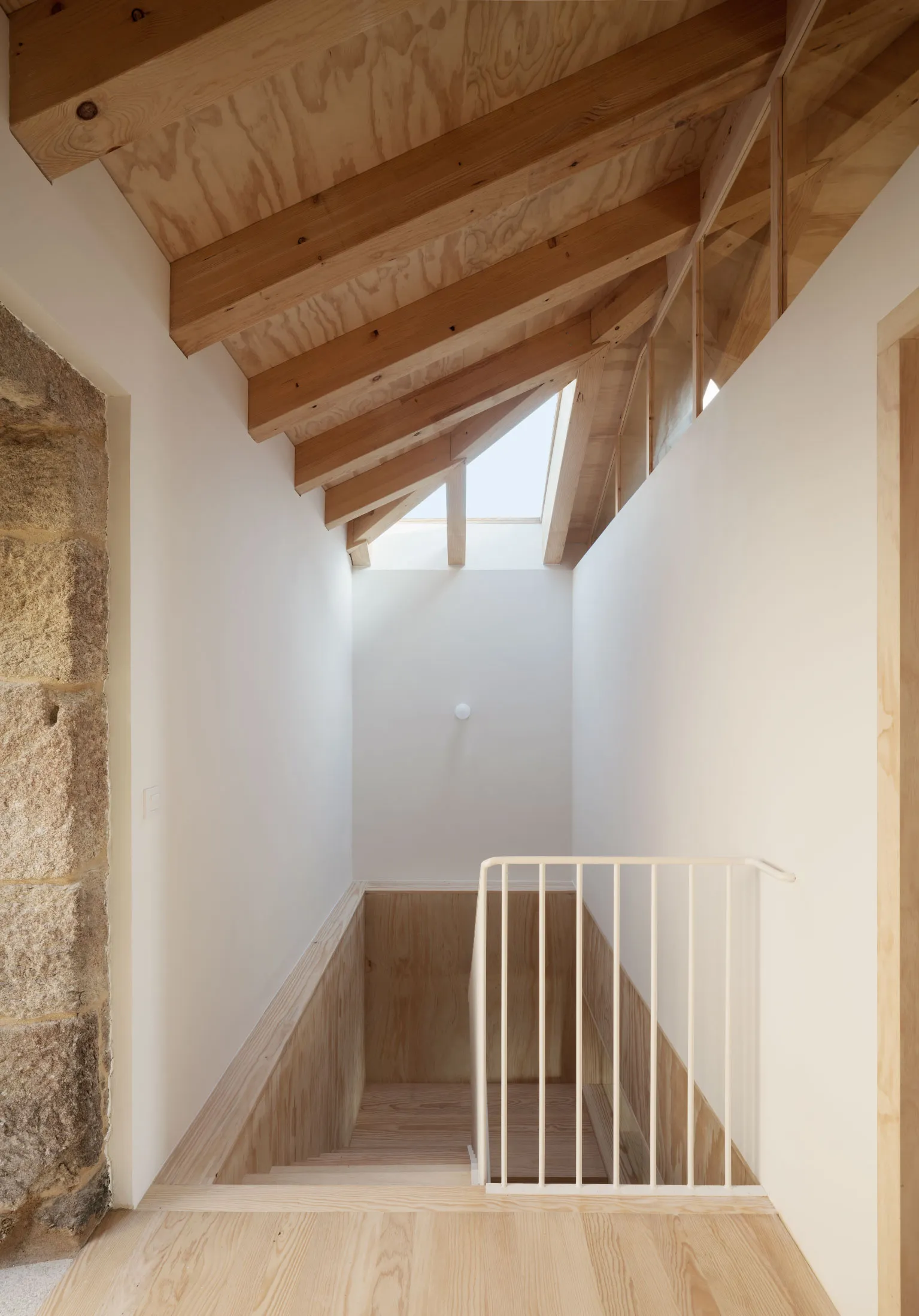
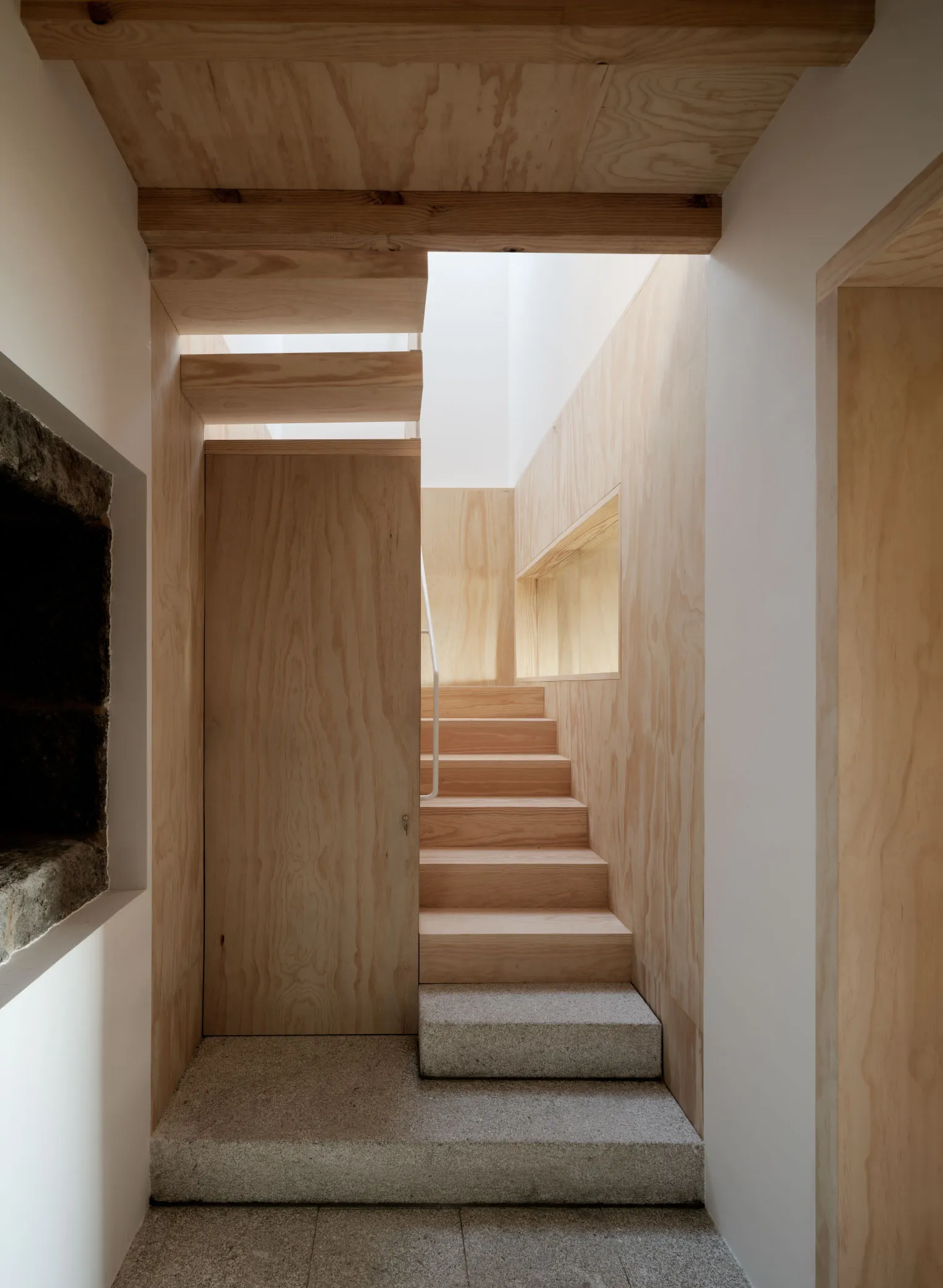
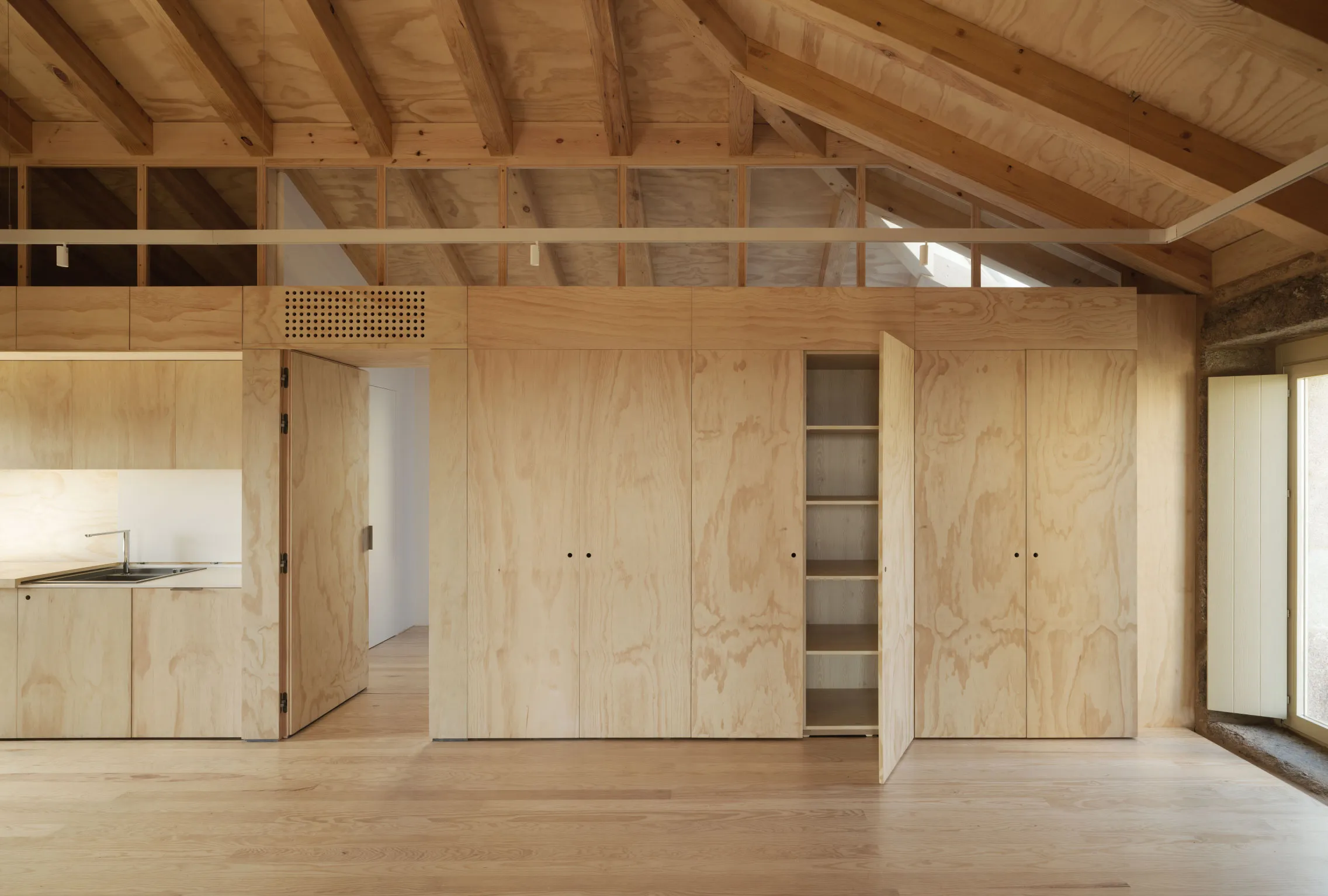
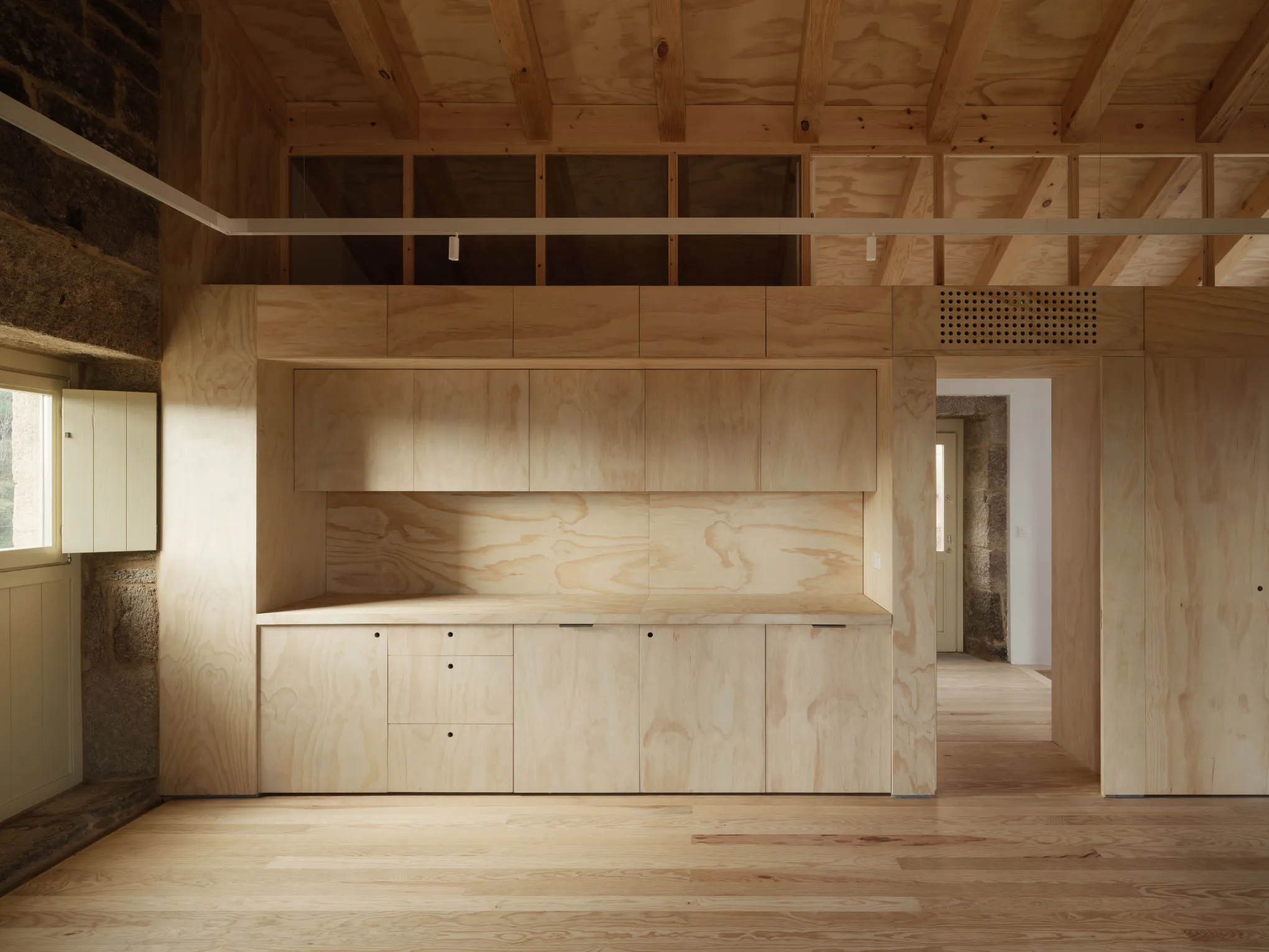
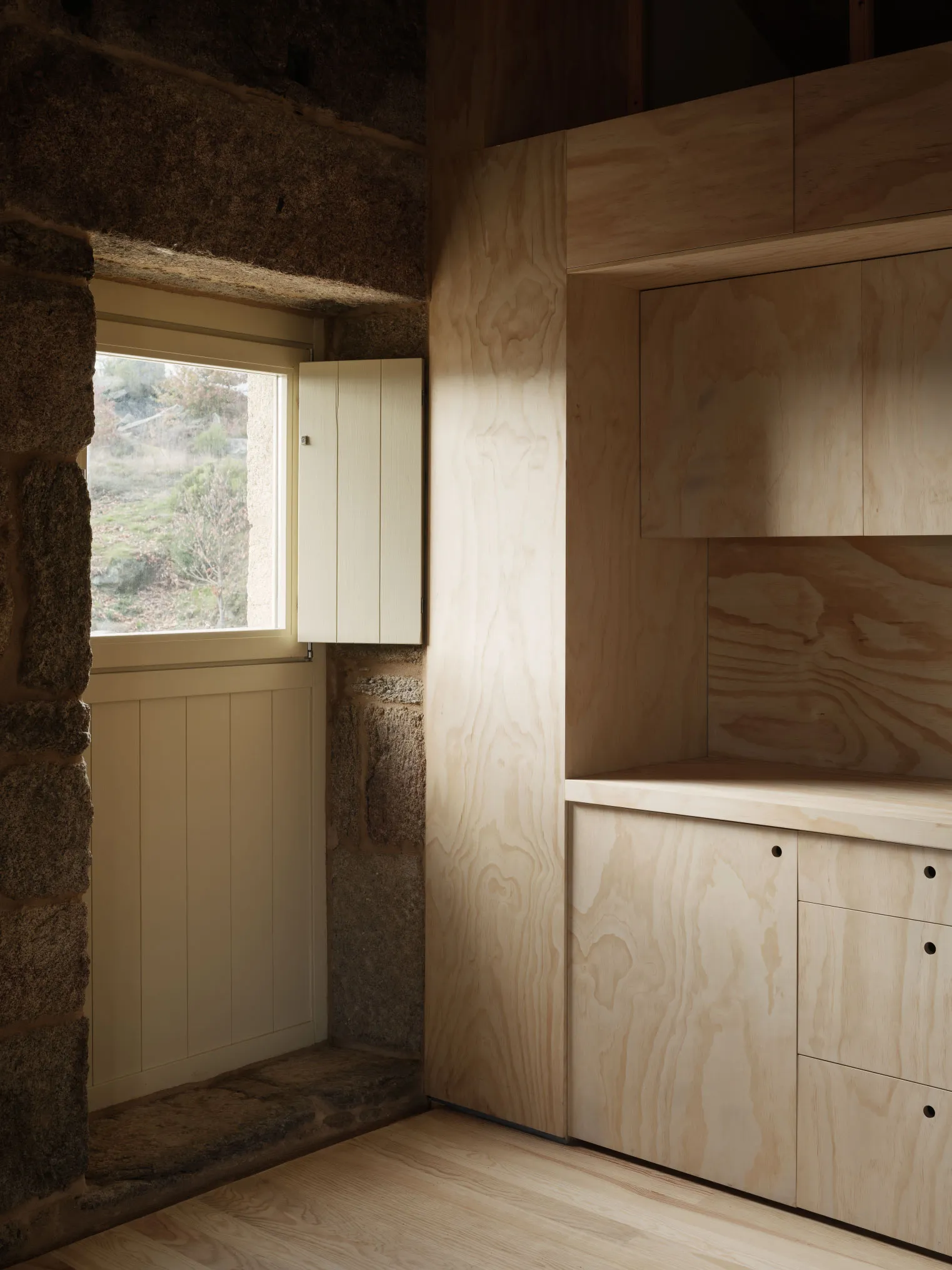
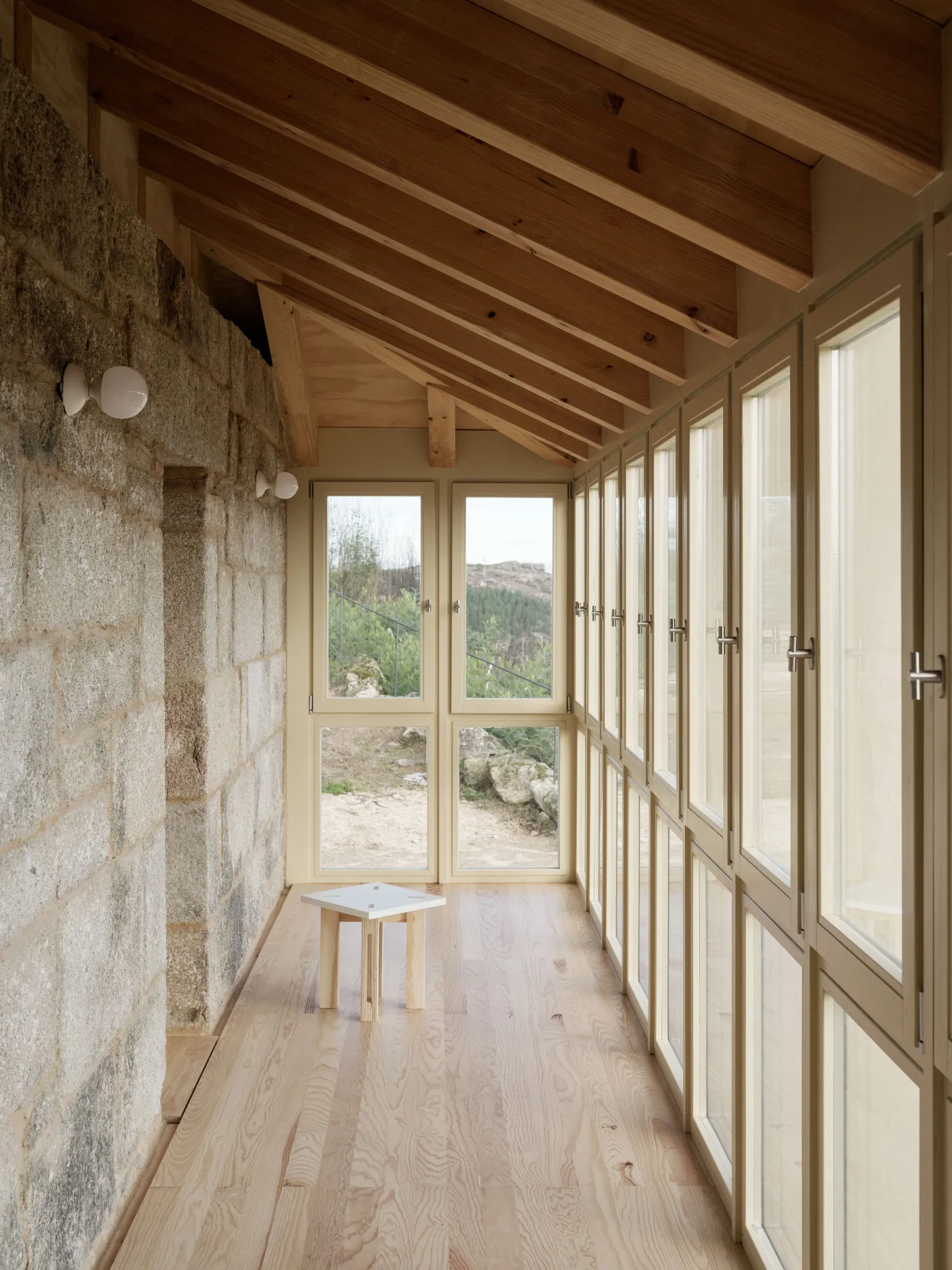
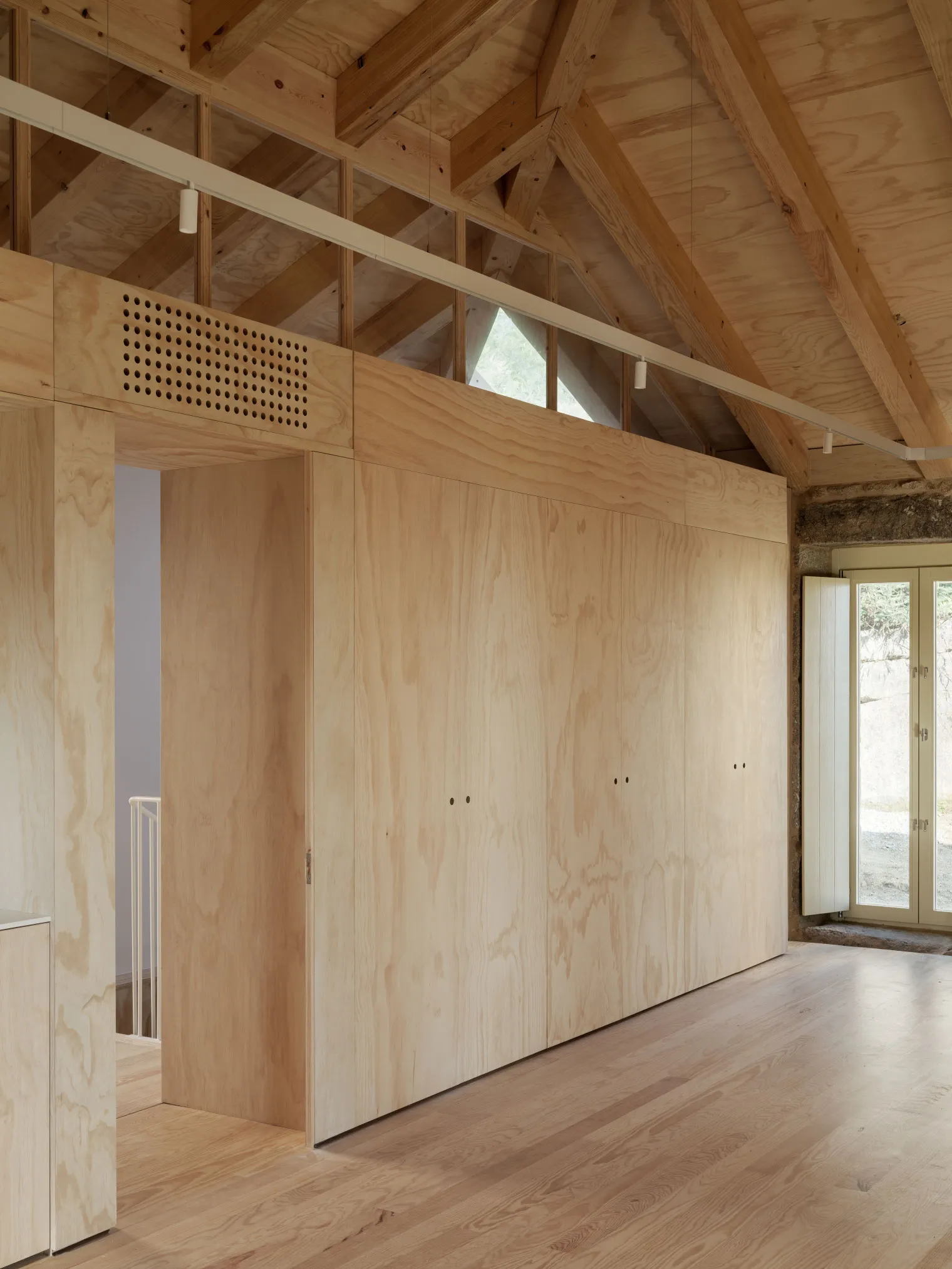
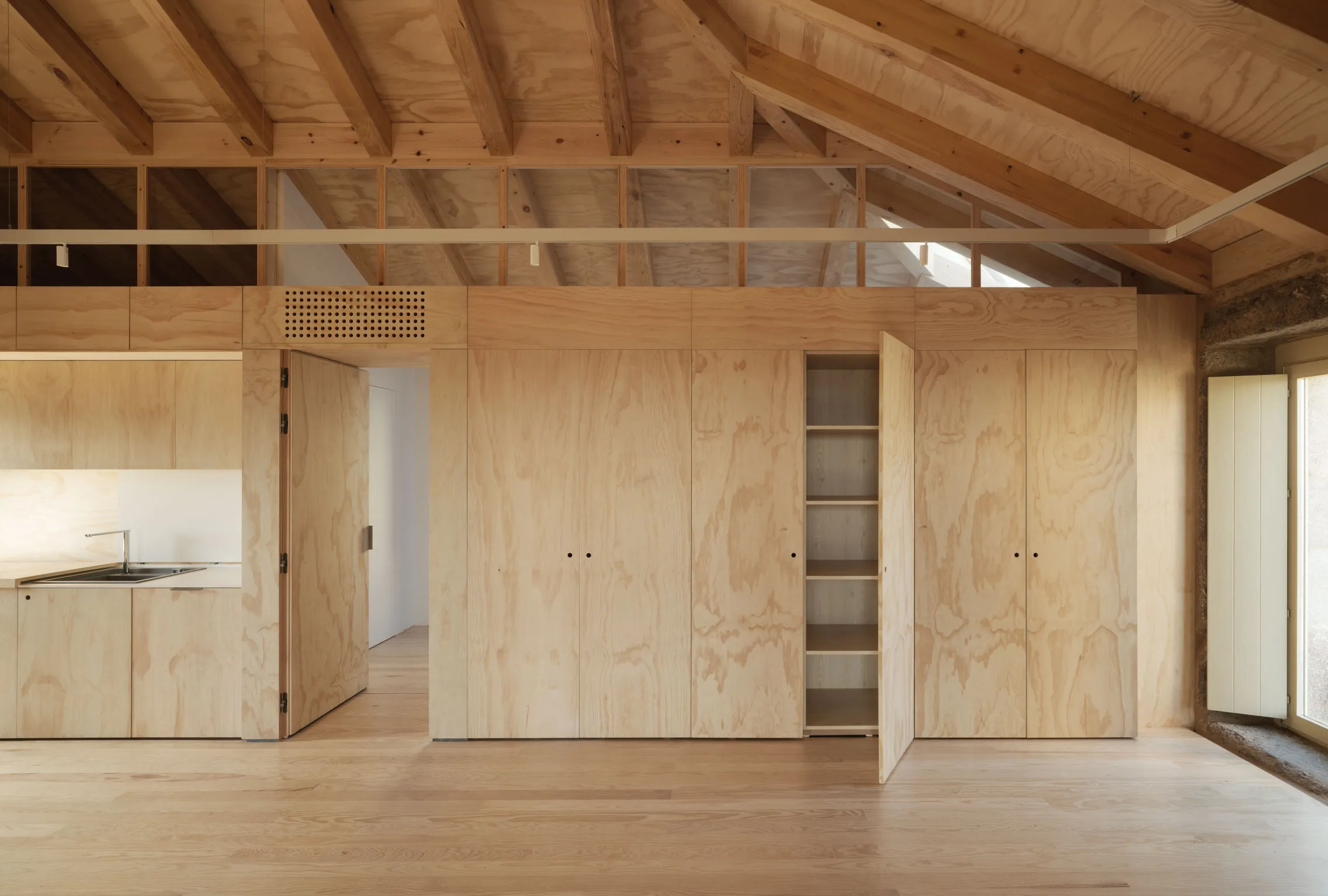
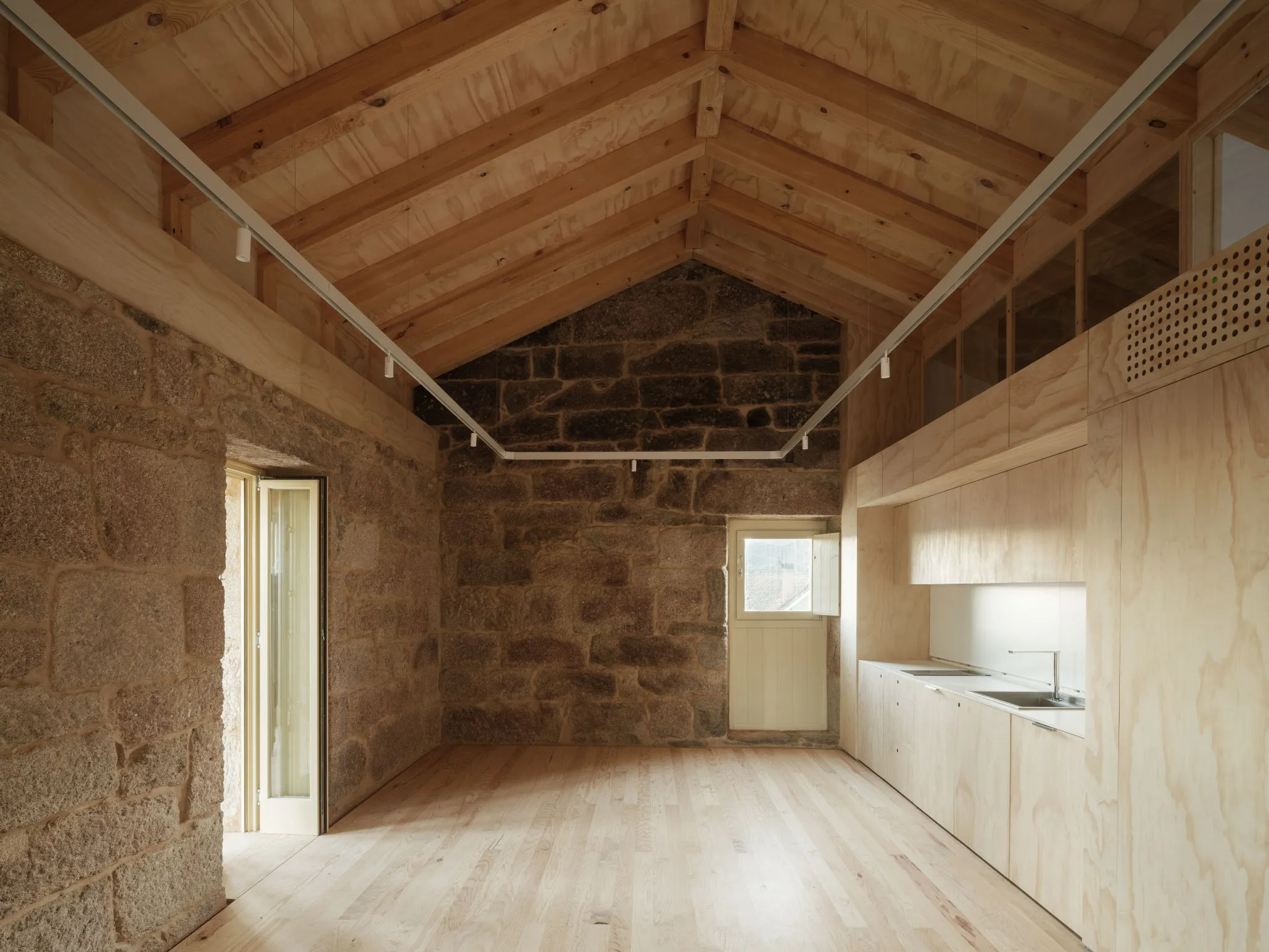
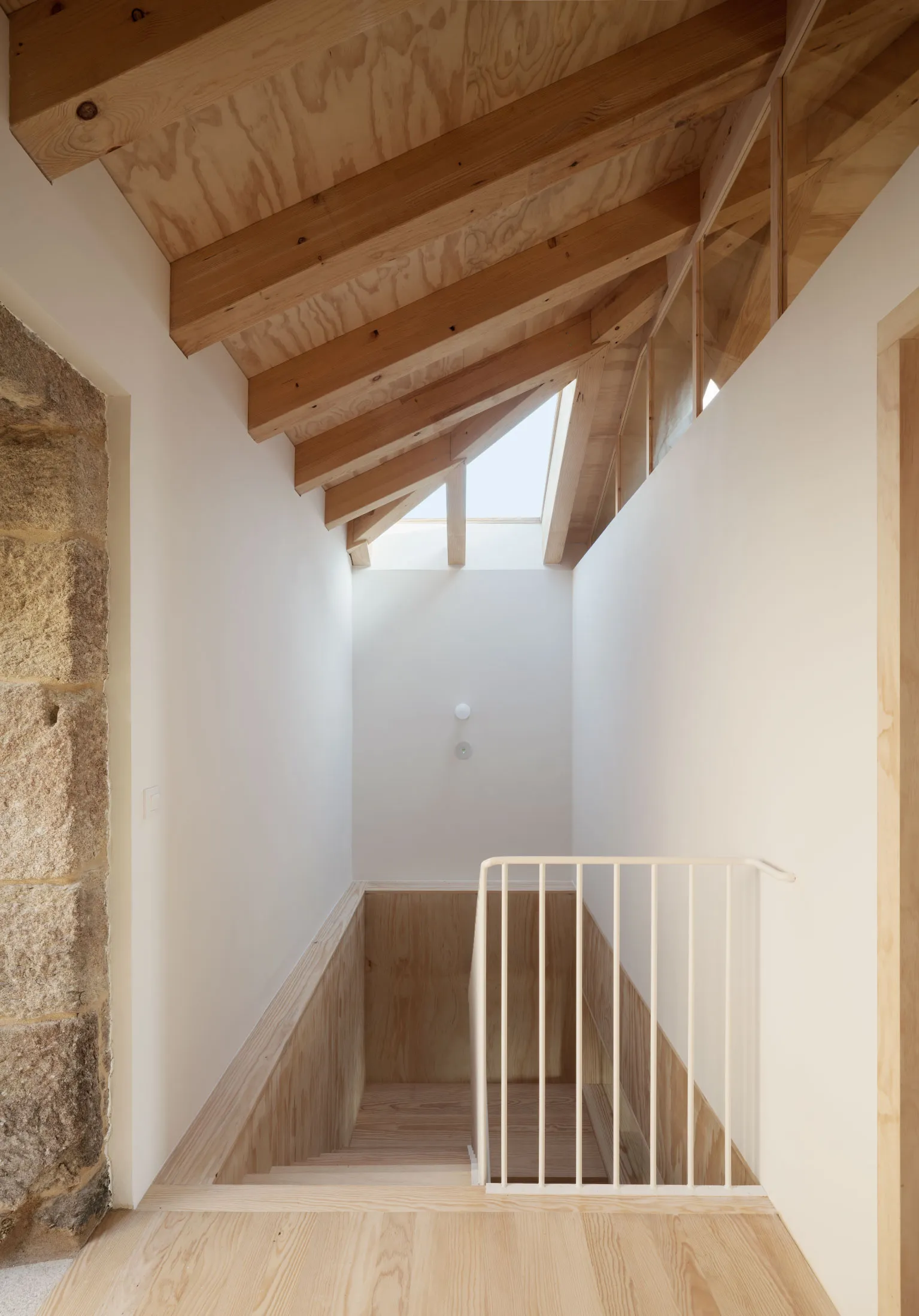
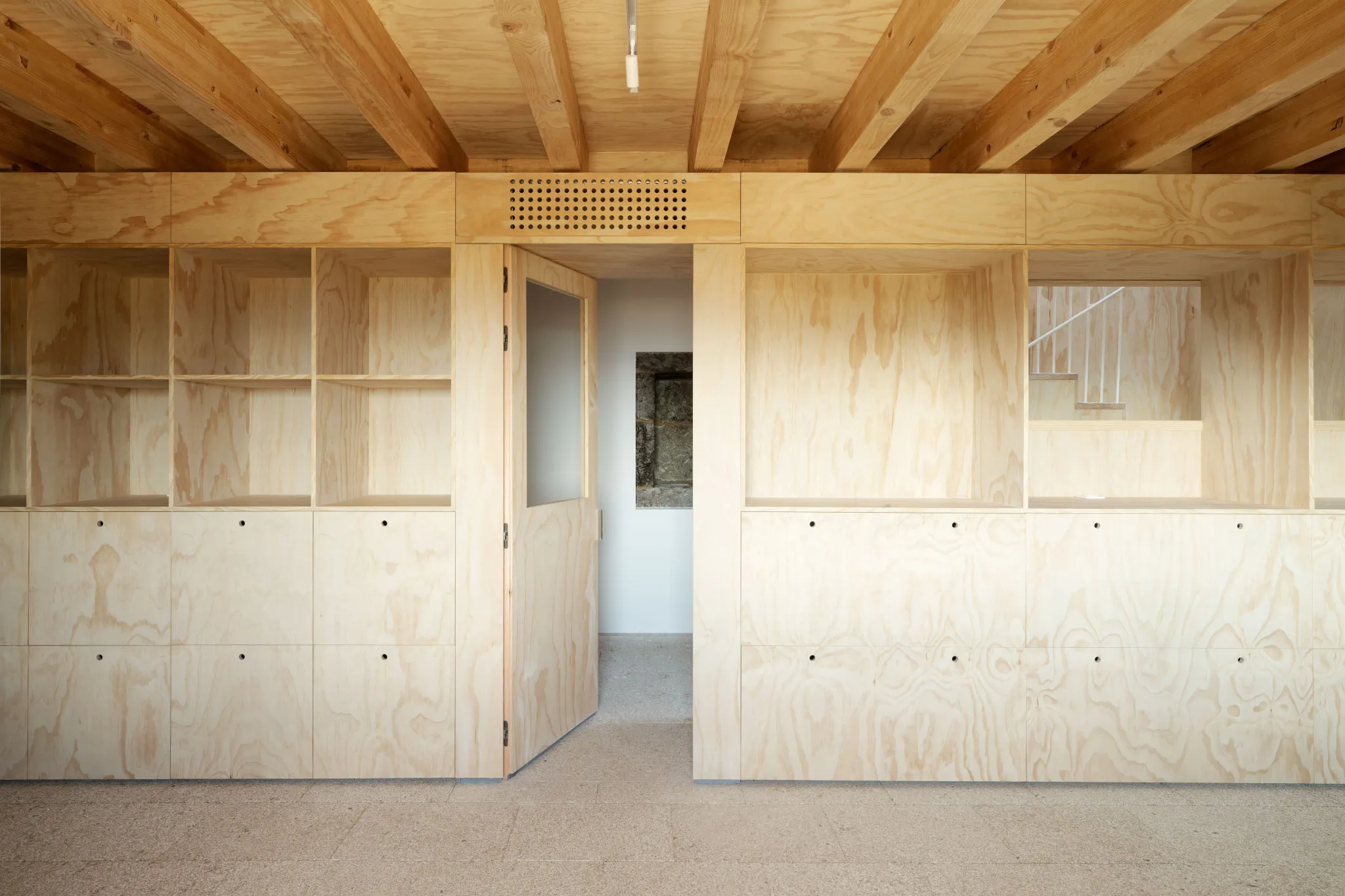
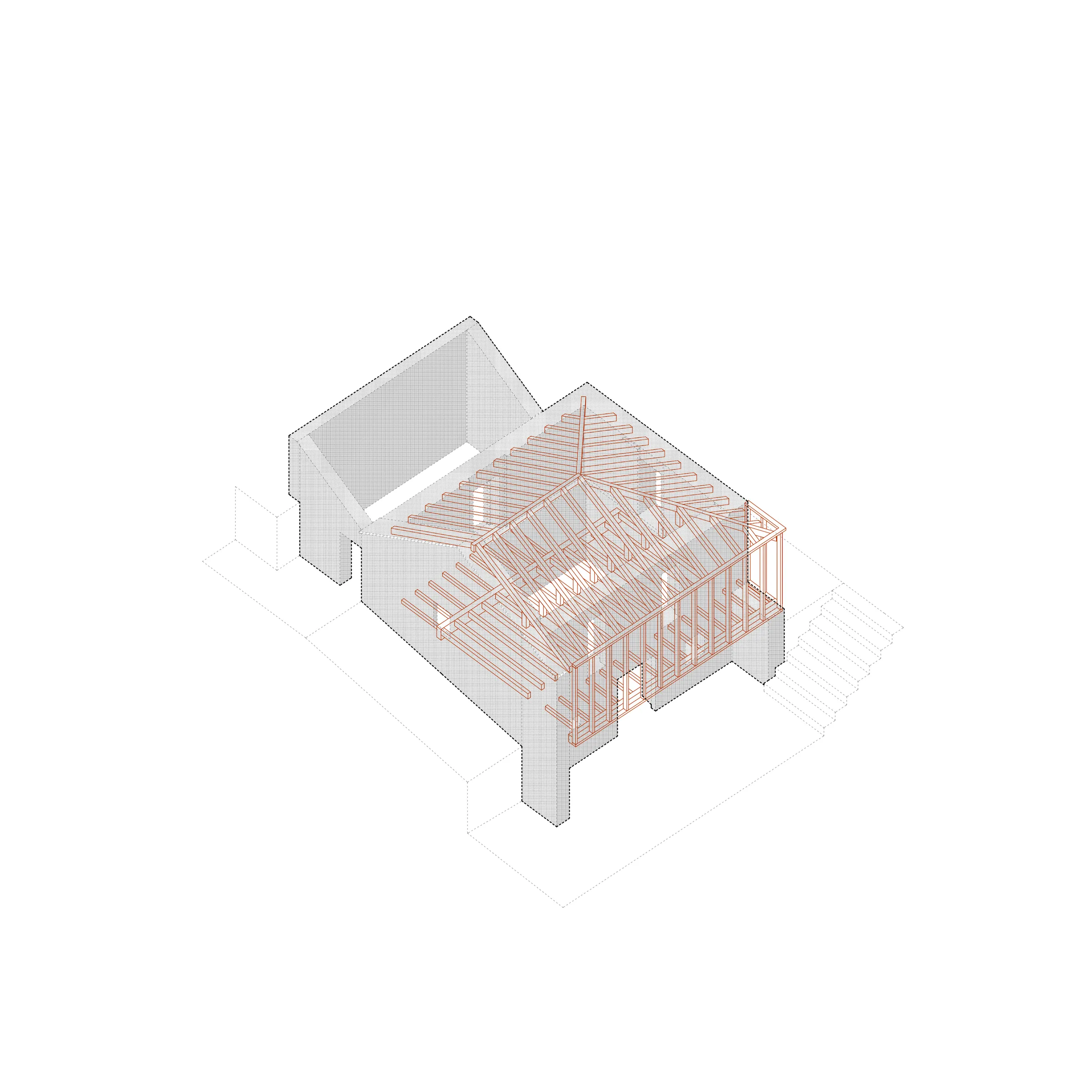
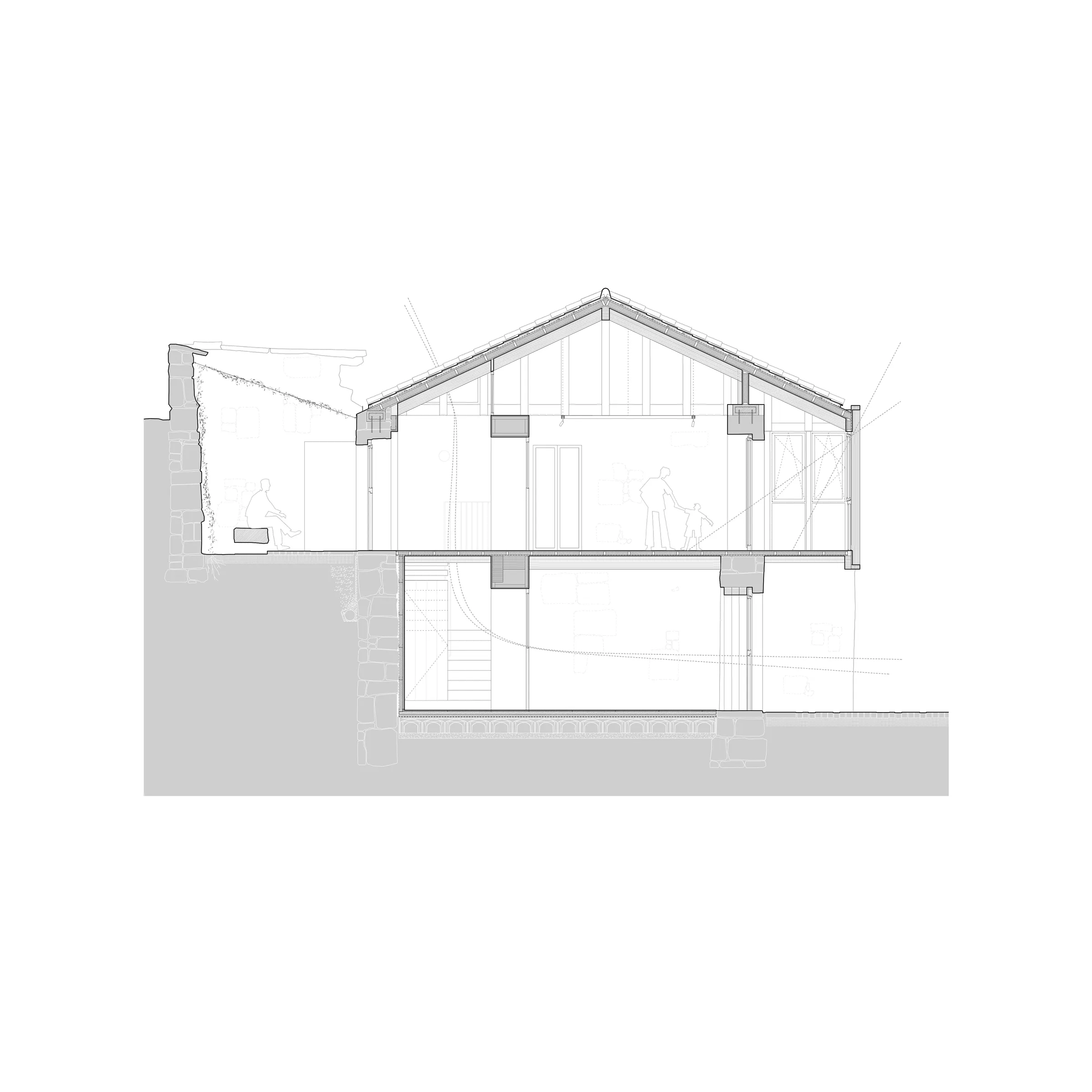
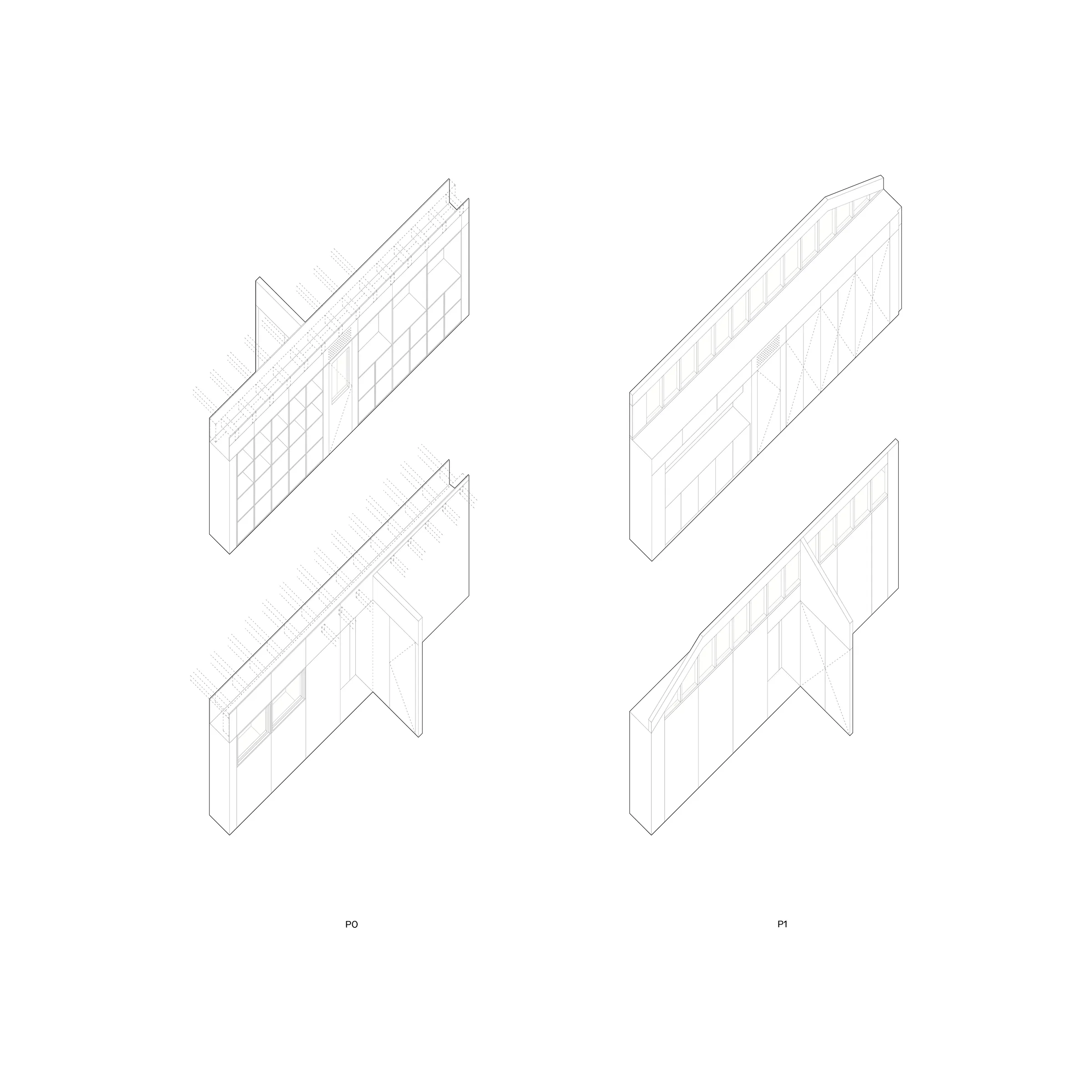
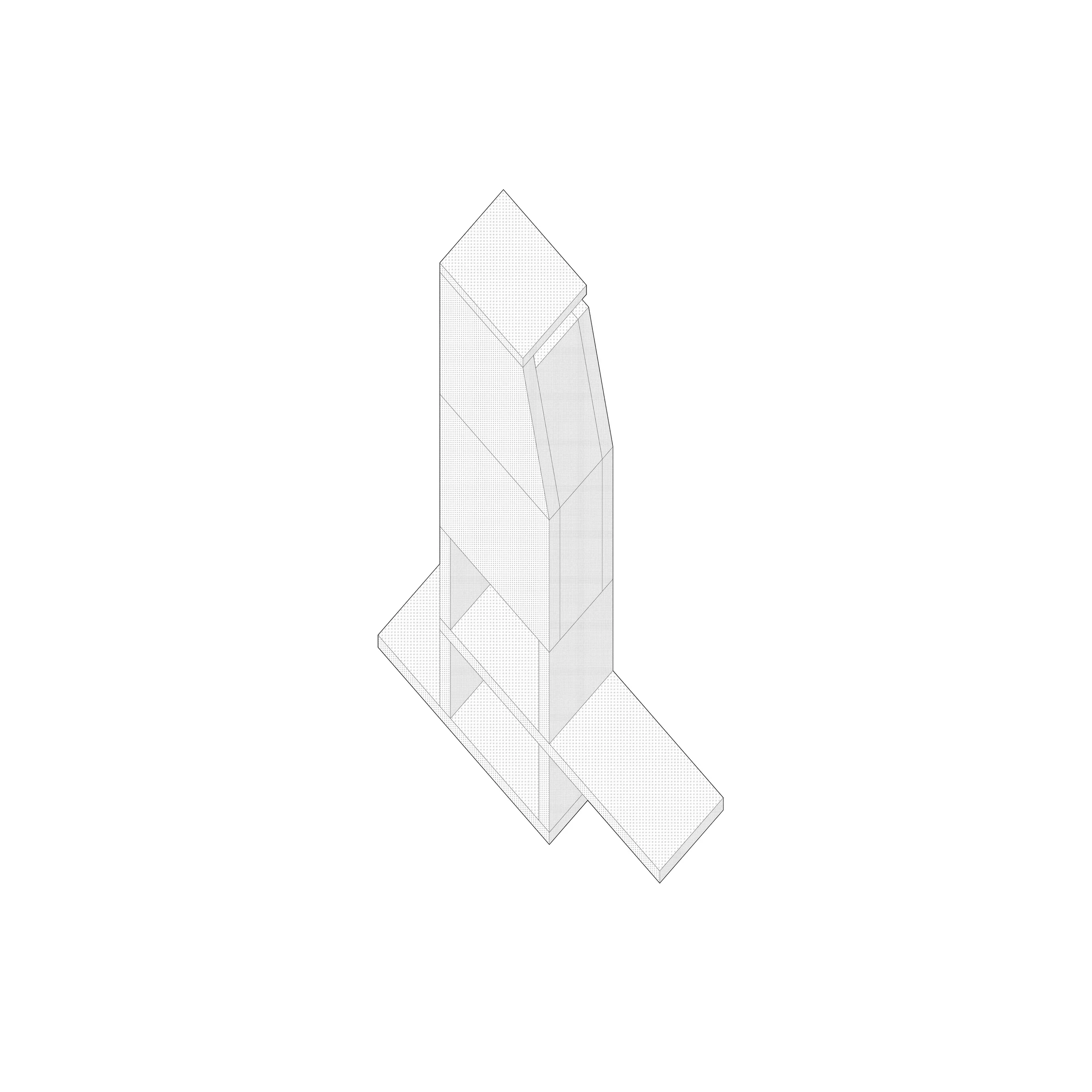
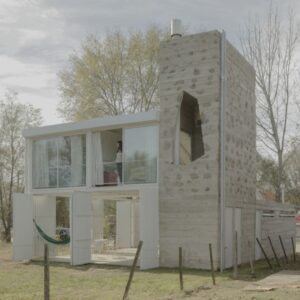
The starting point for the intervention is the understanding of the different levels or socalcos (the name given in Galicia to the traditional technique of constructing terraced fields in areas of steep slope), and the decision not to alter the topographic conditions of the plot, seeking to understand the potential of the site and its surroundings. Thus, the rehabilitation of the existing dwelling on the plot is proposed—in ruins after being devastated by the fires that struck Muimenta in 2018. This construction serves as a connection between the first two socalcos and, within it, two spaces are designed—one per level—intended for work, lectures, courses, exhibitions, or simply gathering, seeking to be as flexible and non-hierarchical as possible. These spaces are served by a core located toward the north facade, which contains both vertical circulation and sanitary facilities, storage, and general installations.
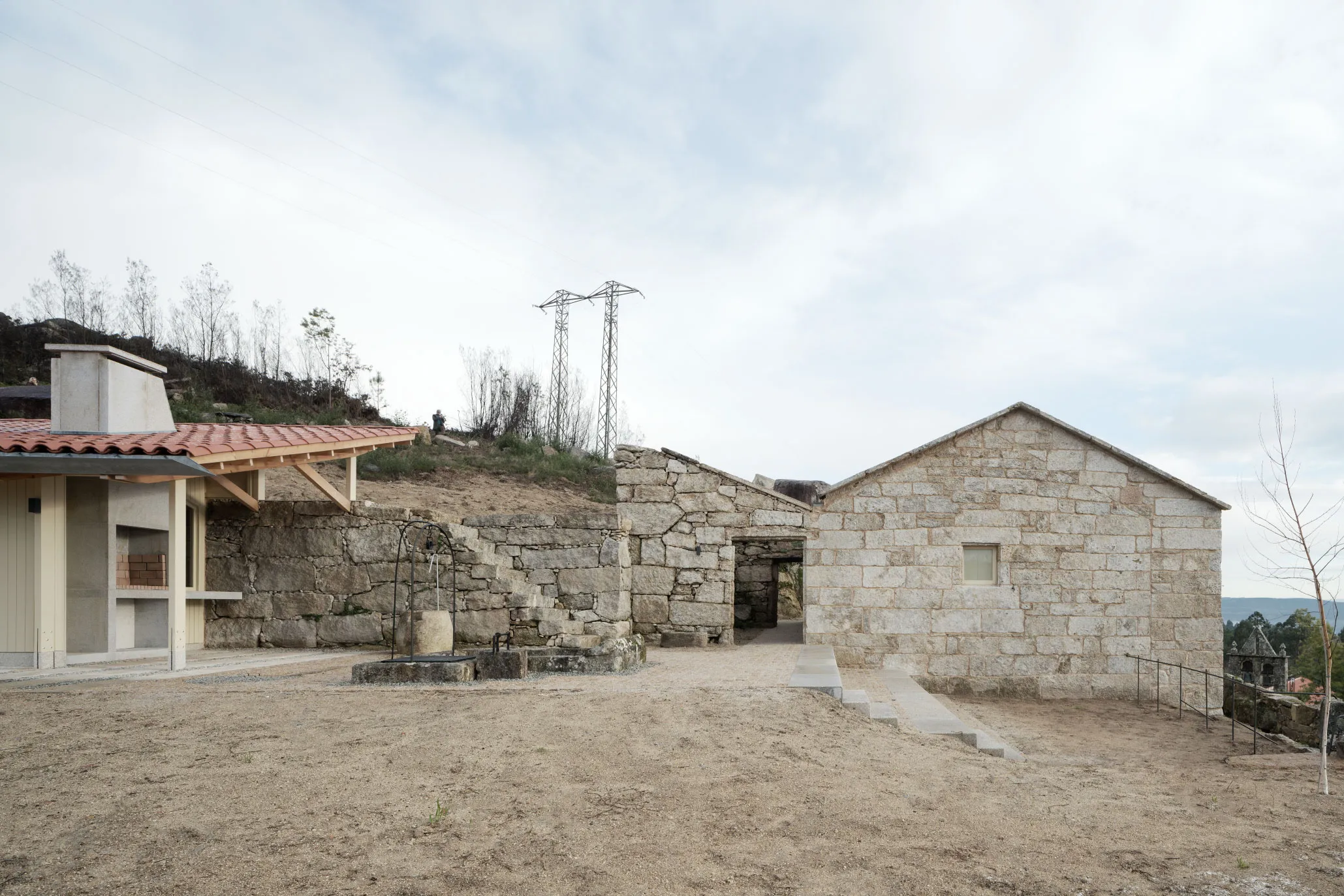
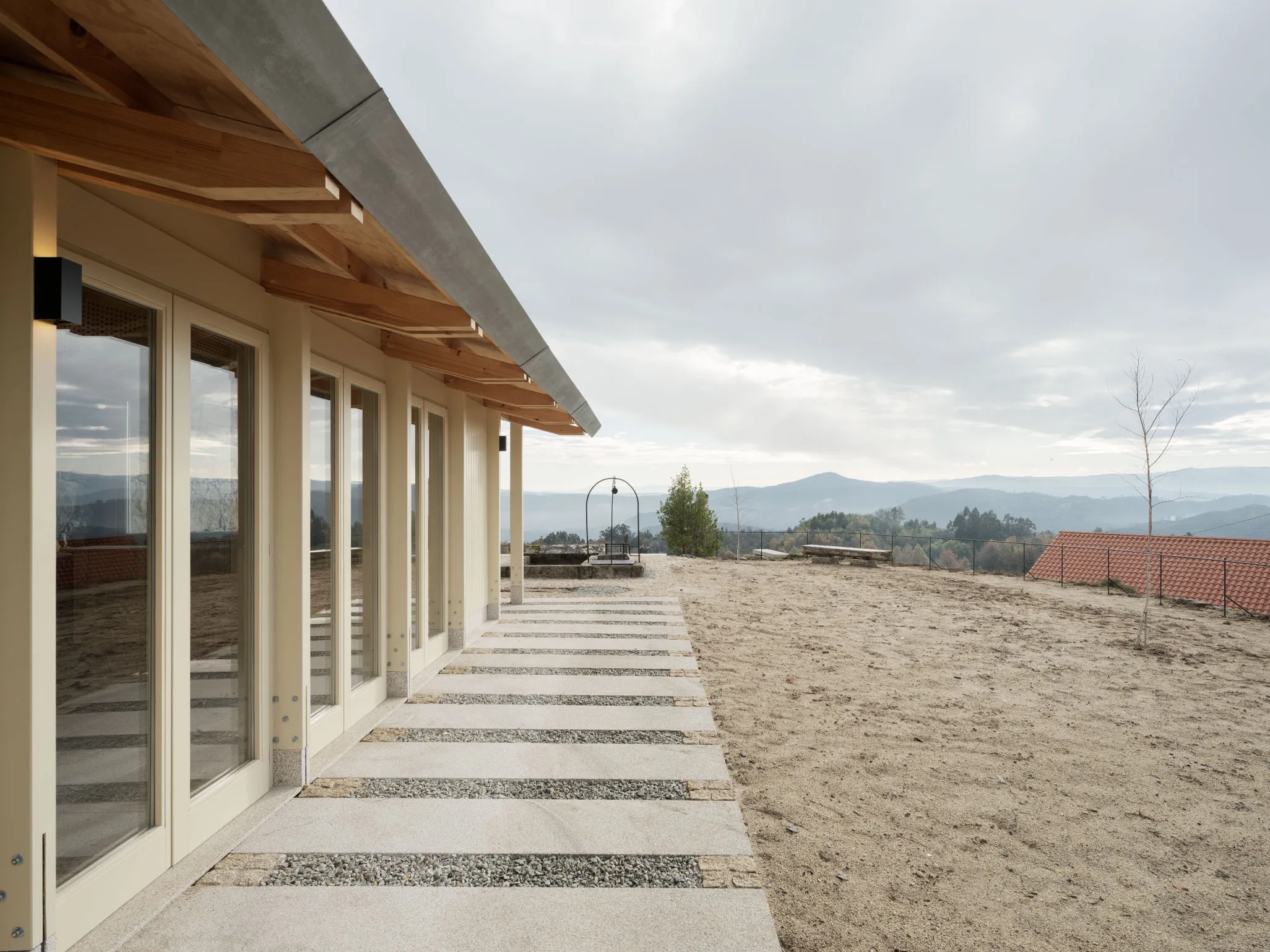
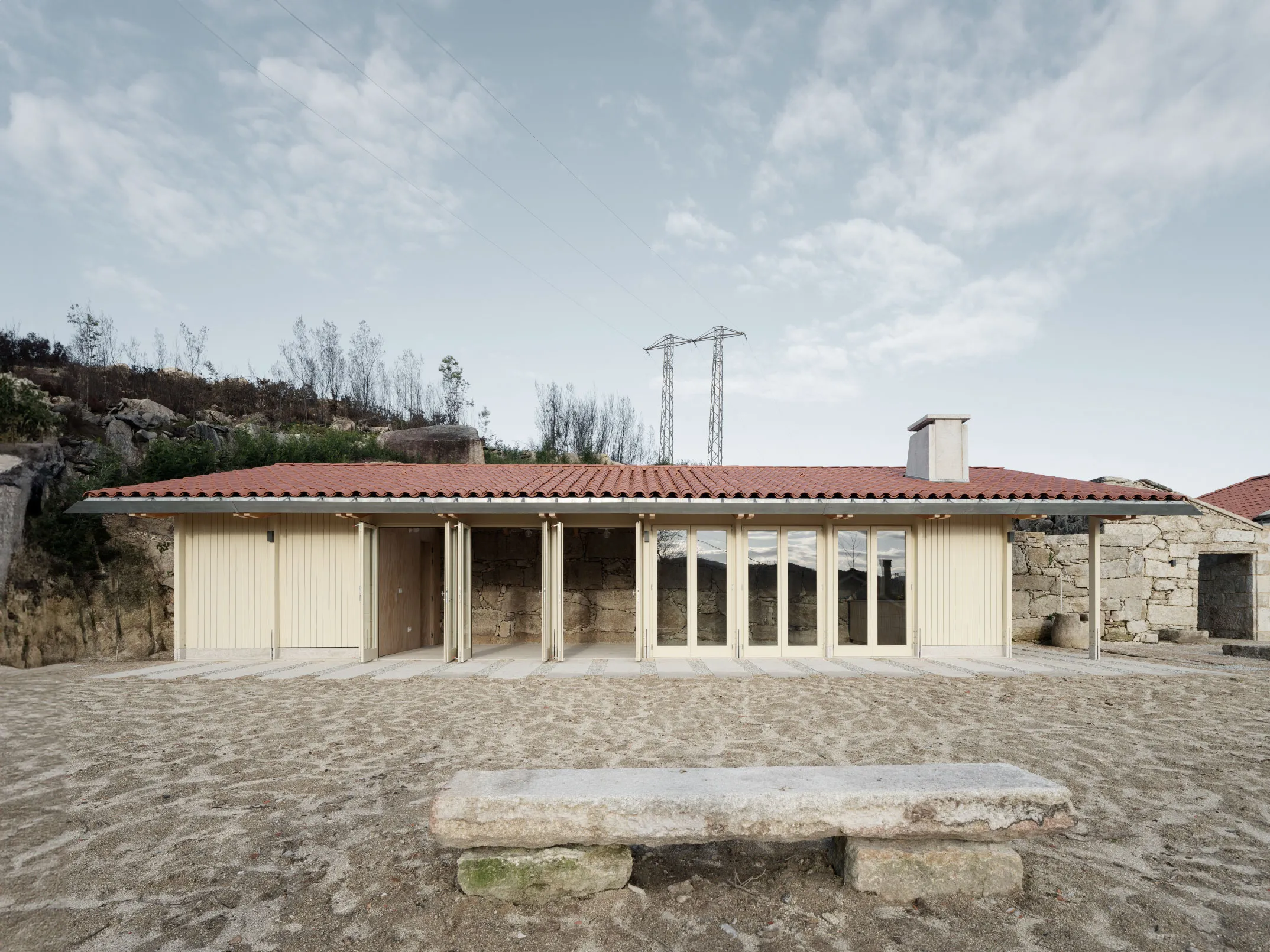
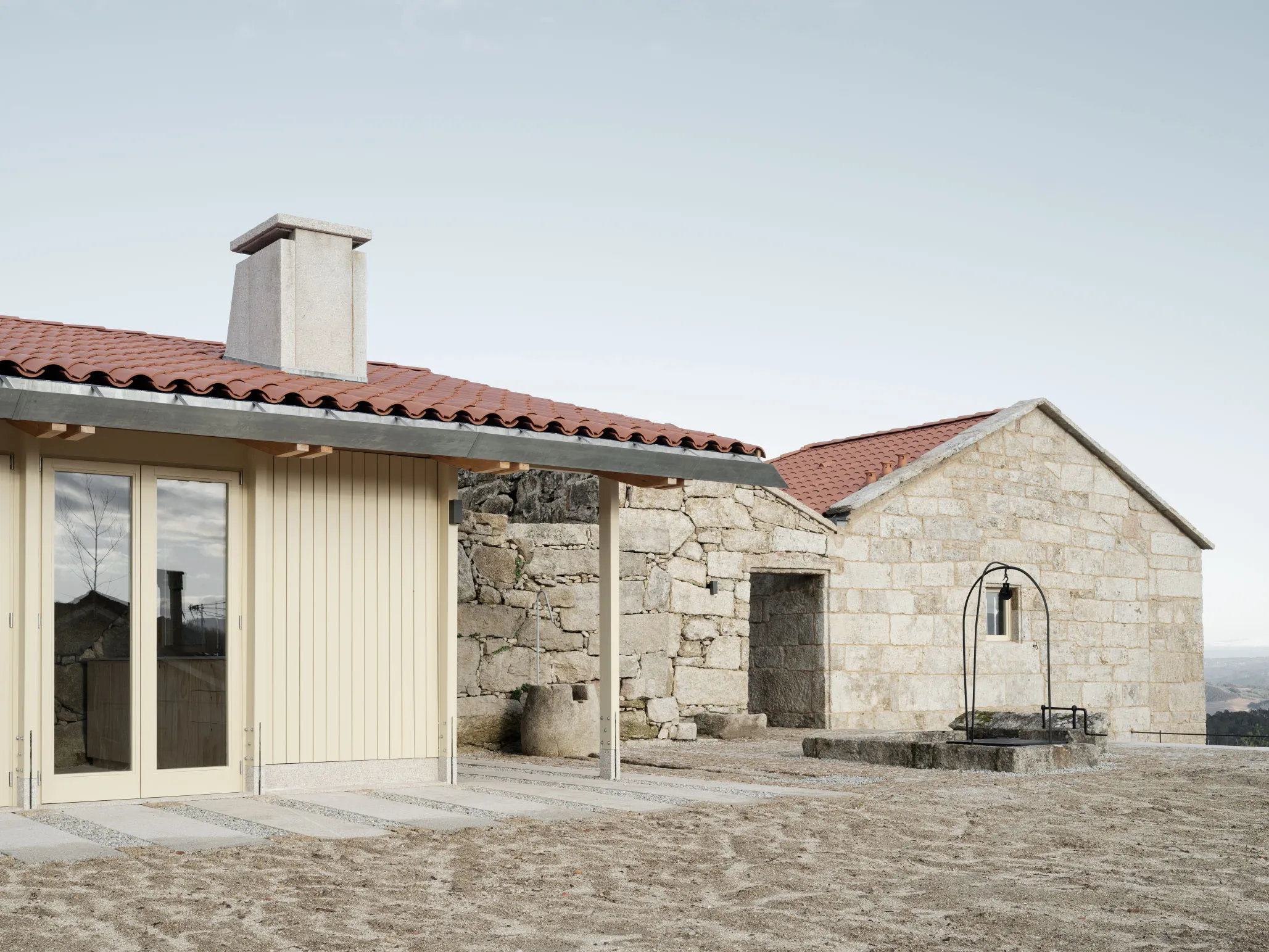
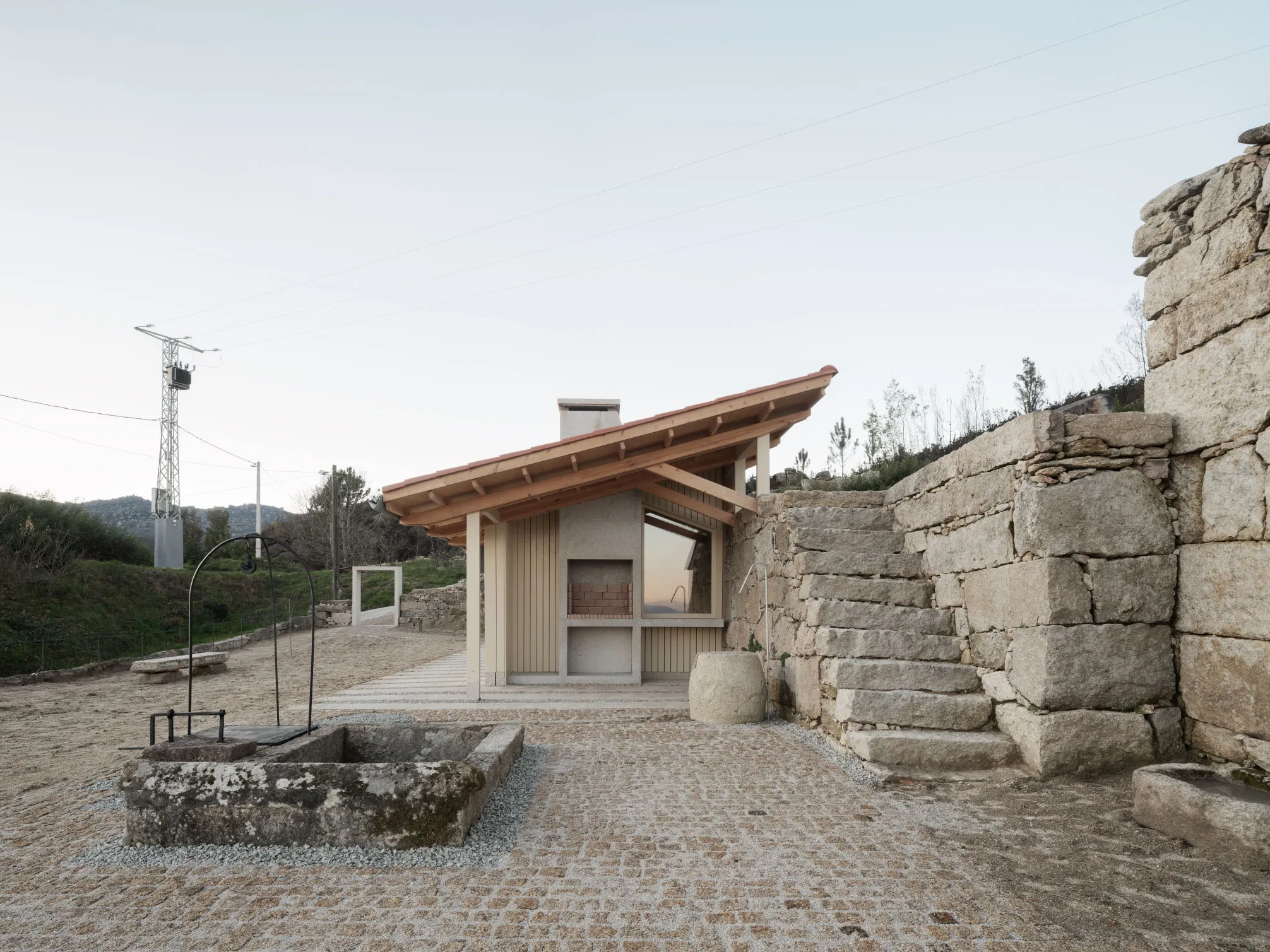
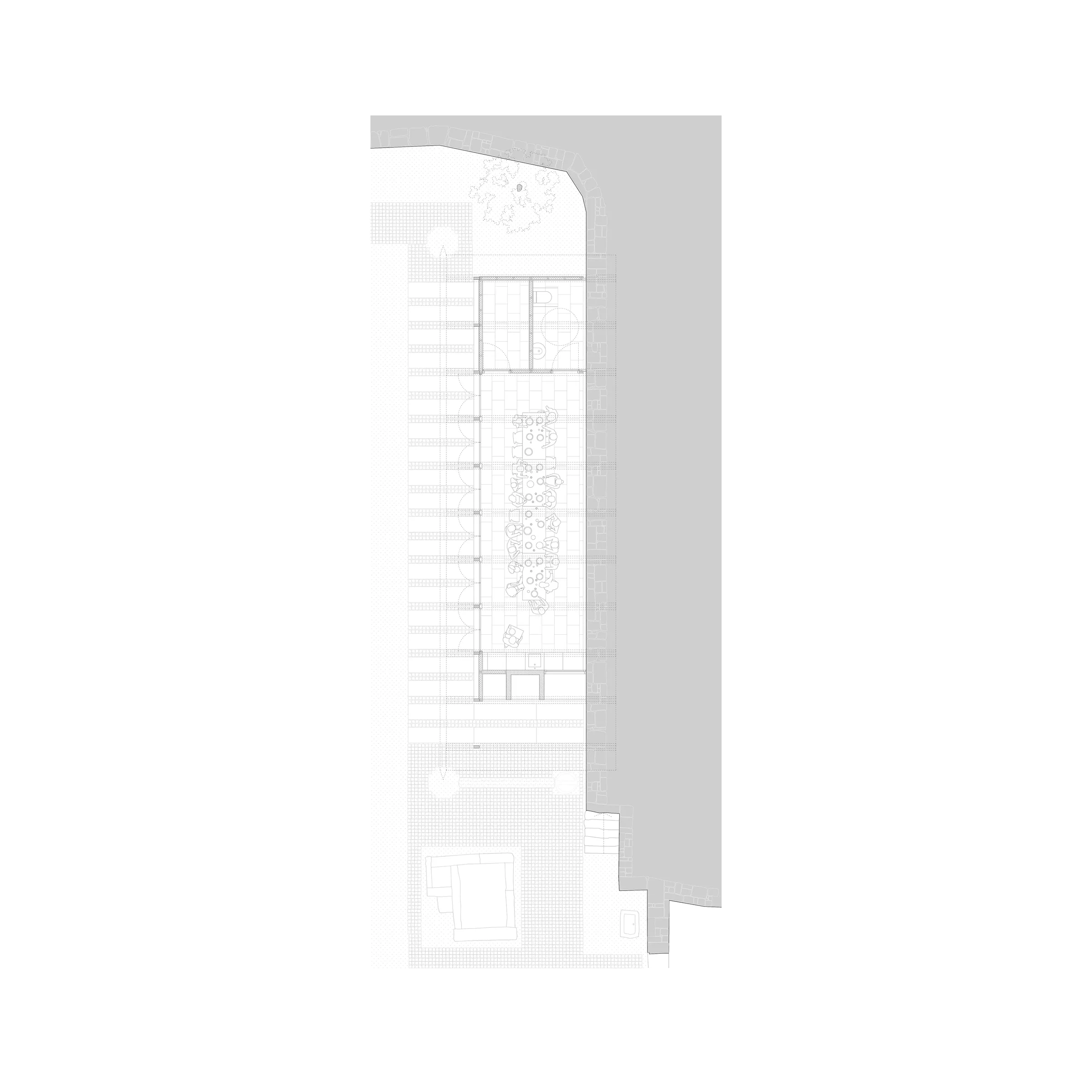
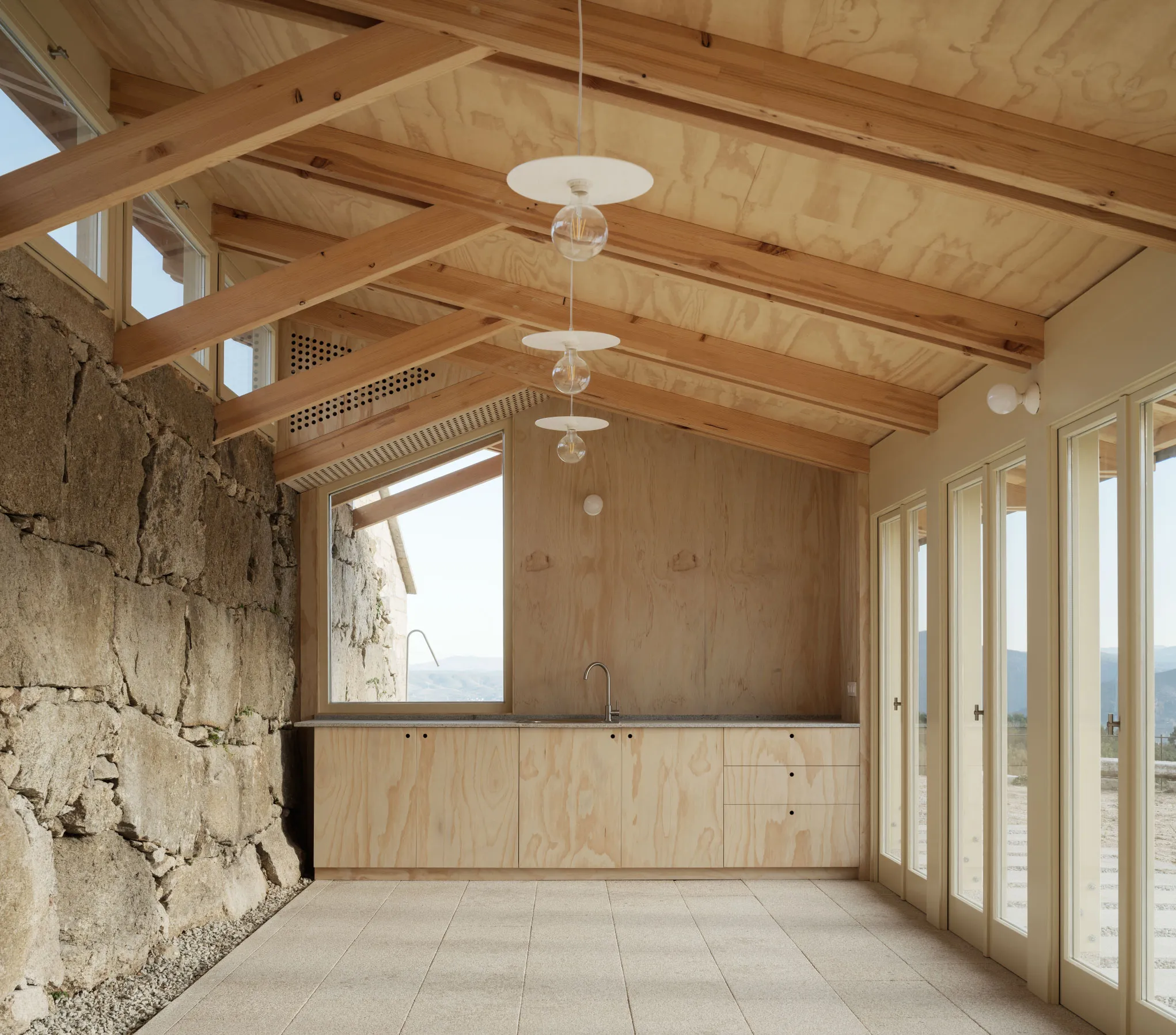
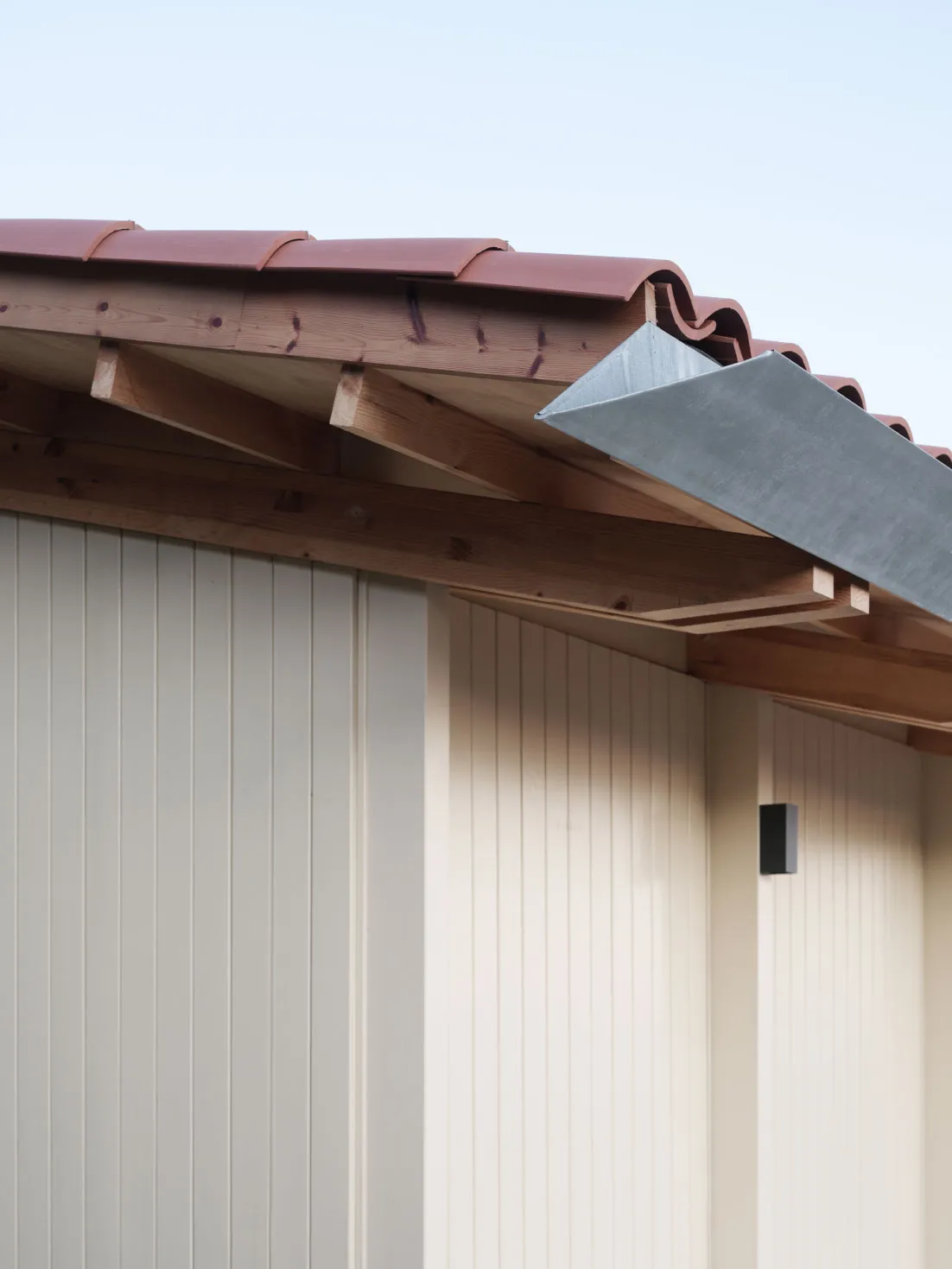
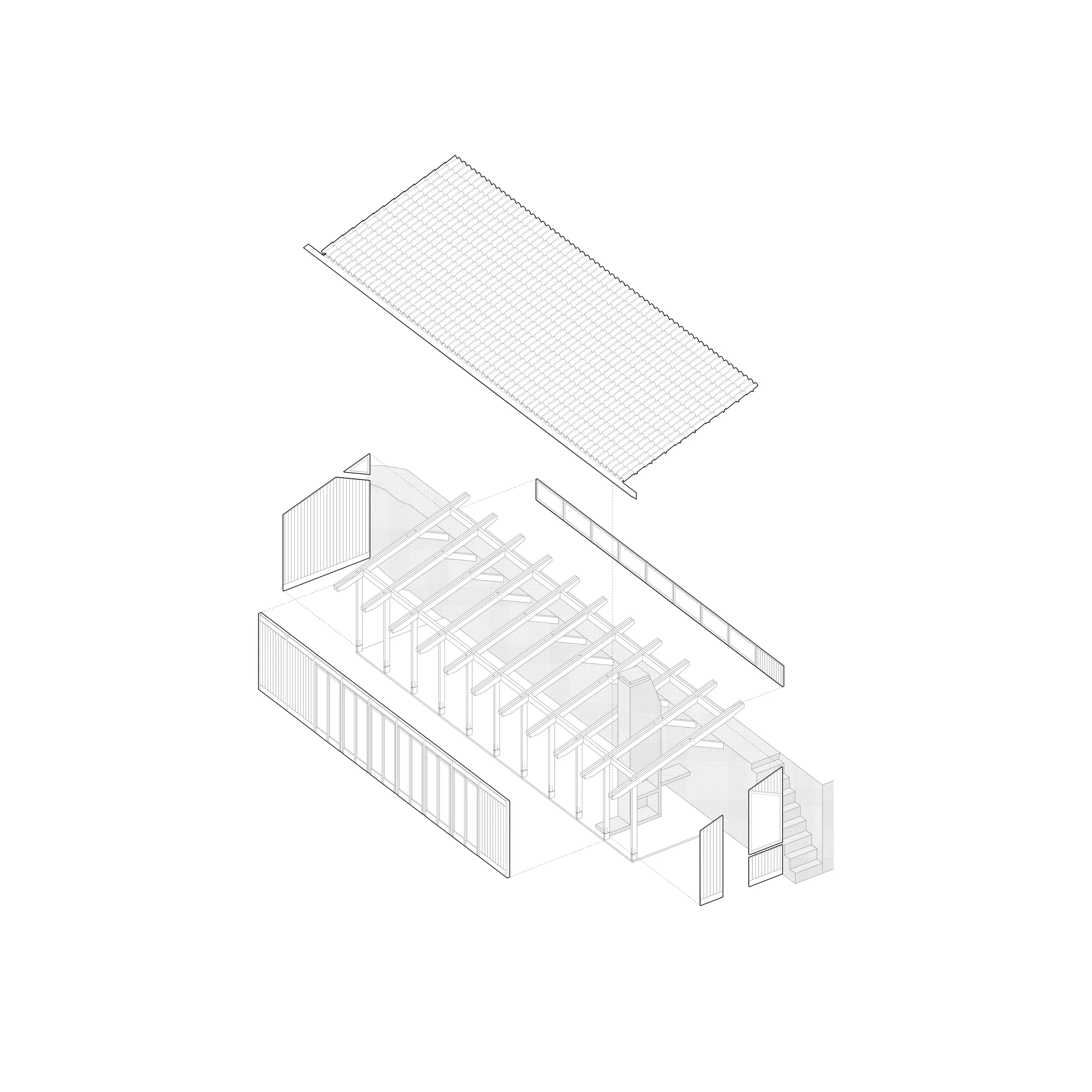
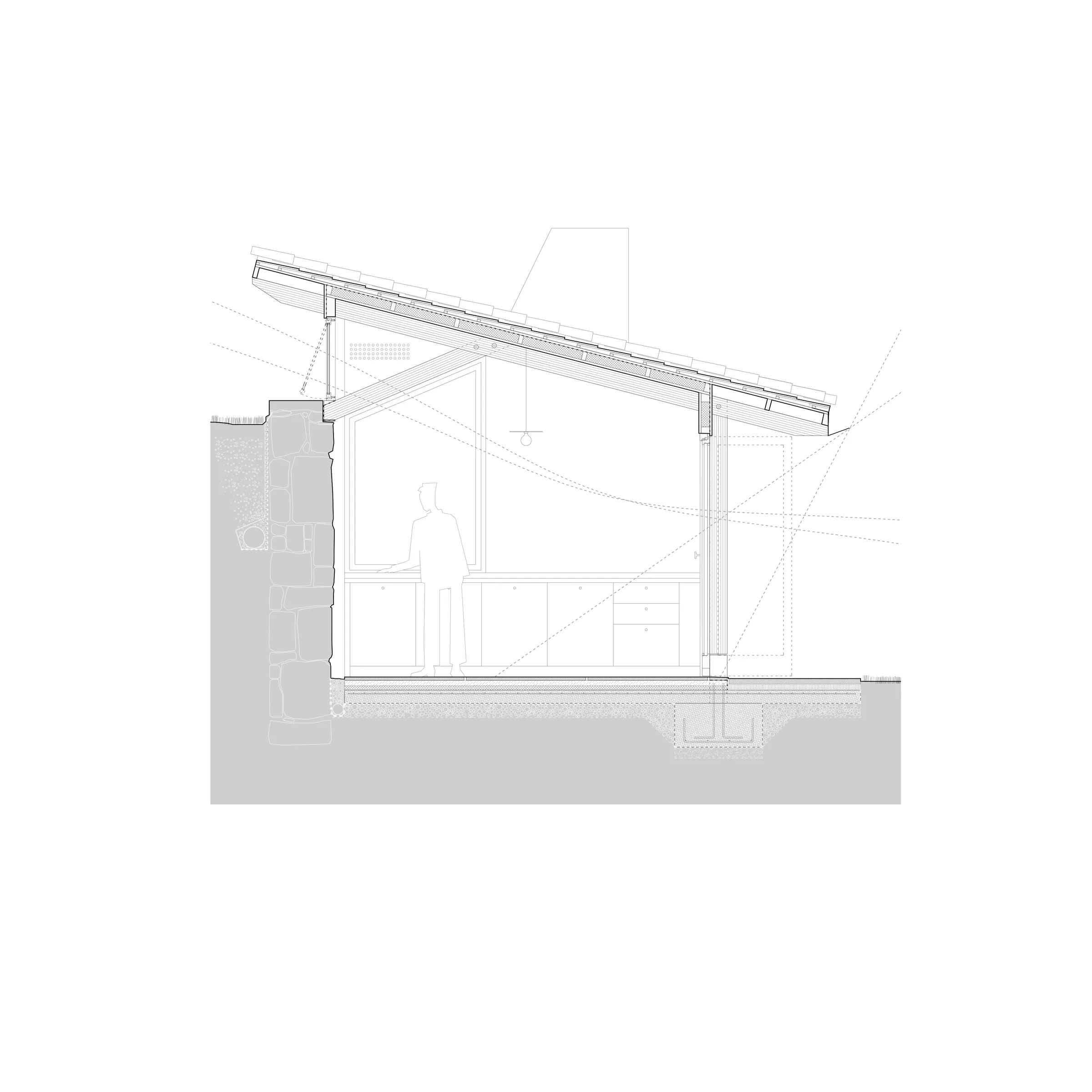
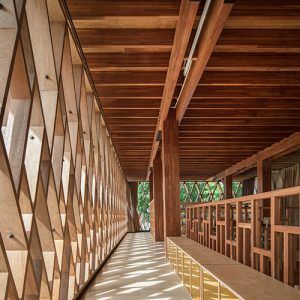
On the other hand, to respond to the expansion requested in the program of requirements, the decision is made to exploit the potential of the intermediate socalco, proposing a sort of multipurpose pavilion parallel to a pre-existing retaining wall, on which elementary granite structures once rested—simple structures over which ancient vineyards climbed. Thus, a new wooden porticoed structure, on which a tile roof rests, seeks to activate the green surface of said terrace, critically reinterpreting some of the initial premises of the design competition, while functioning as a reception area for those accessing the plot from its western edge. The relationship of the pavilion with the pre-existing construction, as well as its independence, provides greater flexibility for uses, as it allows the coexistence of different activities without overlapping.
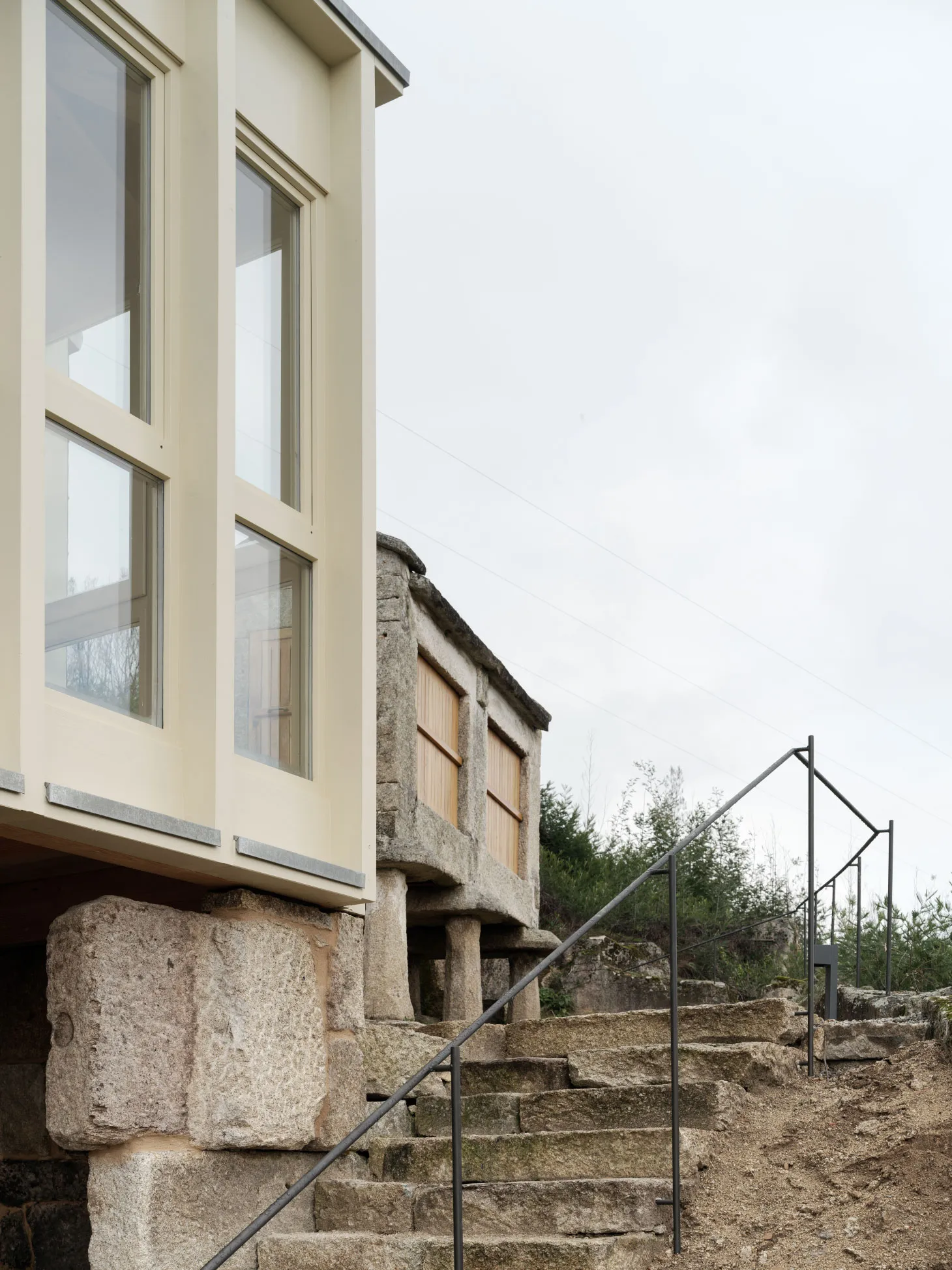
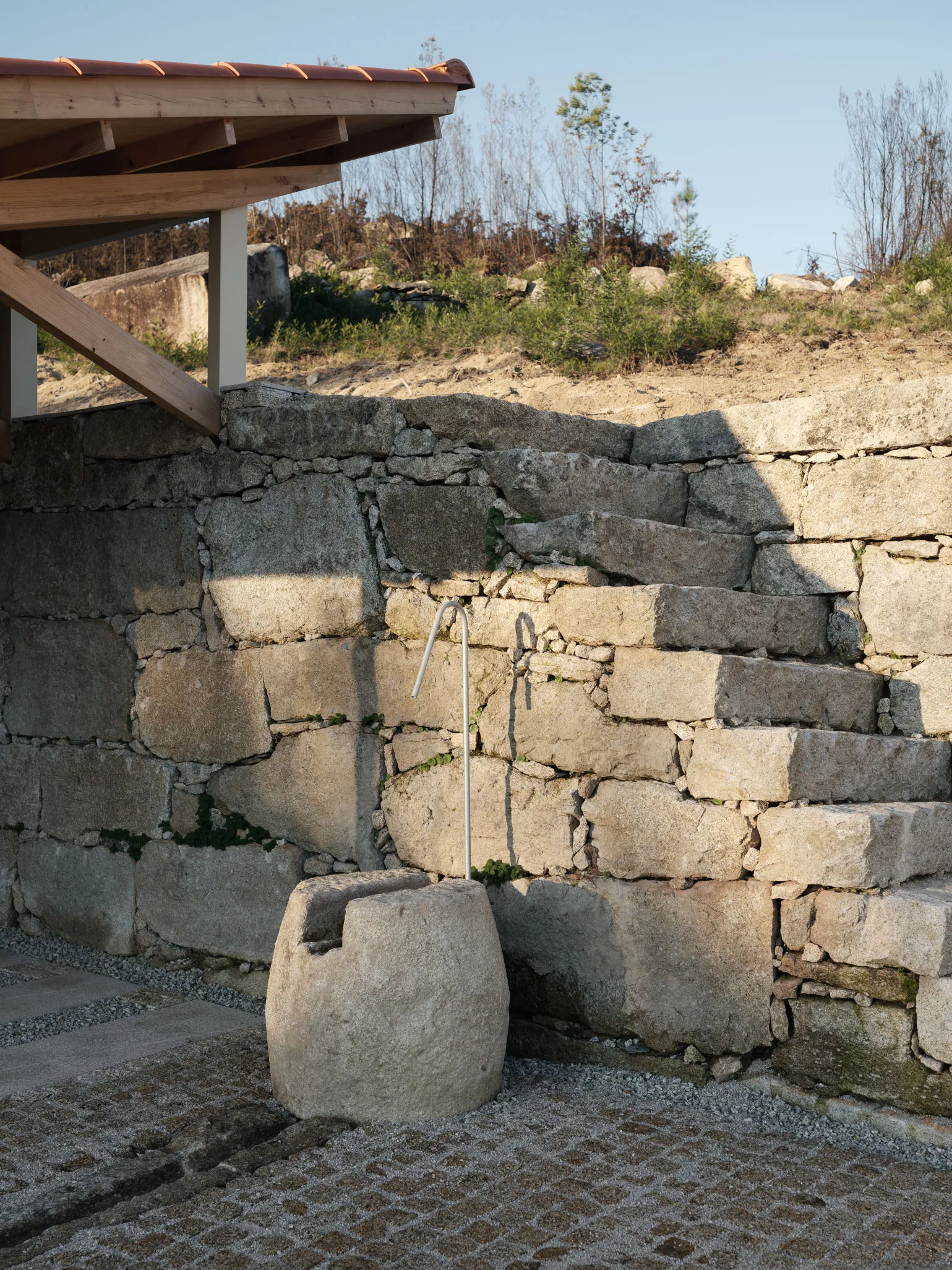
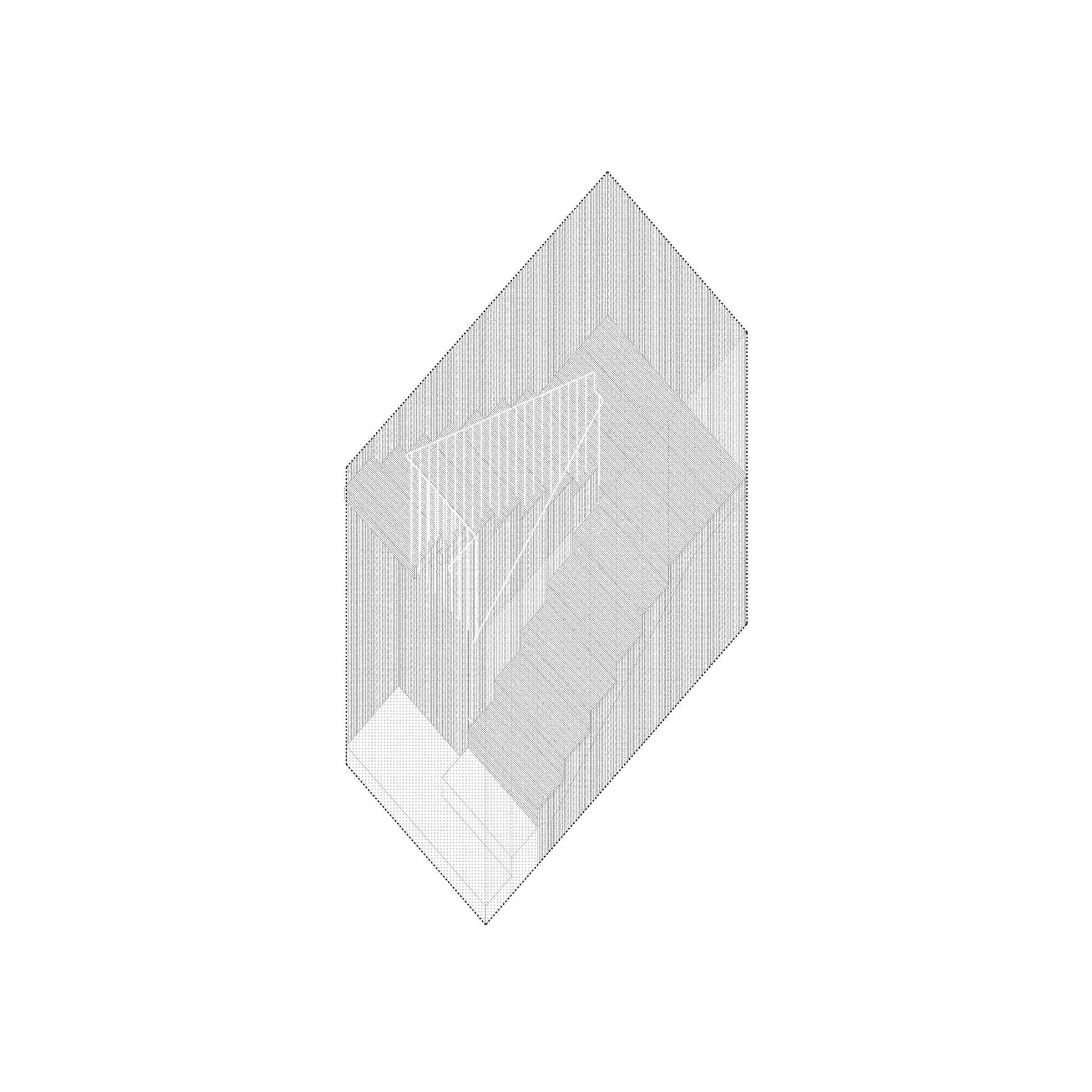
Finally, the intervention is completed with the recovery of elements of heritage value existing on the plot: a hórreo (traditional granary), a well-laundry, and the perimeter enclosure wall. Additionally, small urbanization works and consolidation of existing level changes are carried out, using in part material found during work inside the dwelling, which allows the activation of certain spaces, as well as the creation of a pedestrian path that connects the two accesses to the plot.