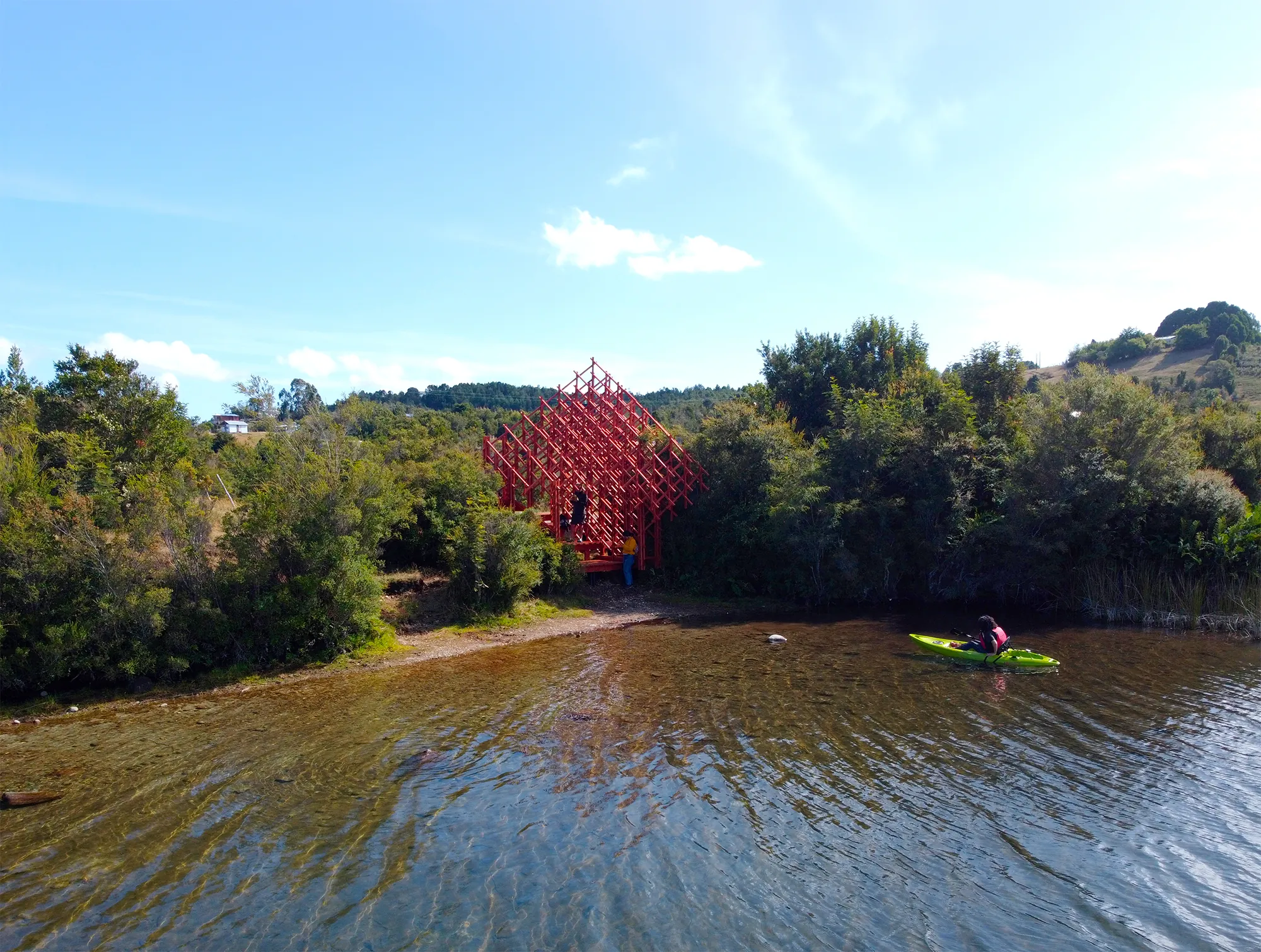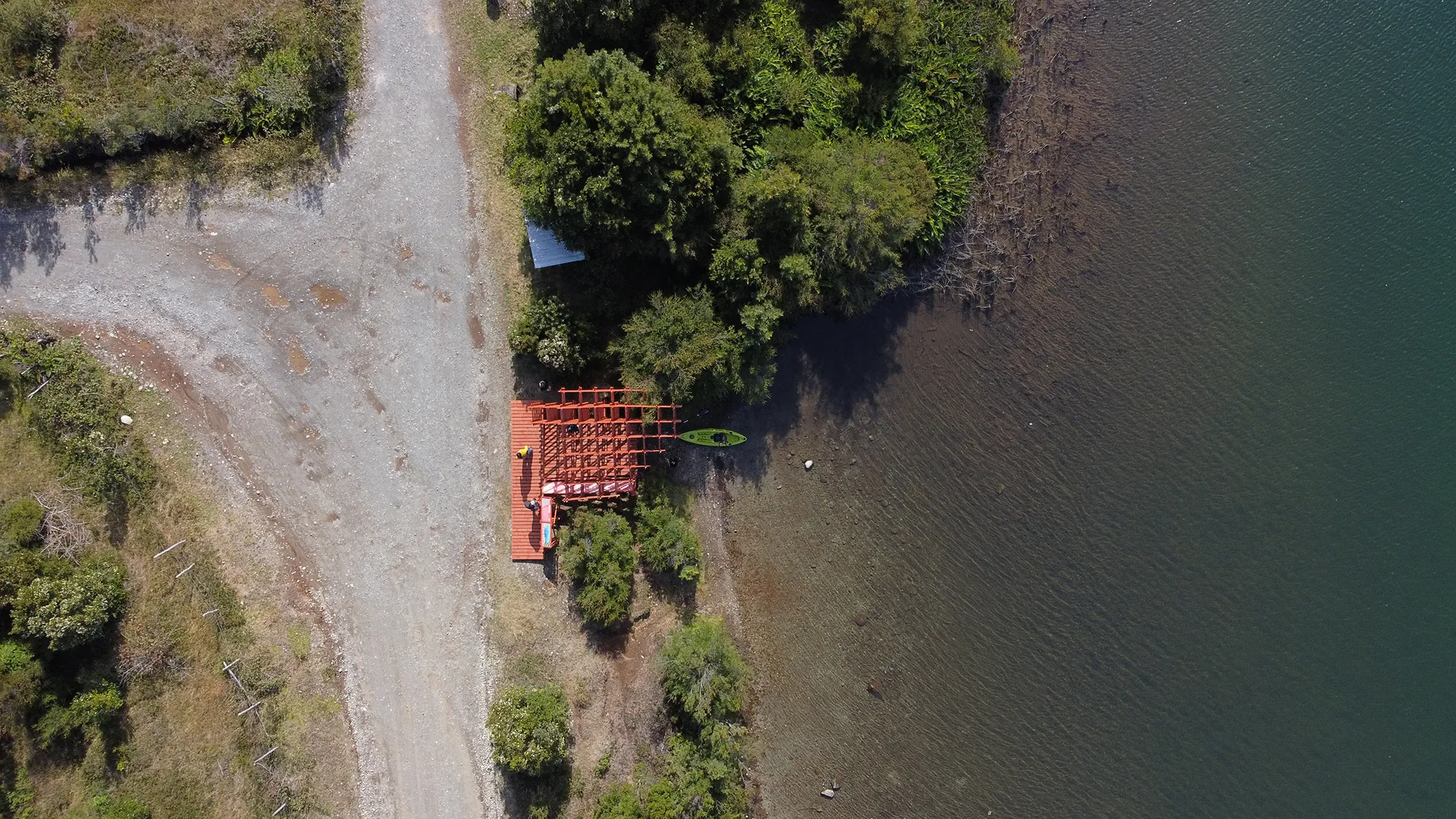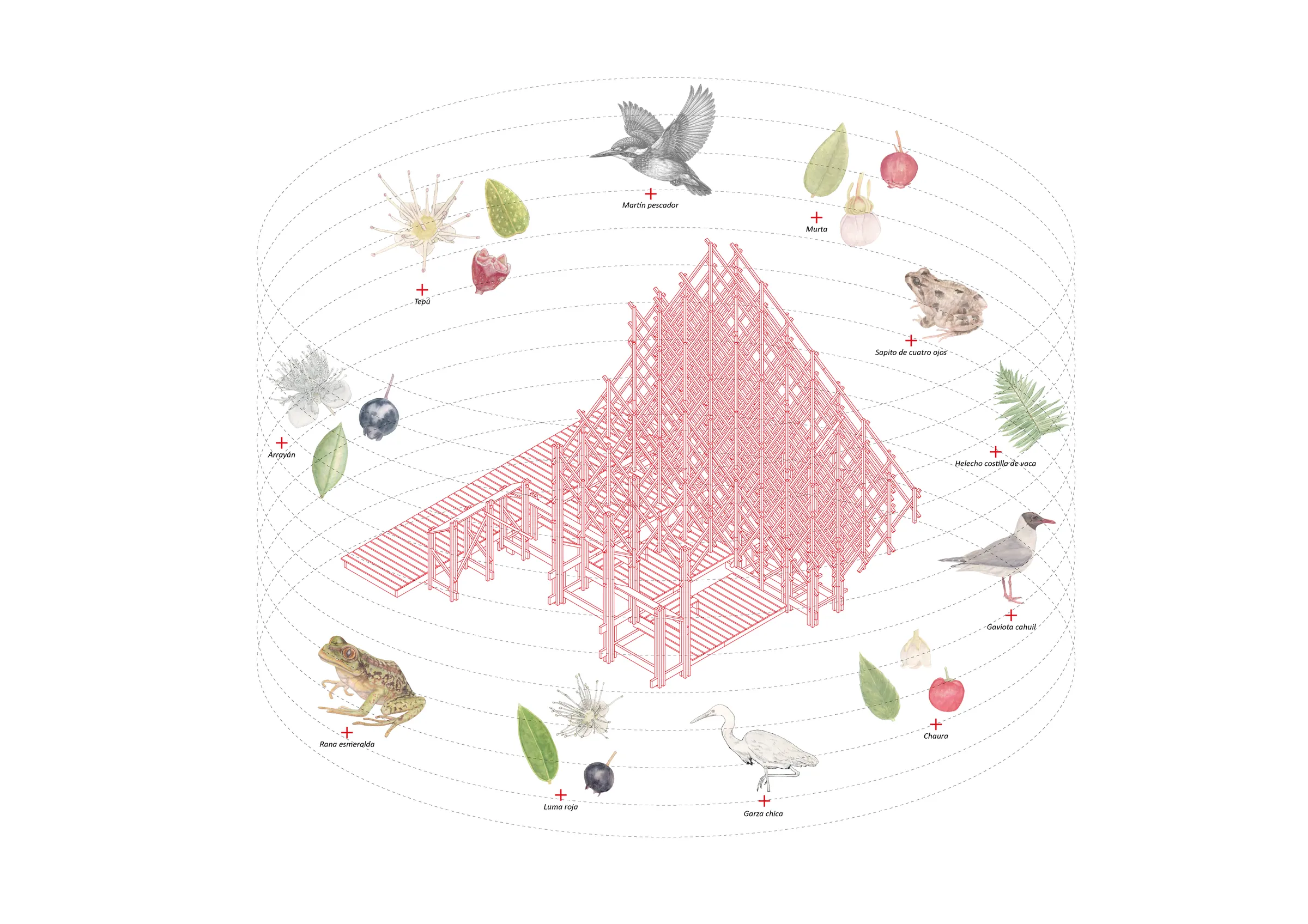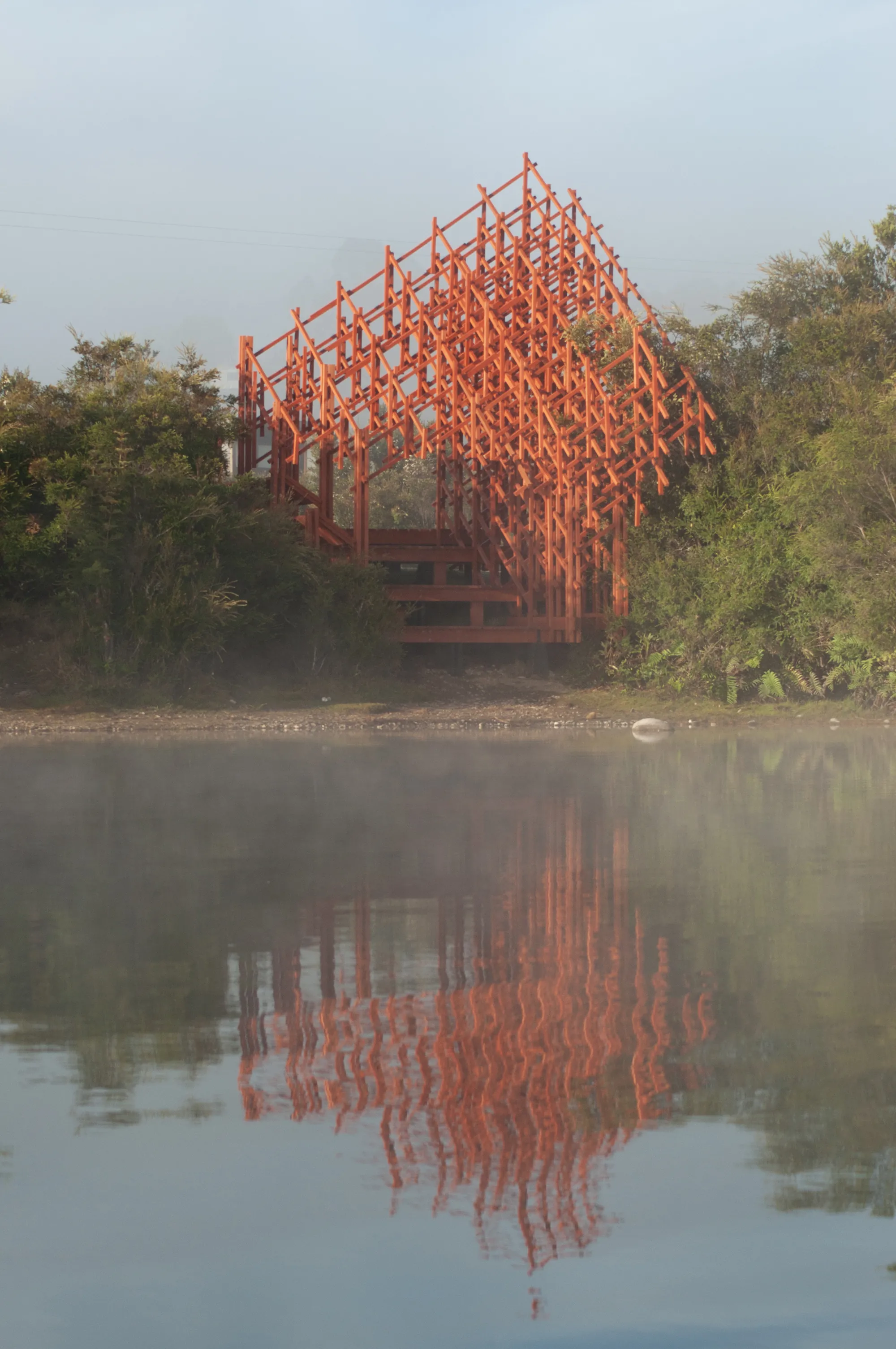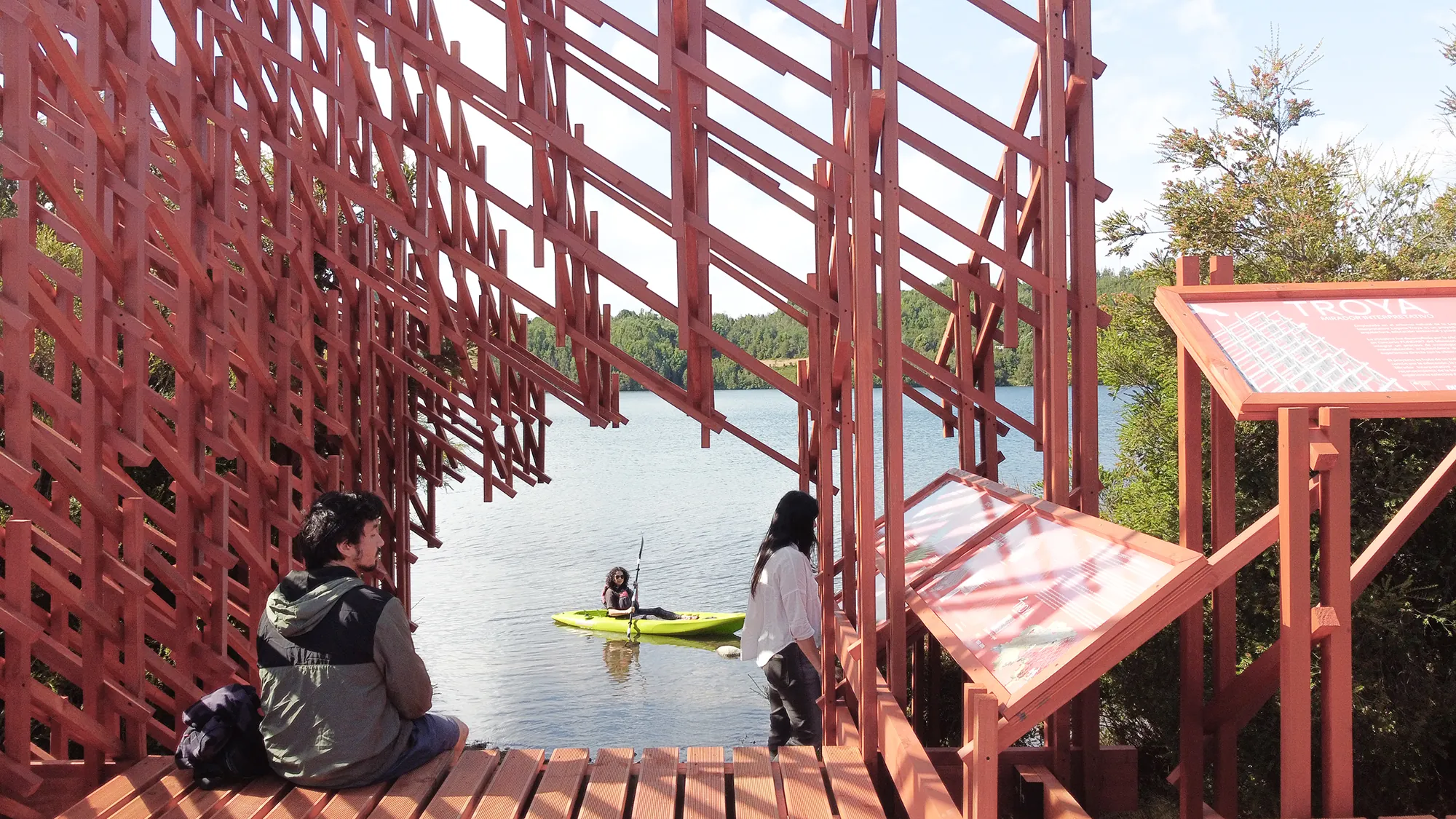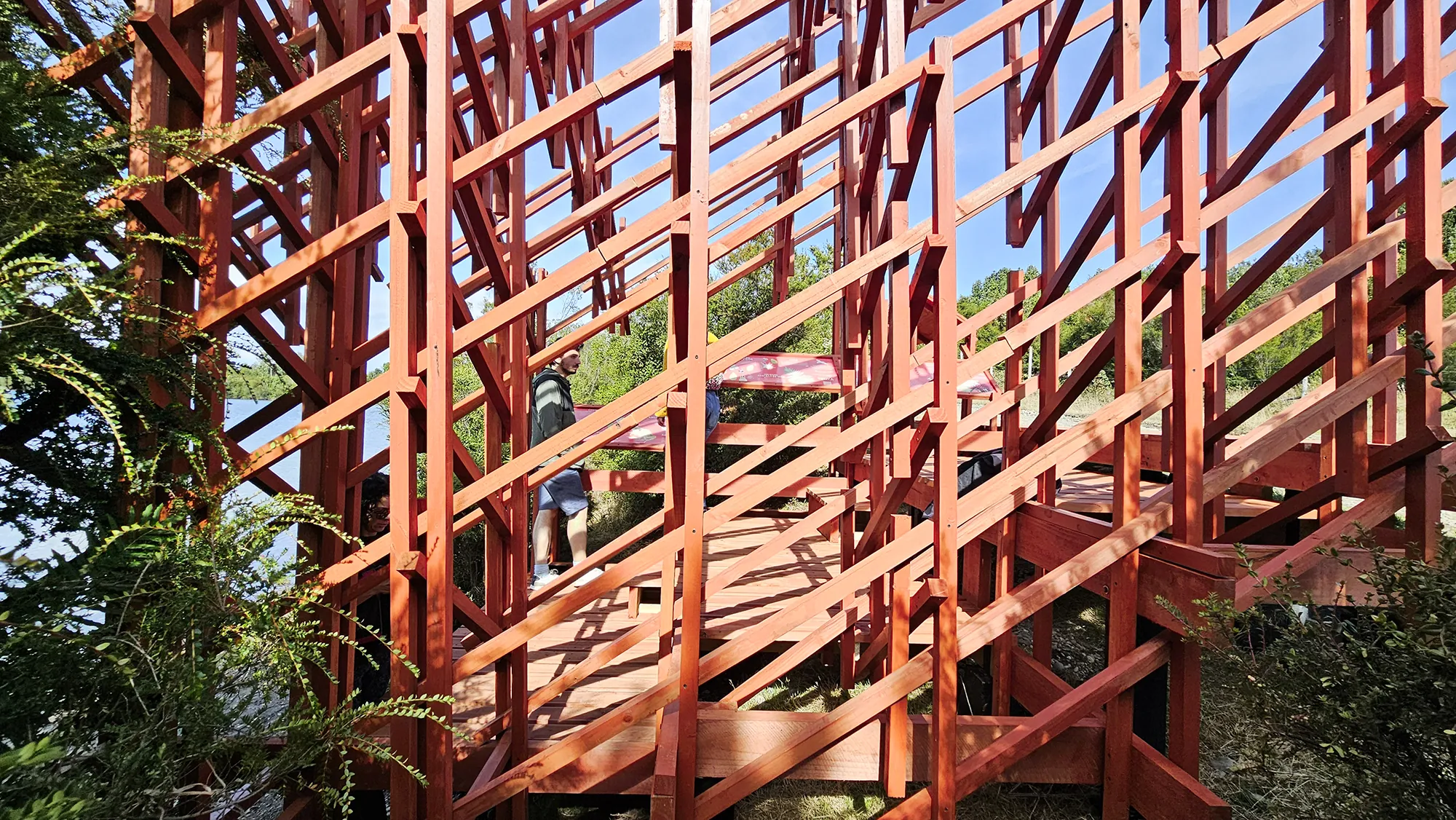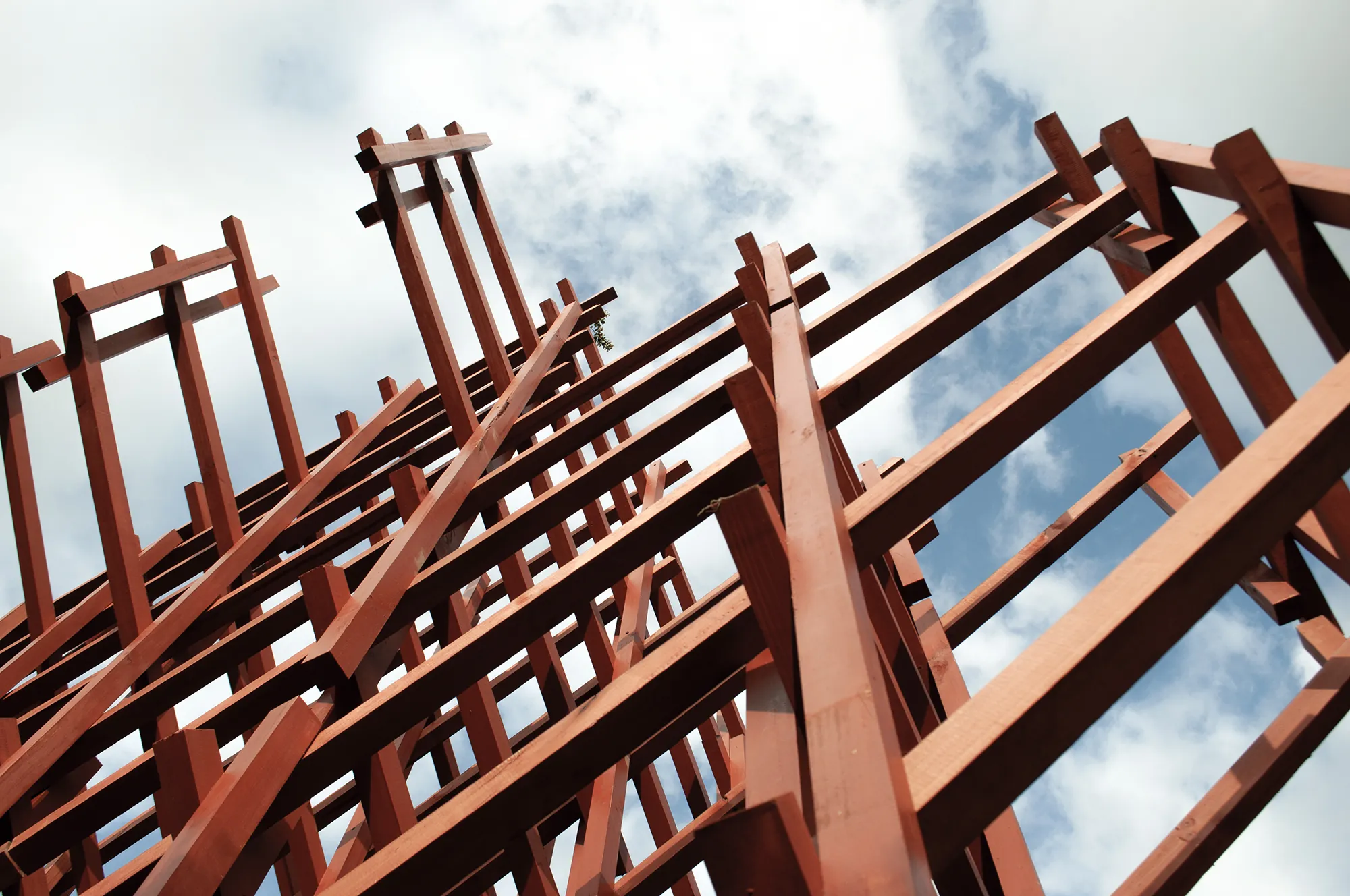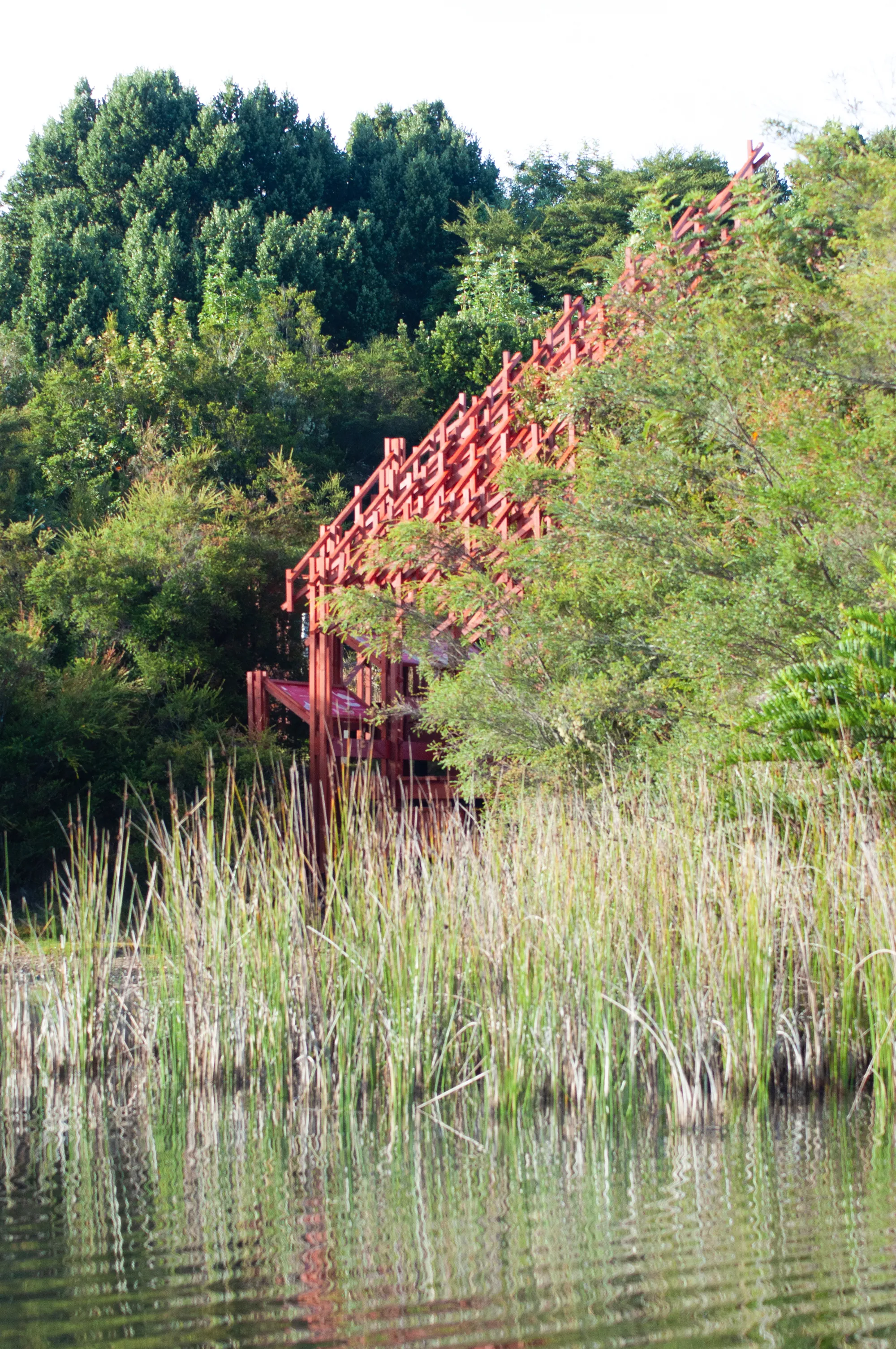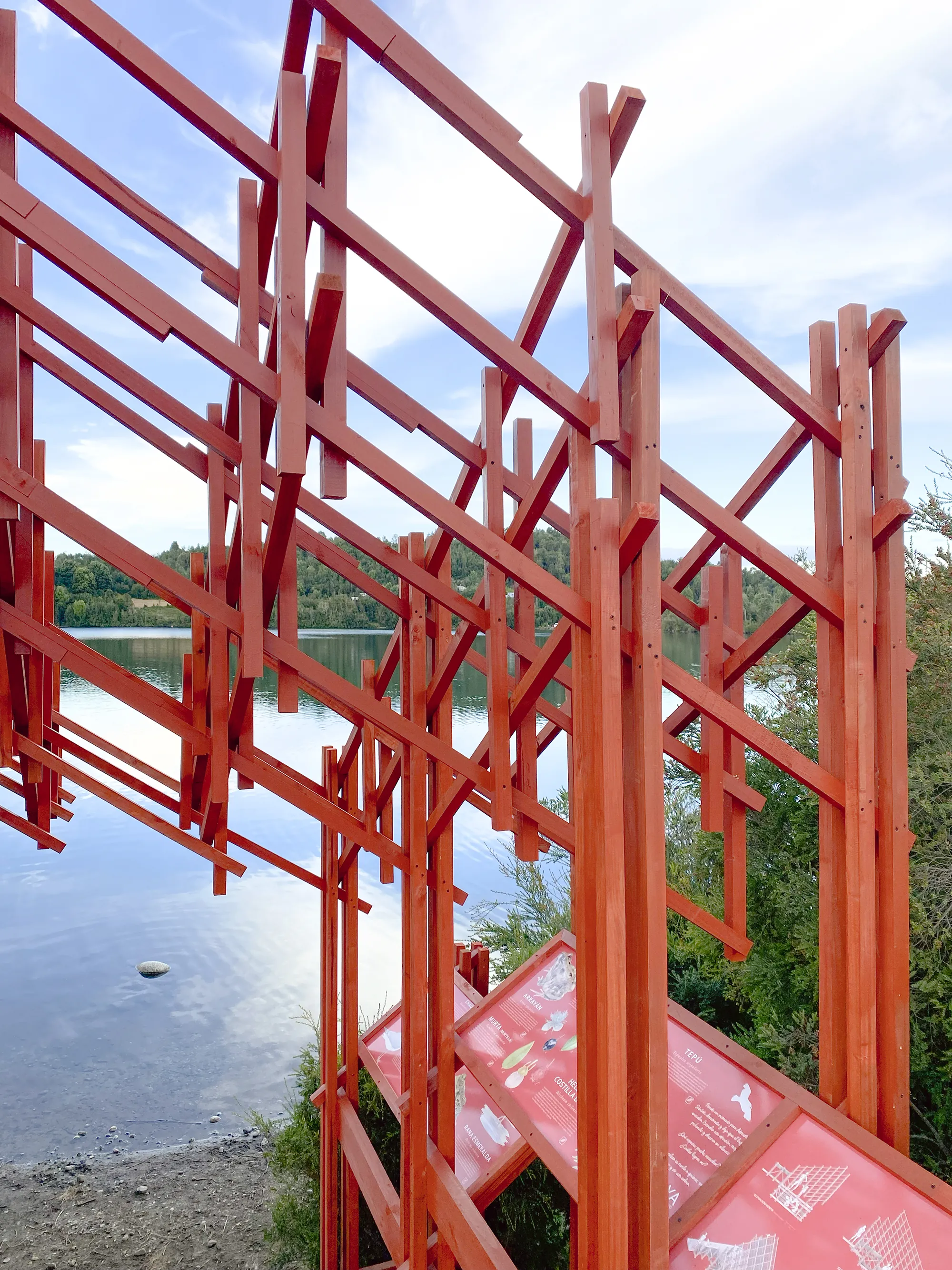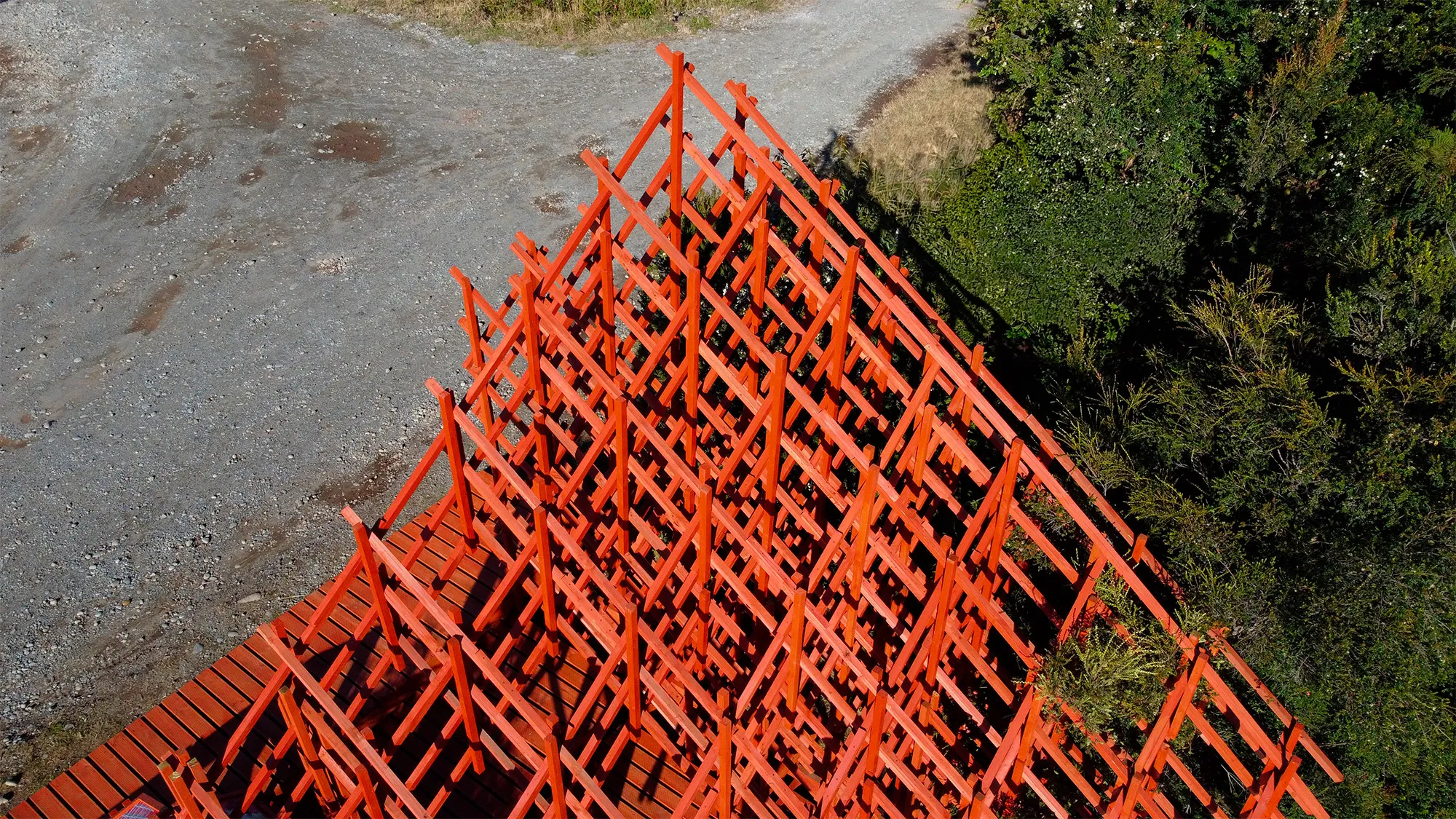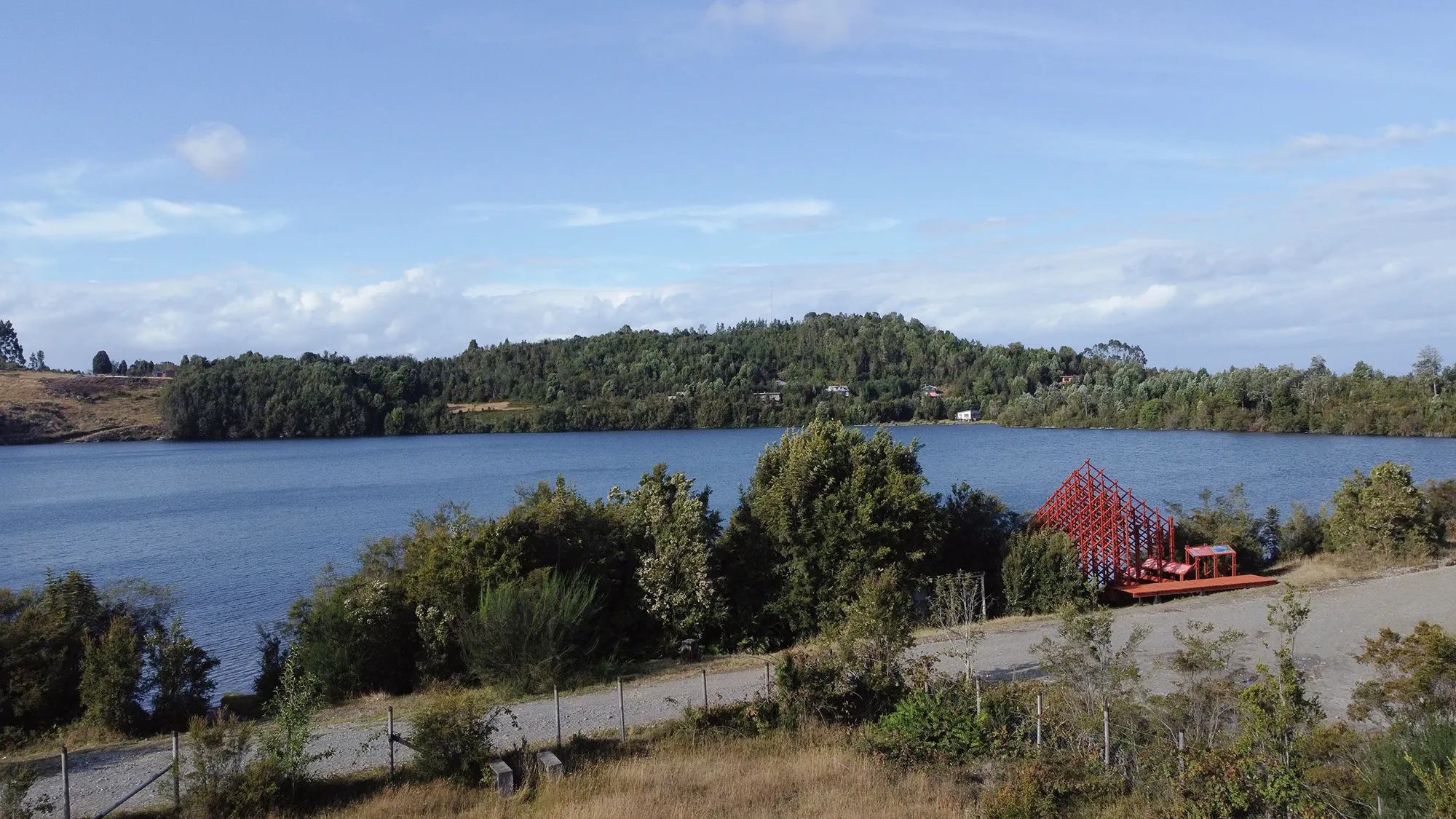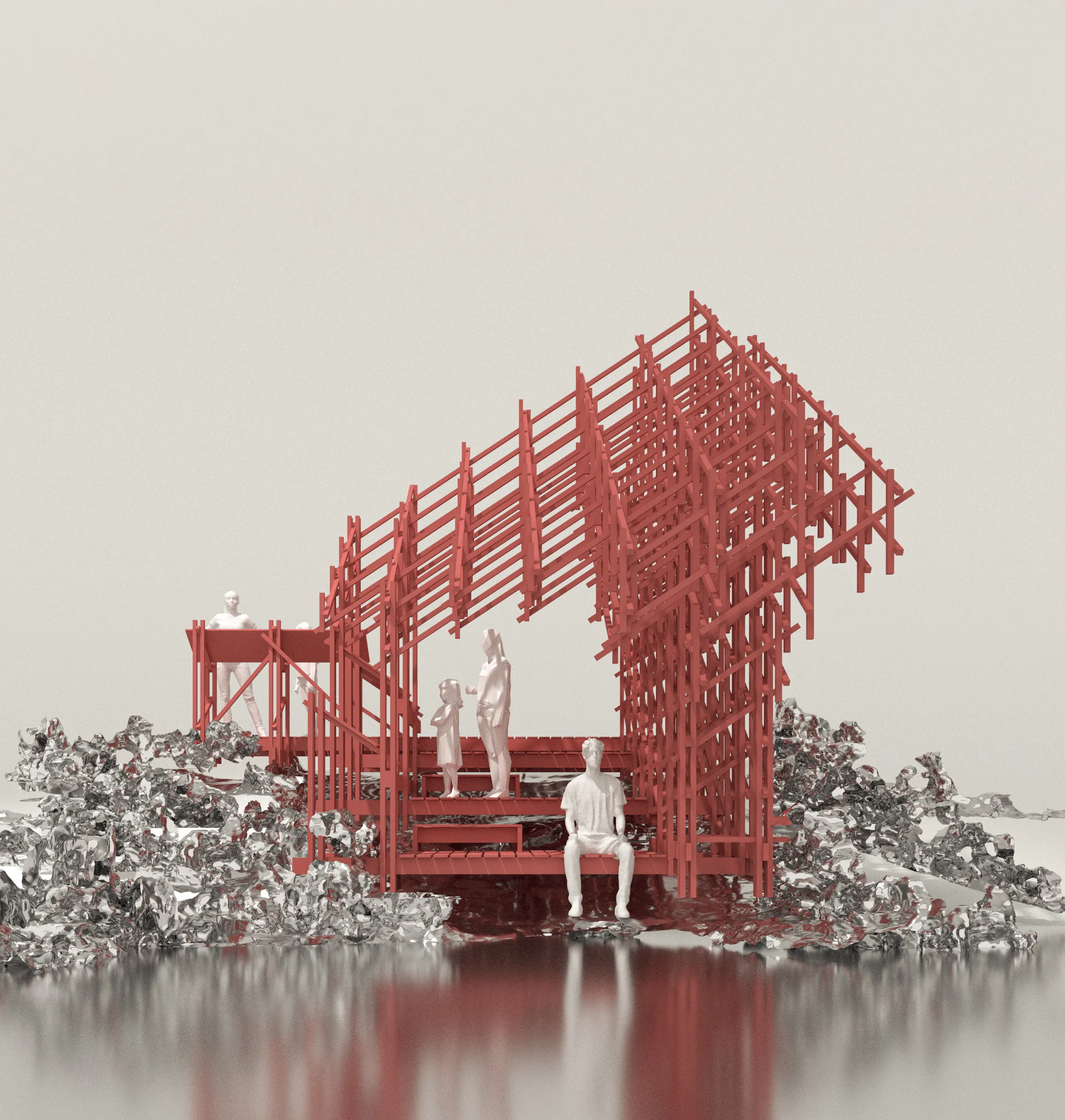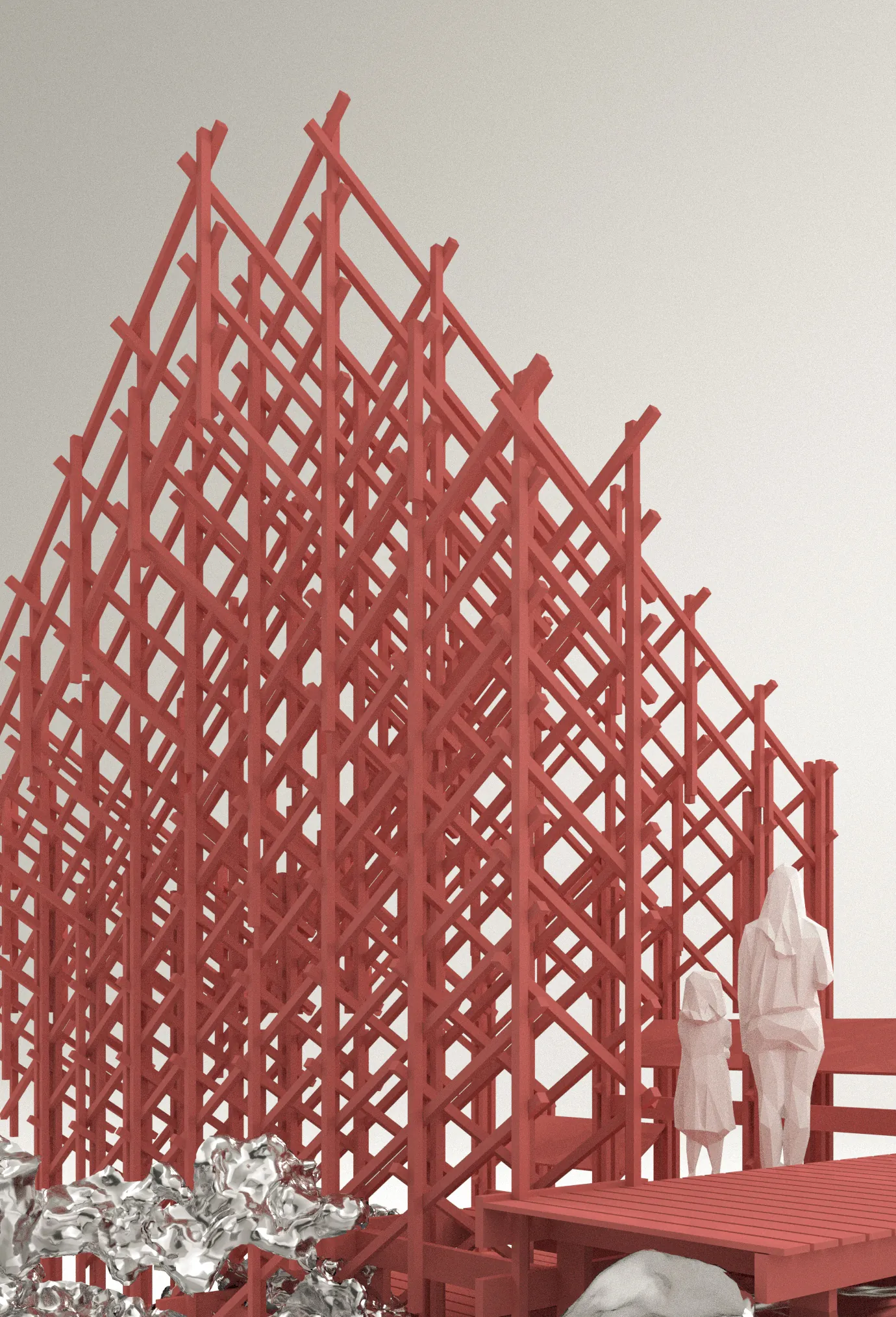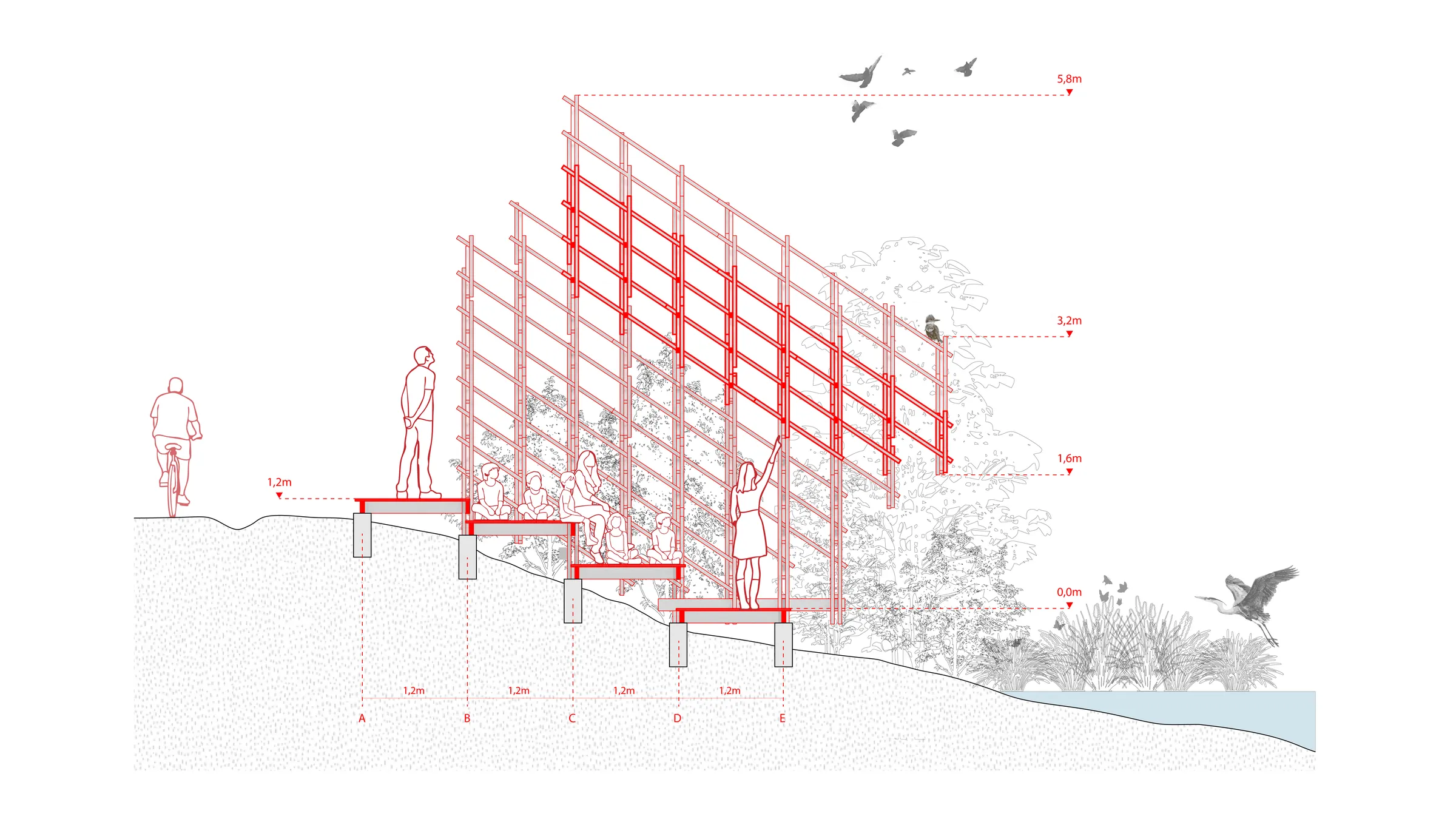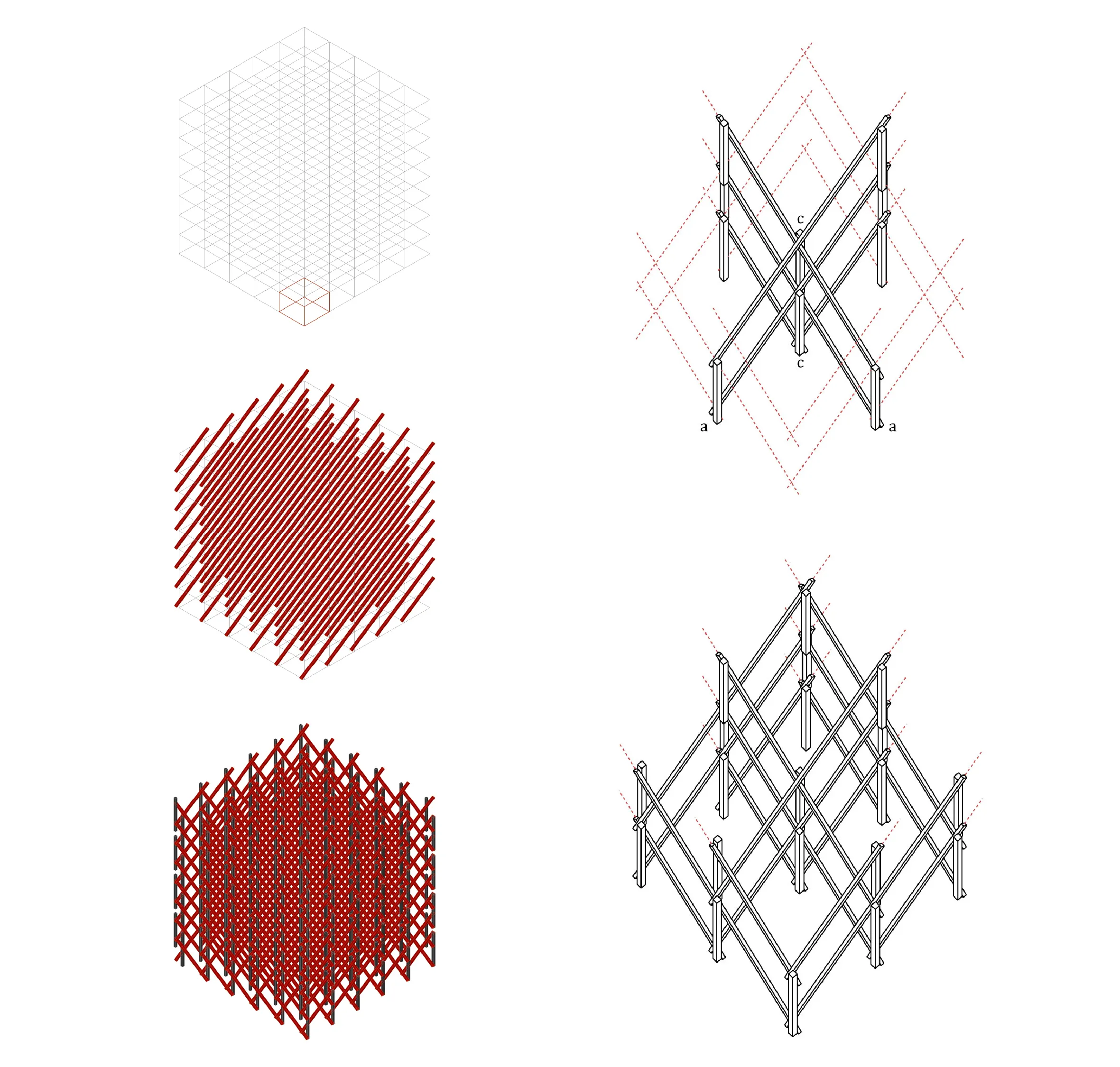
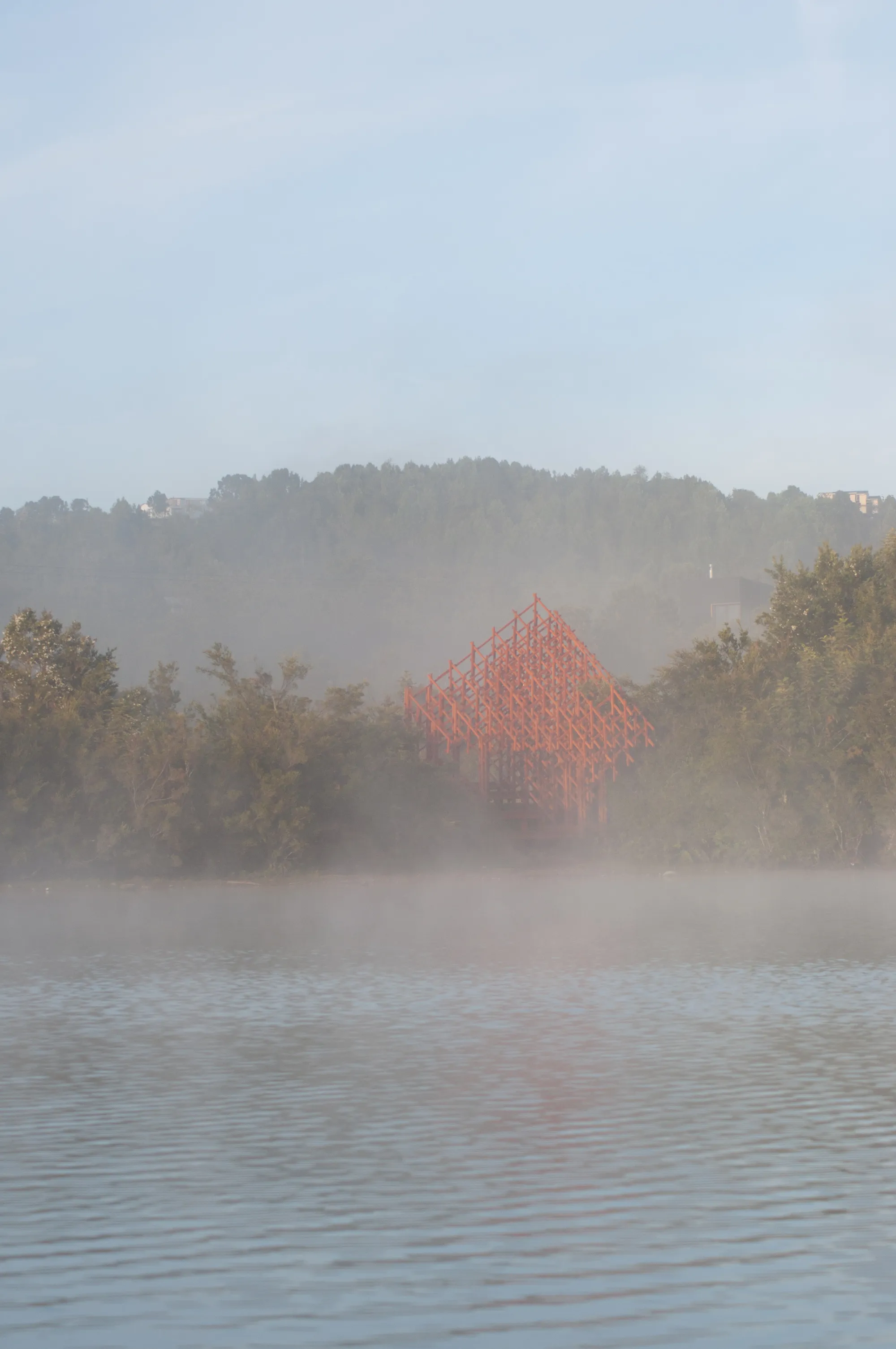
The Laguna Troya Interpretive Viewpoint is developed through an architectural system based on the aggregation of small-scale discrete timber elements.
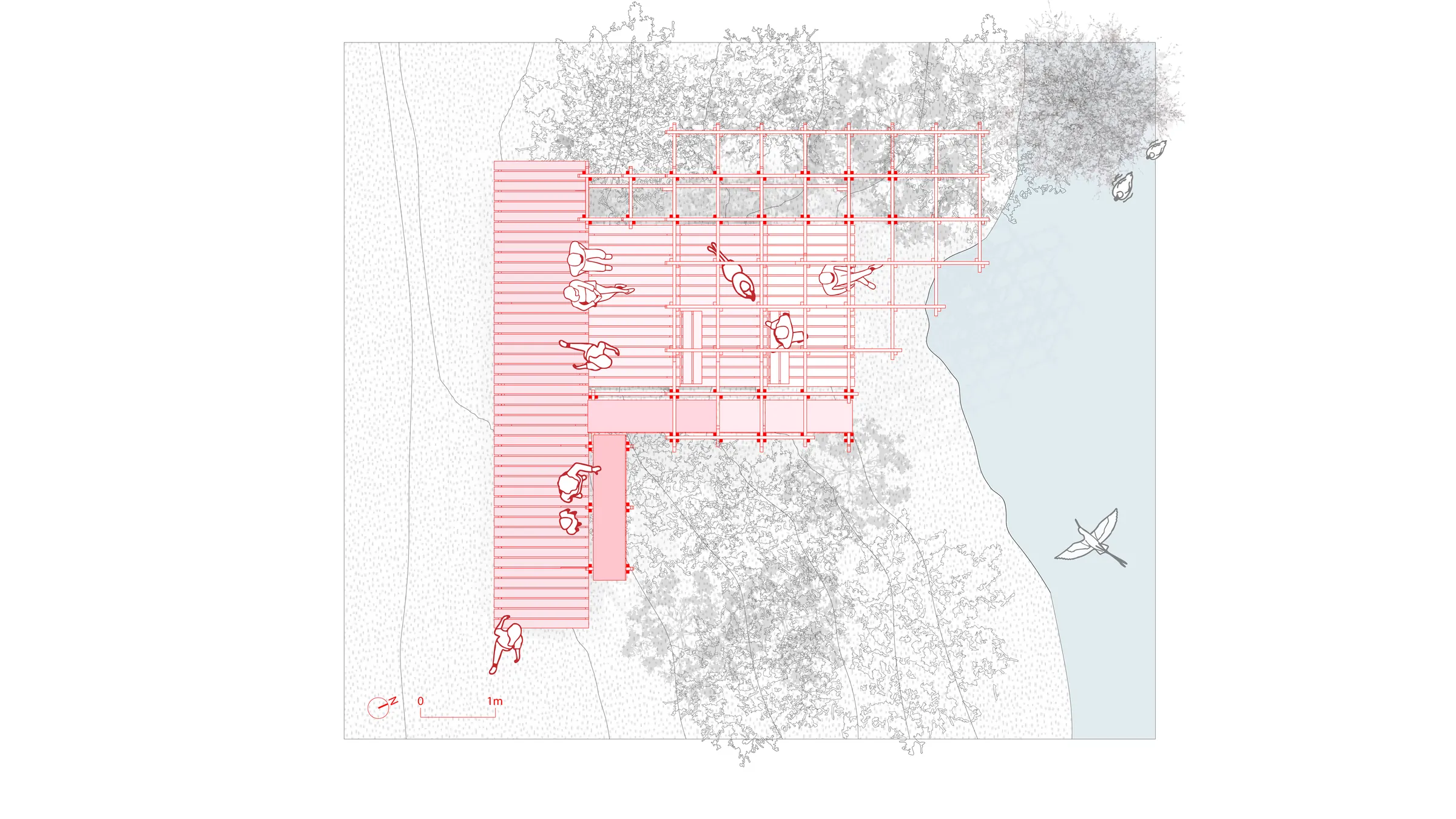
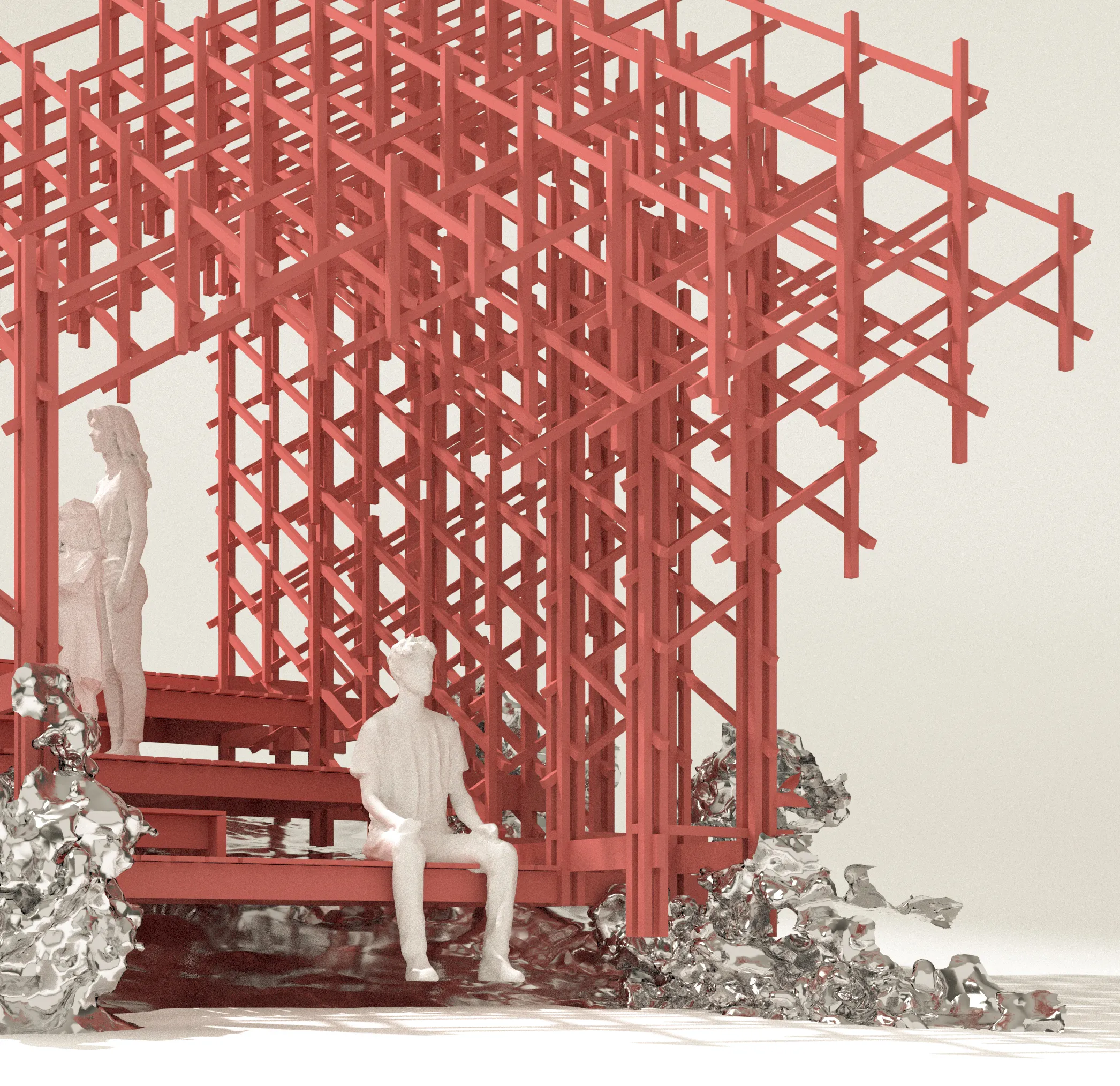
The structure is configured through a stereometric logic that enables the control of density, rigidity, and permeability through the repetition and variation of its components, avoiding the use of large-scale elements. This system allows for localized adjustments of both structural and spatial performance, generating a continuous field that operates simultaneously as support and filter.
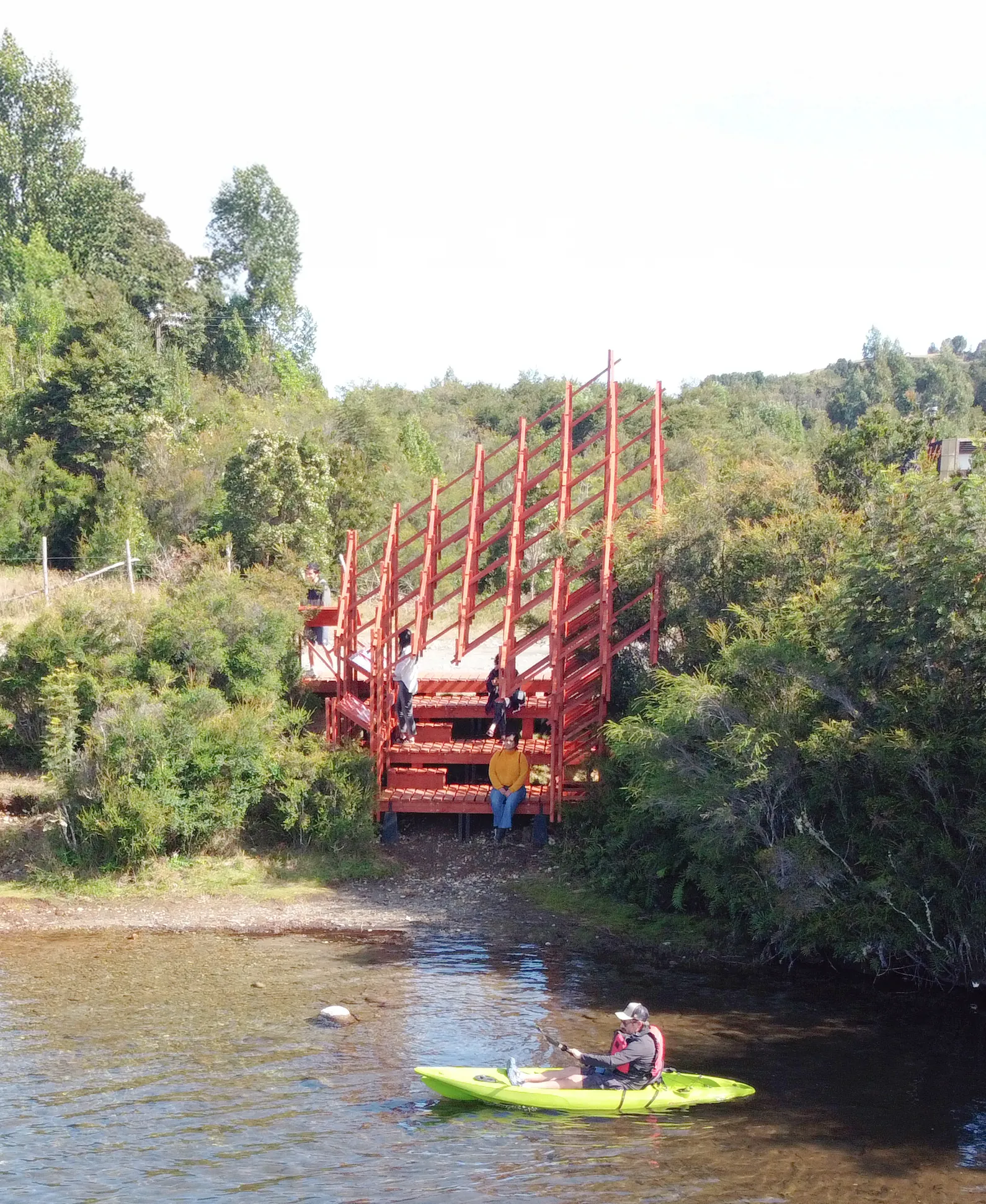
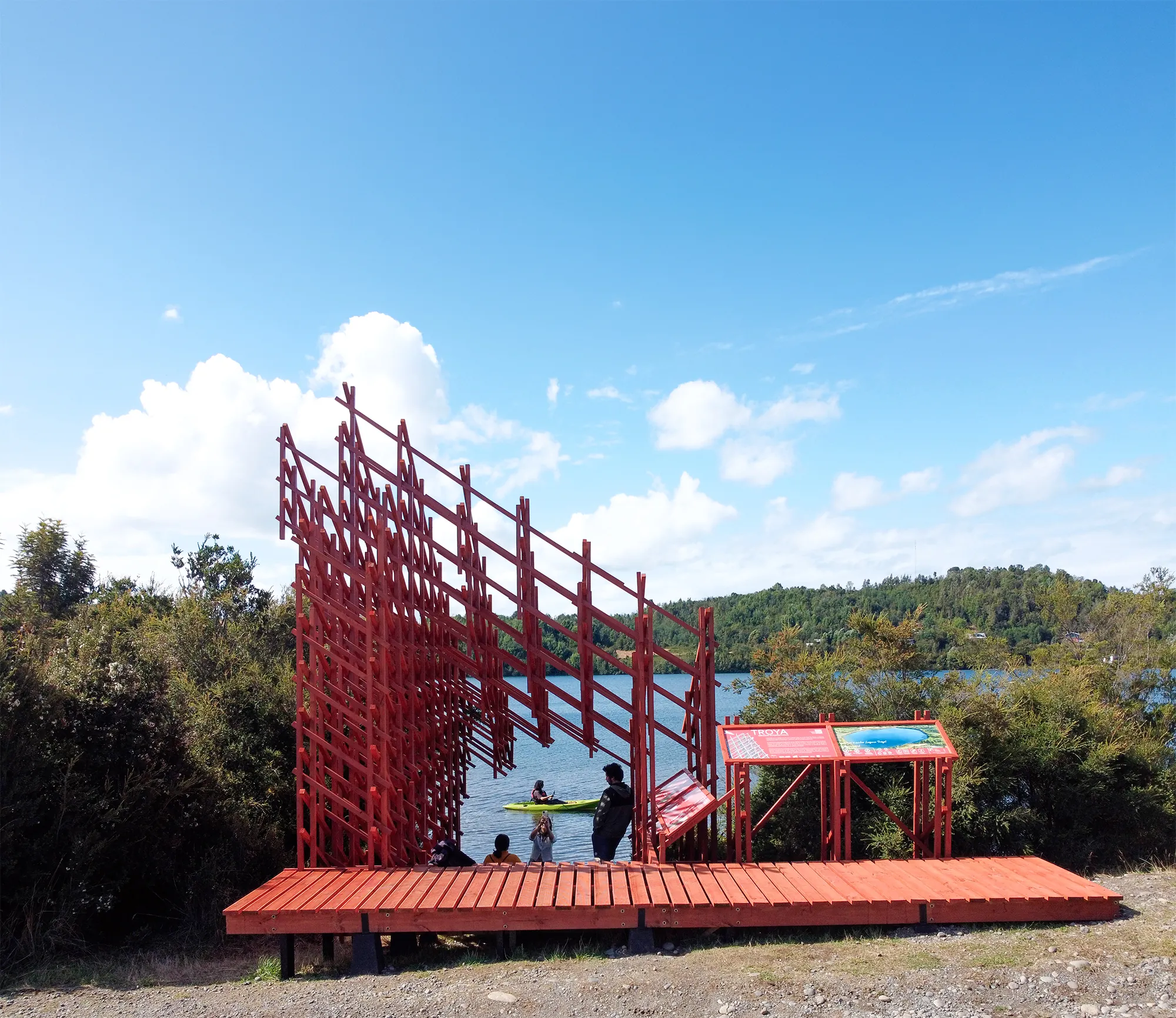
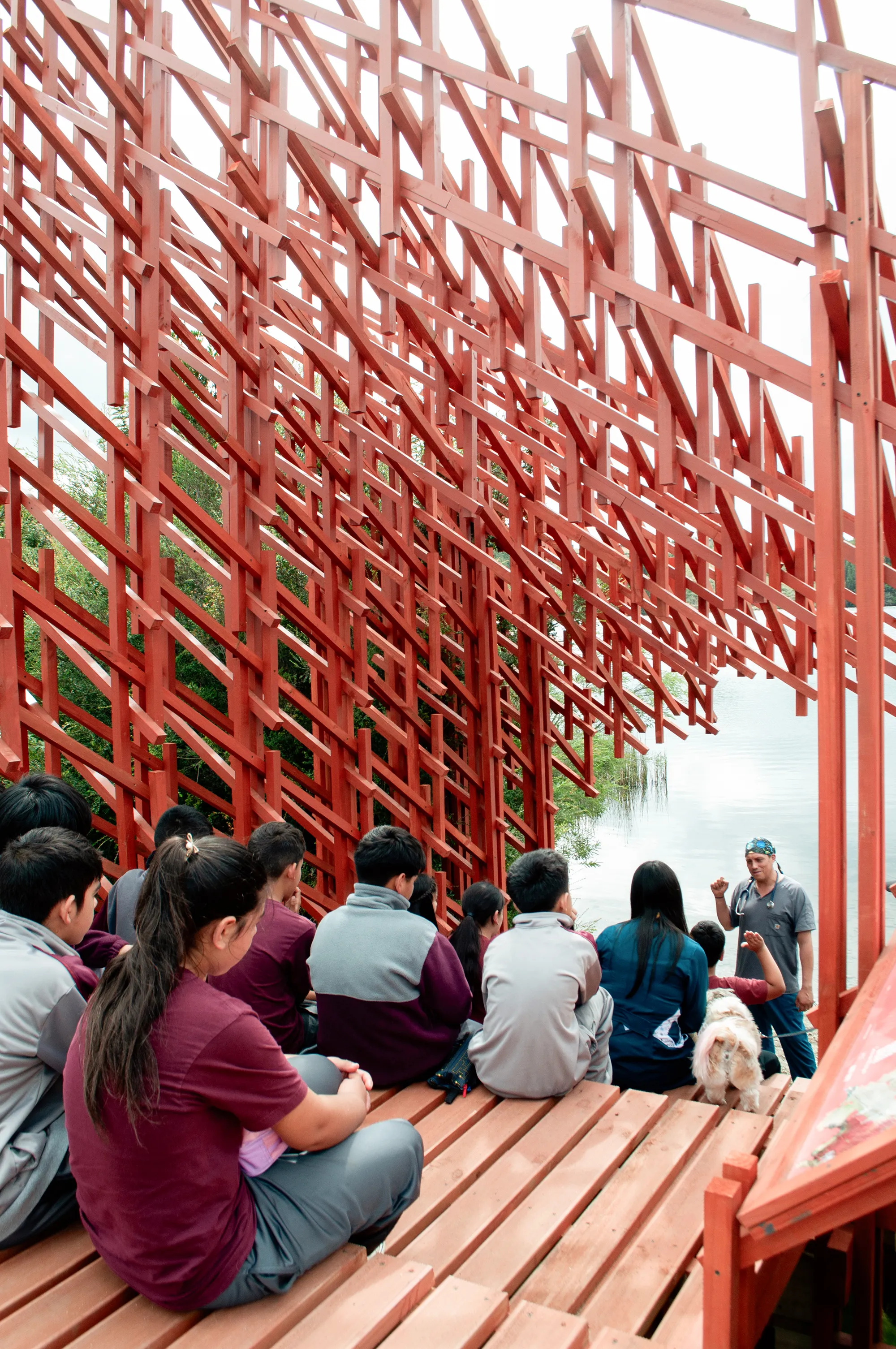
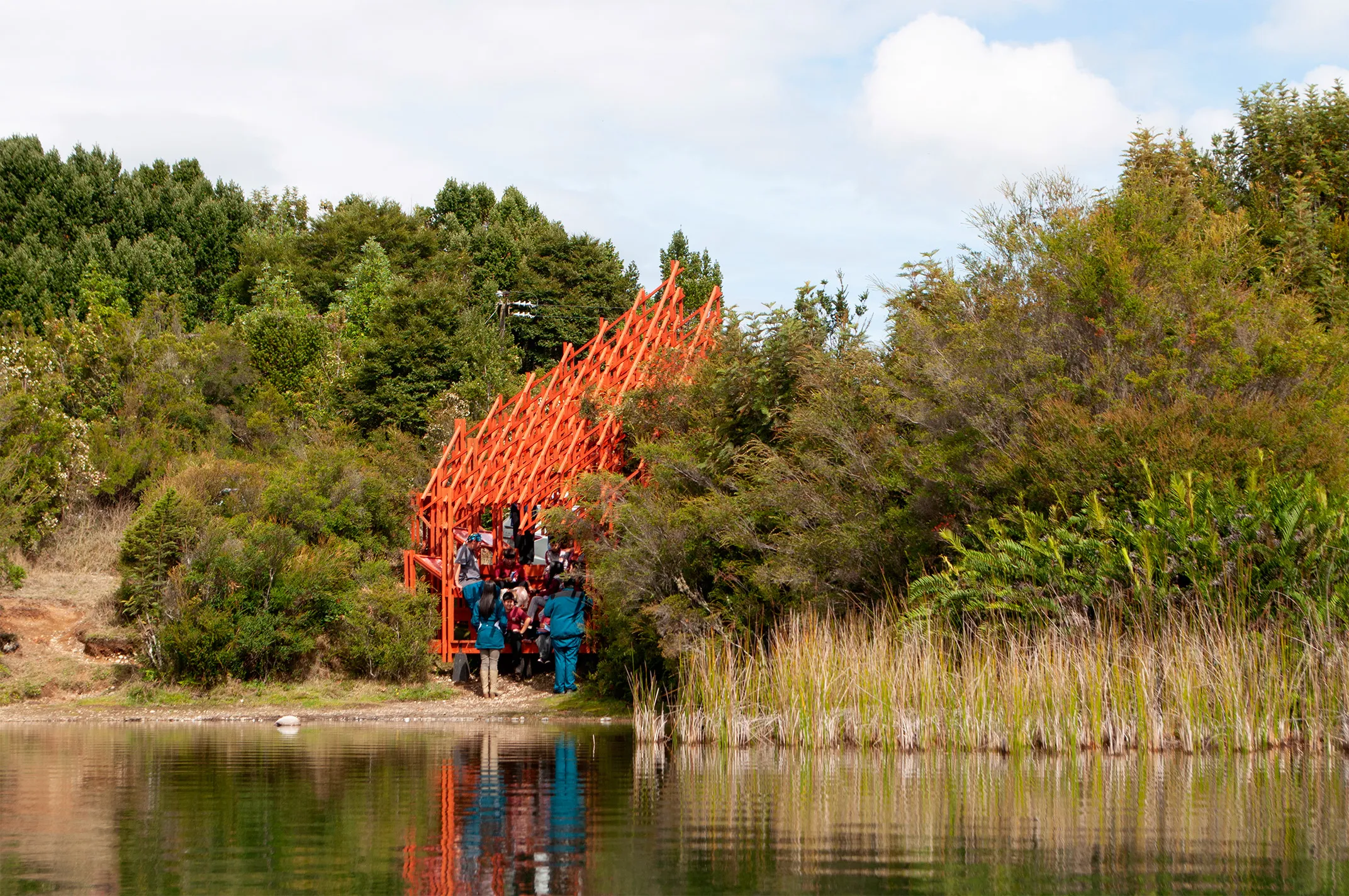
The open condition of the system allows for the progressive integration of vegetation, establishing a non-binary relationship between structure and environment. The spacing between elements generates a porous volume that facilitates both plant growth and the movement and perching of birds, incorporating ecosystem dynamics within the architectural system itself. This same condition introduces a variable distance between observer and environment, avoiding direct occupation and enabling a mediated form of observation.
The ground is resolved as a series of stepped platforms that configure a collective observation system oriented toward the lagoon. This arrangement operates as an open classroom, where spatial organization does not define an enclosed space but rather a condition that enables pedagogical activities in direct relation to the environment. This operation introduces a second layer of organization, where topography and structure work in a complementary manner.
The project incorporates information through scientific illustrations of local flora and fauna developed by marine biologist and scientific illustrator Sol Pacheco Ortiz. These elements operate as reading devices that complement direct observation, integrating into the circulation as part of the spatial system.
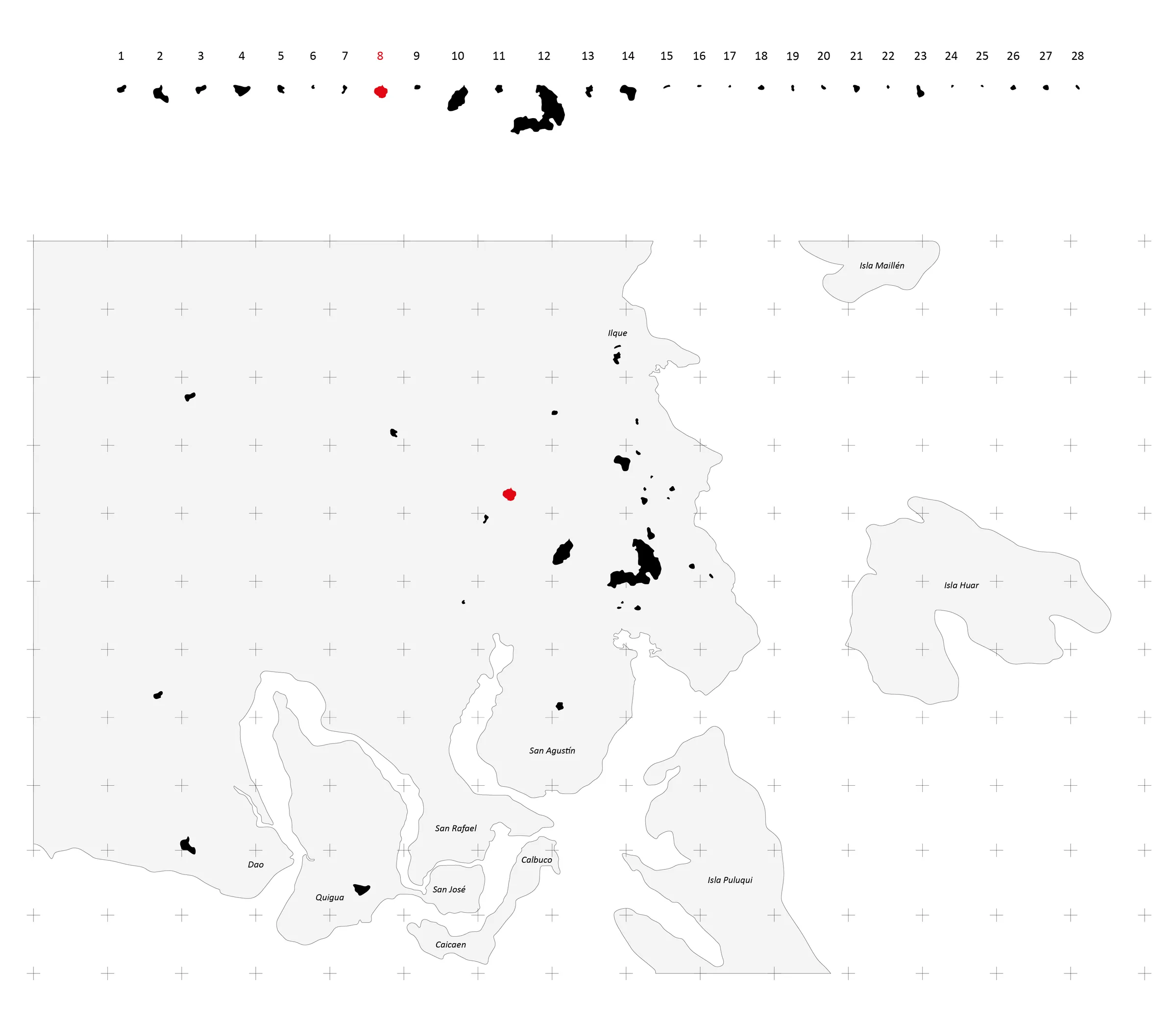
The viewpoint is located in the locality of Putenio and is part of a FONDART-funded initiative that articulates territorial research, design, and construction. Its development involves the participation of the local community, integrating situated knowledge practices into the definition and use of space.
Rather than an isolated object, the project is understood as an infrastructure that links construction system, territory, and learning.