Premise
The Hudson Valley is home to a vibrant artistic community, enriched by contemporary art institutions such as Dia Beacon, Storm King Art Center, and Magazzino, among others. Culture plays a key role in the region, and this project aims to reinforce the Hudson Valley as a major location for art.
Concept
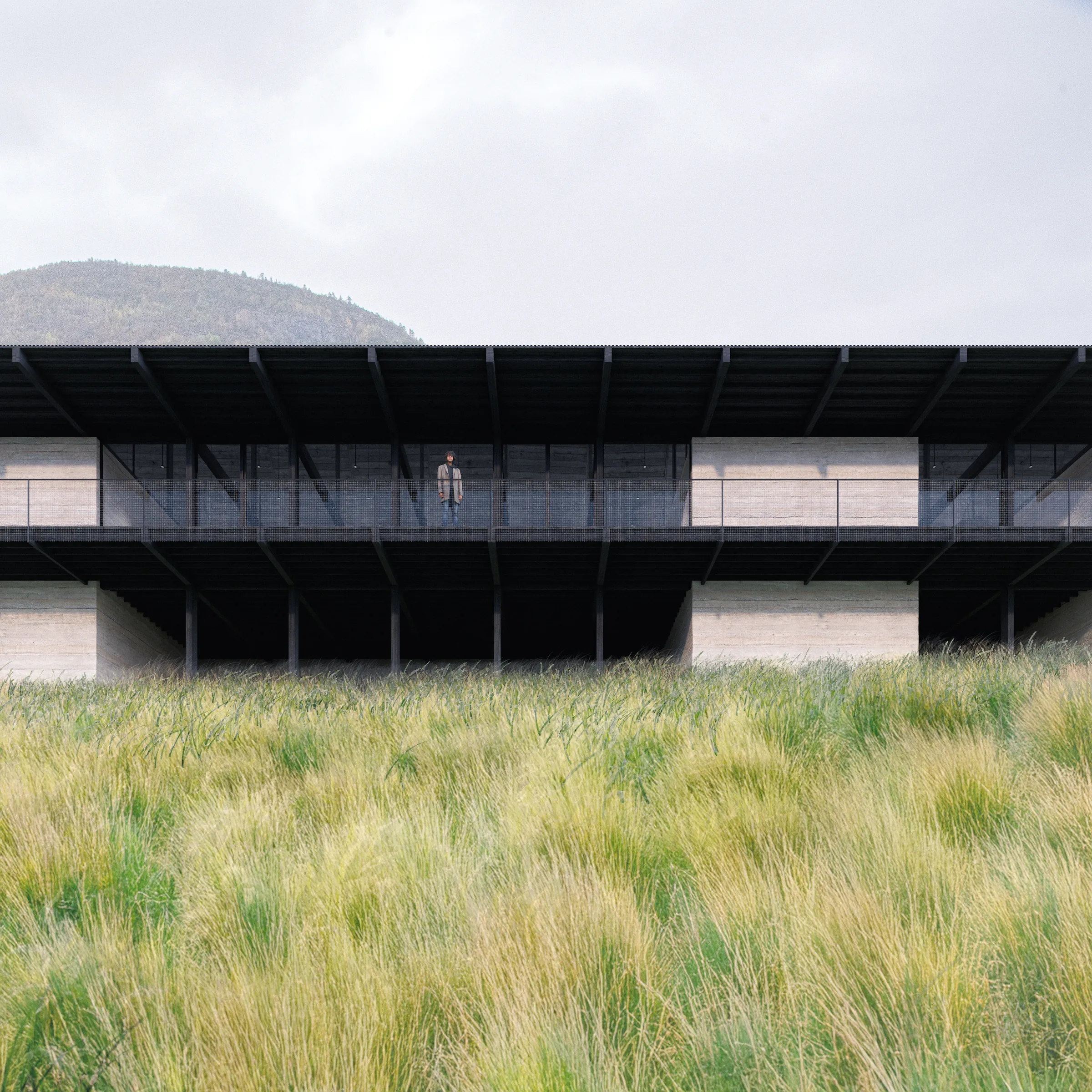
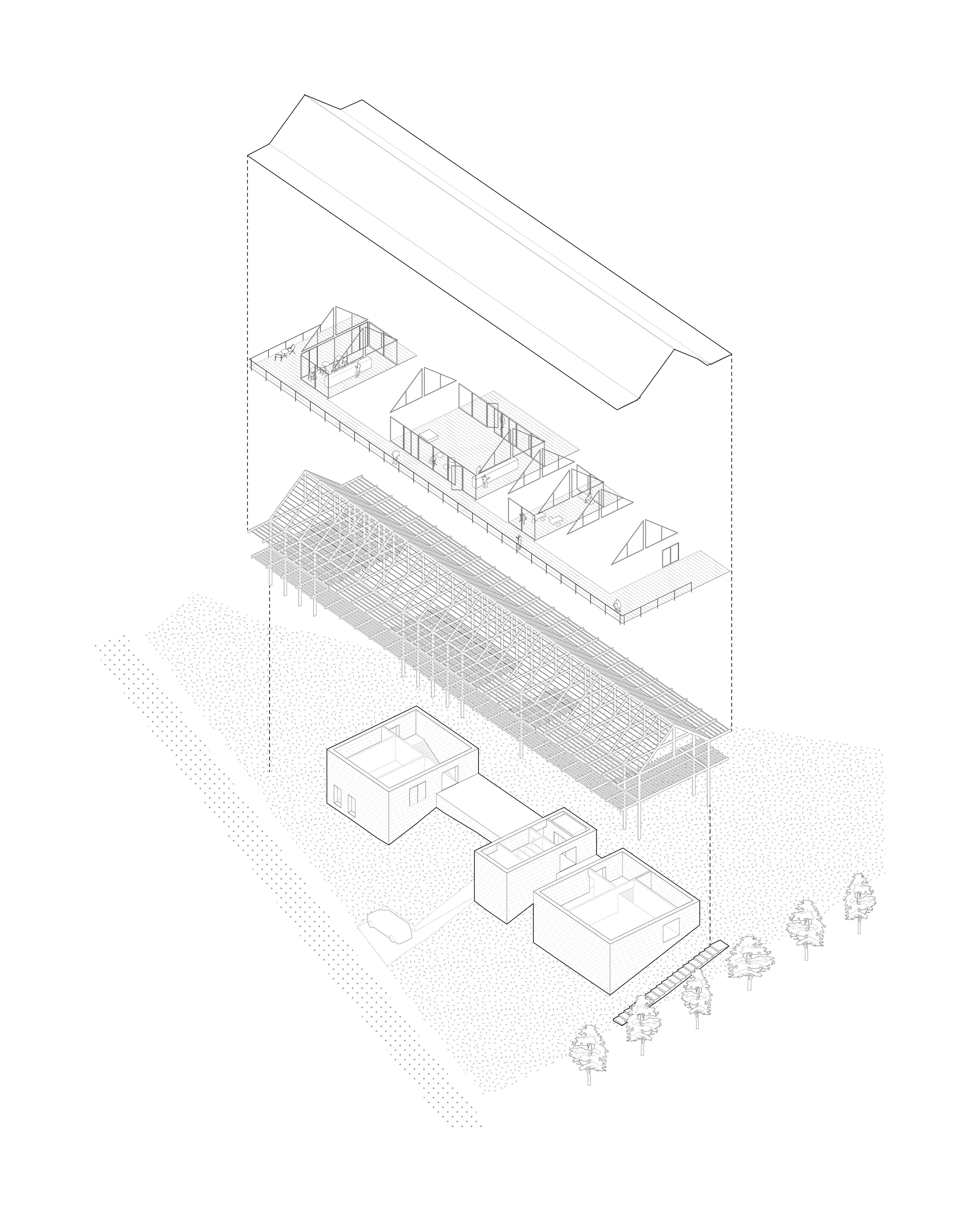
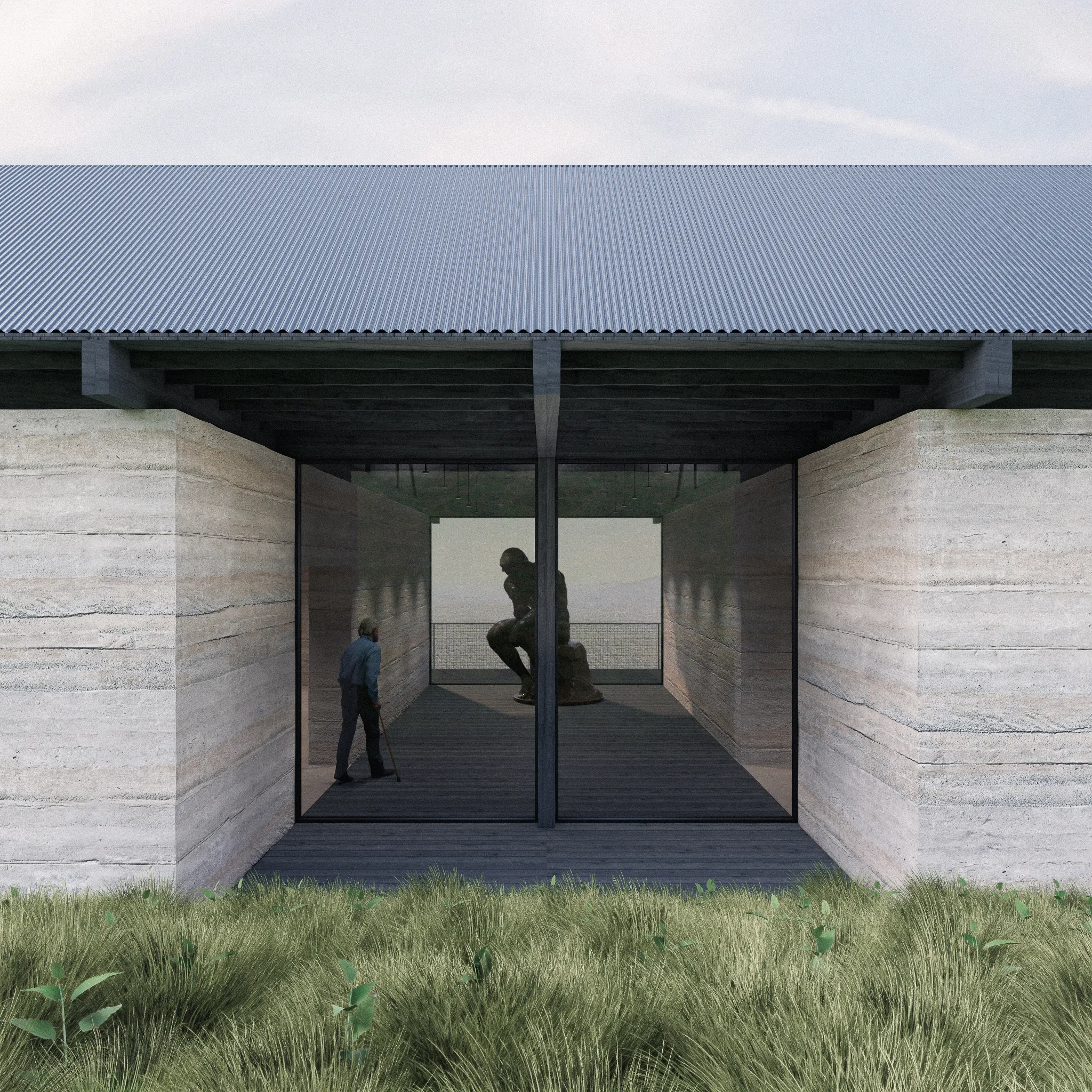
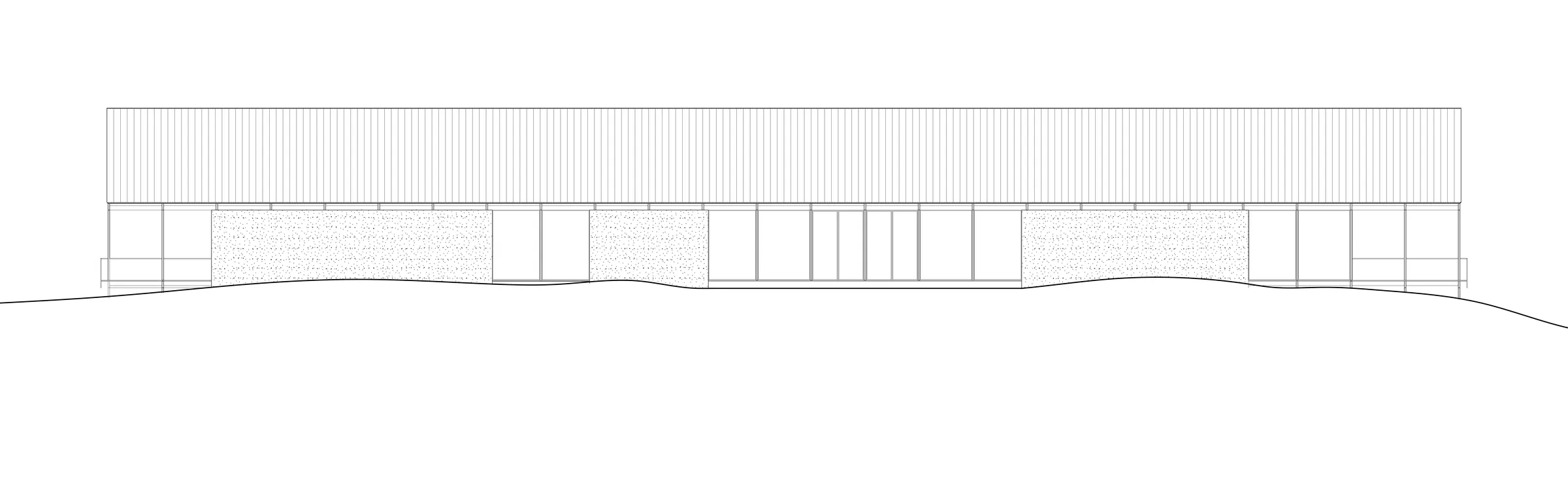
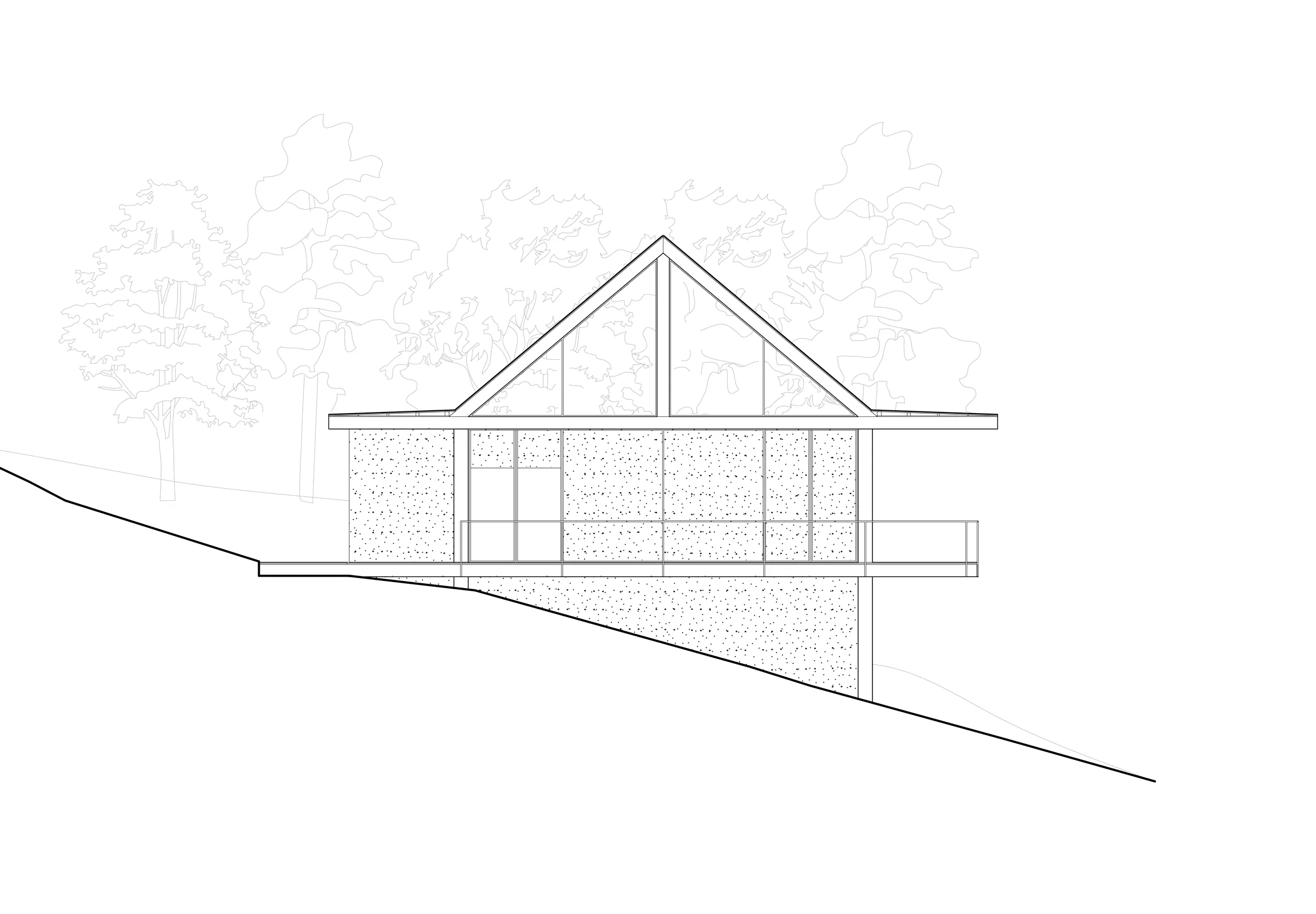
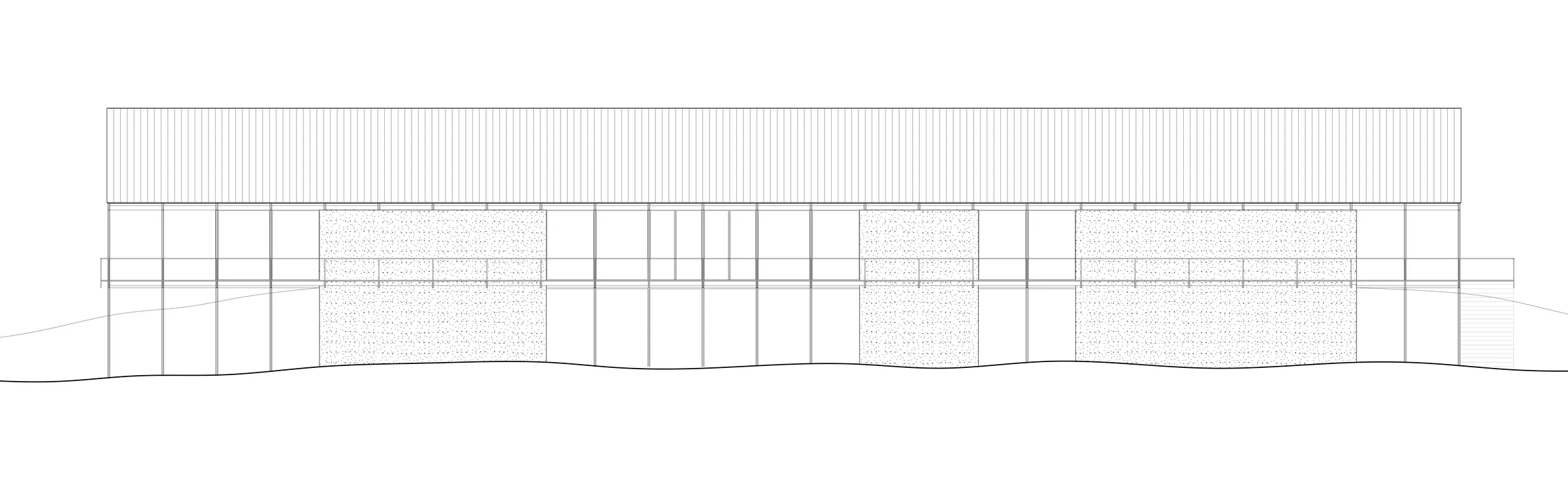
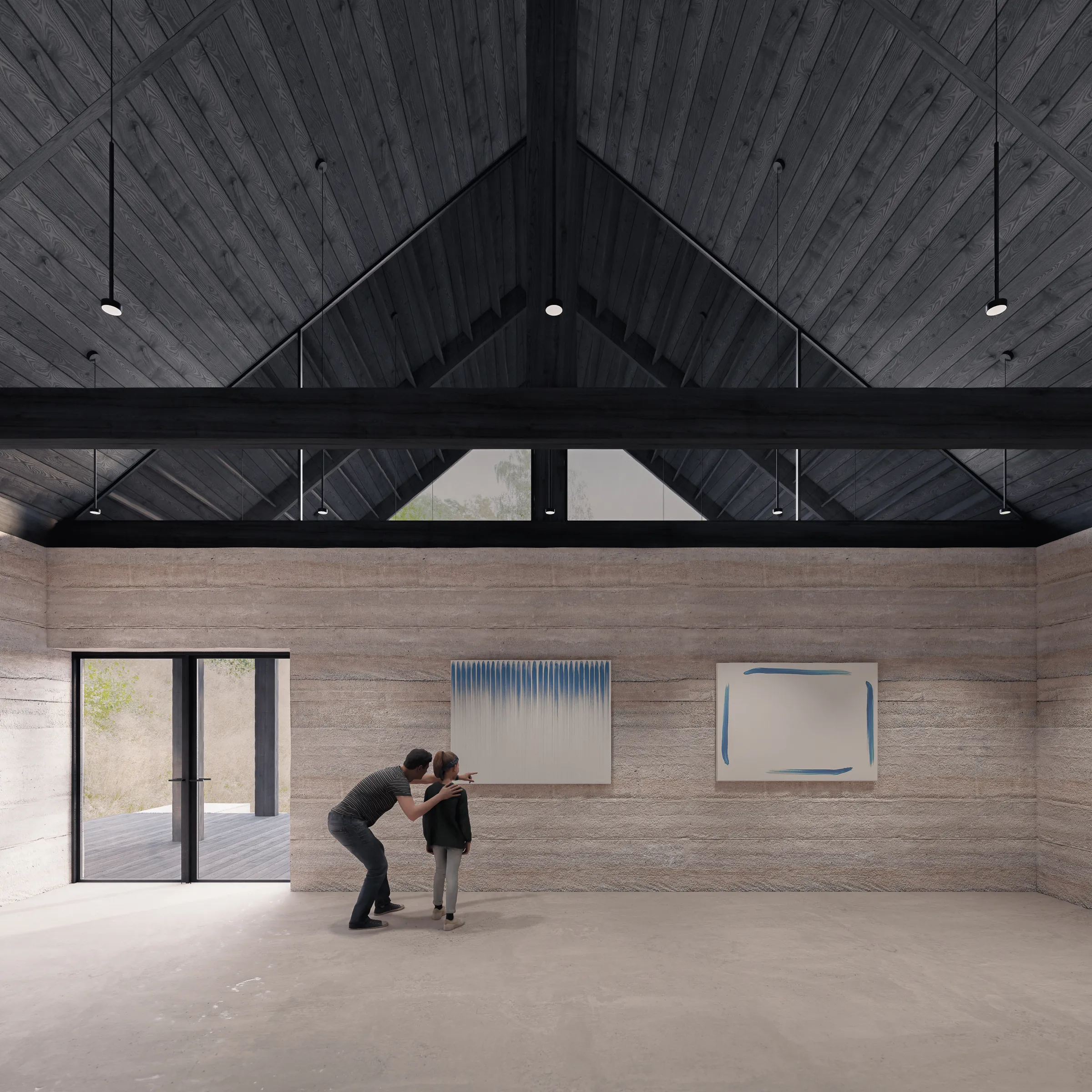
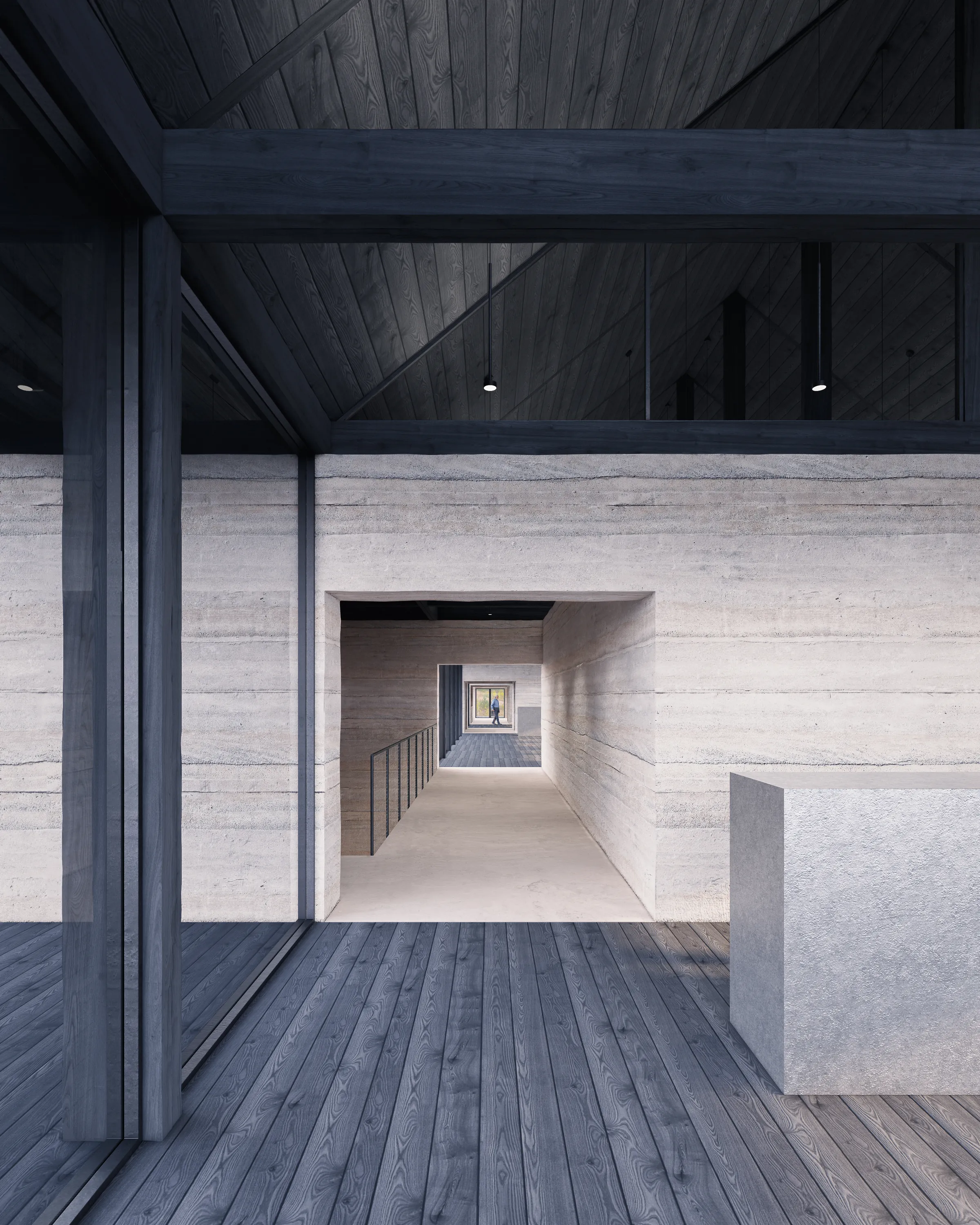
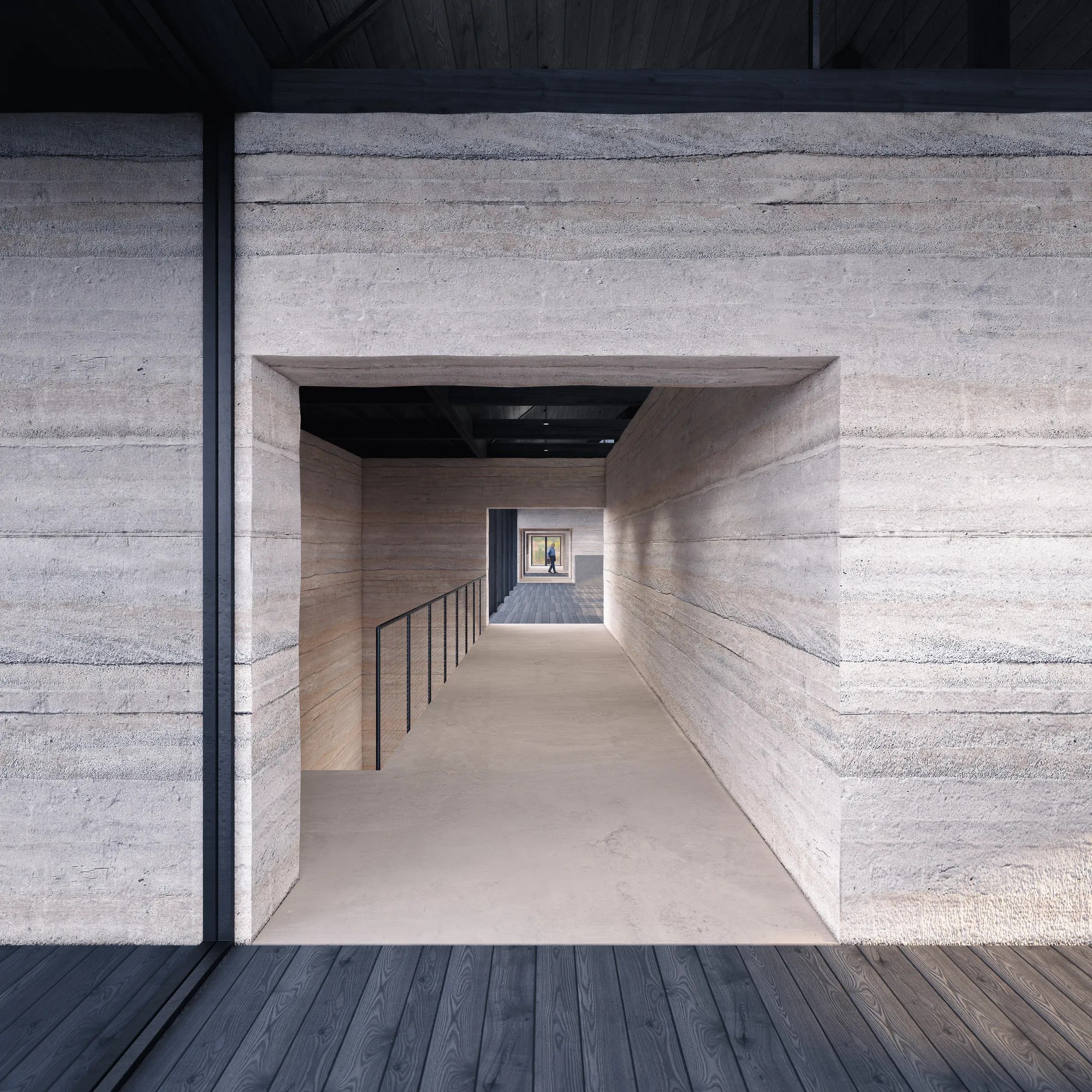
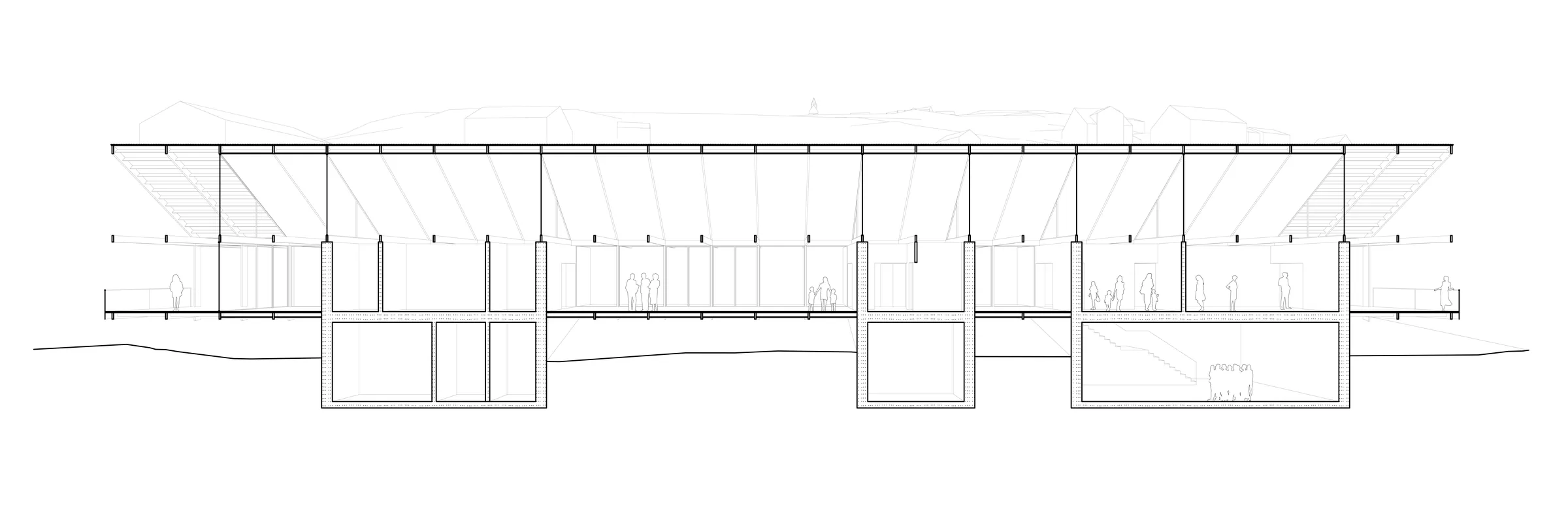
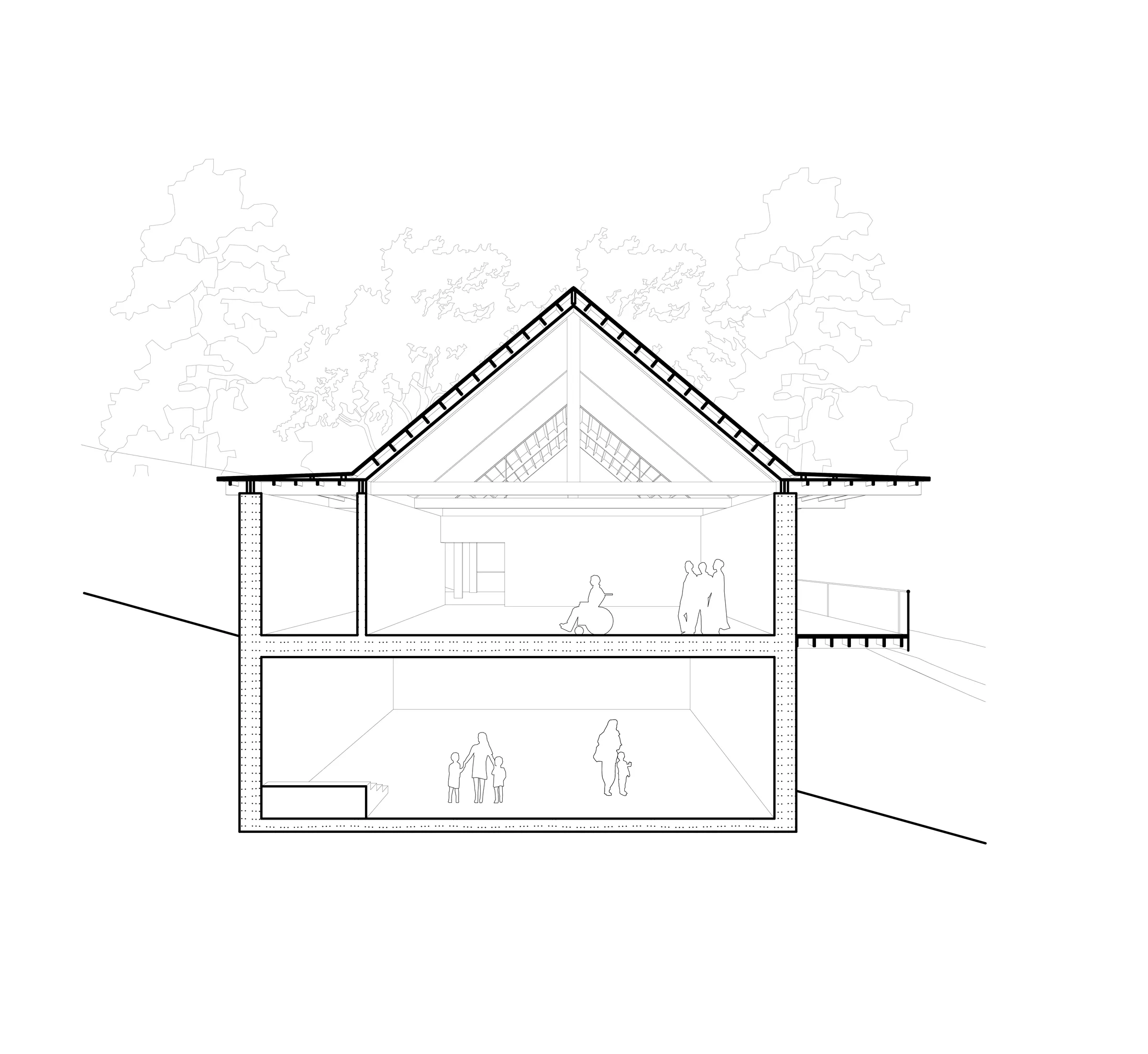
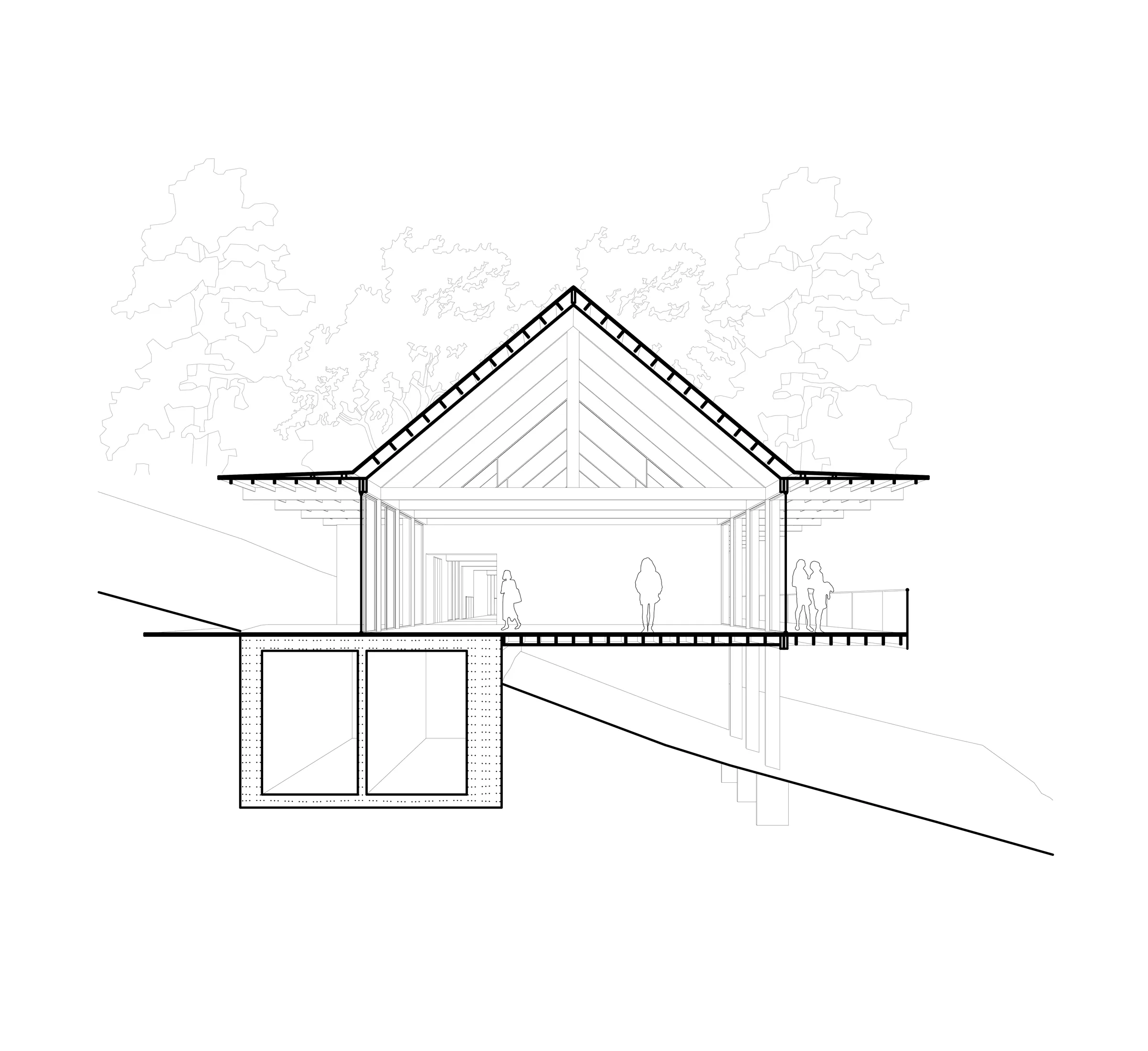
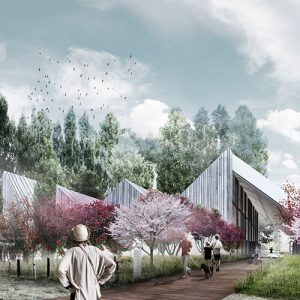
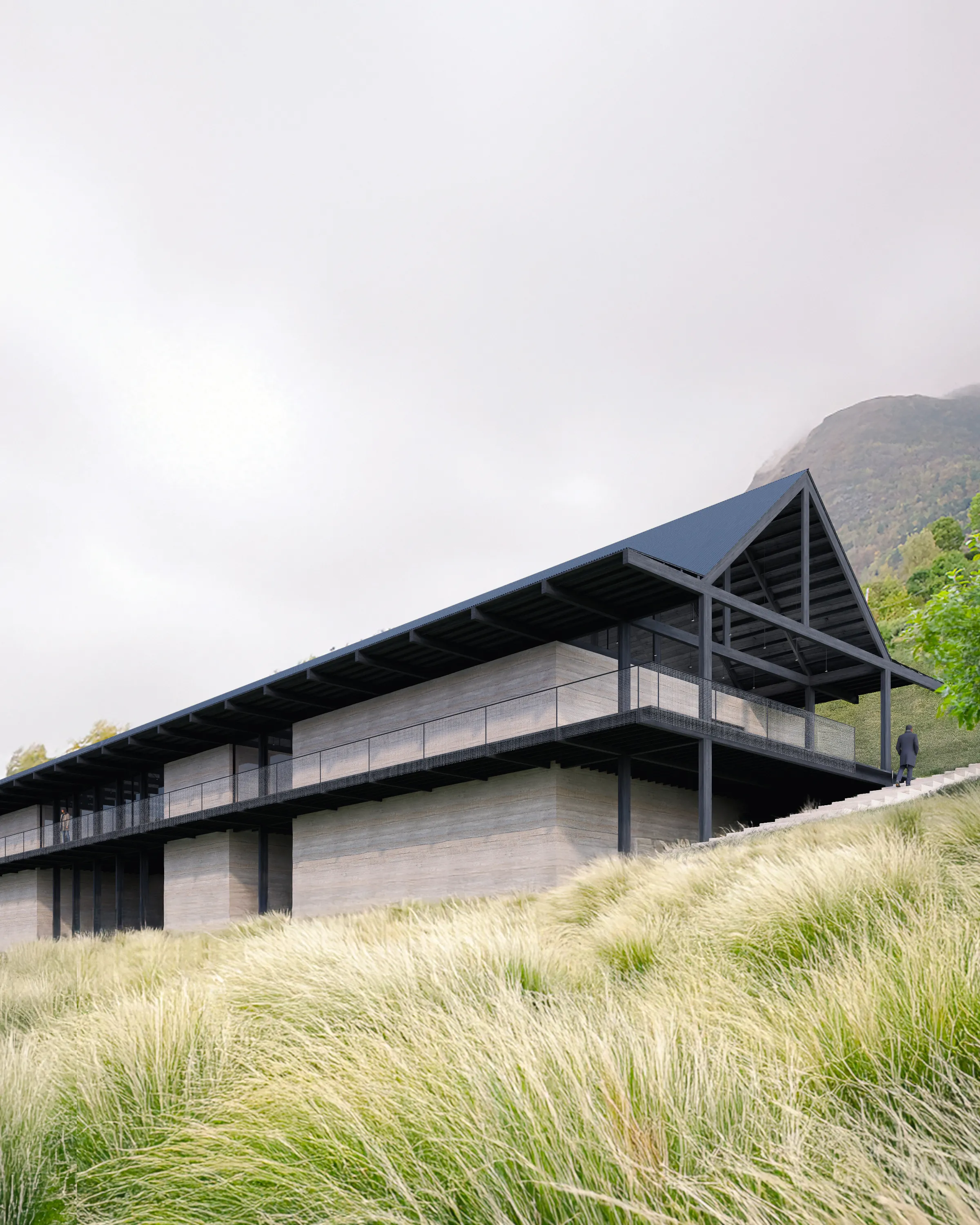
The Hudson Highlands Art Foundation (HHAF) connects contemporary art with the unique landscape of the Hudson Valley. The building is shaped by two essential elements: Earth, with rammed-earth volumes that echo the valley’s geological formations; and Wood, with a light wooden structure that frames the monoliths and rests gently along the slope.
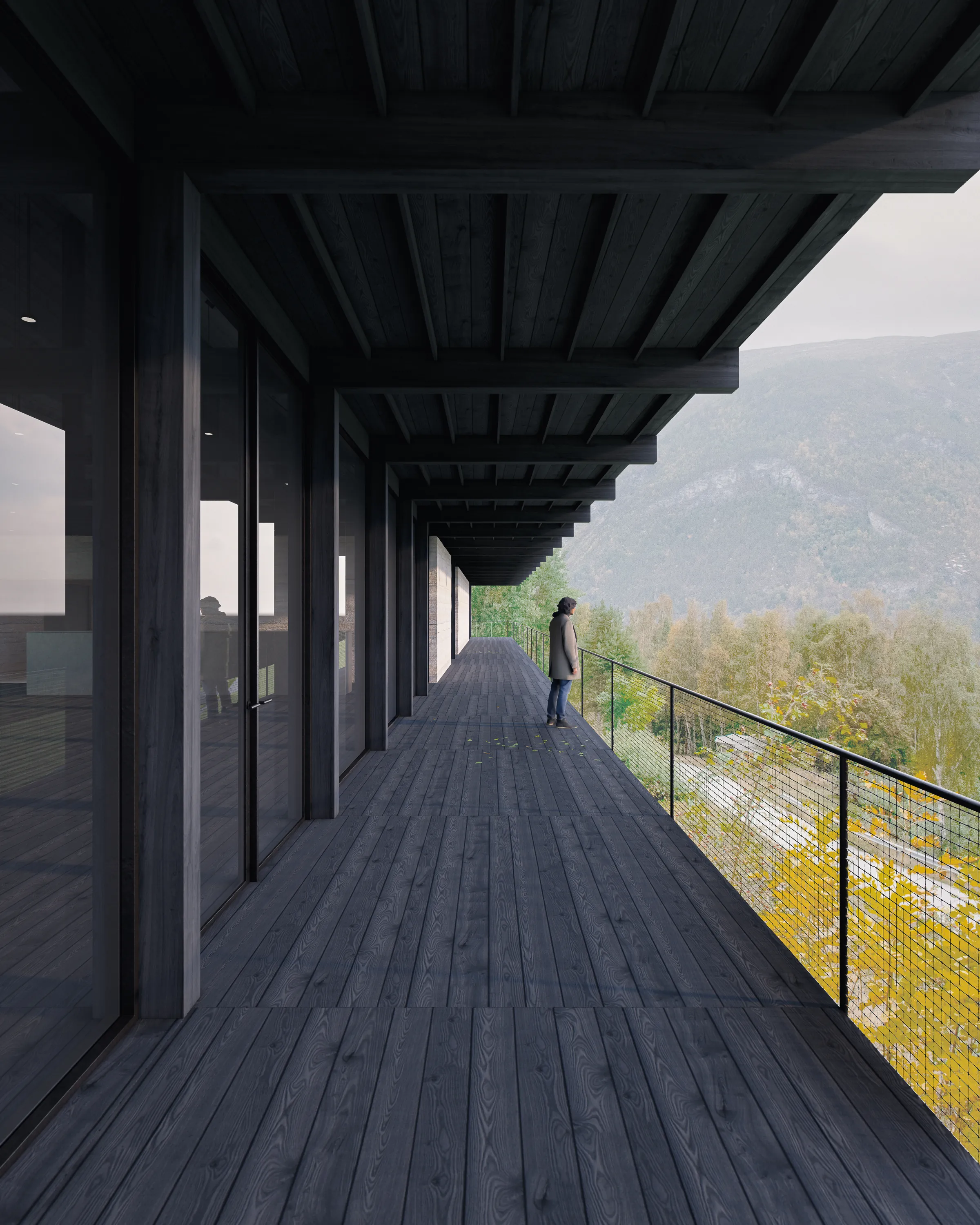
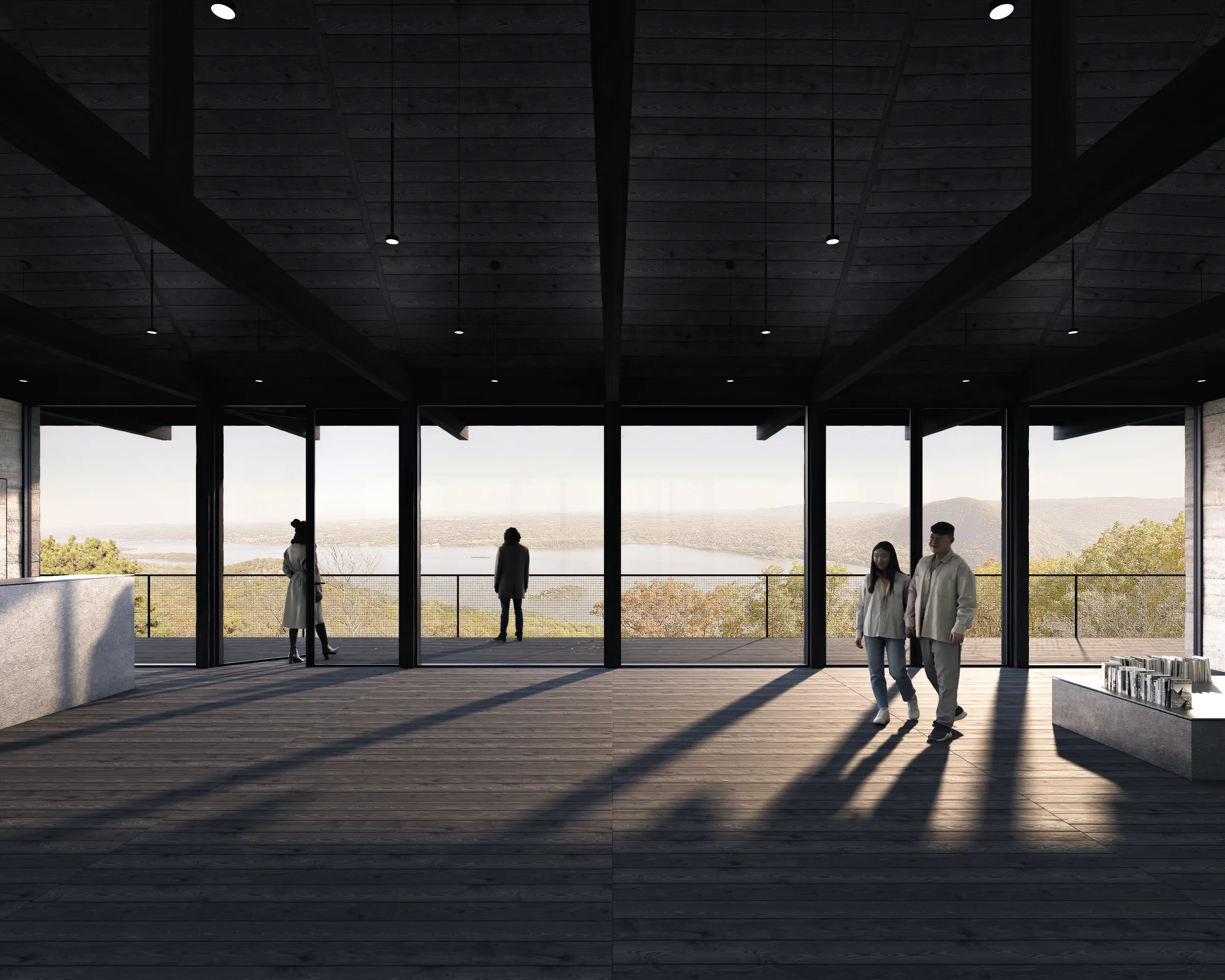
The design invites visitors to experience art and landscape as one continuous journey. The foundation stands on pilotis, opening up panoramic views of the river. A suspended deck offers 360-degree views over the valley and reinforces the sense that the public areas belong to the natural surroundings. Inside, the rammed-earth volumes contain the rest of the exhibition spaces and office areas, designed for supporting research and meetings.
The architecture aims to be part of the landscape, drawing attention to the art and the valley rather than itself. It invites visitors to pause, reflect, and engage deeply with both the collection and the environment.
Program
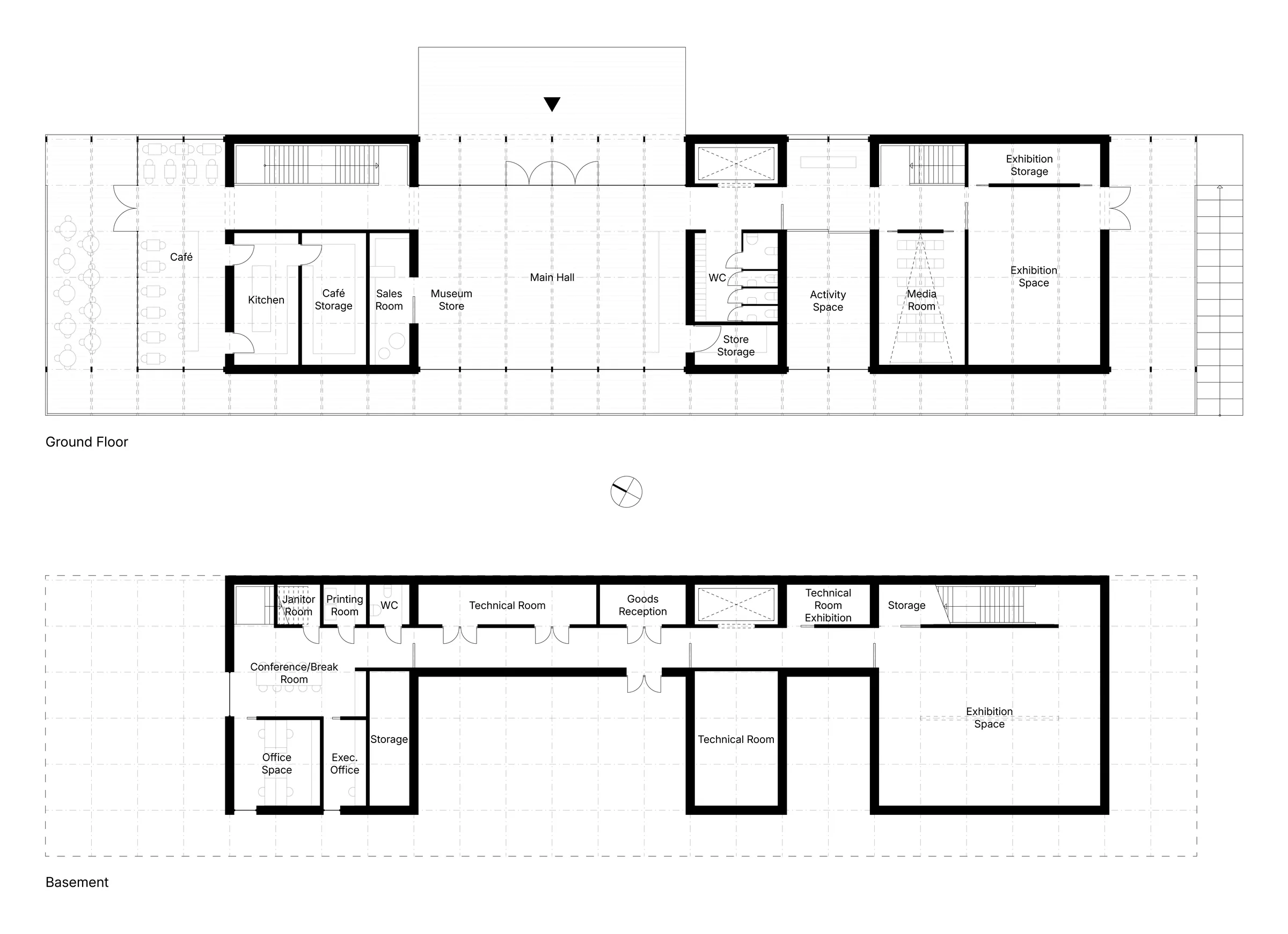
The foundation is organized across two levels. The lobby serves as the heart of the visitor experience, with direct access to the café on one side and the exhibitions on the other. Placing the exhibition spaces at the far end of the building allows the rest of the structure to remain open to the public without admission. The café, with its independent entrance and generous terrace, offers a place to take in views of the valley.
Materiality & Sustainability
Built from earth and wood — durable, natural materials — the foundation is designed to have a minimal ecological footprint. The structure rests lightly on the land, using pilotis and locally sourced rammed earth for the main volumes. This approach reduces embodied energy and waste while rooting the building in its context, both materially and visually.