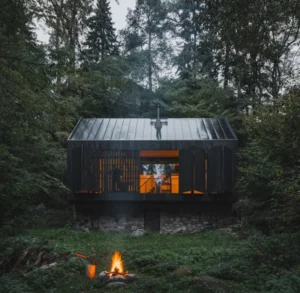
Inhabiting the landscape through restraint.
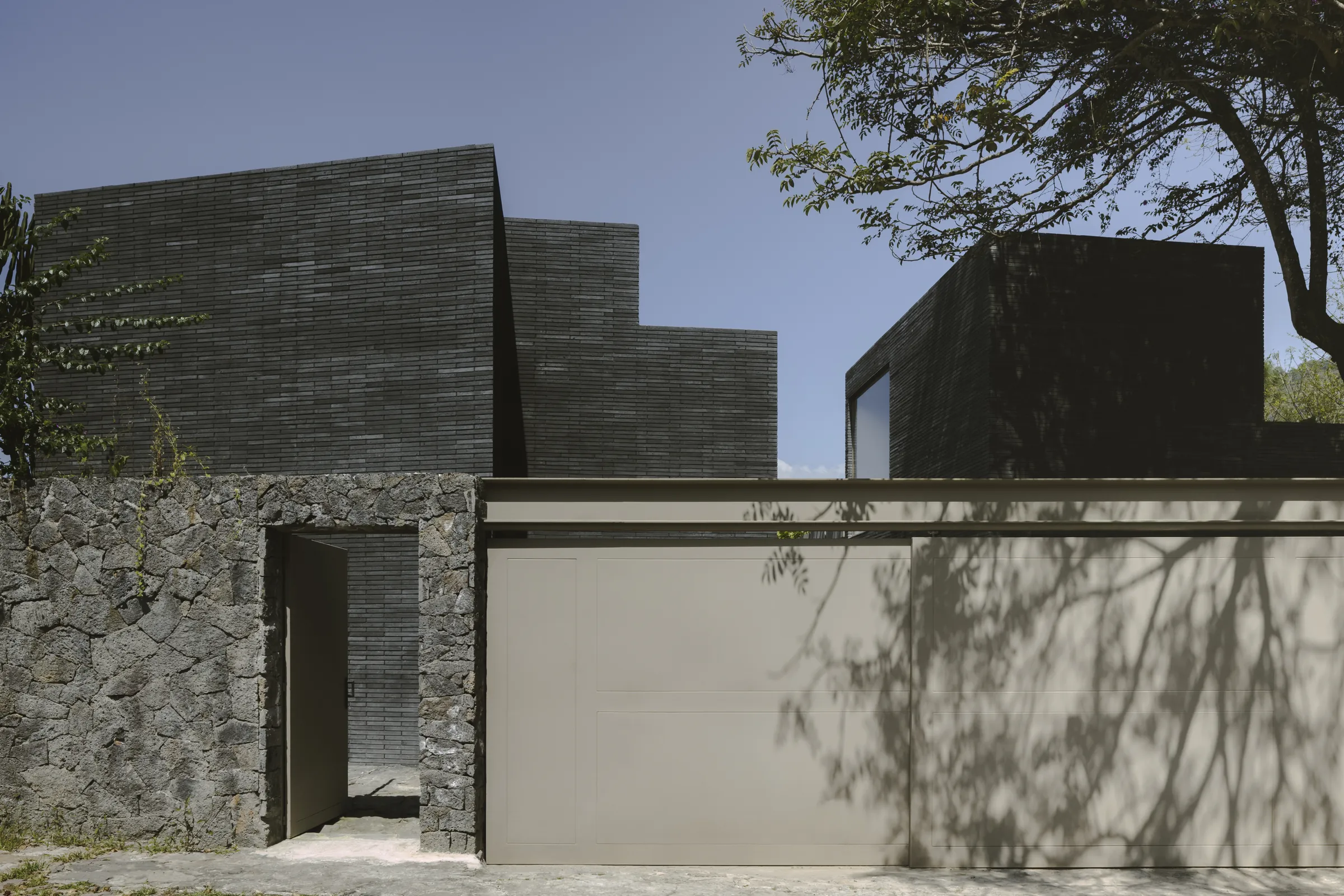
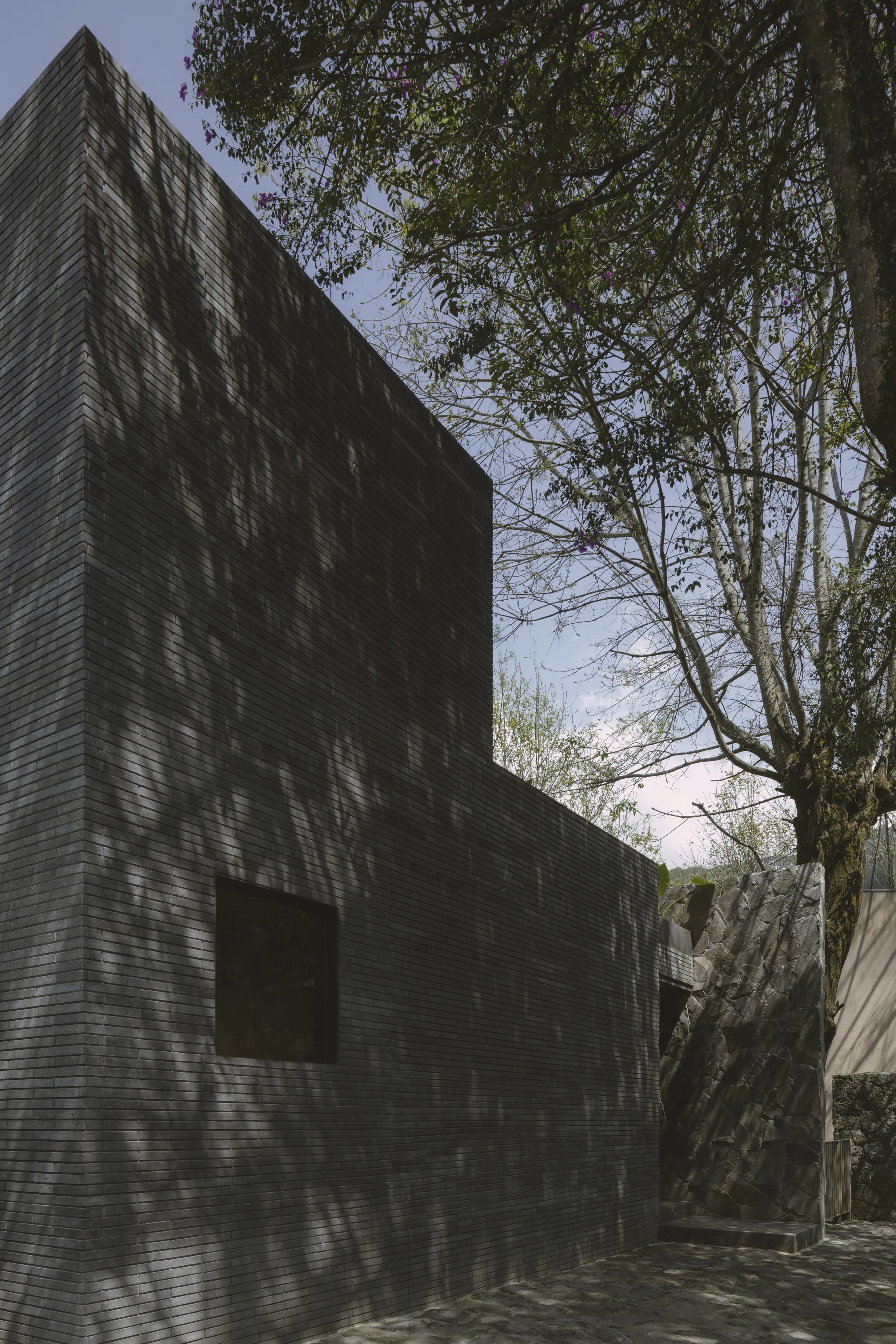
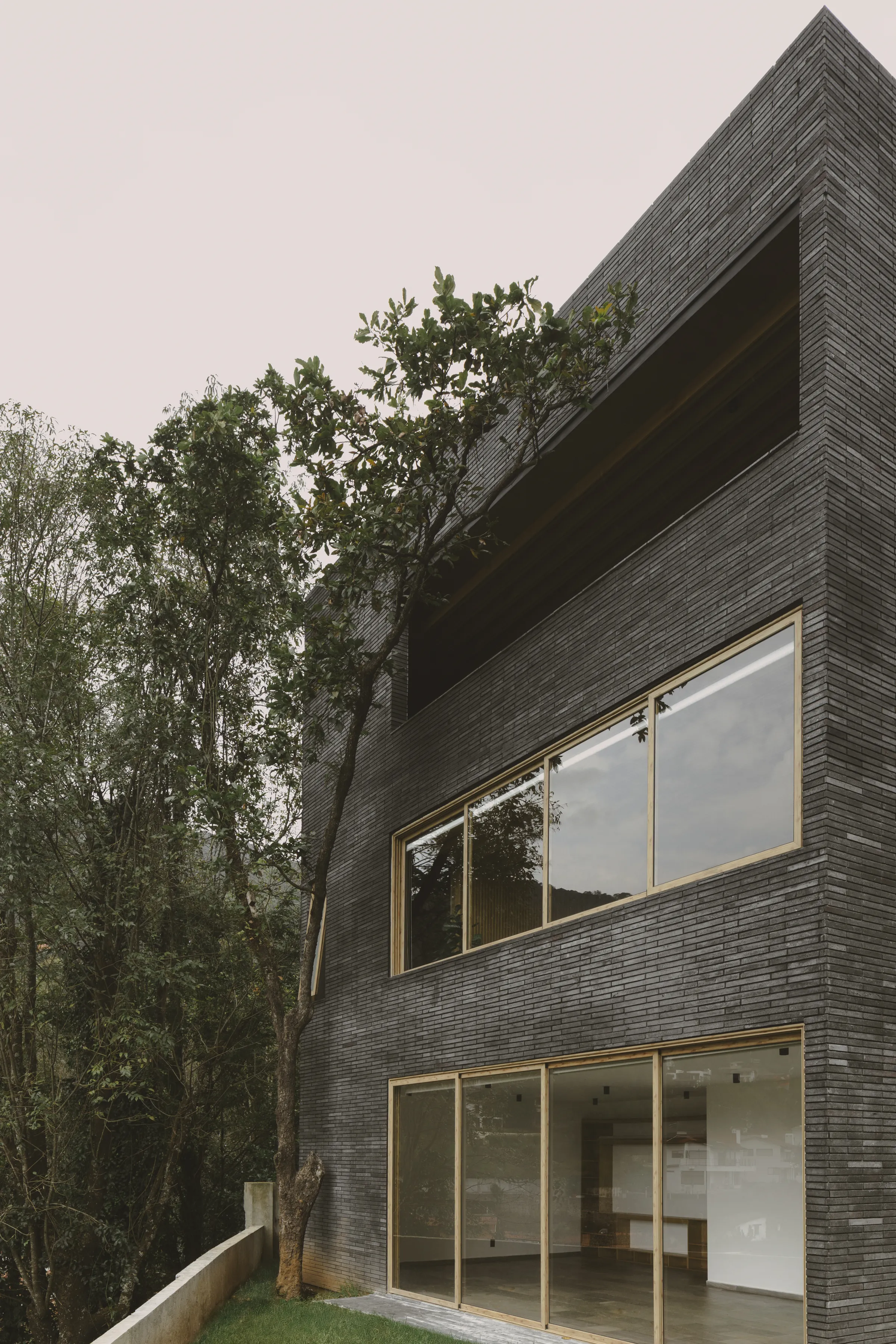
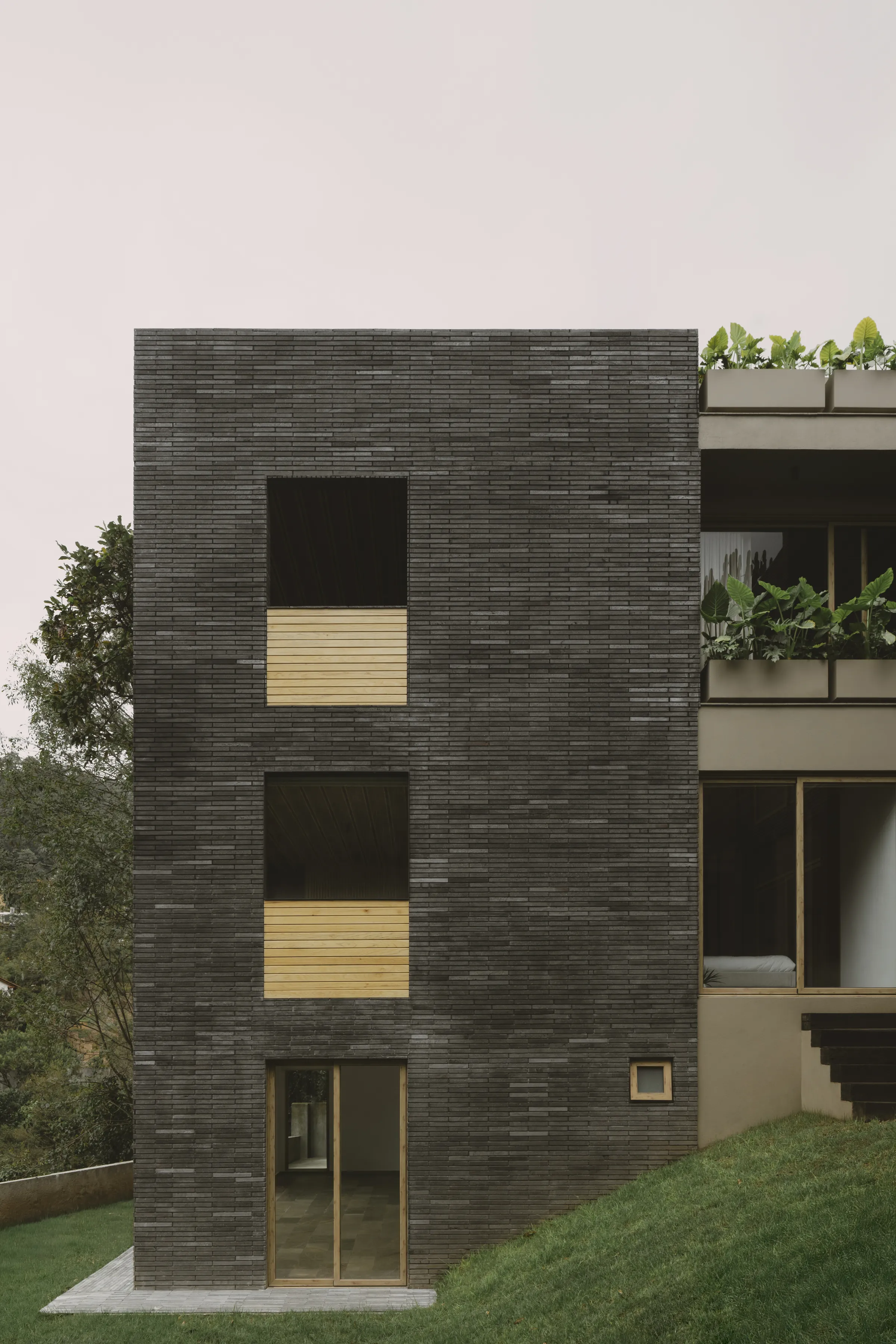
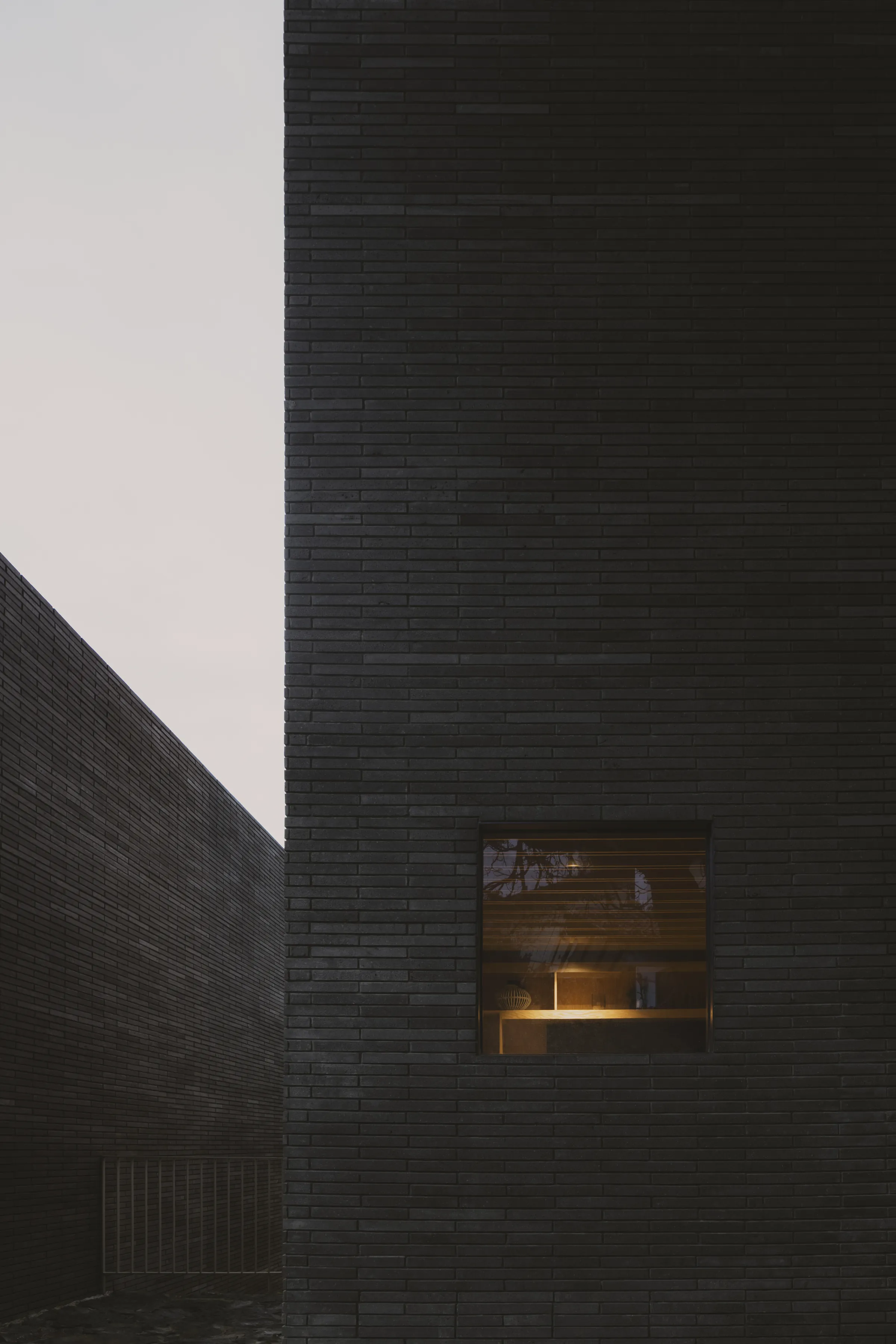
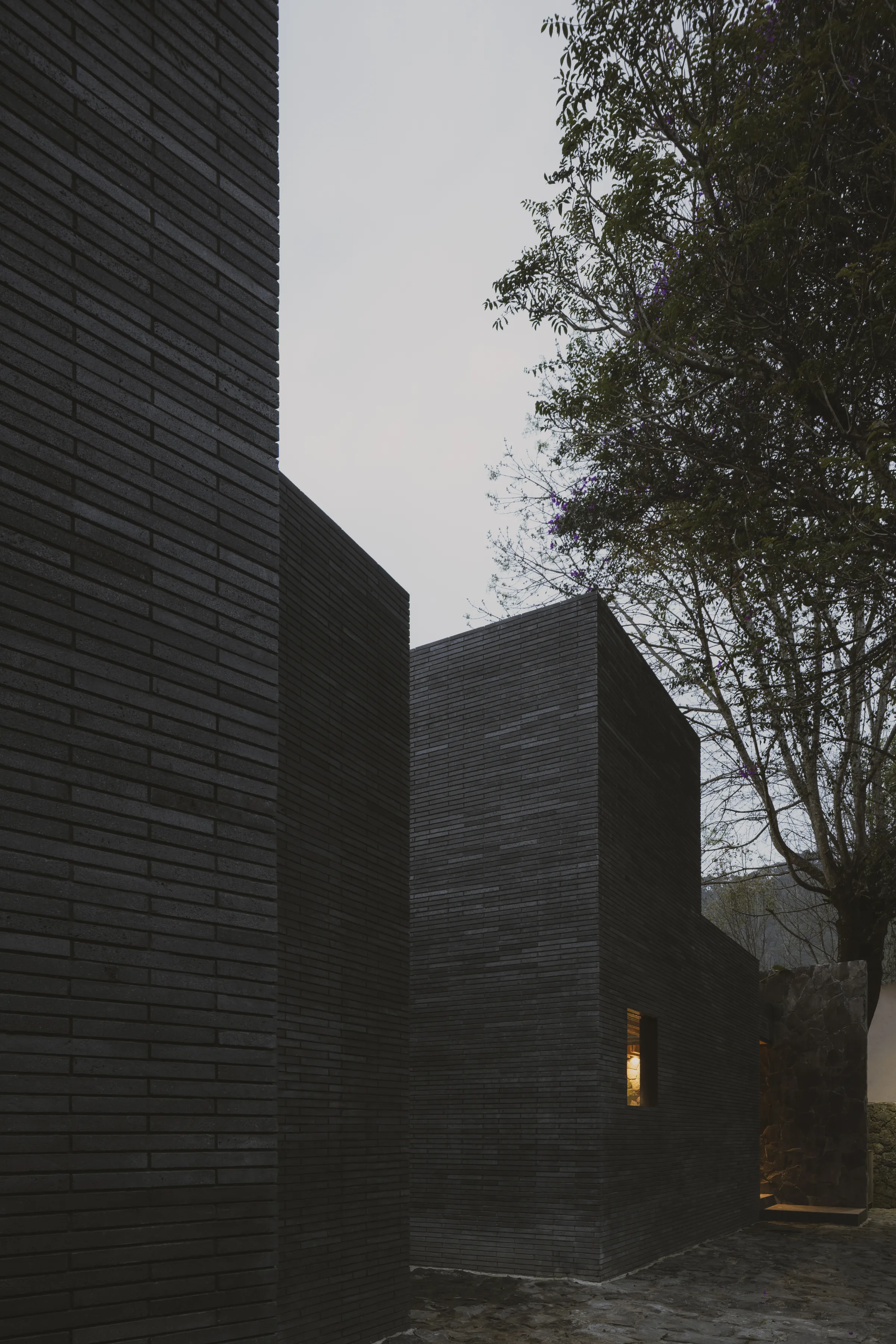
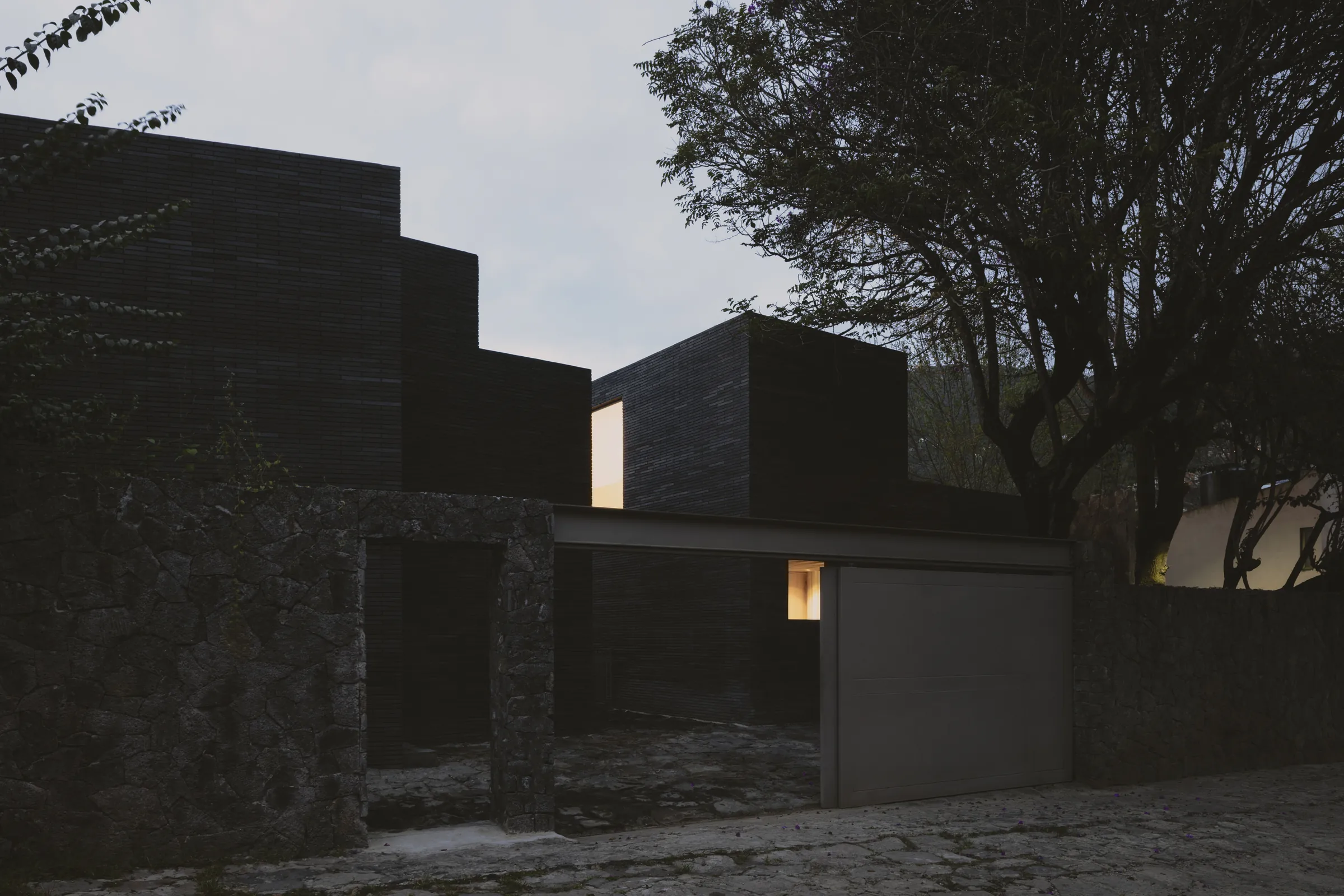
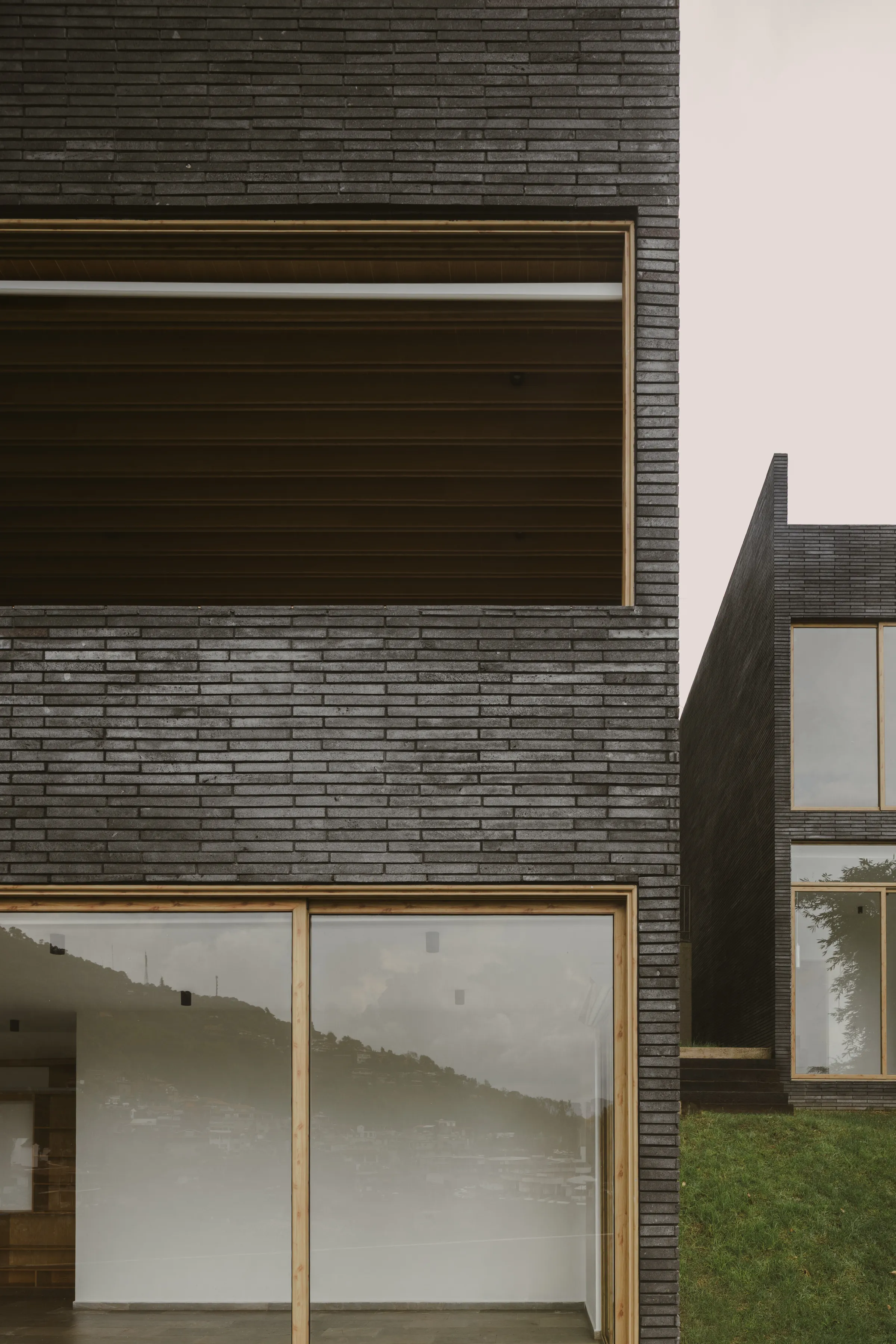
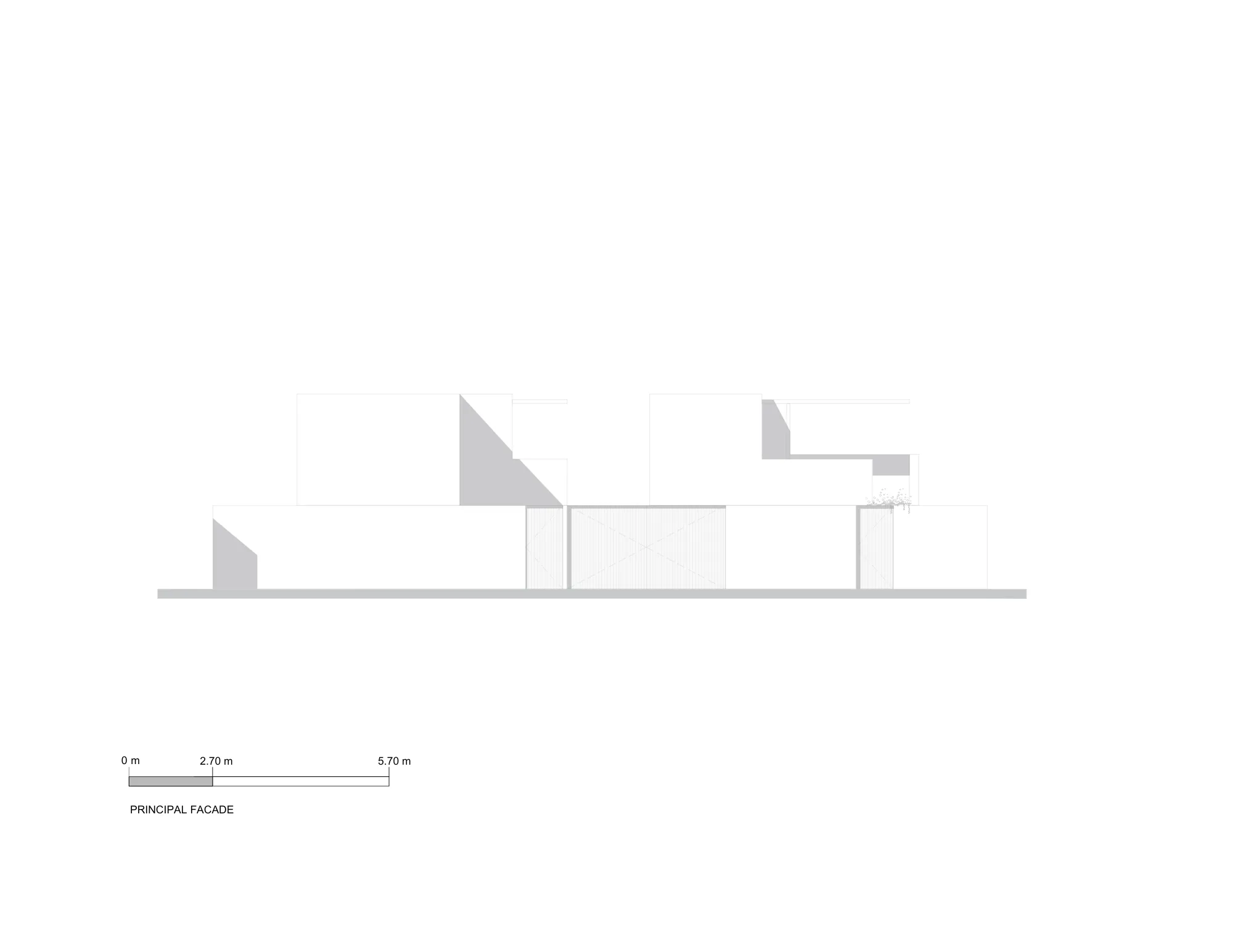
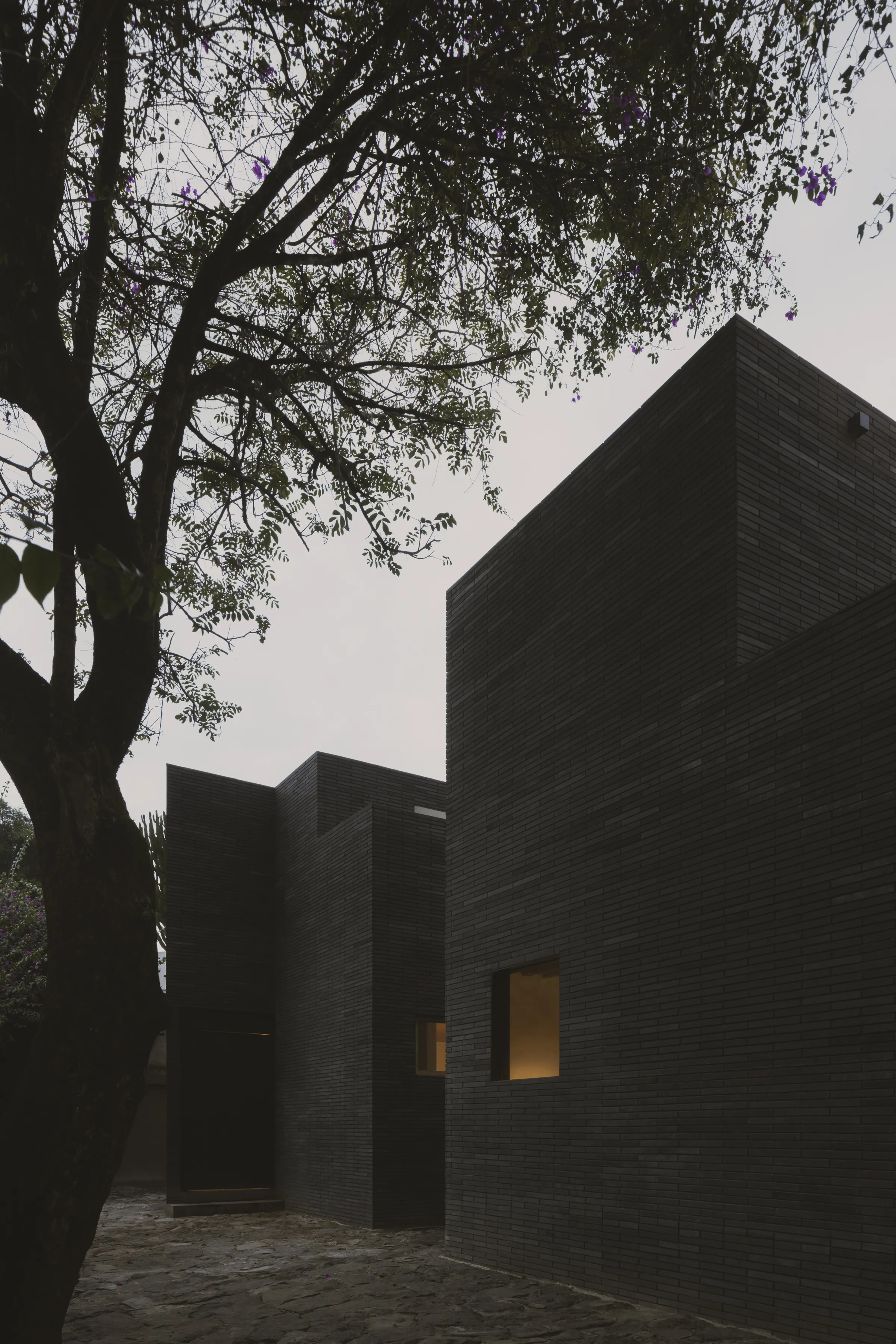
From the street, the house appears restrained and silent. The stone volumes barely assert themselves, avoiding any emphatic gesture. The architecture does not seek to announce itself; it remains reserved. It is only upon crossing the boundary of the site that the project begins to reveal itself.
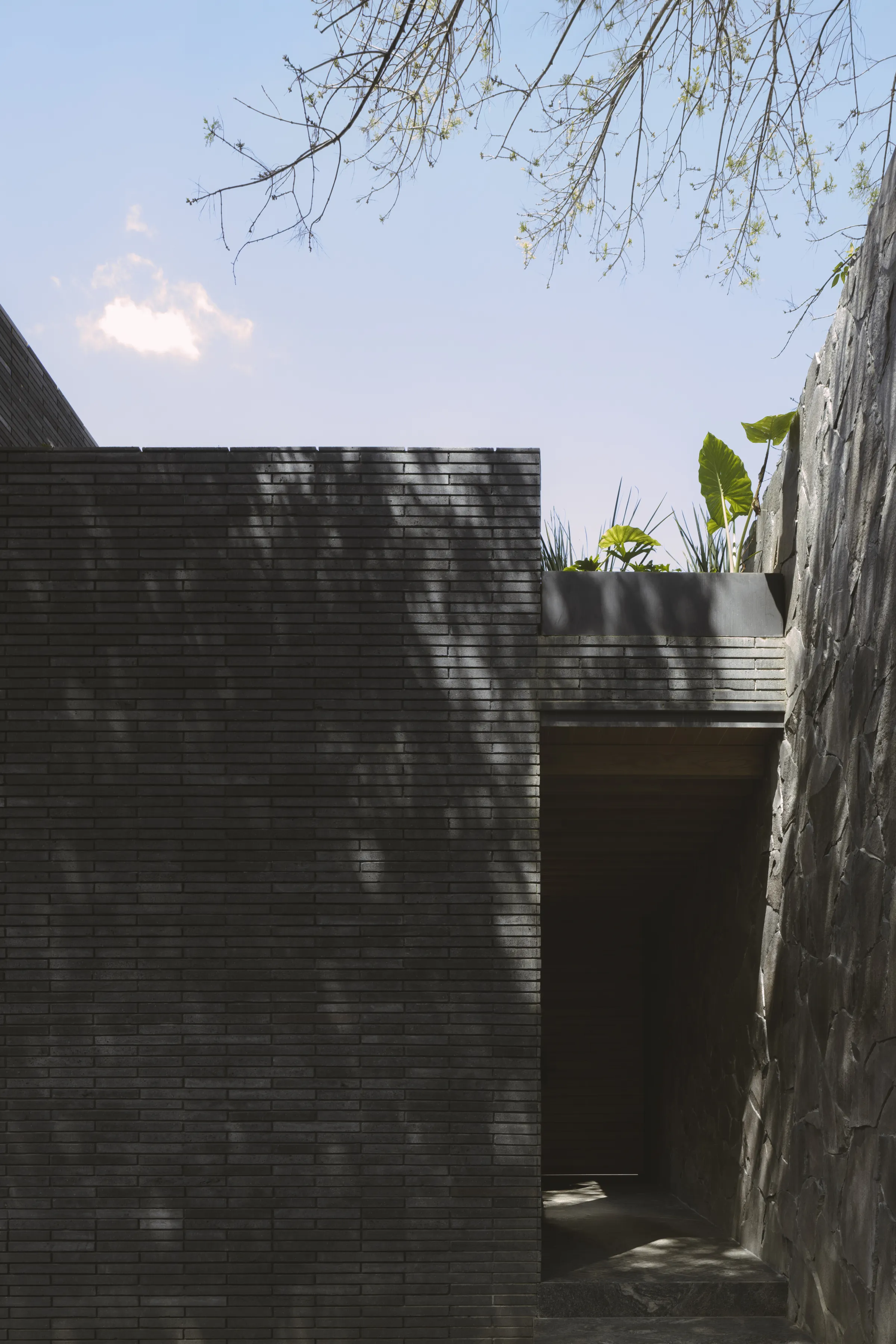
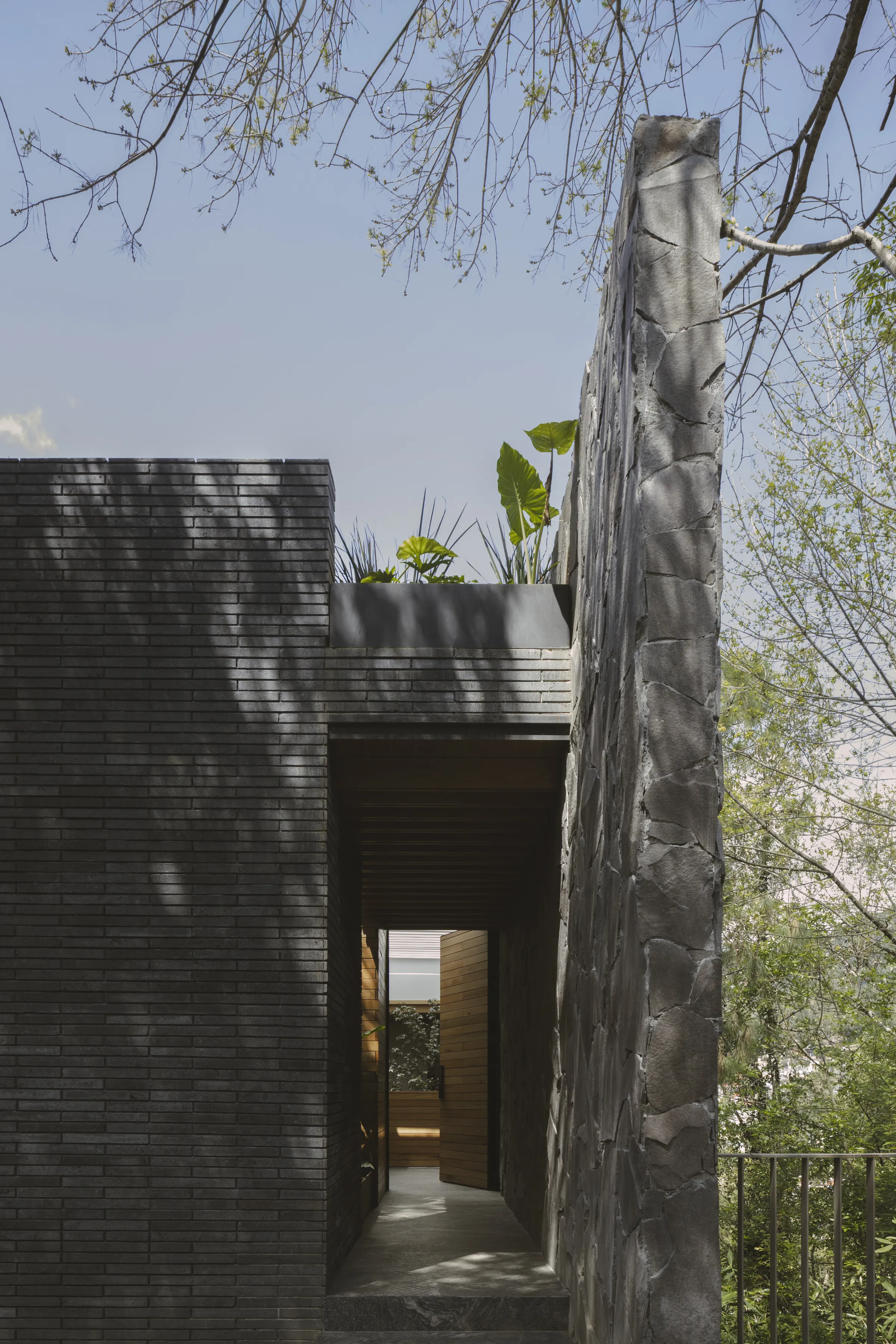
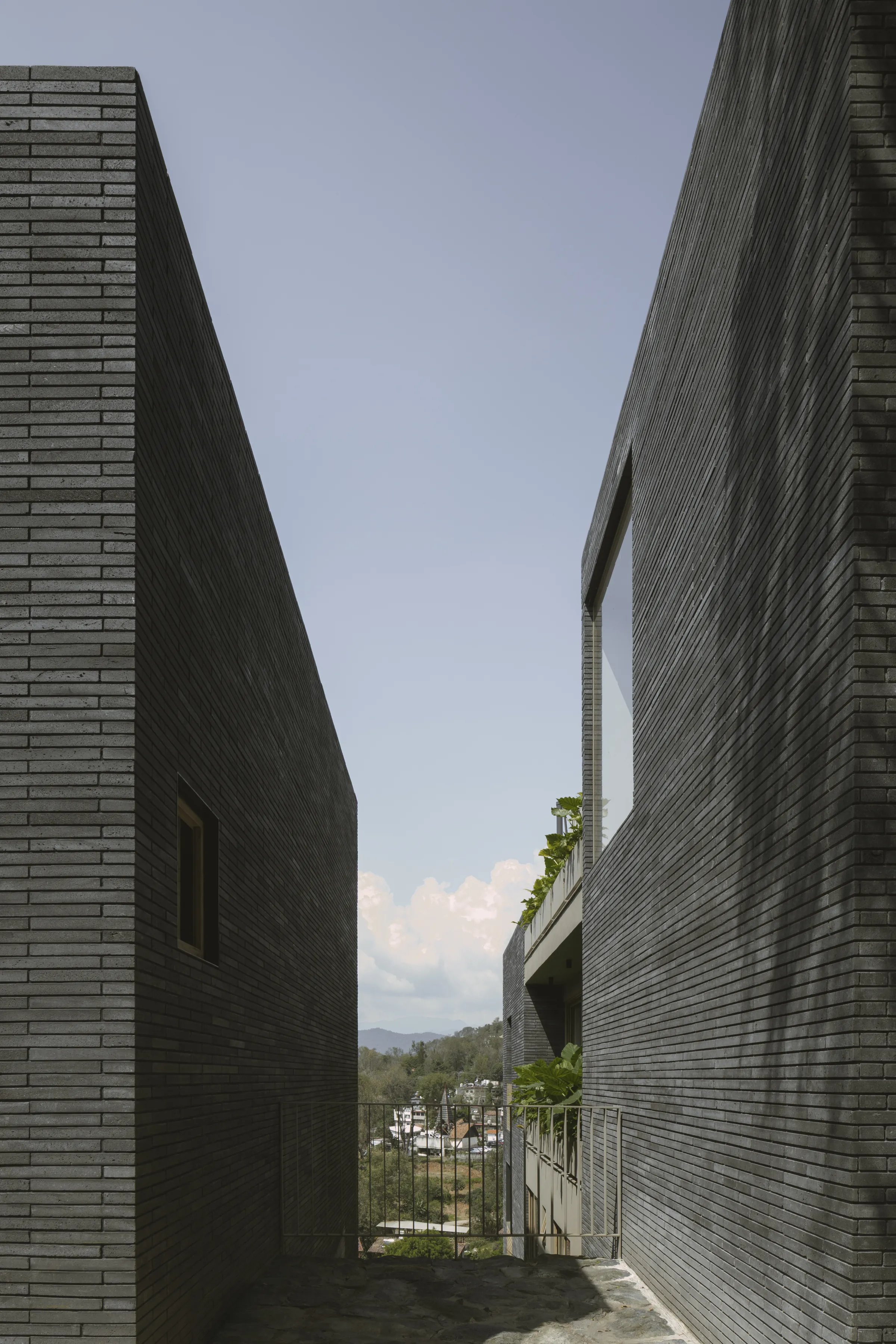
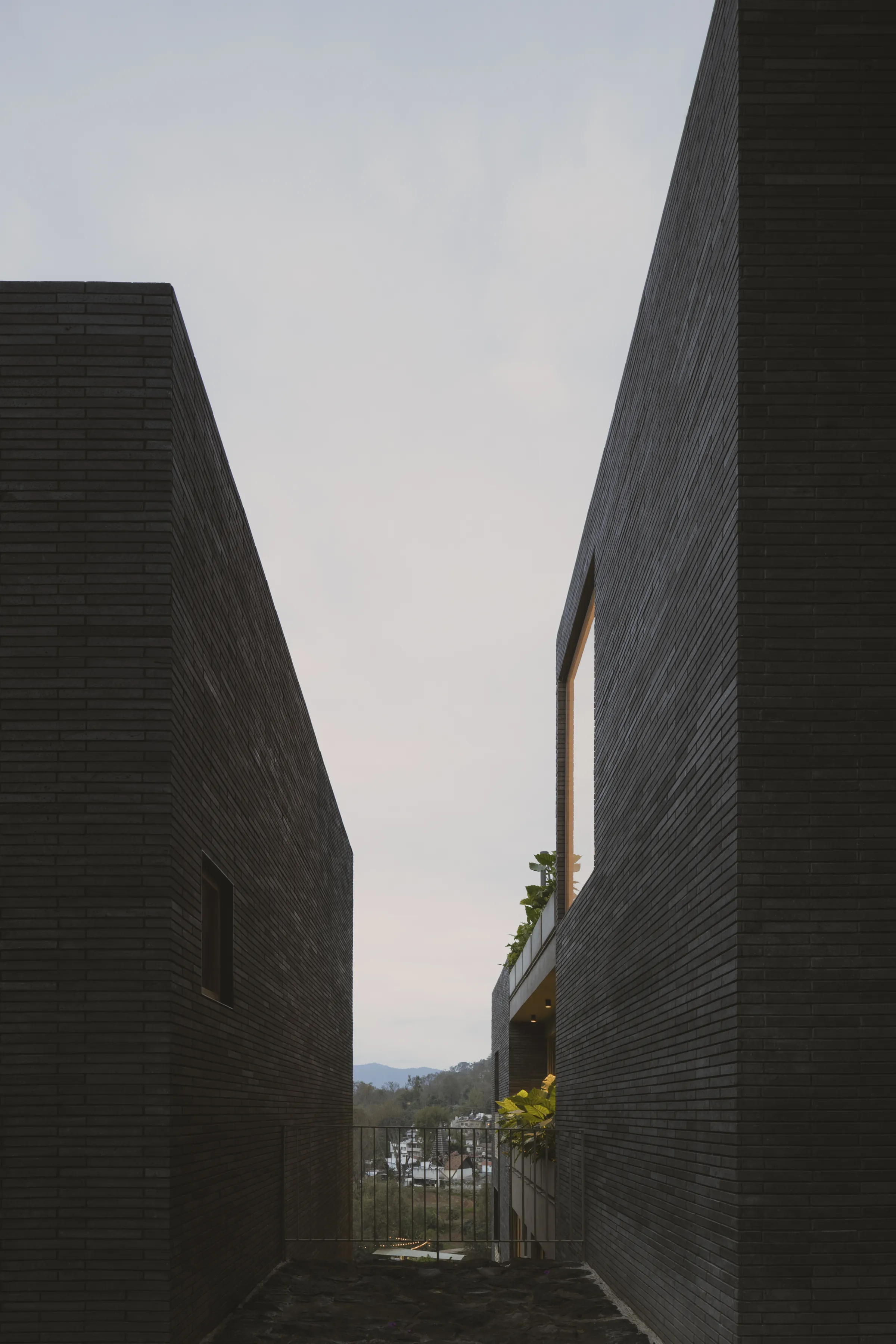
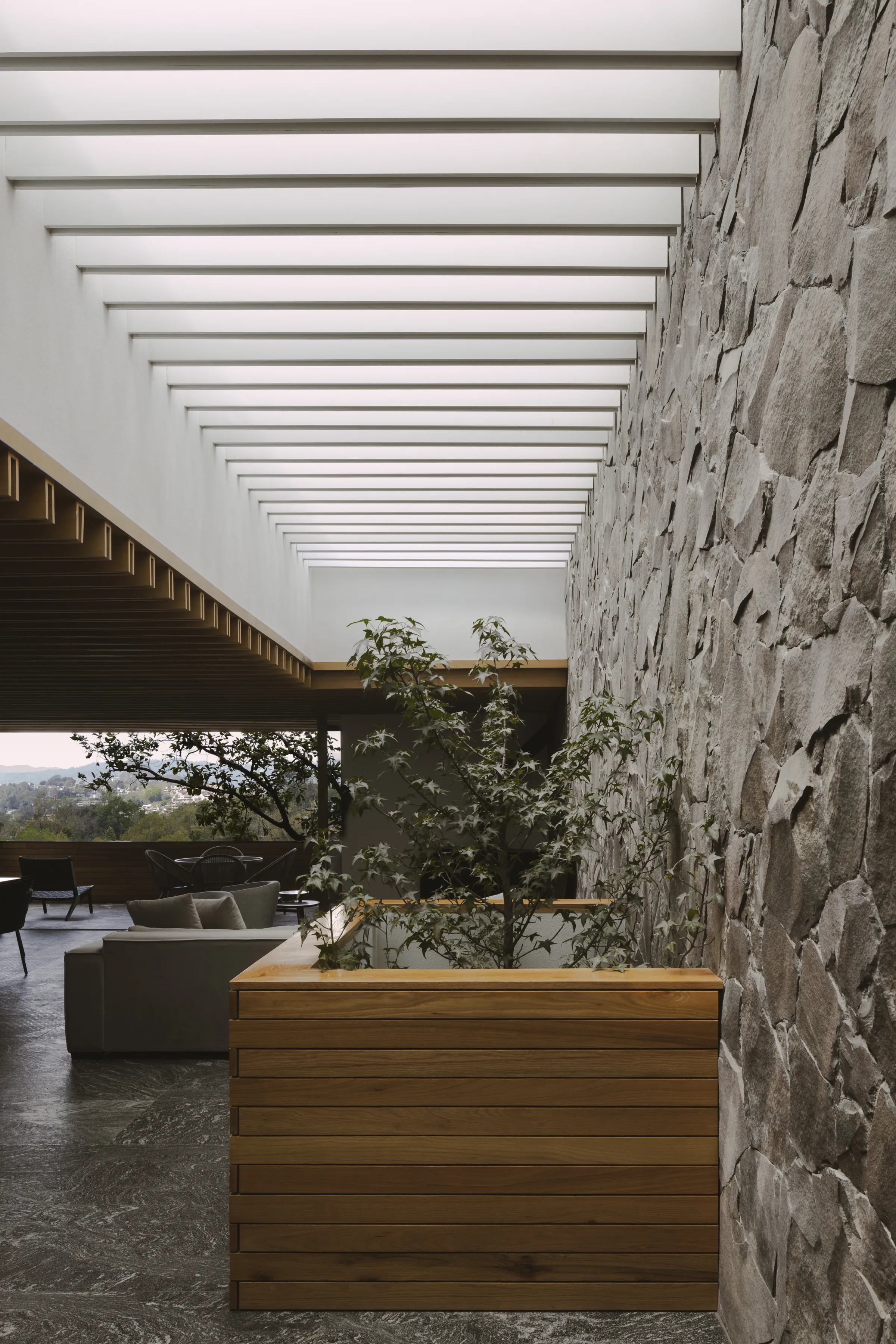
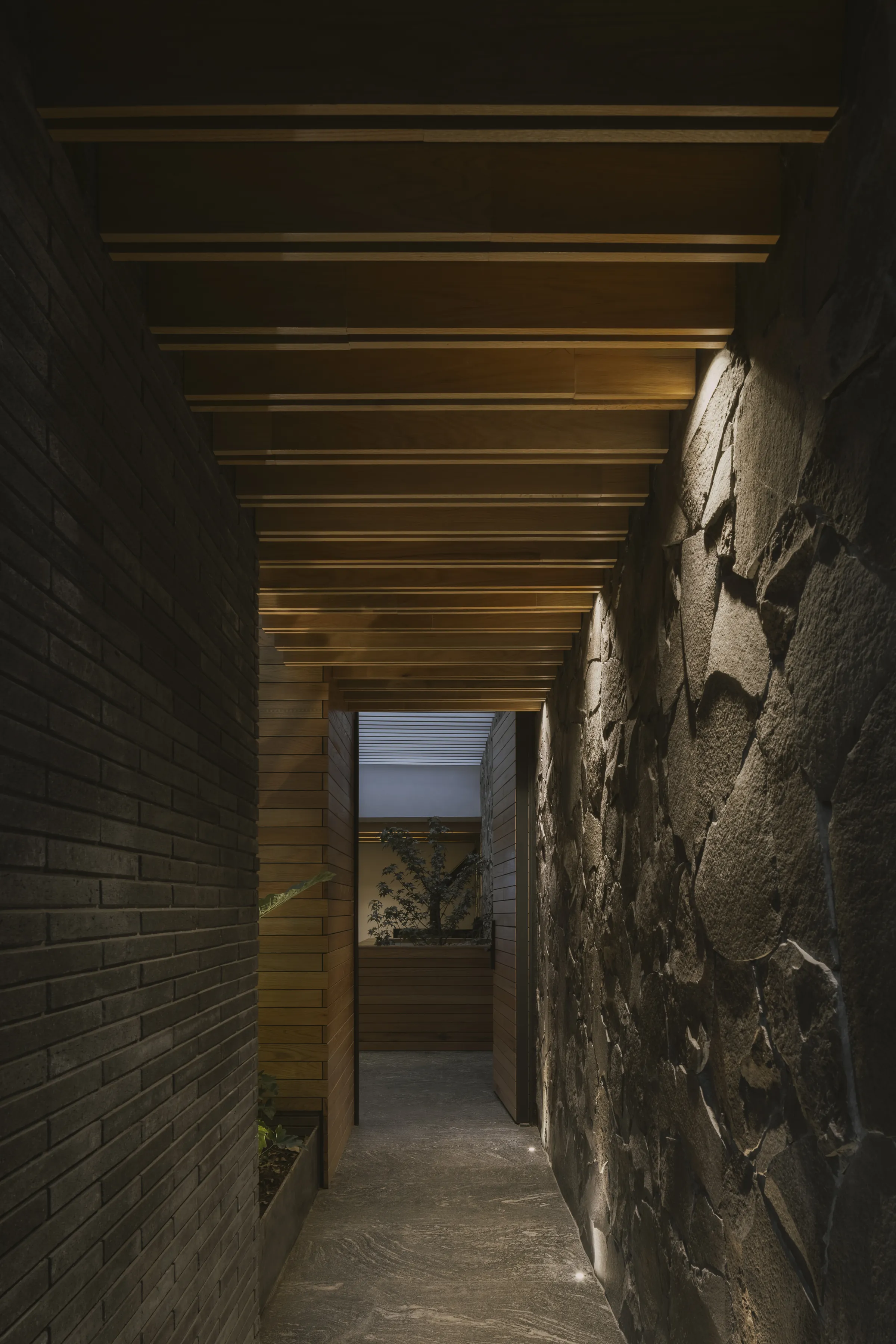
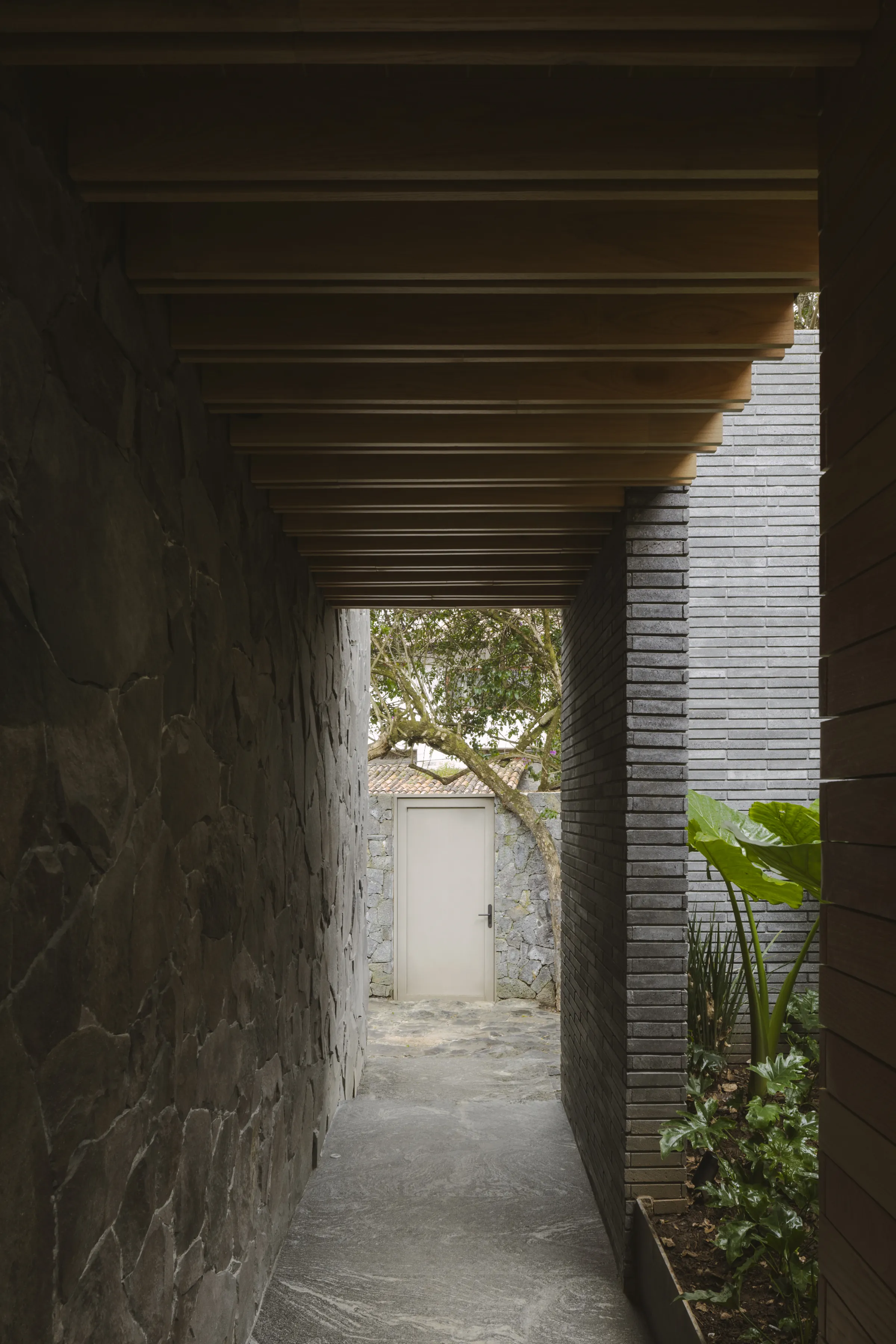
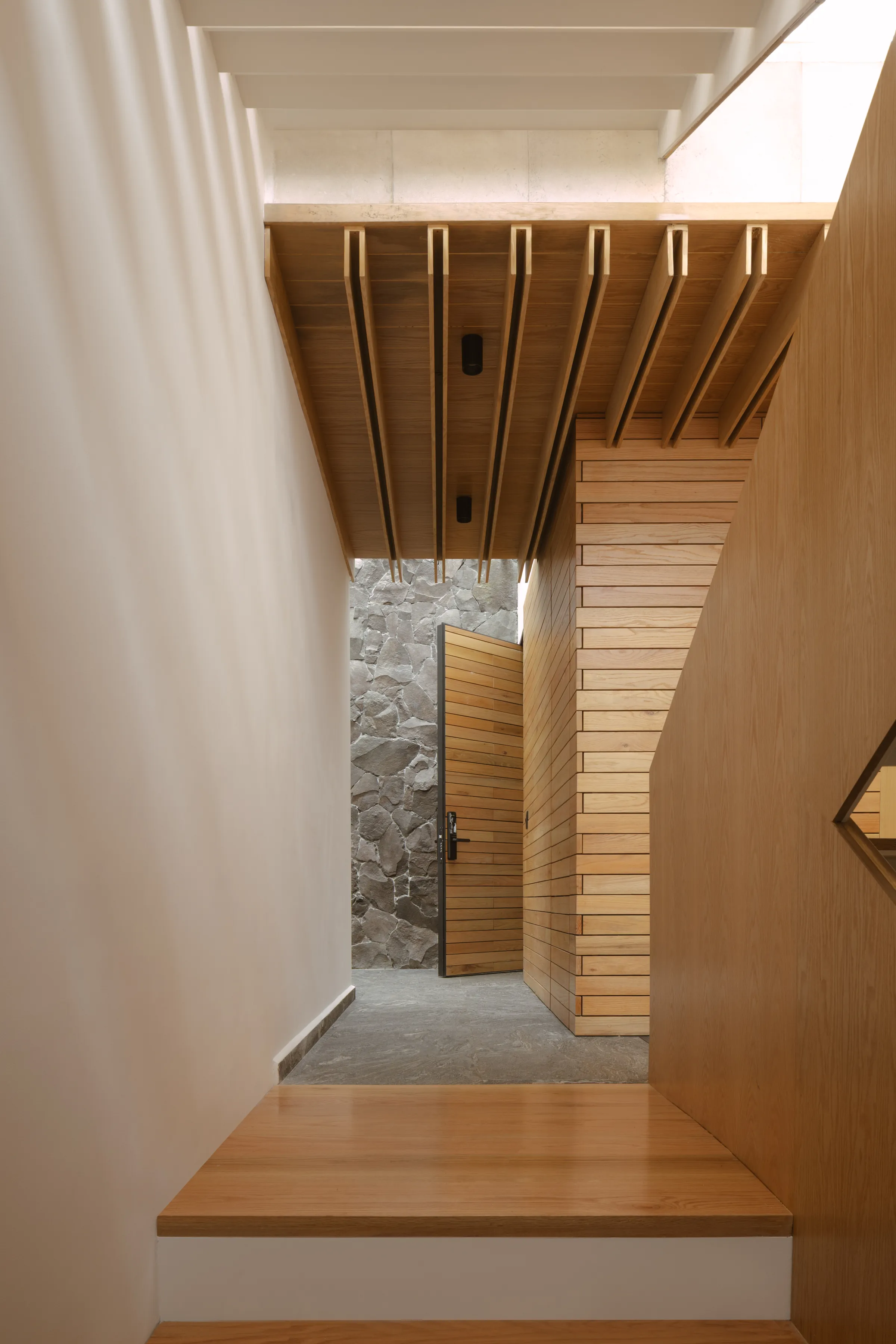
Between two stone volumes, a contained void opens up an space that does not function as a foyer or circulation, but as a place to pause. From there, the landscape presents itself frontally, establishing a direct relationship with the house even before crossing the threshold.
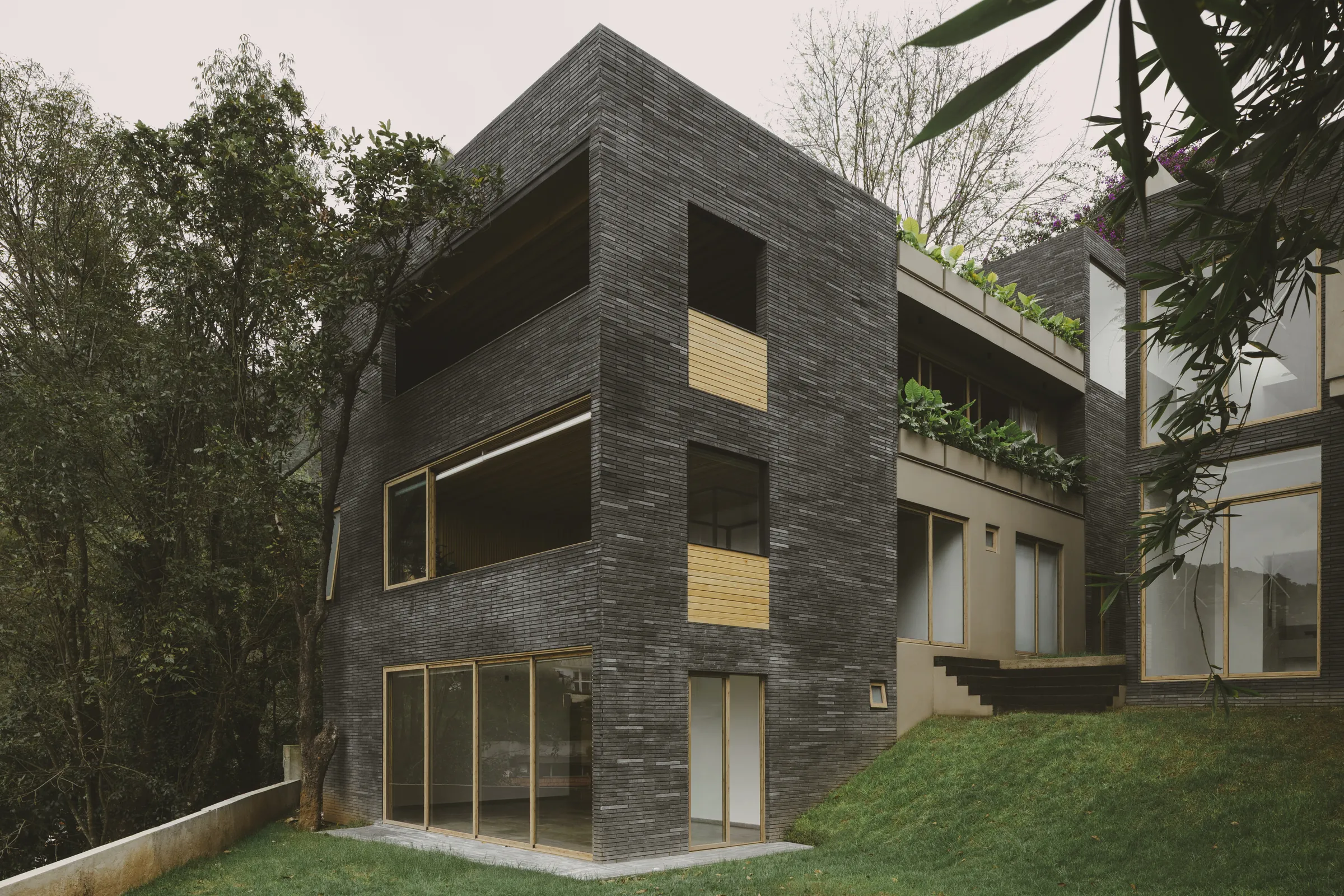
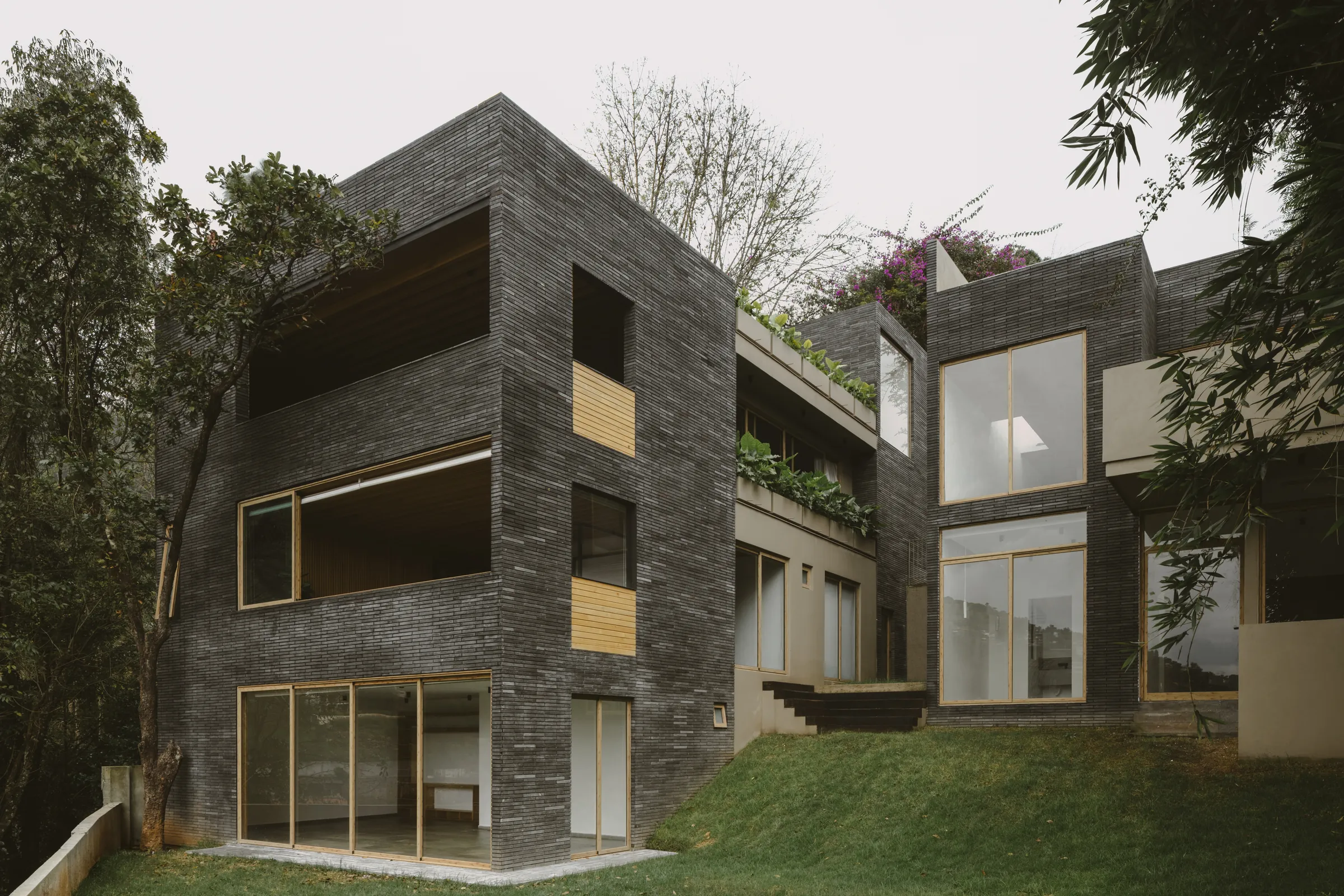
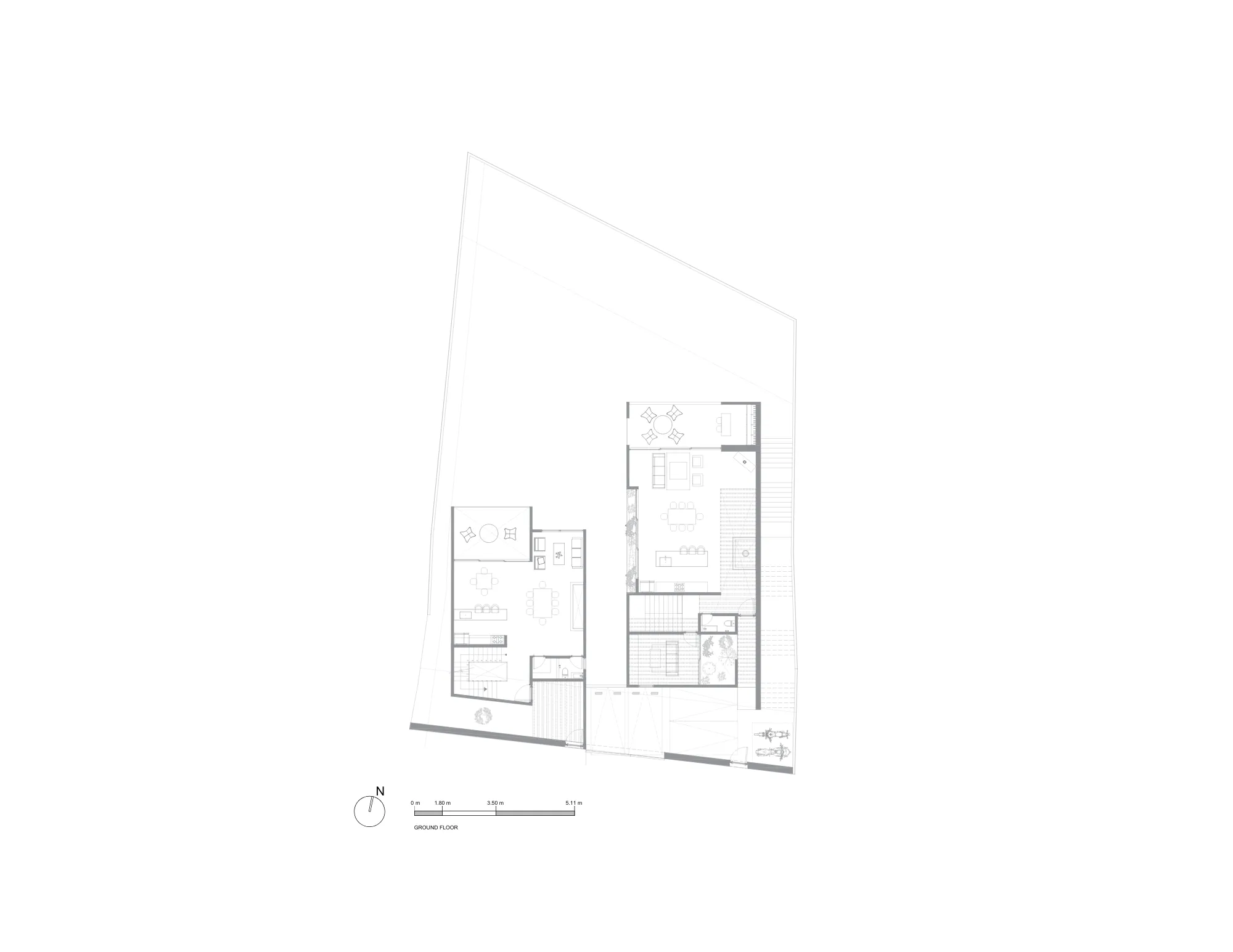
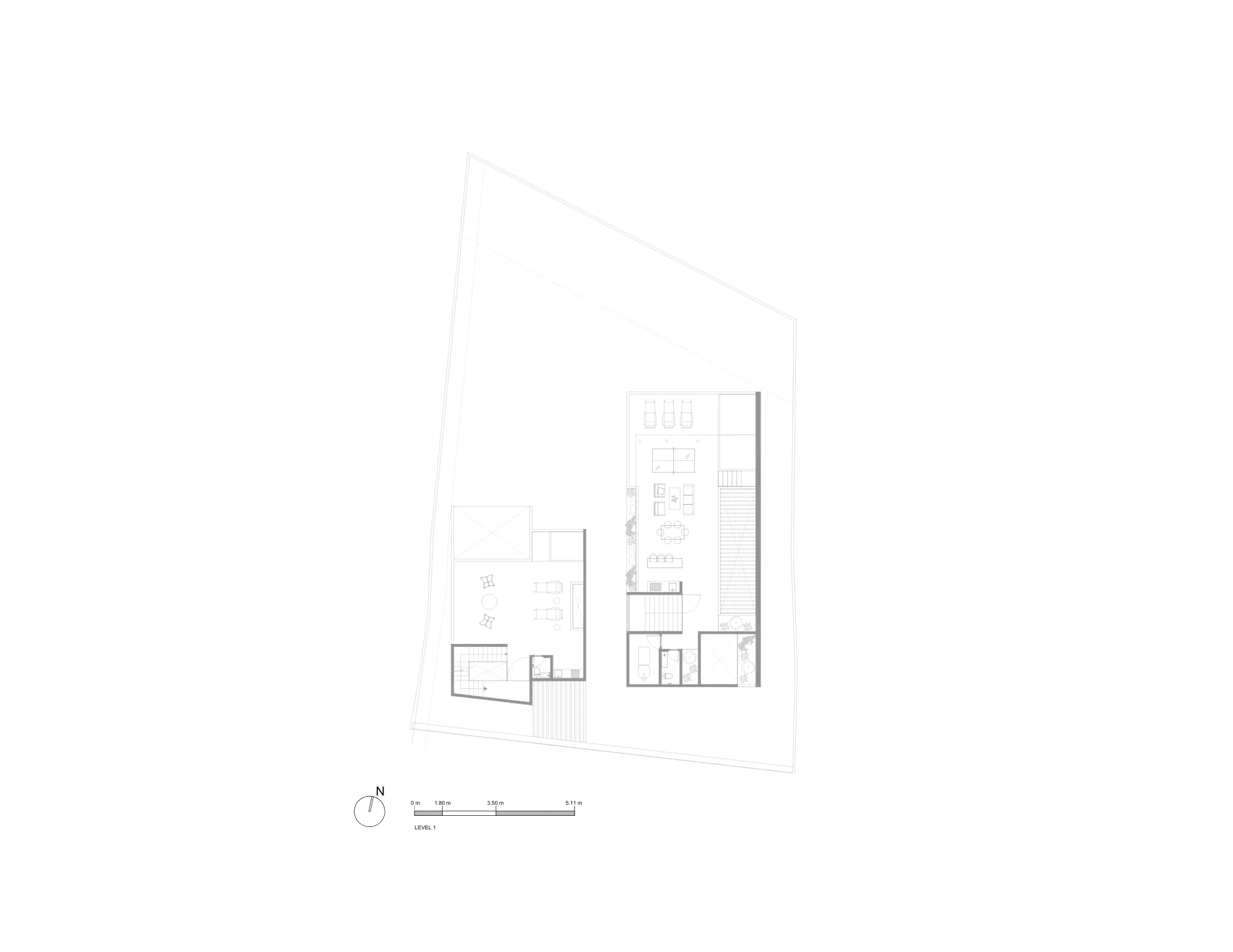
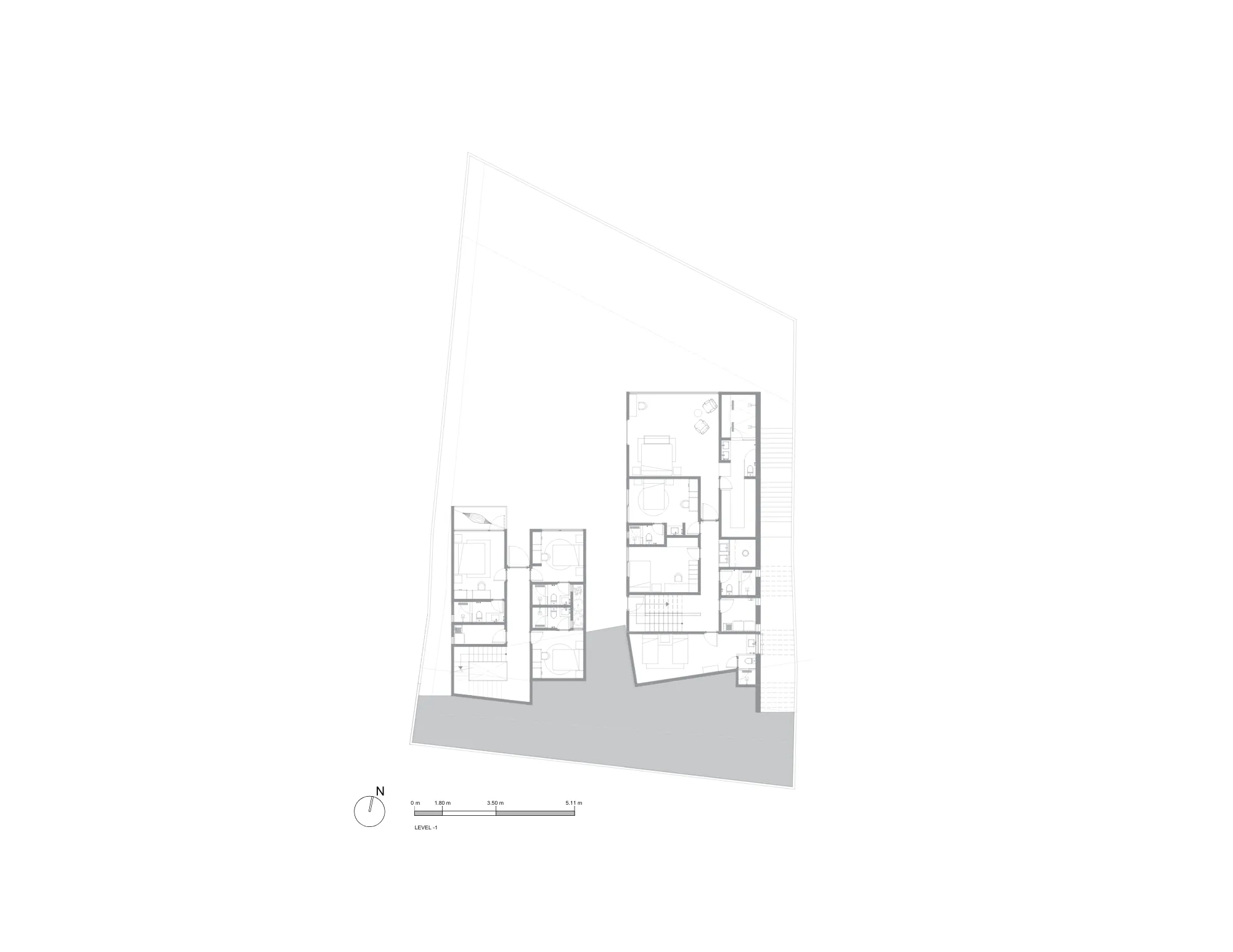
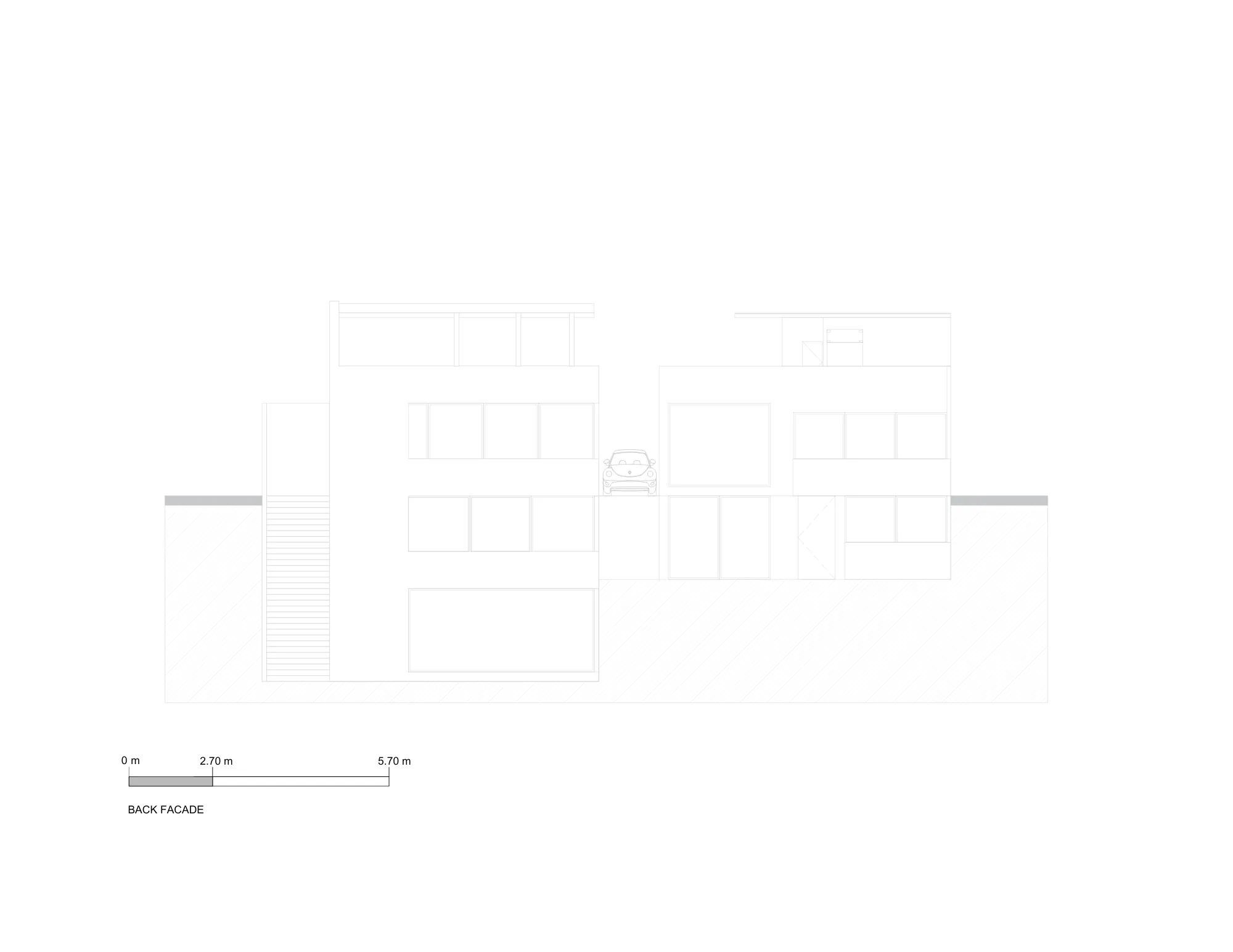
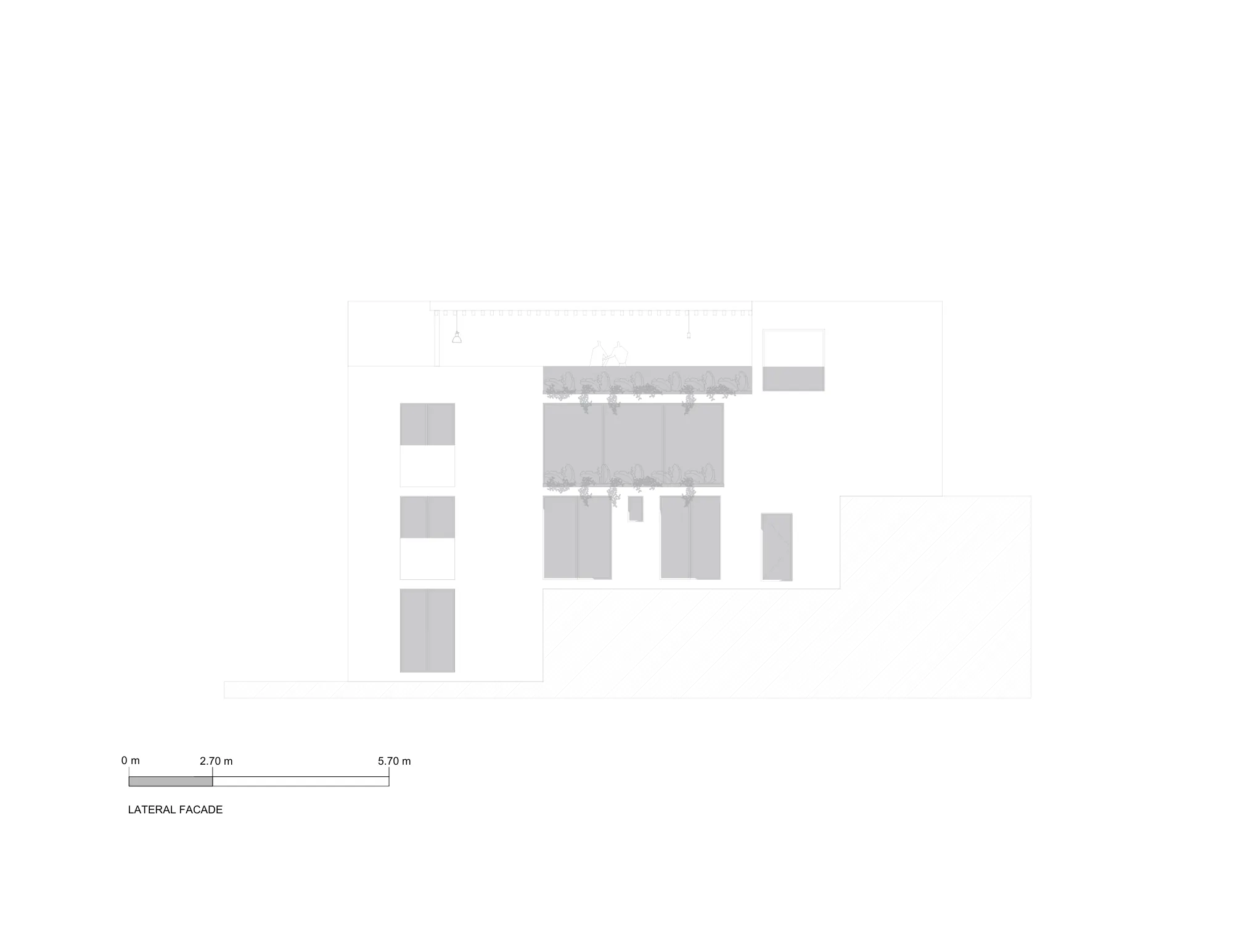
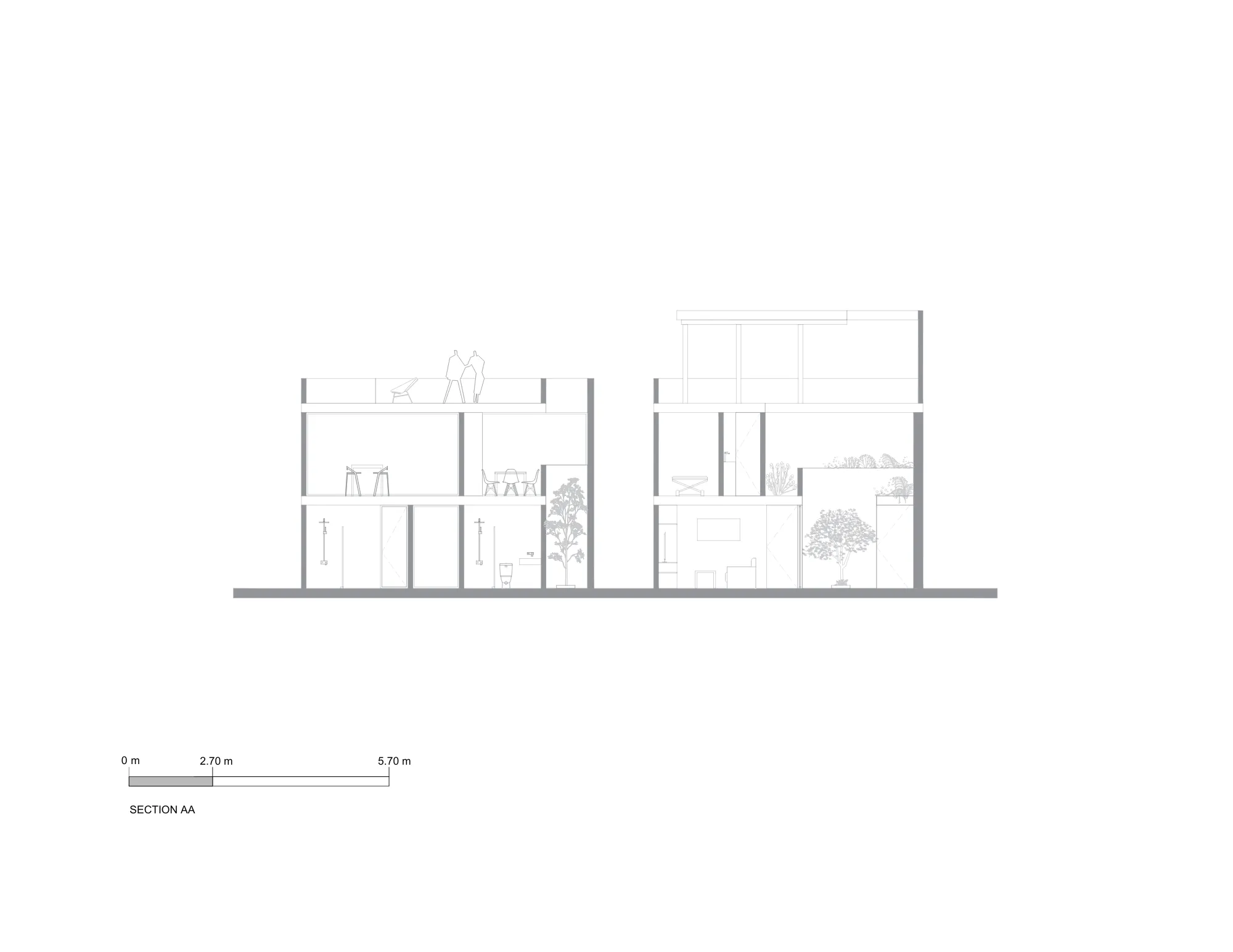
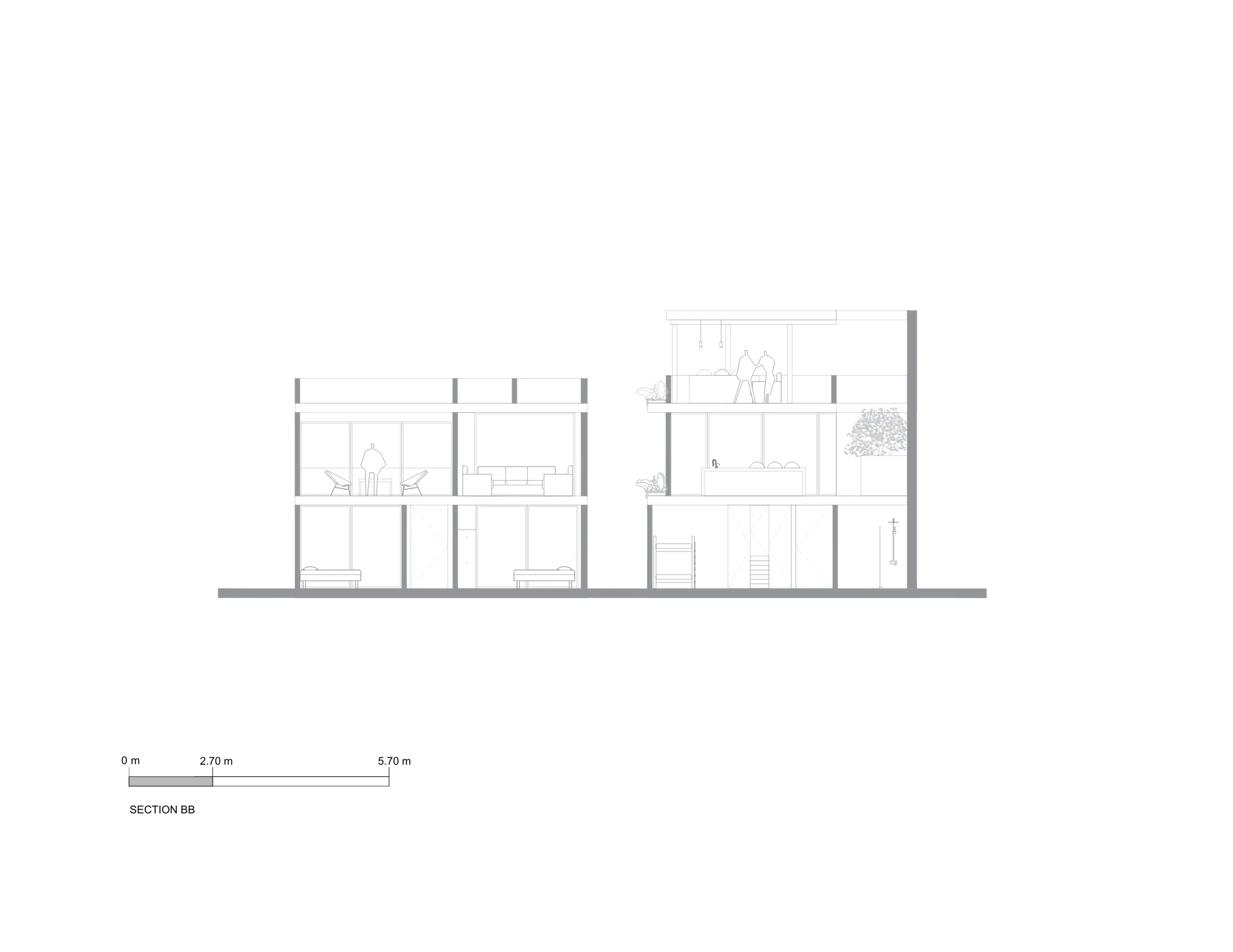
Located in Valle de Bravo, this weekend house rests on a site with a steep slope. Rather than neutralizing it, the project assumes the topography as an organizing principle and fragments into two bodies that step down following the terrain. Both volumes function as extensions of a single house, yet operate independently. They share a contemplative space facing the landscape and the garden, while each maintains its own logic of use and habitation.
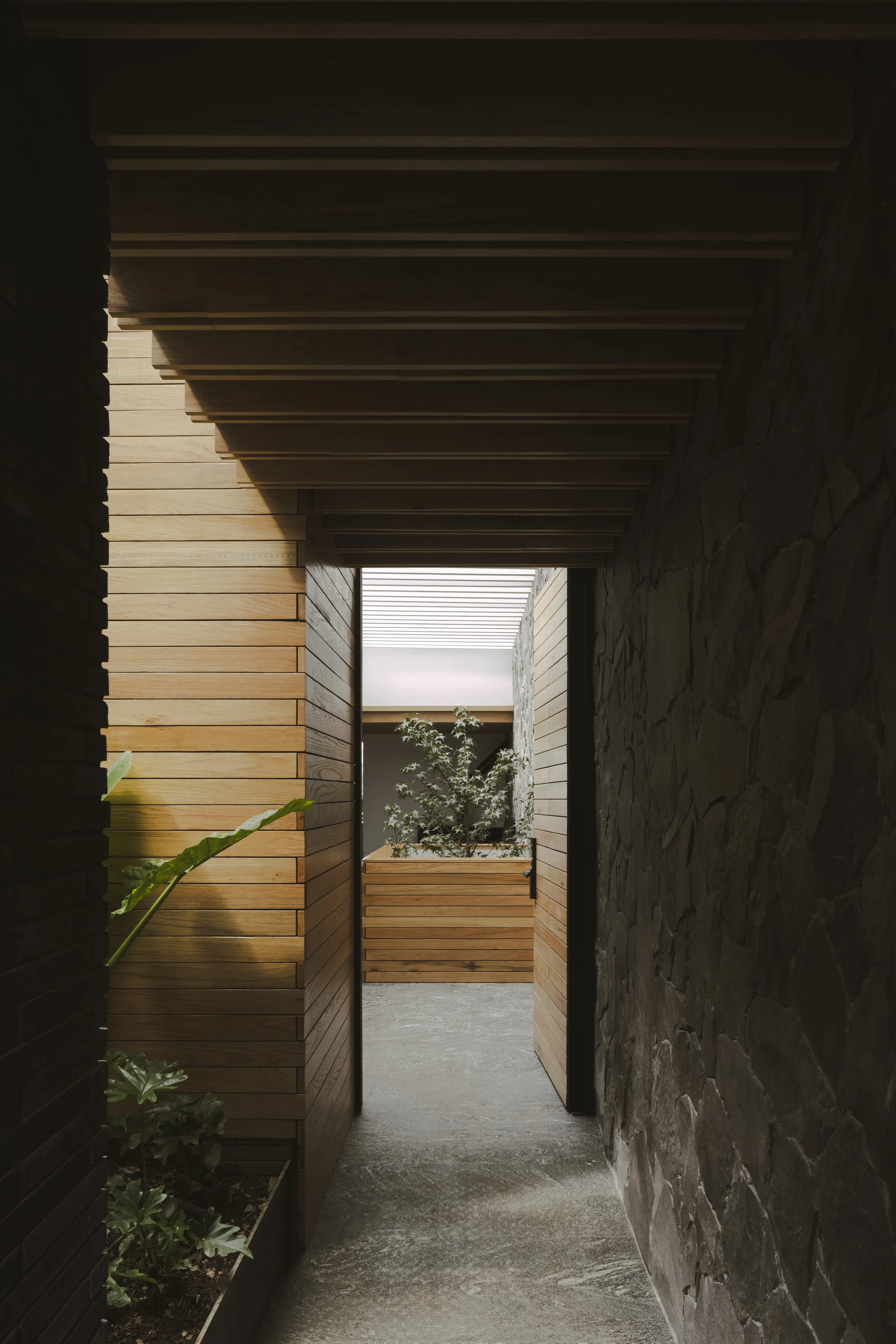
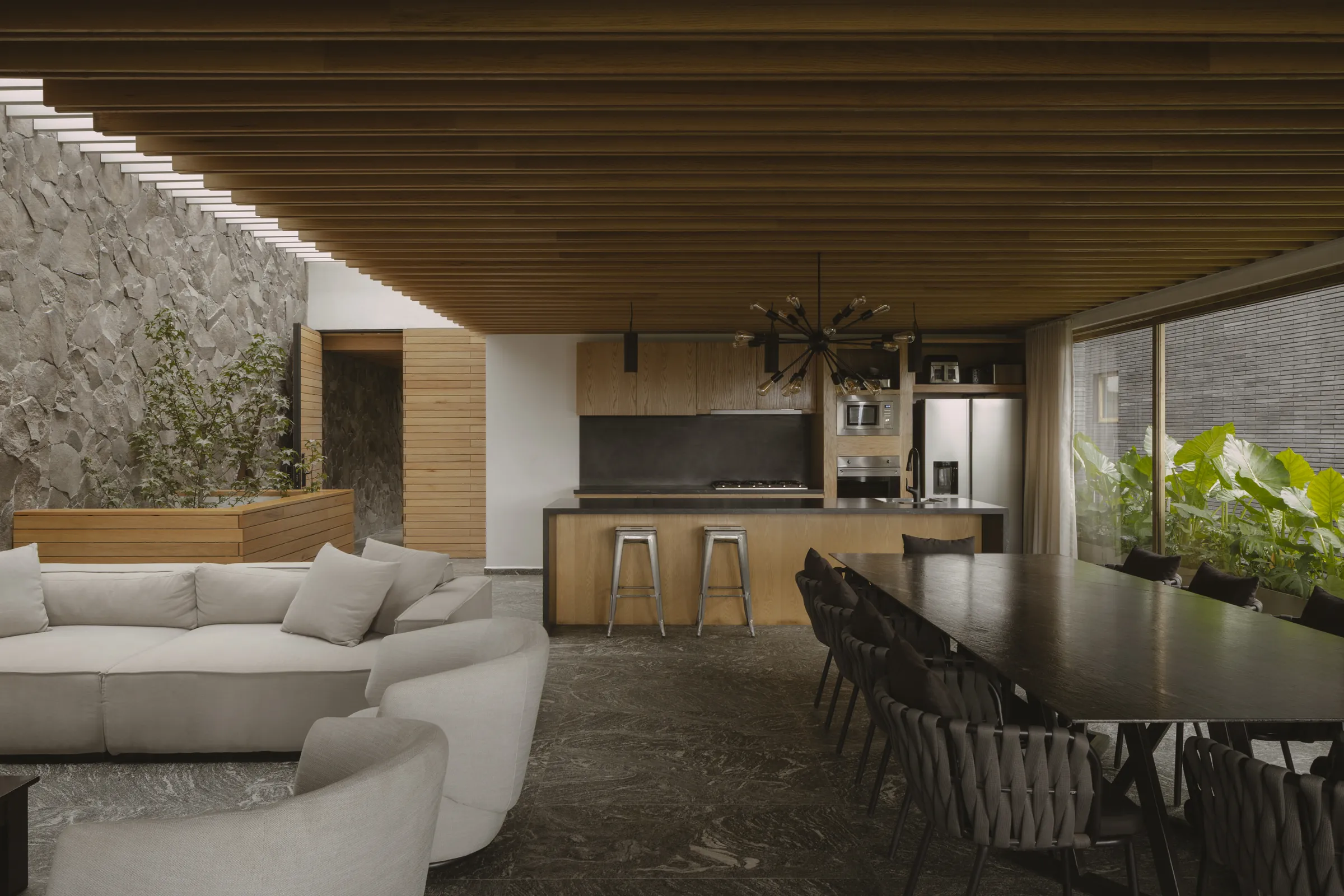
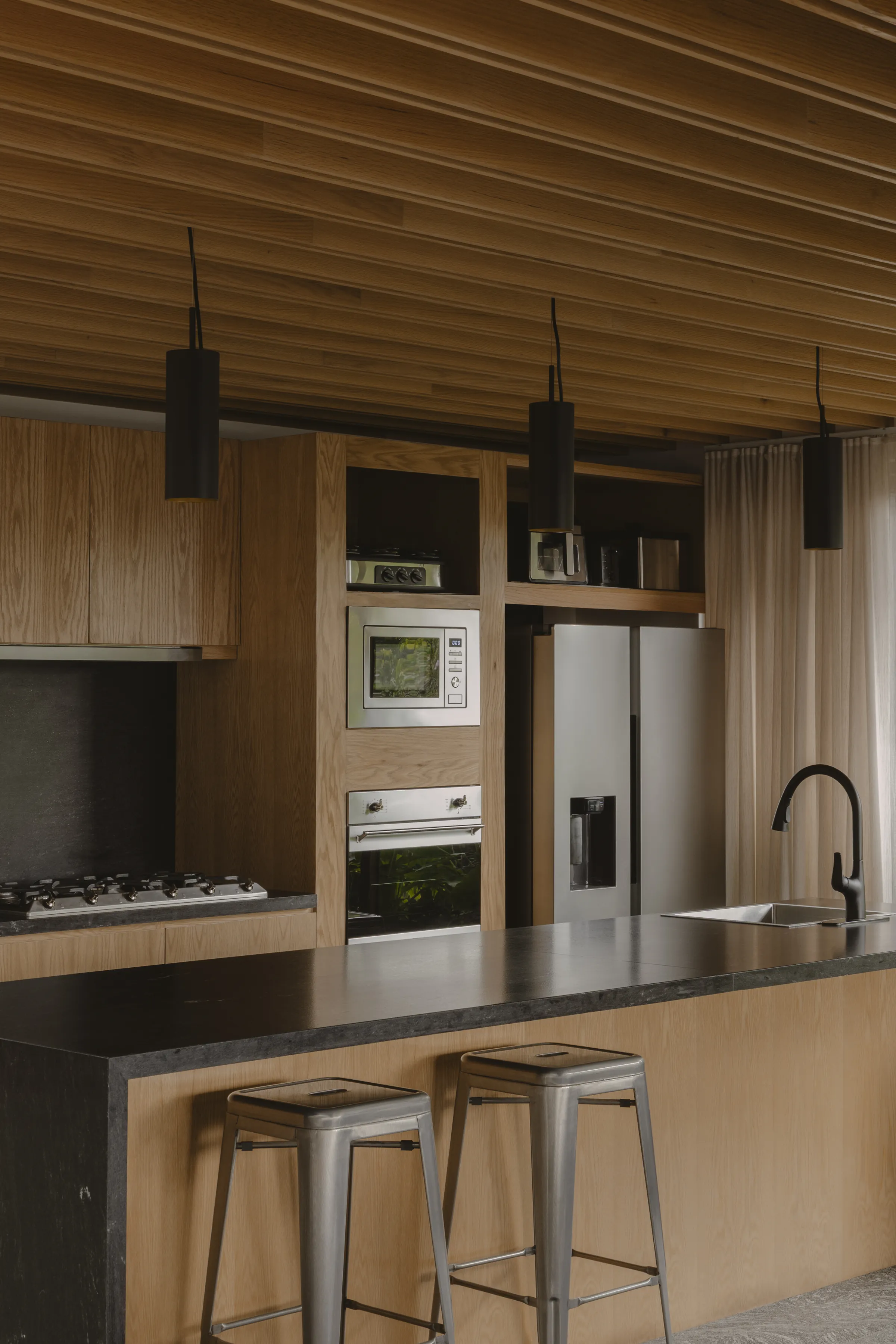
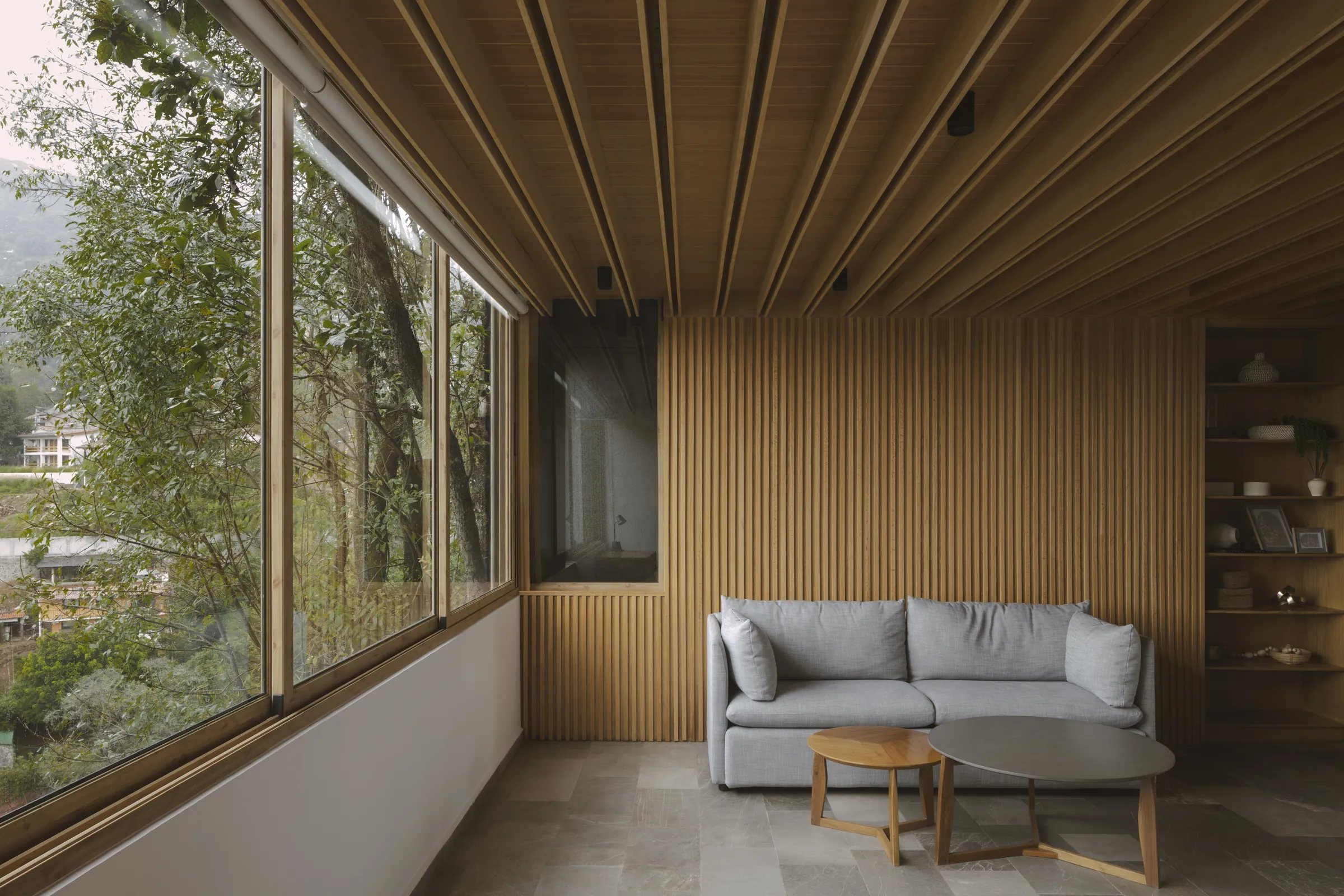
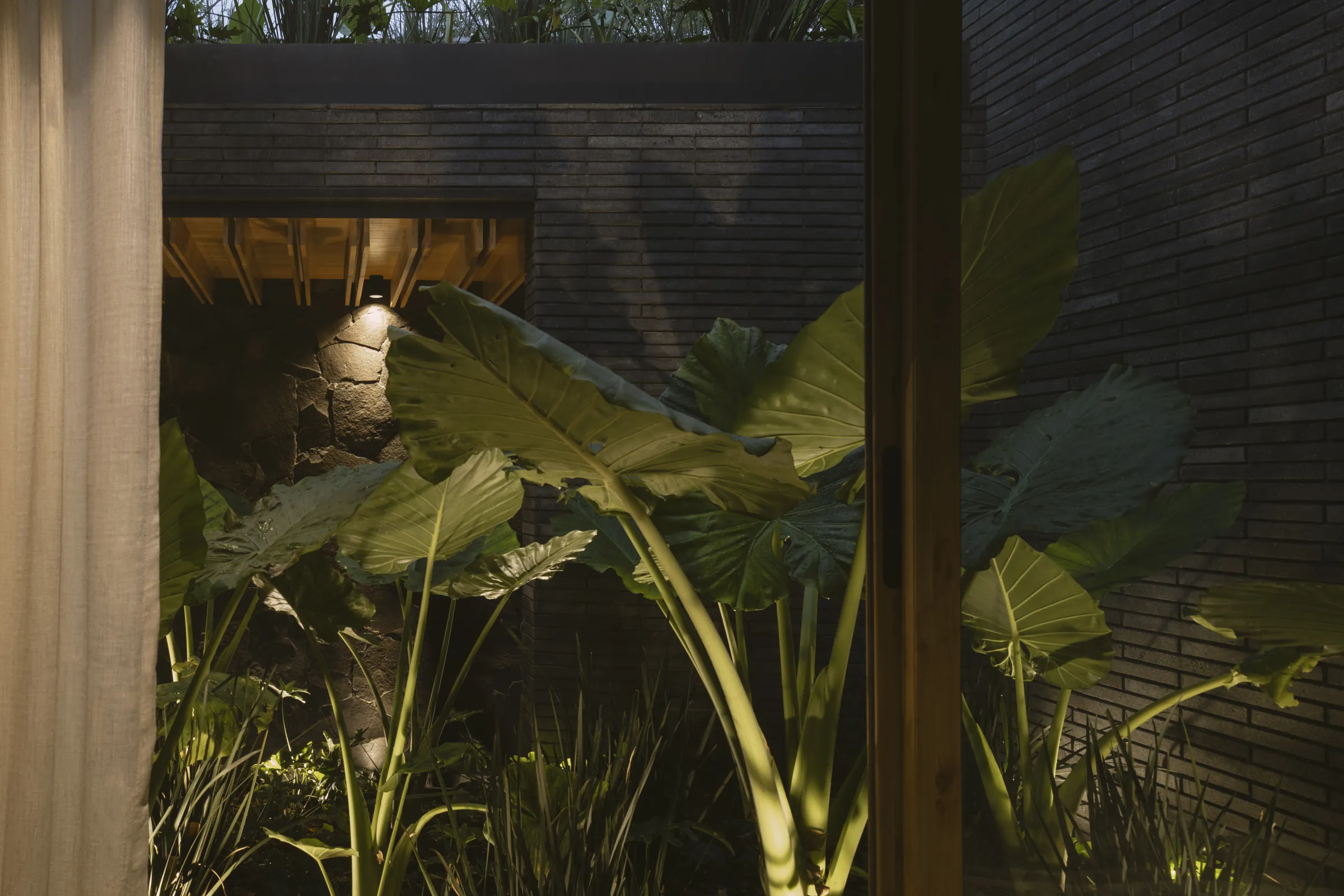
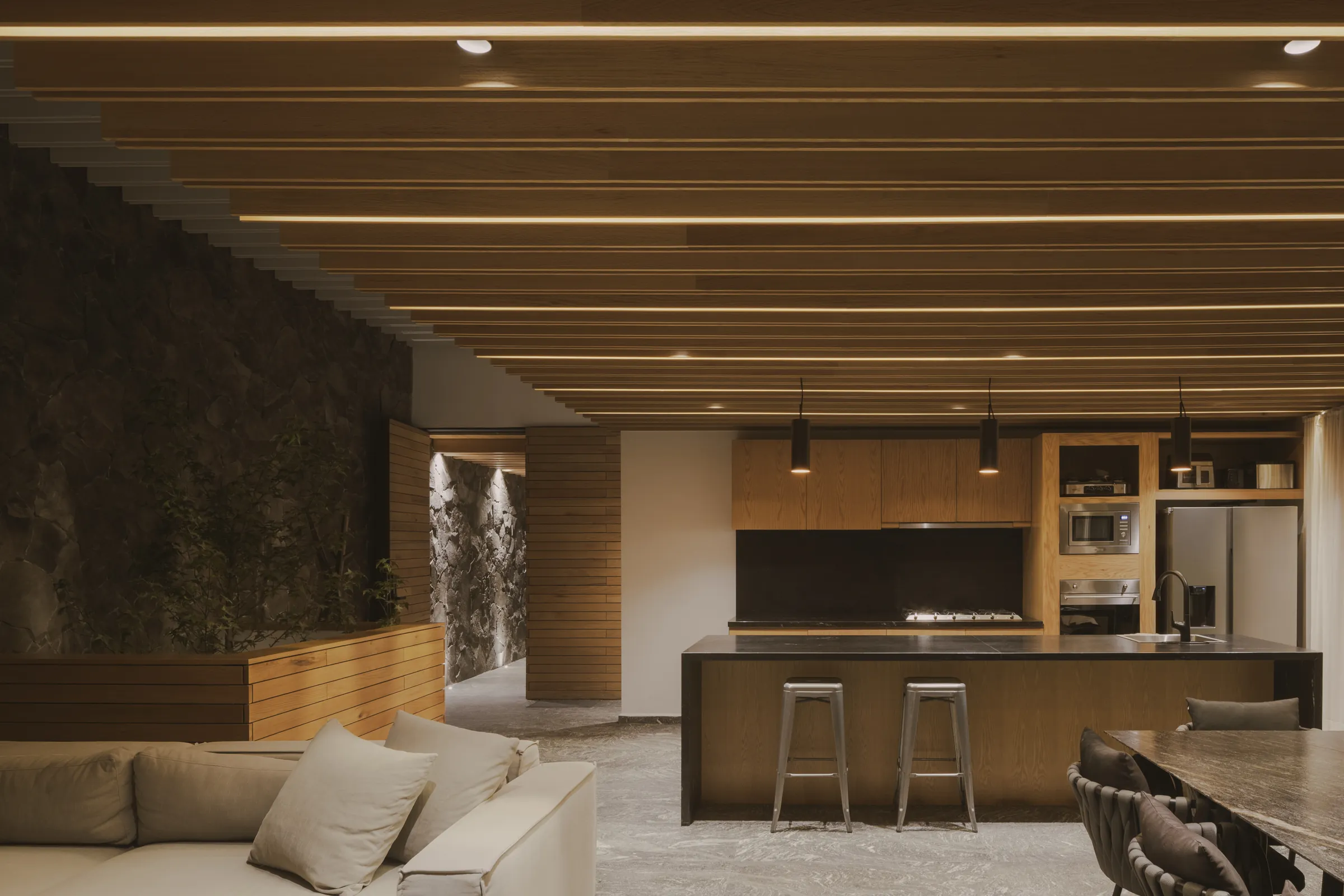
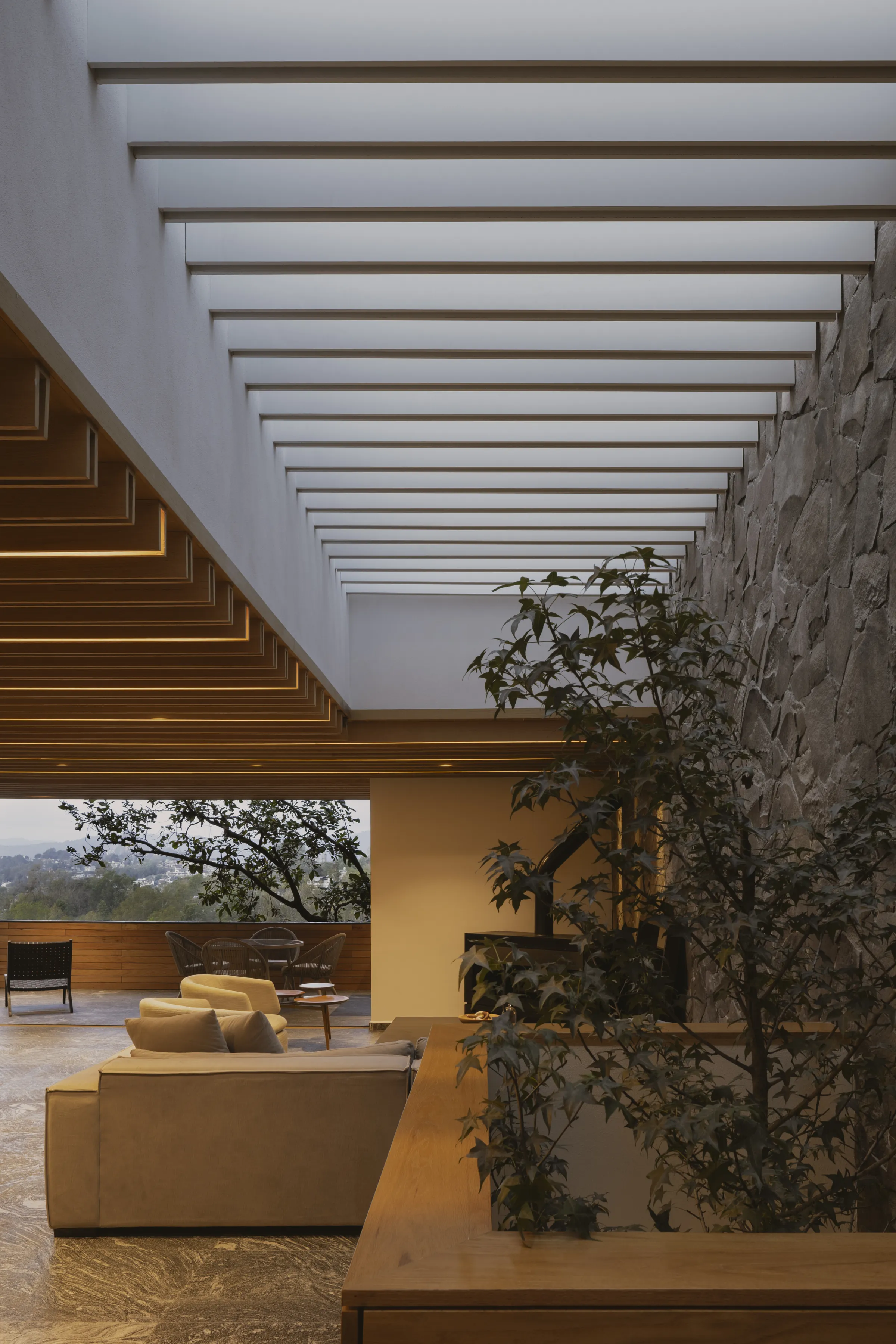
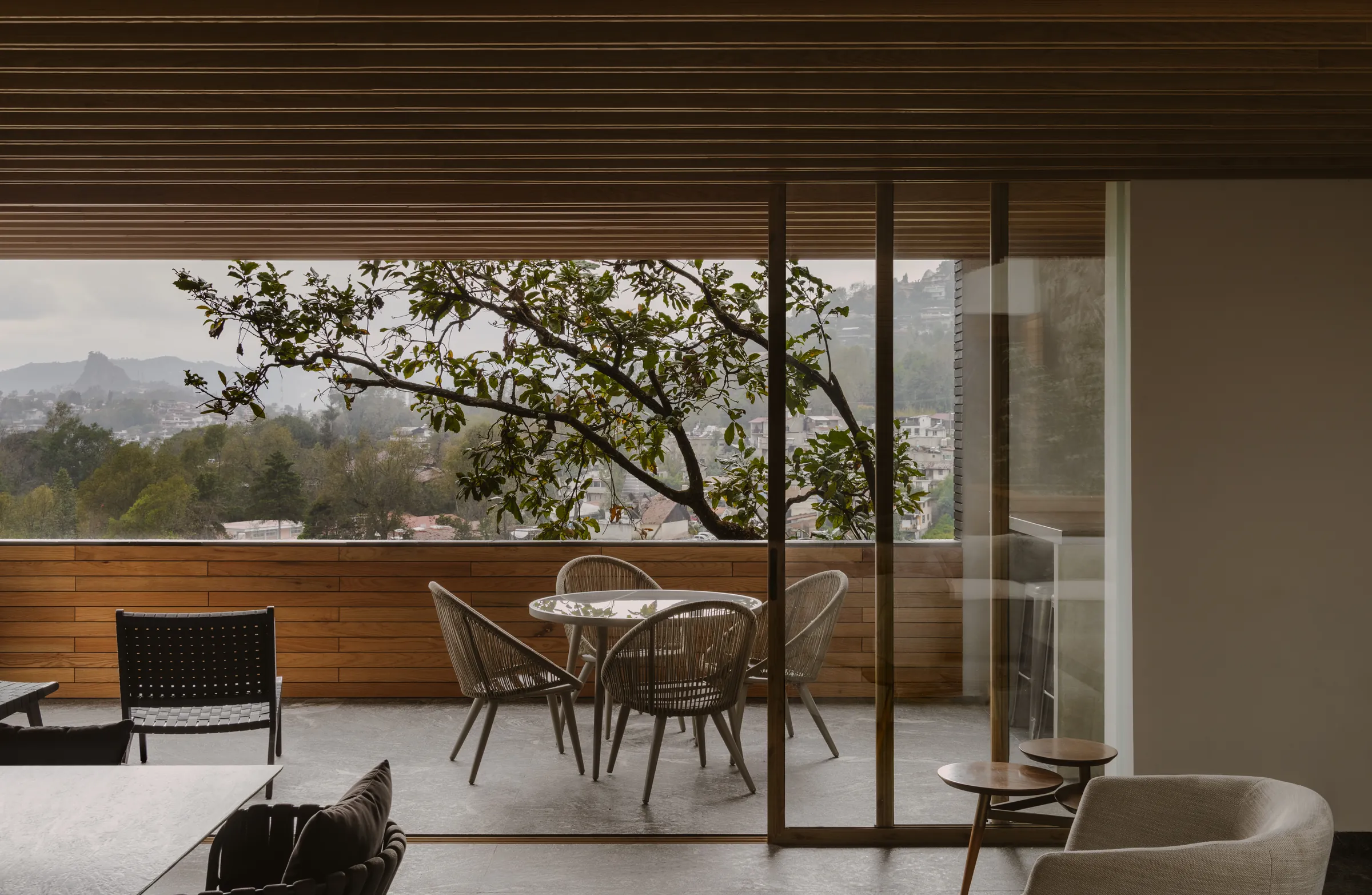
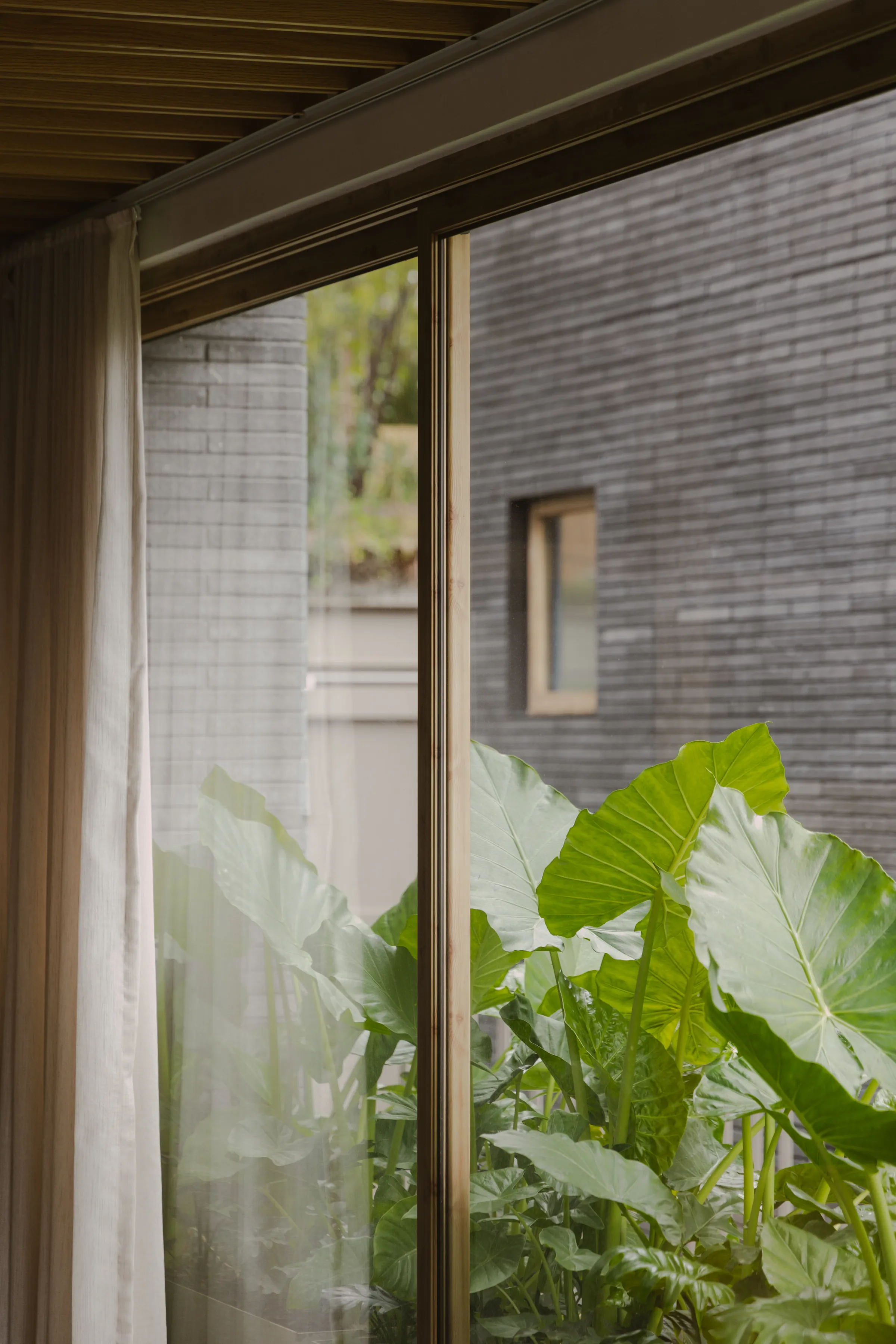
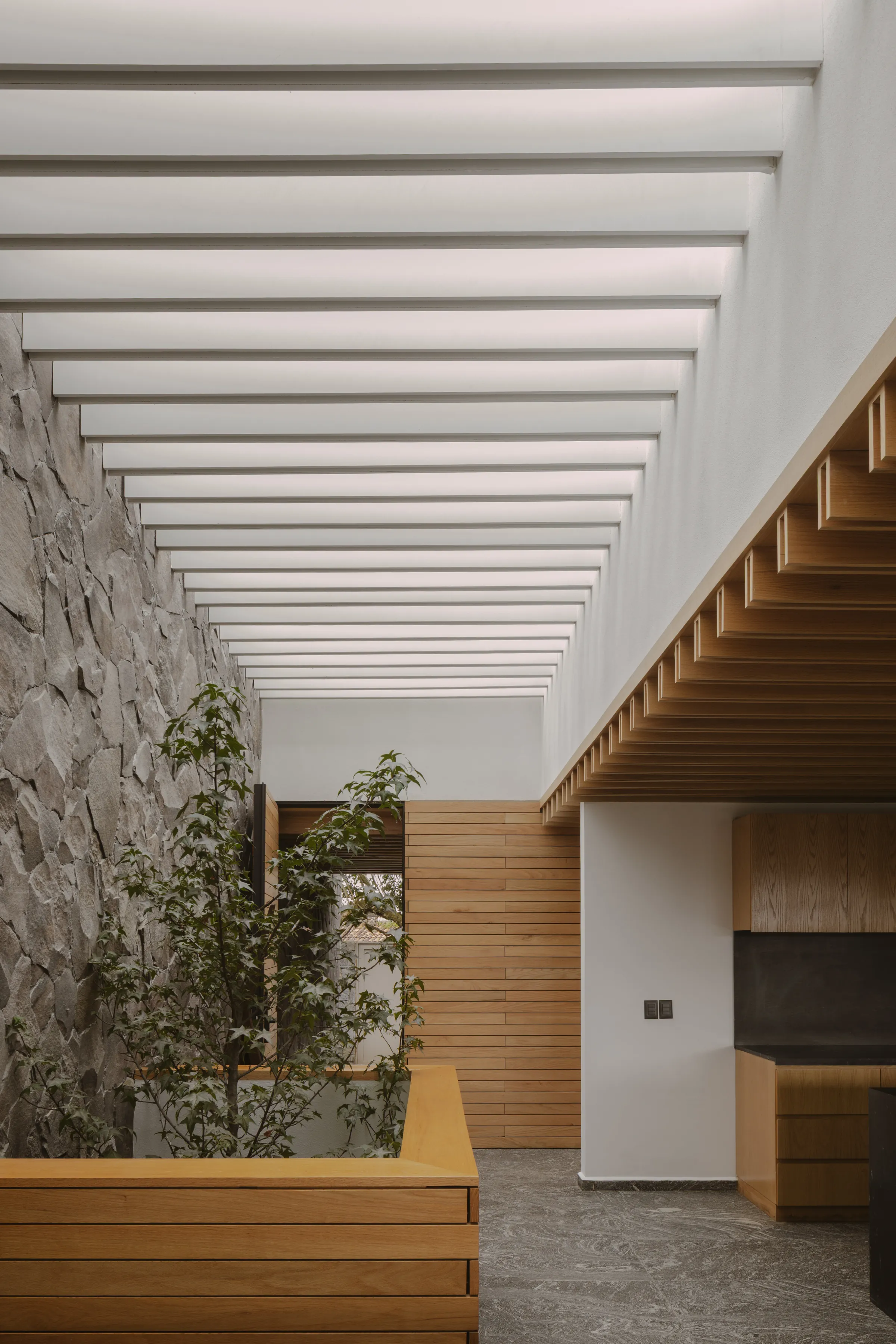
Access to the main house occurs through a narrow corridor that compresses the sequence and crosses a small garden. This is not a neutral passage: its narrowness, shade, and the closeness of vegetation alter perception and prepare the body before entering. At the end of this transition, the space opens up to the public area, where the living room, dining room, and kitchen merge into a single environment that seems to hover between architecture and landscape. Vegetation and rocky formations surround it, softening the boundaries between interior and exterior and constructing a contained atmospherecloser to contemplation than to display.
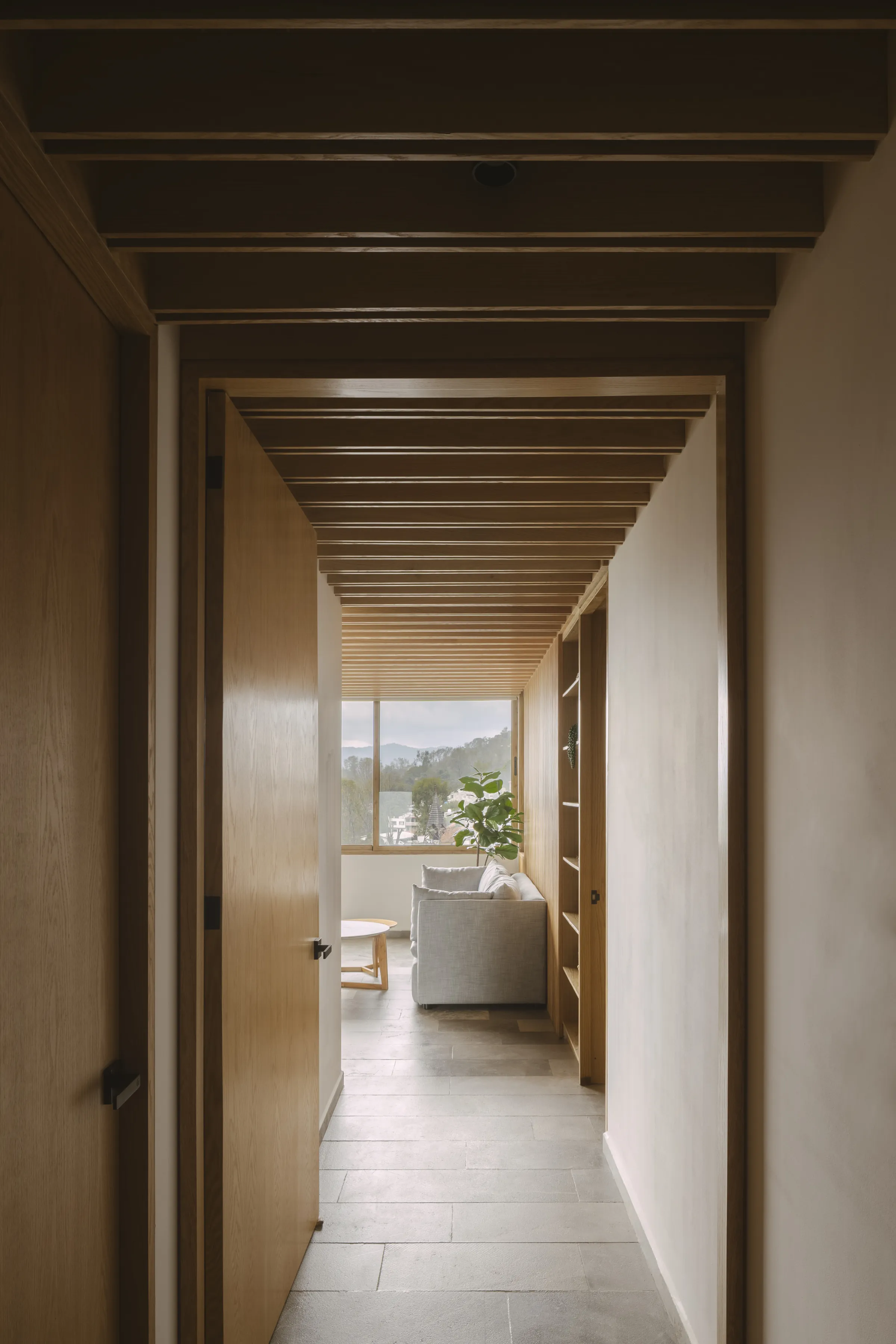
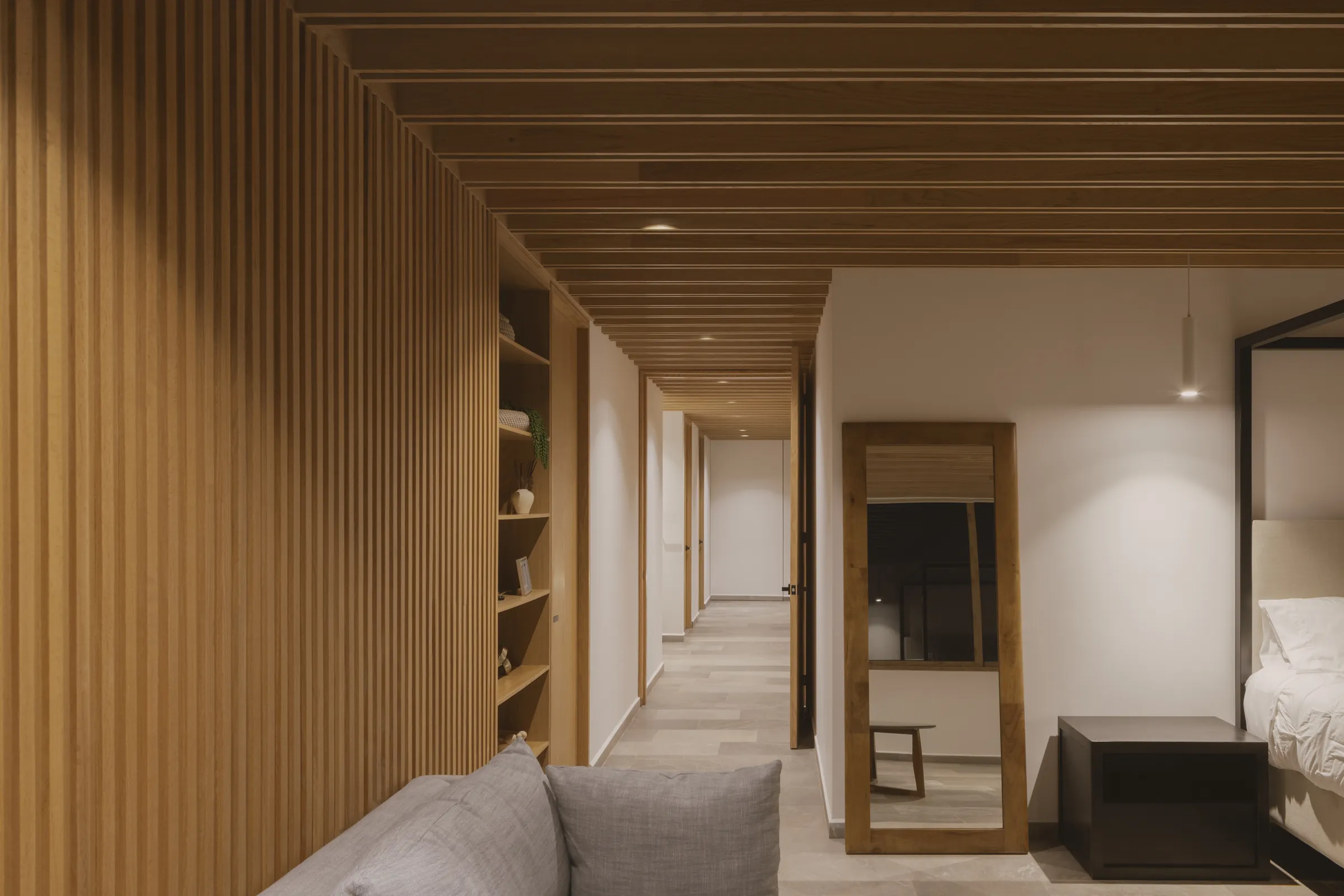
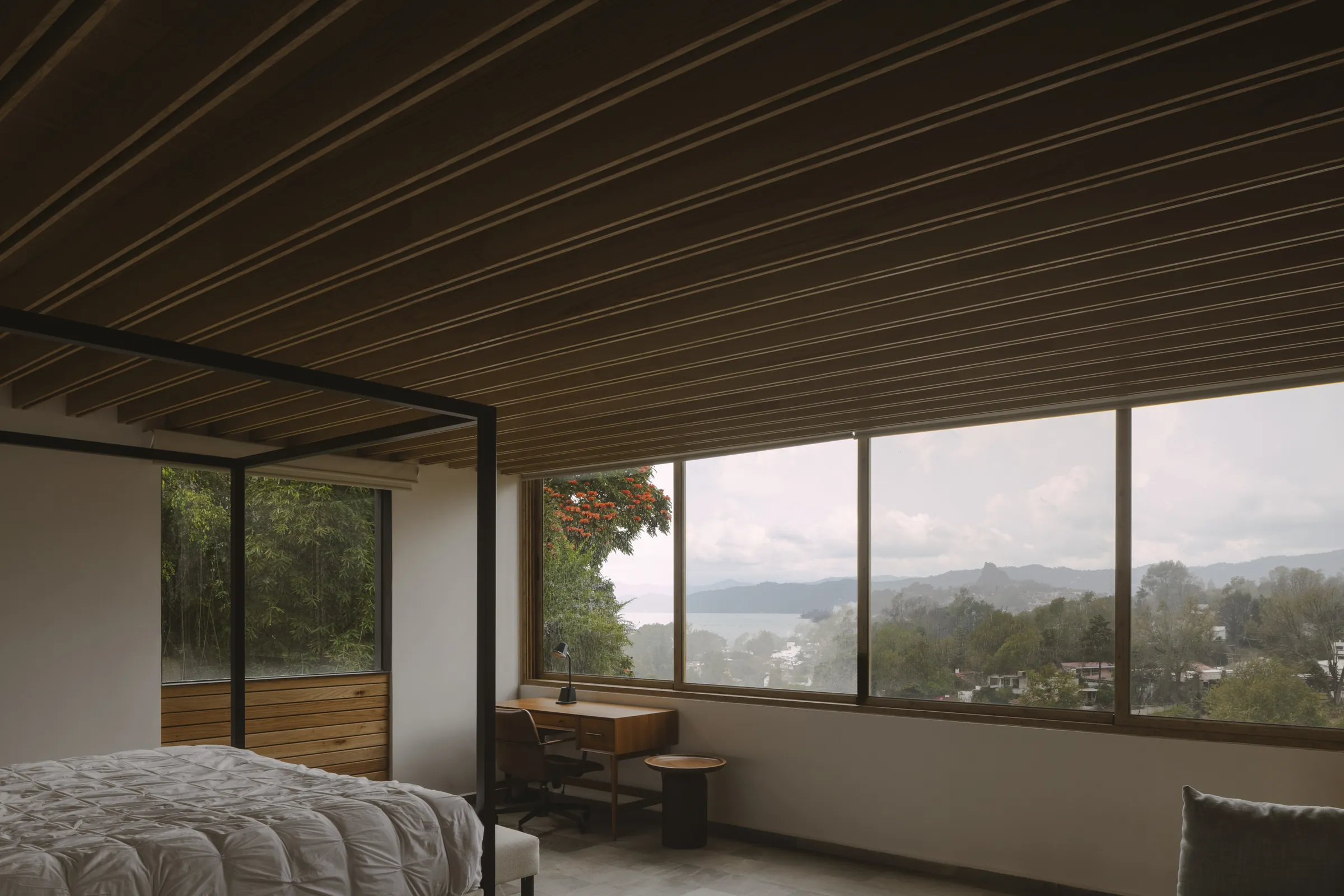
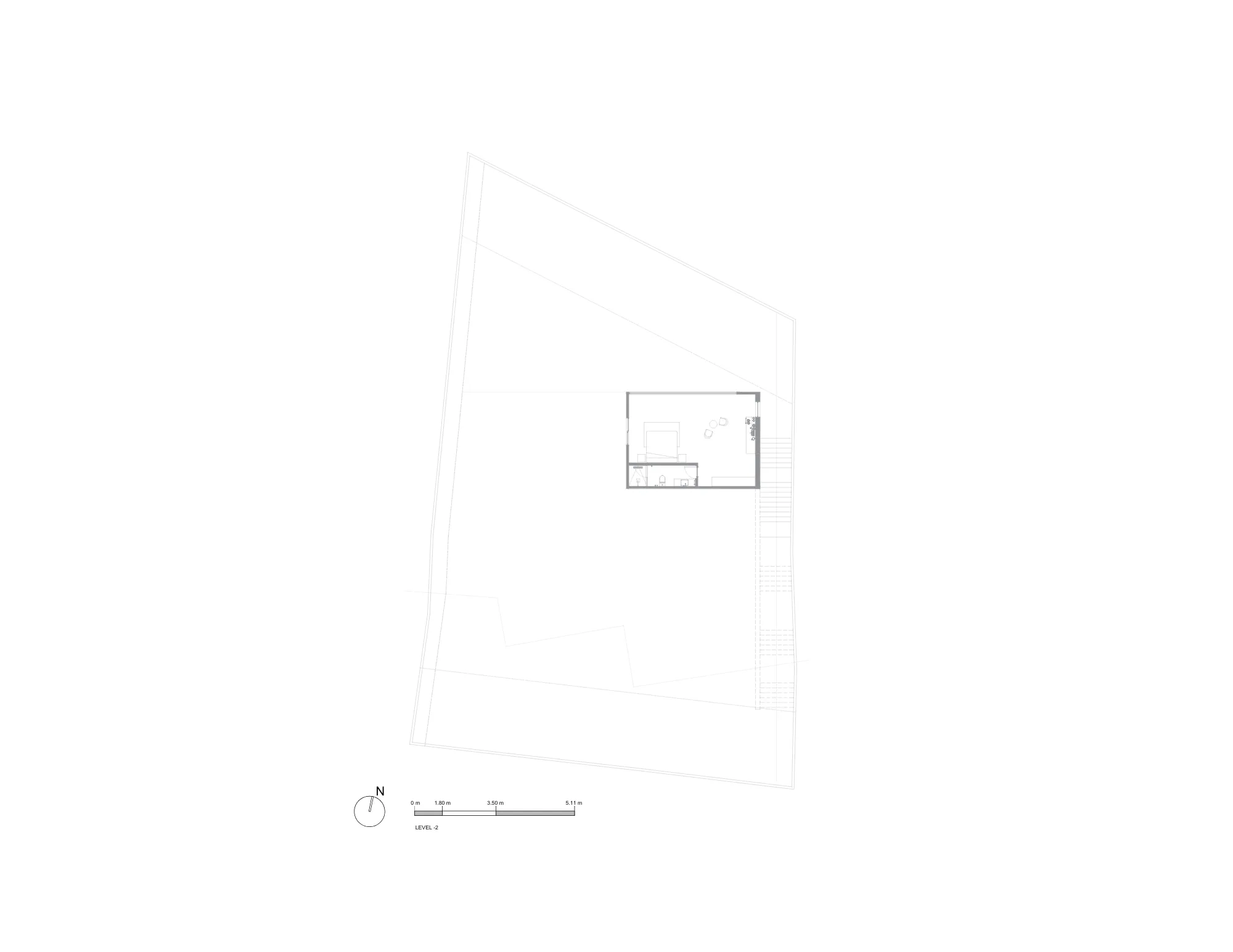
All bedrooms are arranged on the same intermediate level. Descending from the public area, a horizontal corridor operates as a new threshold: it first serves the two secondary bedrooms and ultimately leads to the main bedroom. This configuration takes advantage of the siteʼs slope, allowing the secondary bedrooms to have direct access to the garden, while the main bedroom, located at the end of the sequence, claims the best view and maintains a more controlled relationship with the landscape and the rest of the house.
On the lower level, also in direct contact with the garden, a space conceived as a social area extends daily life outward. More than an enclosed room, it functions as a broad transition between interior and ground, reinforcing a direct relationship with vegetation and the immediate surroundings.
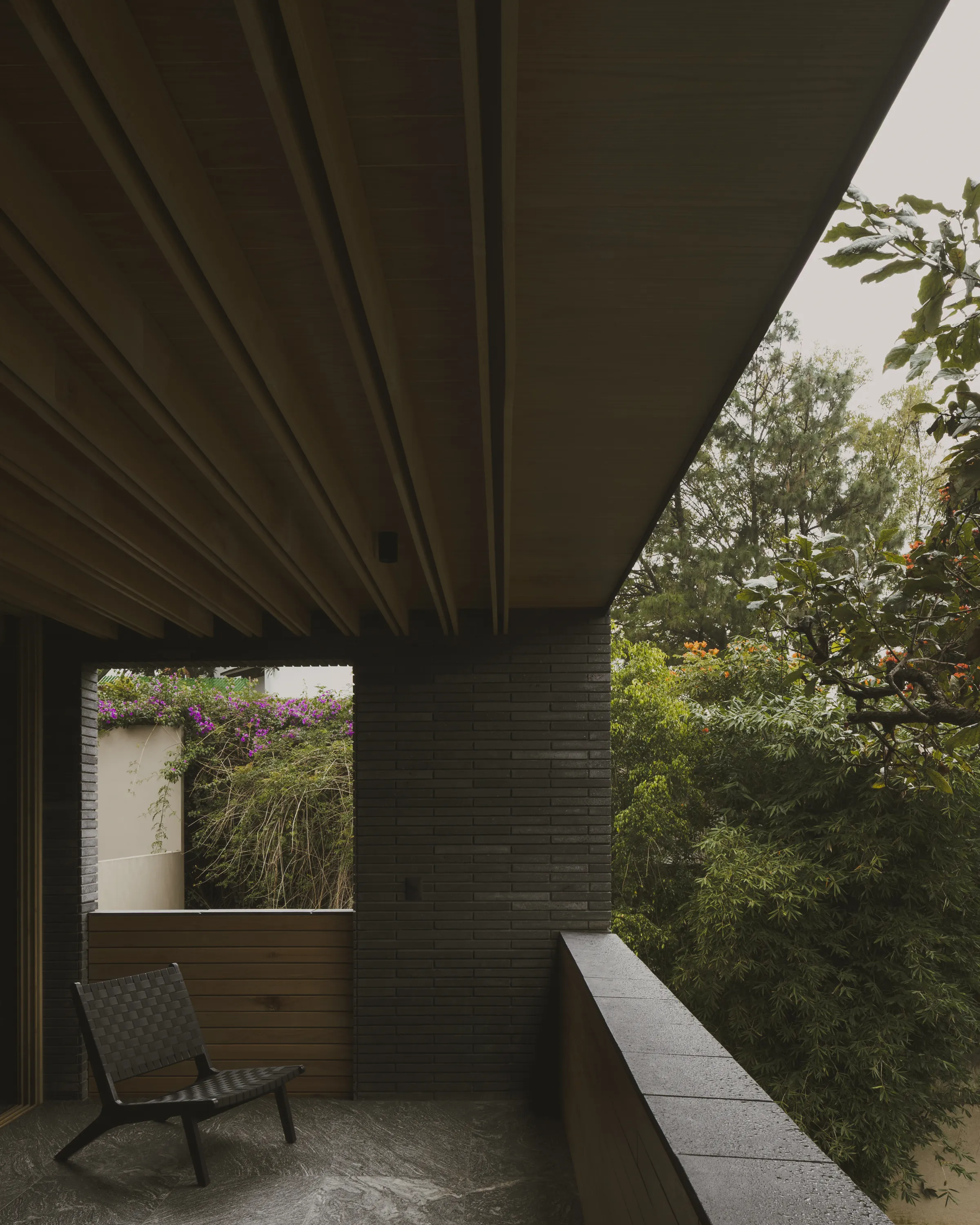
At the upper level, the roof terrace becomes a gathering place an open space for meeting, cooking, resting, and observing the landscape from an elevated point without losing a sense of shelter. Far from being a scenic gesture, it acts as a natural extension of inhabitation, where the view is integrated into everyday use.
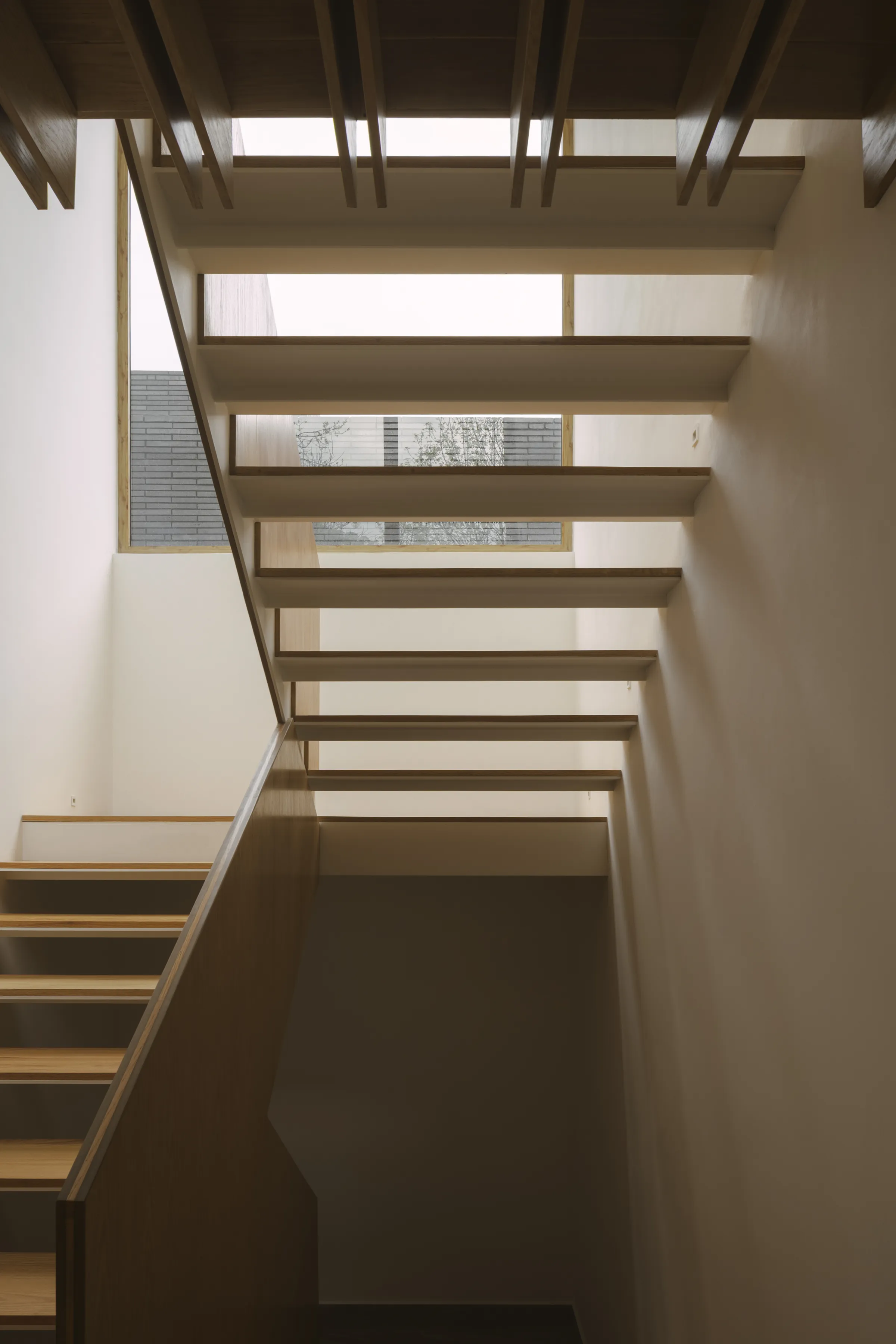
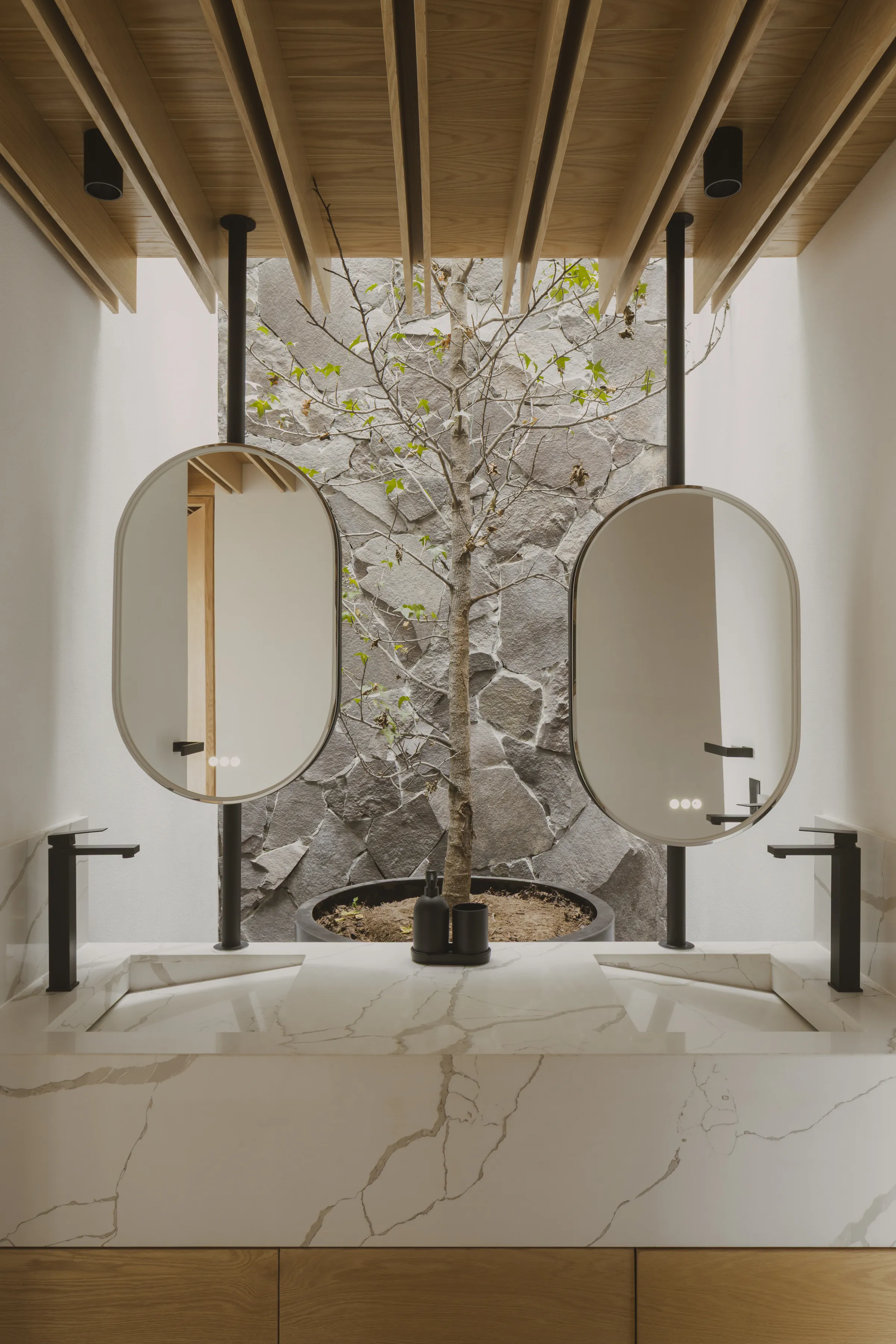
Materiality reinforces this way of building. Stone provides weight and permanence; wood introduces warmth and defines thresholds; deep openings regulate light and carefully frame views. The environment is not revealed immediately it unfolds gradually through movement, dwelling, and pause.
In this house, architecture and landscape do not operate separately. Both depend on one another to construct an experience in which context is not observed from a distance but integrated into inhabited space. Casa para ver la Peña does not seek to impose itself on the site nor to turn the landscape into spectacle. Its architecture is built through restraint, void, and attentive observation, an understanding of the natural environment not as a backdrop, but as a presence to live with.