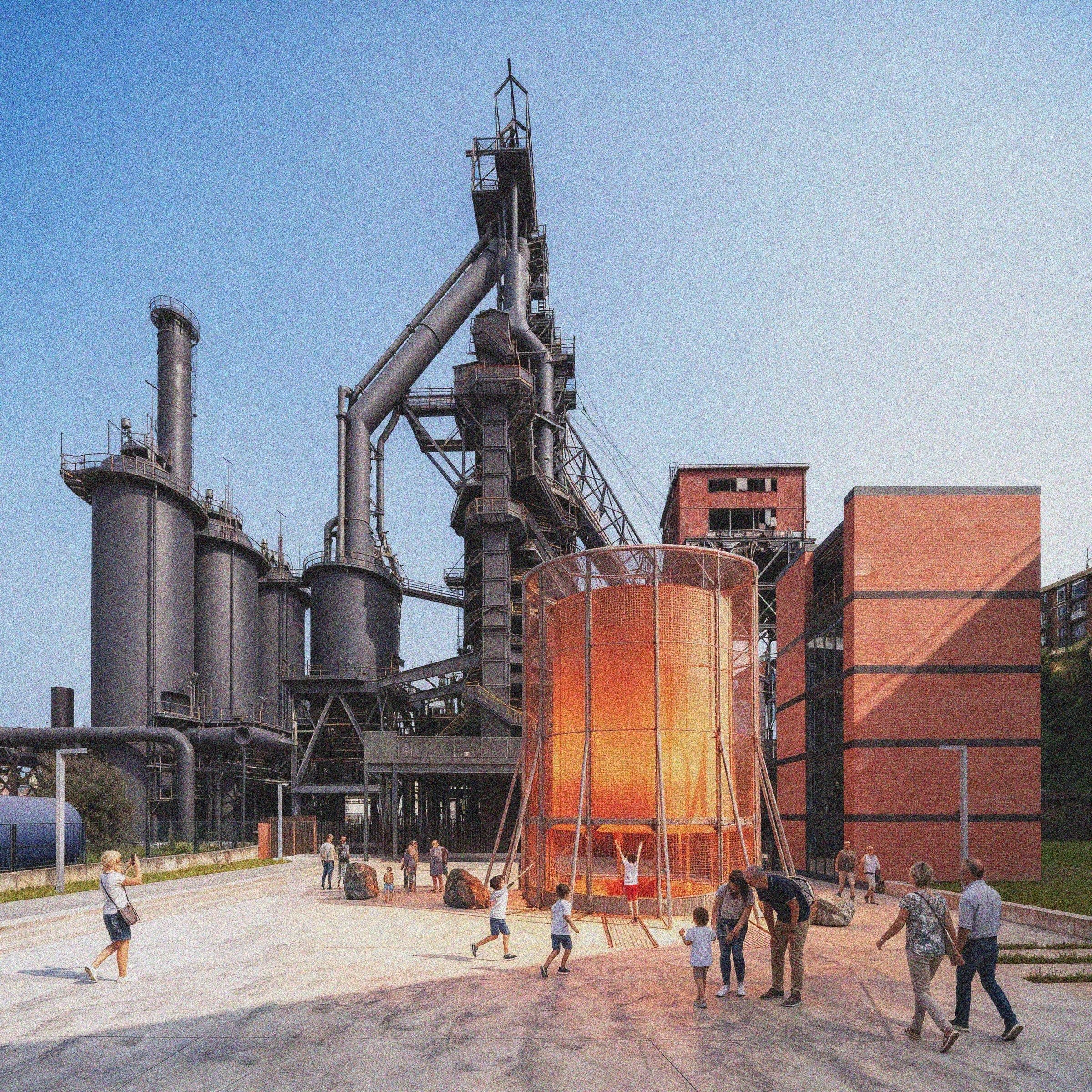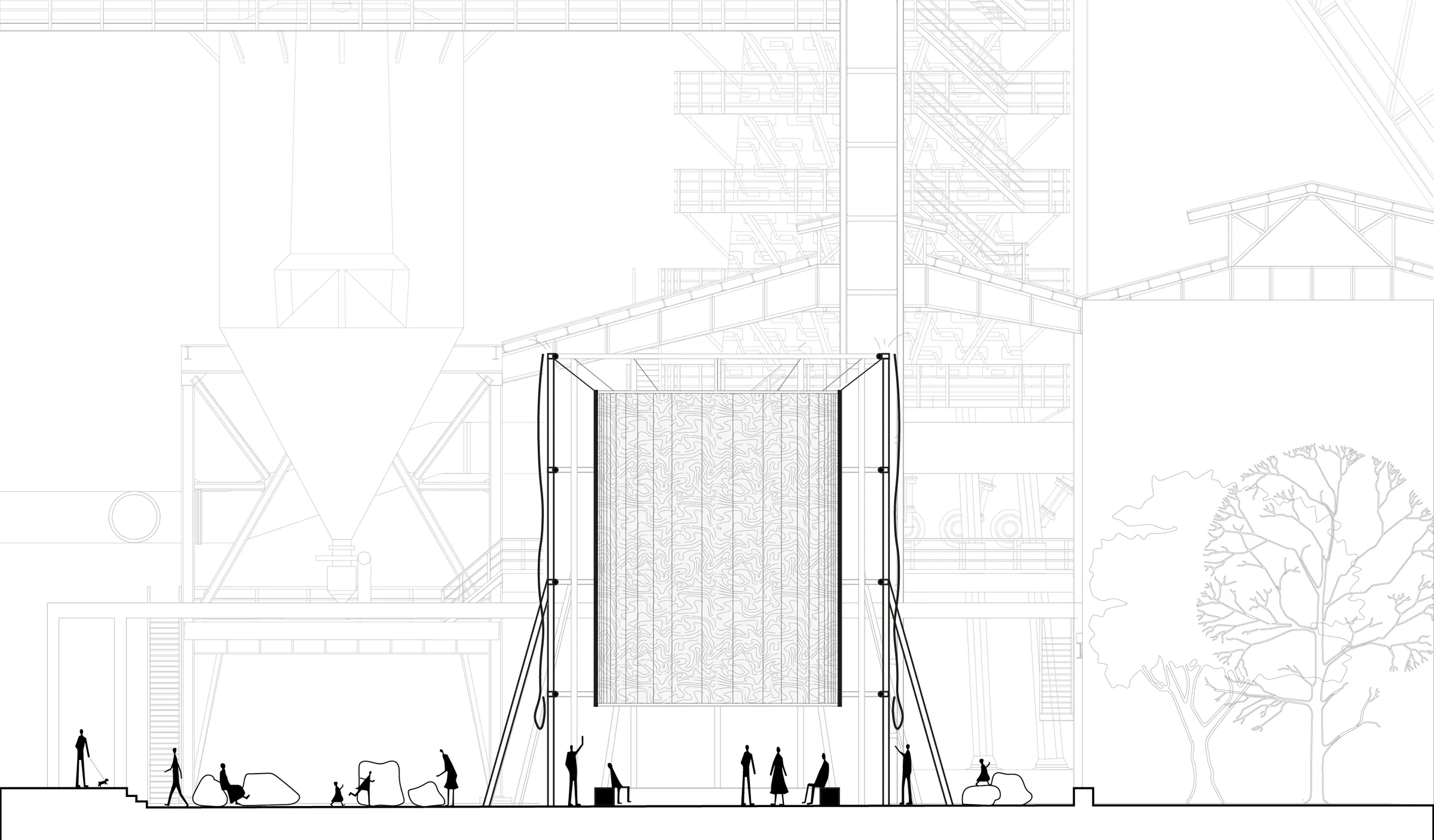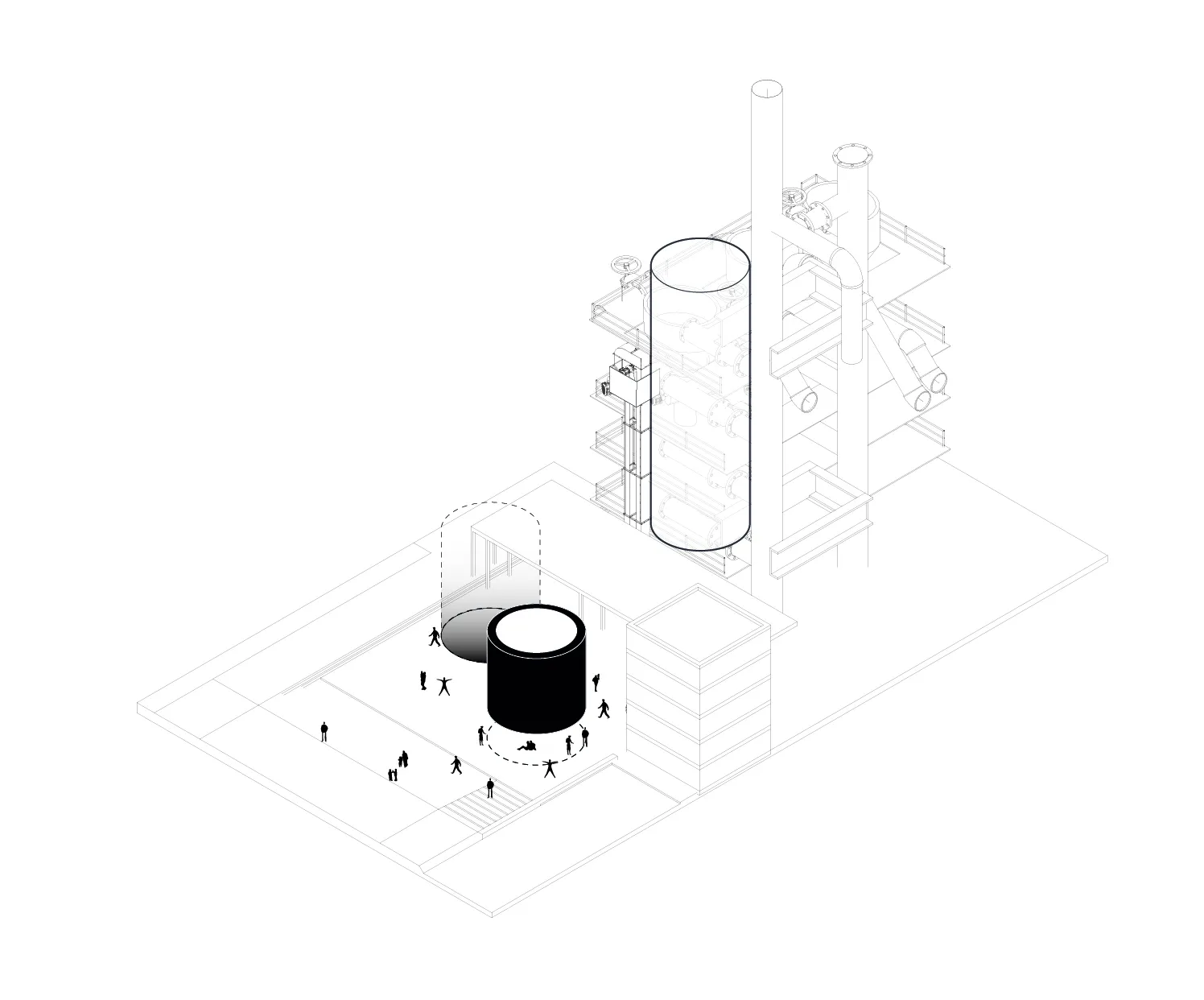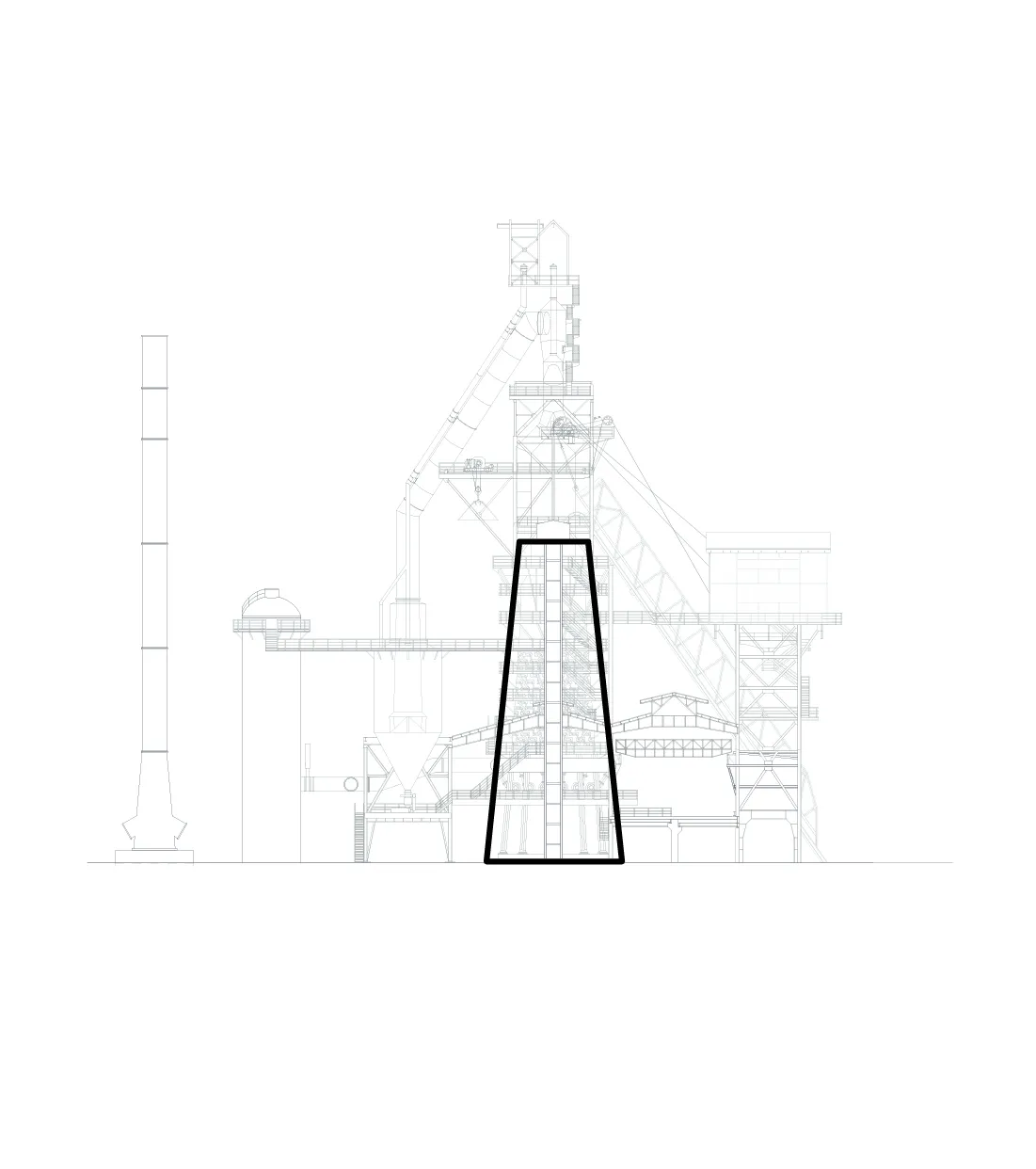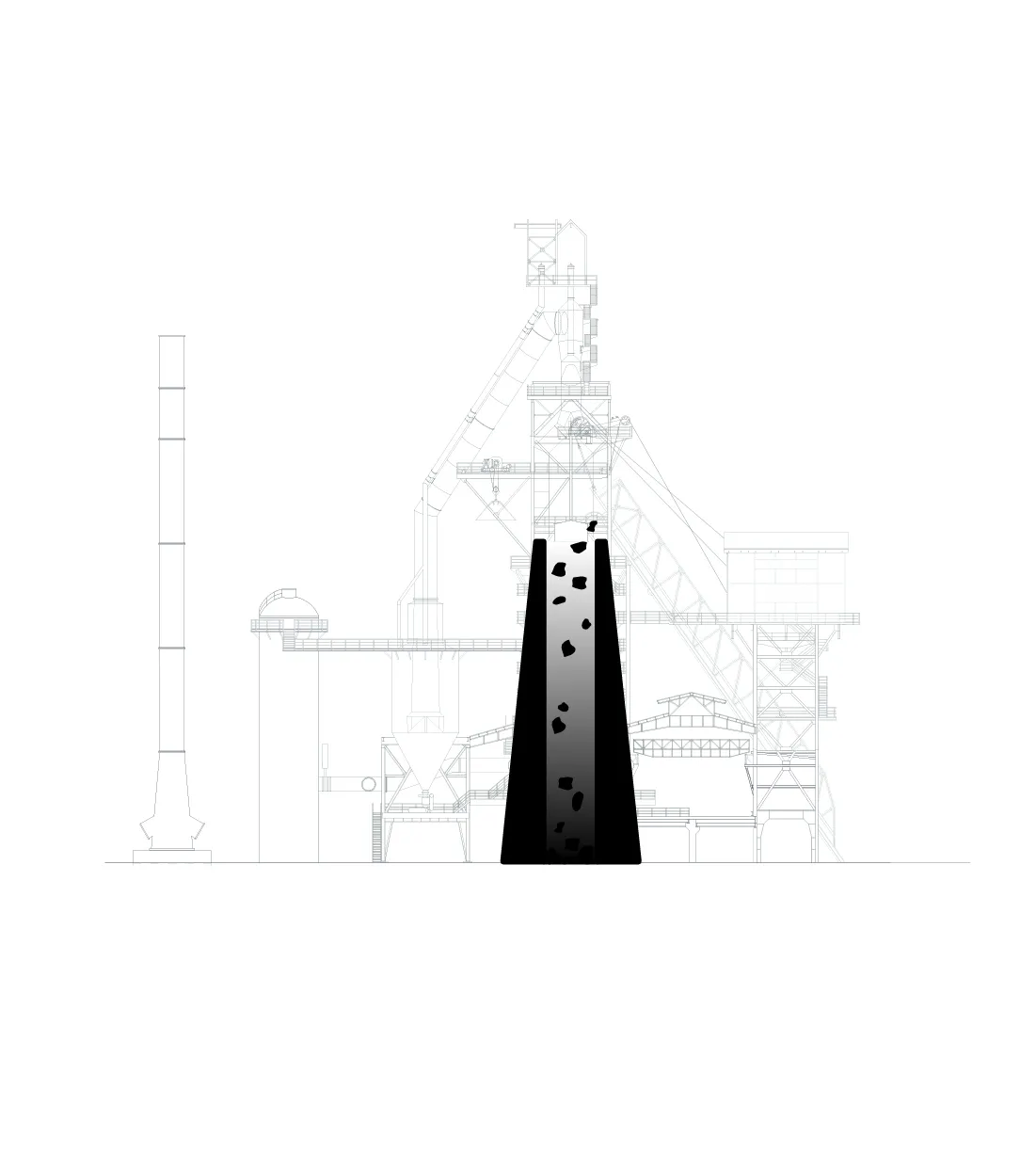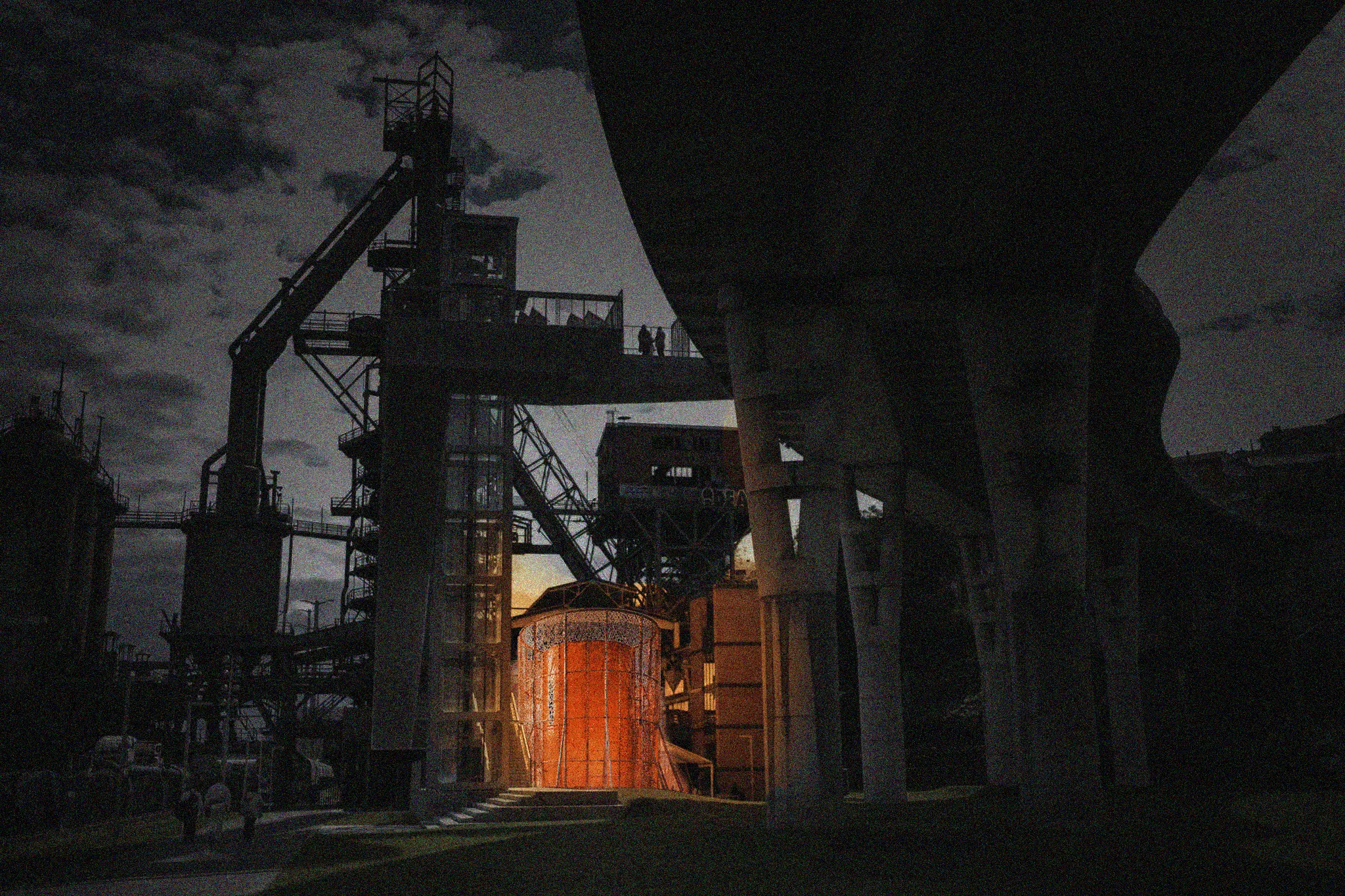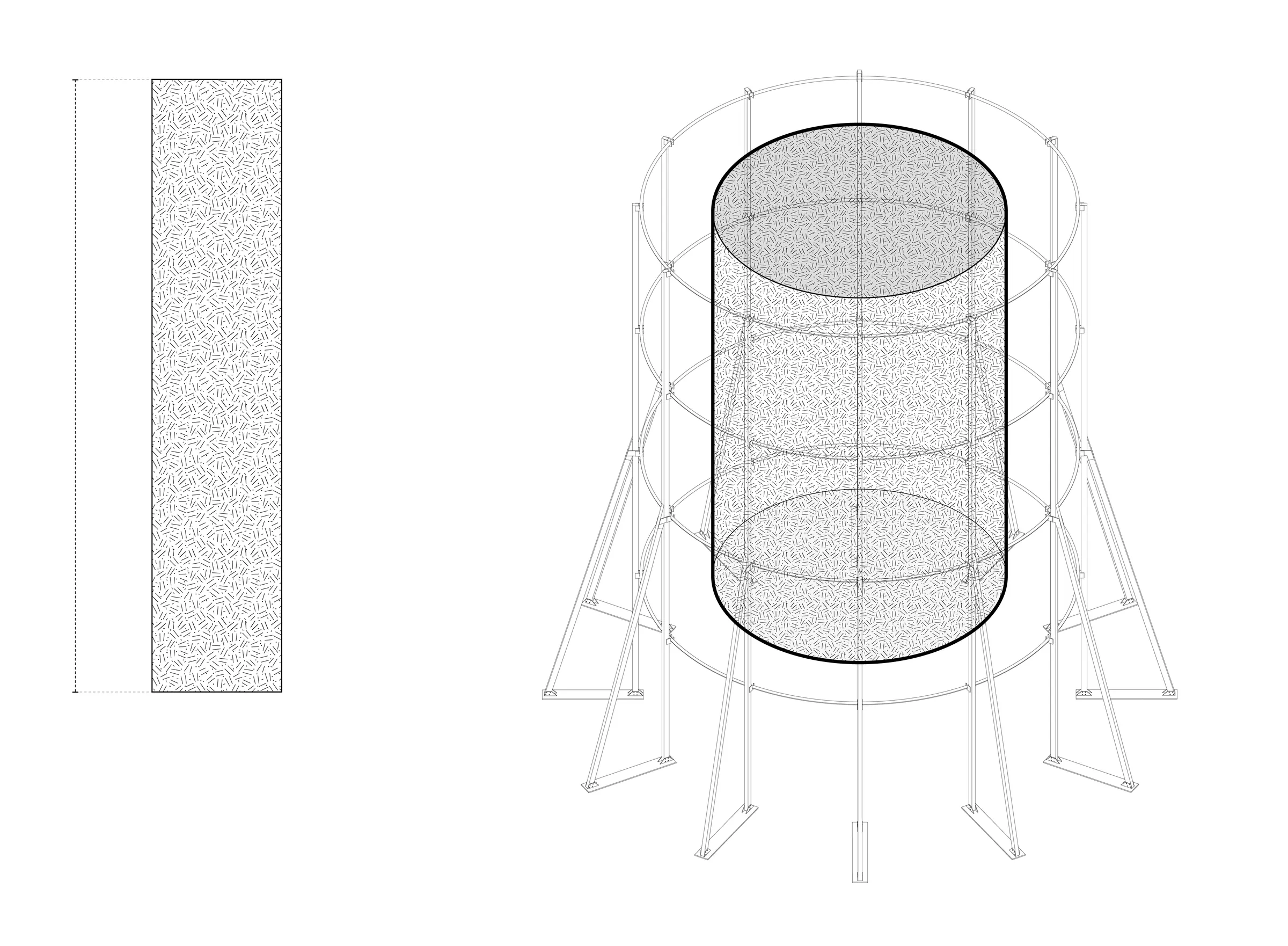
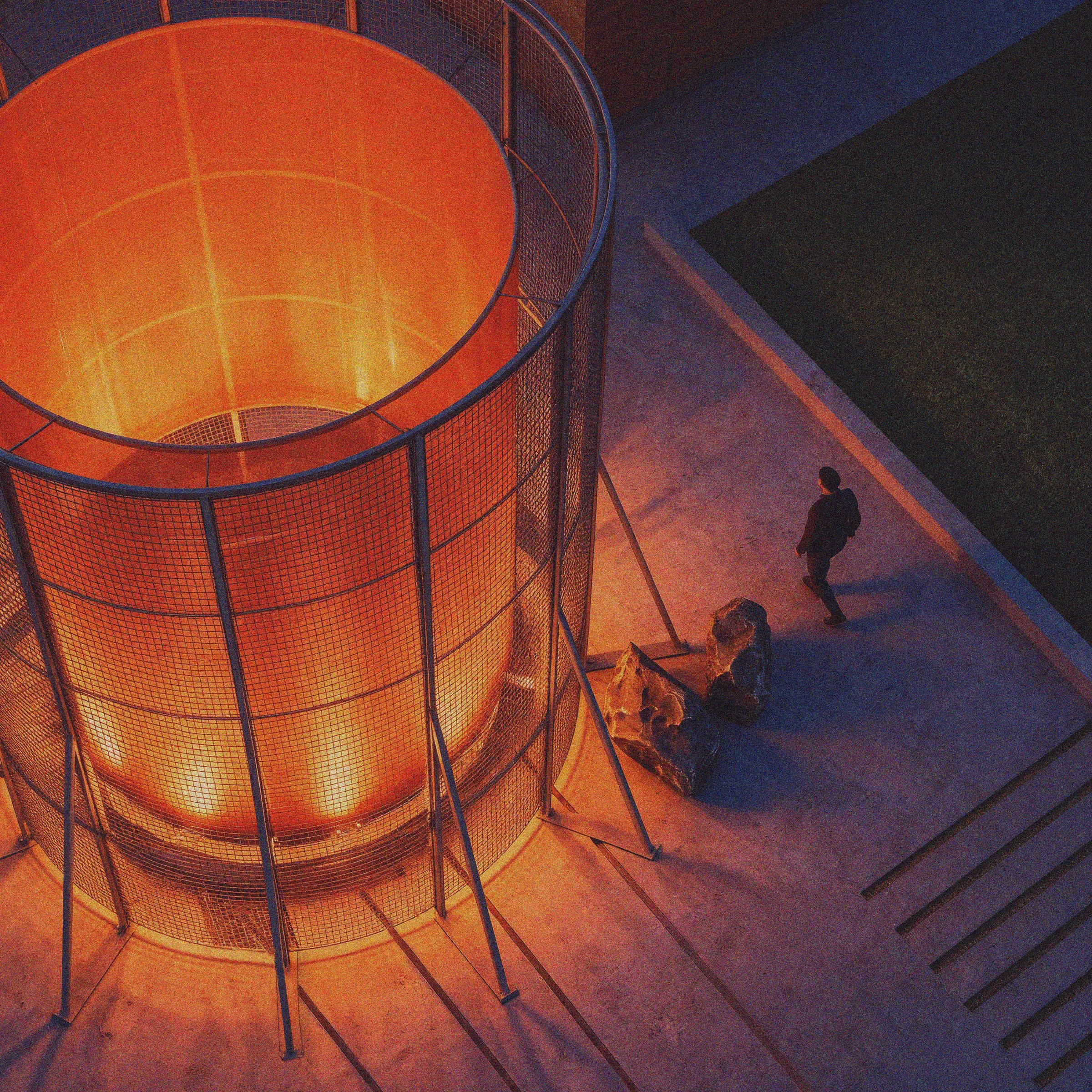
Located within the surroundings of the former steelworks complex, the project takes the figure of the furnace as a symbol of production, extraction, and emission. In response to this legacy, the proposal puts forward an operation of reverse engineering: an architectural device that no longer transforms matter into steel, but energy into encounter. Living Furnace seeks to reactivate Sestao’s industrial memory through a temporary pavilion that inverts the energy logic of the blast furnace.
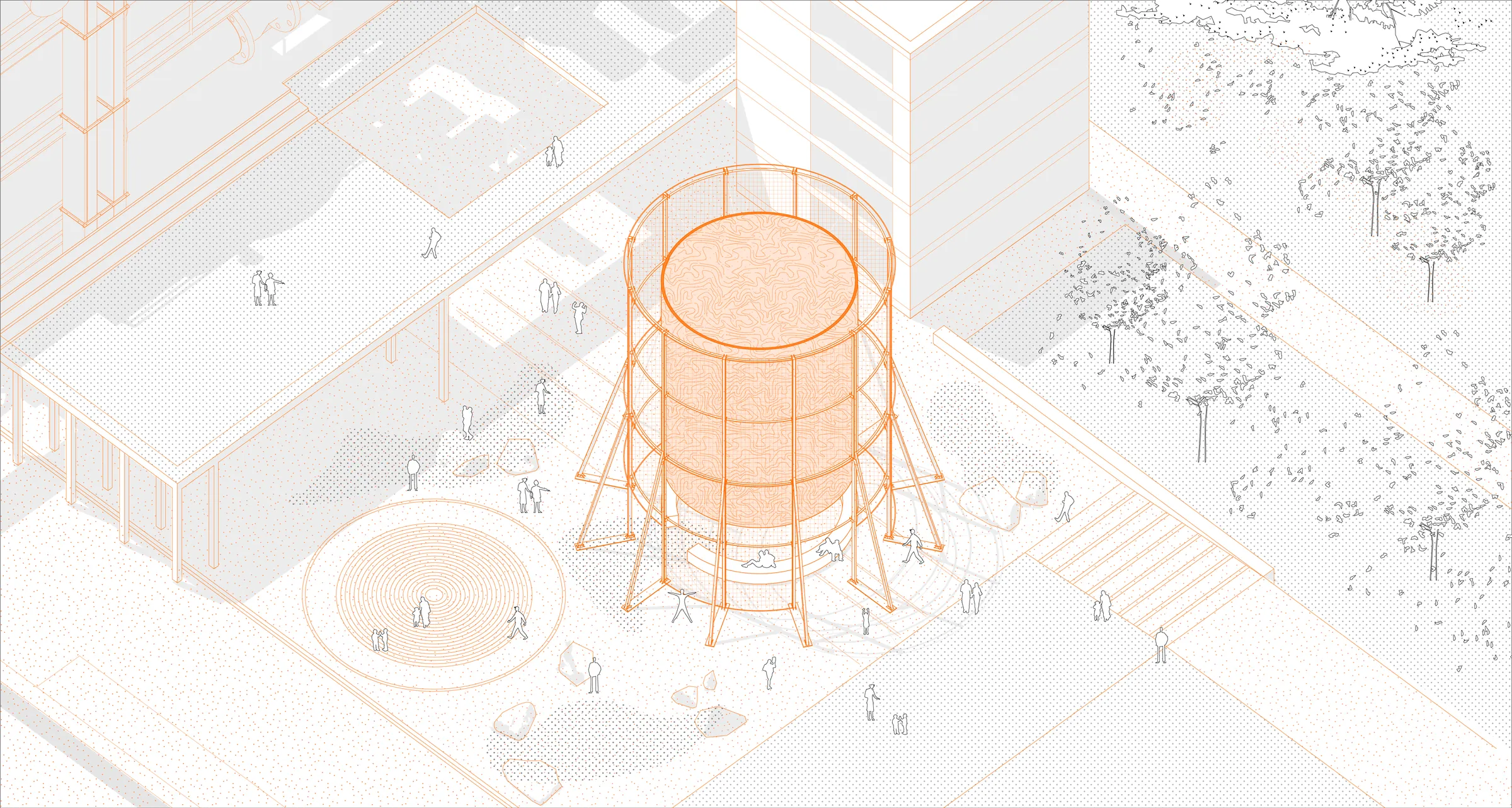
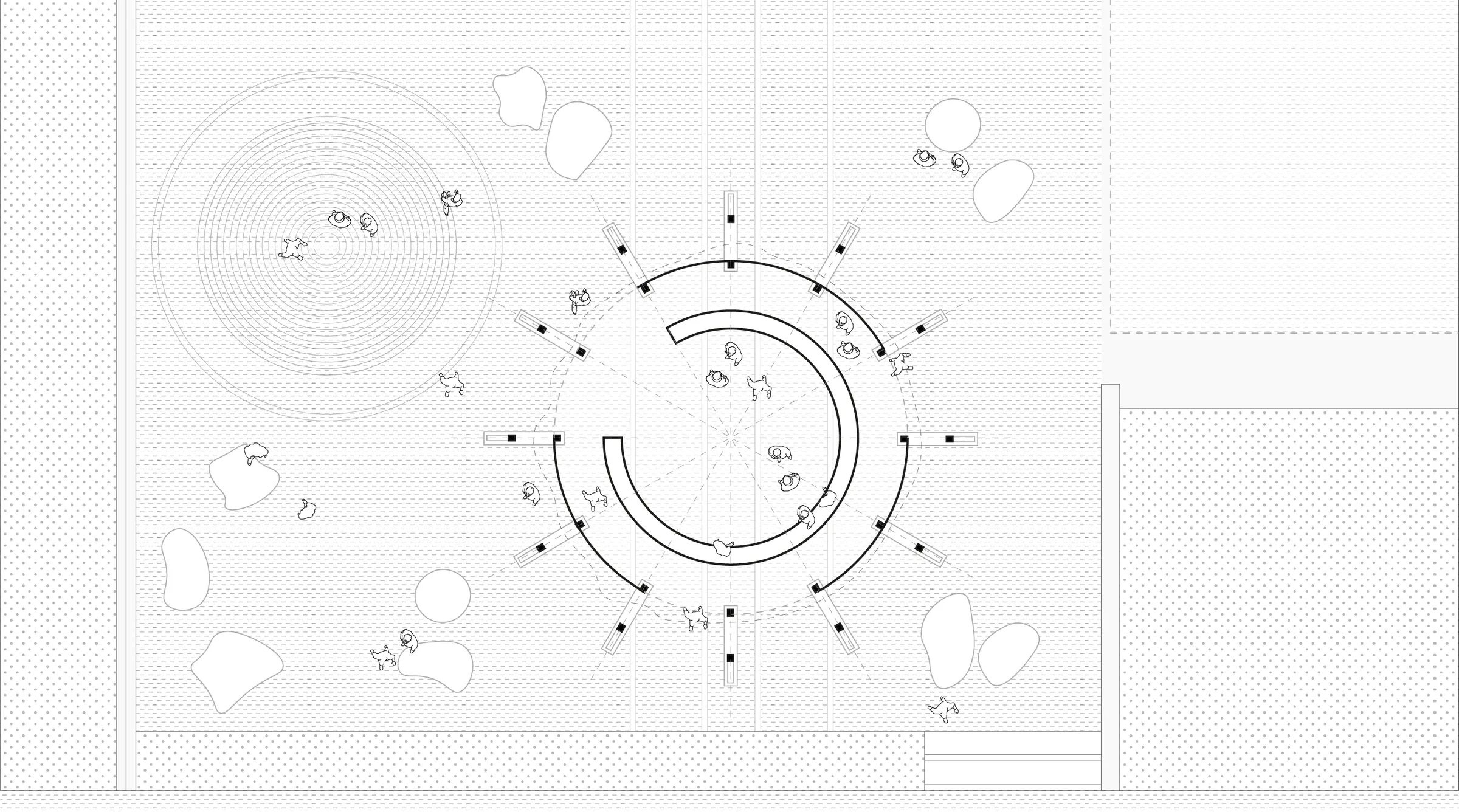
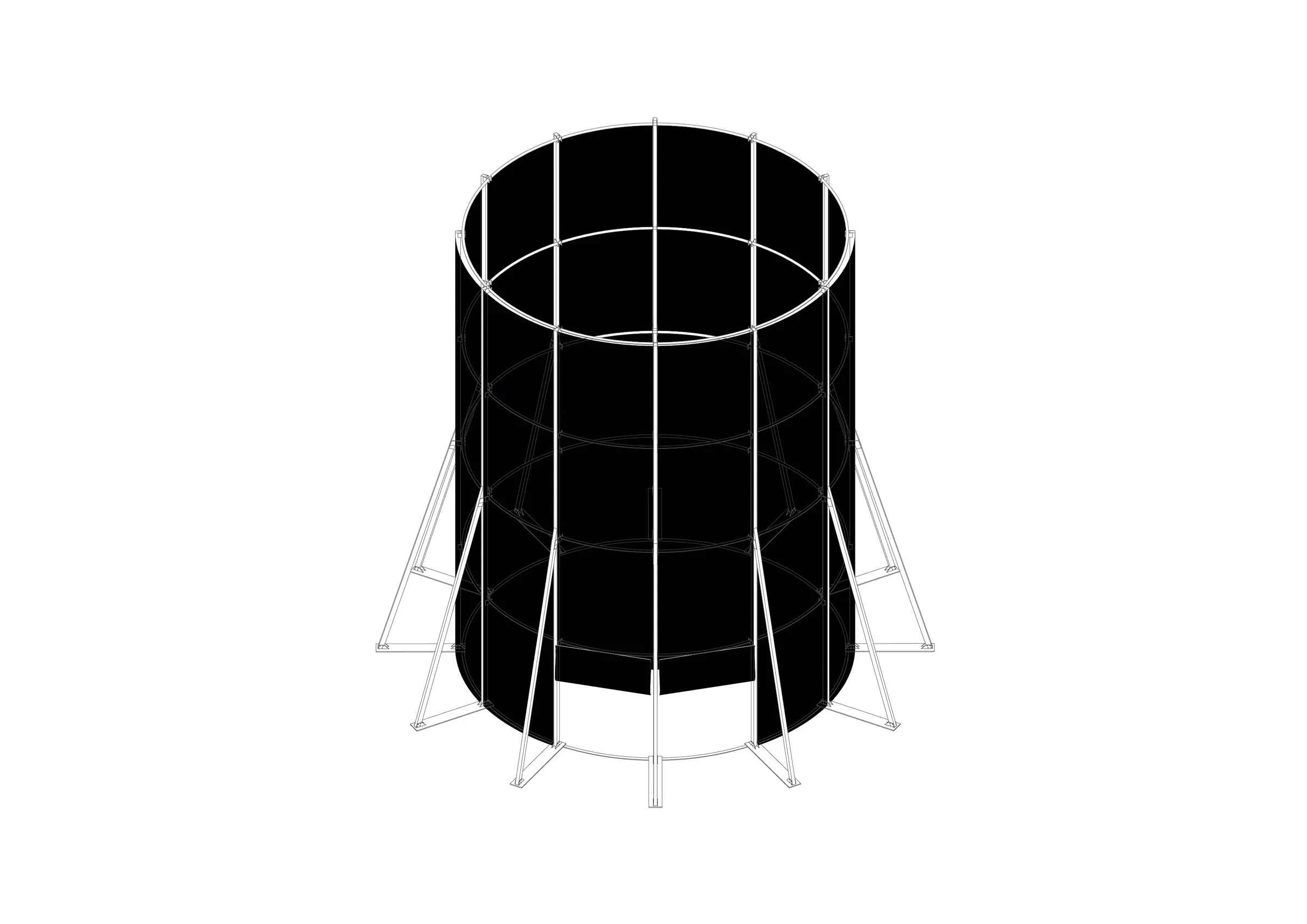
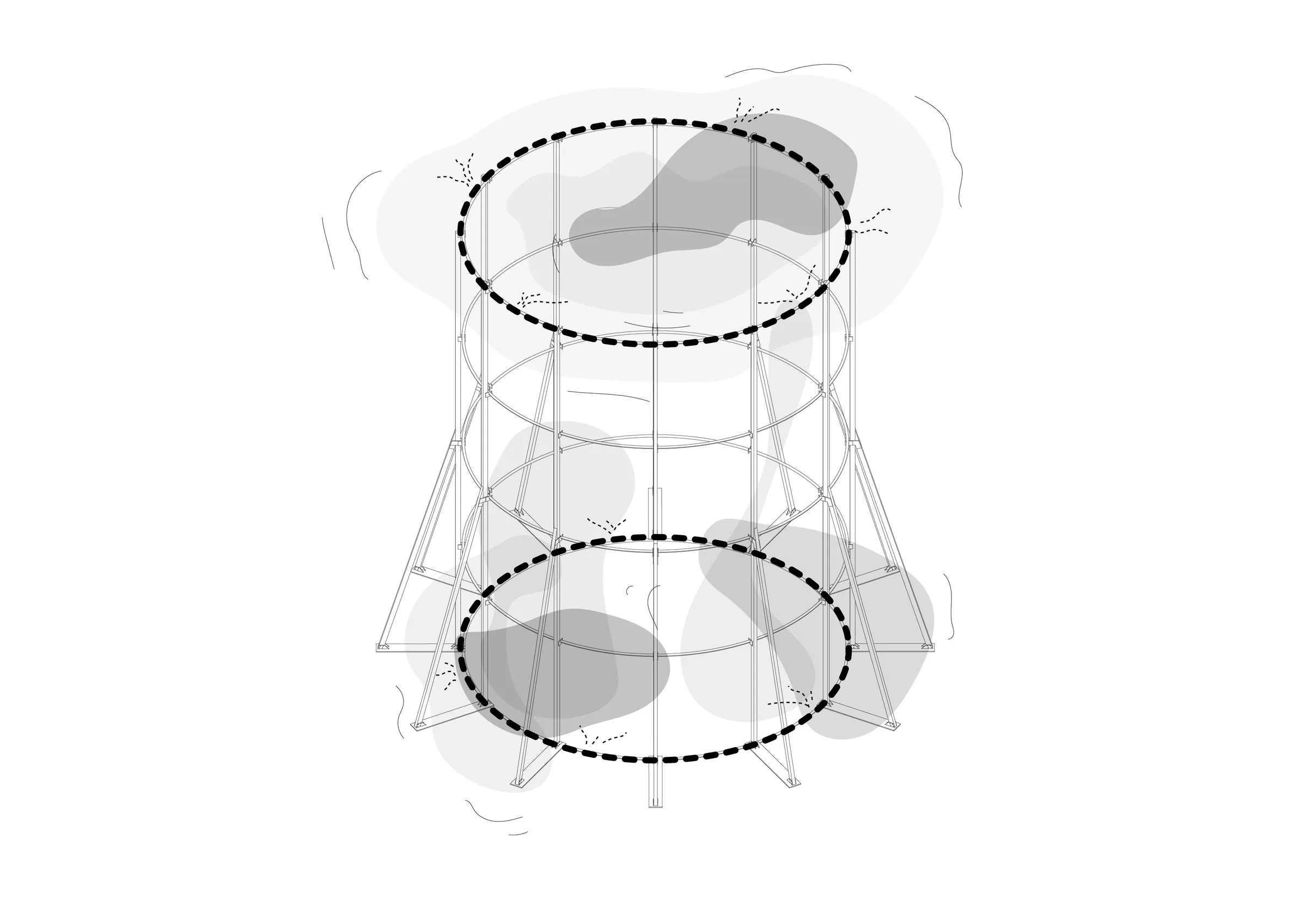
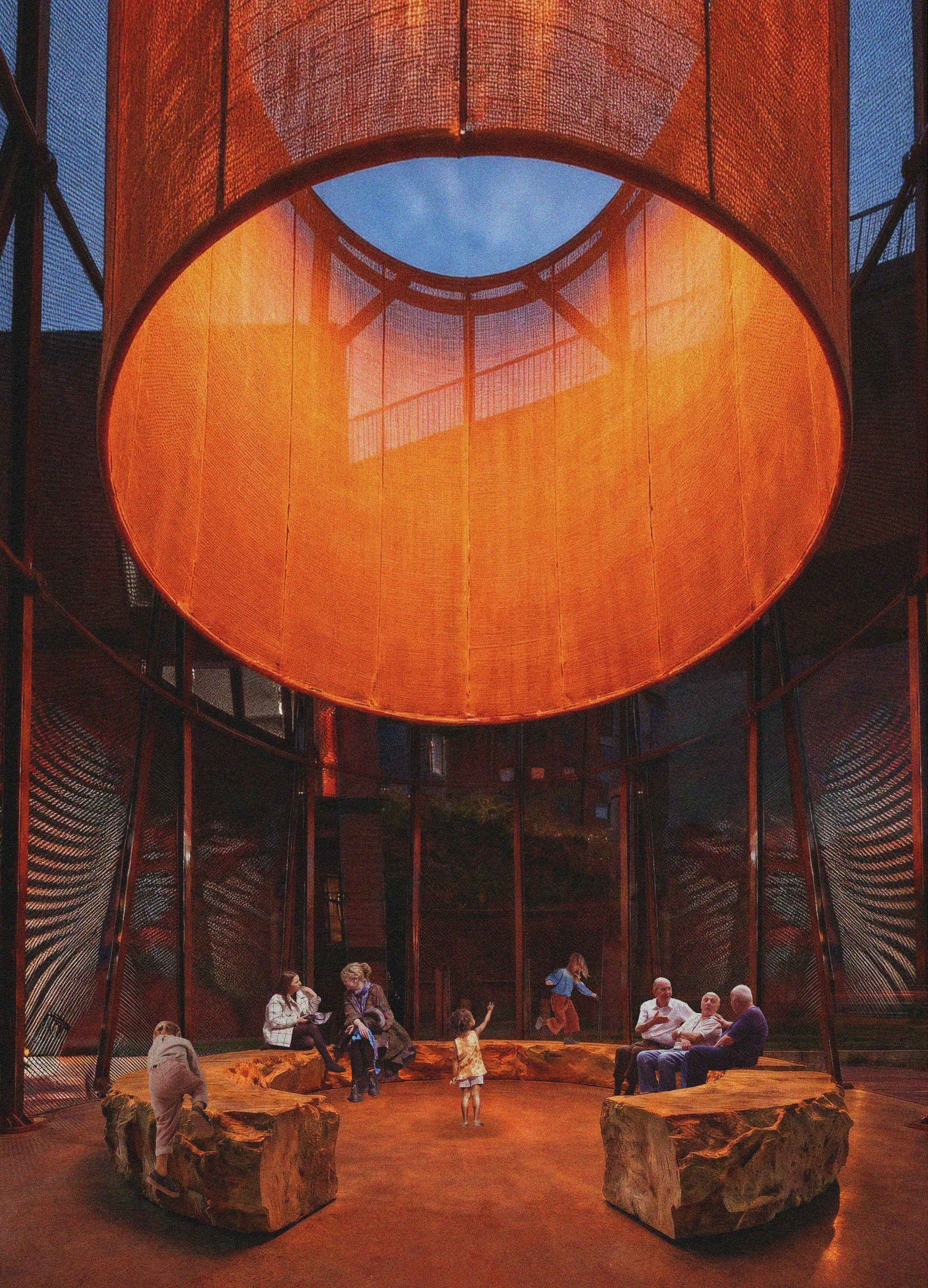
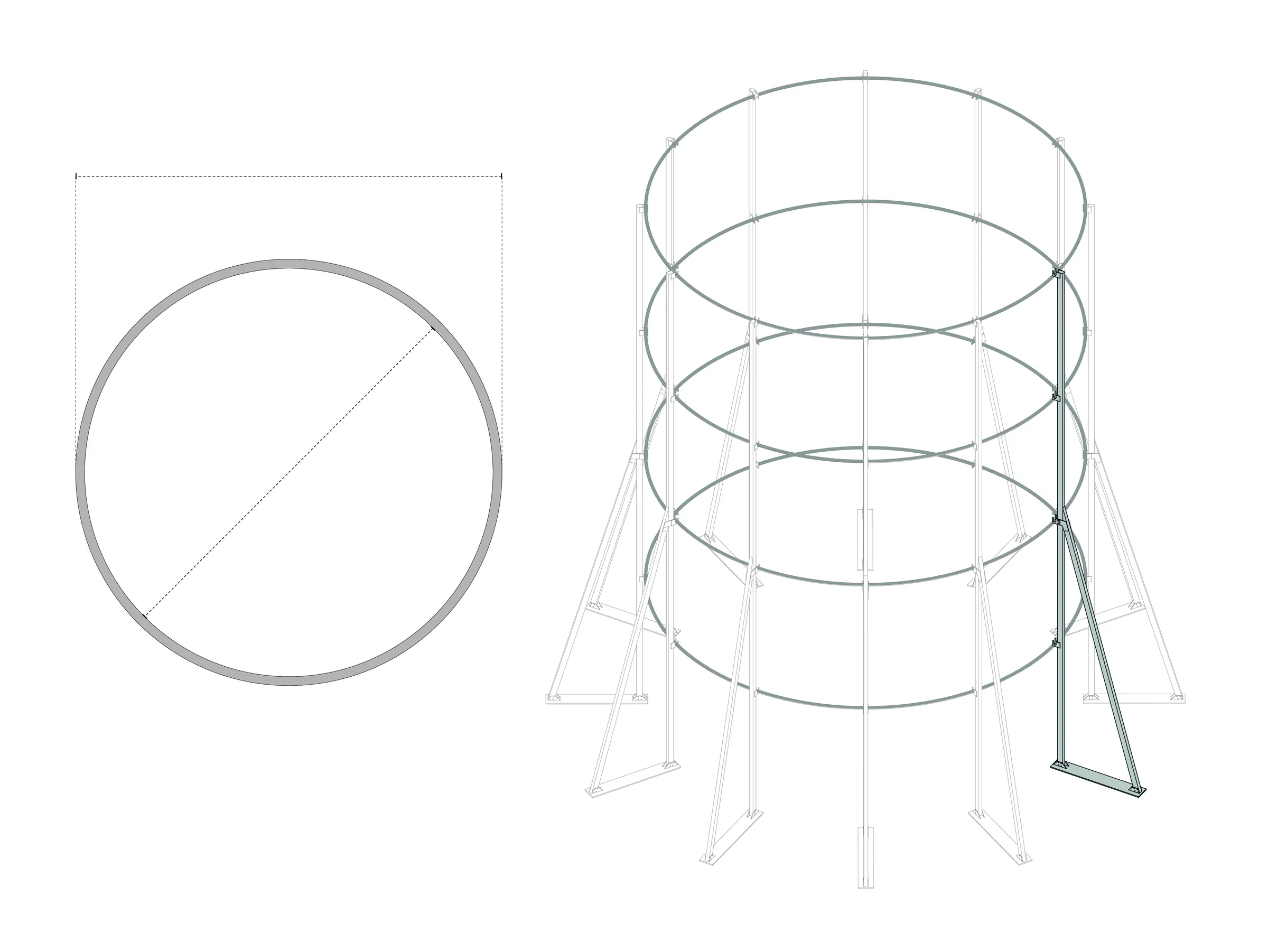
The pavilion is conceived as an open cylindrical structure that reinterprets the blast furnace as a civic space. Inside, light, vapor, and atmosphere evoke the thermal processes of industry, yet shifted toward a collective experience. Heat becomes presence, emission becomes mist, and combustion becomes a shared environment.
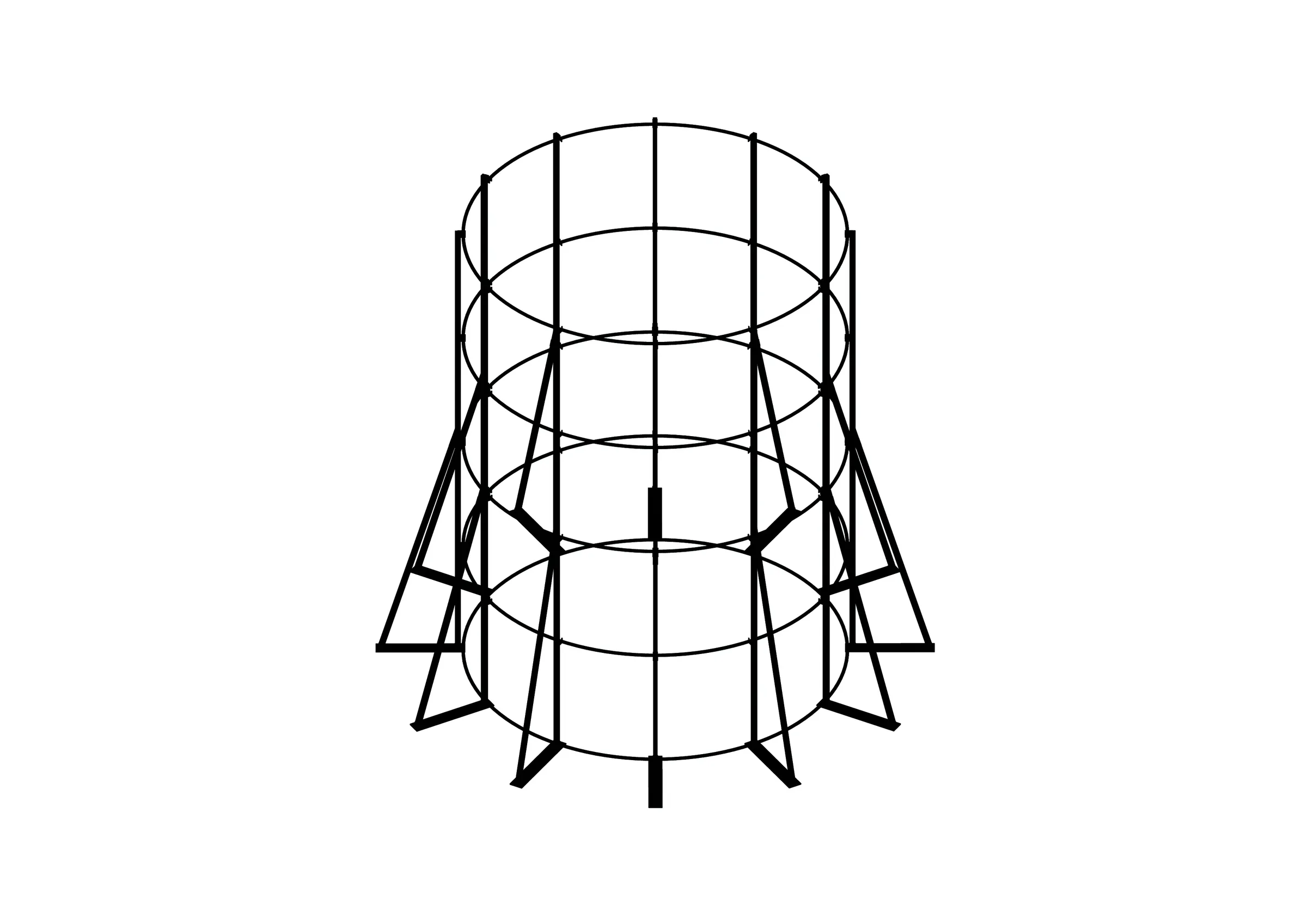
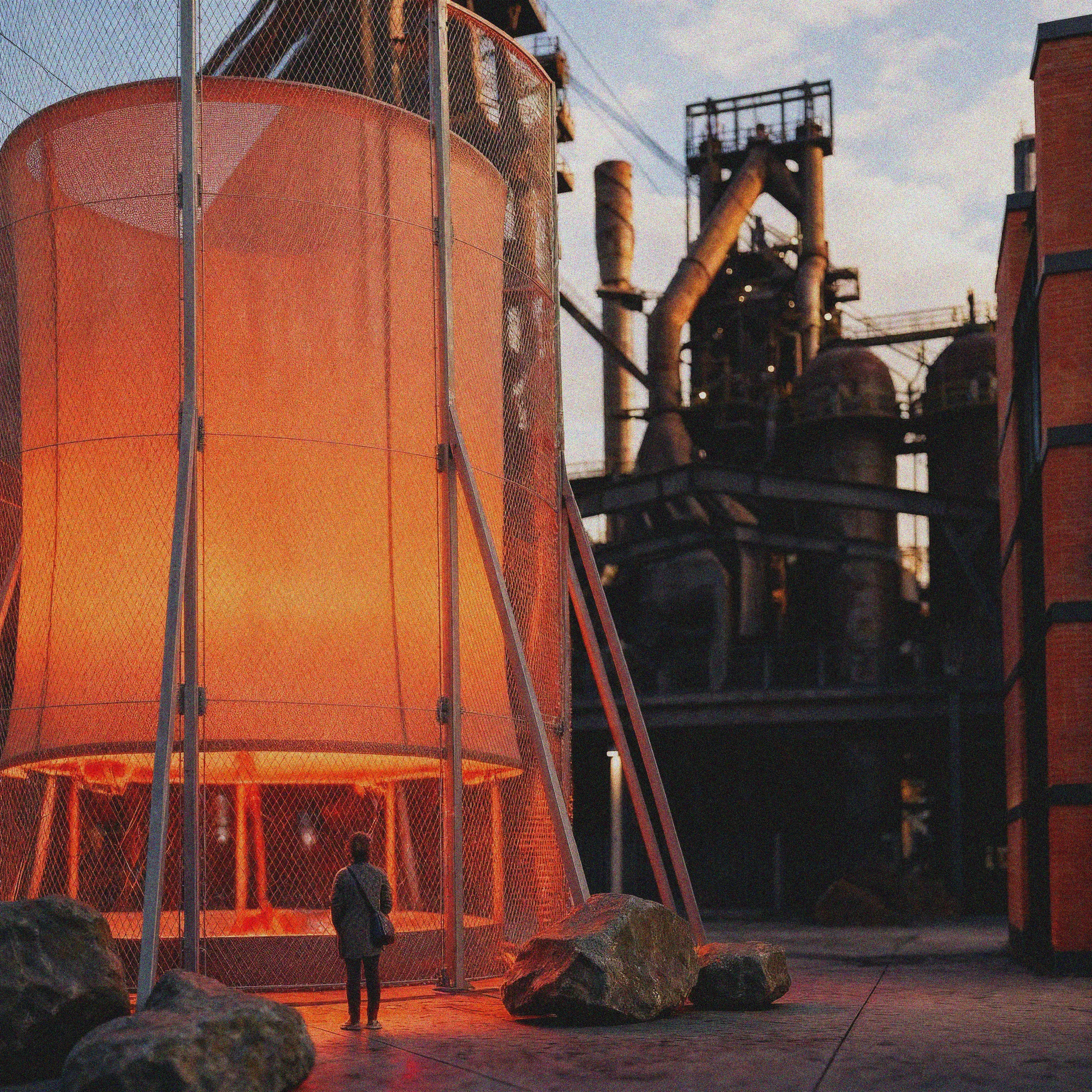
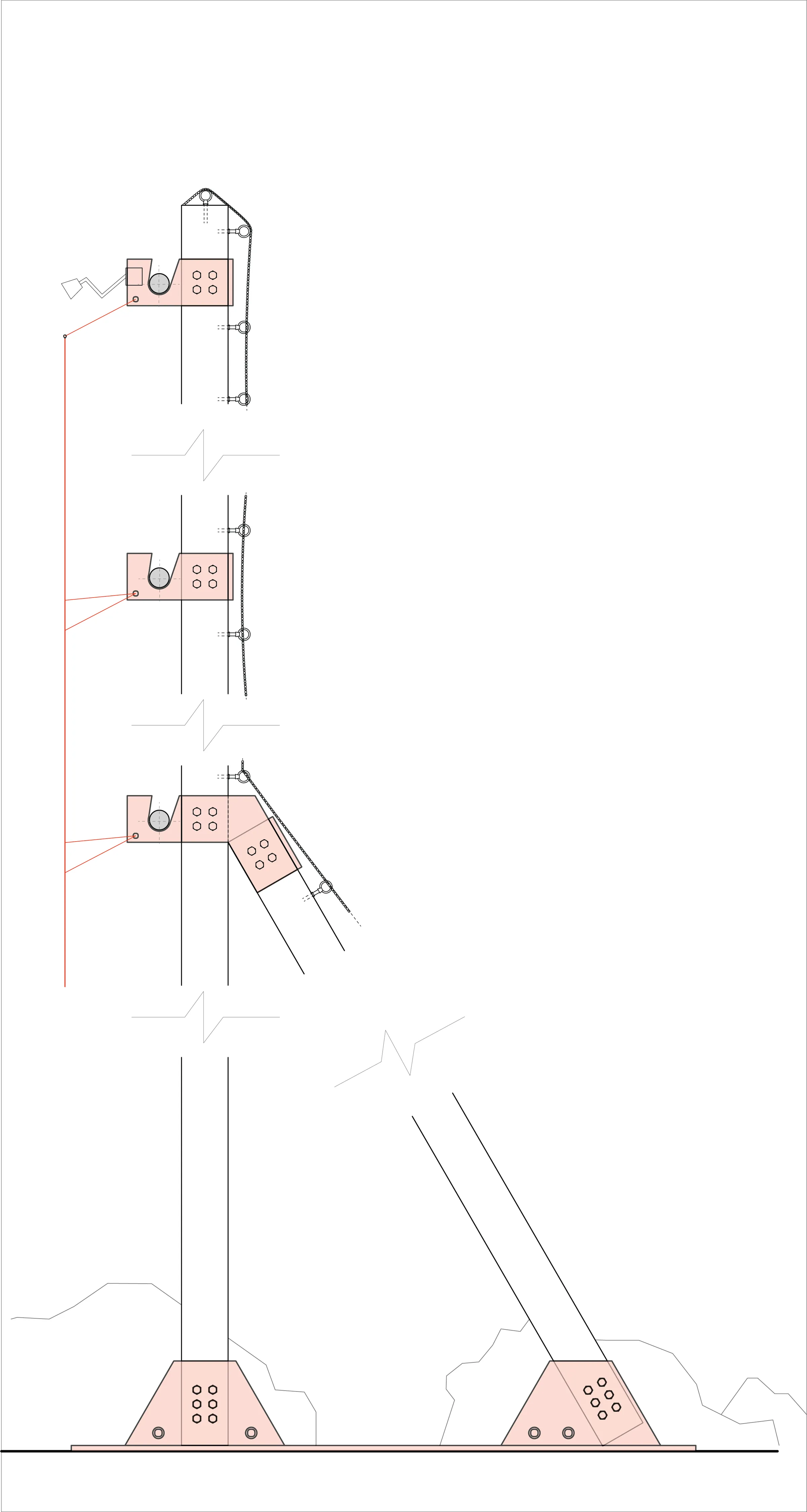
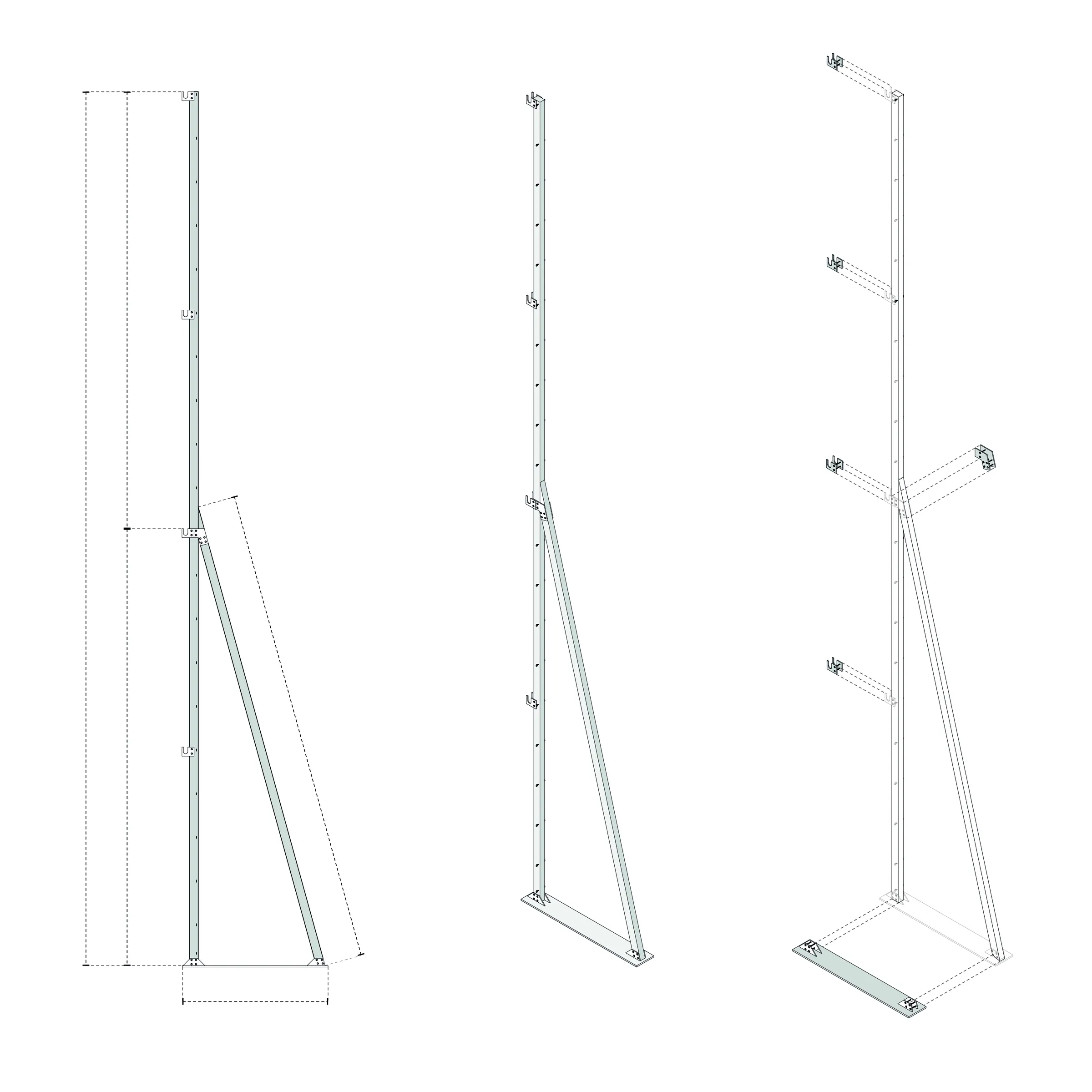
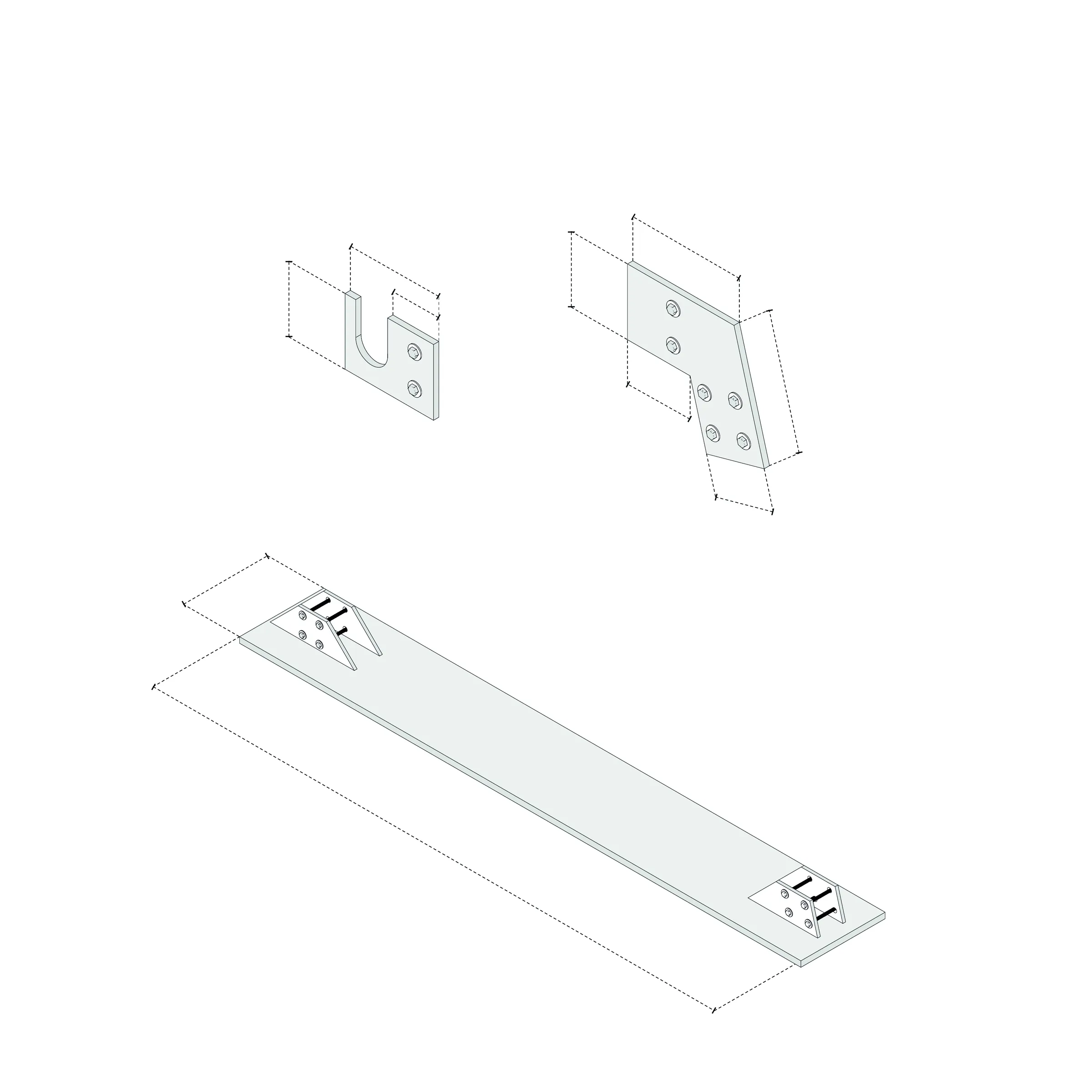
Built from recycled steel elements sourced from the nearby industrial context, the structural system uses standard profiles without transformation, assembled through mechanical joints that allow for disassembly, reuse, and reconfiguration. This logic avoids irreversible processes and places materiality within an open cycle, where what already exists is not discarded but reorganized.
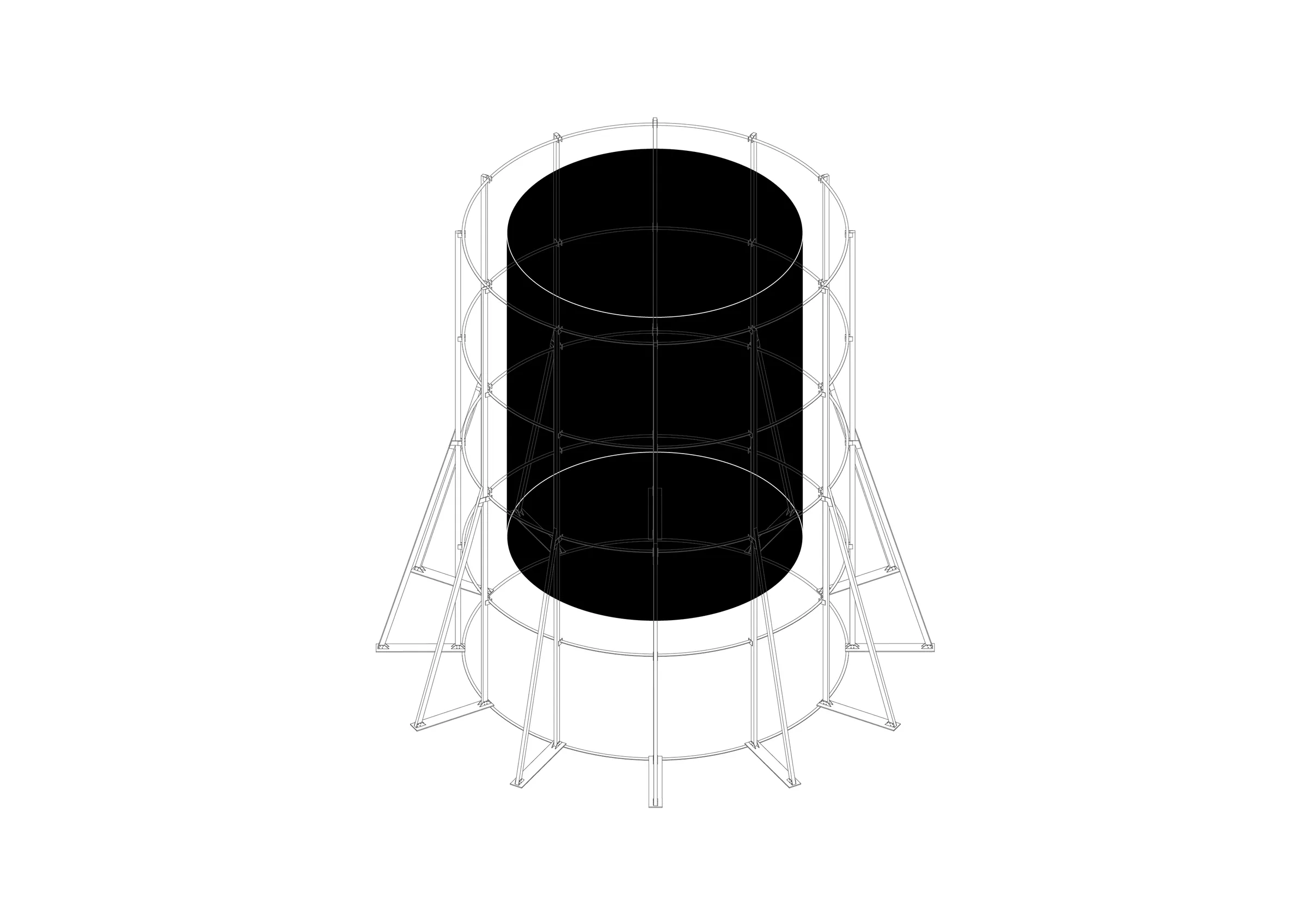
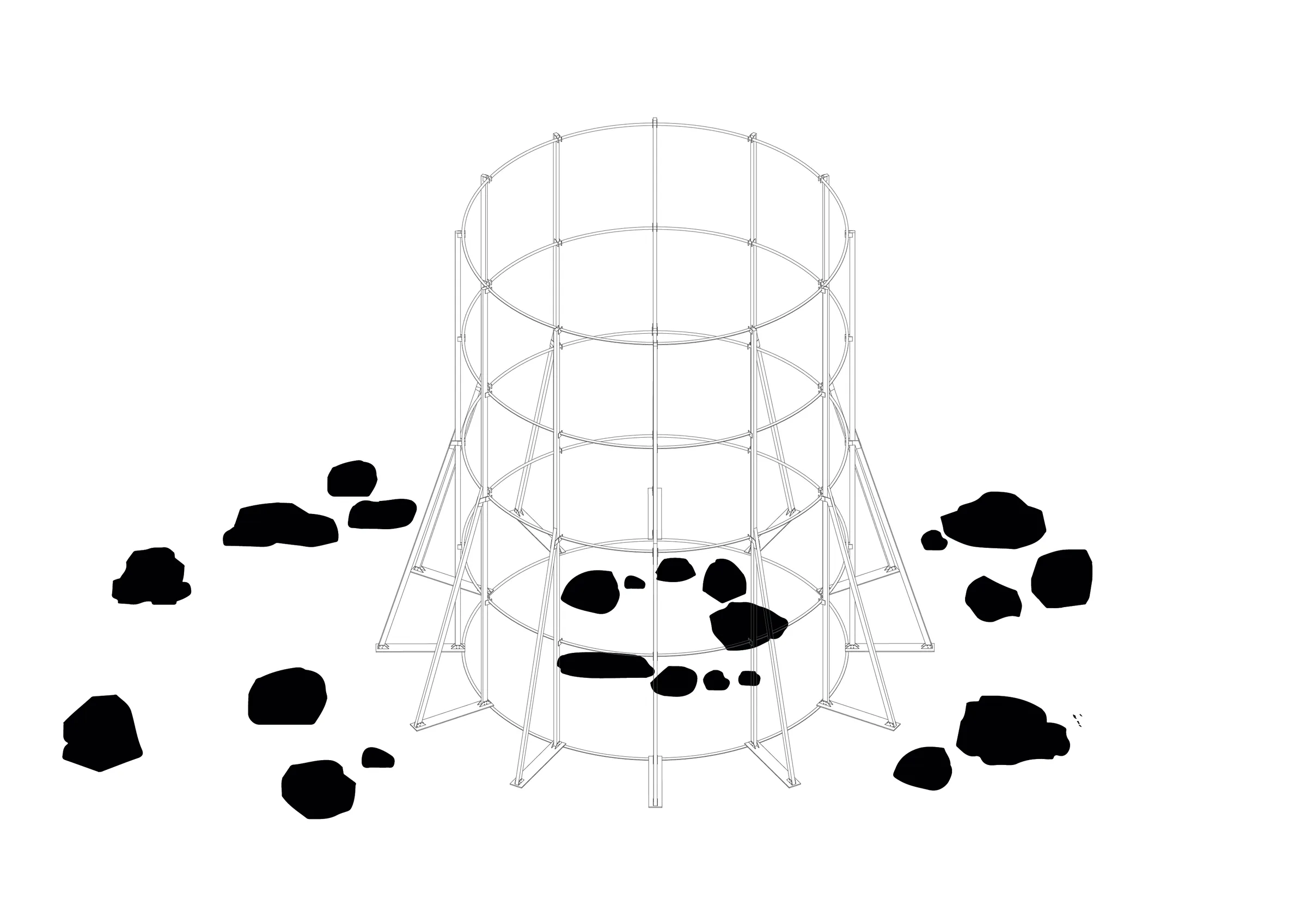
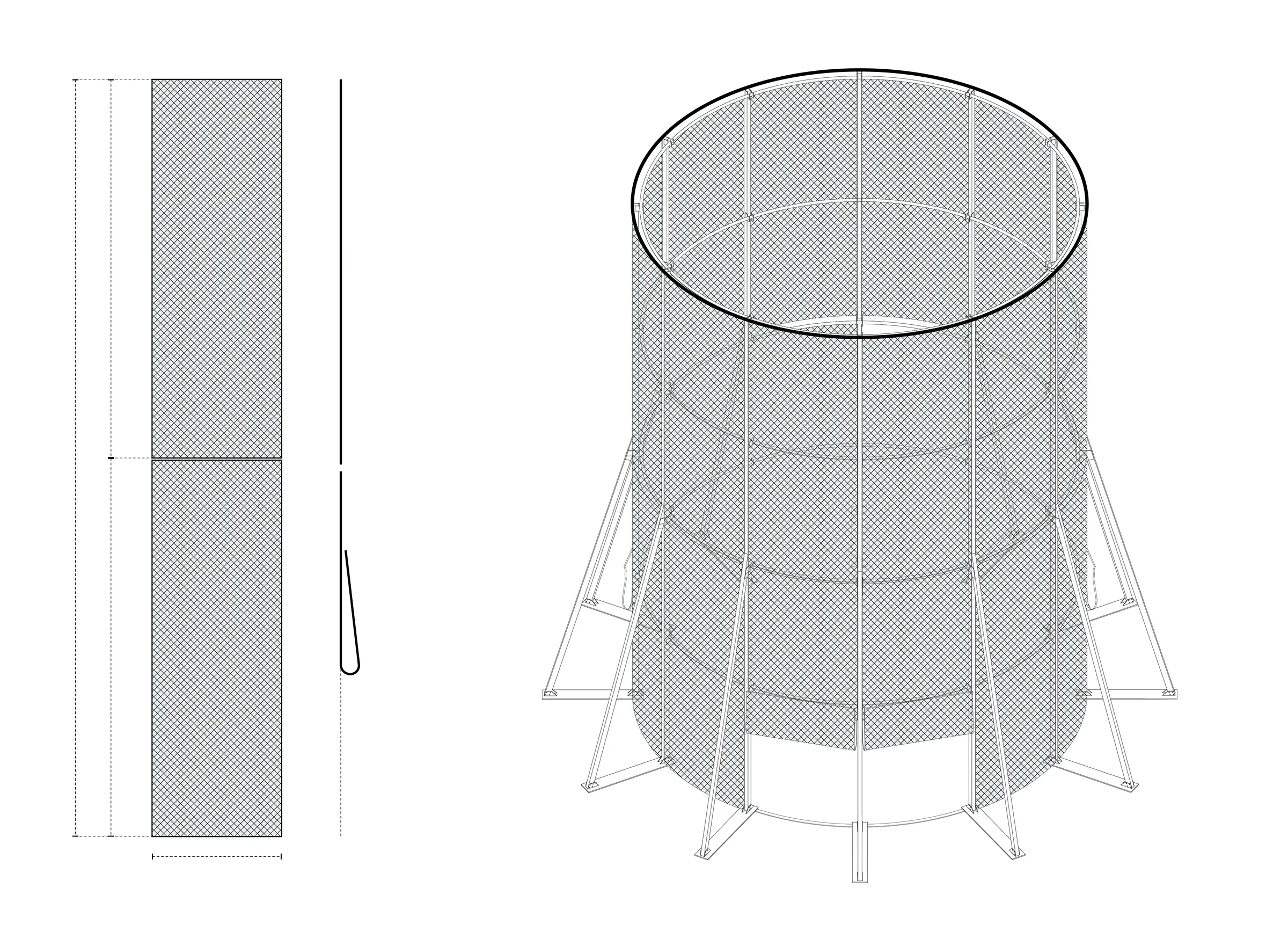
A metal mesh envelope filters the relationship between interior and exterior, while an inner textile membrane transforms light into a thermal gradient that recalls the incandescence of the furnace. At its crown, a misting system generates a light atmosphere that intensifies the perception of the pavilion as an active body. Around the structure, a ring of stones historically linked to steelmaking processes shapes a space for gathering and conversation. These pieces, used as furniture and support, introduce a material dimension that connects the extractive past with a contemporary reading of the territory.
Understanding industry as heritage, culture, and legacy of Sestao, the pavilion functions as a cultural infrastructure where energy ceases to be solely a productive resource and becomes a medium for social exchange, raising questions about the future of industrial territories in the context of the climate crisis.