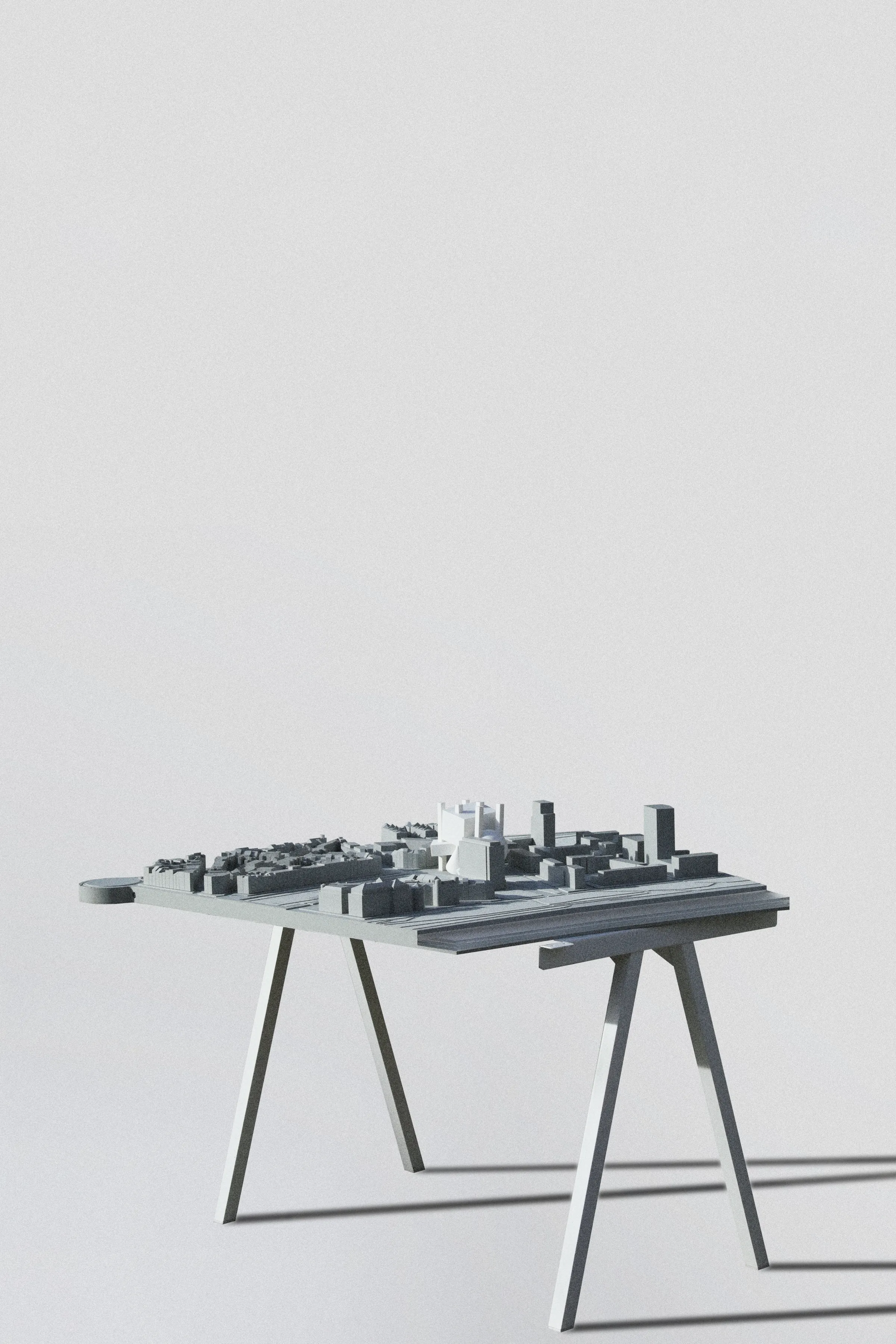
The City Performs Itself begins from the premise that the contemporary city no longer shares the religious or ideological frameworks that once grounded monuments in stable meaning. The monument has given way to the iconic building, which operates through media visibility and symbolic ambiguity rather than shared belief. In this context, cultural architecture inevitably partic- ipatesin theproduction of urban image ratherthantheexpressionof collective consensus. Today, however, the crisis is one of legitimacy and di erence, as public life unfolds across fragmented and competing publics.
This thesis critiques the contemporary performing arts center as a highly scripted cultural typology that often reinforces cultural hierarchies through the way it structures participation. Although presented as a universal civic space, the conventional performing arts center typically organizes engage- ment around scheduled events, ticketed entry, and specialized programming, producing a self-selecting audience and limiting the range of publics that can occupy the building. Architecturally, this condition is mirrored in formal unity: the seamless object consolidates institutional authority into a singular image, reinforcing cultural hierarchy under the guise of universality.
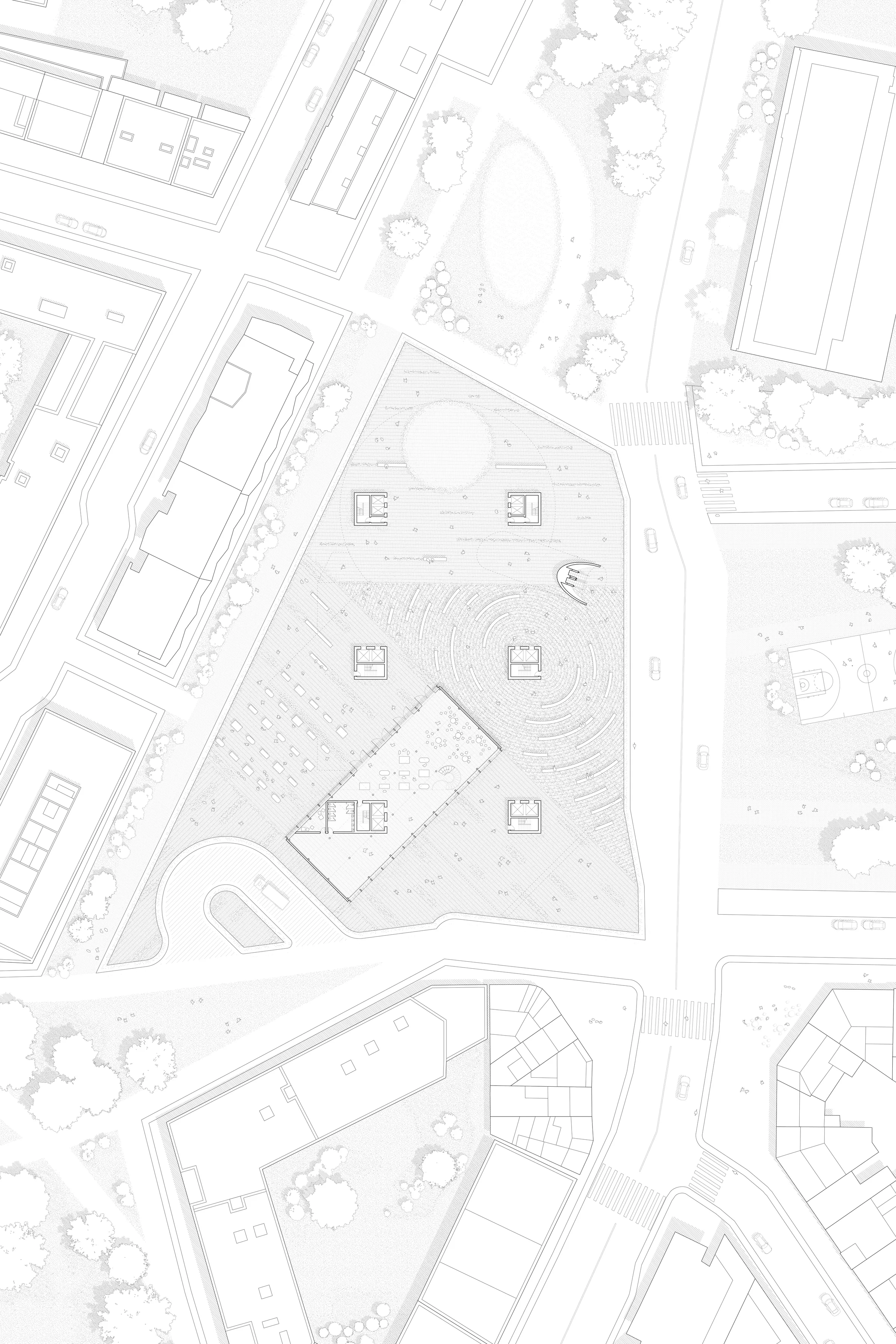
Situated along Antwerp’s Waalsekaai, a waterfront shaped by culture-led regeneration, the project engages a site that mediates between the city’s historical port identity and its present-day ambitions within global economic flows. Here, cultural architecture operates in tension between culture as com- modity and culture as symbolic capital. Rather than rejecting the iconic condi- tion, the project appropriates and redirects it, adopting the scale and visibility expected of a landmark while recalibrating its symbolic logic.
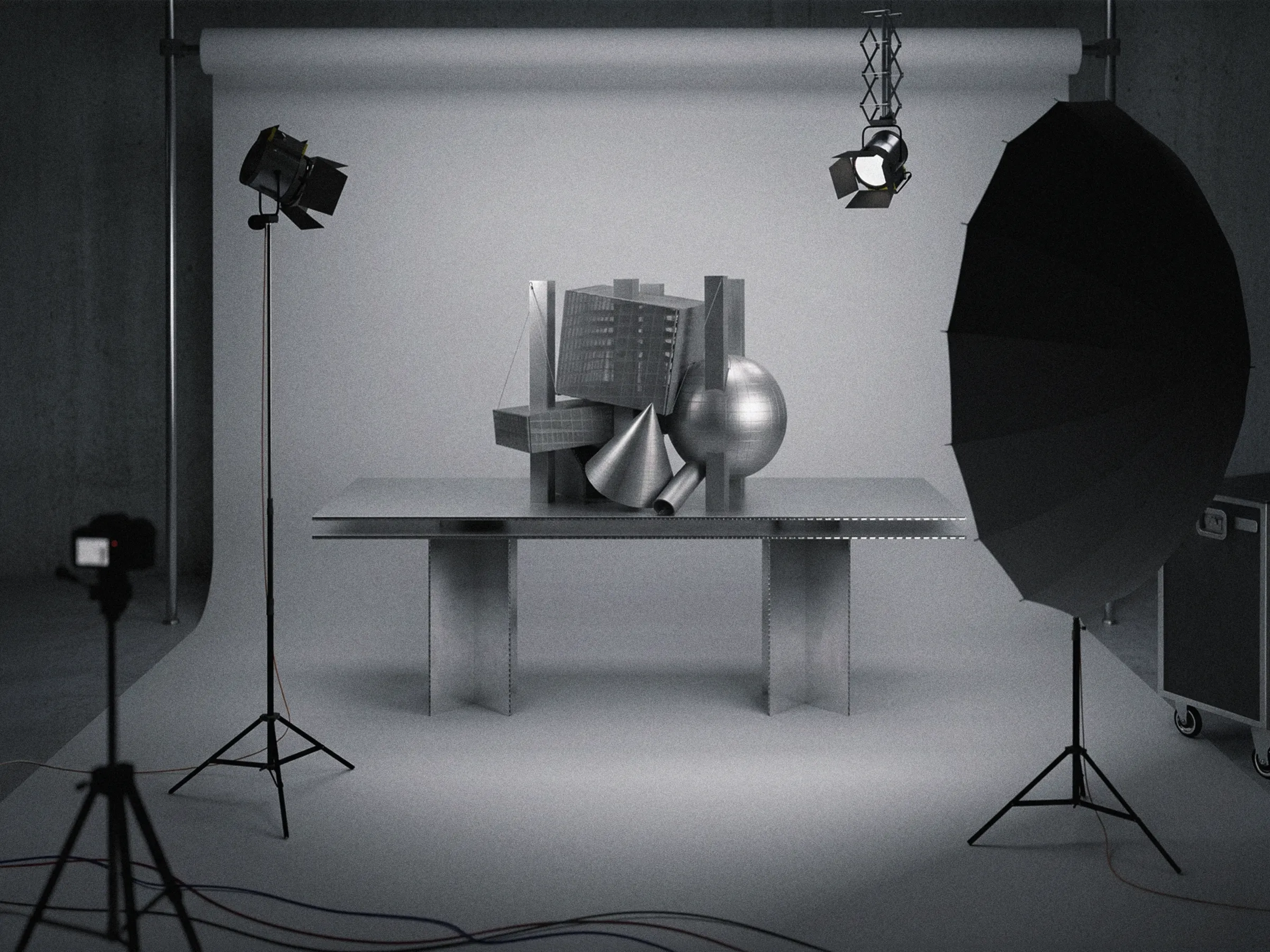
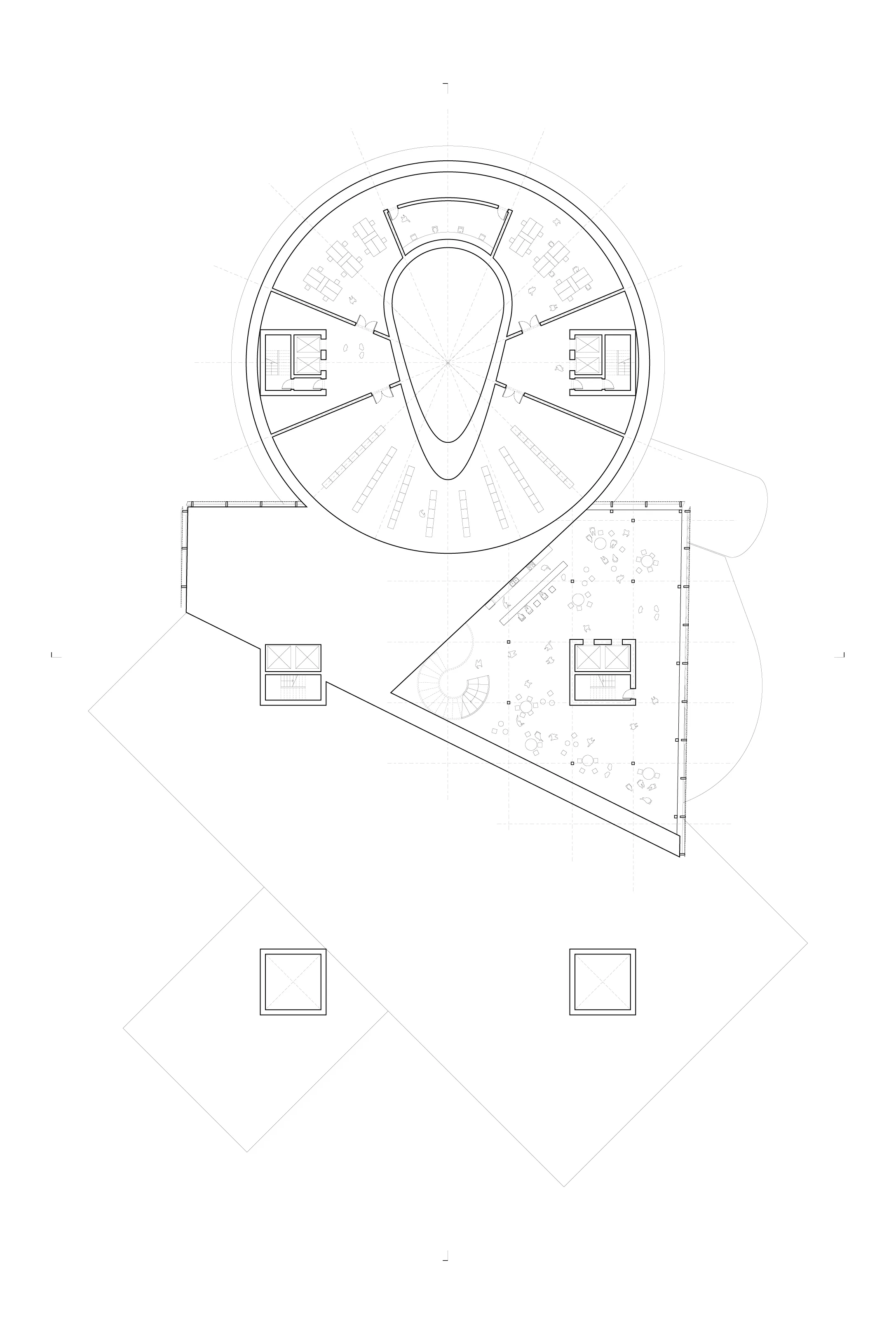
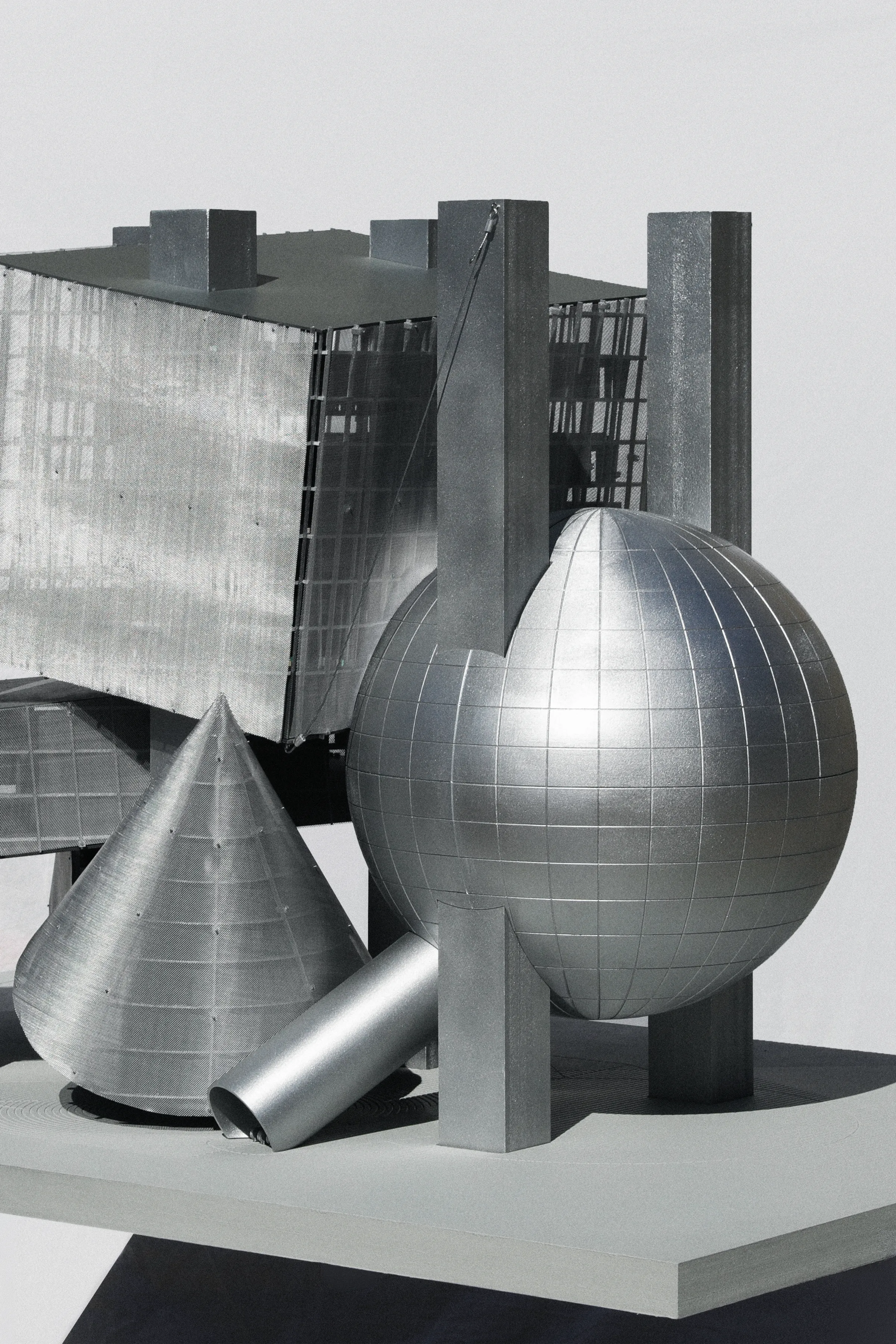
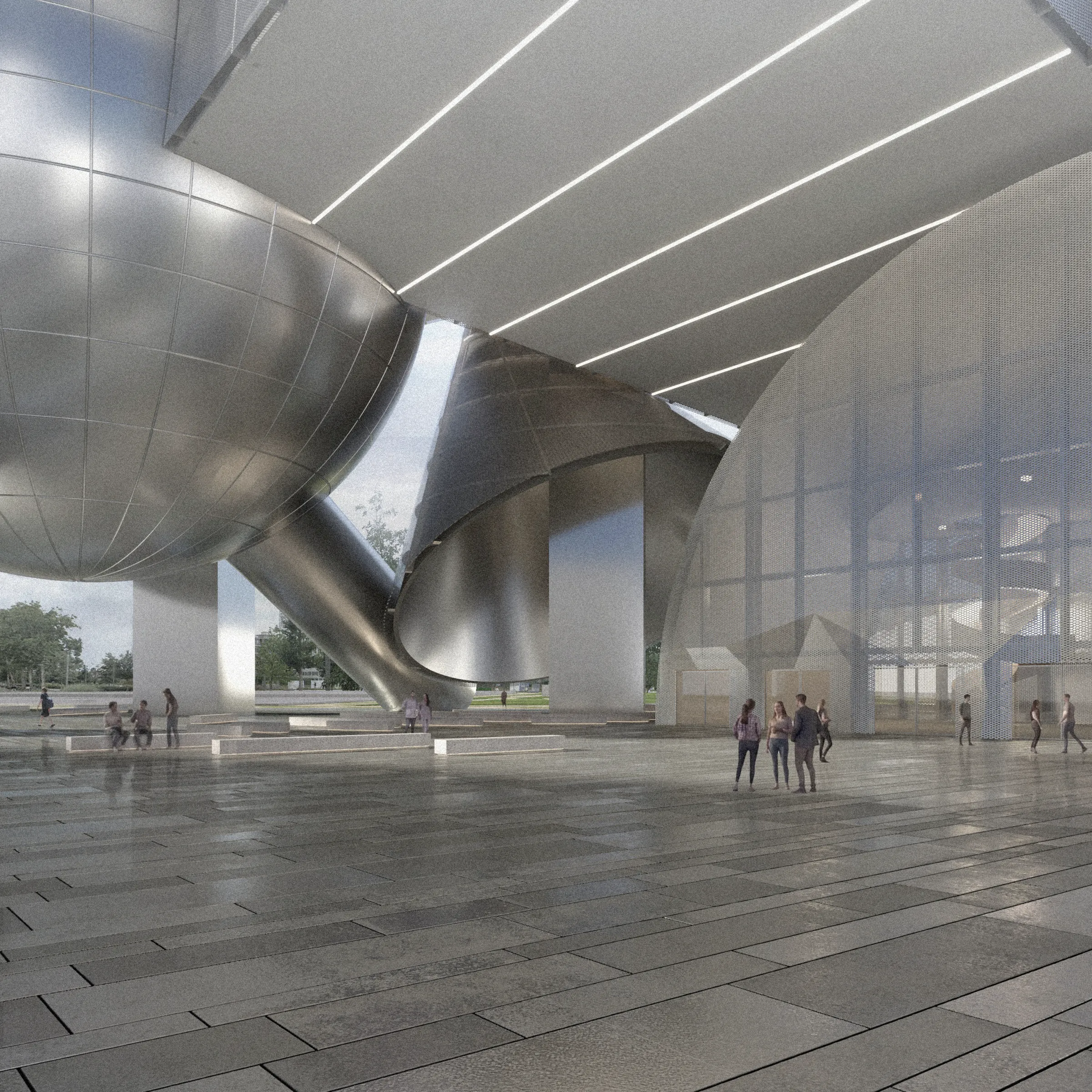
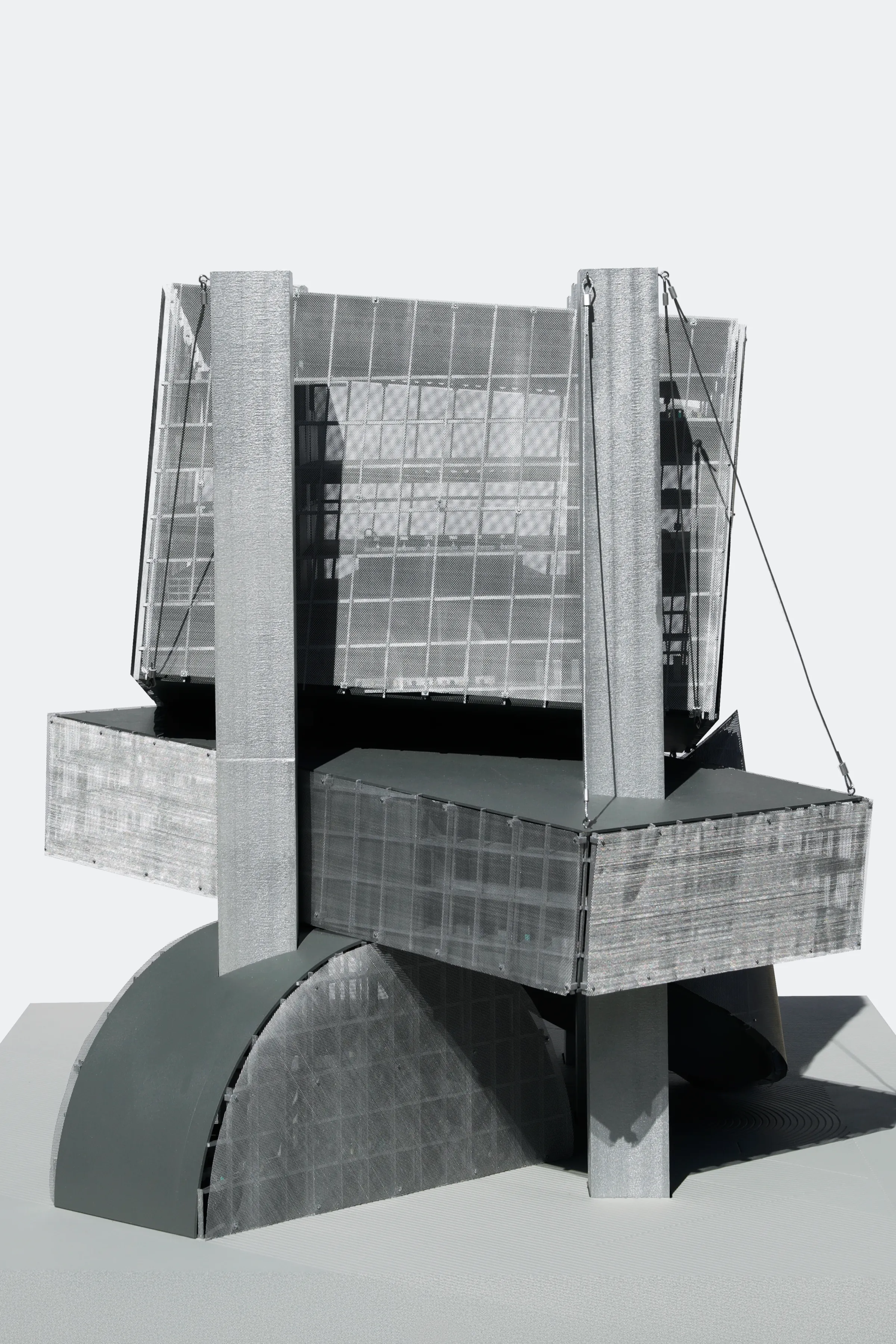
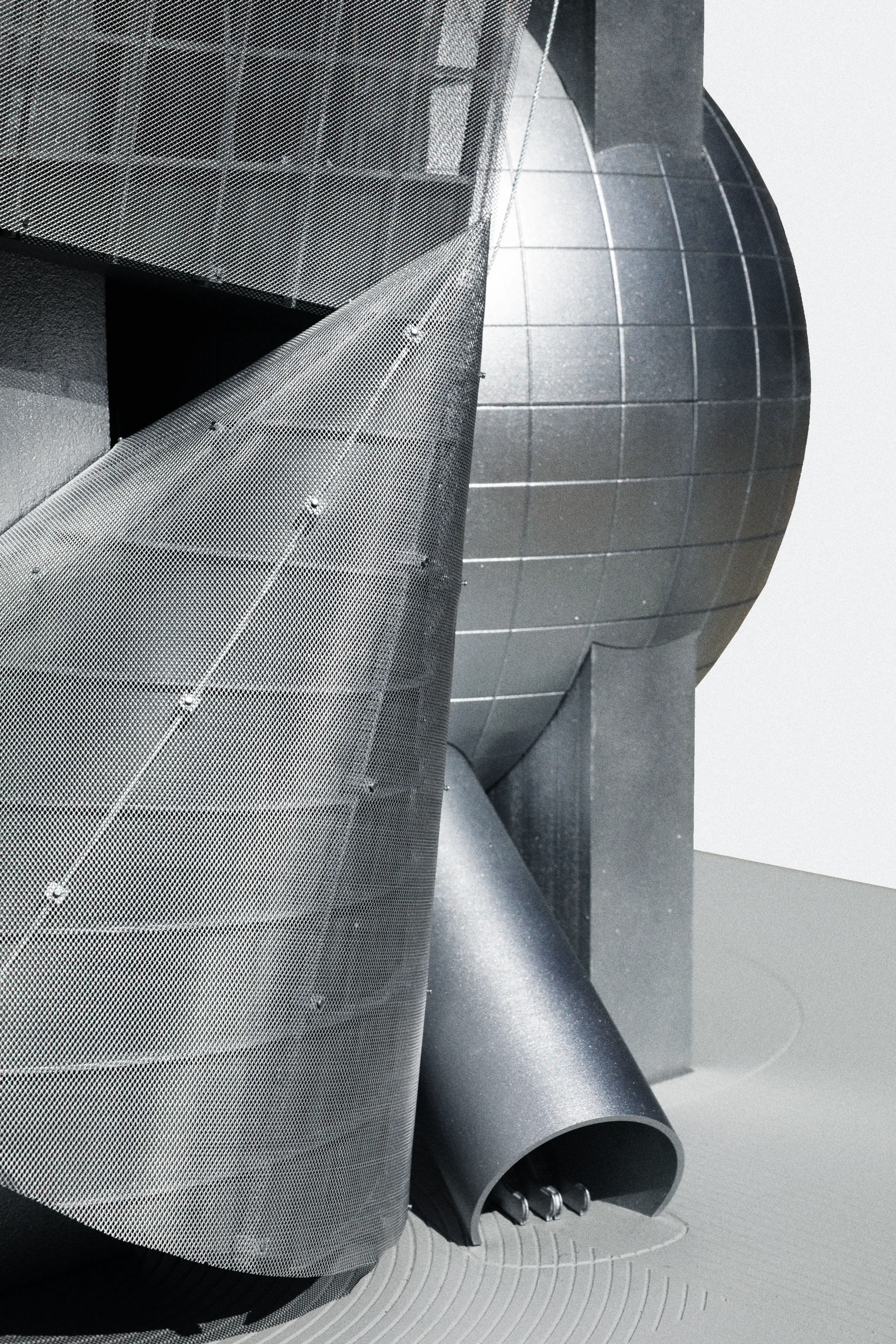
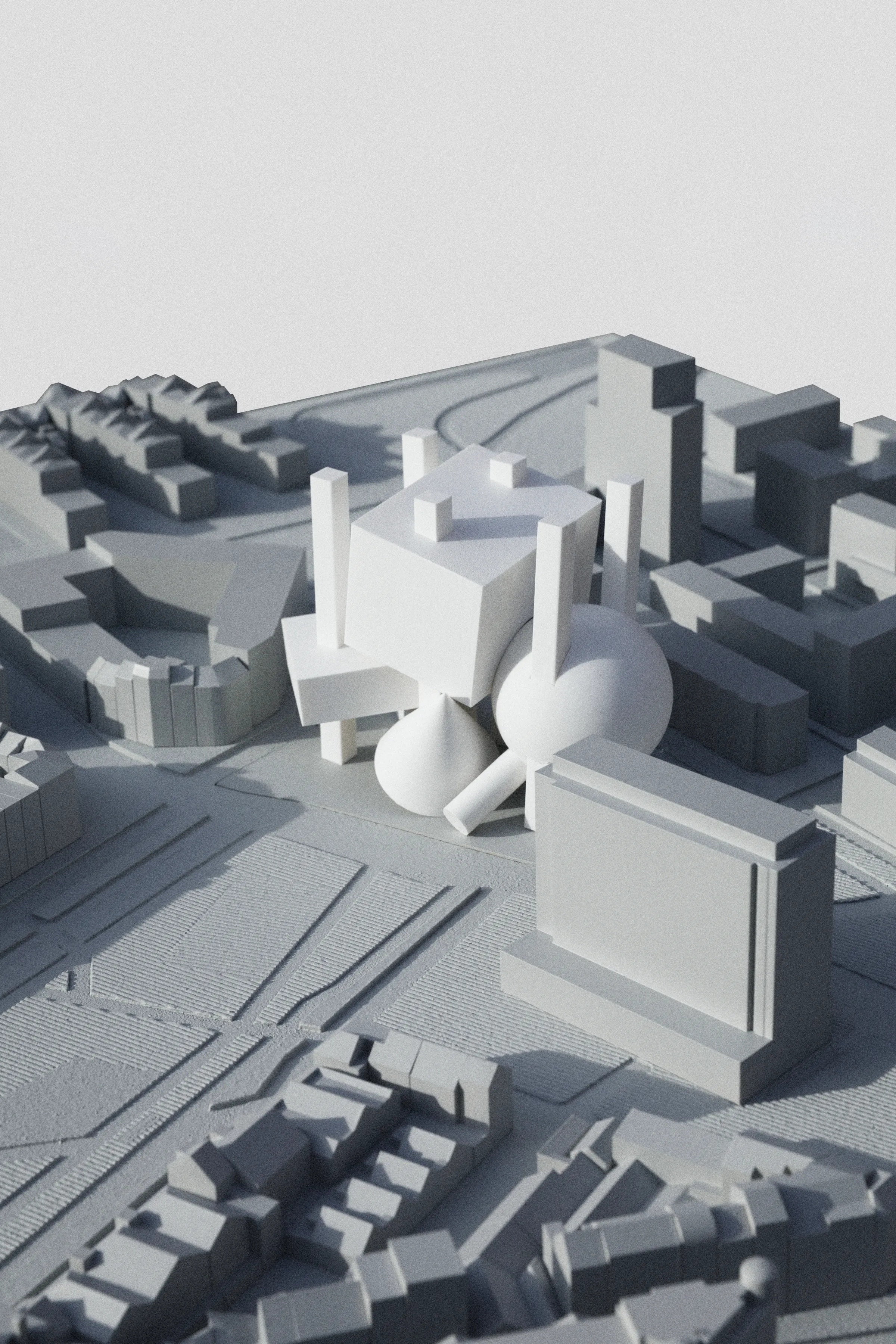
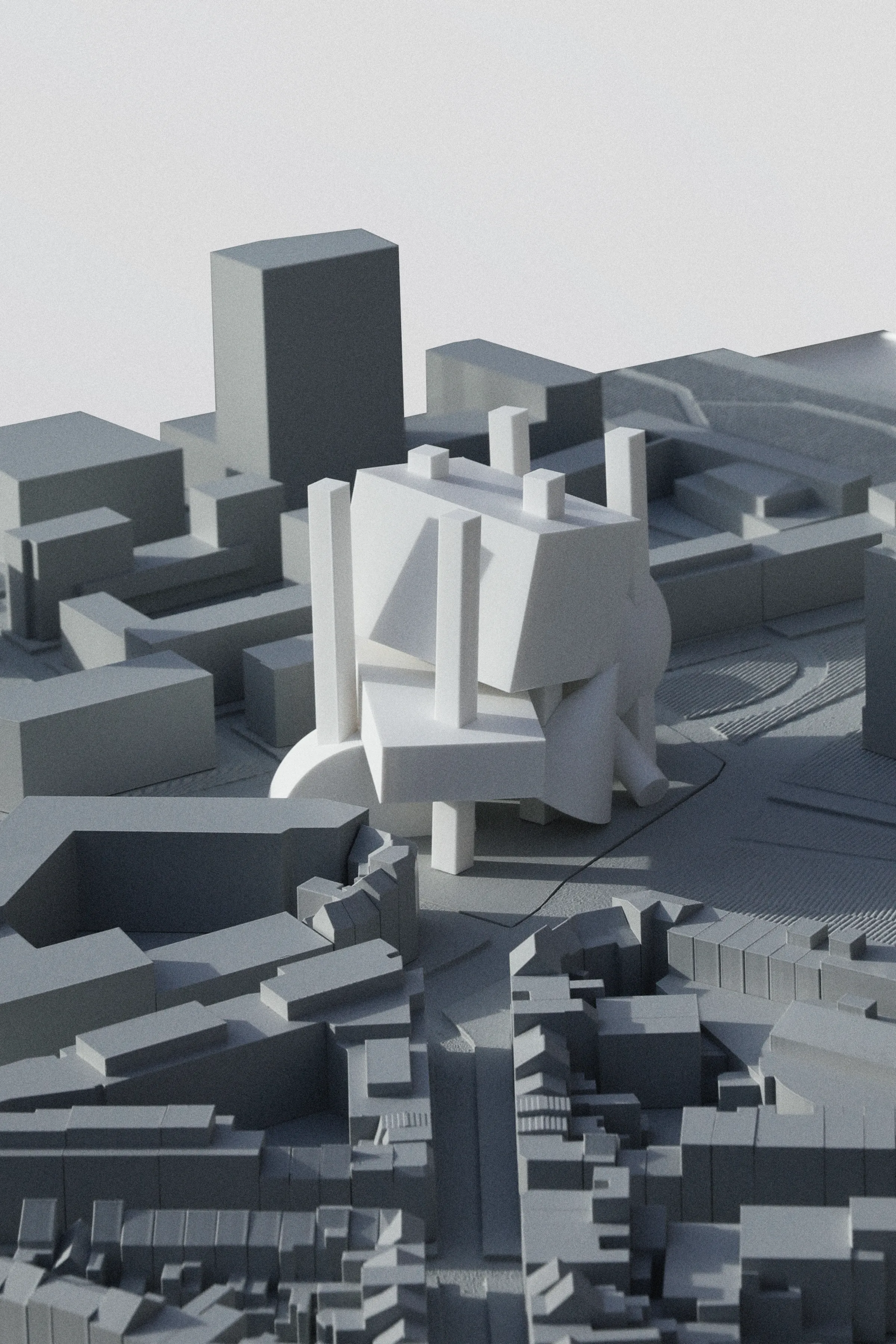
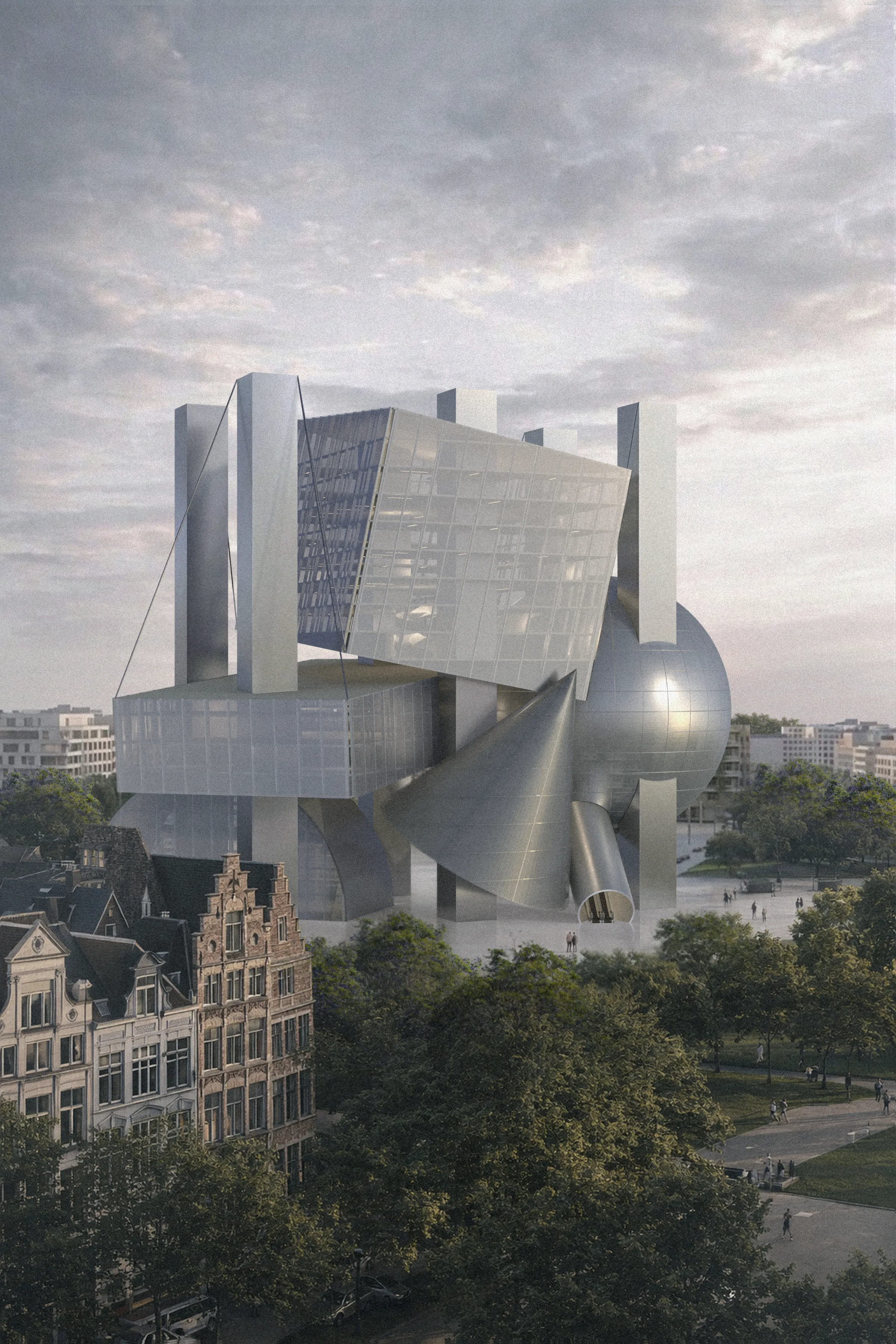
The proposal situates itself within this lineage by shifting the role of form. Rather than reorganizing the institution internally, it externalizes di erence through clear Platonic volumes assembled as distinct parts. Spheres, cones, and cubes appear throughout architectural history as figures of monumentali- ty, clarity, and civic representation, and persist in our collective memory as some of the most recognizable architectural forms. Their continued use is tied to the way Platonic geometries have been associated with universality and ideal order, operating at a perceptual level that precedes interpretation and allows them to claim shared meaning. In this project, this historical association is precisely why these forms are used; however, they are no longer composed into a single dominant object.
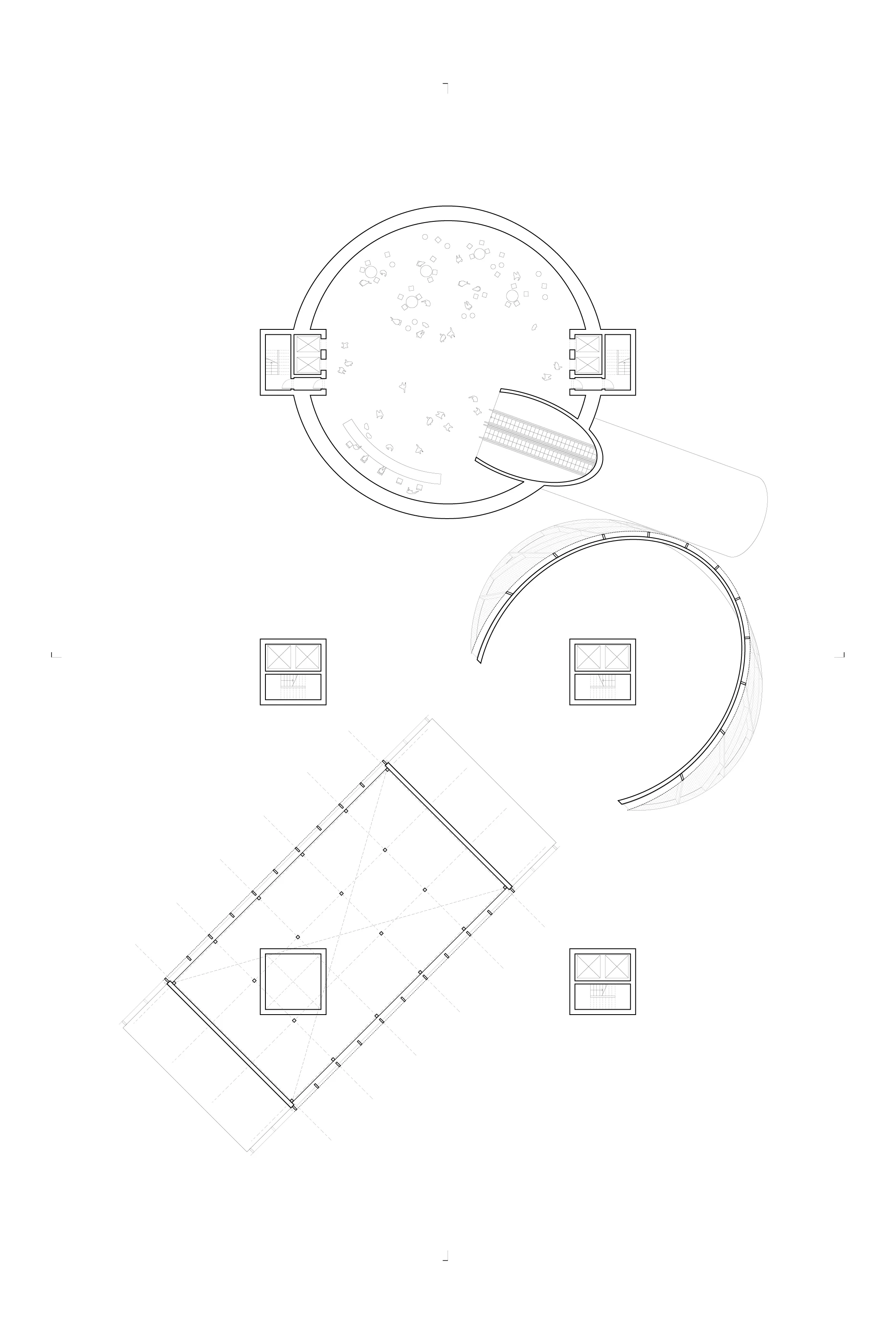
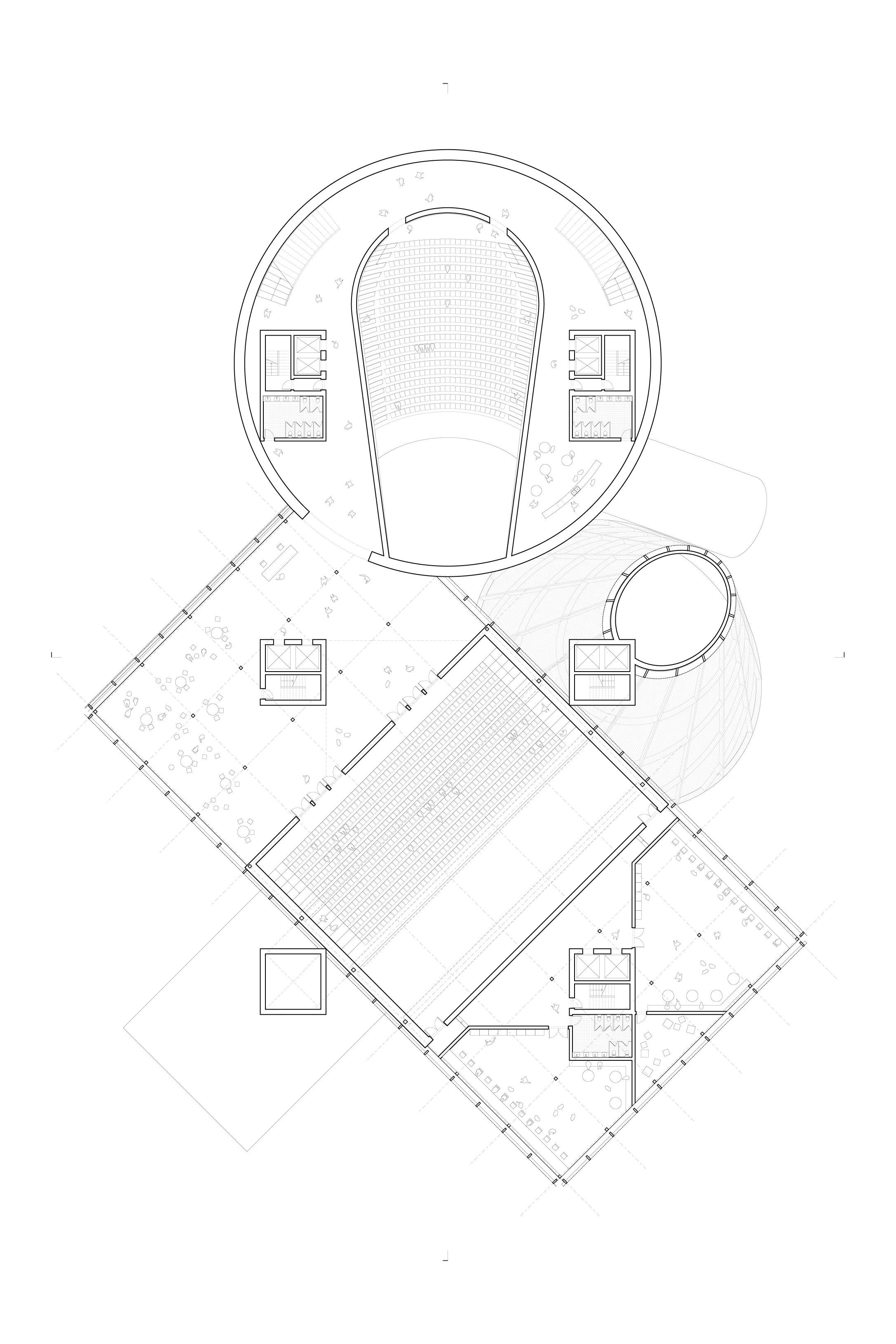
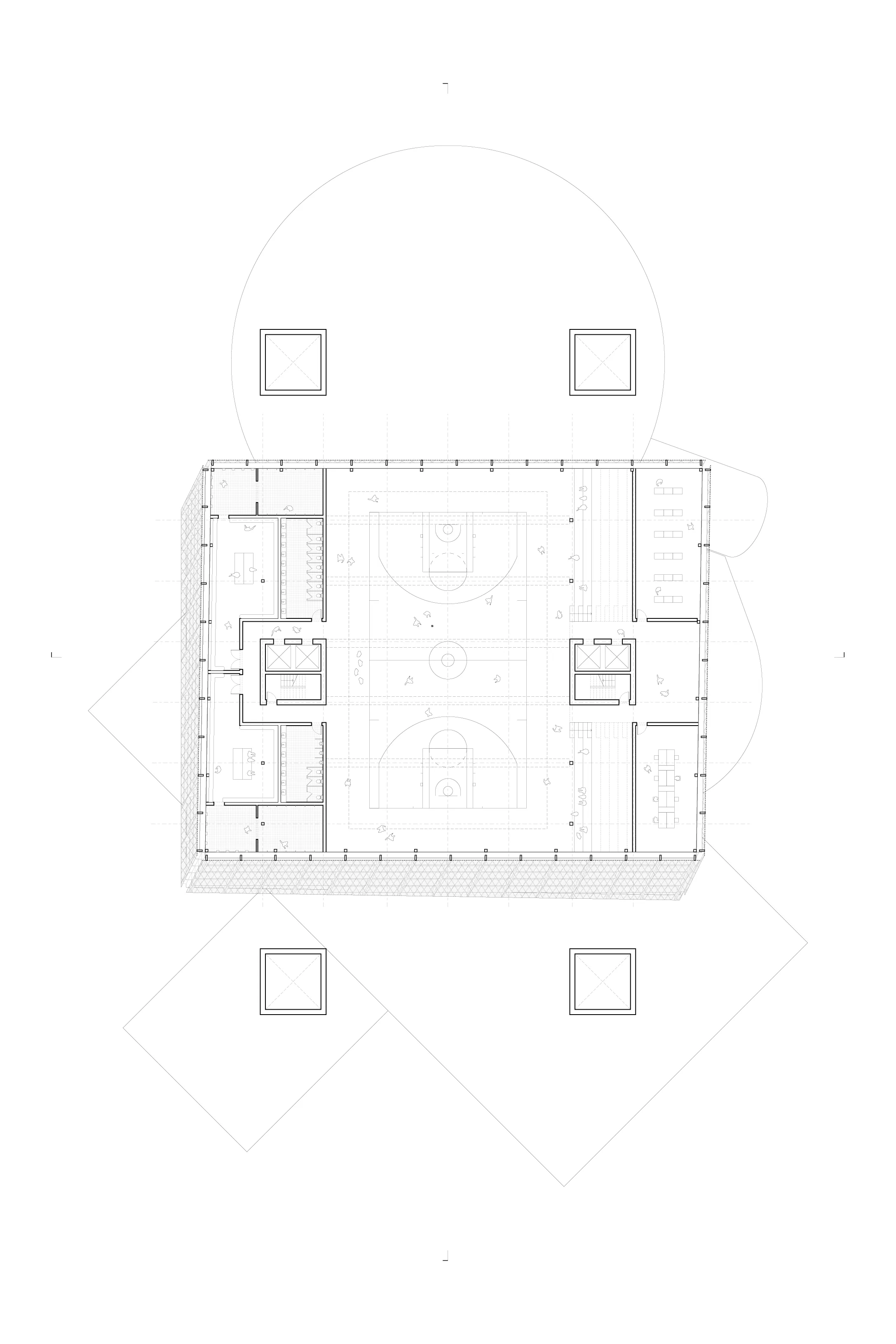
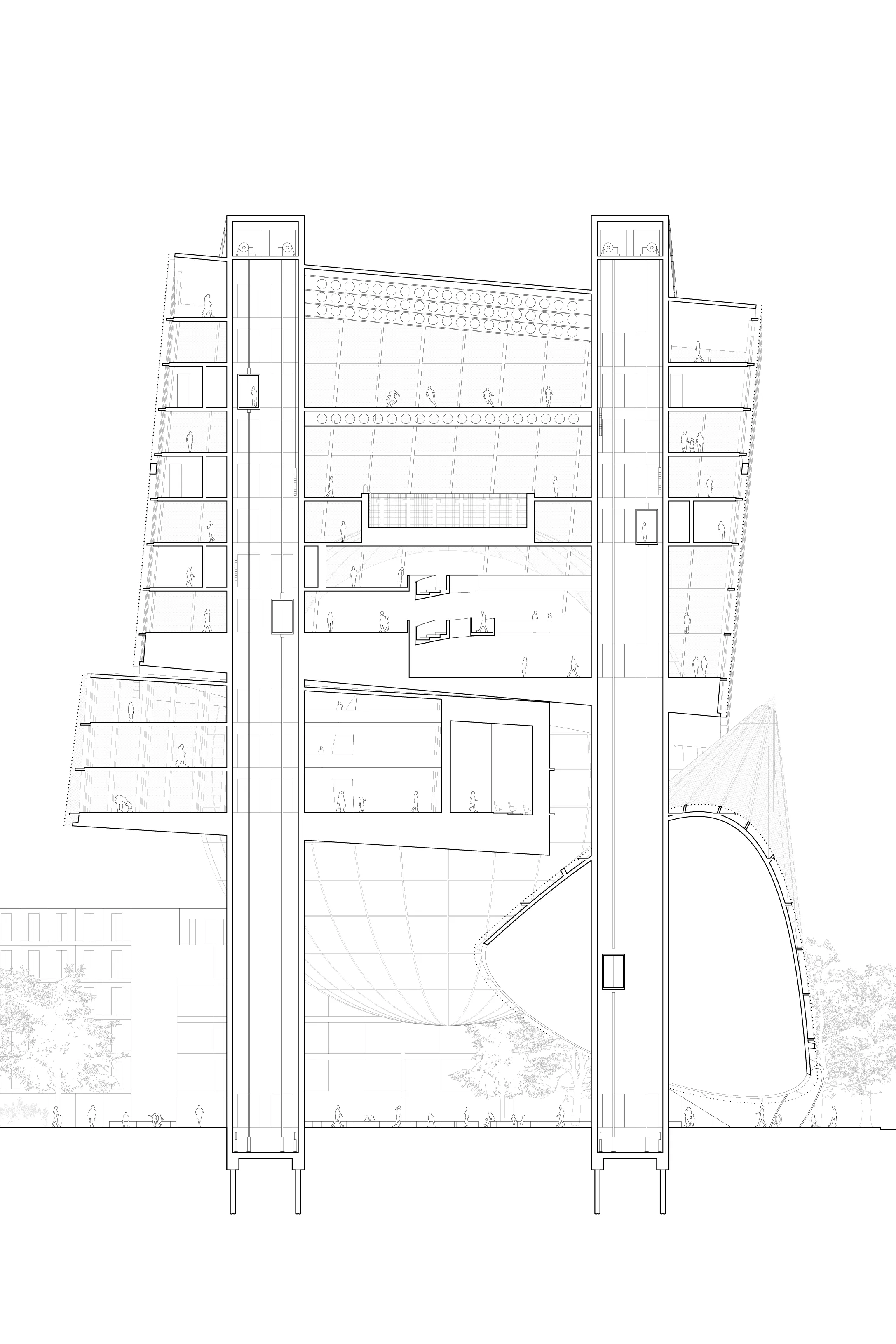
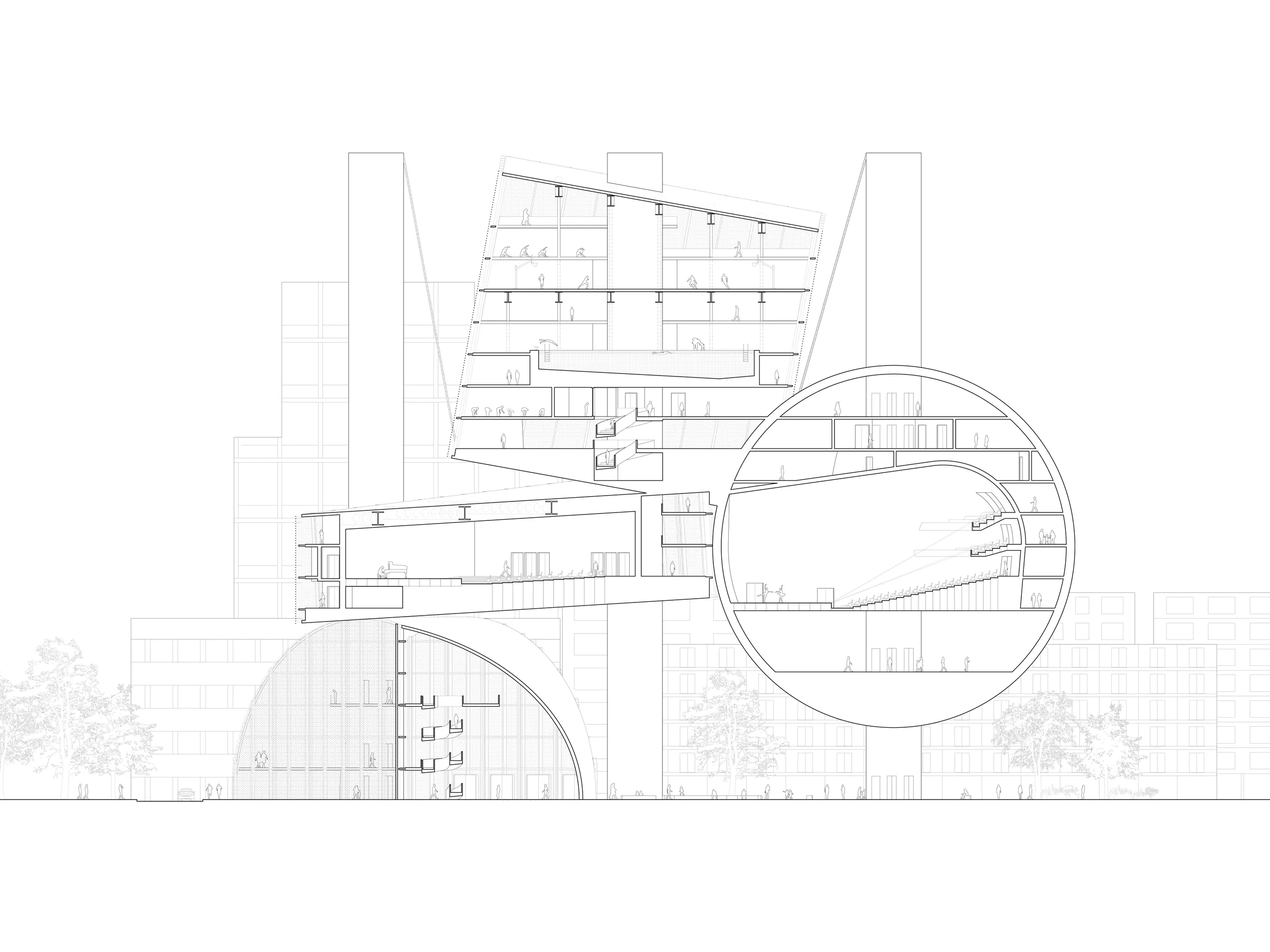
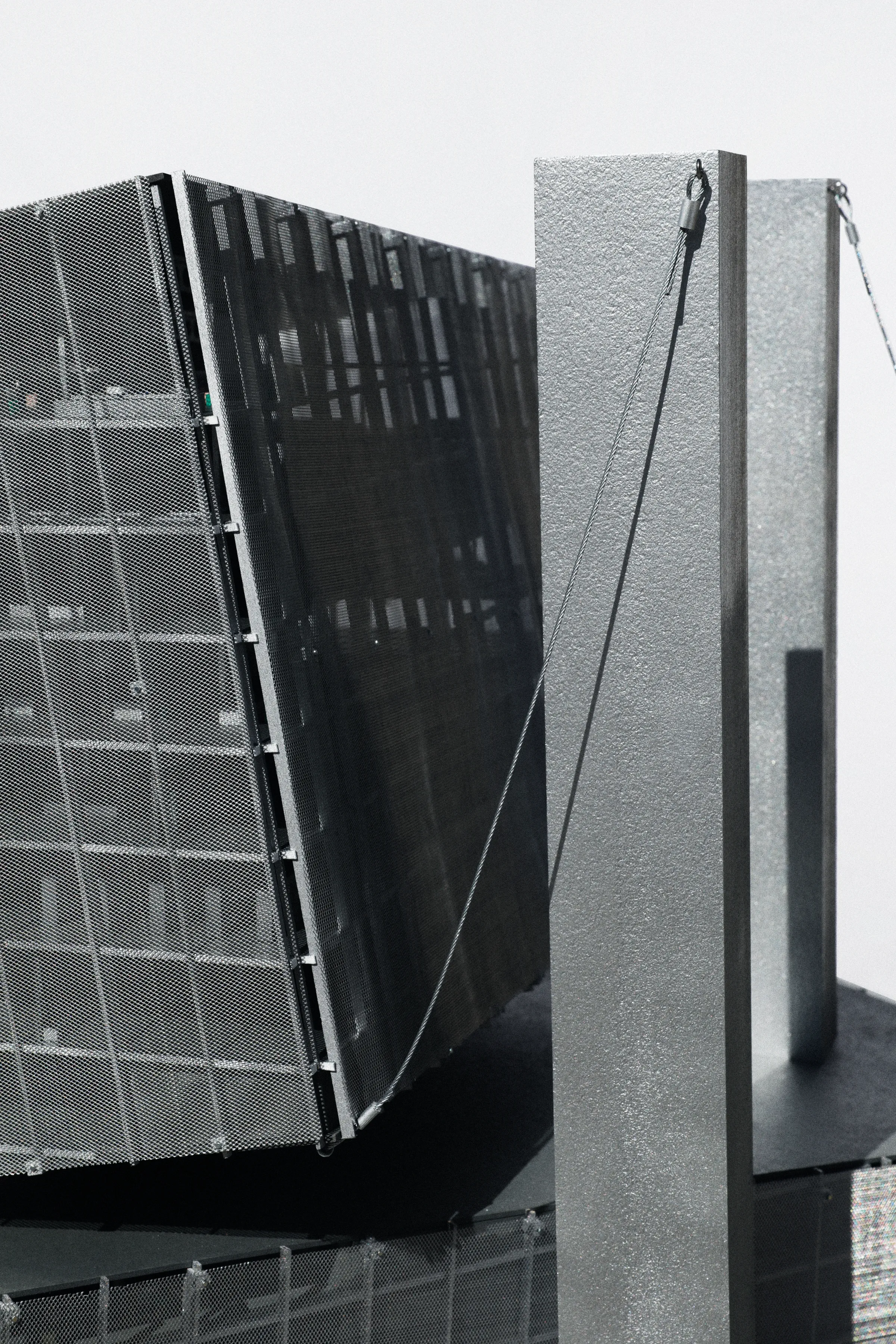
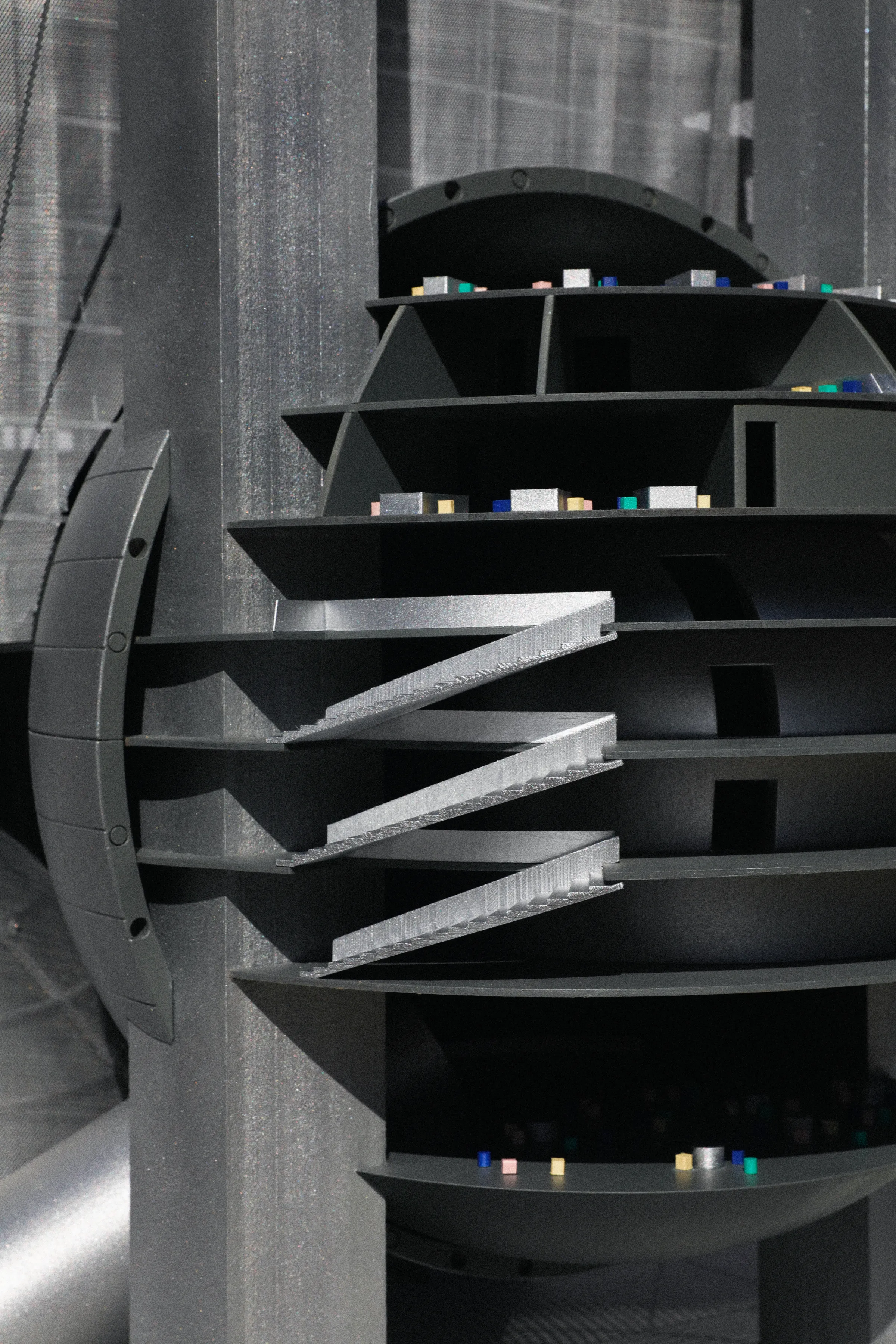
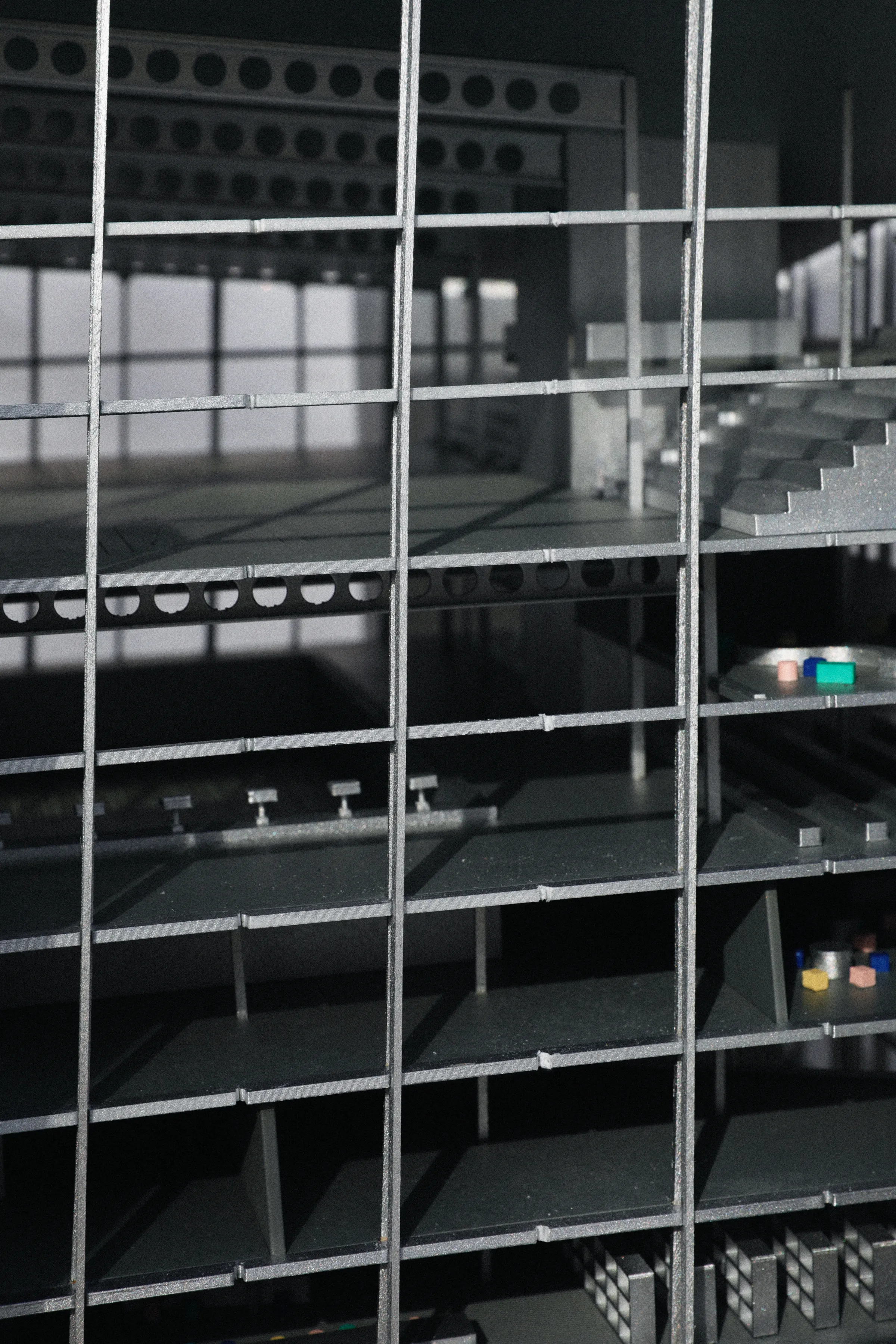
Each volume retains a strong formal identity, yet the building refuses to recon- cile them into a unified composition or program. Instead, the tension between equally legible figures destabilizes the idea of a singular authoritative form, and their collision spatializes plurality. Distinct geometric volumes and infra- structural systems are assembled as discrete yet interdependent elements, generating a spatial condition defined by overlap, friction, and negotiated coexistence. Rather than subsuming di erence within a seamless whole, the architecture maintains the legibility of its constituent parts and the tensions produced between them.
This formal strategy is inseparable from the project’s reconsideration of the performing arts center as a civic institution. The project proposes an alterna- tive model of the iconic: not an image of institutional totality, but a constructed plurality. Cultural architecture is reconceived as a civic field that accommo- dates unscripted forms of public life. The building does not depend solely on scheduled performance to produce occupation; instead, its di erentiated spaces and relationships allow multiple forms of engagement to coexist within and around the institution.
While remaining legible as a landmark within the city, the building’s formal ten- sion and programmatic variation resist singular interpretation, disrupting sym- bolic coherence and staging multiplicity as a civic value. Monumentality is therefore retained, but detached from the expectation that monumental form must communicate a unified cultural identity. The recognizable geometries that historically carried claims of universality are instead placed into confron- tation with one another, allowing di erence itself to become architecturally legible.
The City Performs Itself ultimately asks how cultural architecture might retain the civic presence and representational capacity of the monument without reproducing its claim to singular meaning. Rather than resolving the fragment- ed publics of the contemporary city into a unified image, the project gives their coexistence spatial and formal expression. It does not perform culture as con- tained spectacle; it constructs the spatial conditions through which the city performs itself.