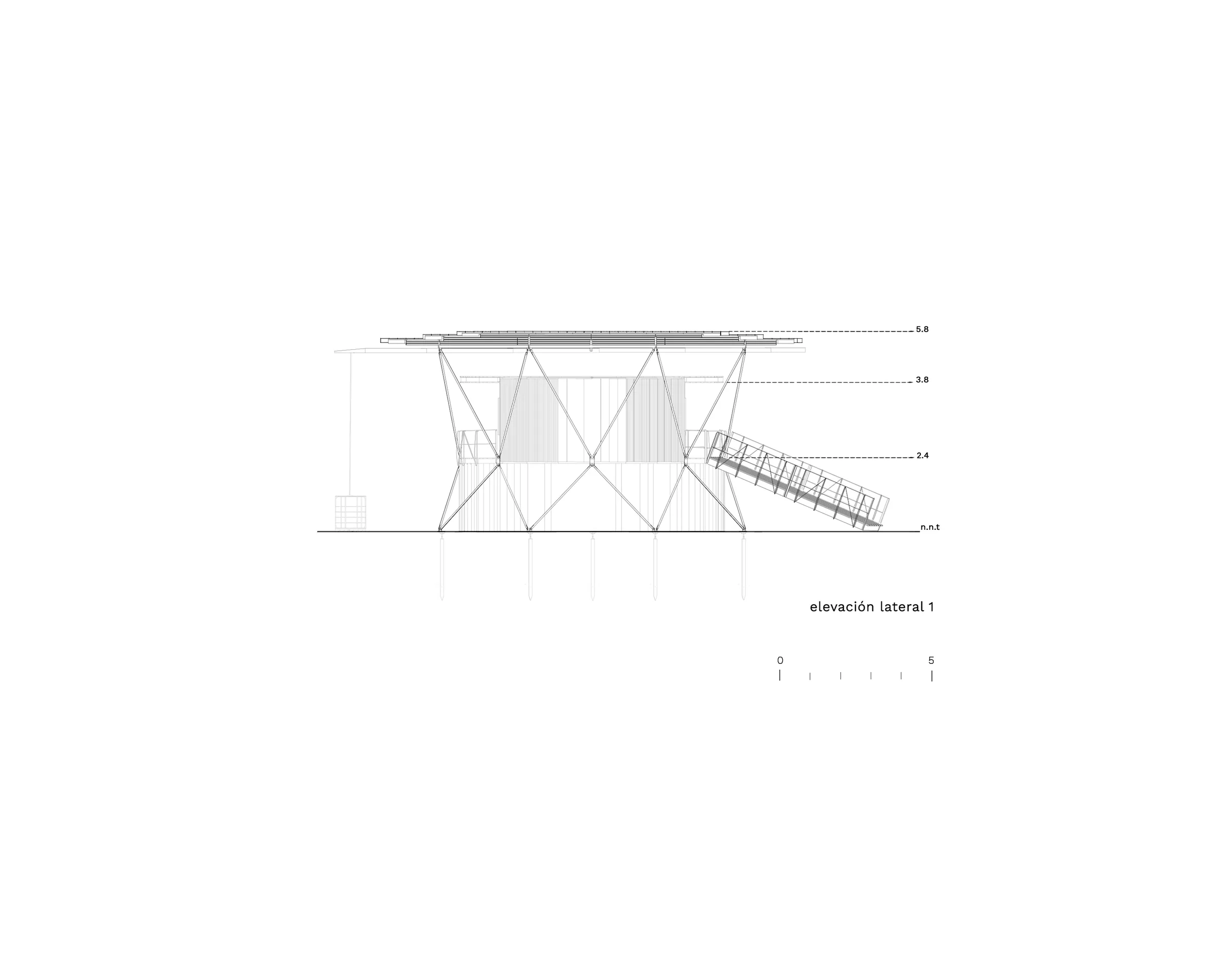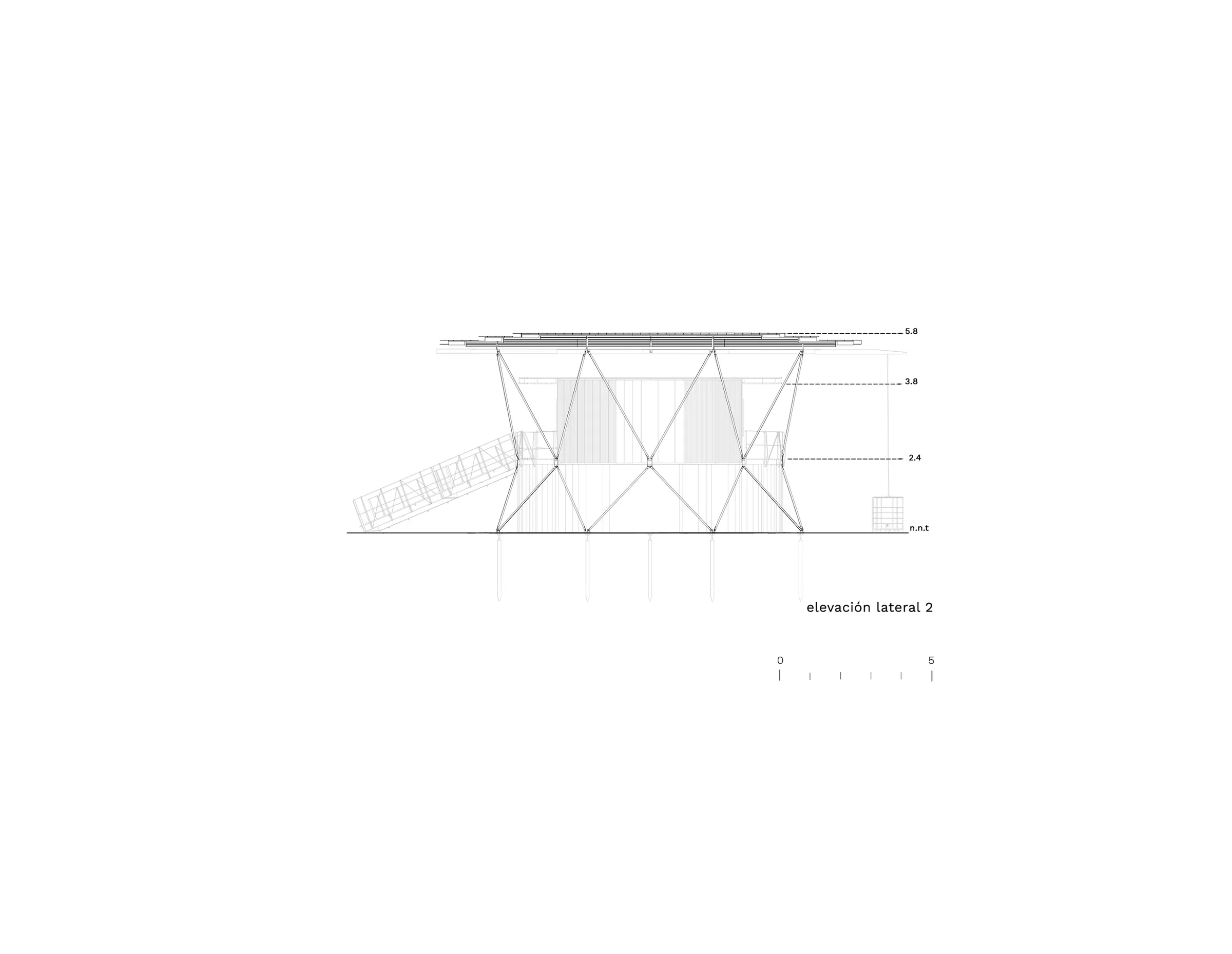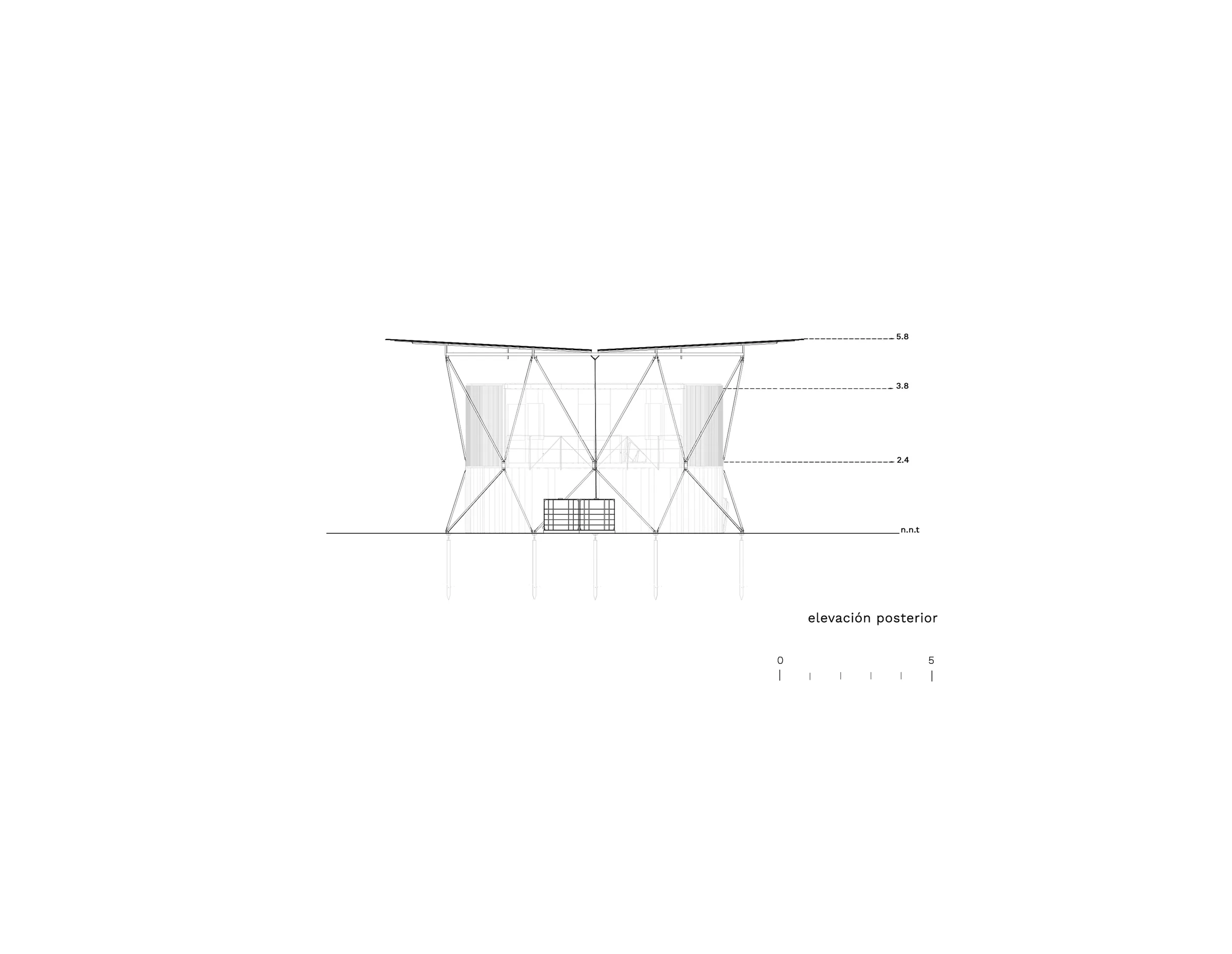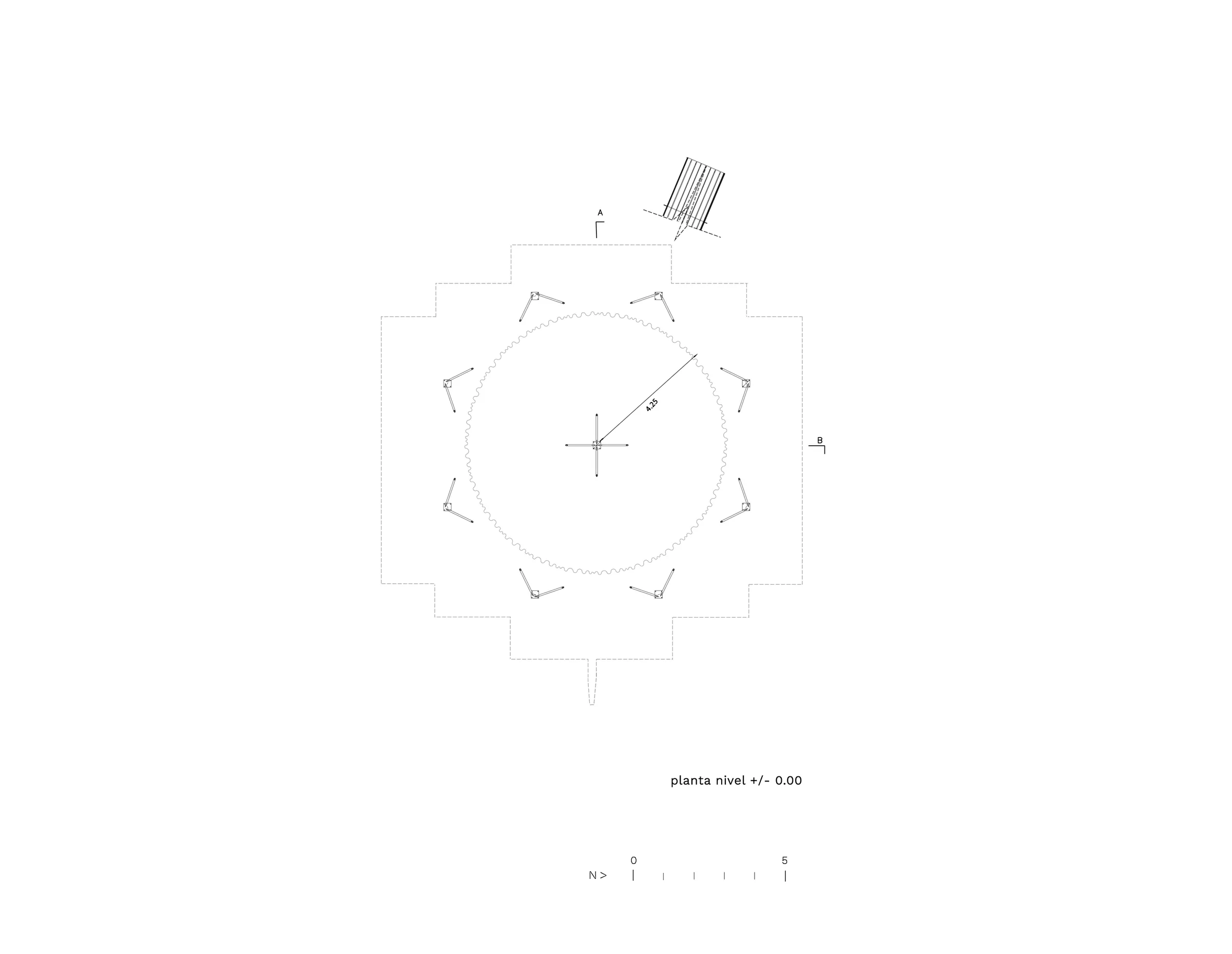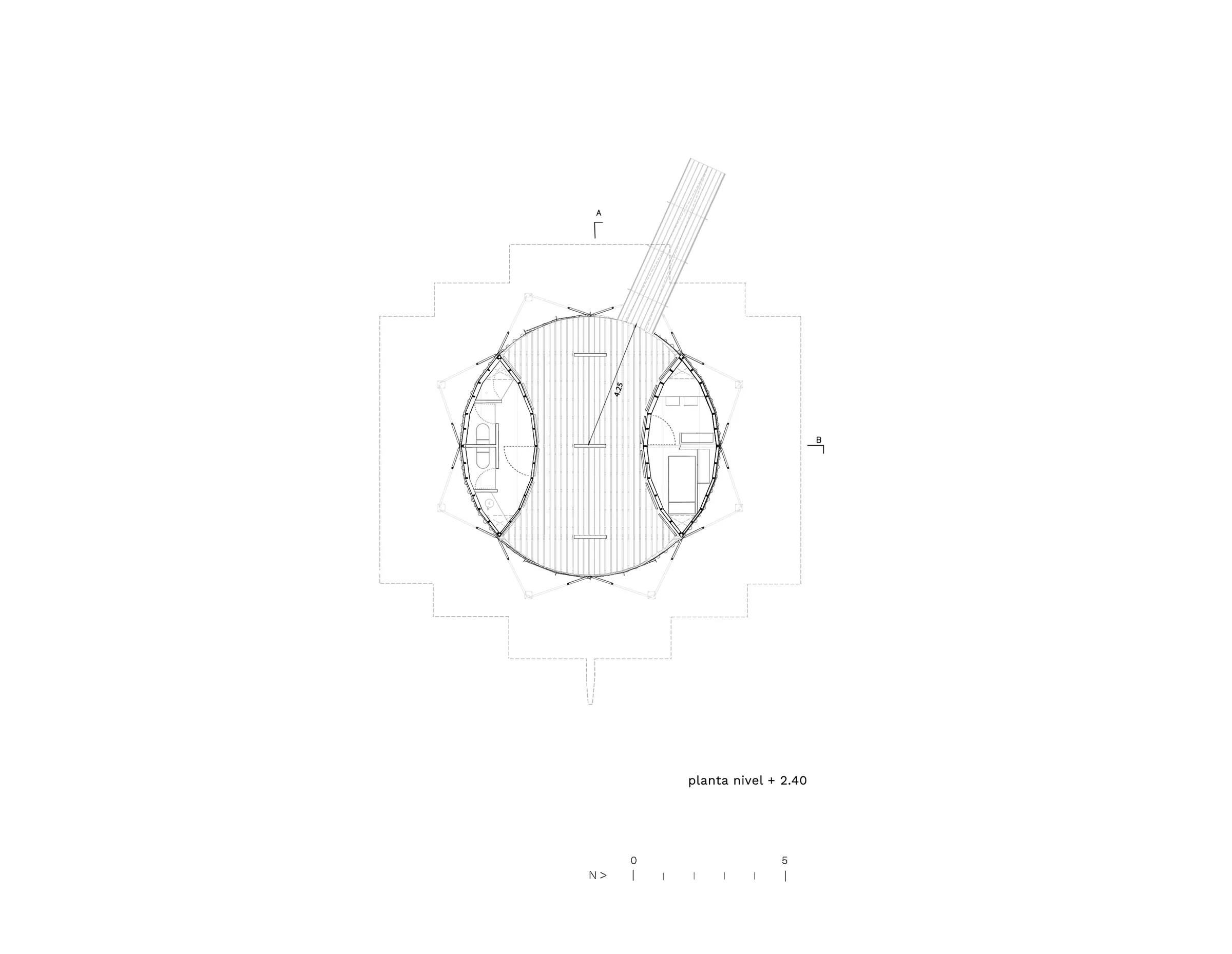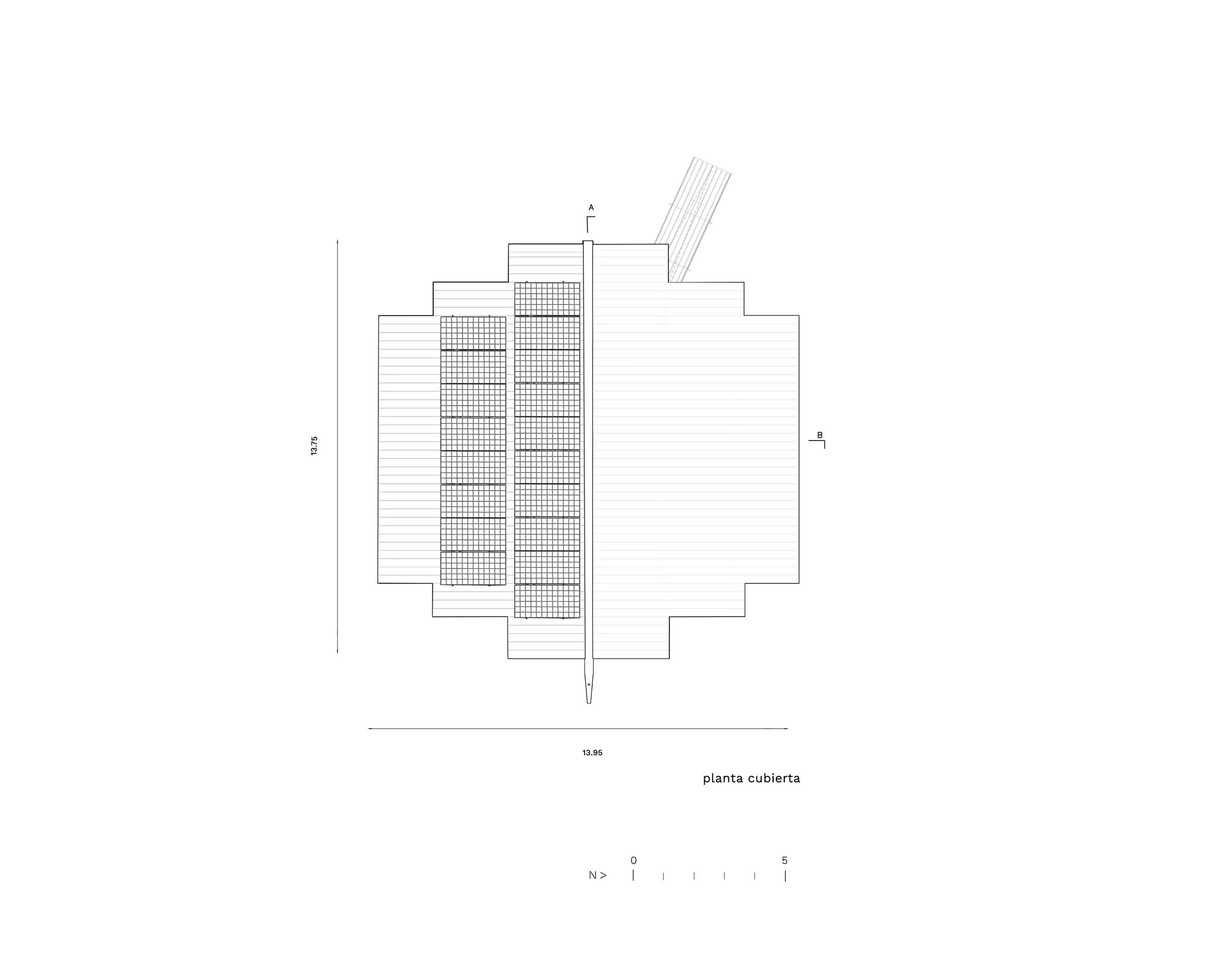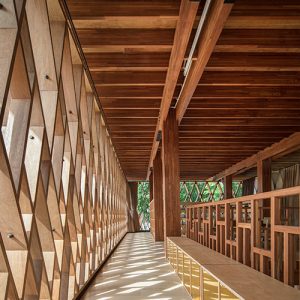
Our proposal for equipment in the national parks of Atacama, conceived and developed by our office as a collaboration with the School of Architecture of the Pontificia Universidad Católica de Chile, includes four prototypes.
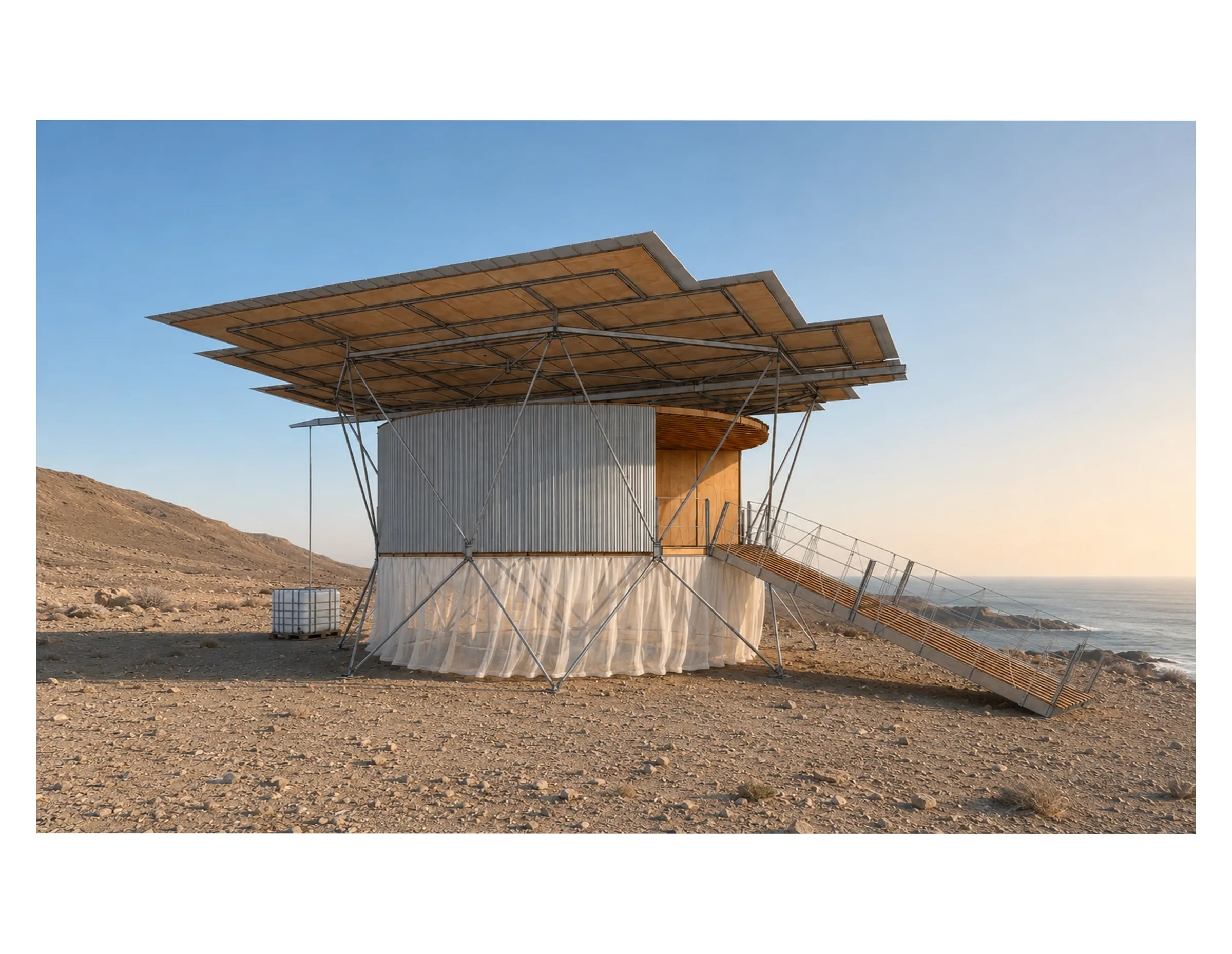
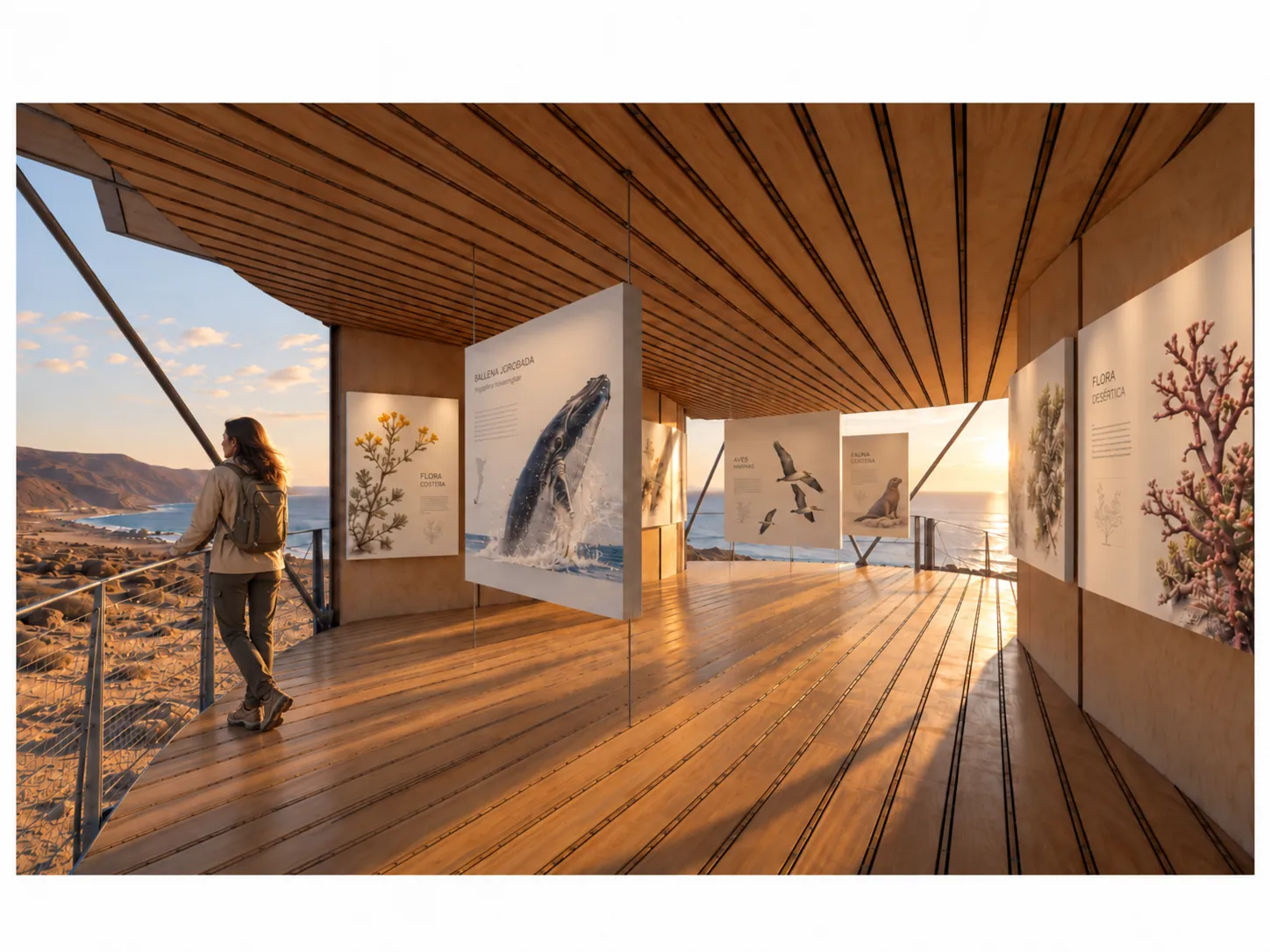
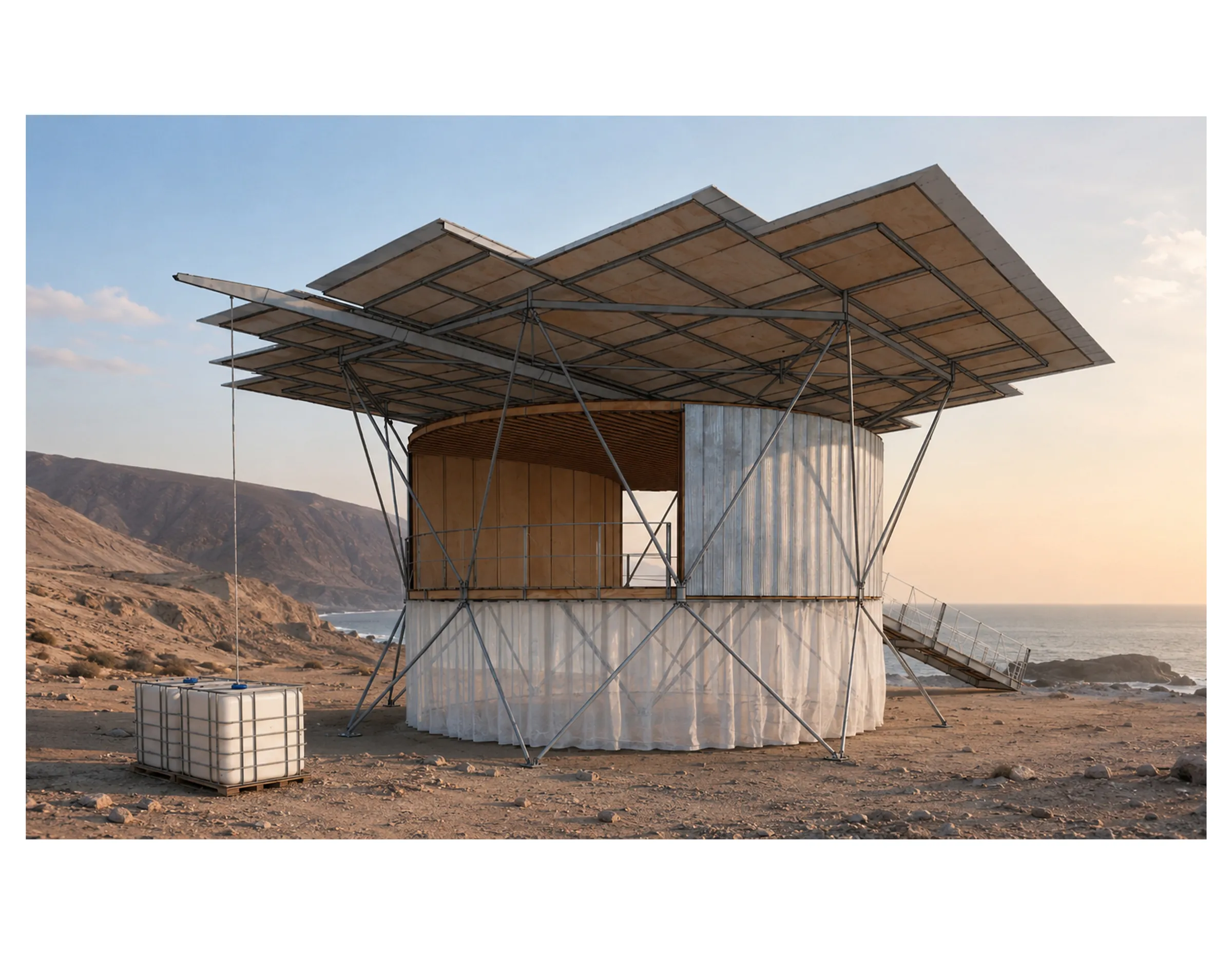
This is one of them, designed to be placed near the coast, in Chañaral de Aceituno. It combines an elevated platform for observation and exhibition, an office for park rangers, and sanitary facilities. Beneath it, a shaded, ventilated rest area offers shelter to visitors in the extreme conditions of the desert.
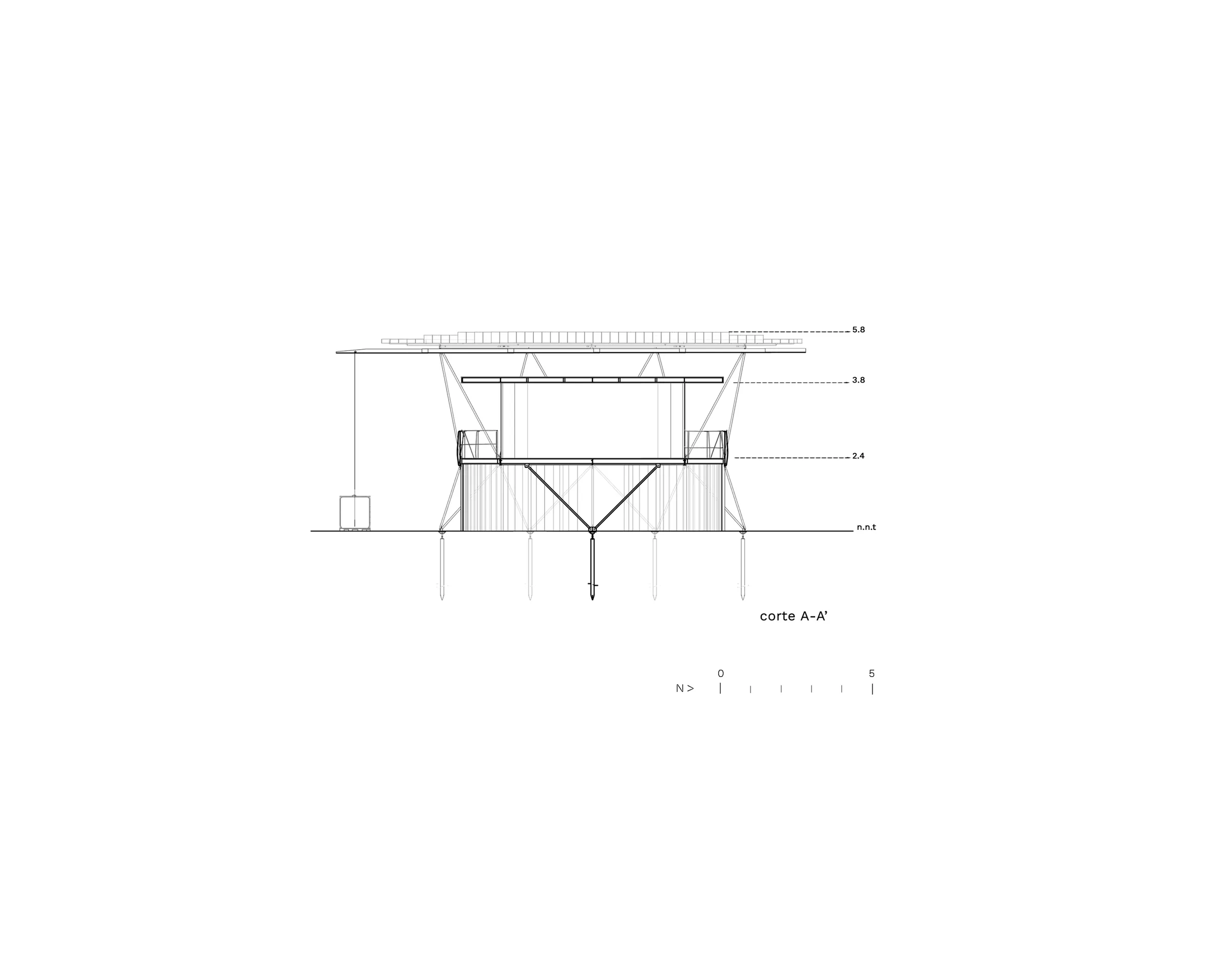
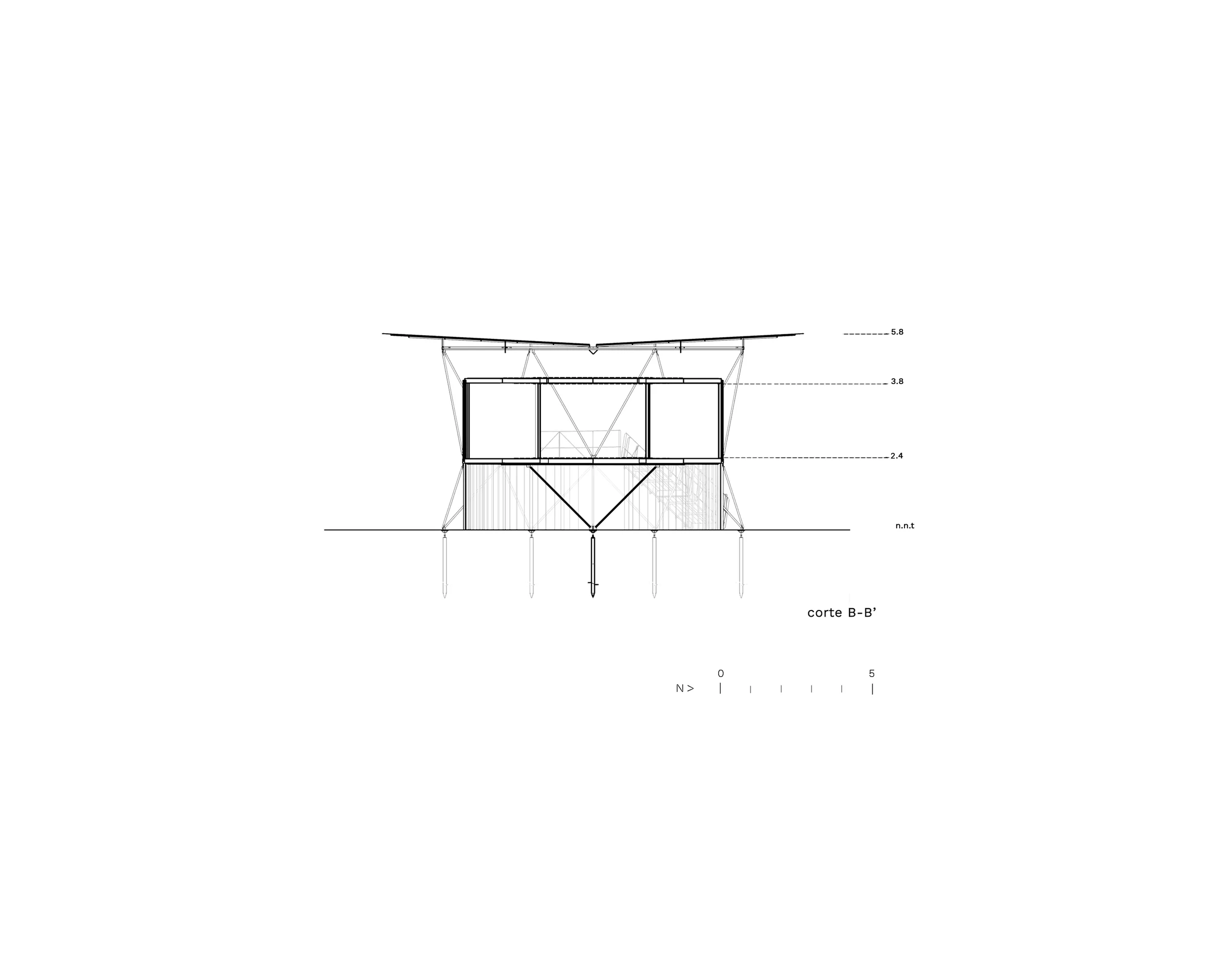
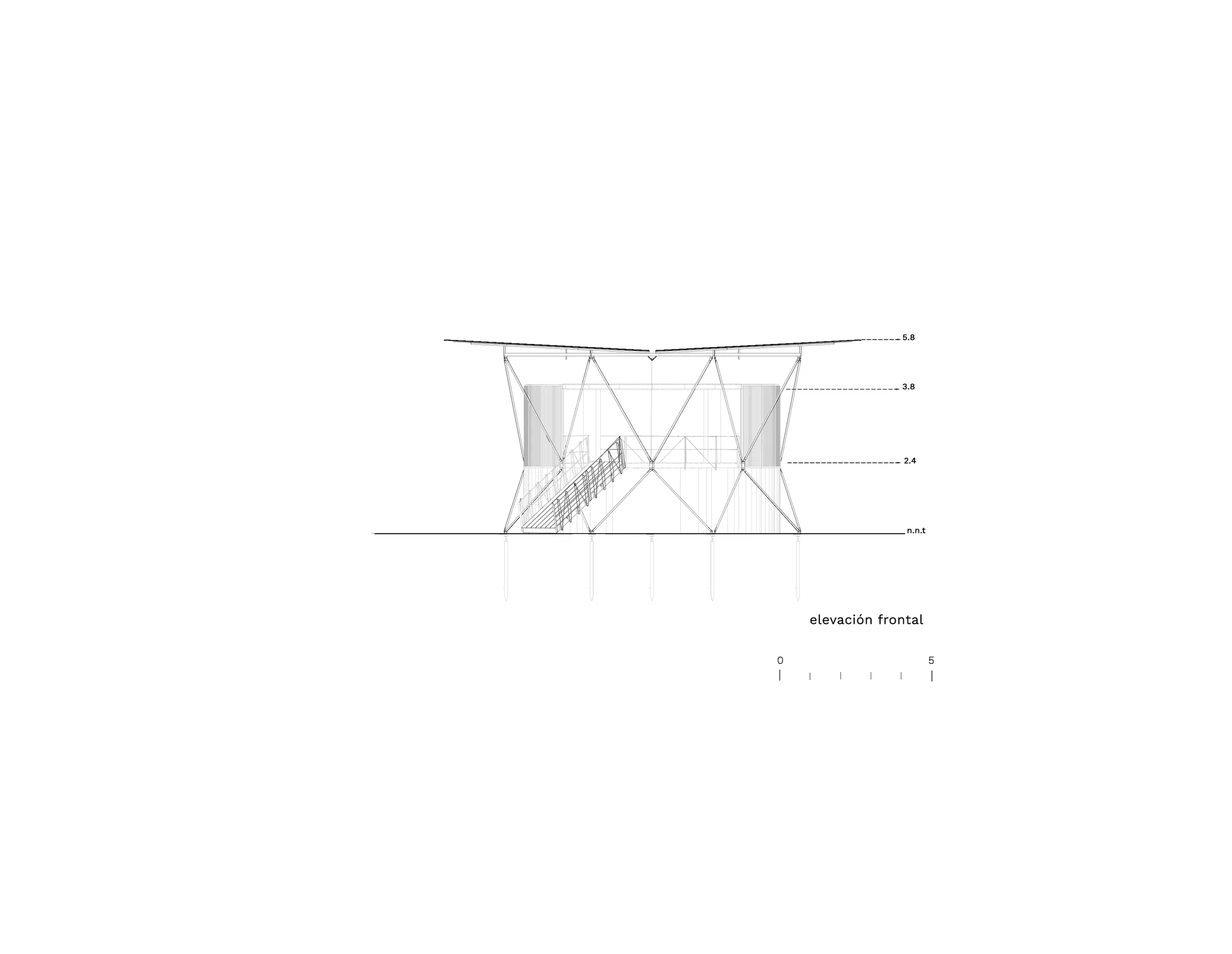
The proposal explores how a precise organization of construction means can expand spatial possibilities and optimize available resources. A lightweight steel and timber structure supports a large roof that is independent of the enclosed spaces it protects. More than a protective element, this roof is conceived as an infrastructure that integrates spatial, environmental, and supply functions: it organizes the whole, provides shade, favors passive ventilation, and allows solar generation systems and water capture by condensation to be incorporated. Its extent allows the usable area to be considerably enlarged and environmental conditions to be improved without proportionally increasing the material resources used. In this way, a single constructive solution multiplies its spatial, environmental, and energy performance.
Using helical screw foundations, the building rests “on tiptoe” on the terrain, minimizing its intervention and allowing it to be dismantled, moved, and reused in new locations.
Designed to operate fully off-grid, without connection to conventional networks, it incorporates solar energy generation, water collection and storage, and a greywater treatment system for infiltration into the ground.
Its modular constructive logic, based on industrialized components and reversible connections, facilitates transport to remote sites, dry assembly, and reconfiguration of the whole. Thus, resource efficiency is not an added condition but a principle that shapes the architecture from its conception.