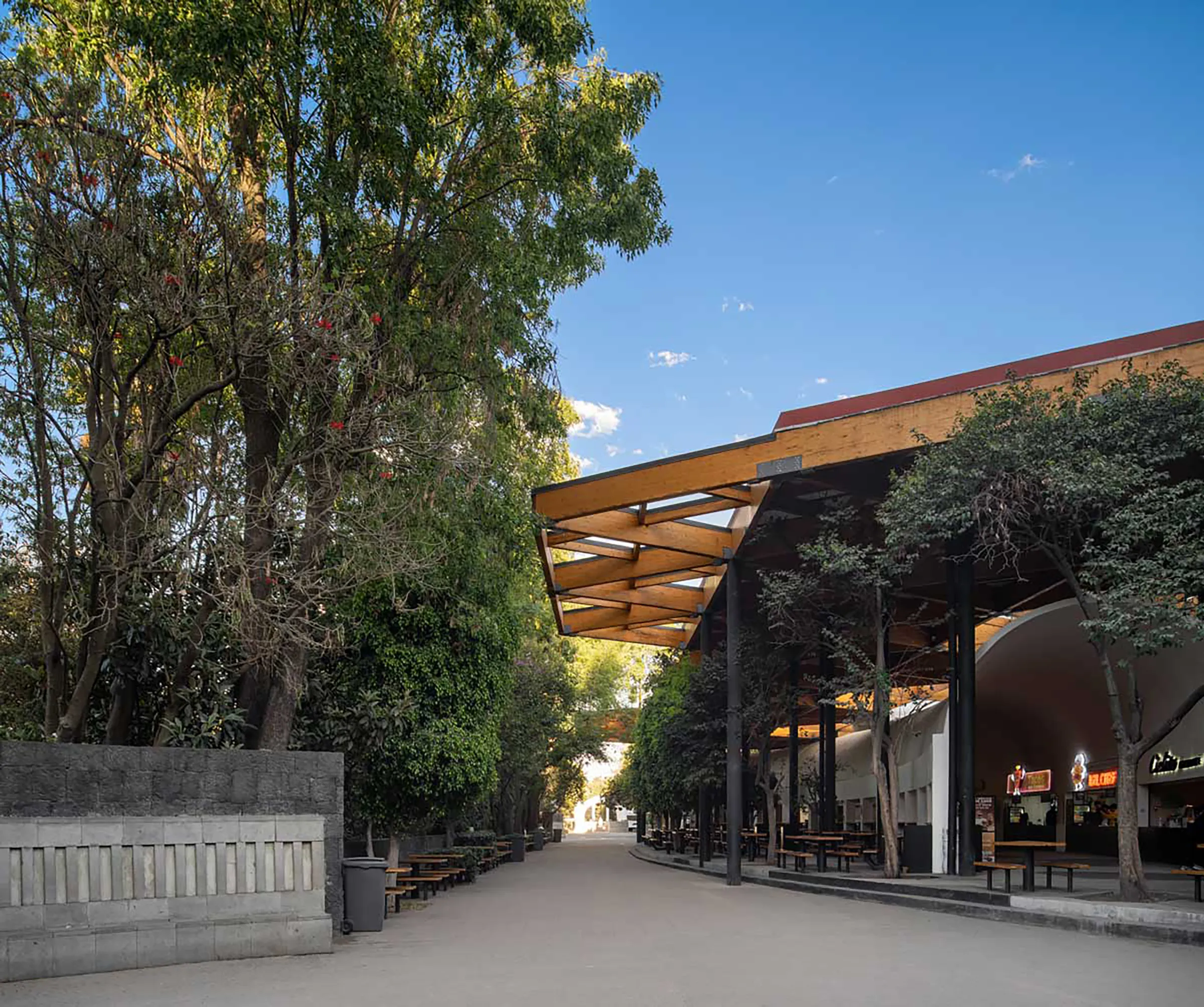
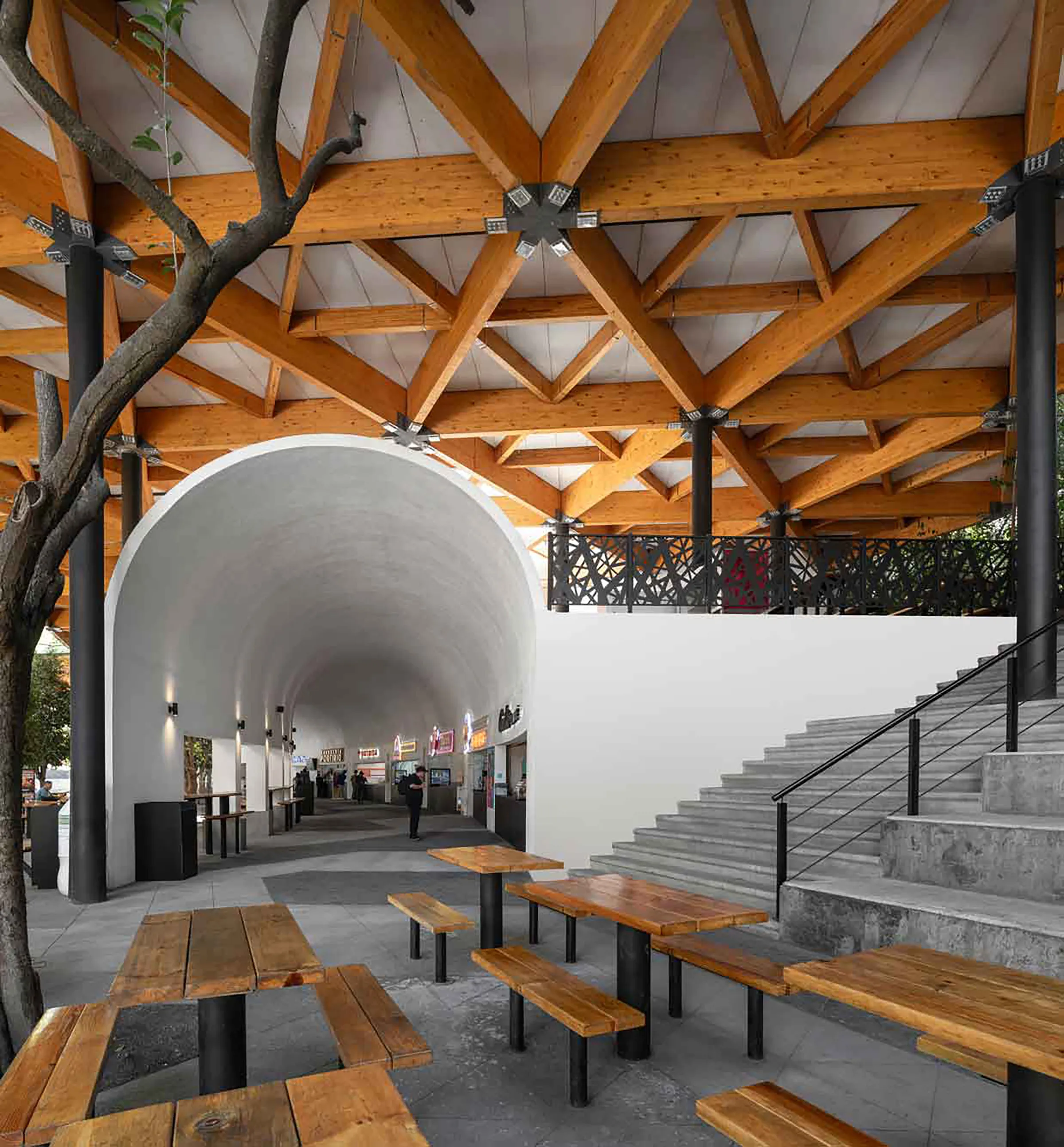
This project conceptualizes the rehabilitation of the space in direct connection with its natural context. The rehabilitation was approached as an opportunity to redeem and redefine the food area of Chapultepec Zoo. Each piece is linked by maximizing the constructive and structural value of new materiality, converging in its integration as an iconic point where people who transit, live, and coexist in the zoo always find equilibrium between social recreation and environmental respect in comfortable, modern spaces.
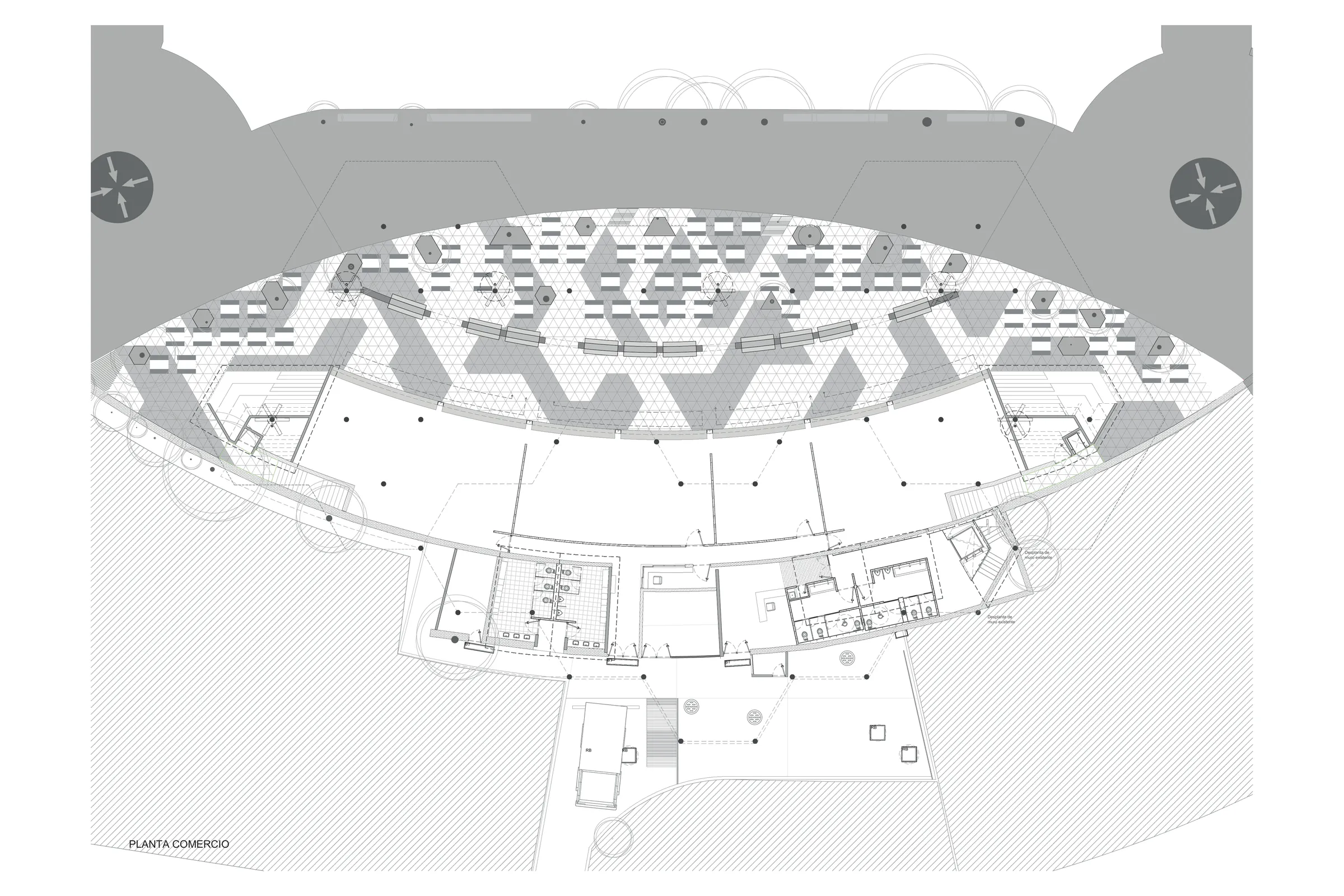
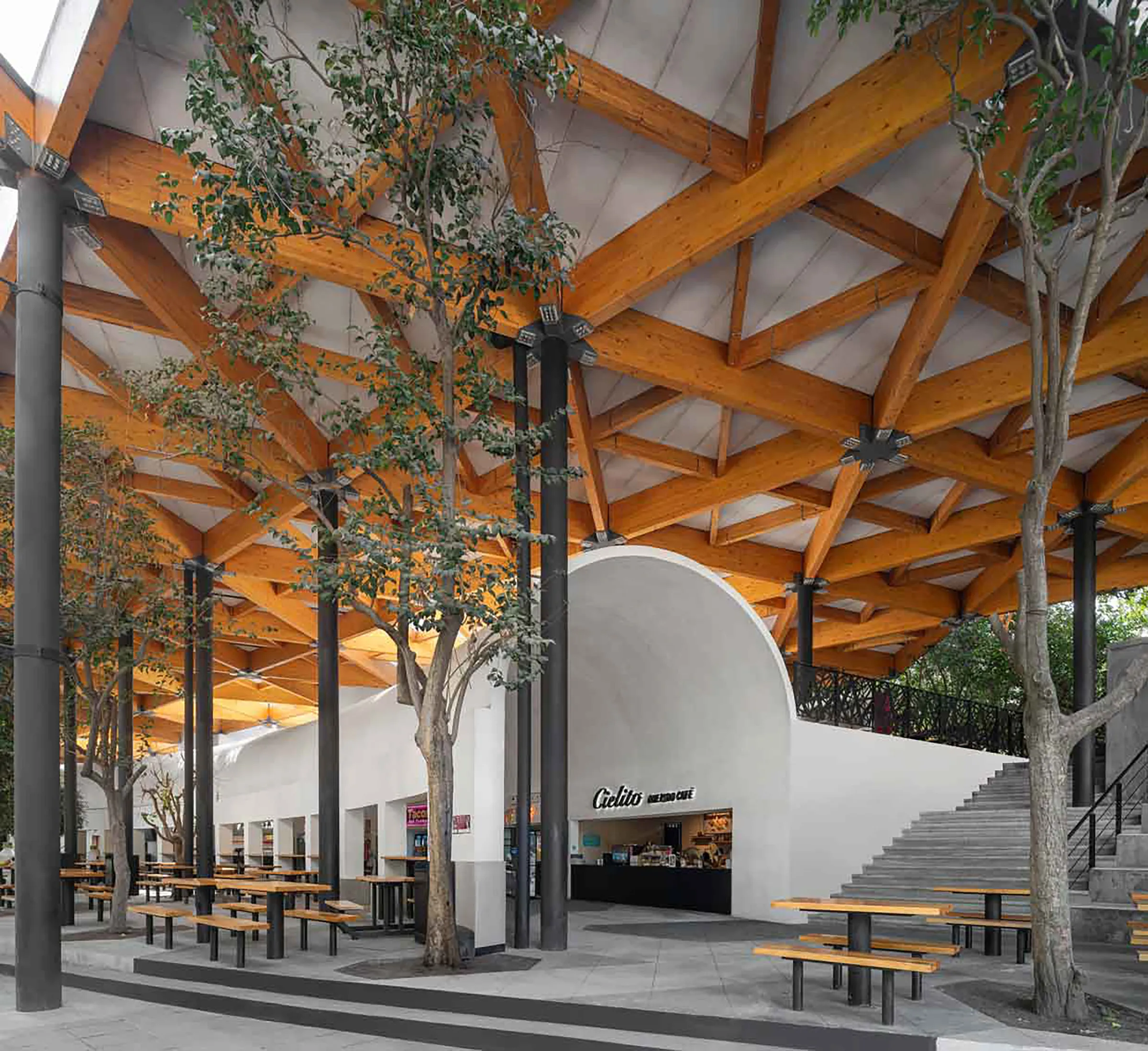
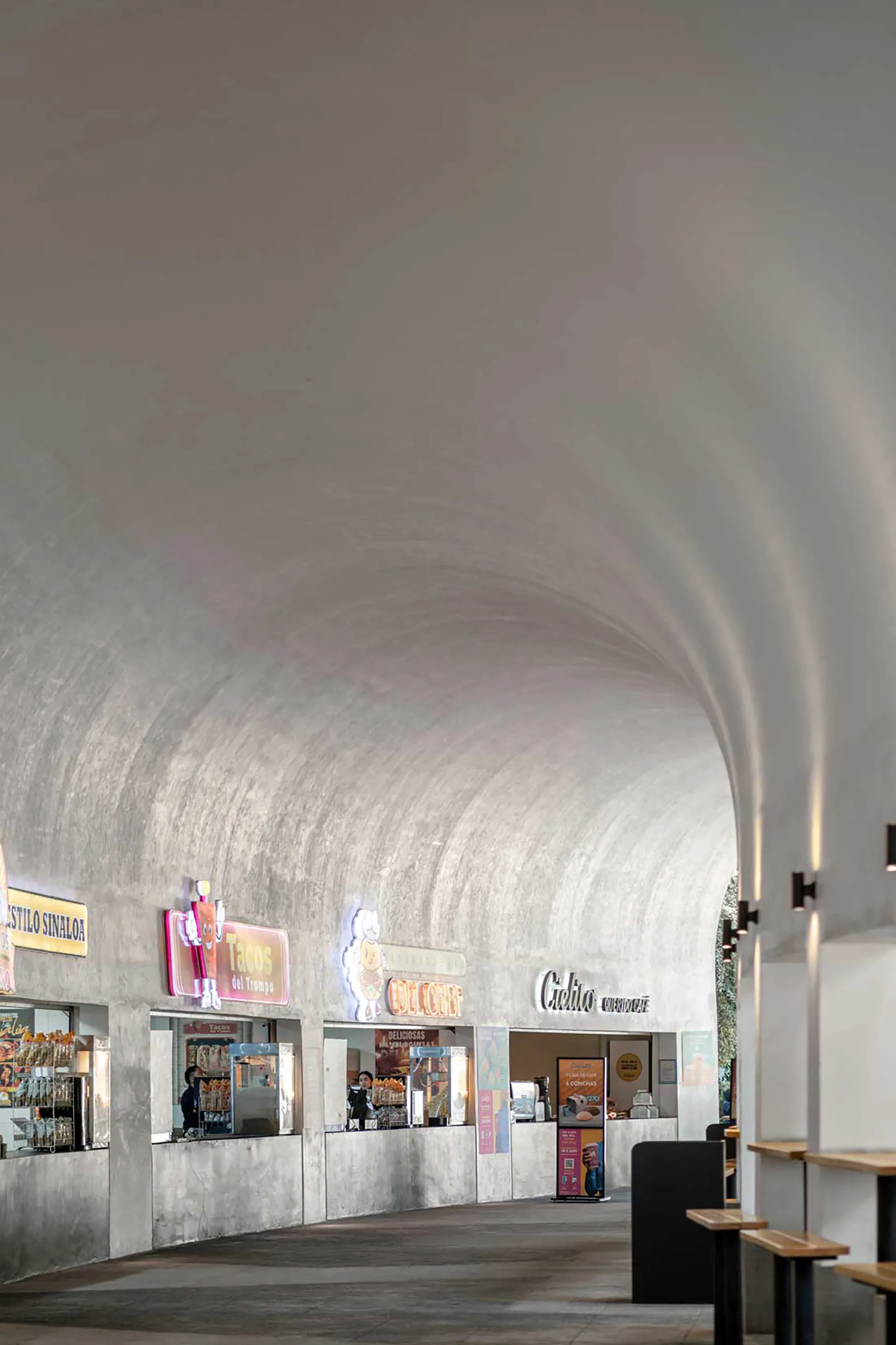
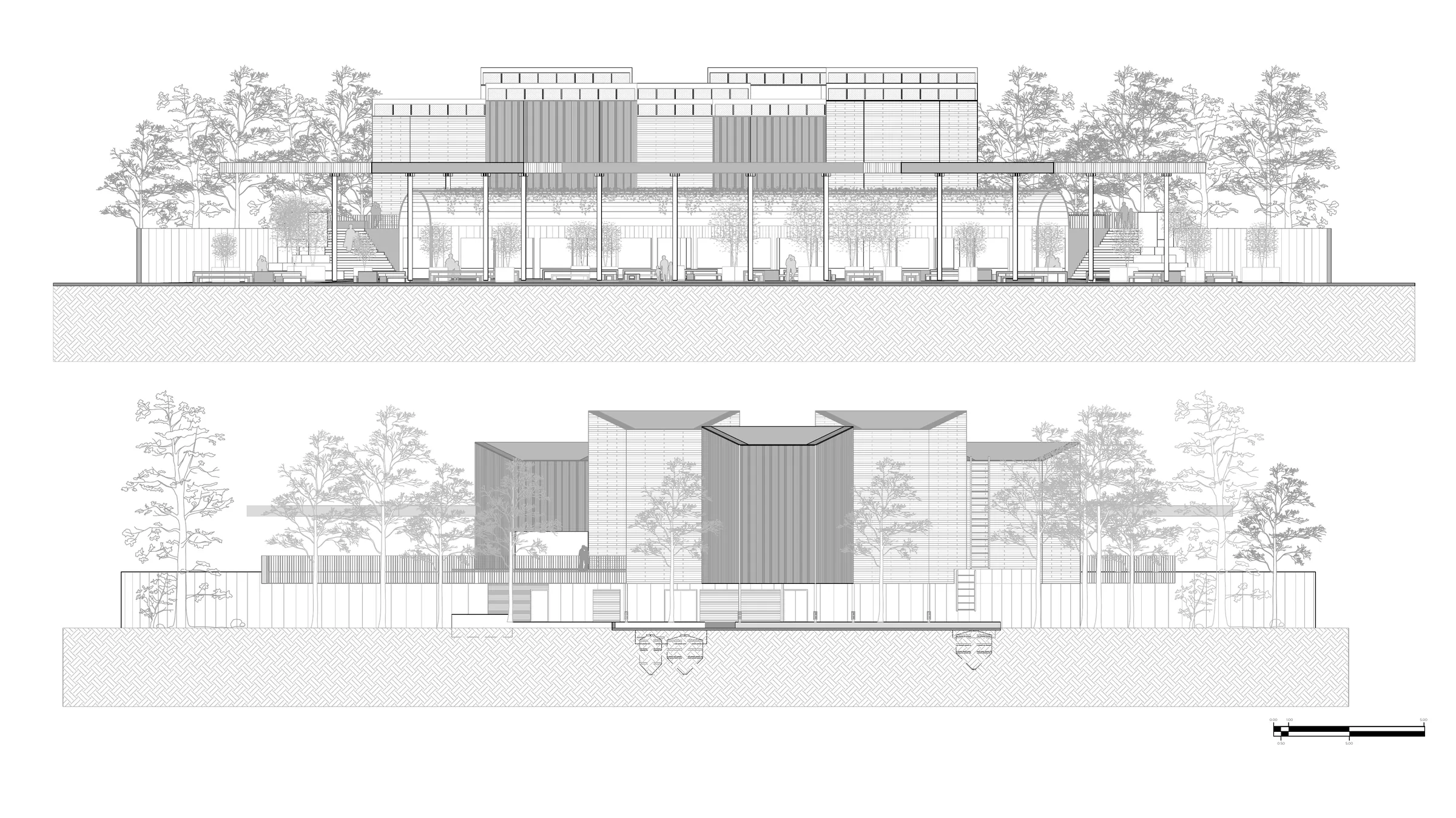
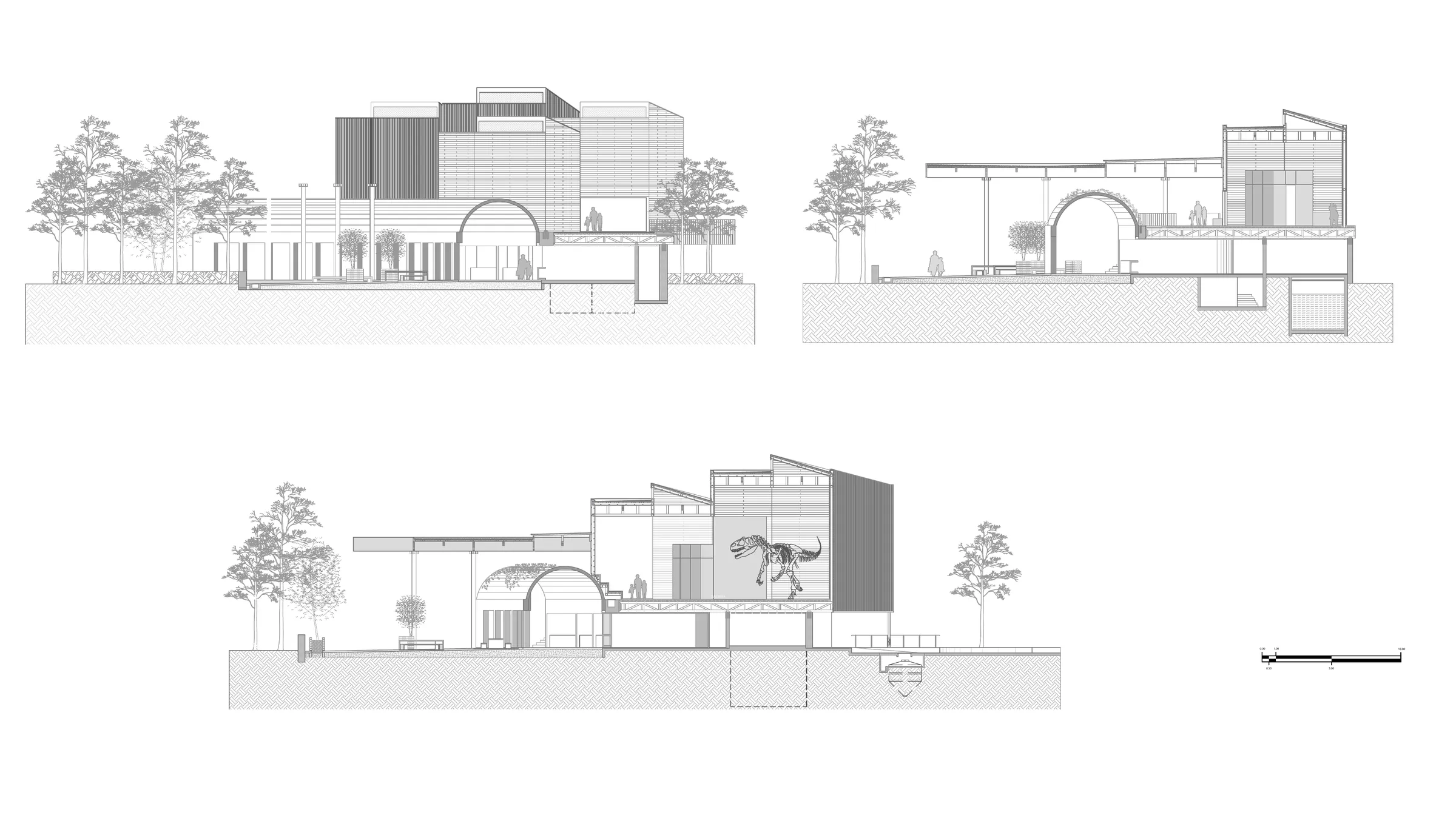
The project comprises a mixed-use building: on the ground floor, a new esplanade for diners is created alongside a food preparation corridor with complementary services and gallery. This enables a more casual transition between the preparation zone and dining area, inviting people to gather, socialize, and appropriate the common space without spatial barriers.
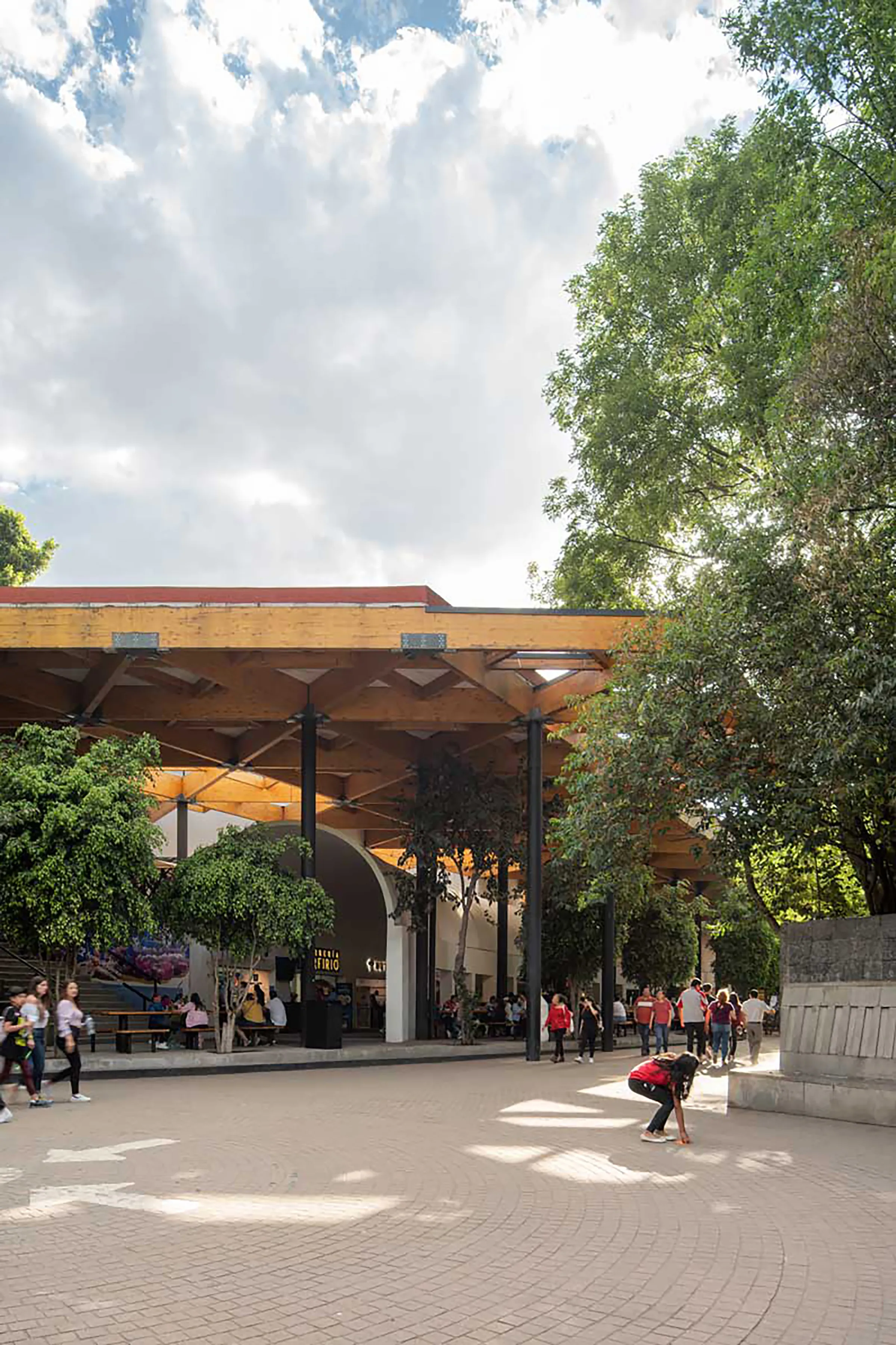
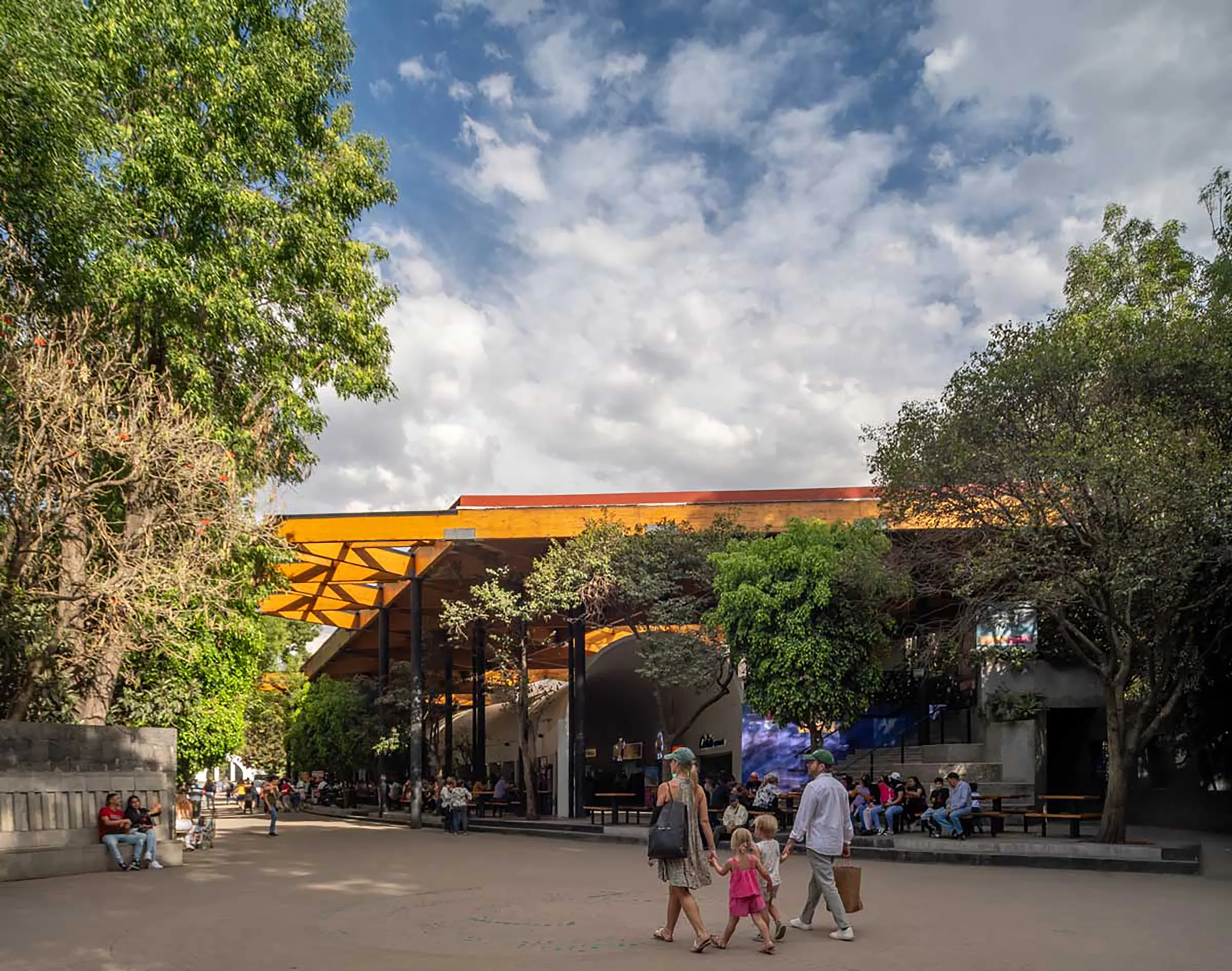
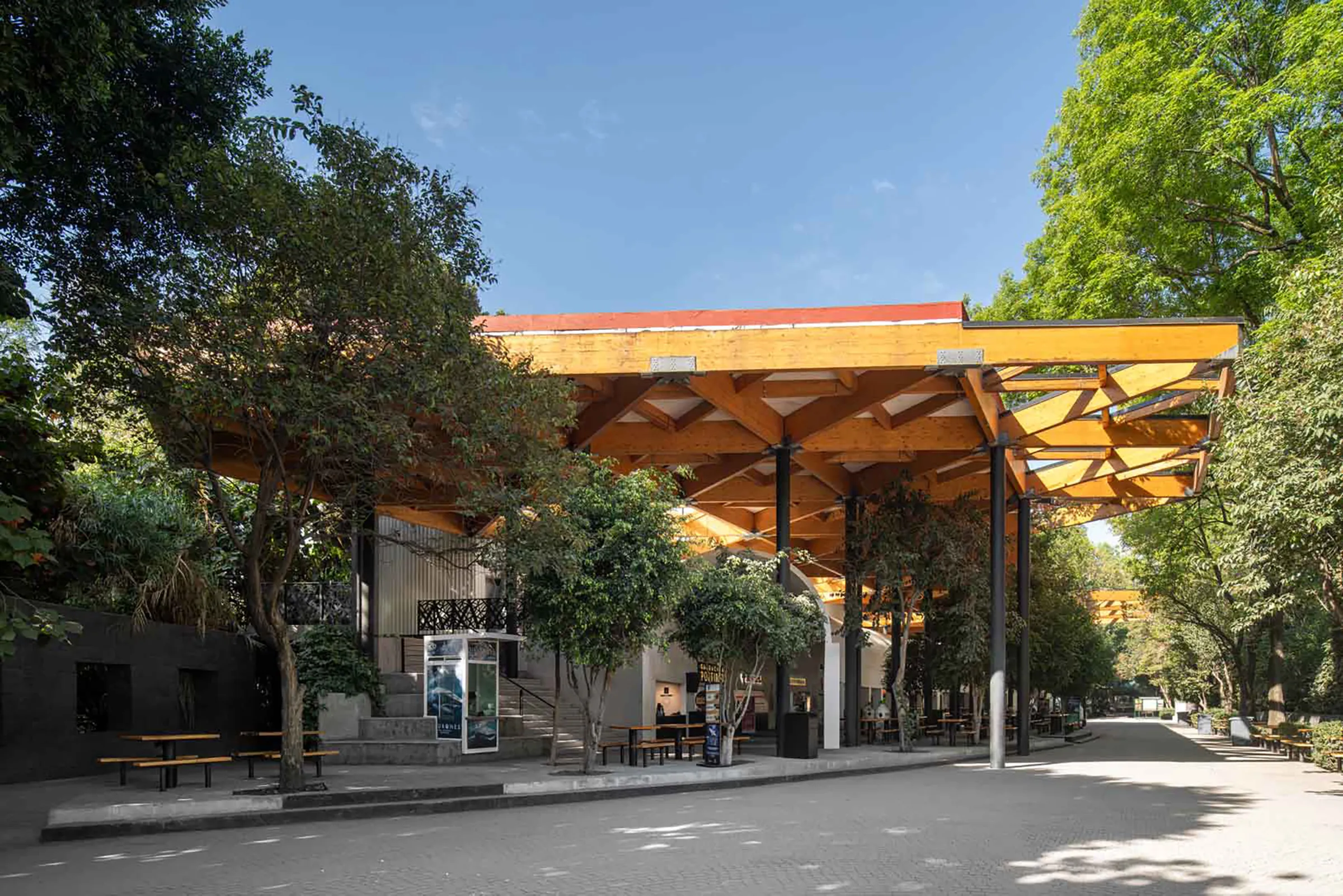
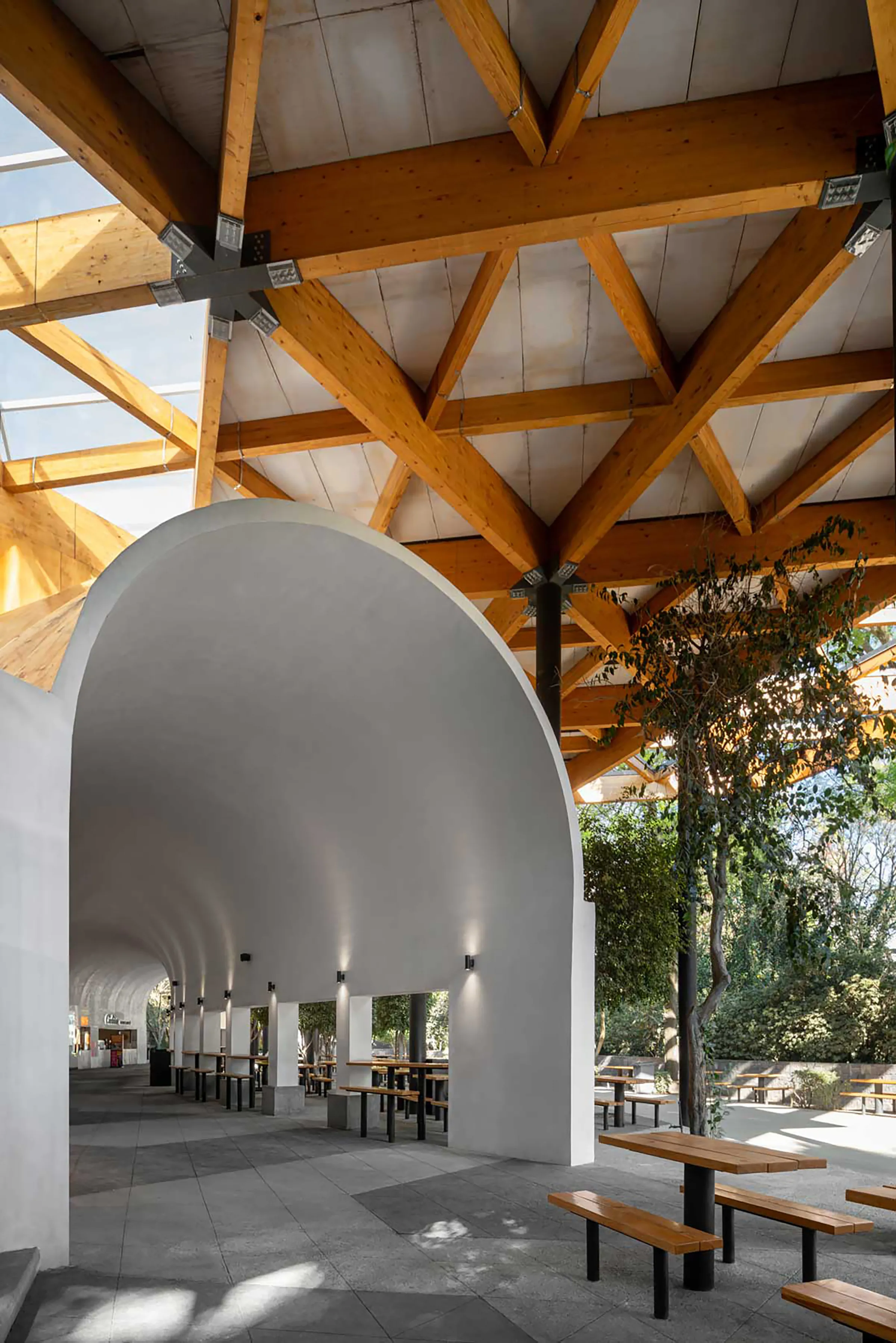
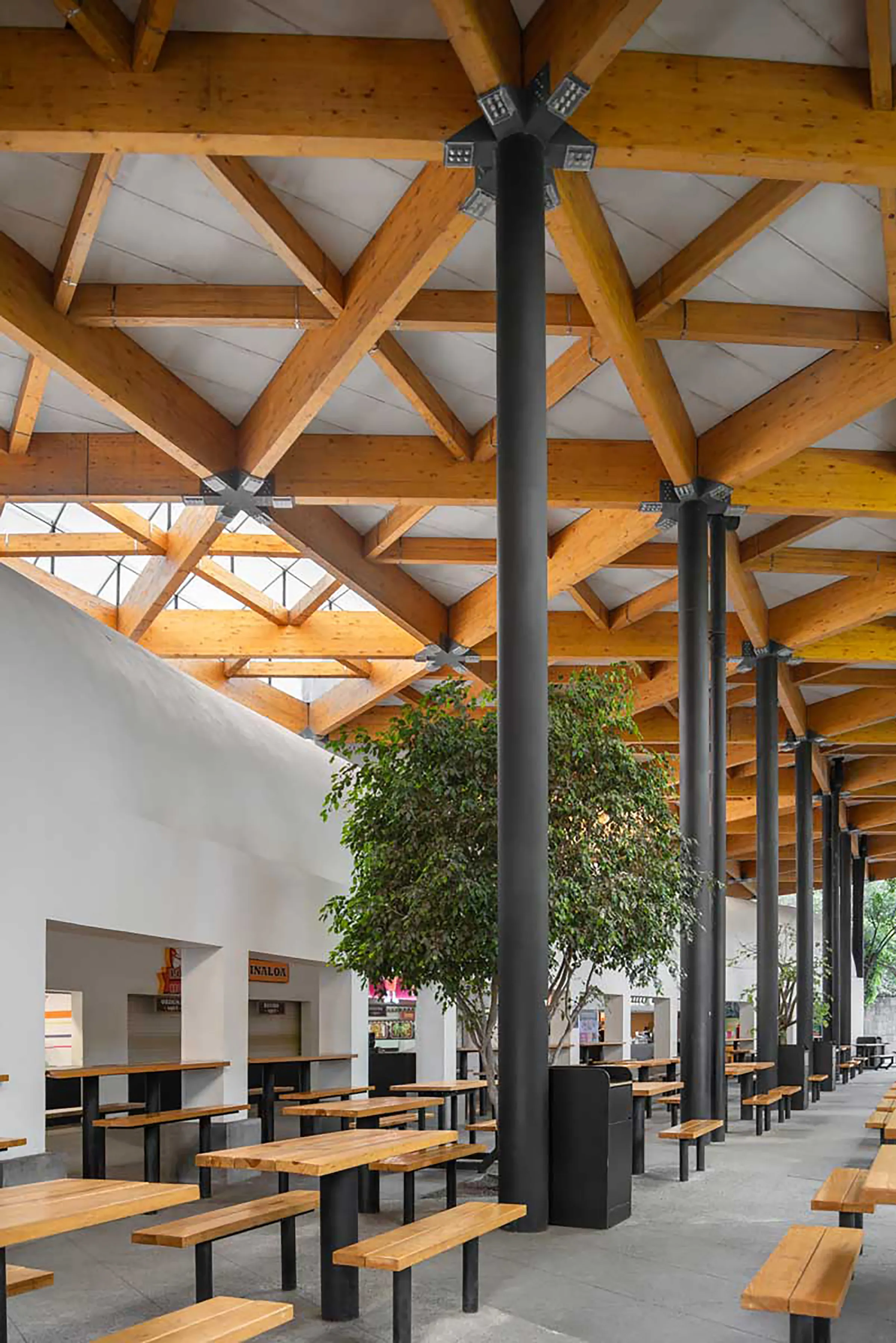
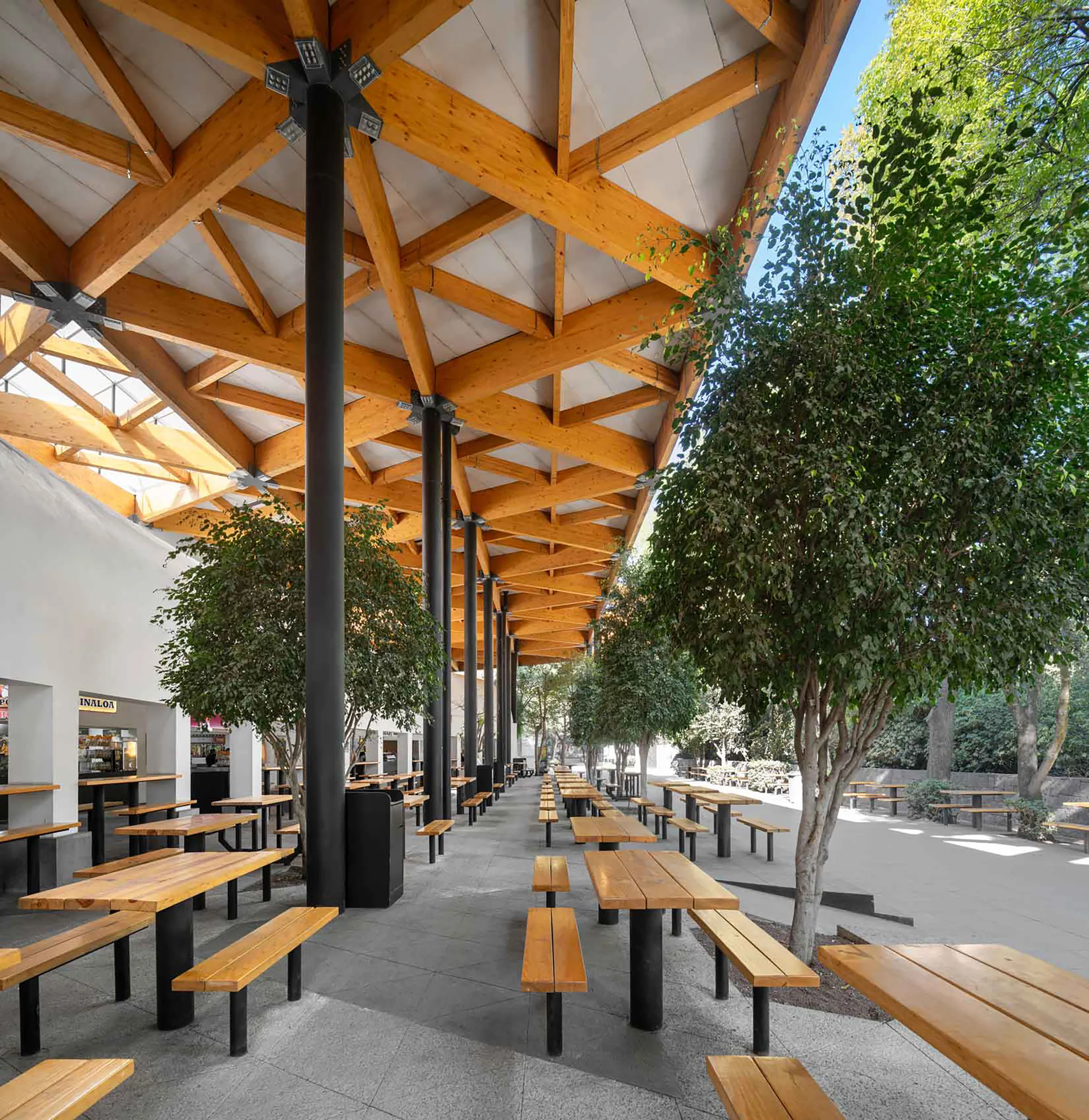
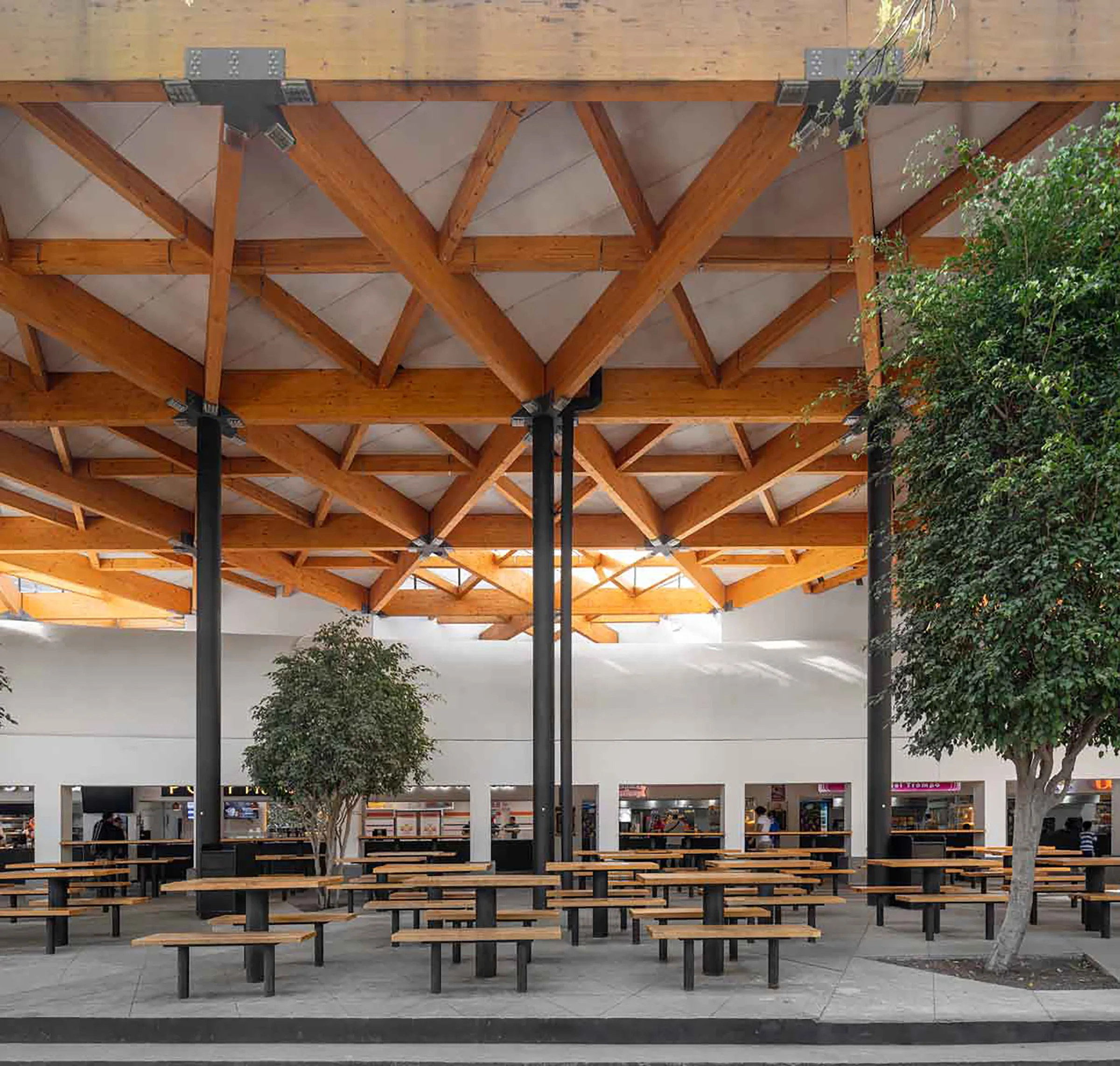
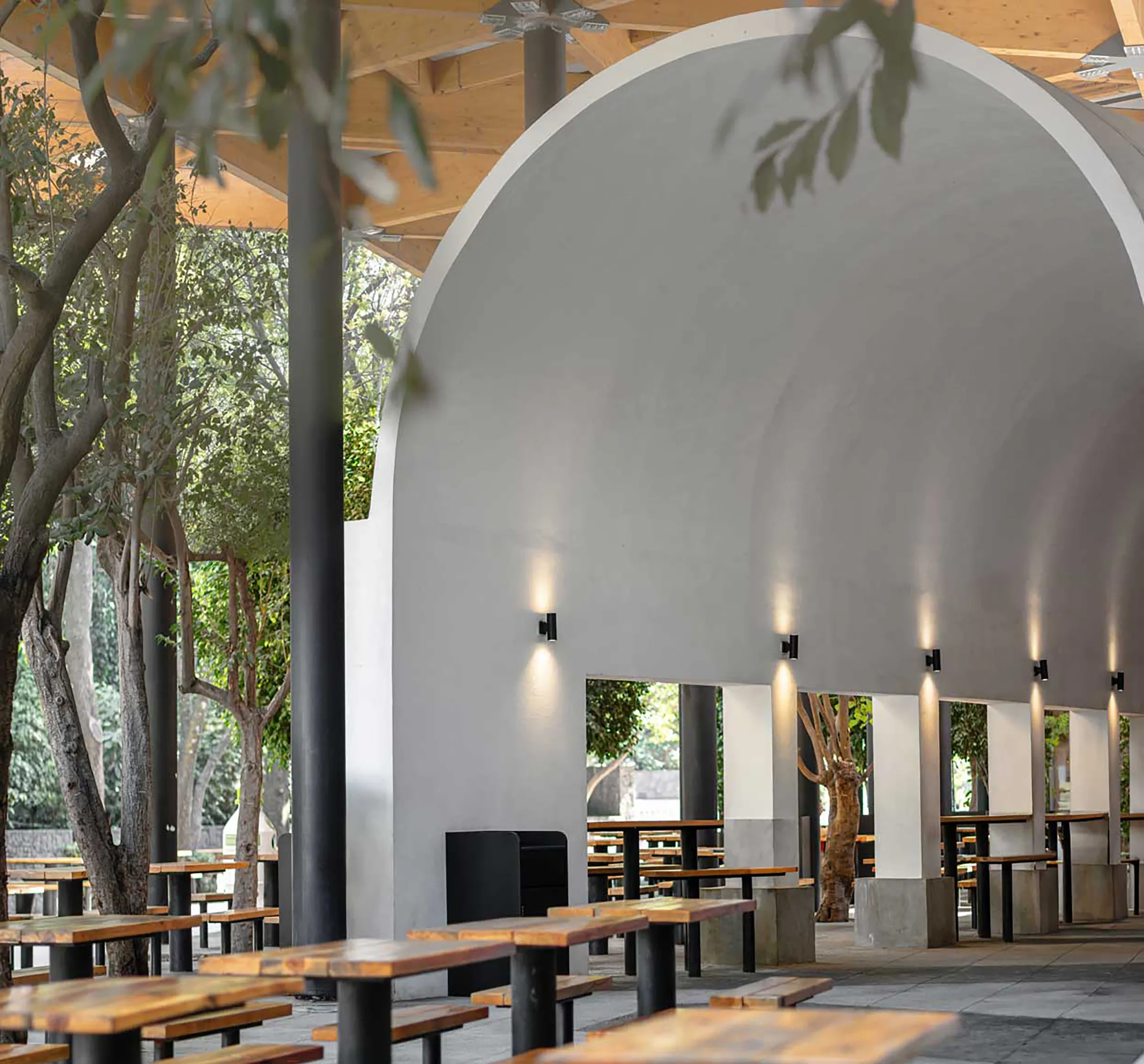
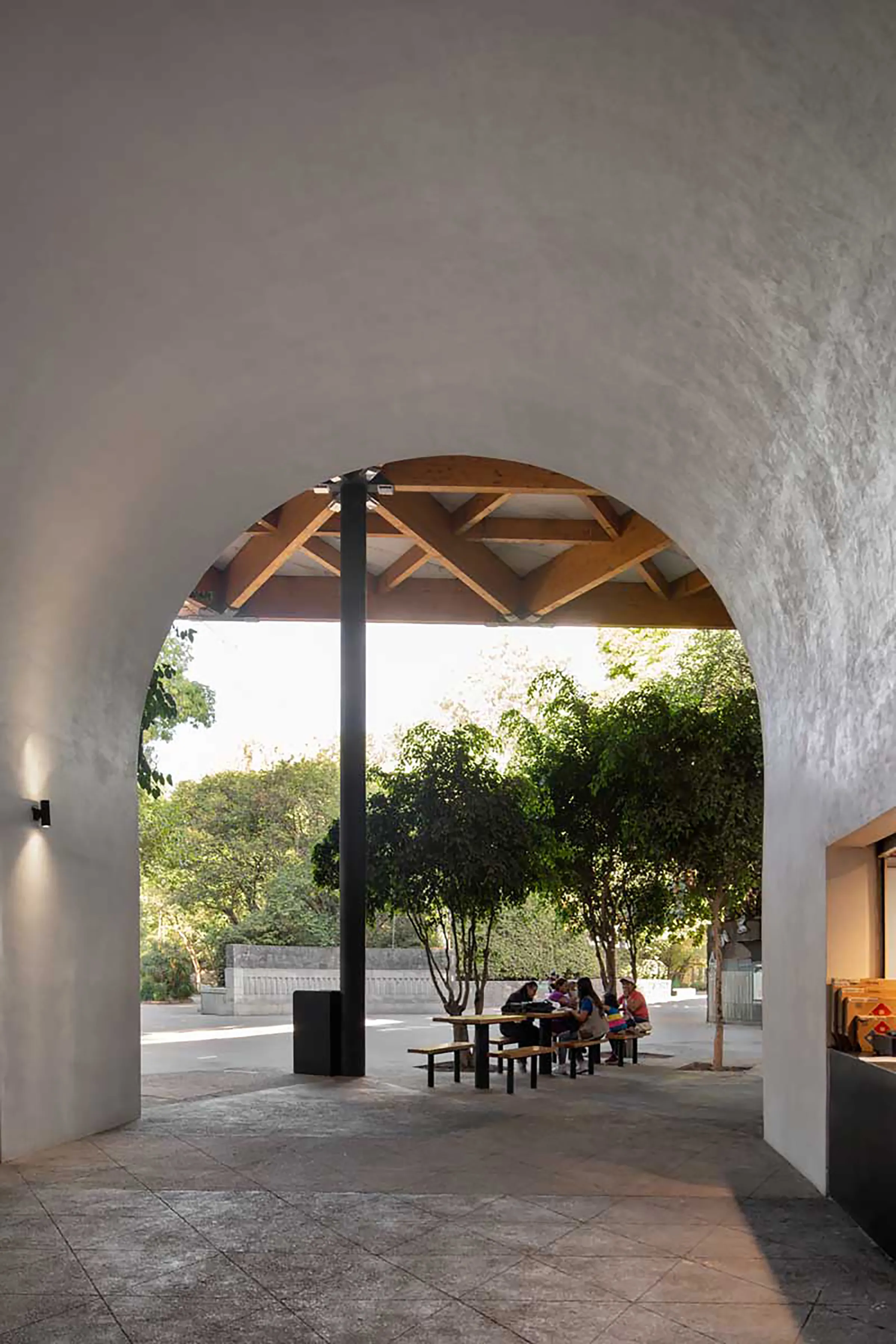
On the upper floor, an open gallery with terraces and permeable elements offers unobstructed views, a sense of continuity between interior and exterior, better natural light and ventilation, and facilitates the recreational use of barrier-free space for curation, exhibition, and appreciation and education of the displays—highlighting its role as an educational space for new generations regarding environmental care and zoo biodiversity. The dining esplanade, as well as gallery access and exit, are sheltered beneath a laminated wood canopy, while the food preparation and services corridor features a vault.
This singular form defines and respects the footprints and paths of diners and visitors, transforming them into consolidated, accessible circulations that connect meeting points and enable access without losing connection to the immediate context and natural surroundings. The vault form creates spacious open areas without intermediate columns, facilitating movement and interaction and fostering a welcoming atmosphere of spaciousness and comfort that triggers connection and interaction among people while they wait for food.
From the outset, the intention was to create a food court that would not be an alien insertion in the zoo or Chapultepec forest, but through its appearance, language, and environmental connection, become part of the place. The choice of laminated wood as the protagonist element stemmed from the need to use a material inherent to the forest.
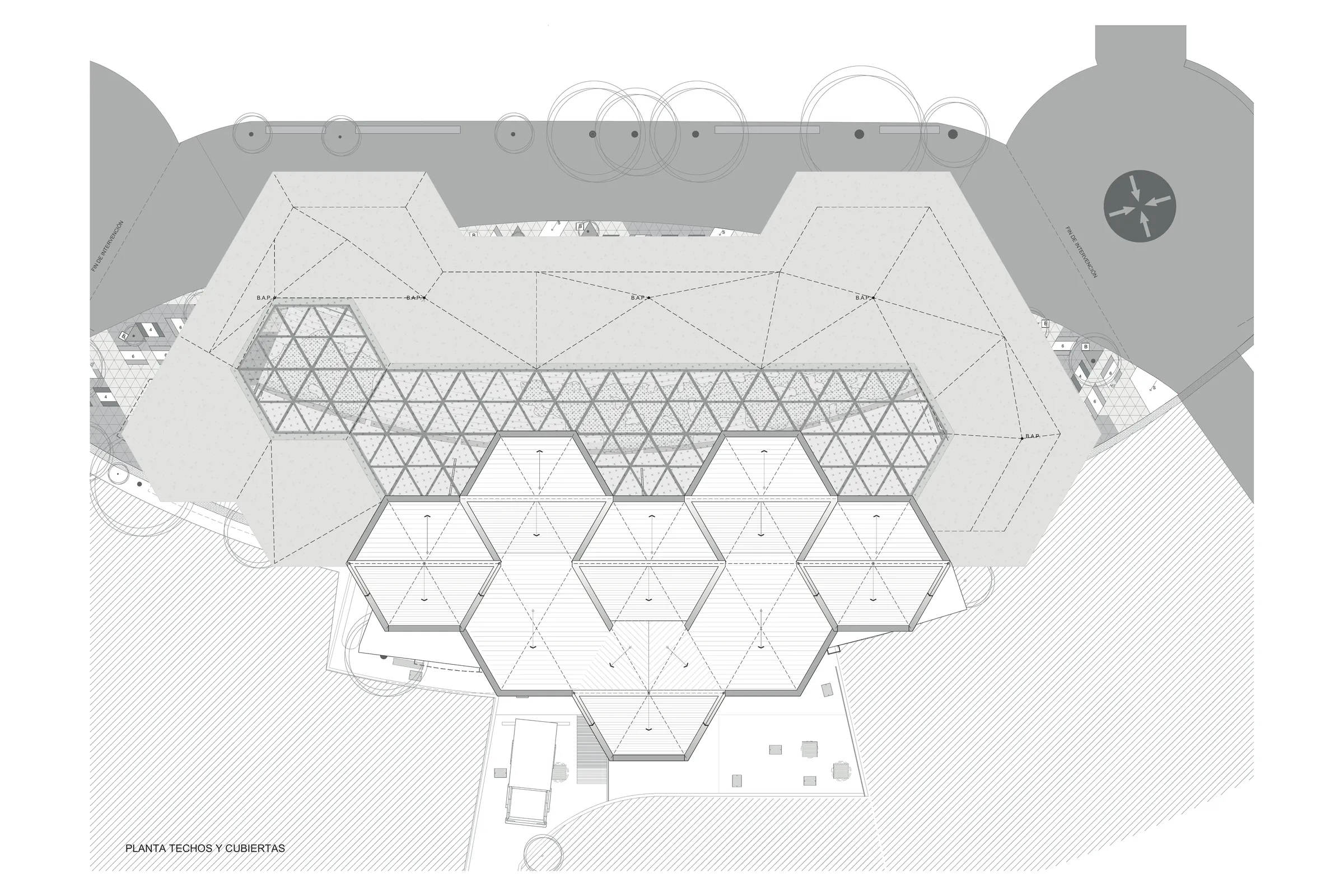
As a common space for socialization, it required an open, shaded place for enjoyment and recreation. The main canopy—composed of a laminated wood roof with a triangular pattern—was designed drawing from the honeycomb structure as a symbolic representation of community, achieved through eating as an act of coexistence, encounter, and gathering among family and friends.
The canopy and honeycomb align in that both possess an organized structure with each geometric piece fitting perfectly with others. This structure reflects how a community can collaborate and inhabit a common space harmoniously and efficiently.
Thus, through a hybrid construction system, an innovative, environmentally responsible, and functional appearance is reinvented, clearly manifesting the intention to generate common spaces for enjoyment and recreation.