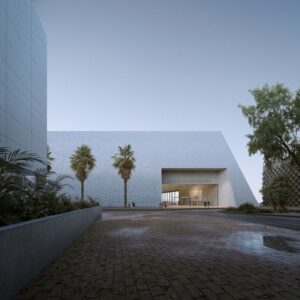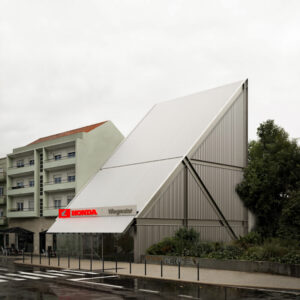
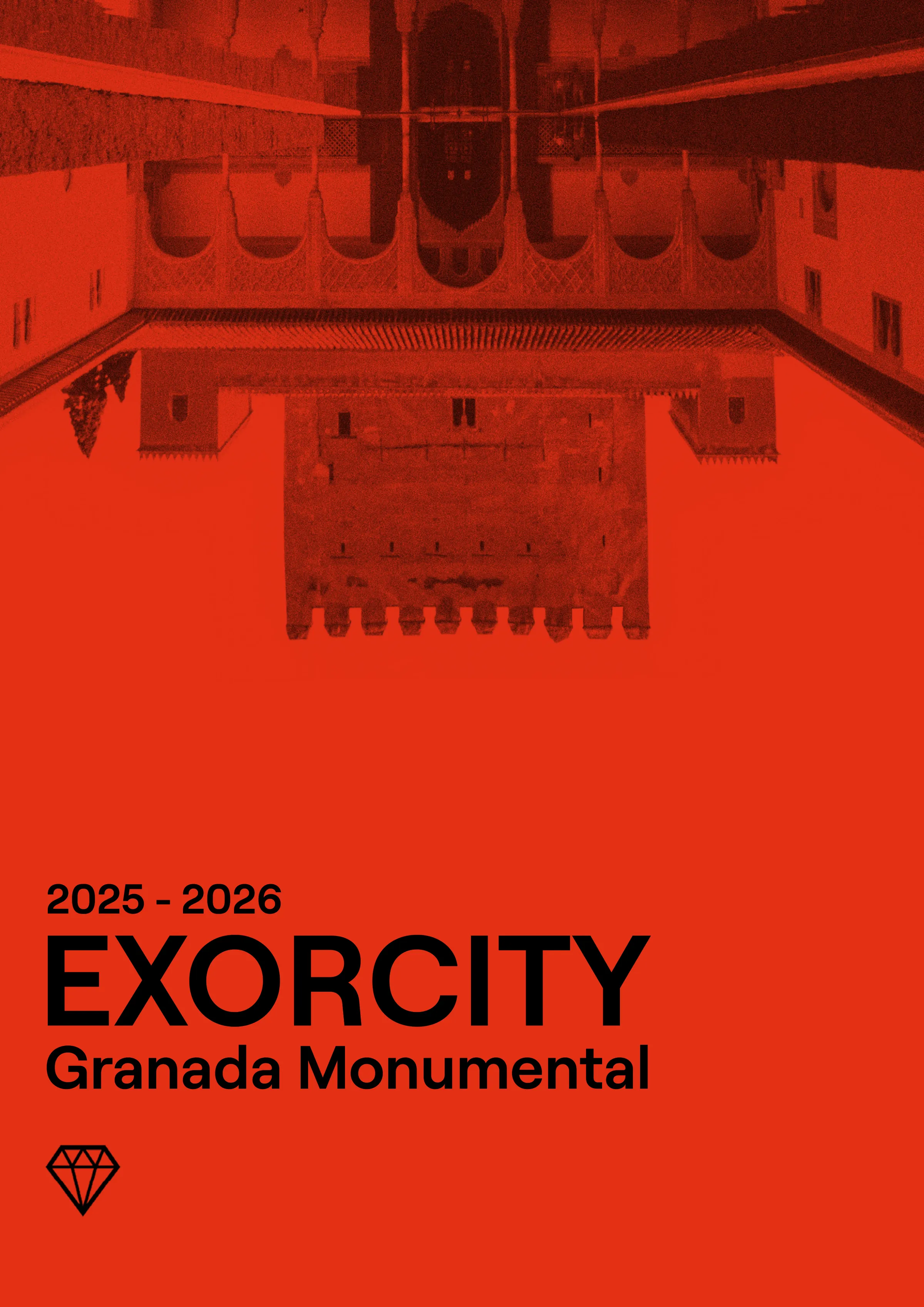
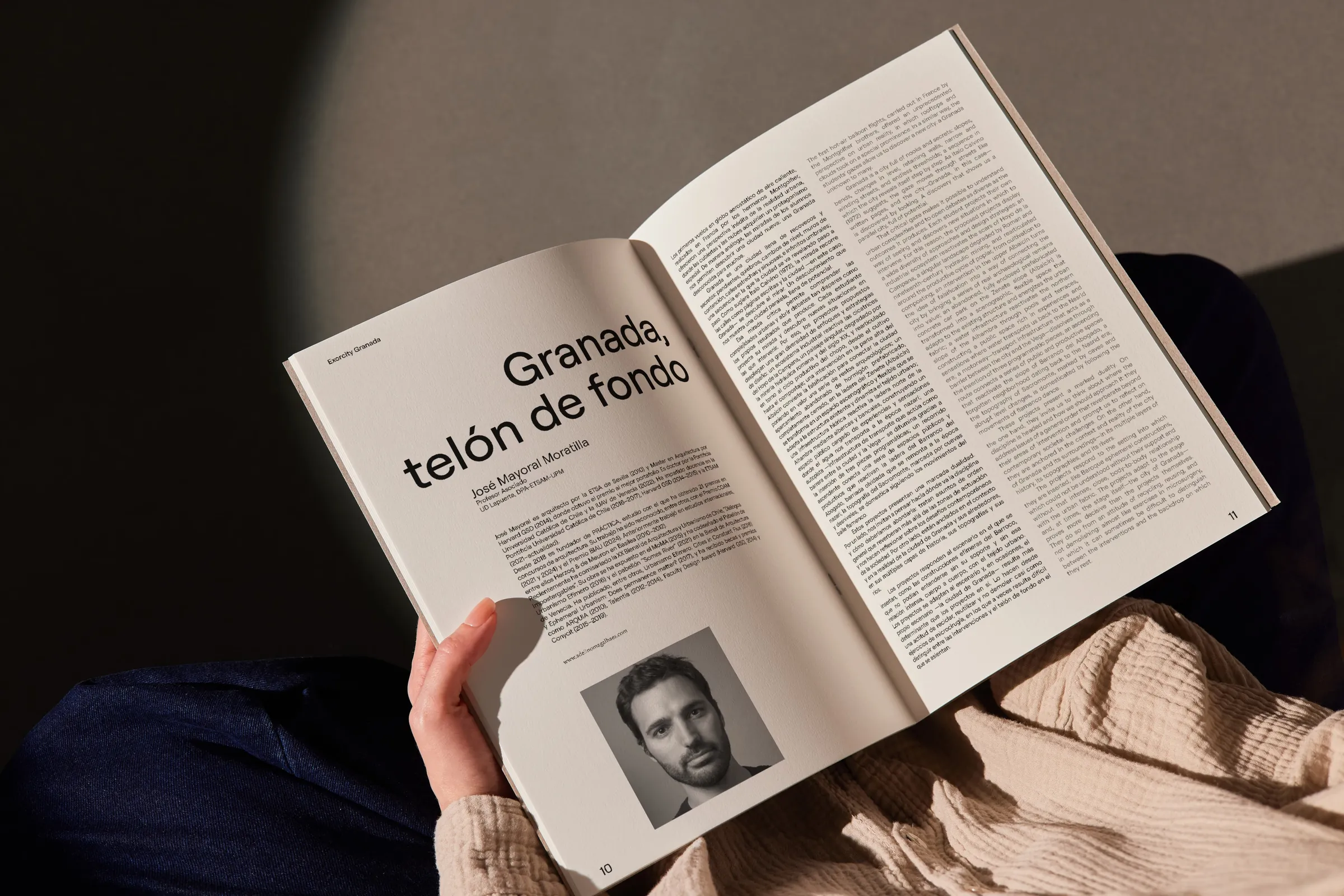
Exorcity Granada is a collective volume that explores the potential of architectural design as a critical tool for intervening in historic cities. Continuing a line of research developed by unit Lapuerta at the Madrid School of Architecture (ETSAM) over more than a decade in cities such as Madrid, Porto, and Lisbon, the book positions Granada as a laboratory from which to rethink the relationships between heritage, landscape, infrastructure, and contemporaneity.
The term EXORCITY, derived from the Greek exorkismos, meaning “to be under oath”, refers to an idea of disciplinary commitment: an architecture capable of identifying conflicts, questioning urban inertia, and proposing new ways of inhabiting and transforming the city.
The book brings together a selection of Master’s Thesis projects developed by students from the ETSAM with the asisstance of professors José María de Lapuerta, Adelino Magalhaes and José Mayoral. The projects are the result of an academic and research process focused on the city of Granada and its surrounding territories.
In contrast to academic models based on homogeneous programs or standardized solutions, each student develops a personal reading of the city and engages with real issues related to heritage, ecology, infrastructure, memory, and productive landscapes. This diversity of approaches turns the book into an atlas of design research that deliberately expands the traditional boundaries of architecture toward environmental, social, and cultural fields.
Granada emerges here as a city of hidden paths, complex topographies, and overlapping historical layers, where water, gardens, and productive landscapes act as guiding threads. From this critical reading, the projects deploy strategies ranging from the ecological recovery of mining-degraded landscapes to the cultural reactivation of abandoned infrastructures, the contemporary reinterpretation of Nasrid hydraulic systems, and the transformation of forgotten urban spaces. Rather than producing isolated objects, the proposals operate through precise and minimal interventions, almost acts of microsurgery, based on recycling, reusing, and avoiding demolition.
The result is a collective reflection on the contemporary role of architecture and on how to intervene in heritage contexts through a critical, sensitive, and deeply site- specific approach.
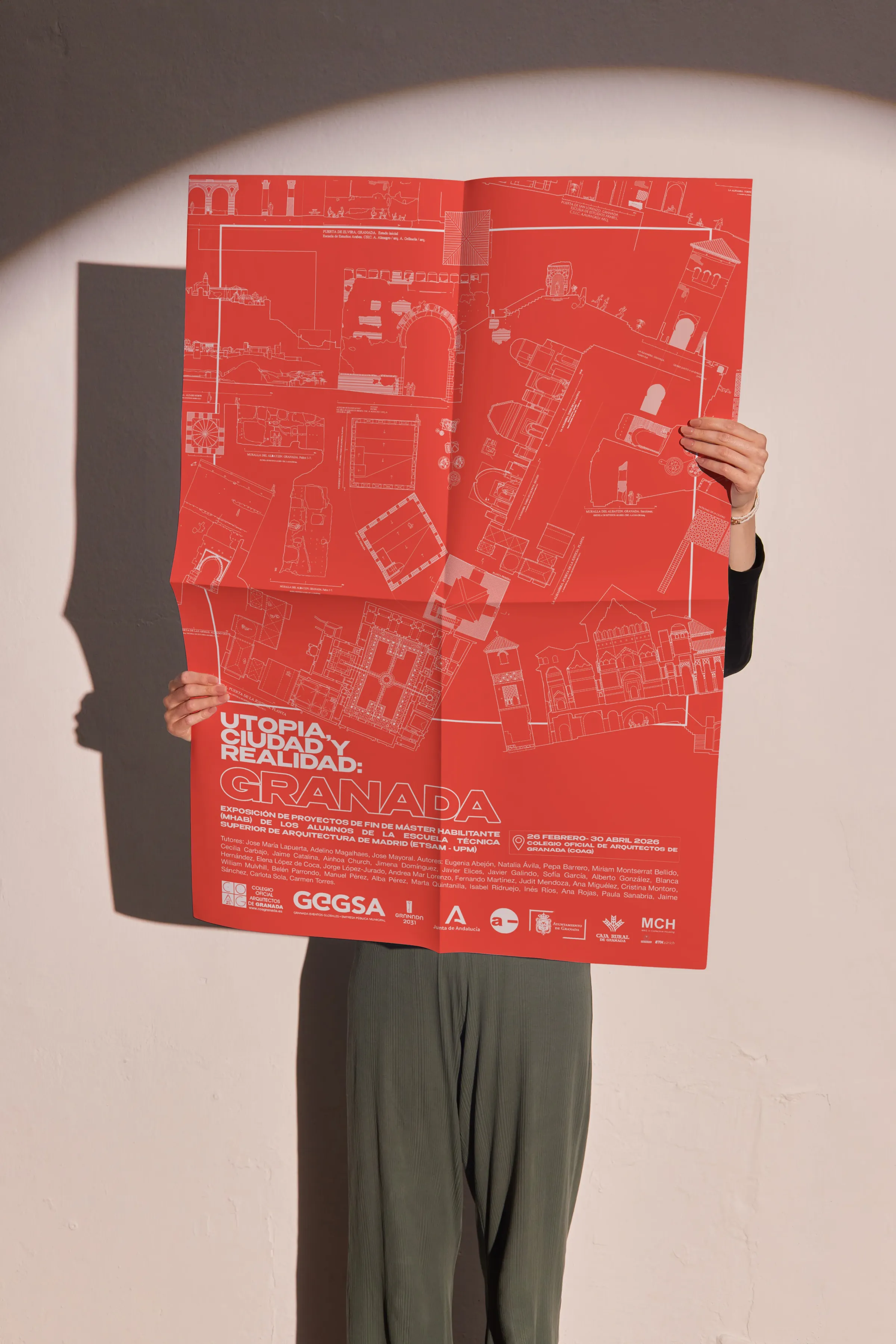
THE PROPOSALS:
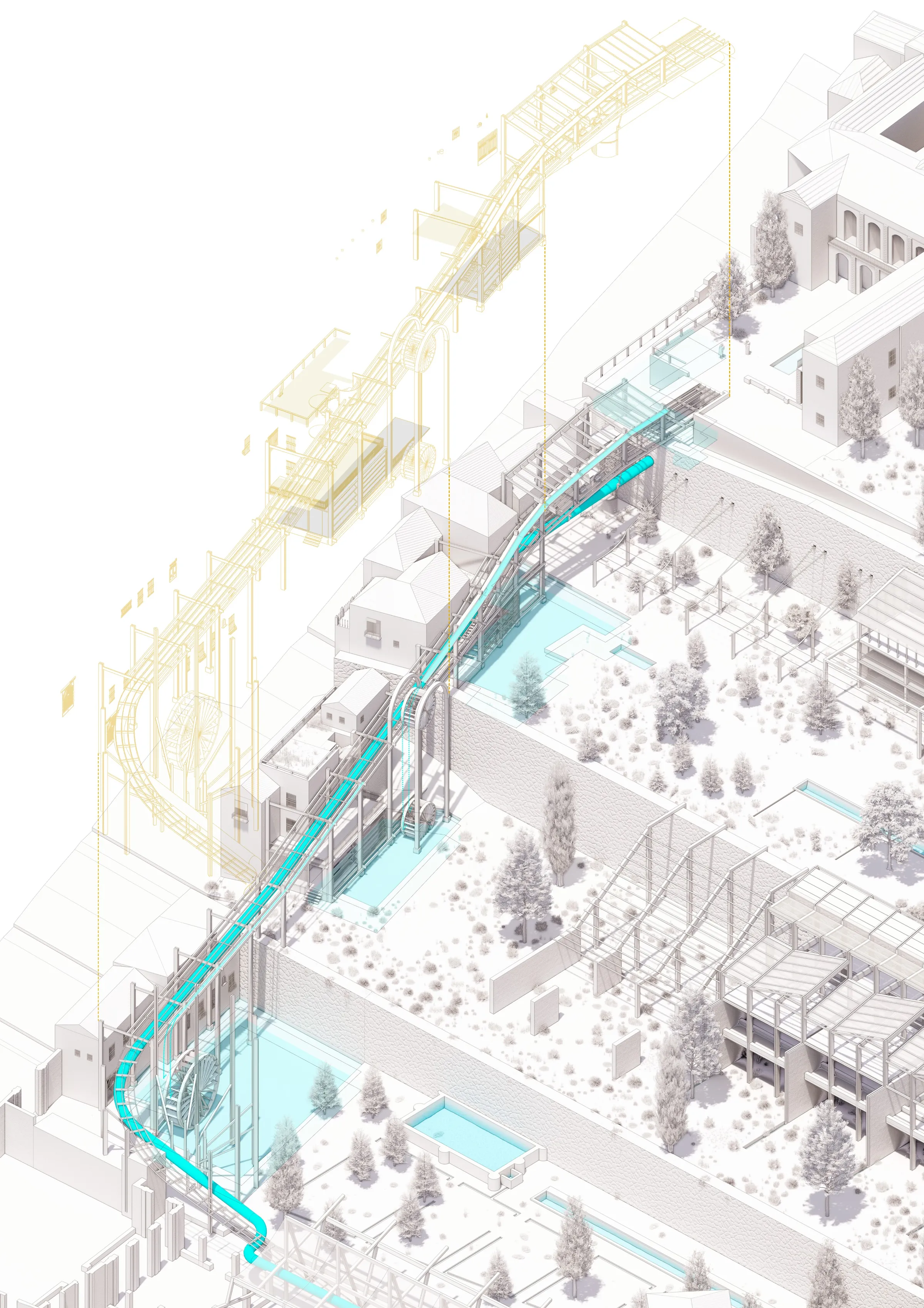
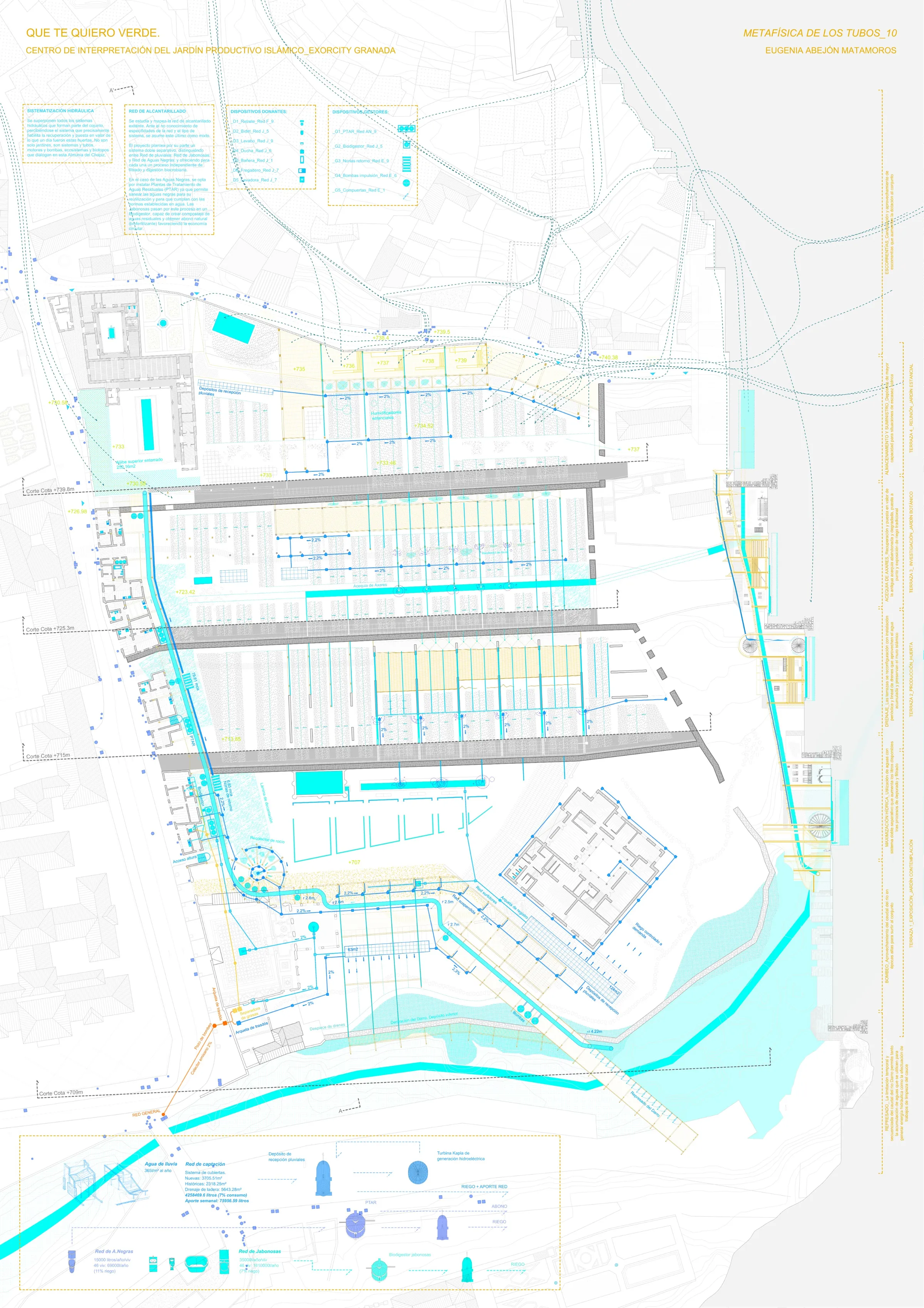
Eugenia Abejón Matamoros
Que te quiero verde
Islamic Productive Garden Interpretation Center
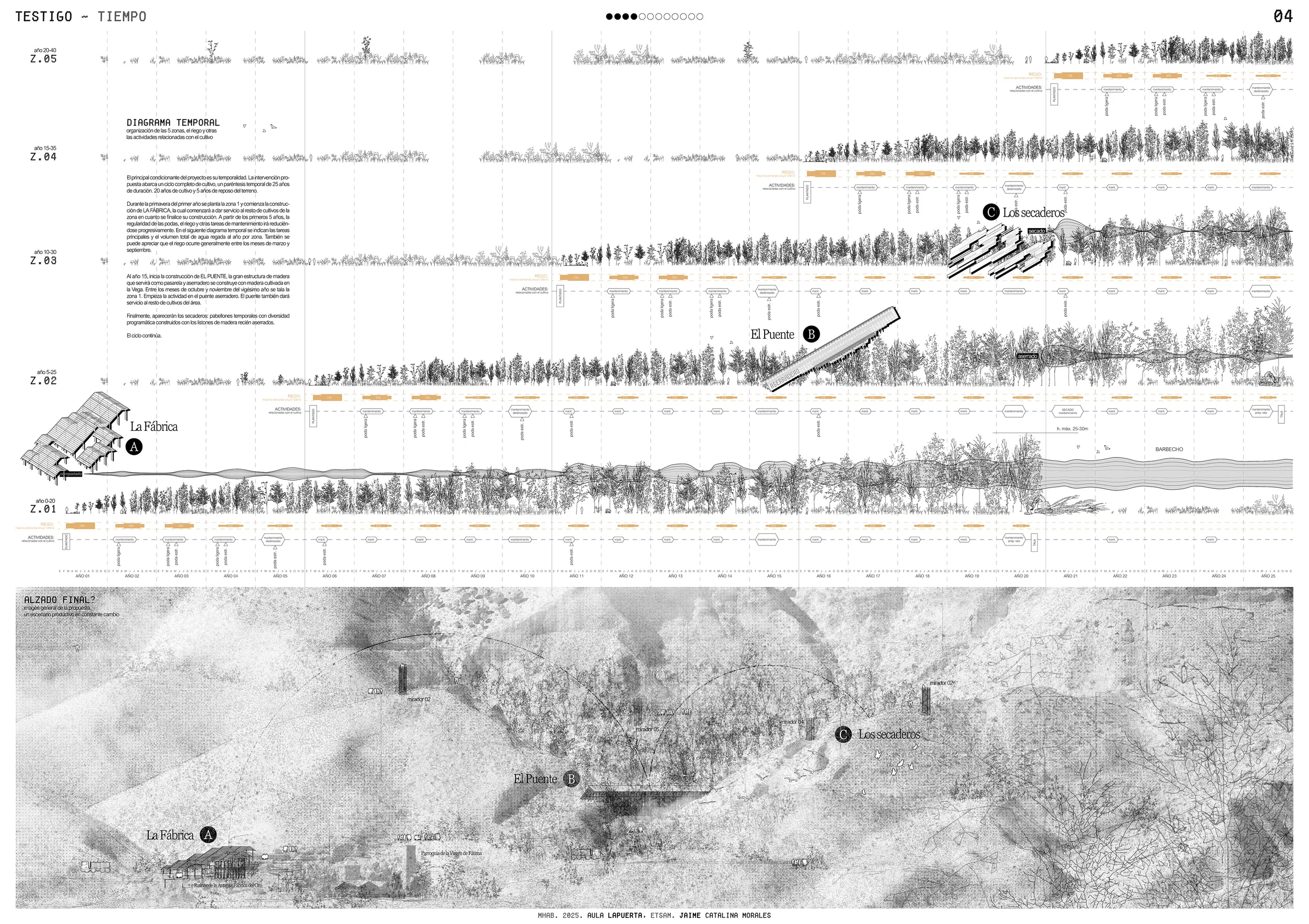
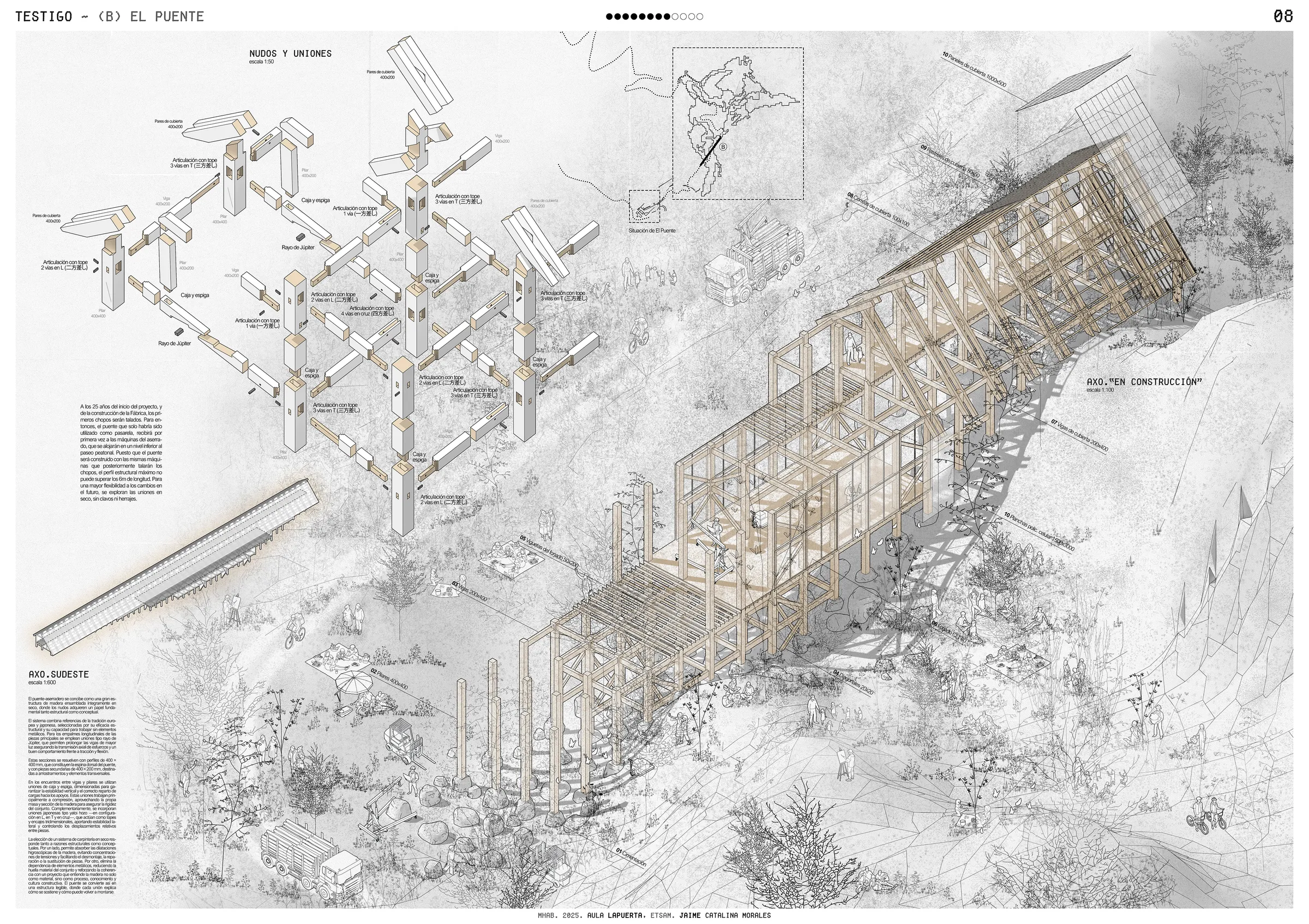
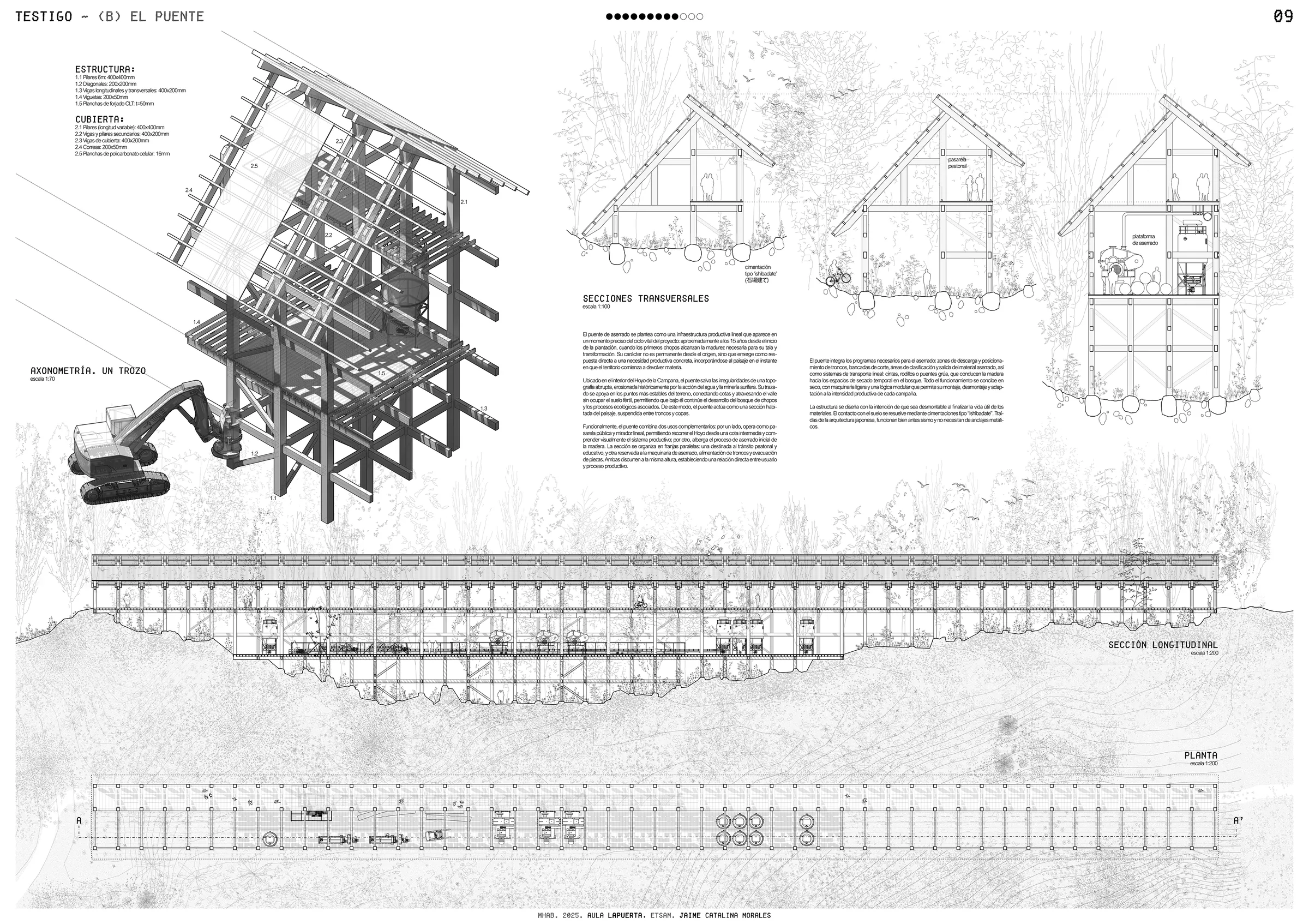
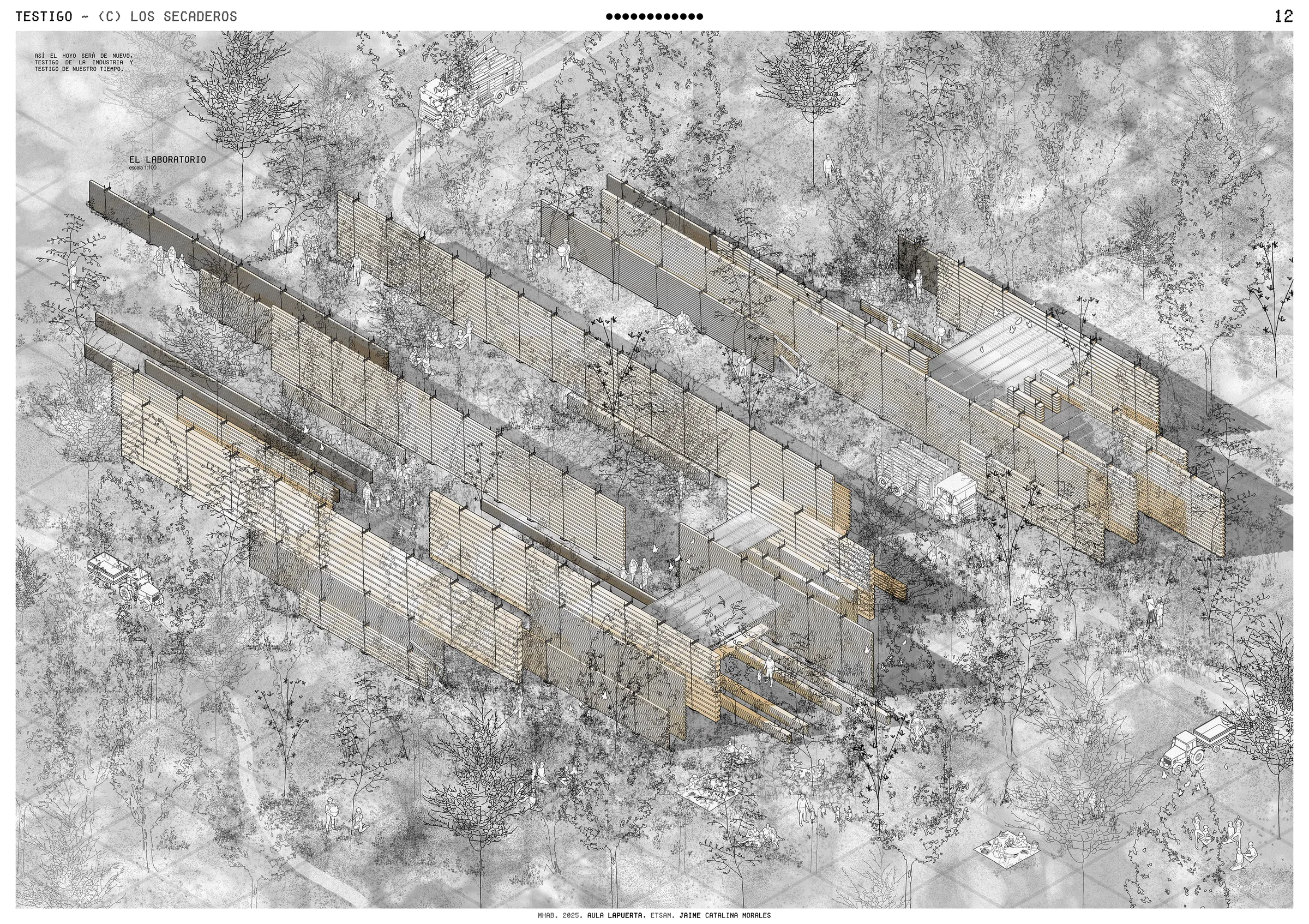
Jaime Catalina Morales
Testigo
Rehabilitation of an Abandoned Industrial Landscape
Ainhoa Church Vidal
Mechinal
The Machine and the Garden
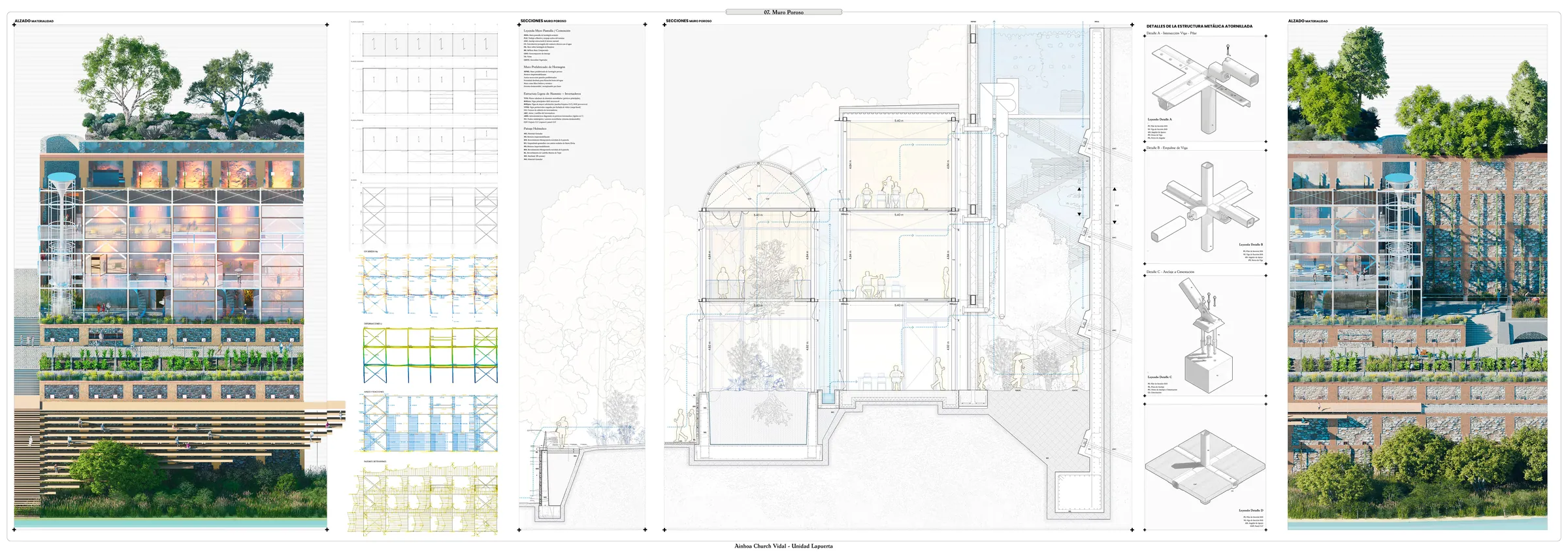
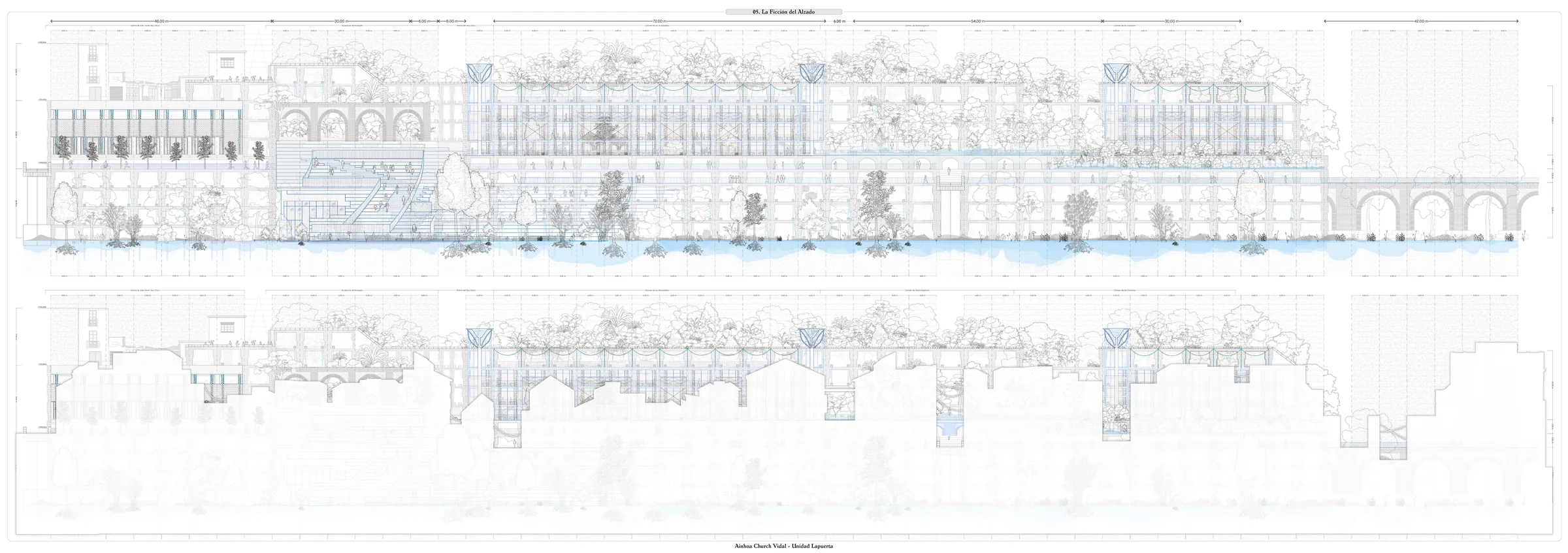
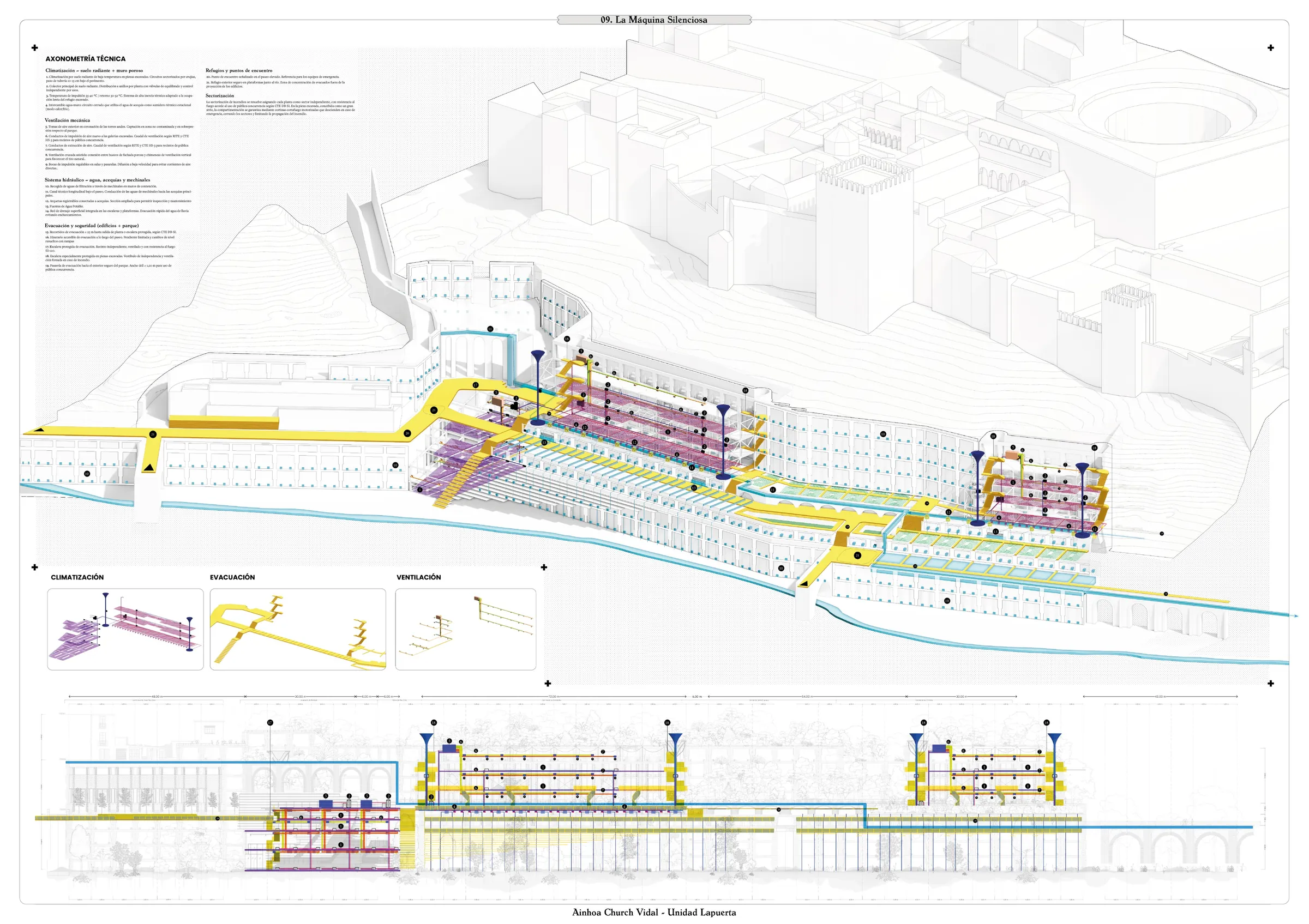
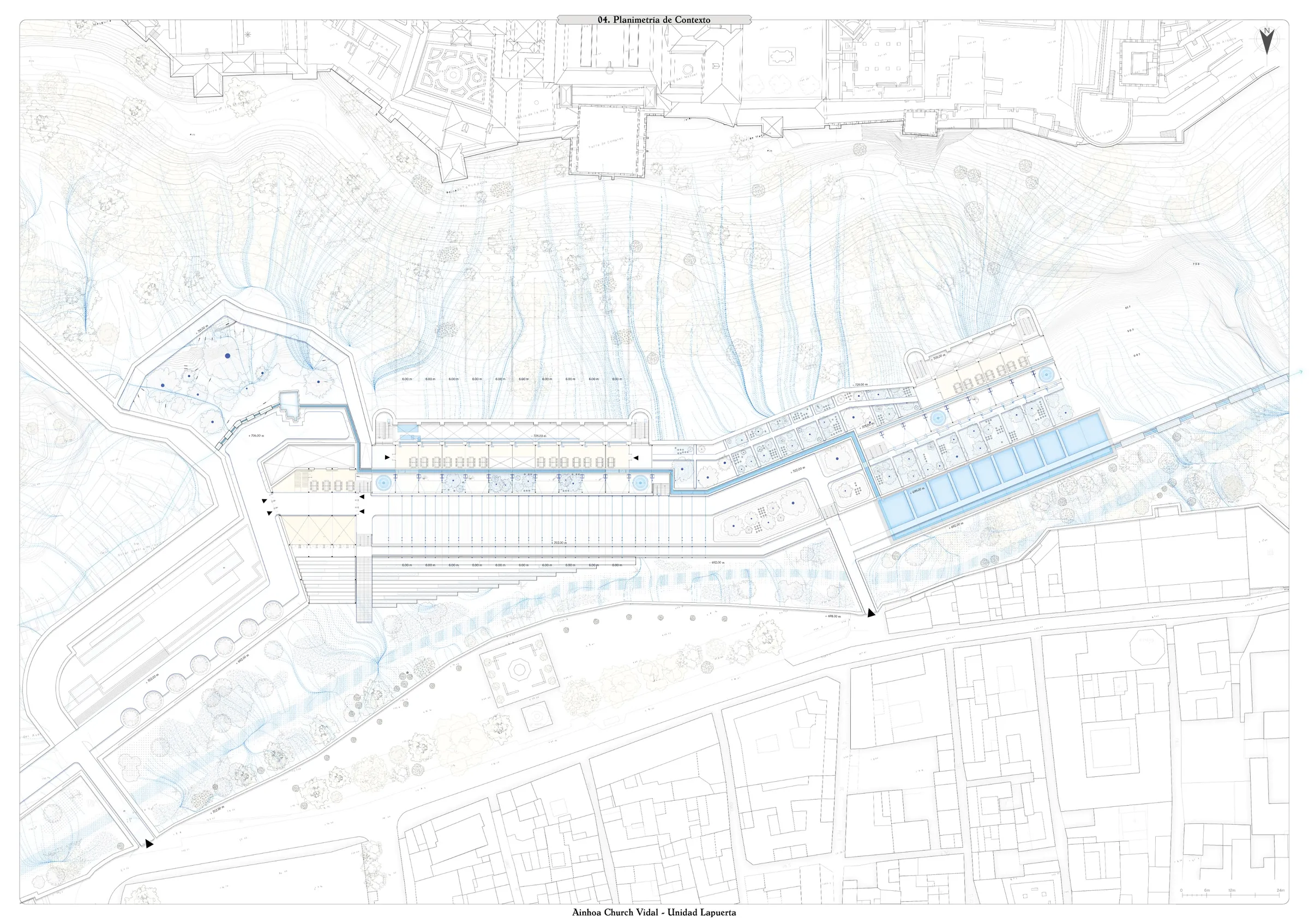
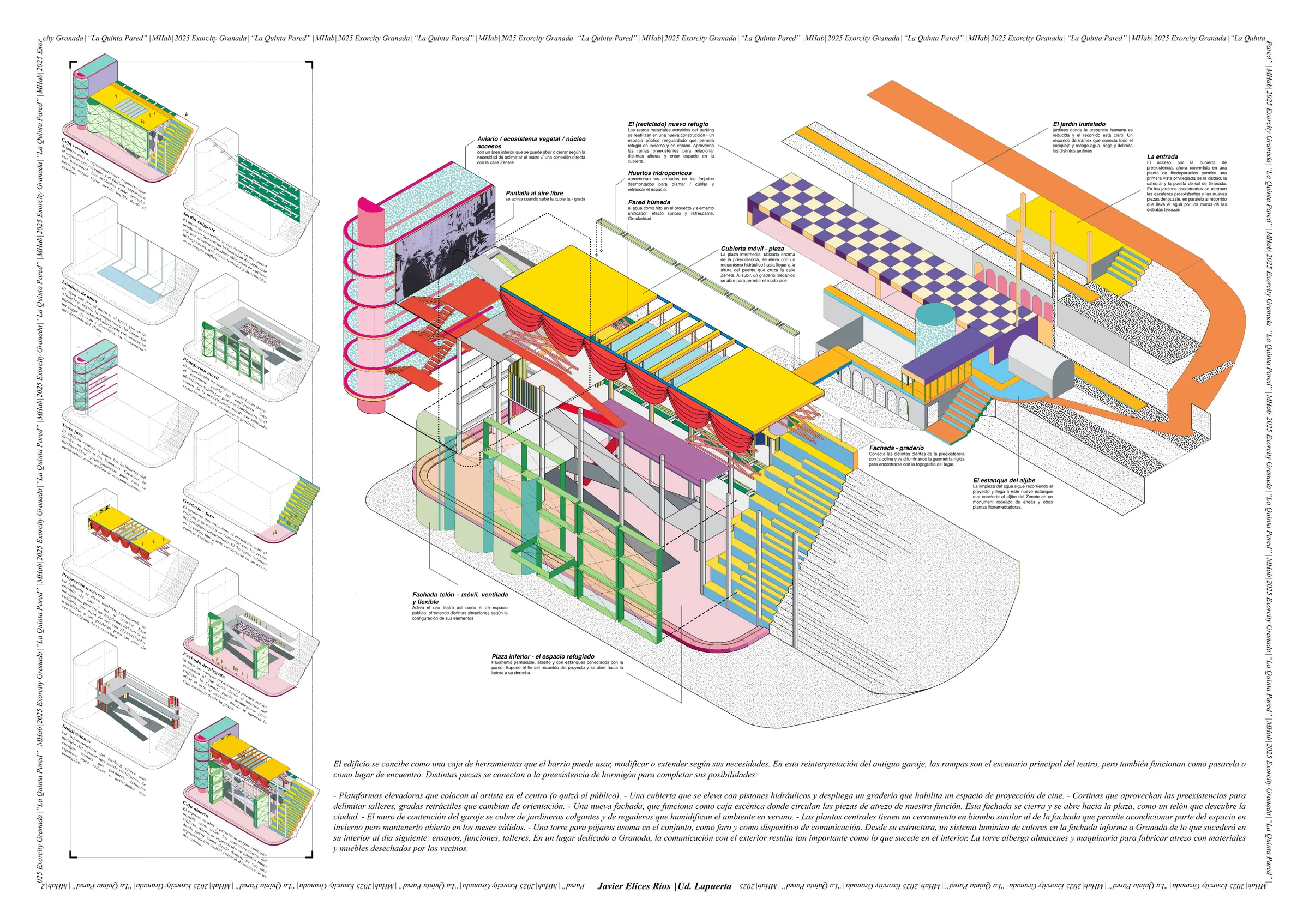
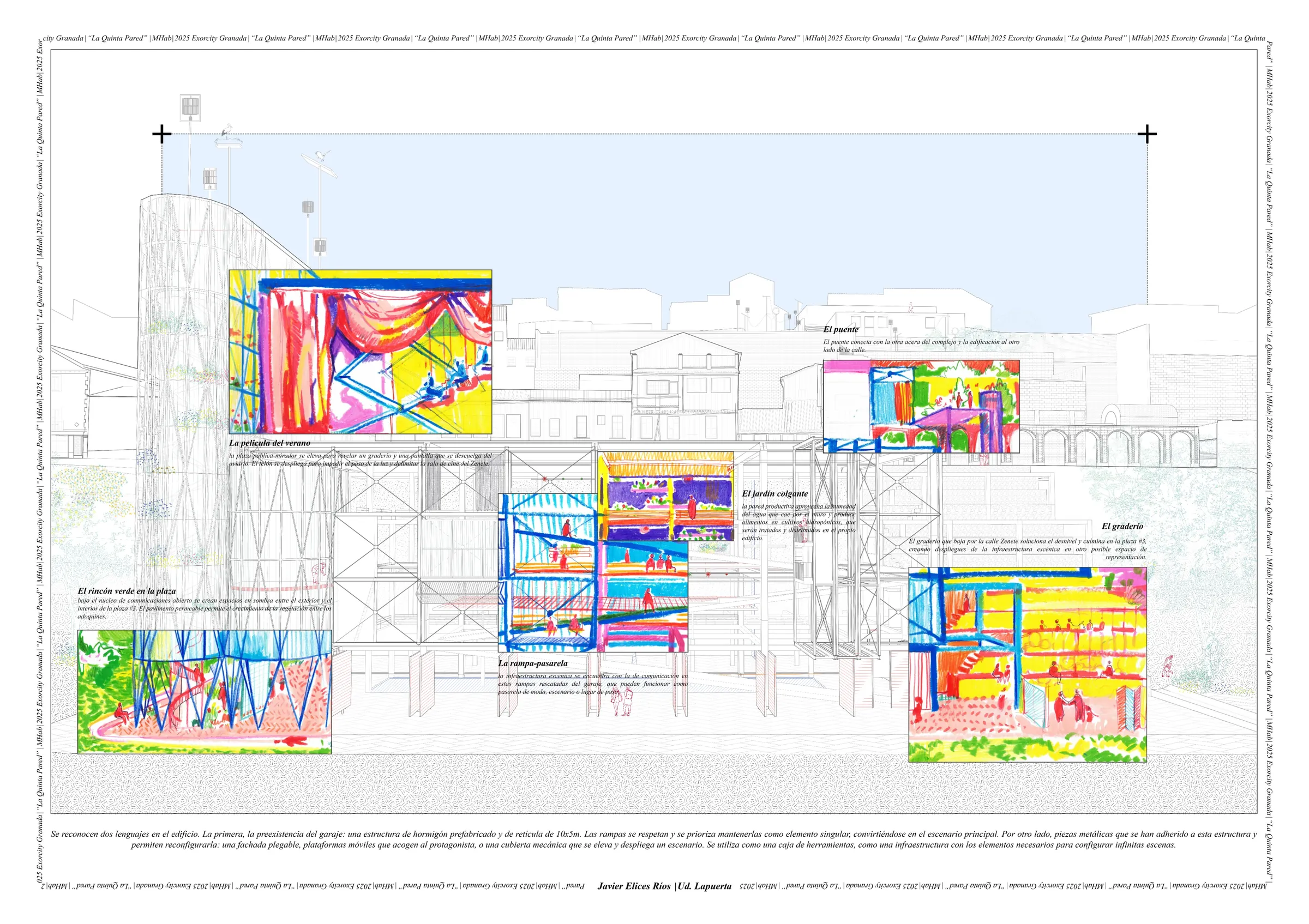
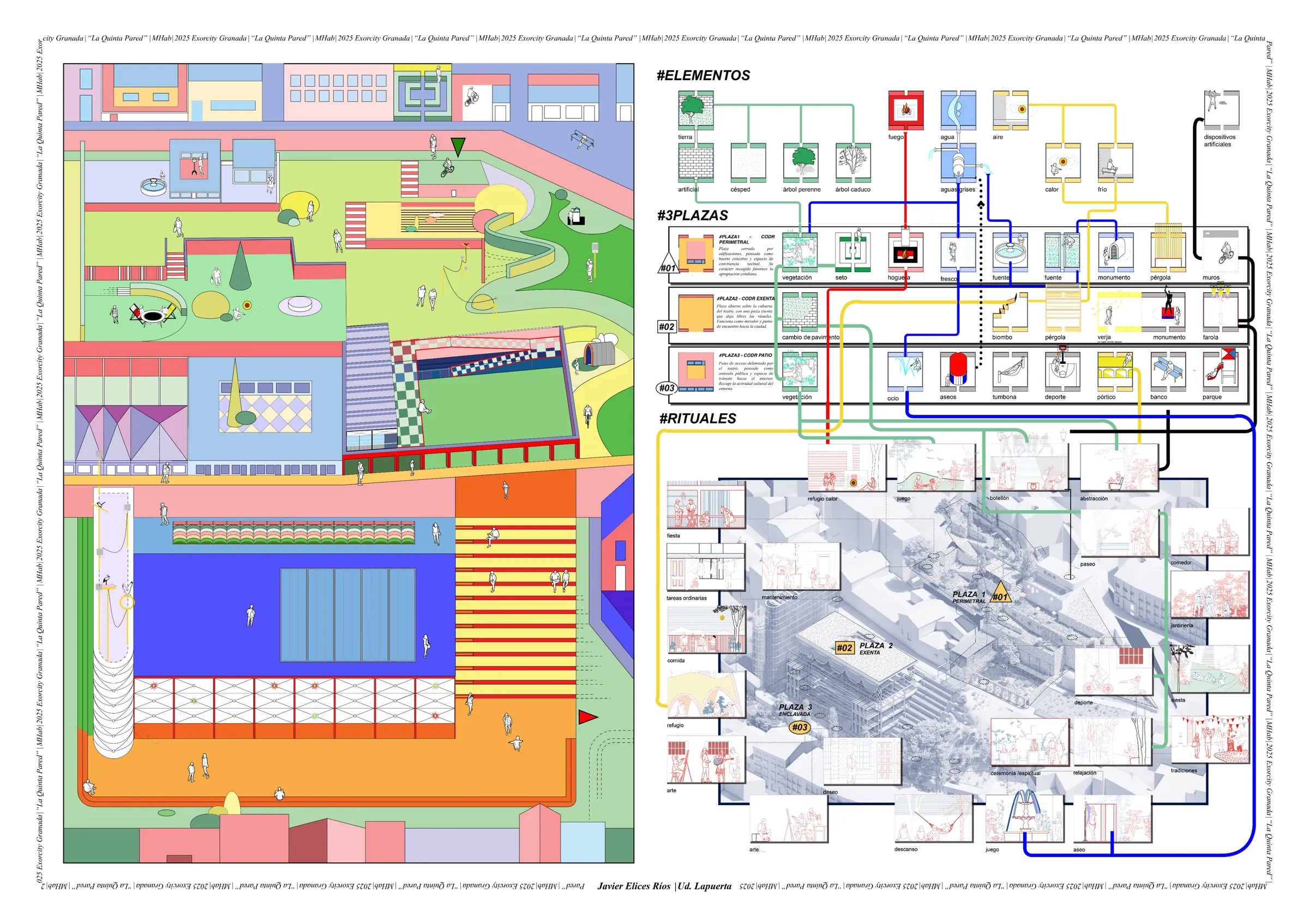
Javier Elices Ríos
La Quinta Pared
Zenete Scenographic Device
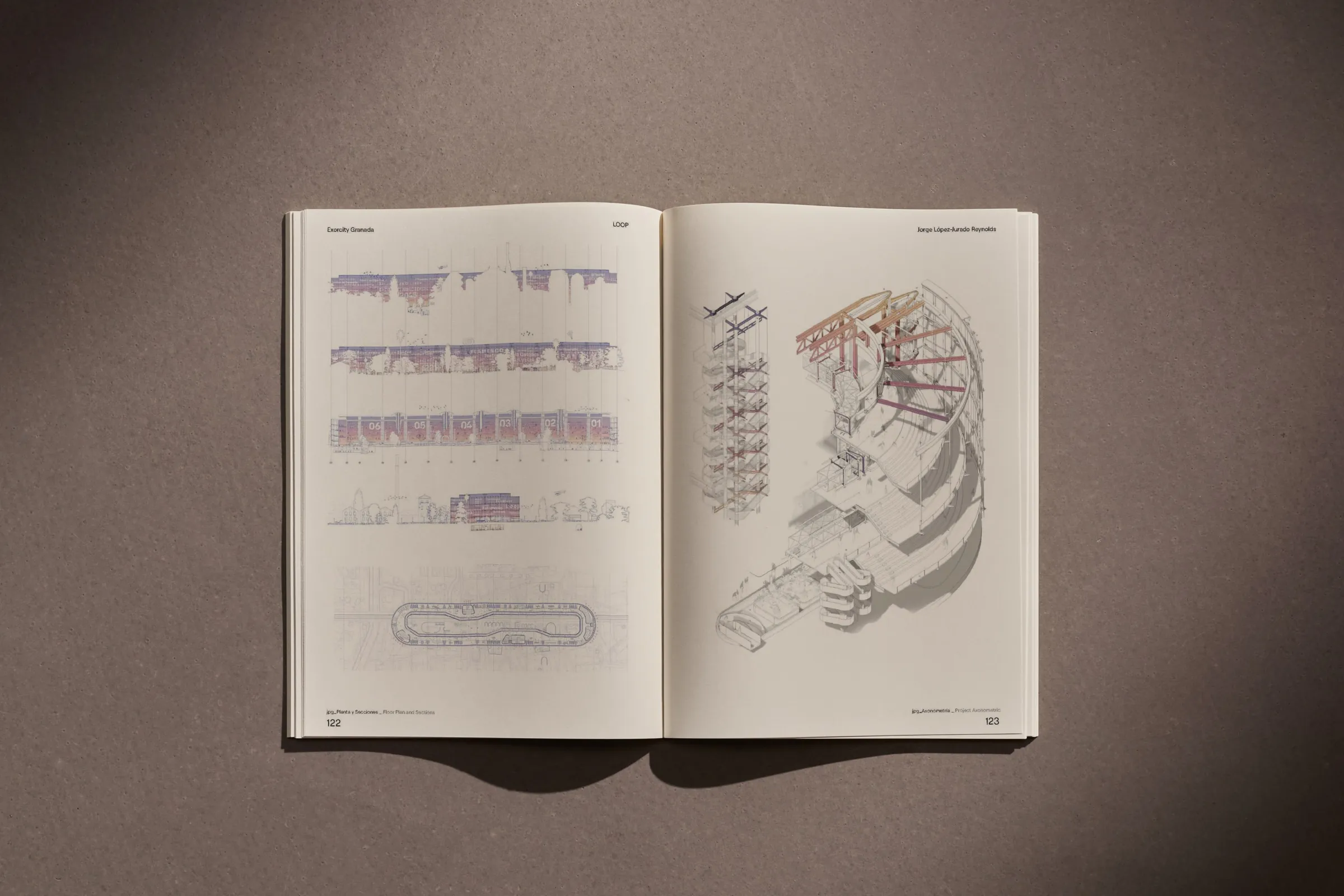
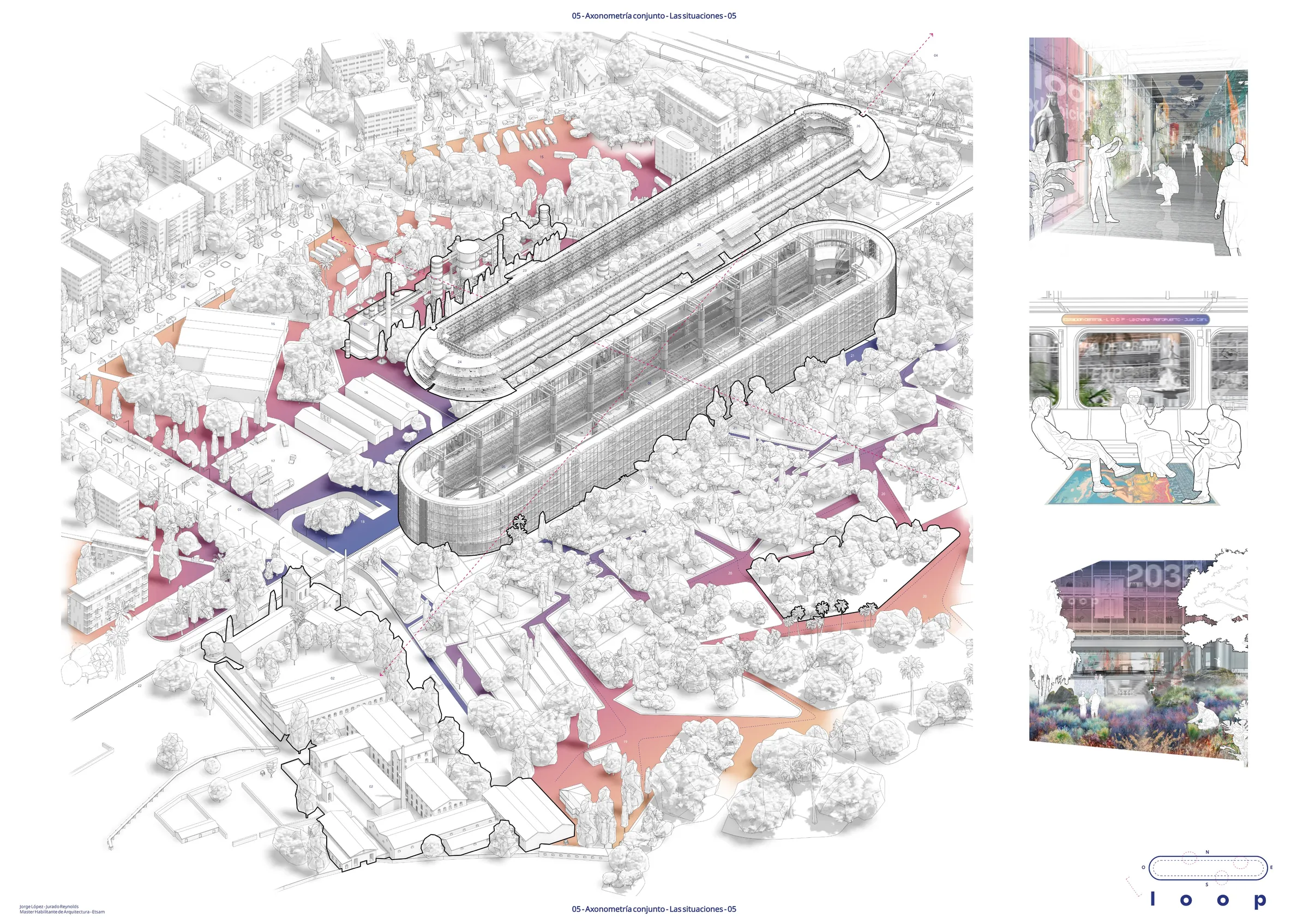
Jorge López-Jurado Reynolds
LOOP
Places of Reinterpretation for Granada’s Lost Heritage
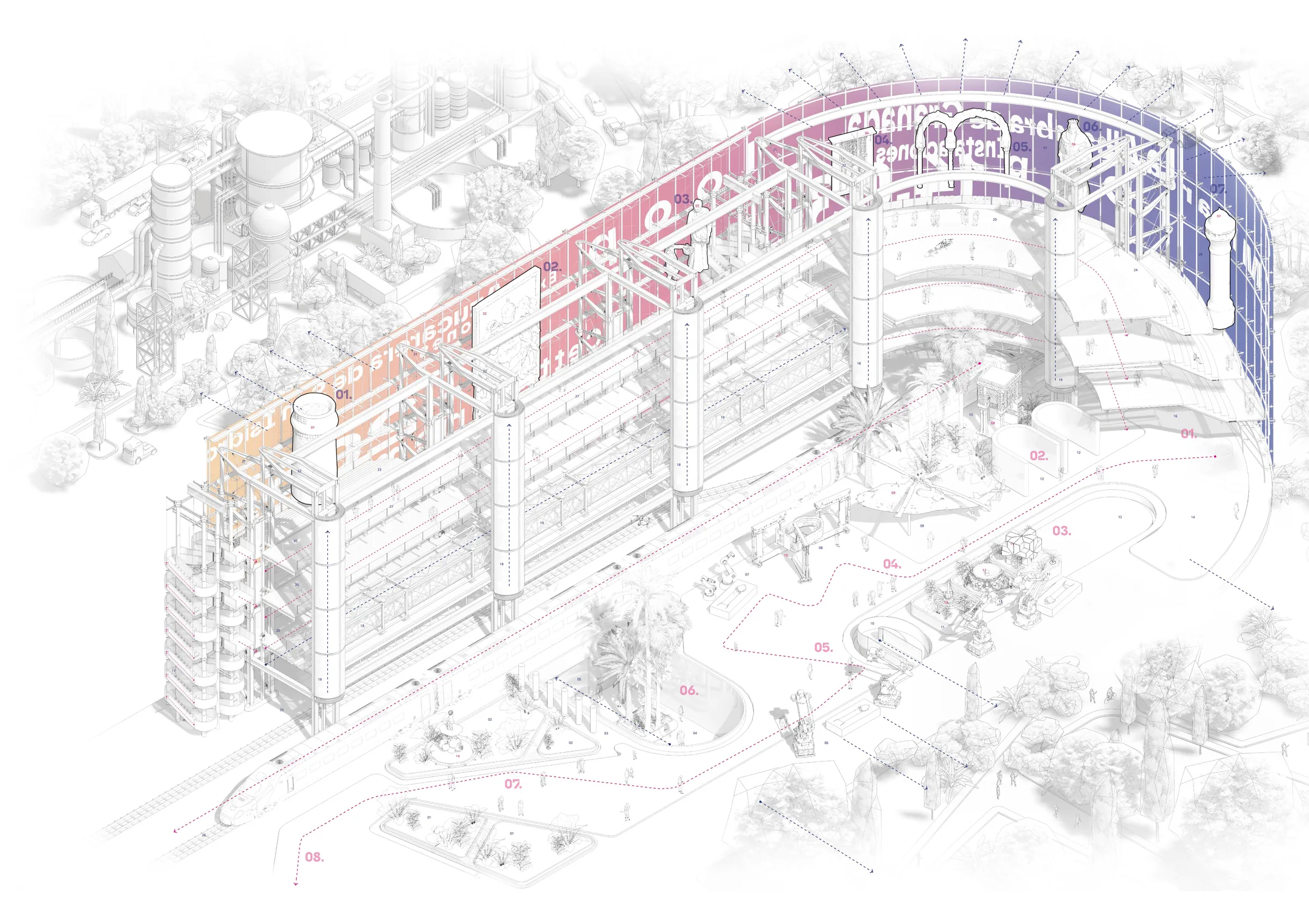
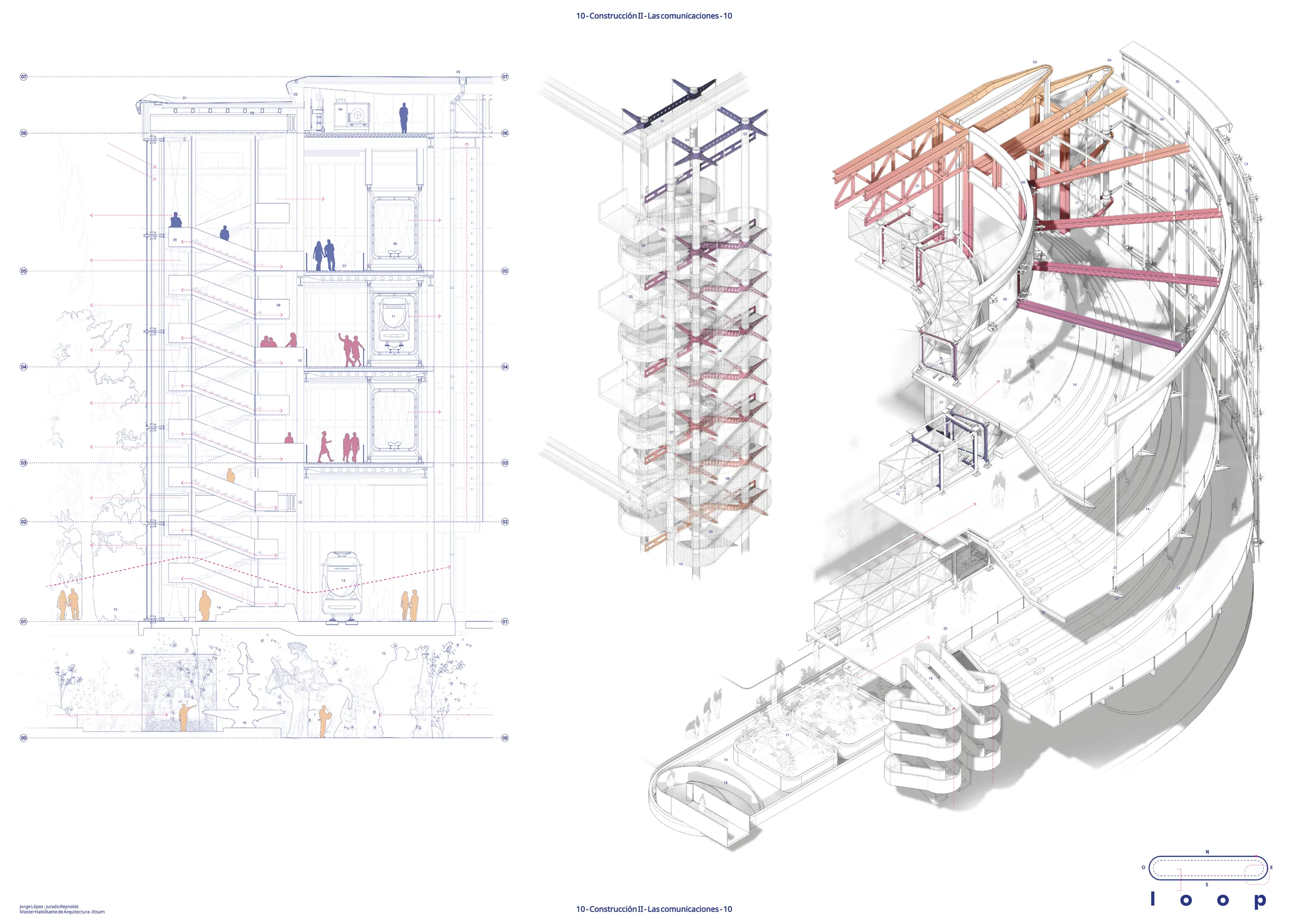
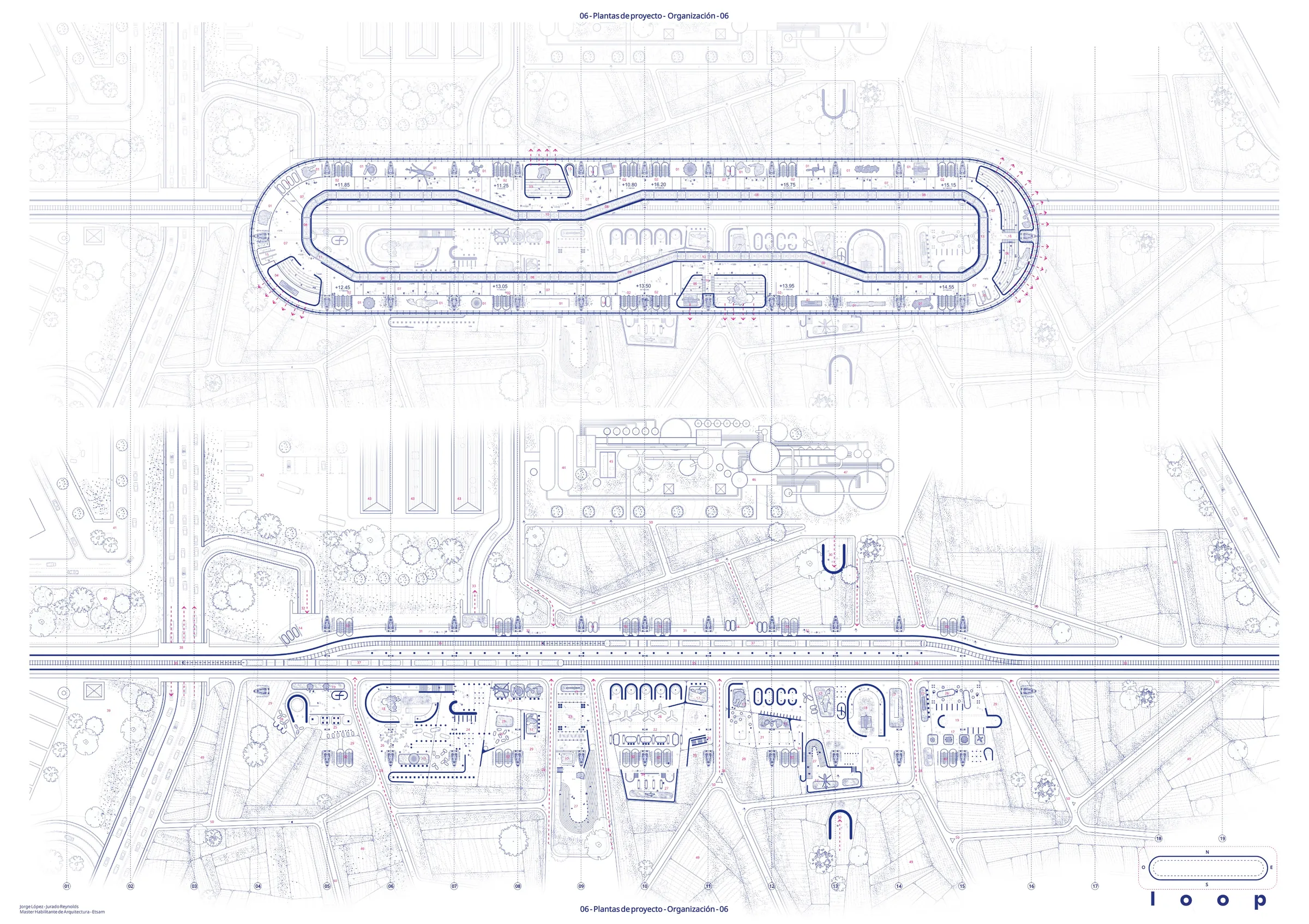
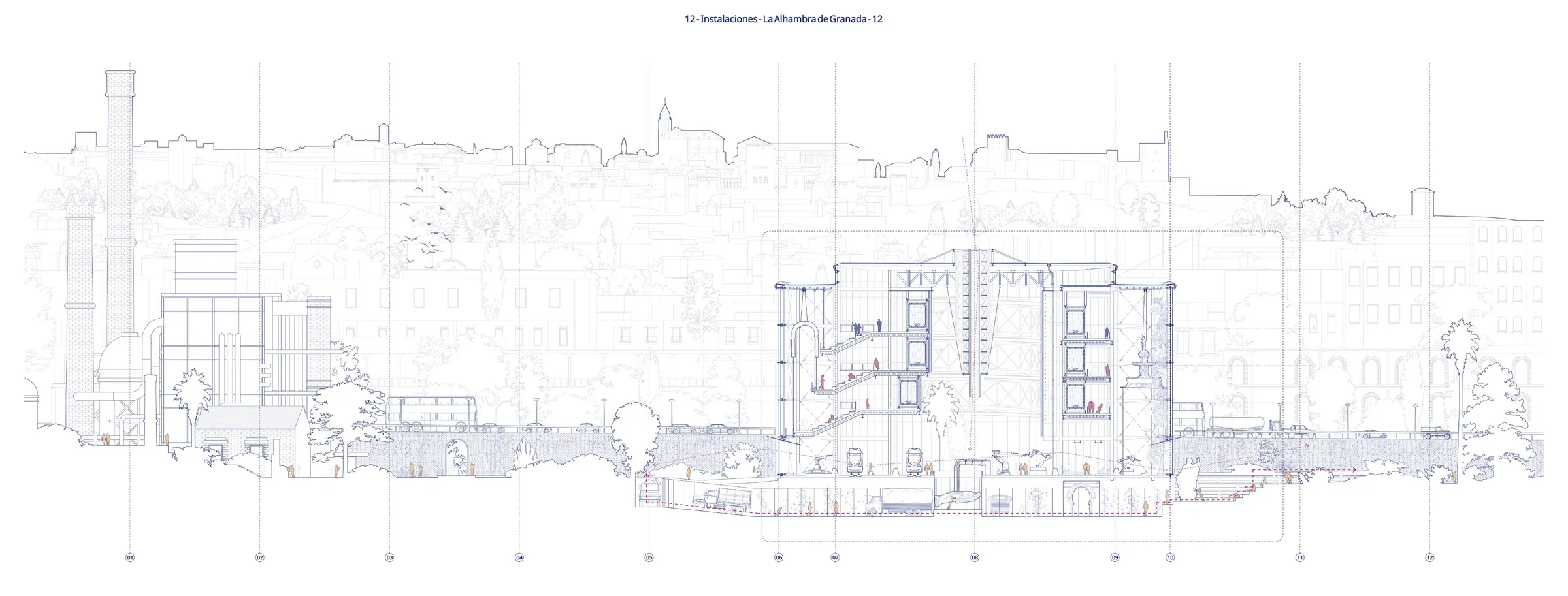
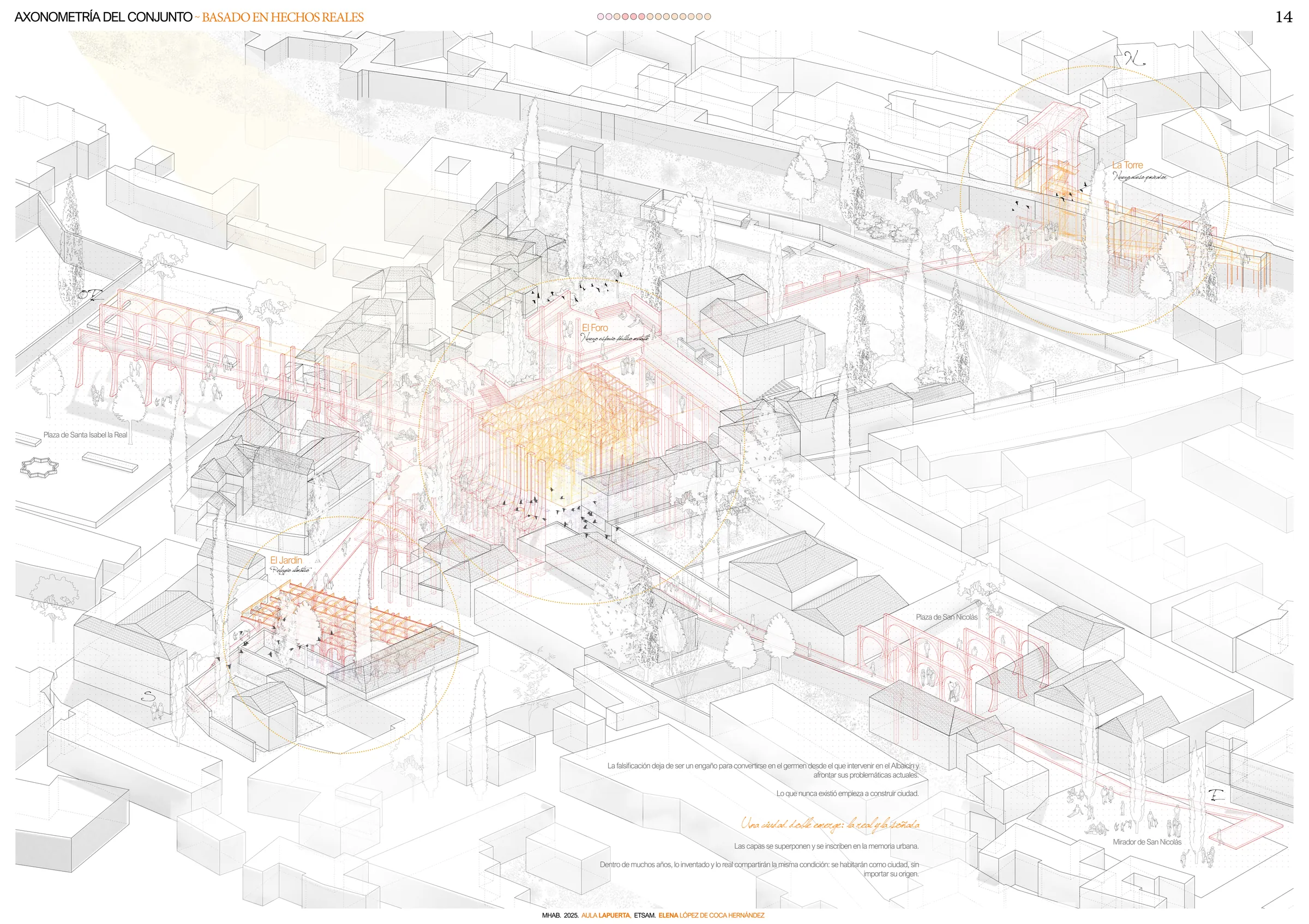
Elena López de Coca Hernández
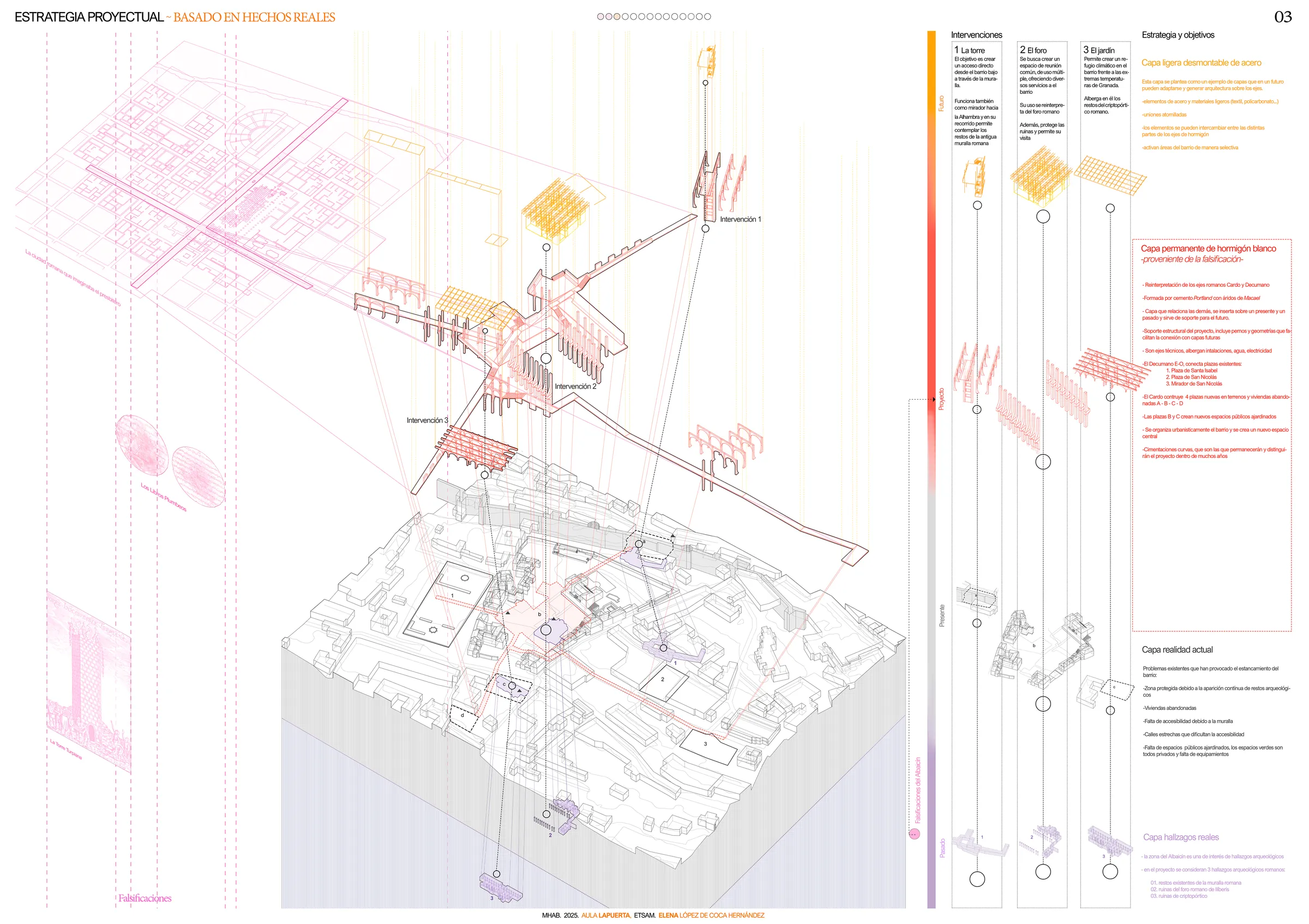
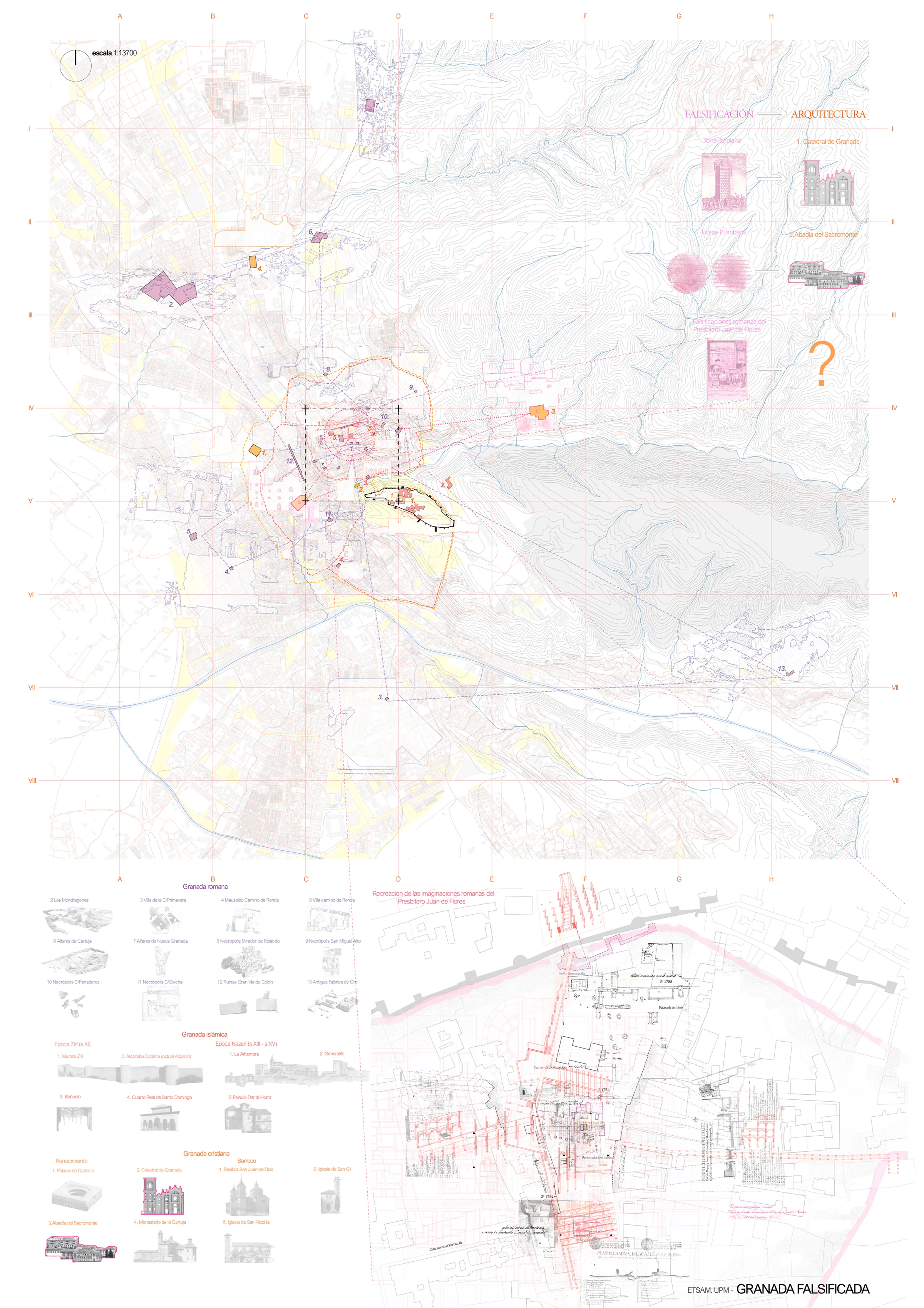
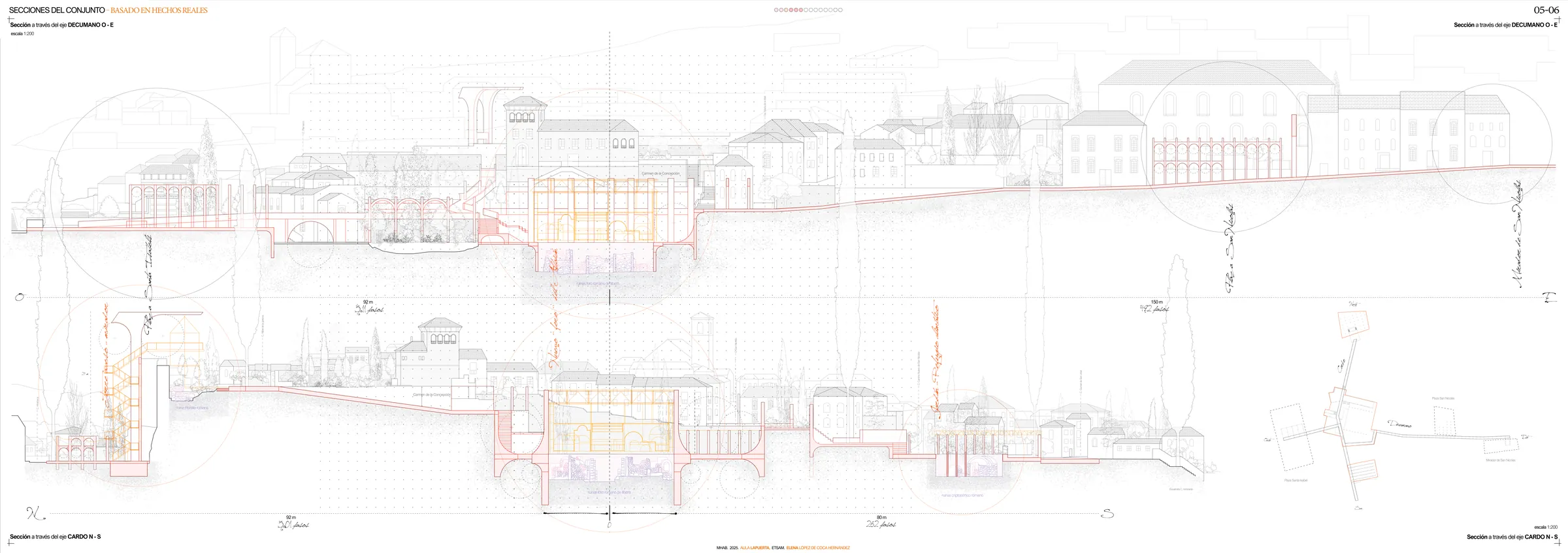
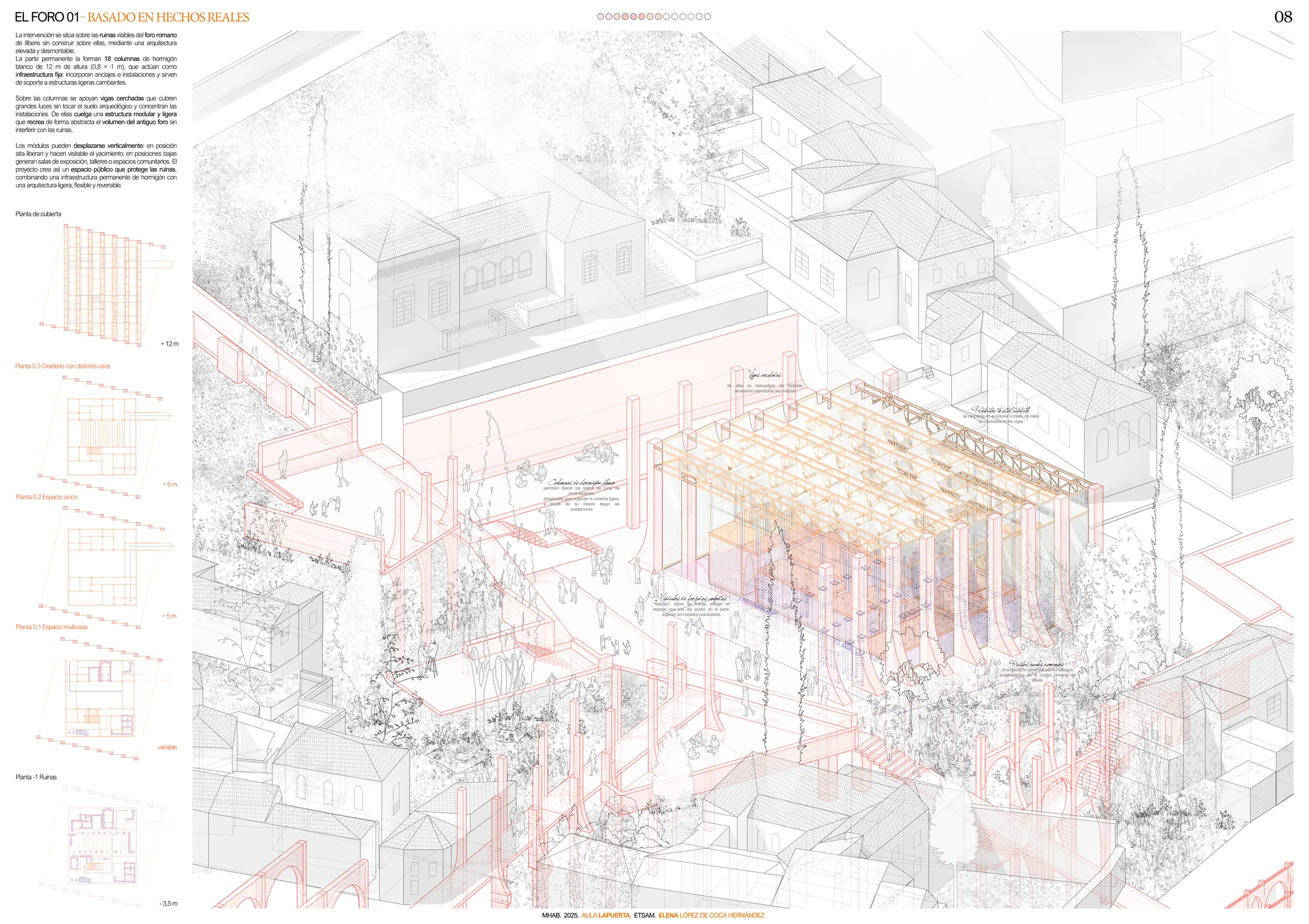
Basado en hechos reales
A Contemporary Archaeology Project in the Albaicín
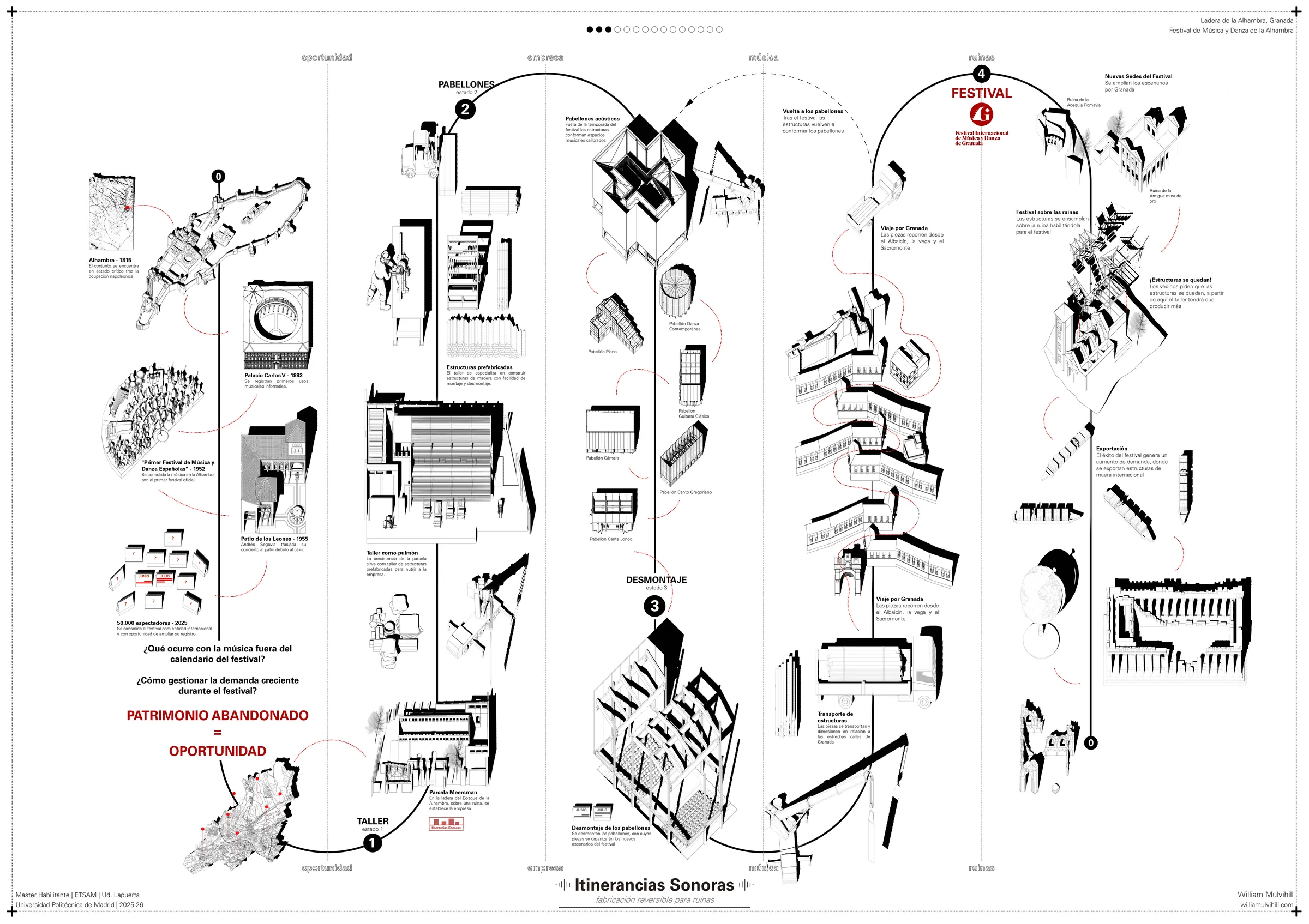
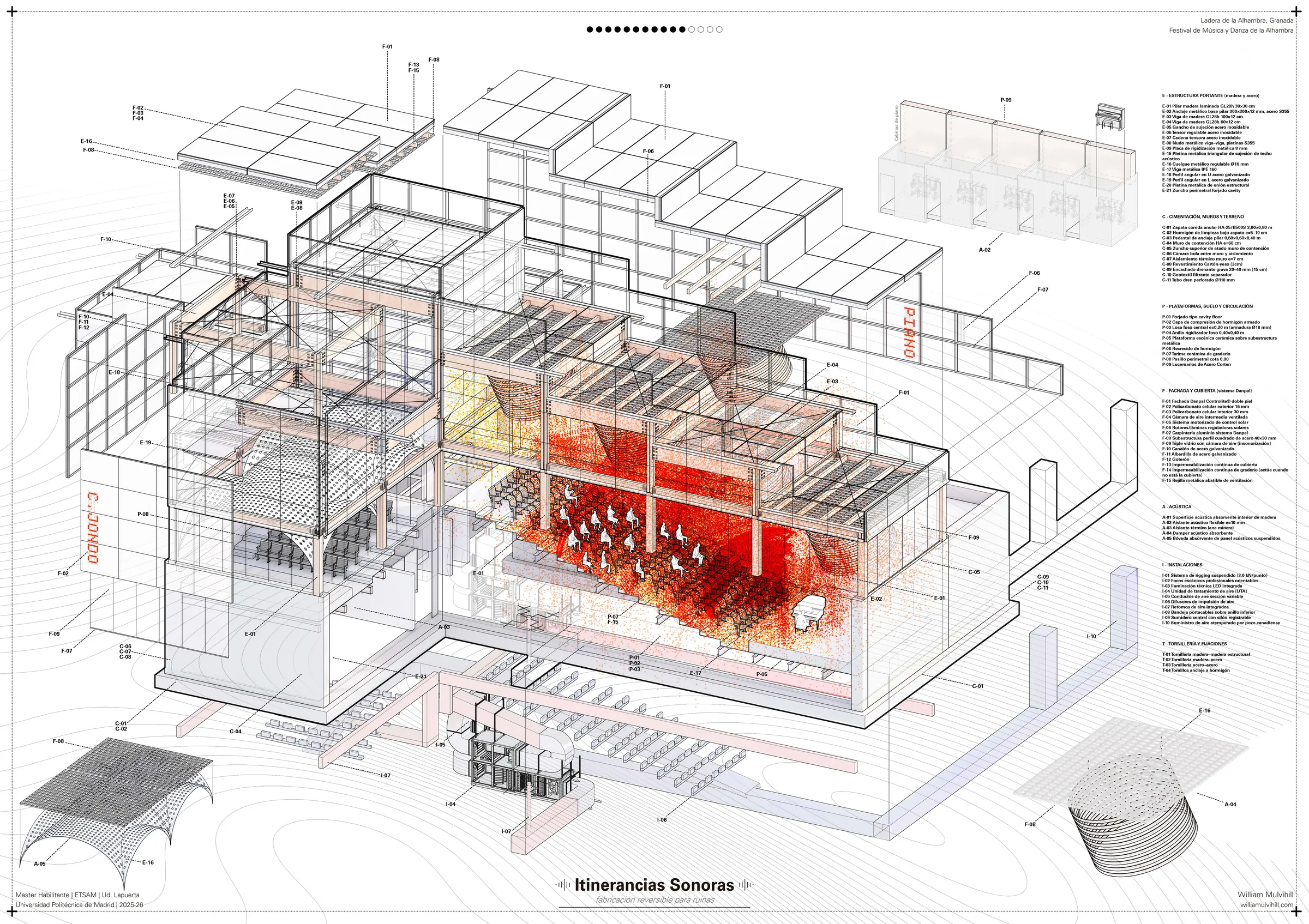
William Mulvihill
Itinerancias sonoras
Reversible Structures for Ruins
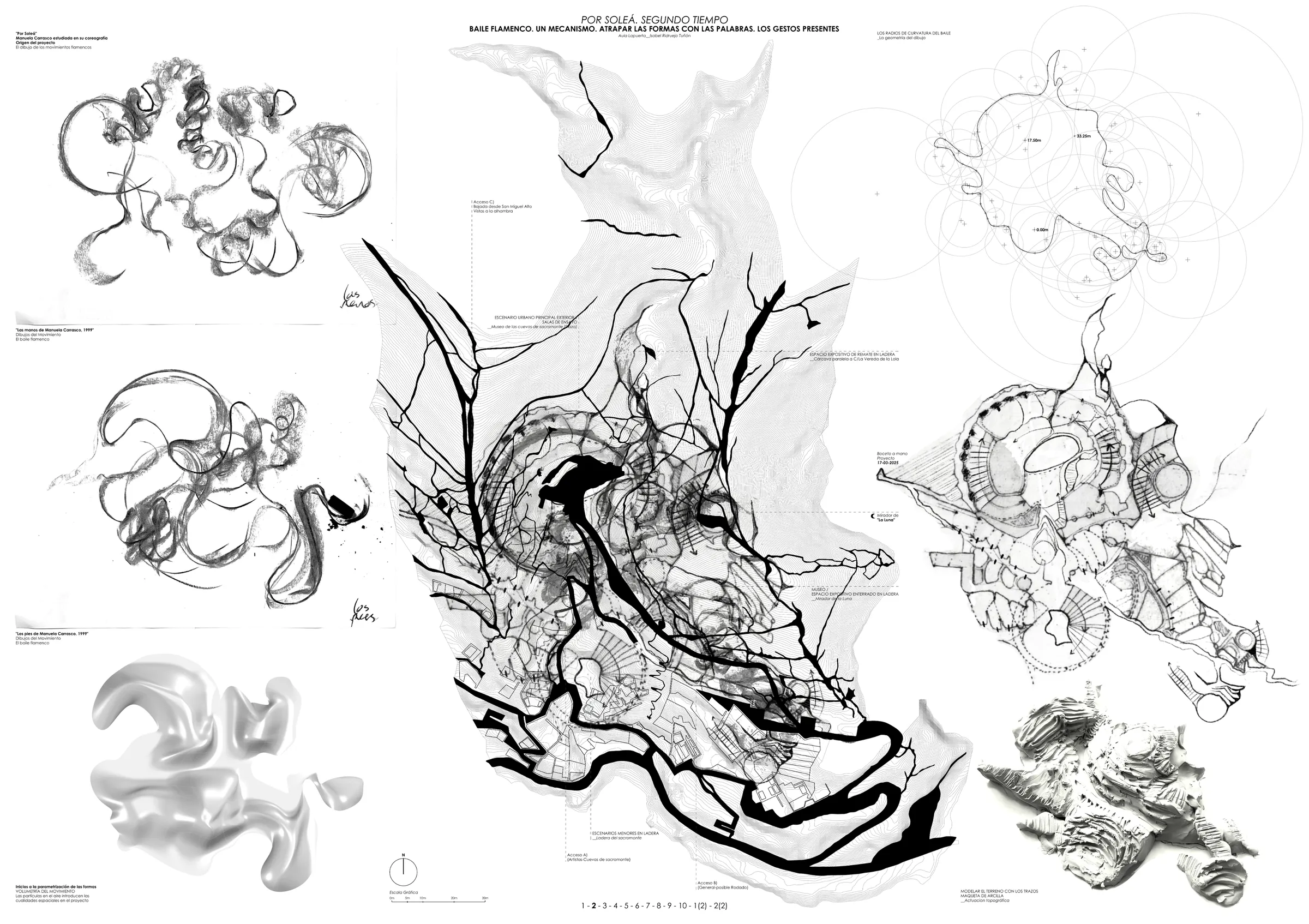
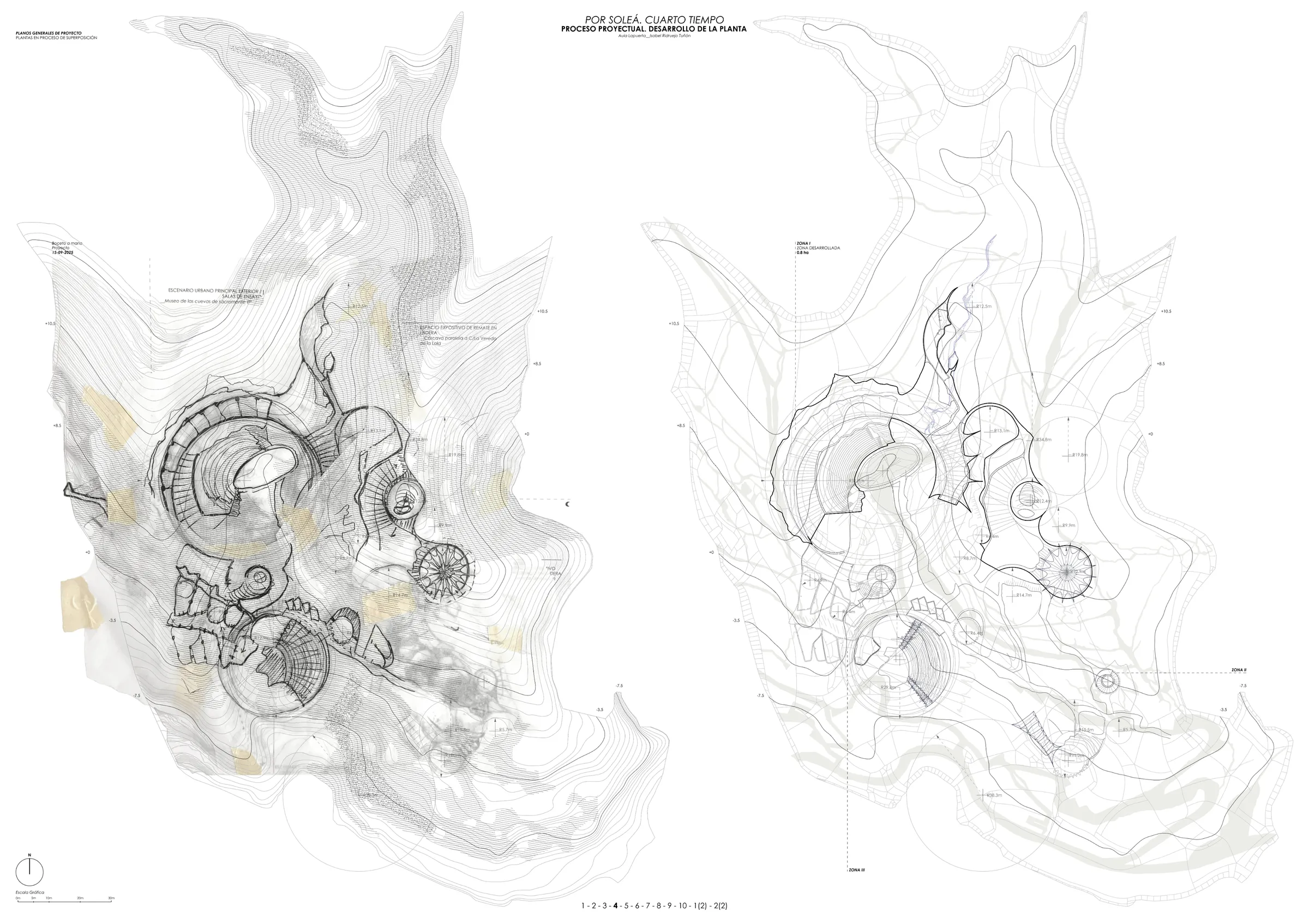
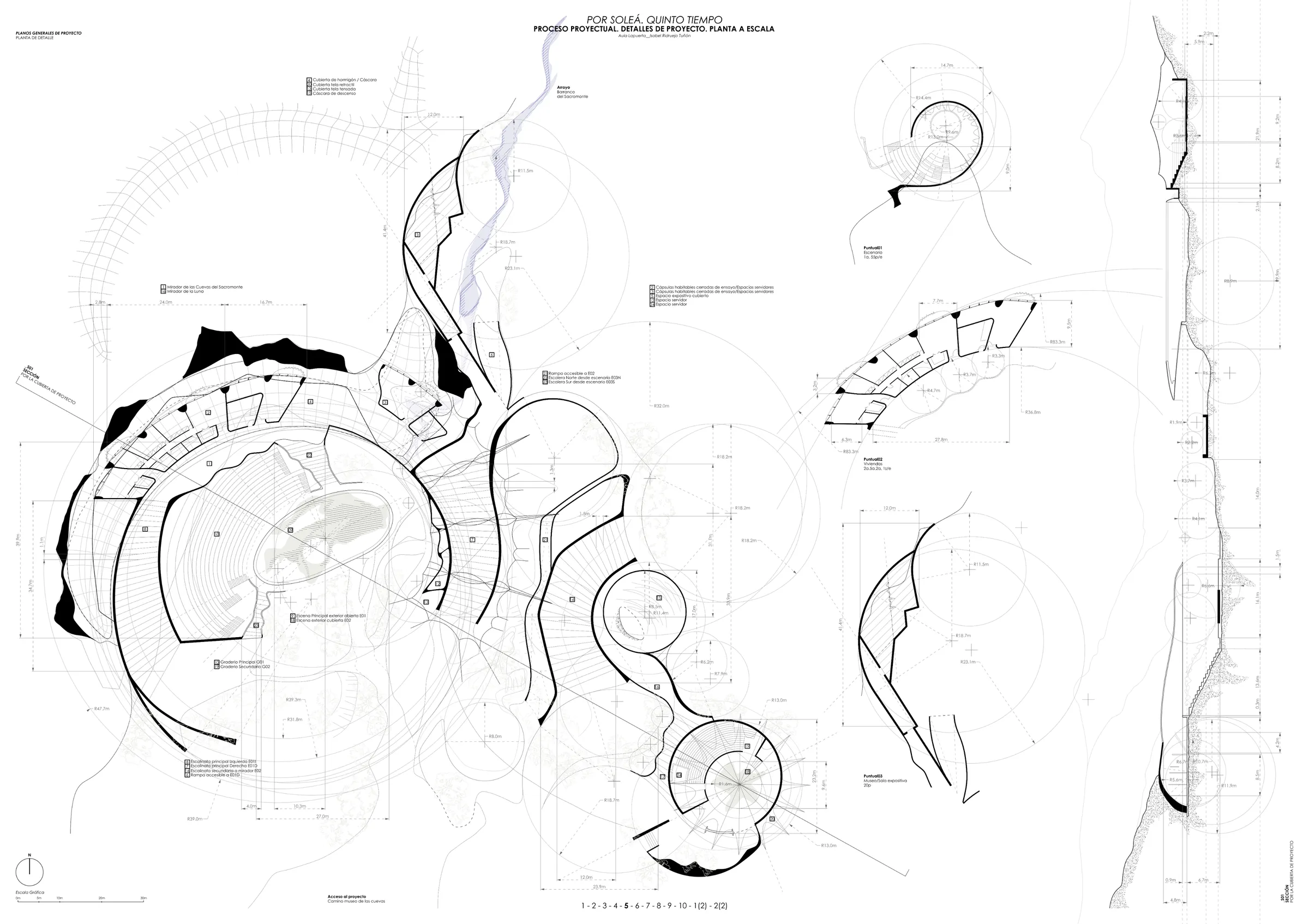
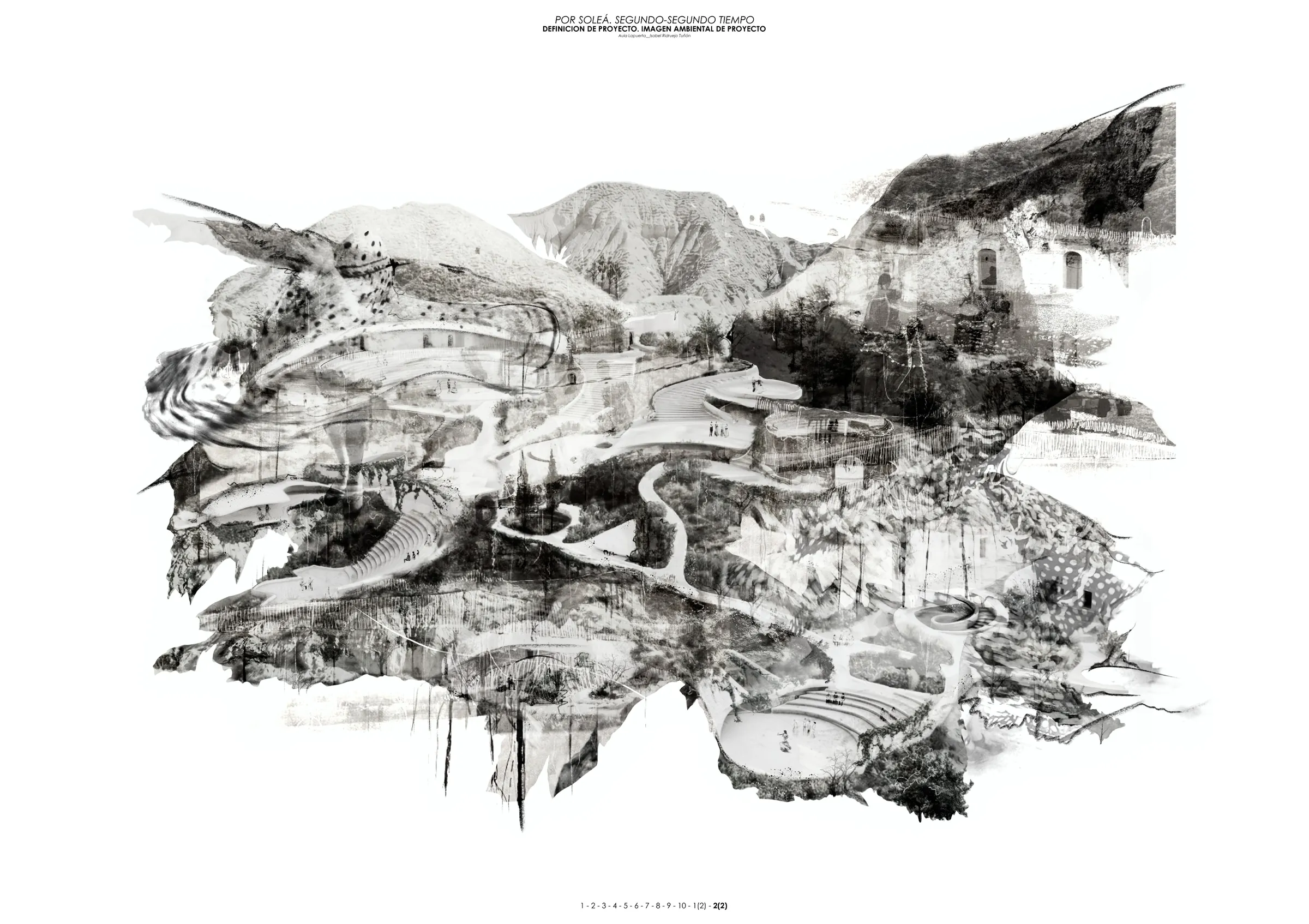
Isabel Ridruejo Tuñón
Por soleá
Intervention in Sacromonte, Granada
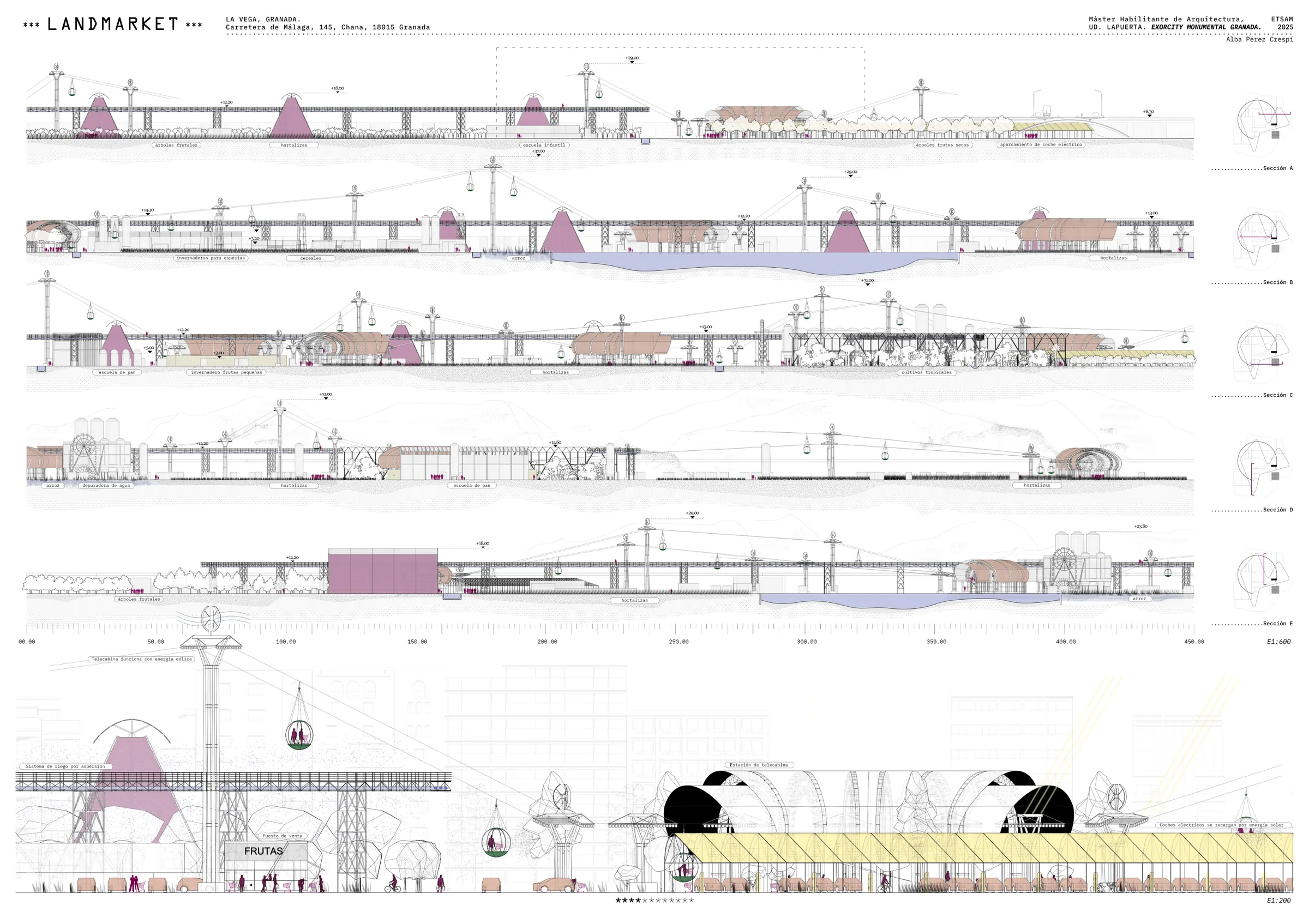
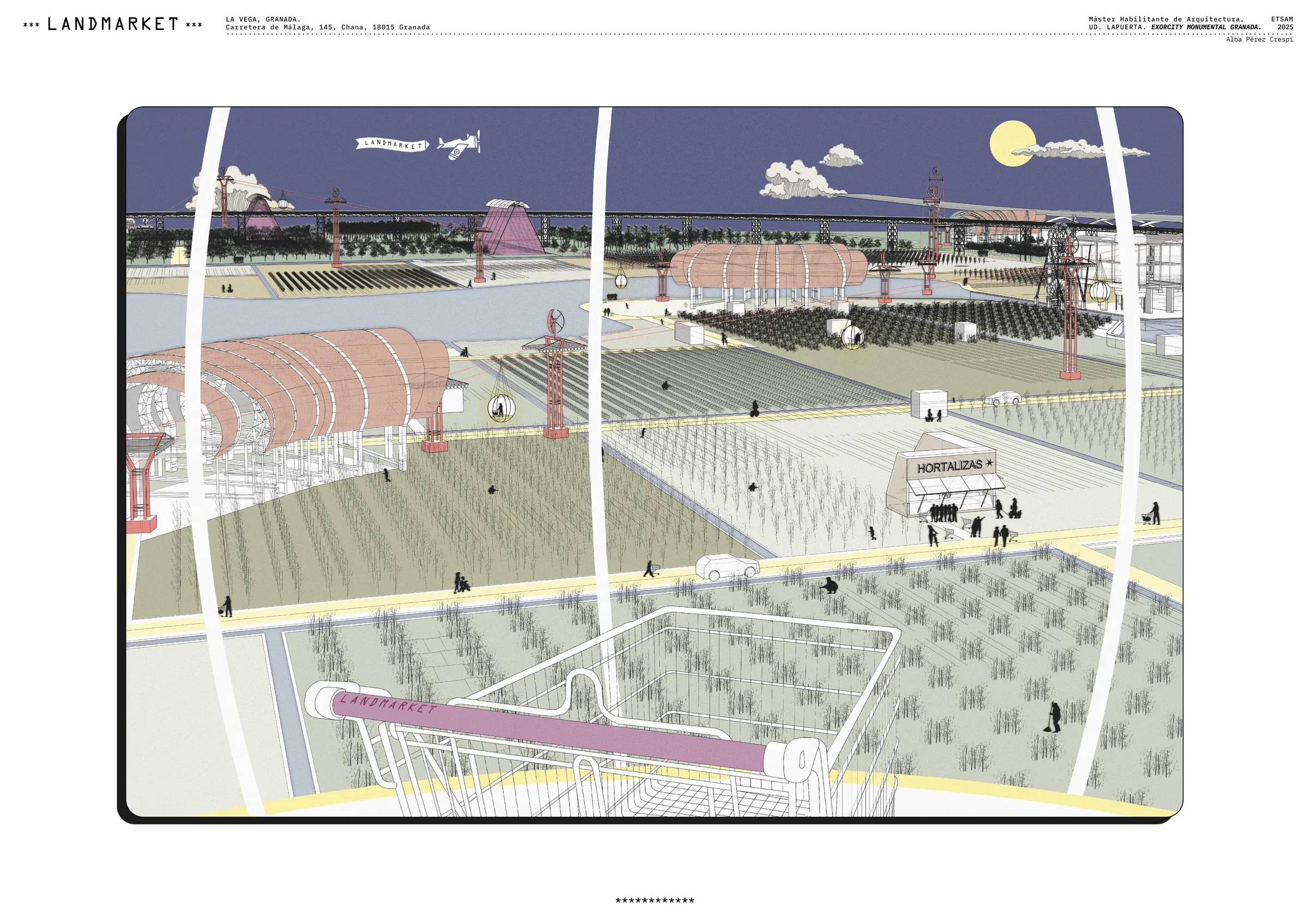
Alba Pérez Crespí
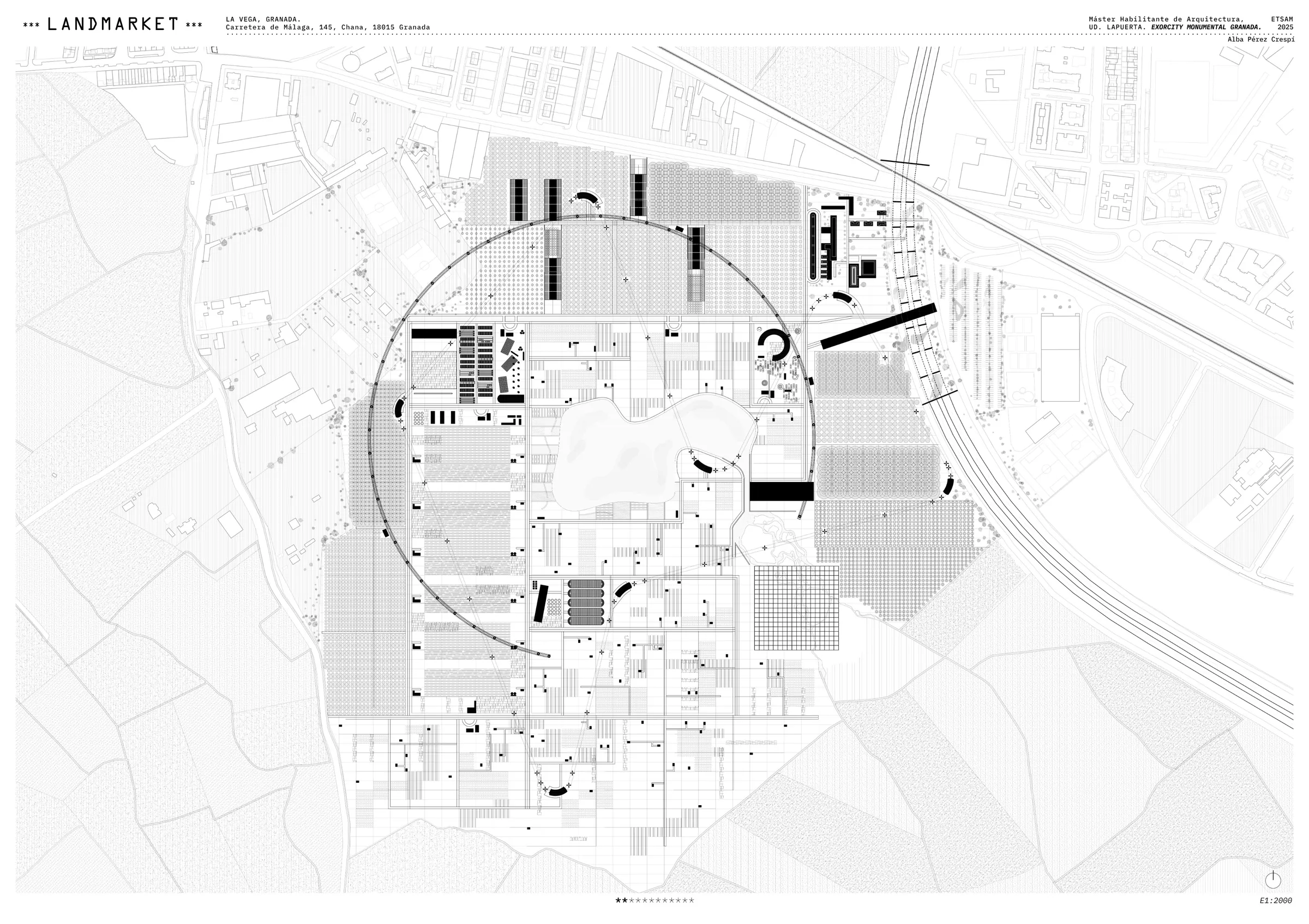
Landmarket
The Vega as a Supermarket
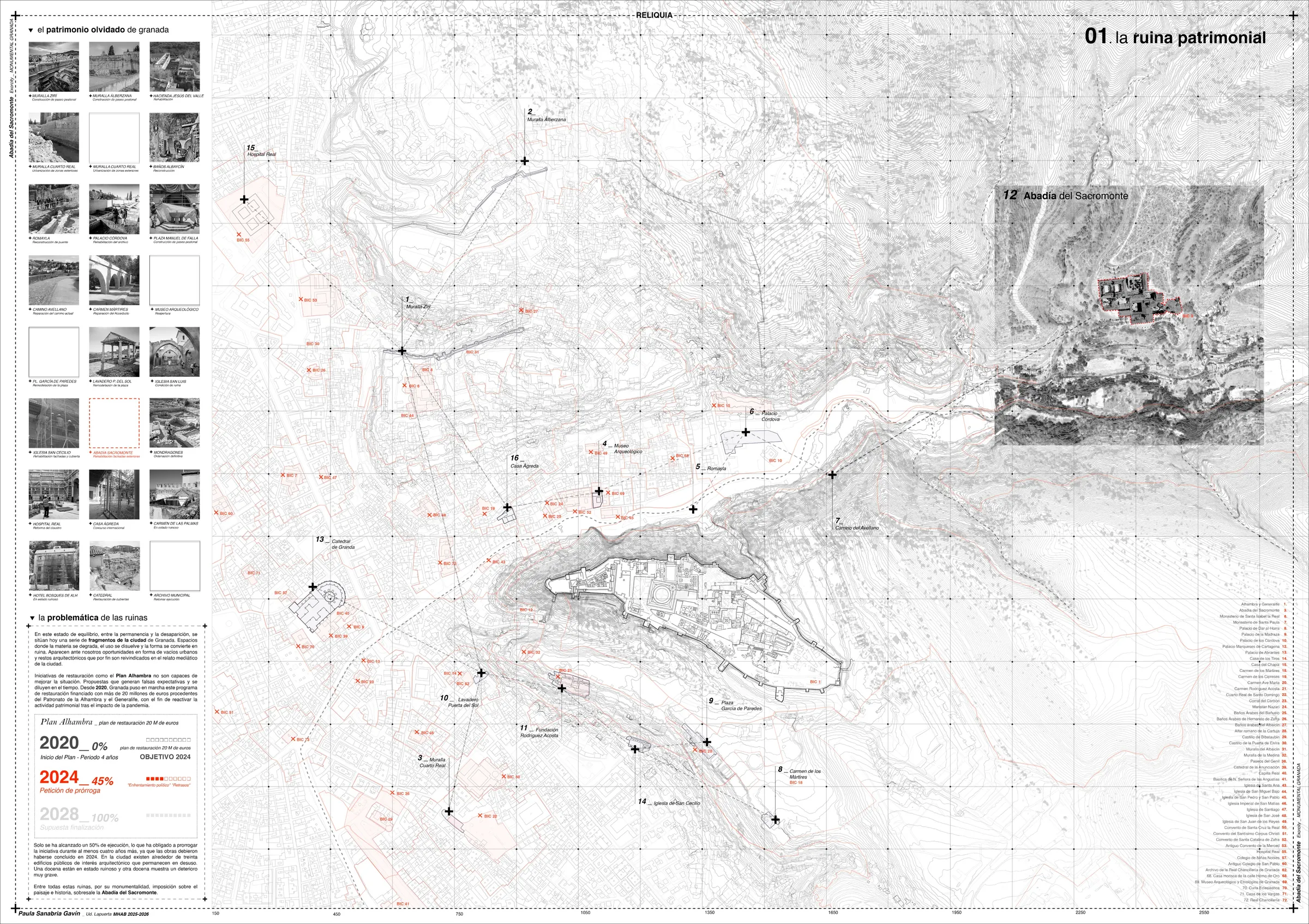
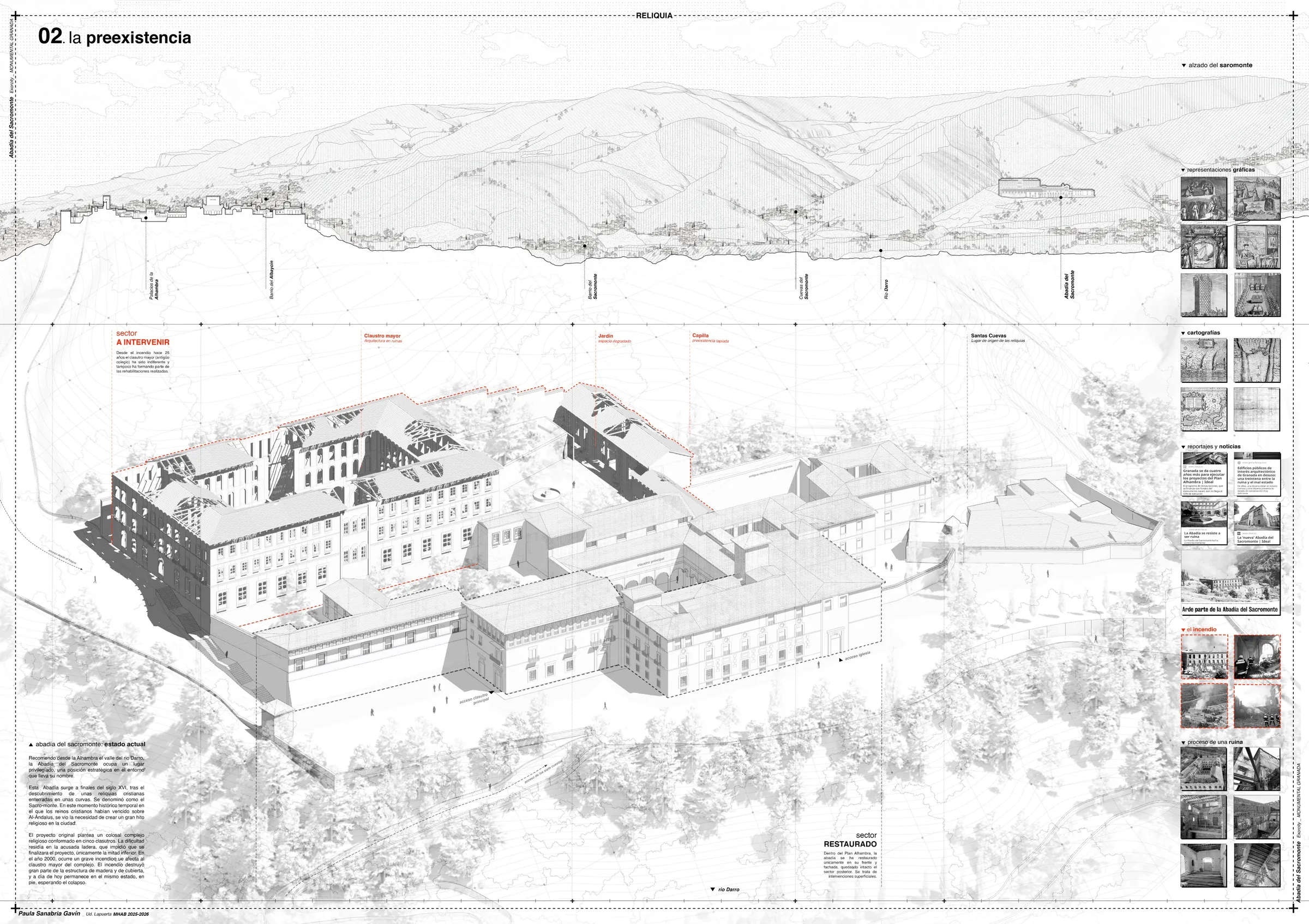
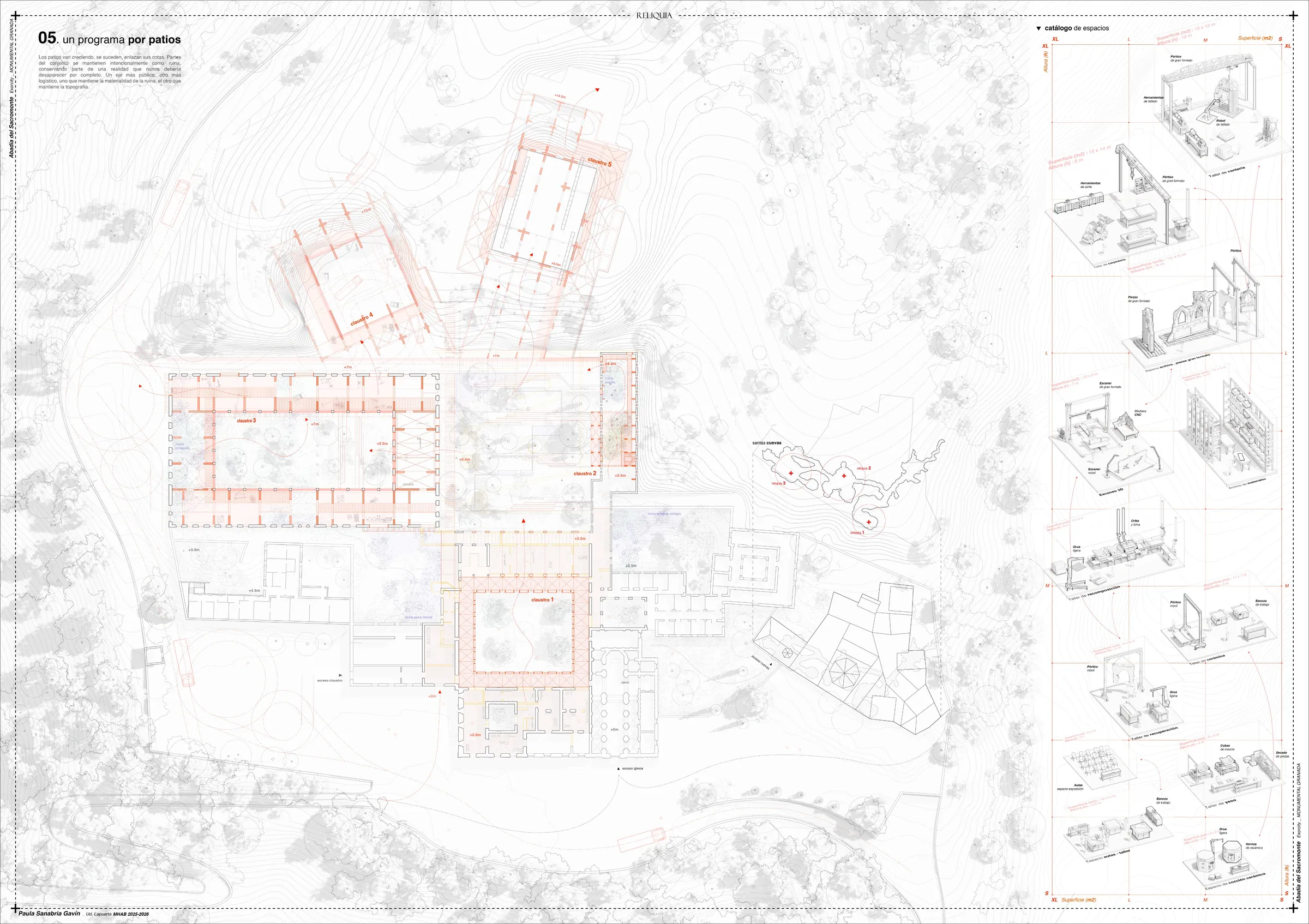
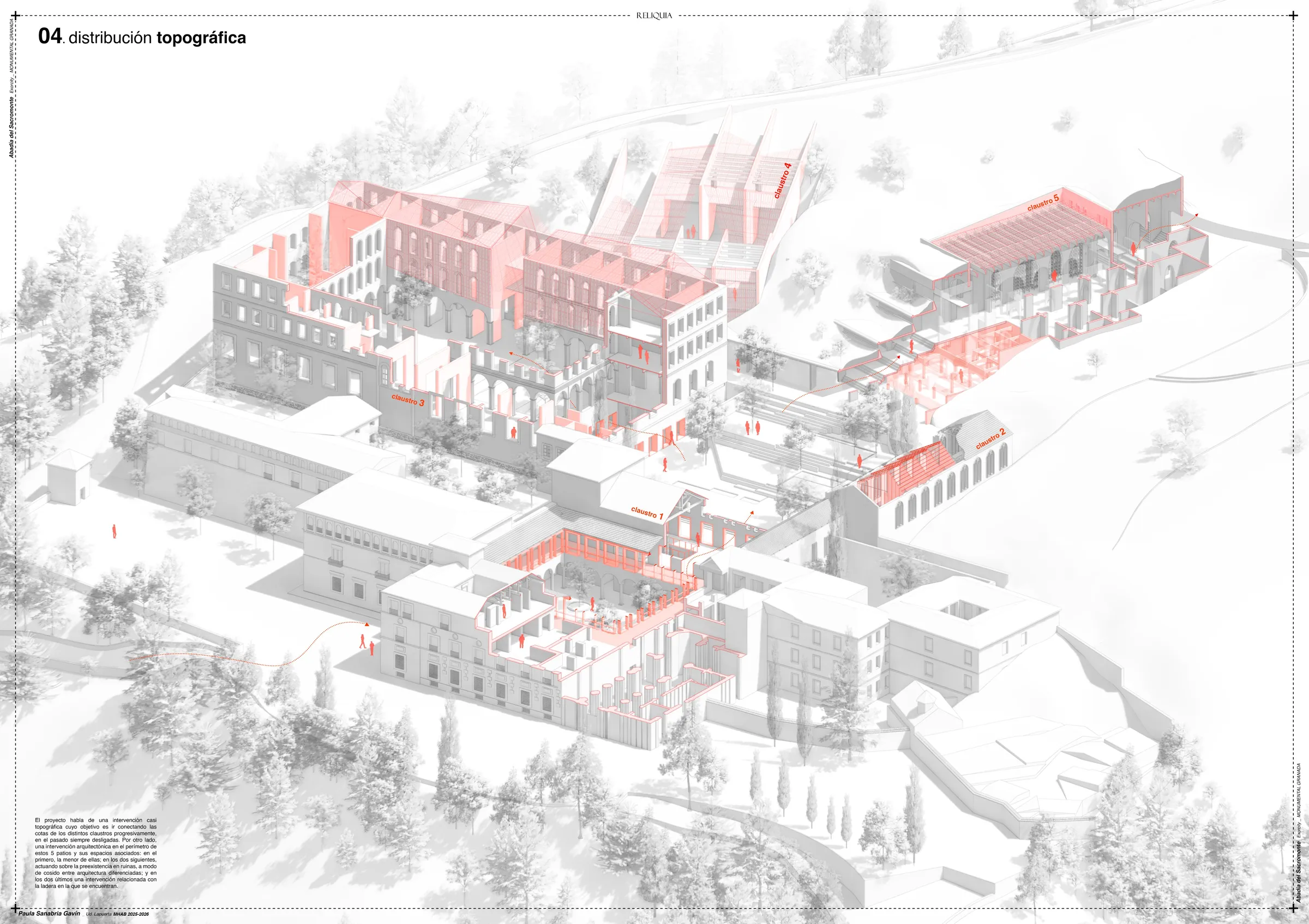
Paula Sanabria Gavín
Reliquia
A Cloister-Based Intervention in the Abbey of Sacromonte
Natalia Ávila Caballero
El Barranco reactivado
The Barranco del Abogado as a Living Urban Spine
Pepa Barrero Carrilero
Hoyo de la Campana
A Route of Memory and Landscape
Miriam Bellido Palau
Muralla in-franqueable
Zirid Wall Cultural Centre
Cecilia Carbajo Ameijeiras
REhUMAnización
Rehabilitation of an Abandoned Industrial Landscape
Jimena Domínguez Garayzábal
Des_bordar
The GR-30 as a Contemporary Boundary
Alberto González Cubilla
Puerta del Beiro
A Multilayer System over the Beiro River
Javier Galindo López
HUB San Isidro
A Logistics Node within a Legacy Structure
Blanca Hernández Díez
El Palacio del Visir
A Route of Memory and Landscape
Andrea Lorenzo López
Dar Al – Zayt
Covering to Uncover
Fernando Martínez Blanco
Nuevo Cervantes
Rehabilitation of the Industrial Halls
Ana Miguélez Vara
Trazas y Trazos
The Historical Archive of the Alhambra
Judit Mendoza Velásquez
Conectar la ladera
Reactivating Public Space in the Barranco del Abogado
Cristina Montoro Renedo
Umbrales de inundación
Filters, Reflections and Flows
Belén Parrondo Candela
Romancero teatro
The Dual Nature of Ruins: Between the Desire to Disappear and the Will to Endure
Manuel Pérez Aguilar
El Renacer de la Vega
A New Pact between Industry, City and Landscape
Marta Quintanilla Pastor
Memoria desbordada
An Agro-Technological Ecosystem for Innovation and Production in the Darro Valley
Inés Ríos Sala
Cárcava 11
Intervention in the Former Gold Factory
Carlota Sola Gonzalvo
Umbral de Granada
Coexistence of Opposites. Granada Research and Development Centre
Jaime Sánchez Molina
Los puentes perdidos del Dauro
A New Green Axis for the City of Granada
Carmen Torres Seara
Arquea-TEC
Innovation in the Service of Memory
BOOK CREDITS:
Editors and teachers:
Adelino Moreira Magalhaes
José Mayoral Moratilla
José María de Lapuerta Montoya
Edition coordinators:
Javier Elices Ríos
Ainhoa Church
Victoria Dafos Aller
Graphic design & layout
Victoria Dafos Aller
Estudio David Cercós
Edition:
General de Ediciones de Arquitectura
www.tccuadernos.com
ISBN:
978 84 17753 78 8
Collaborators:
Colegio Oficial de Arquitectos de Granada
GEGSA
Granada 2031
Junta de Andalucía
Escuela Técnica Superior de Granada
Ayuntamiento de Granada
Fundación Caja Rural de Granada
Master in Collective Housing