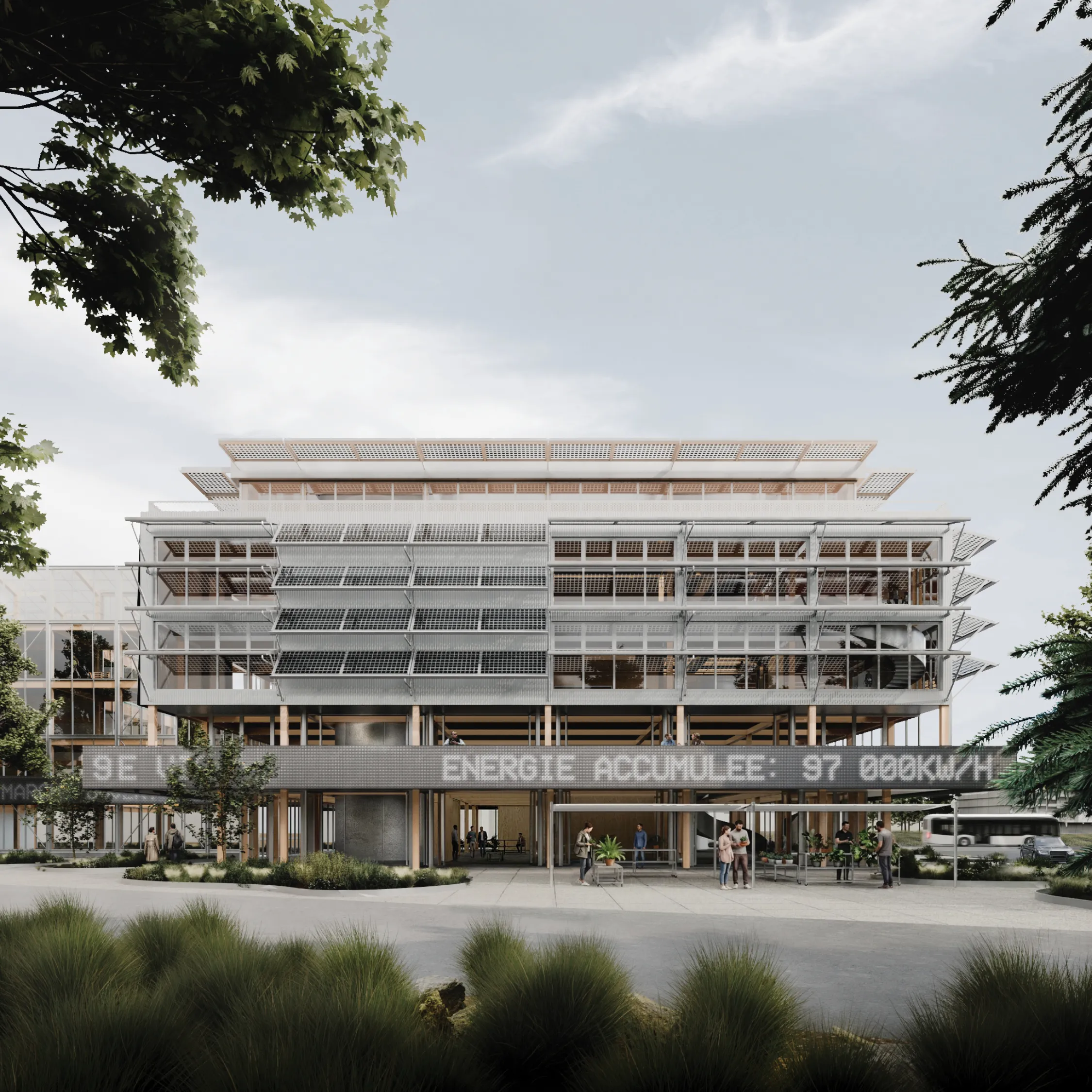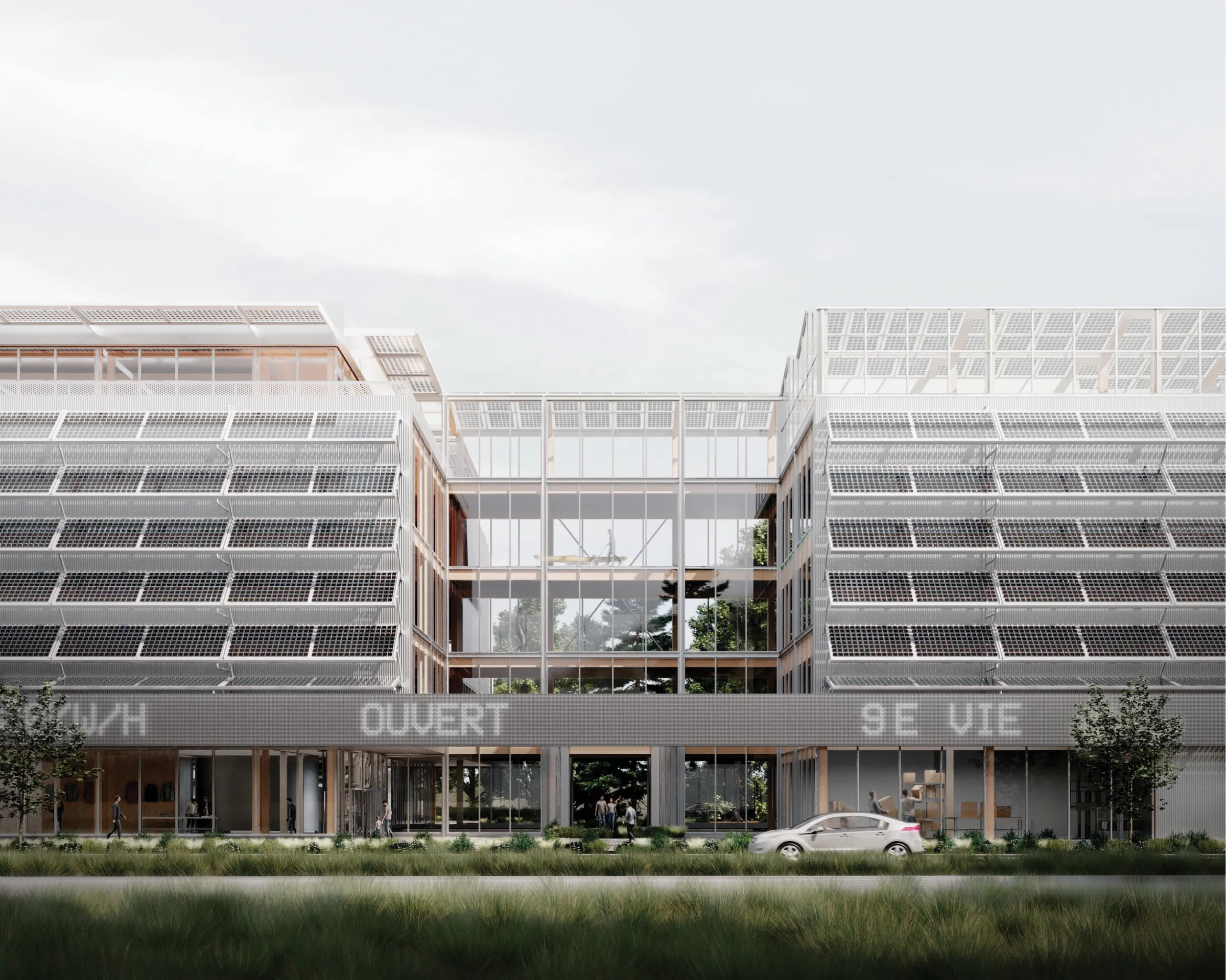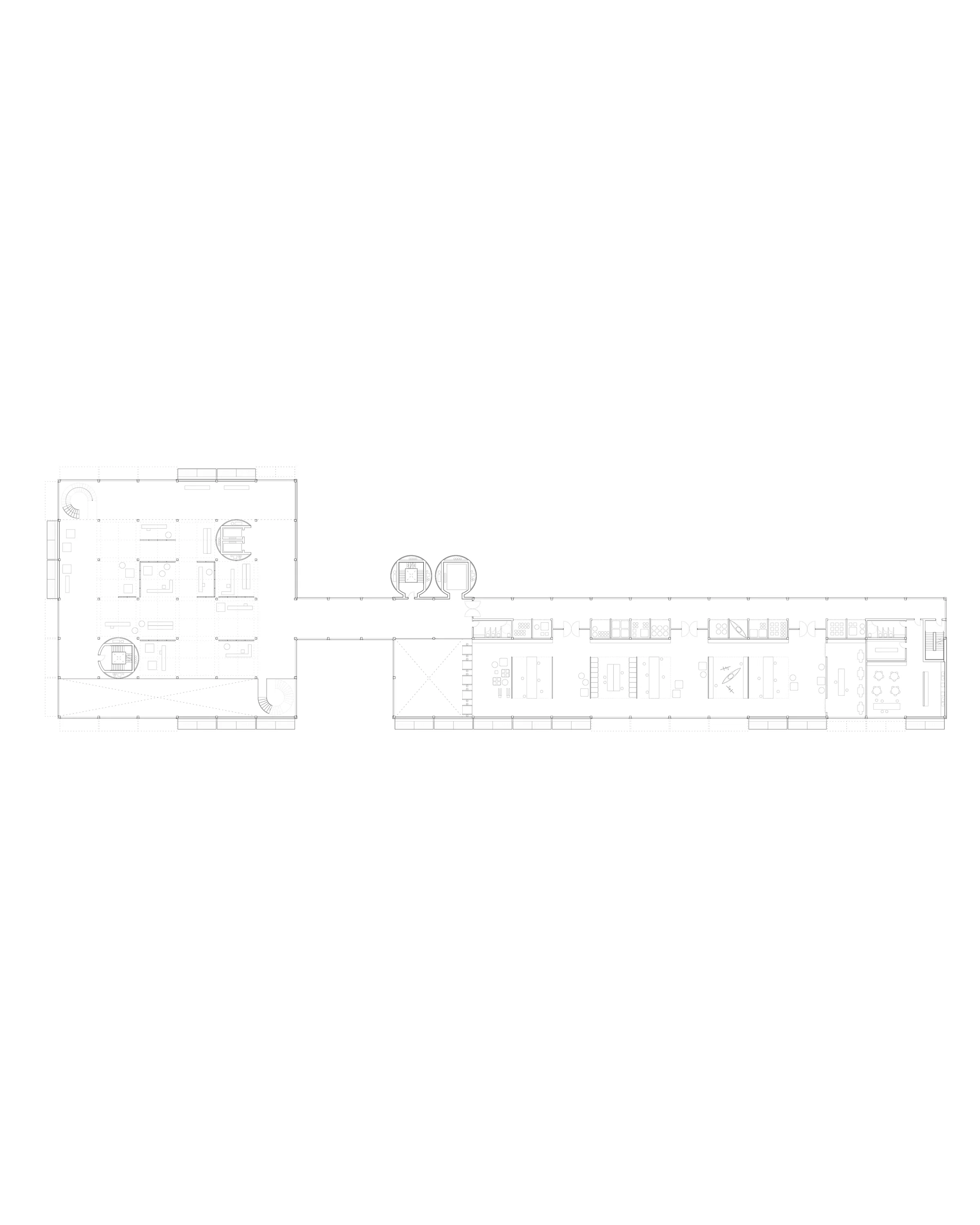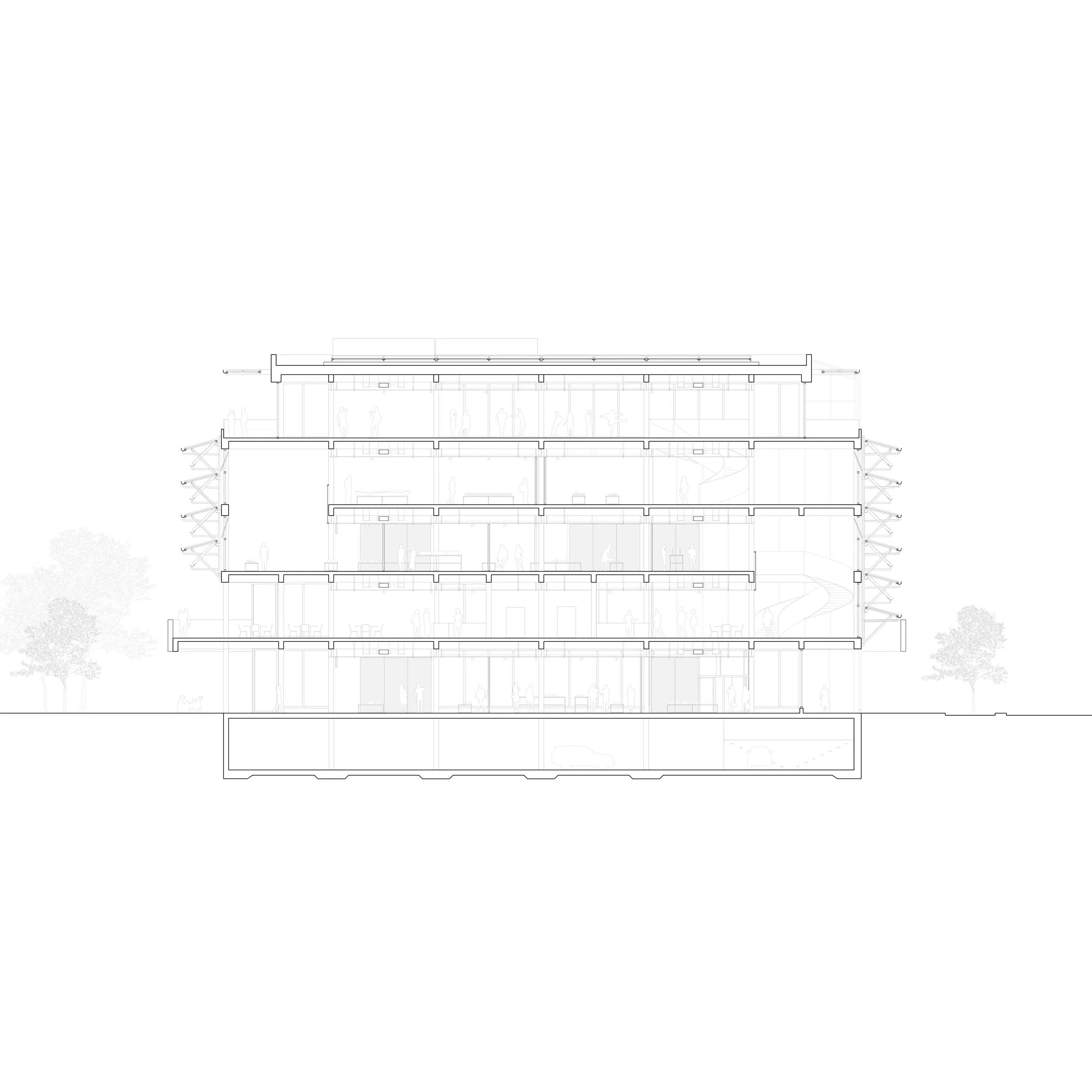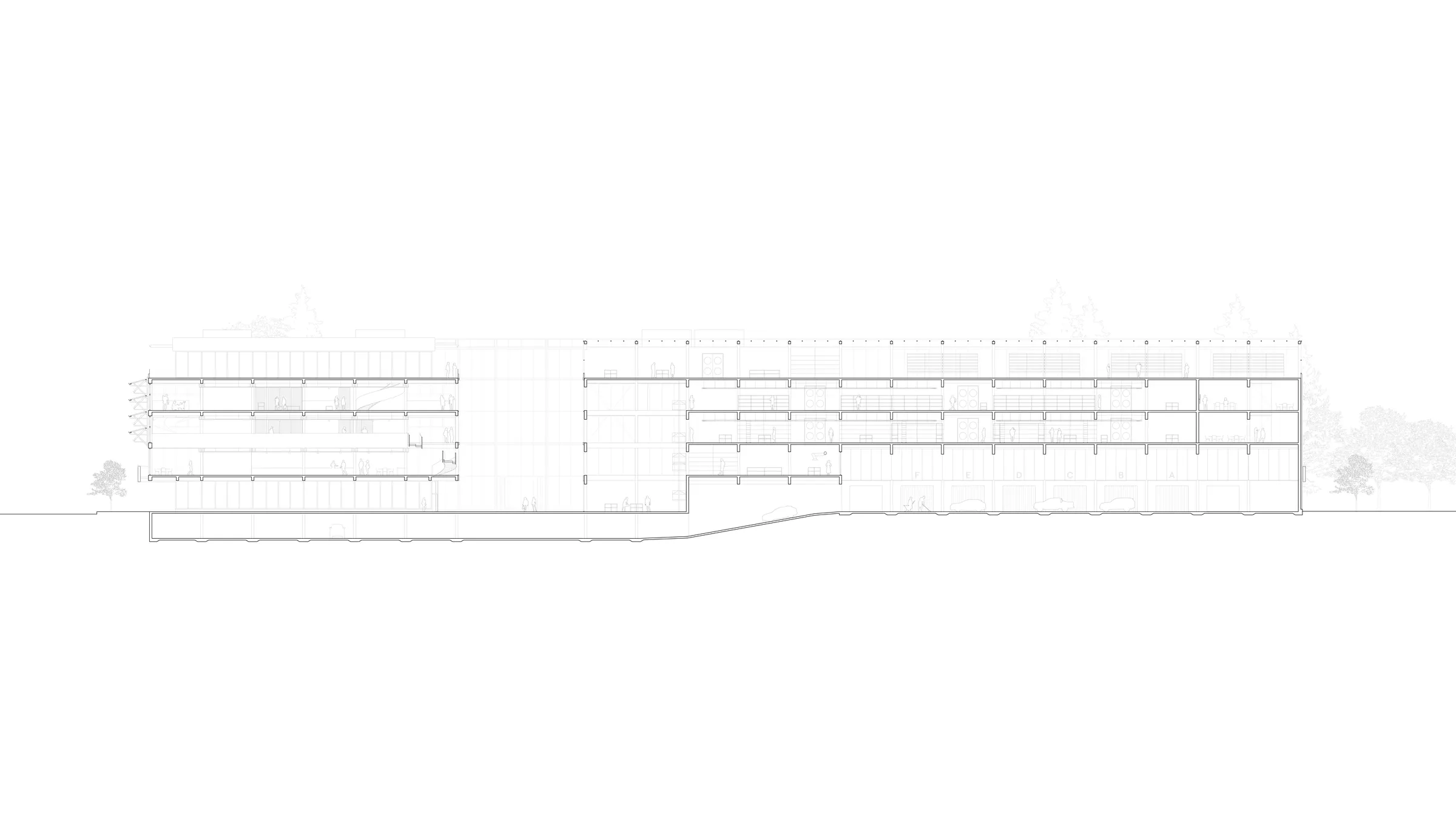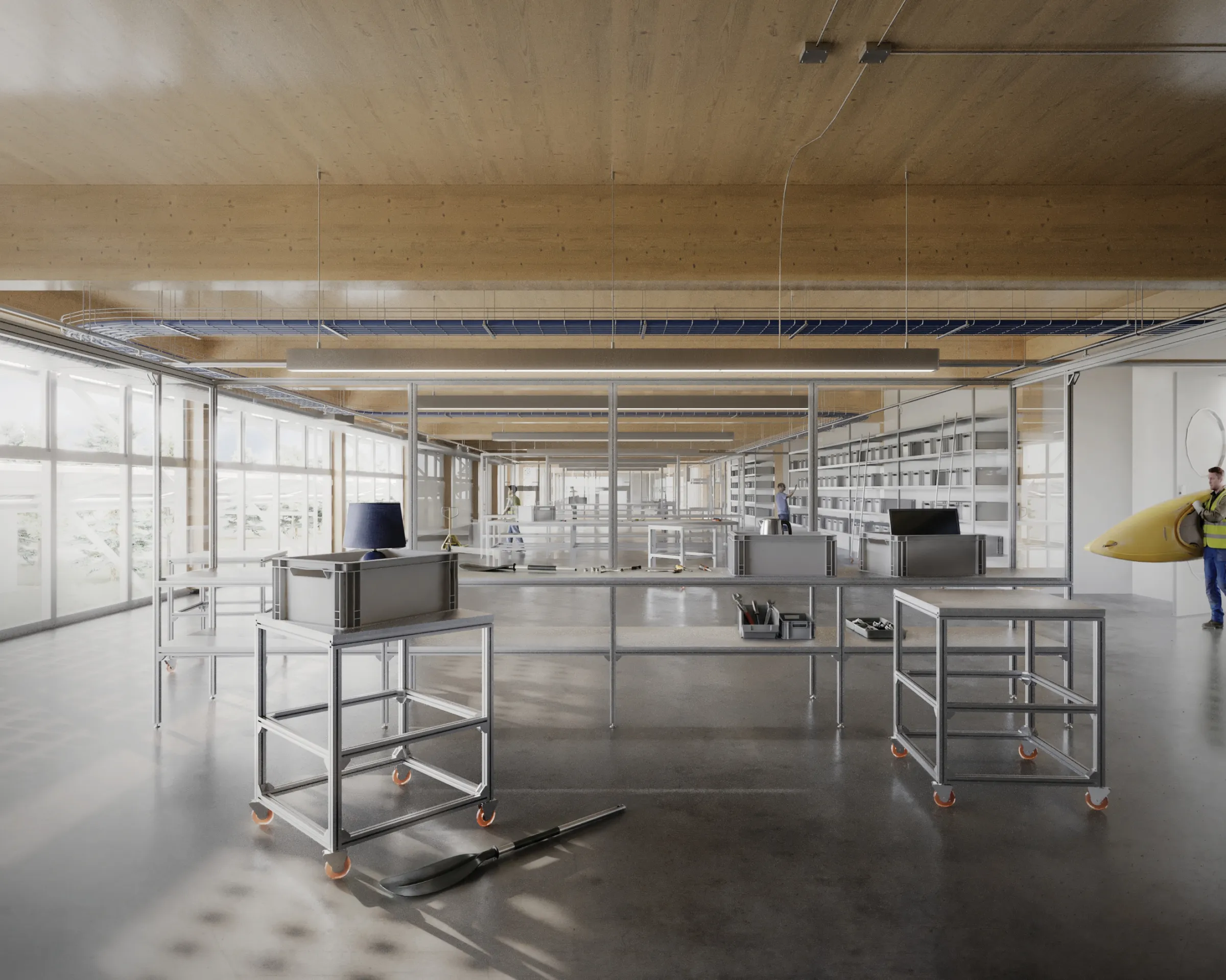
Harvest is a circular economy marketplace dedicated to second life goods, repair and reuse. The project proposes an architectural framework that supports the full lifecycle of objects from donation and sorting to repair, storage, and resale, while fostering exchange and circular living within the site. Rather than treating sustainability as an added layer, the building itself operates as an active system that makes circular processes visible, legible, and shared.
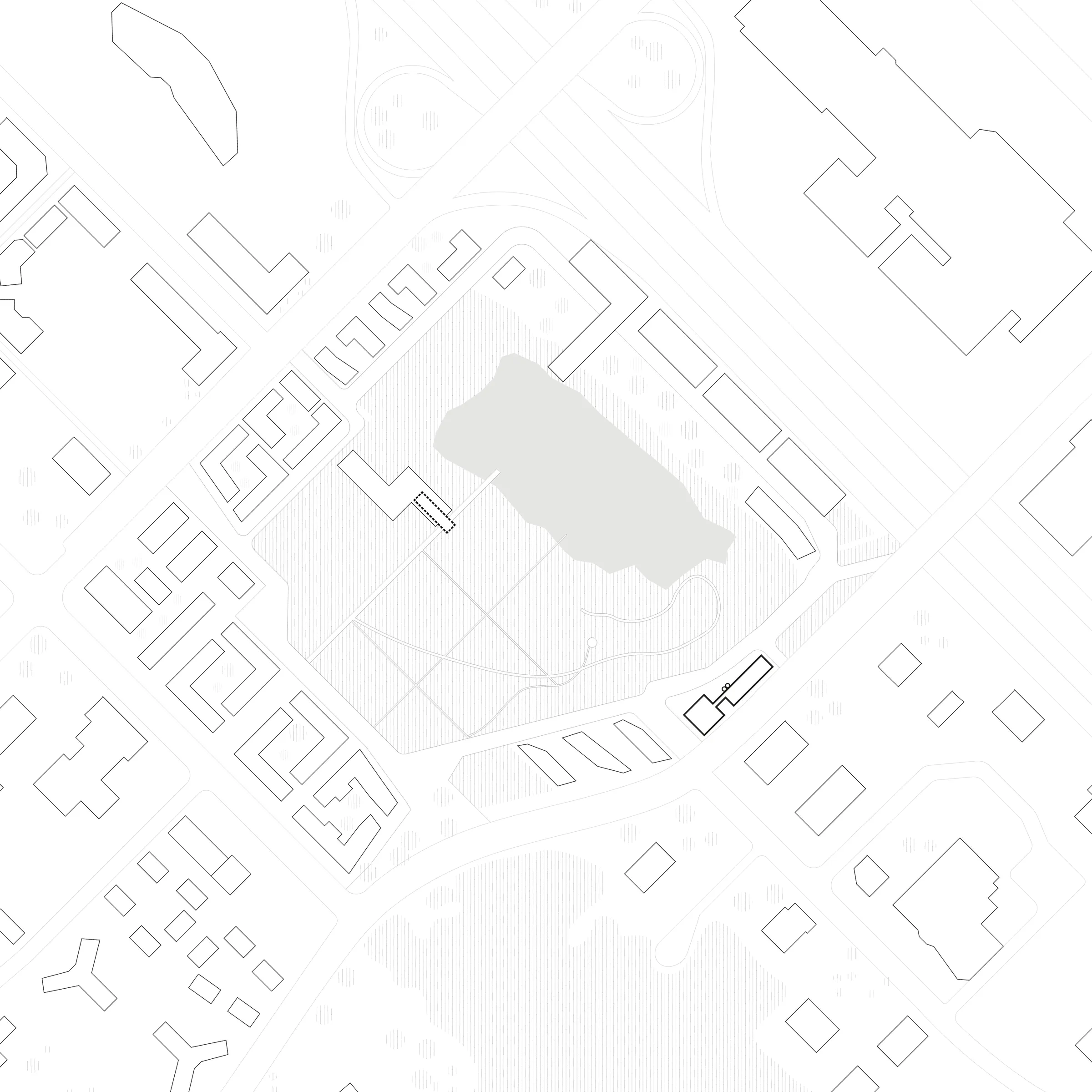
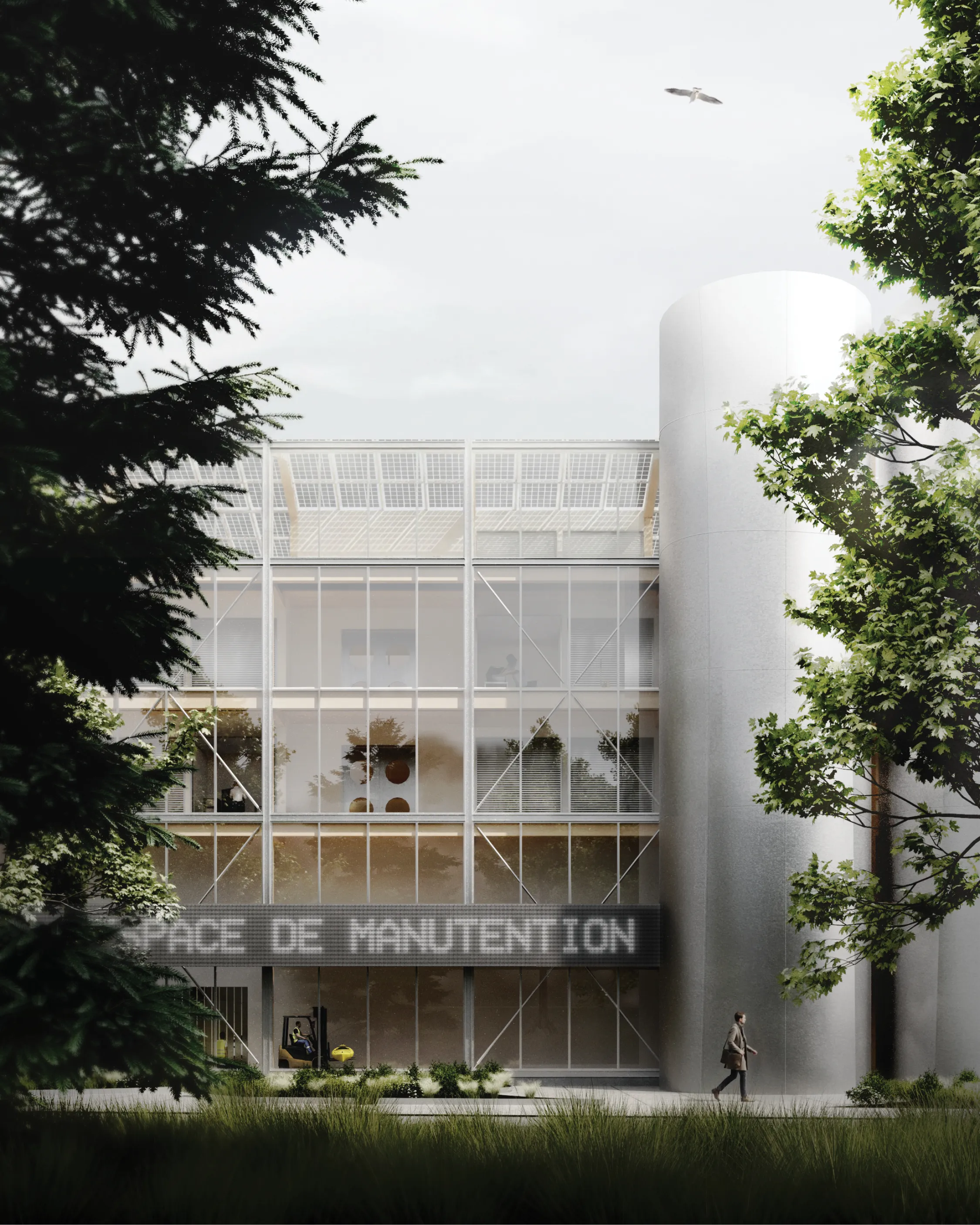
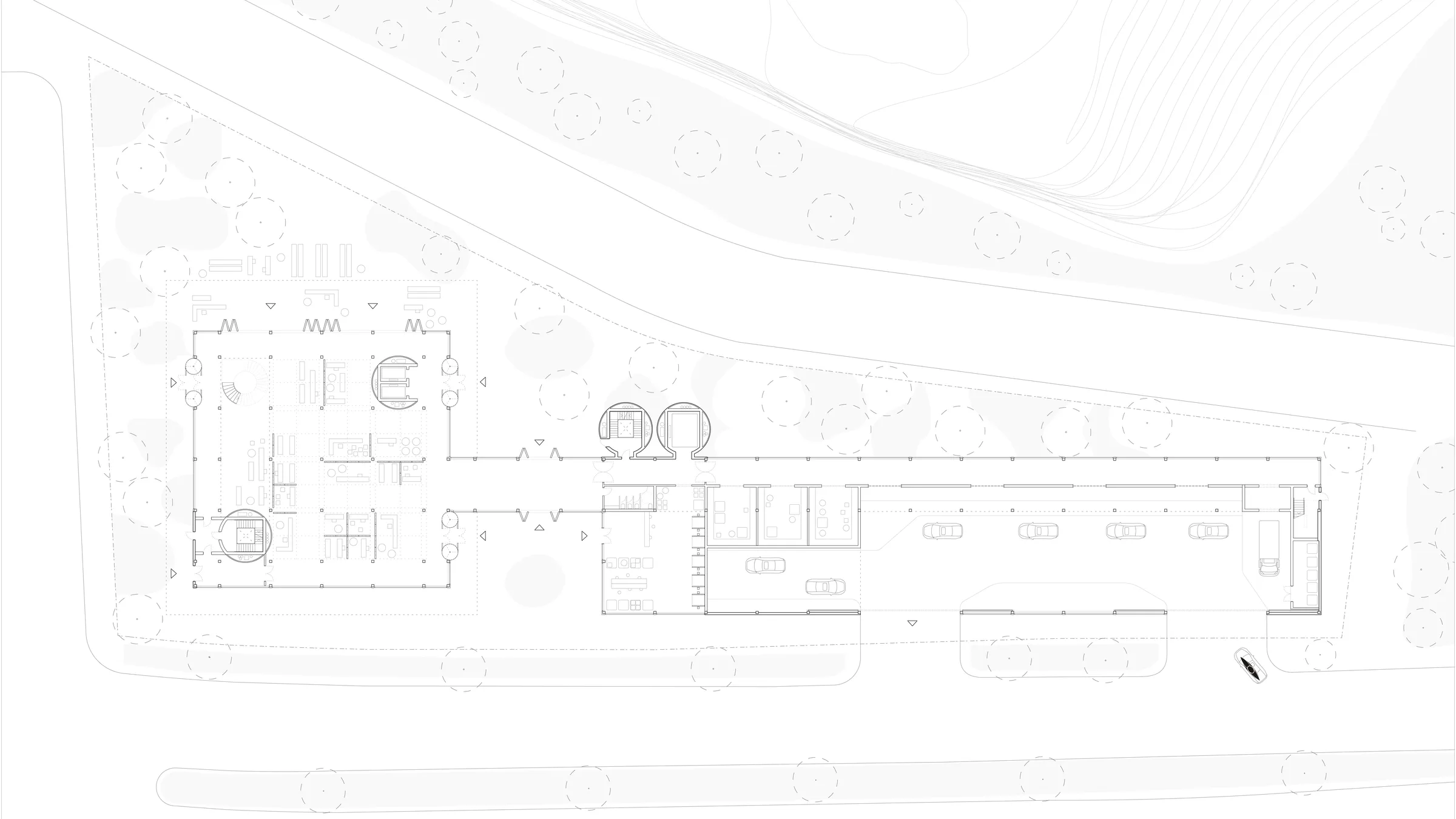
The project draws inspiration from the quarry’s last remaining artefact, the tipple, an industrial structure once used to load extracted material for transport. Reinterpreted in a contemporary context, the tipple becomes both a conceptual and organizational driver. Temporality is central to this approach, linking the site’s industrial past to its future as a regenerative urban environment. The building is divided into two primary volumes, the machine and the market, connected by a vertical distribution shaft that evokes the logic of the tipple’s conveyor belt and redistributes goods throughout the project.
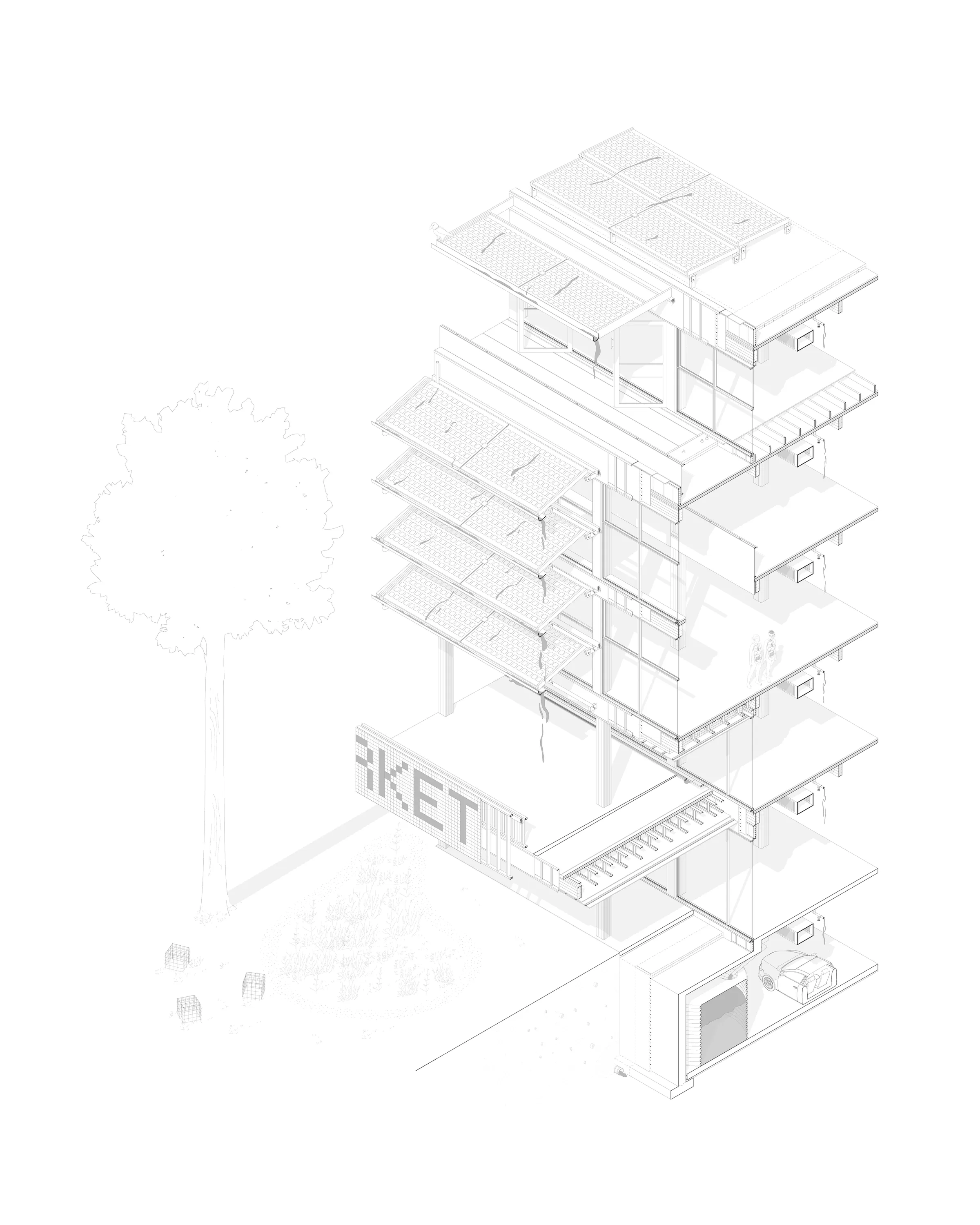
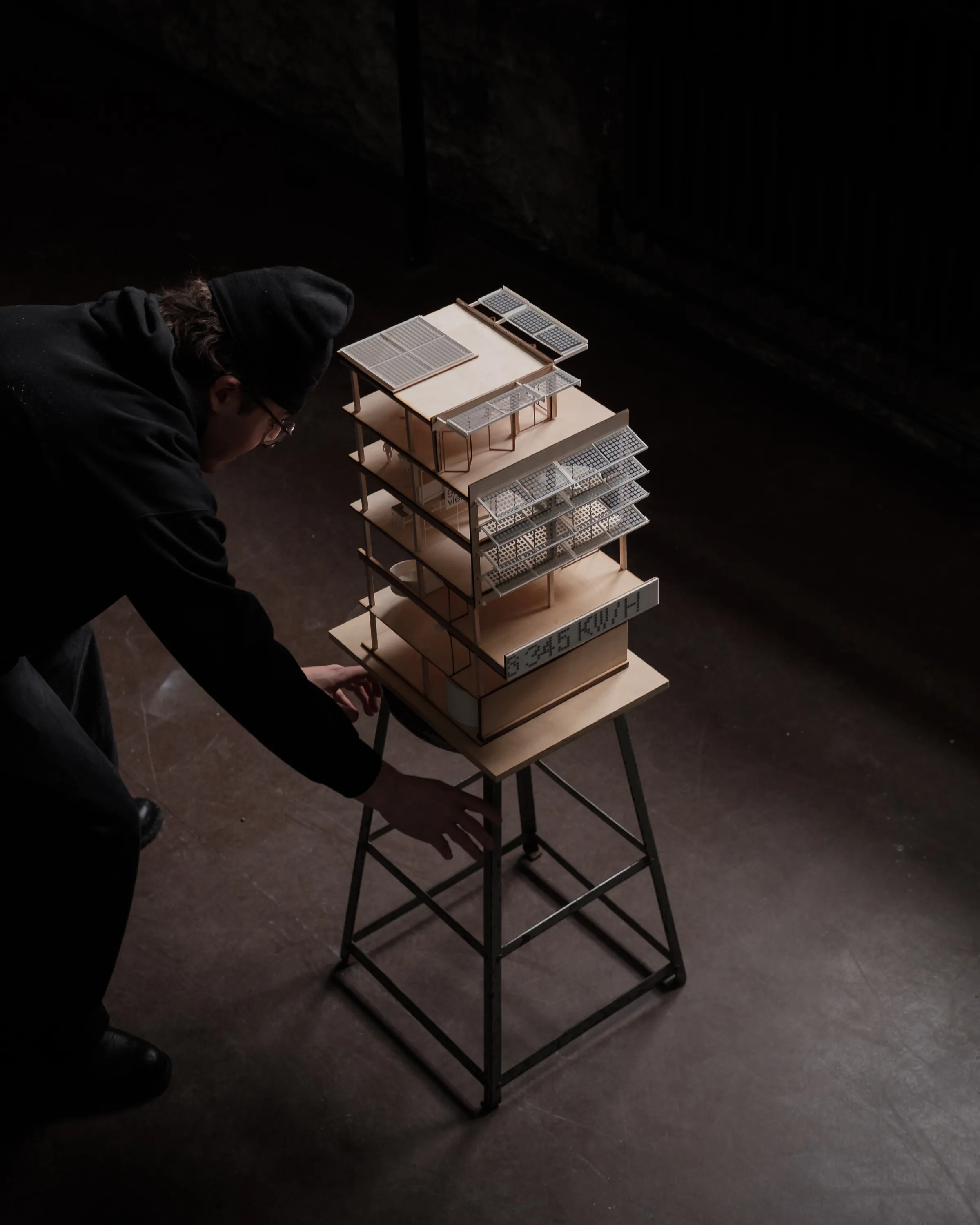
Located along the north façade, the distribution shaft acts as the building’s central vertical artery. It enables the movement of second life objects between floors, connecting intake, sorting, workshops, storage, and market spaces into a continuous logistical loop. Open to the exterior, the shaft exposes the flow of materials to the public, transforming logistics into an architectural experience. The circulation of goods becomes visible, reinforcing the project’s commitment to transparency and circularity.
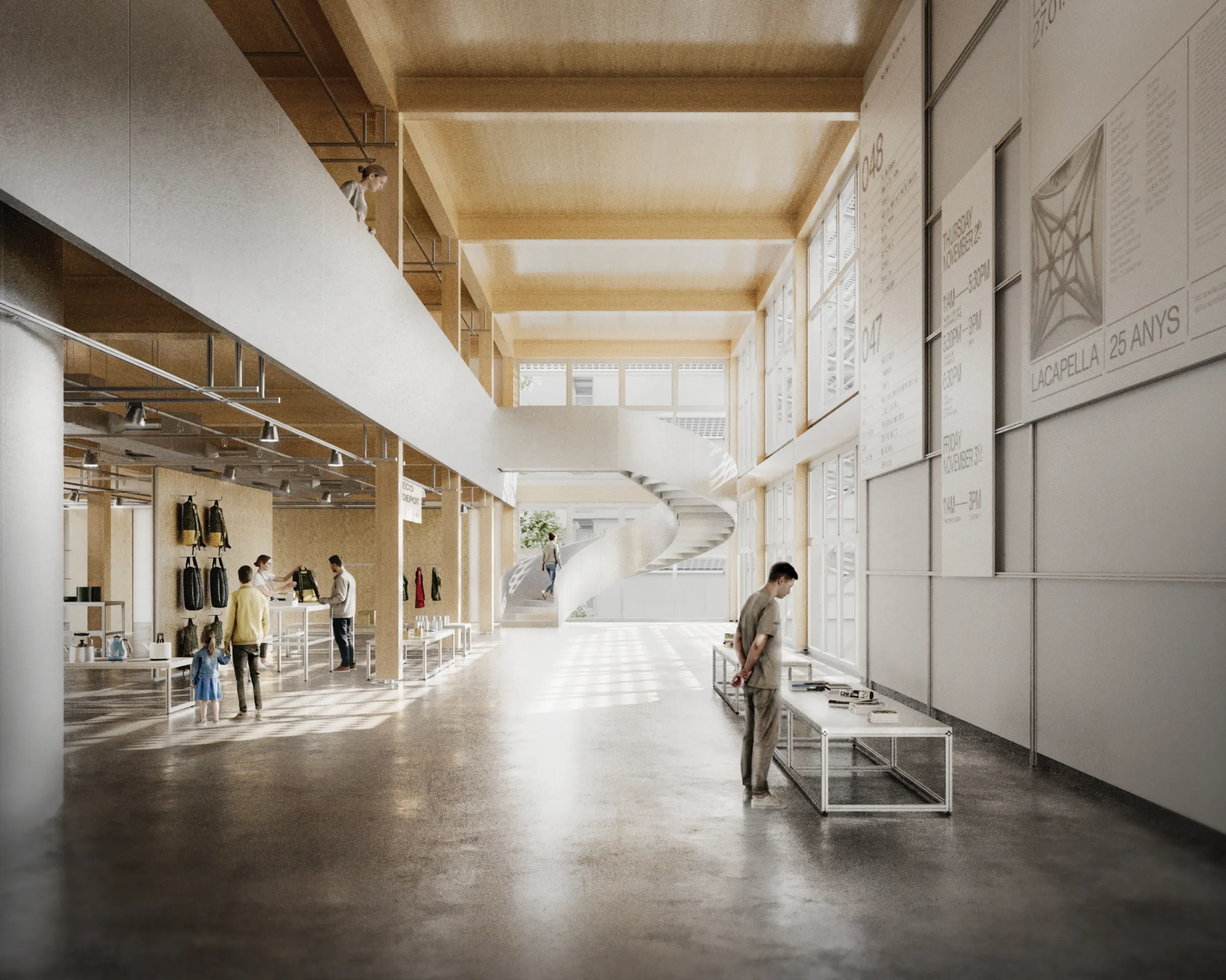
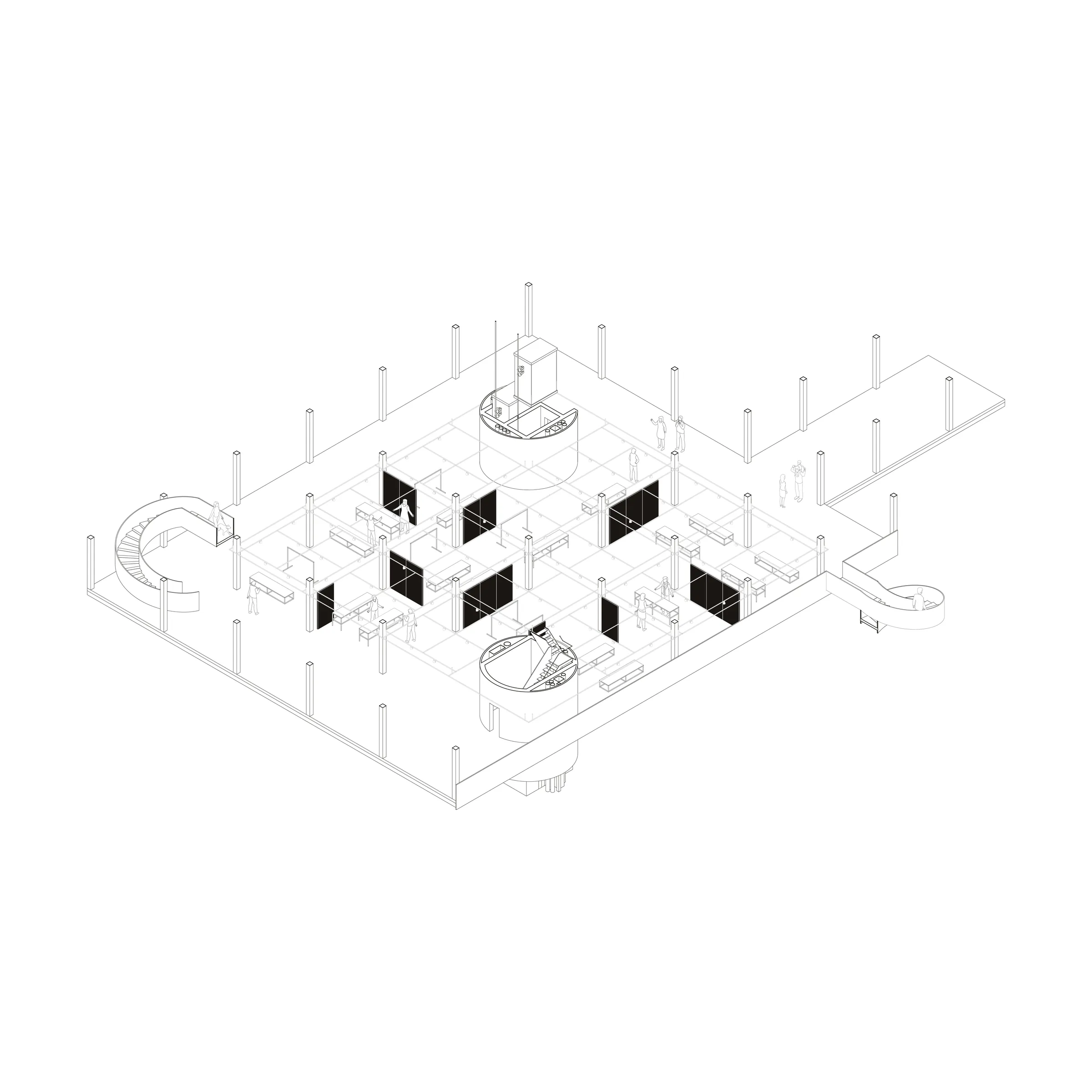
The market itself is organized as an open and flexible space. Merchants occupy modular units aligned with the structural grid, allowing for adaptability over time. Each unit includes a sales area and adjacent storage located within the functional bar along the distribution shaft, keeping the market floor open, uncluttered, and highly legible. The removal of select structural bays at the edges of the floor plate creates double-height spaces that enhance visual connections between levels. Circular staircases punctuate these voids and encourage fluid movement through the market.
Environmental systems are integrated directly into the building envelope, extending the logic of the machine beyond material flows. Solar panels integrated into the façade generate approximately 110 percent of the market’s annual energy consumption. The panel assembly also incorporates gutters that collect and redistribute rainwater for reuse throughout the building, embedding cycles of energy and water into the architectural expression.
Developed at McGill University, in response to the City of Laval and a private client, the project tackles a complex program with significant logistical demands. By organizing circulation, structure, and environmental systems around the logic of reuse, the proposal transforms the former quarry into a living framework where past and future converge, and where architecture becomes an active agent in supporting circular economies and community life.