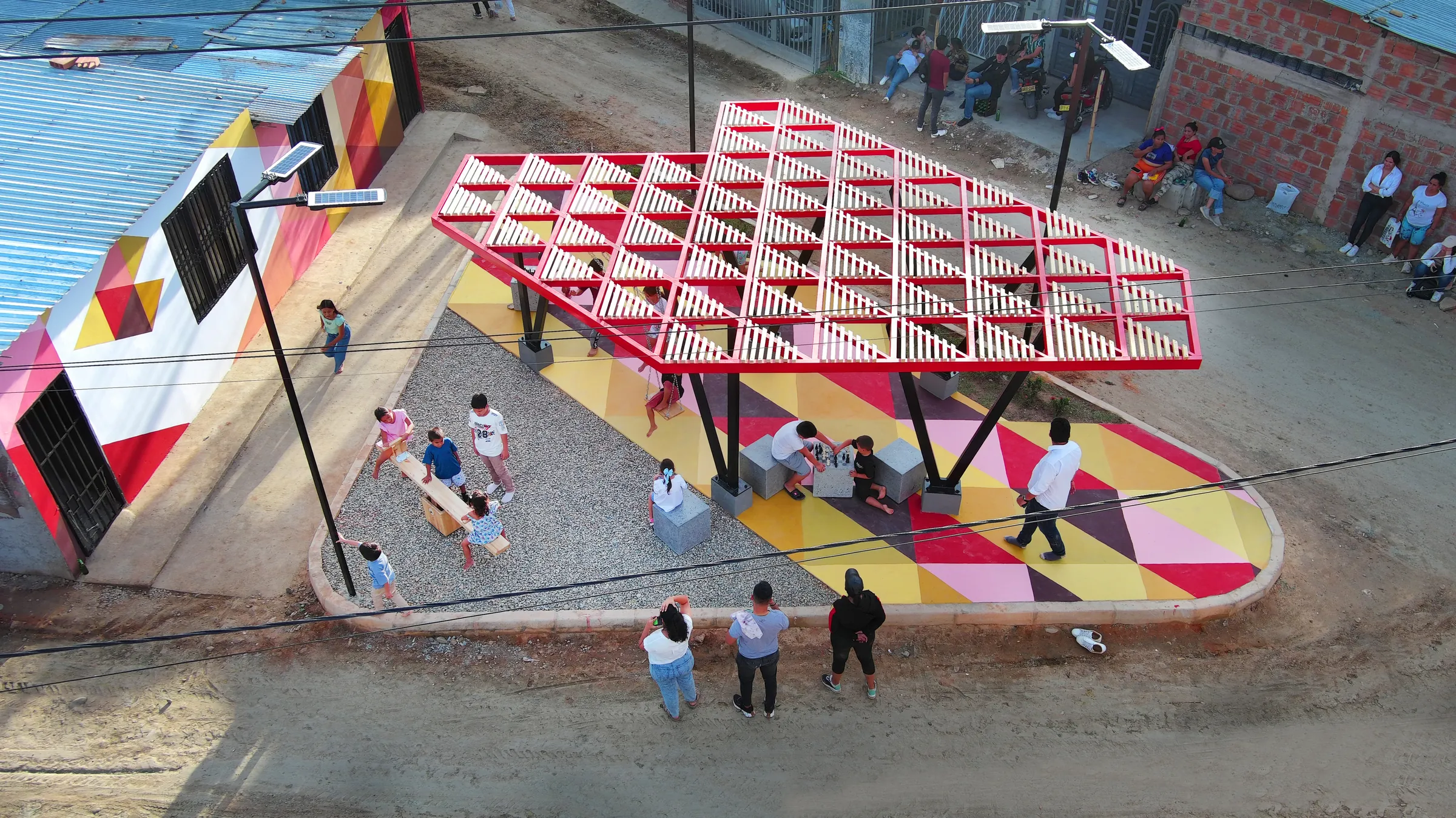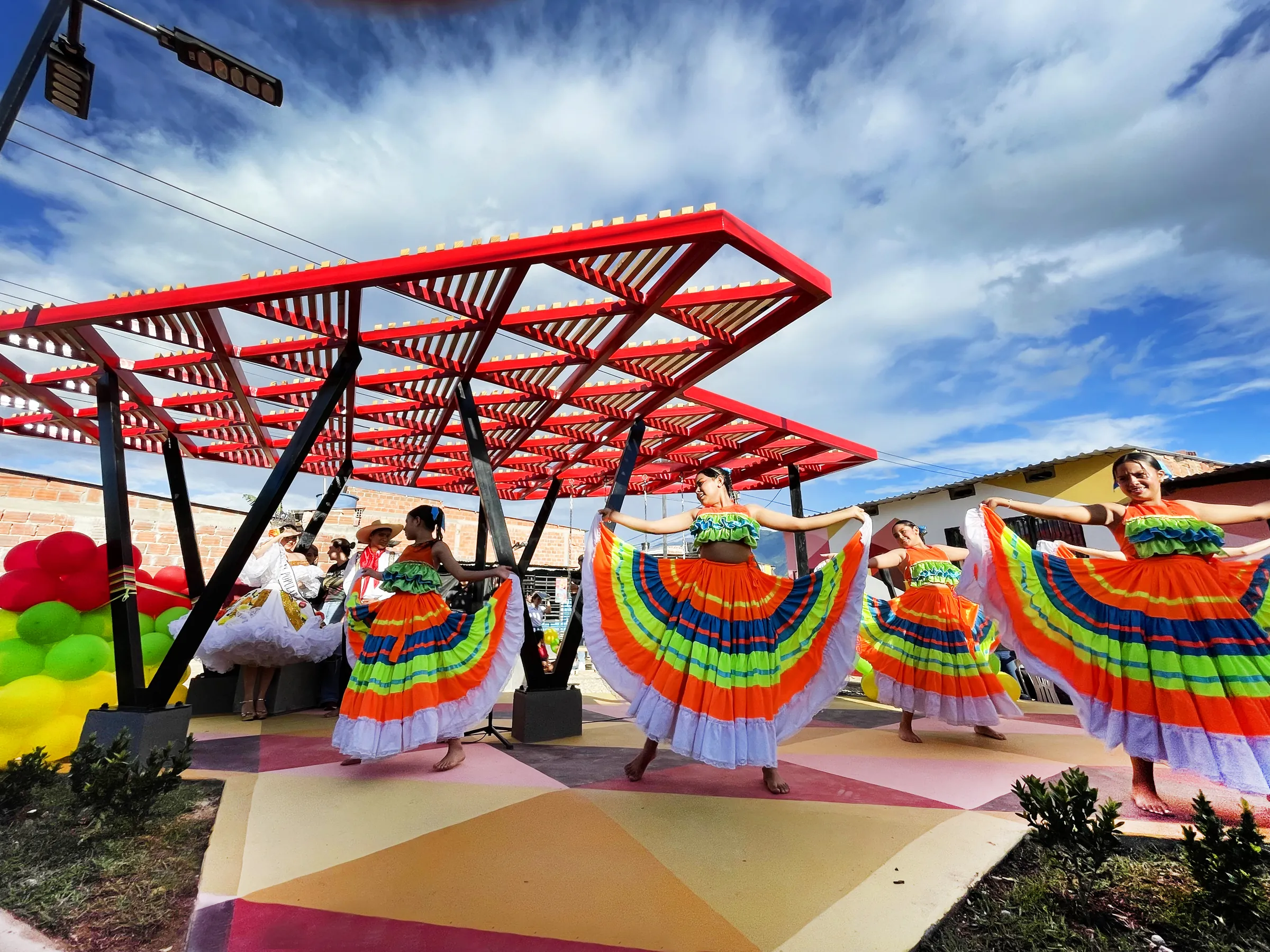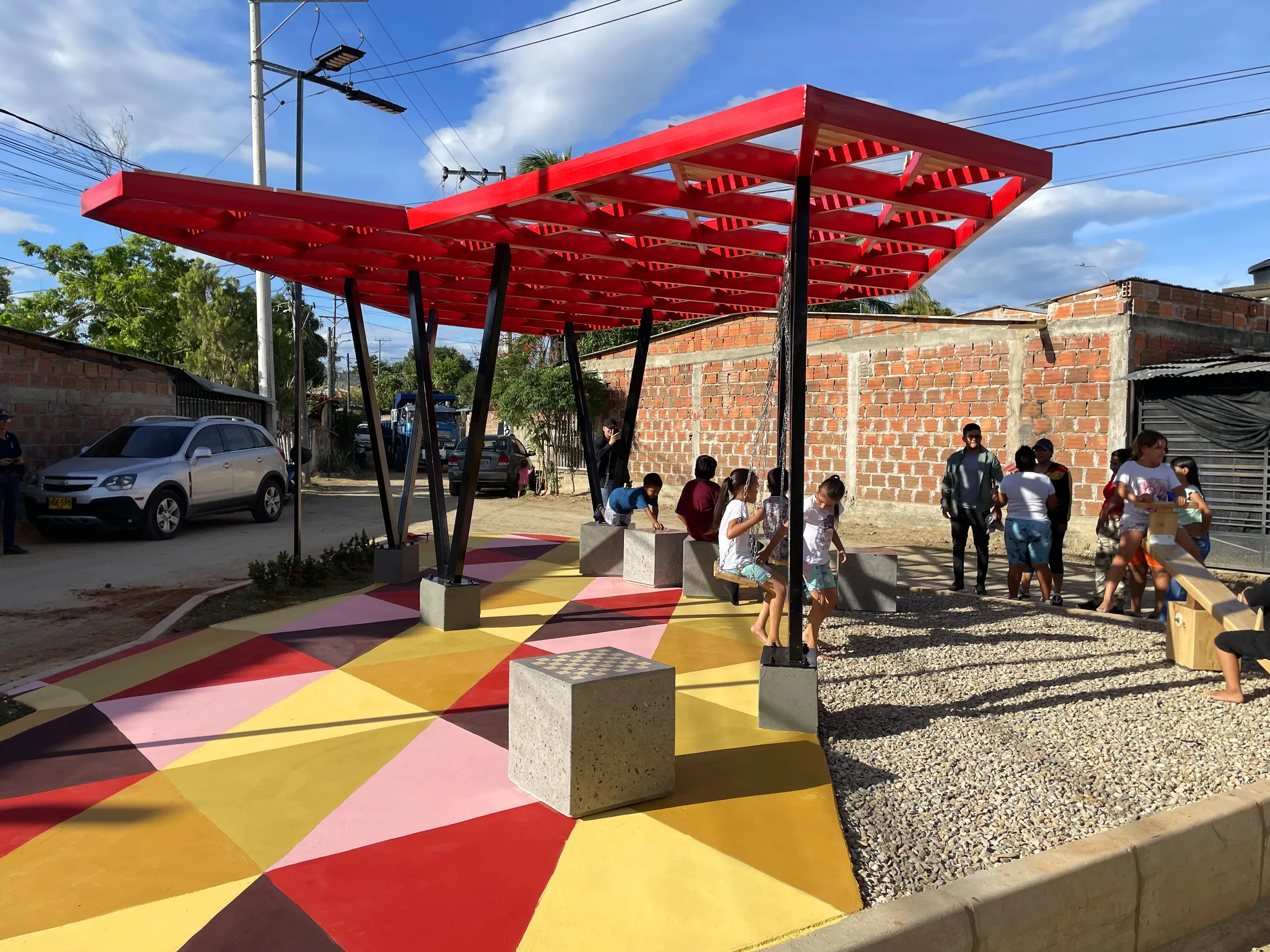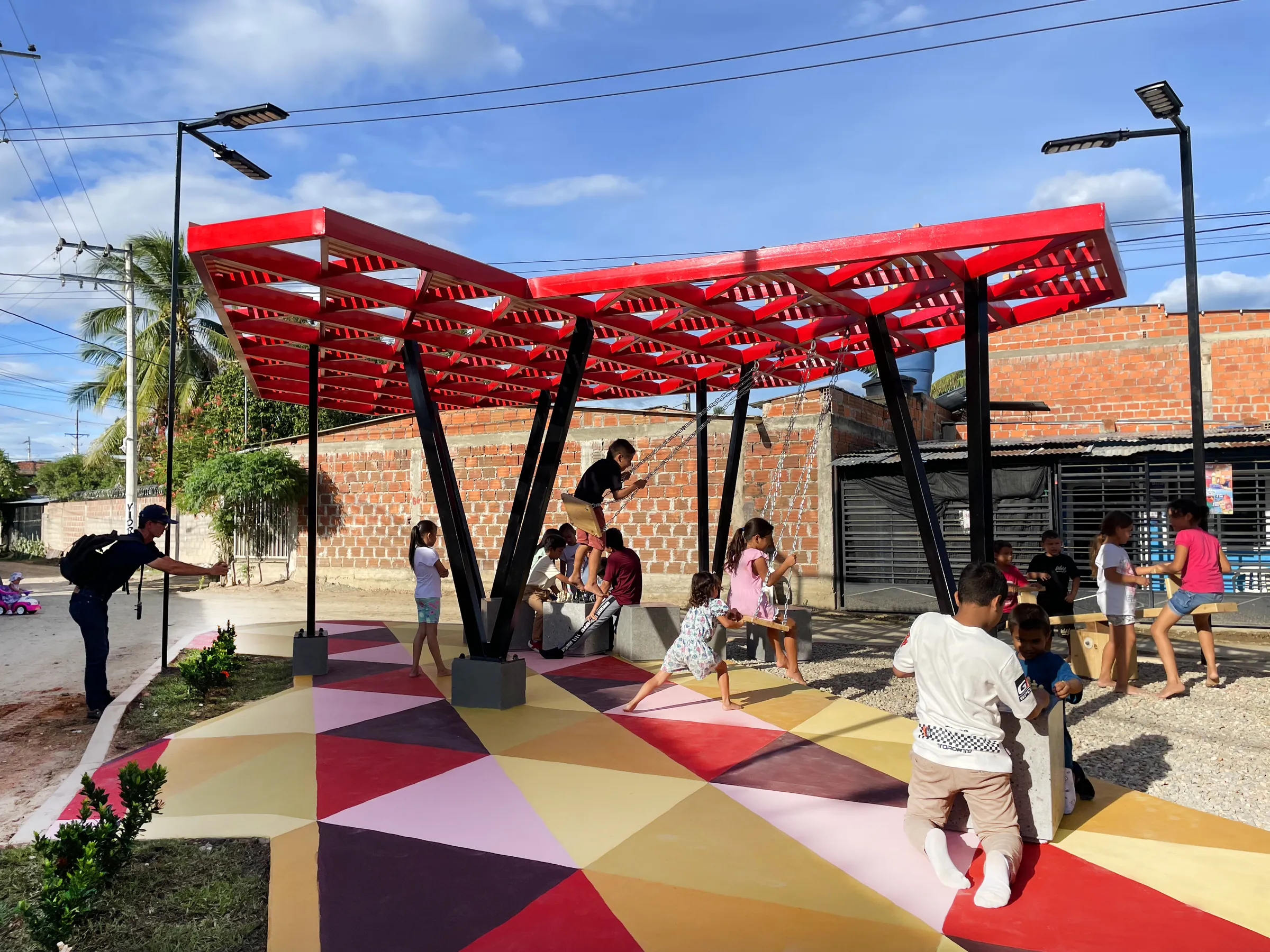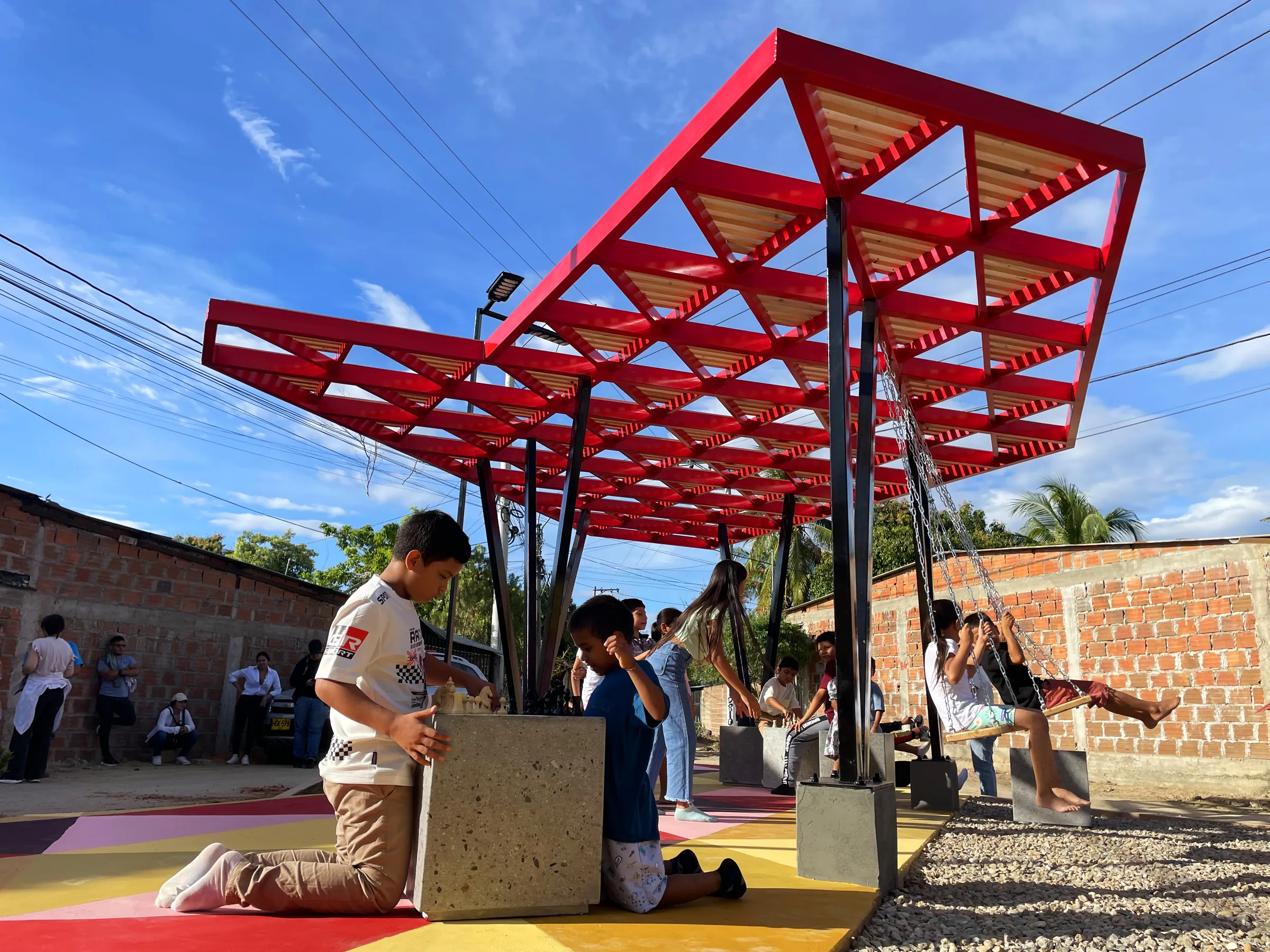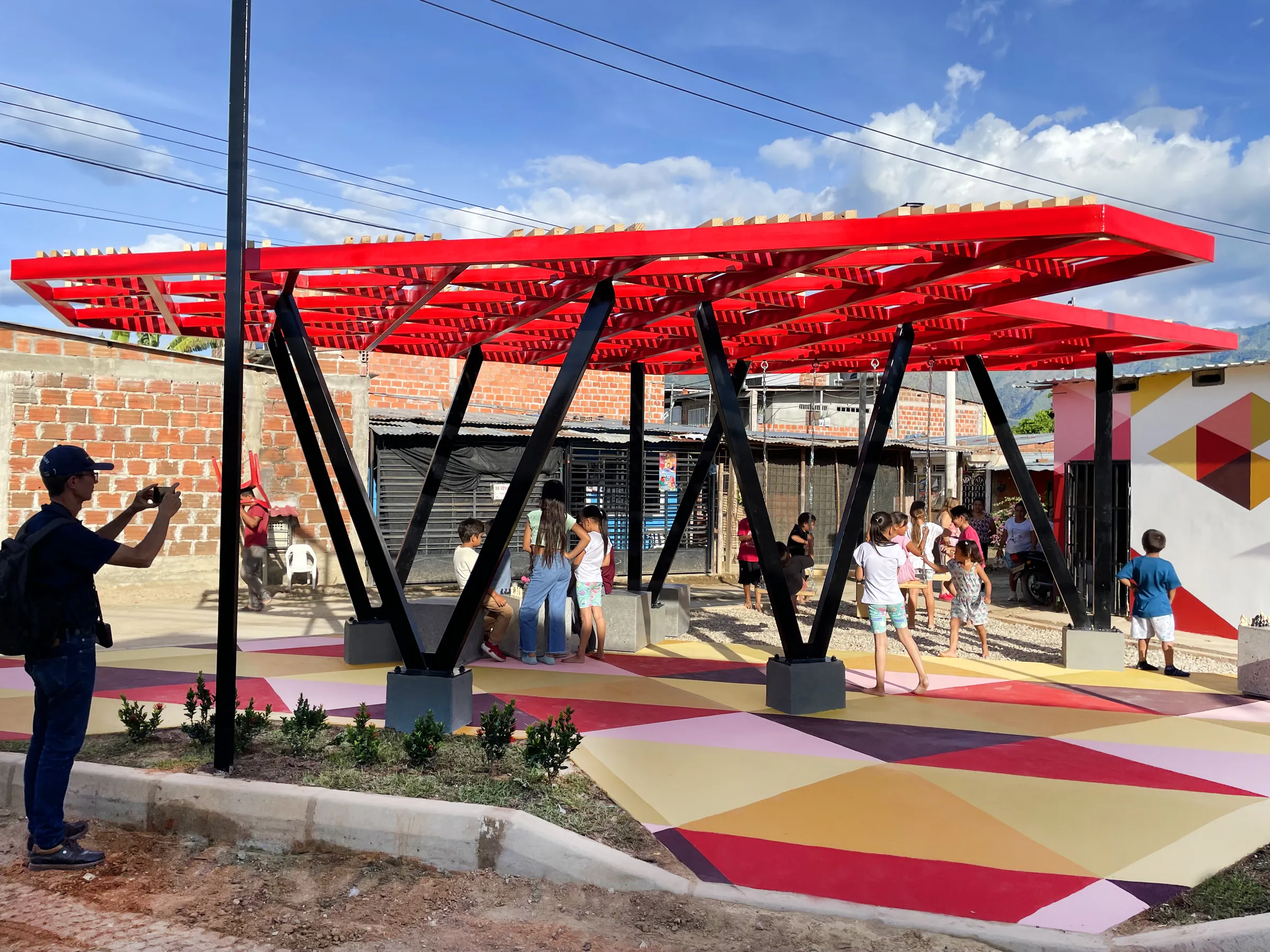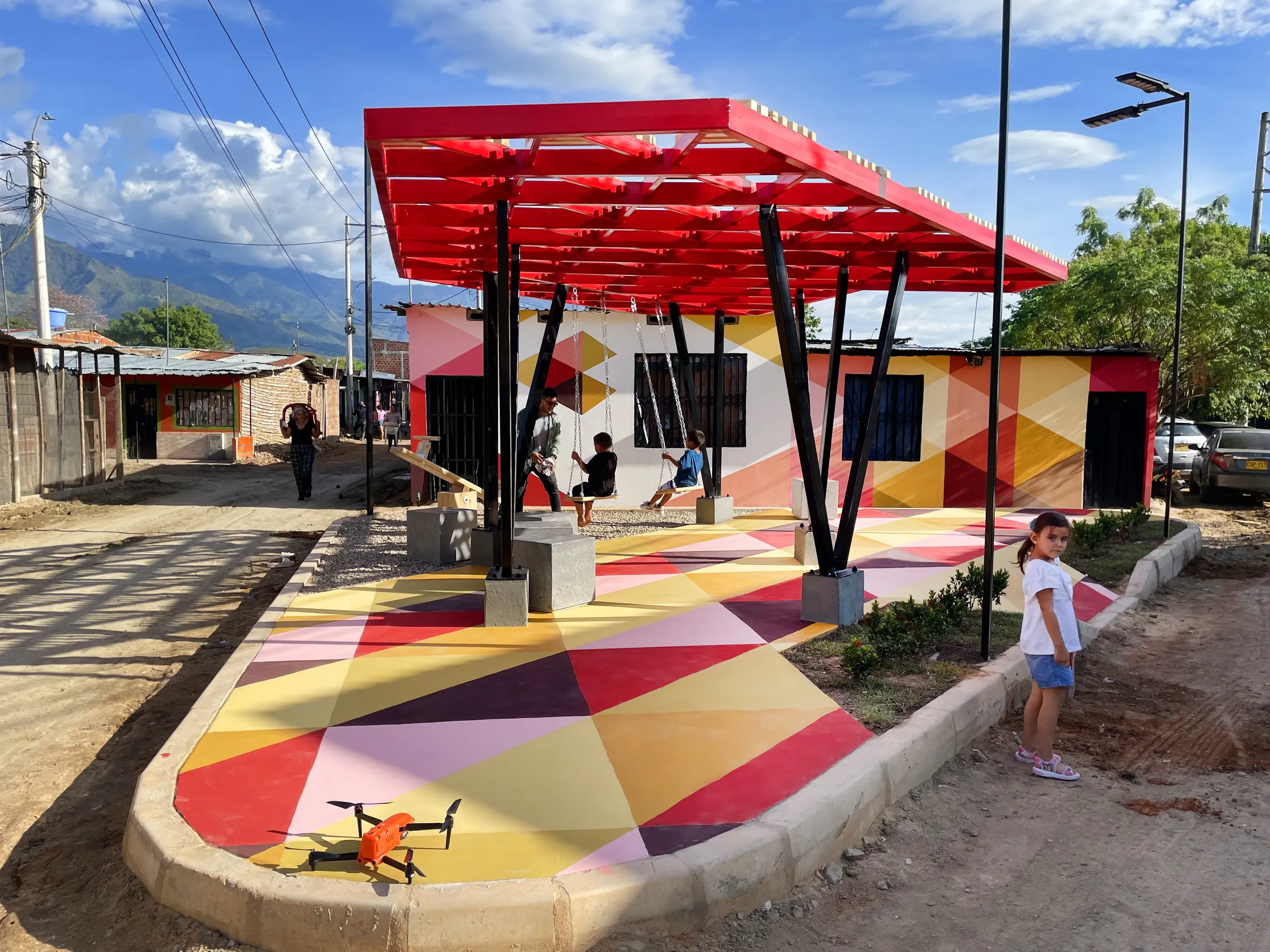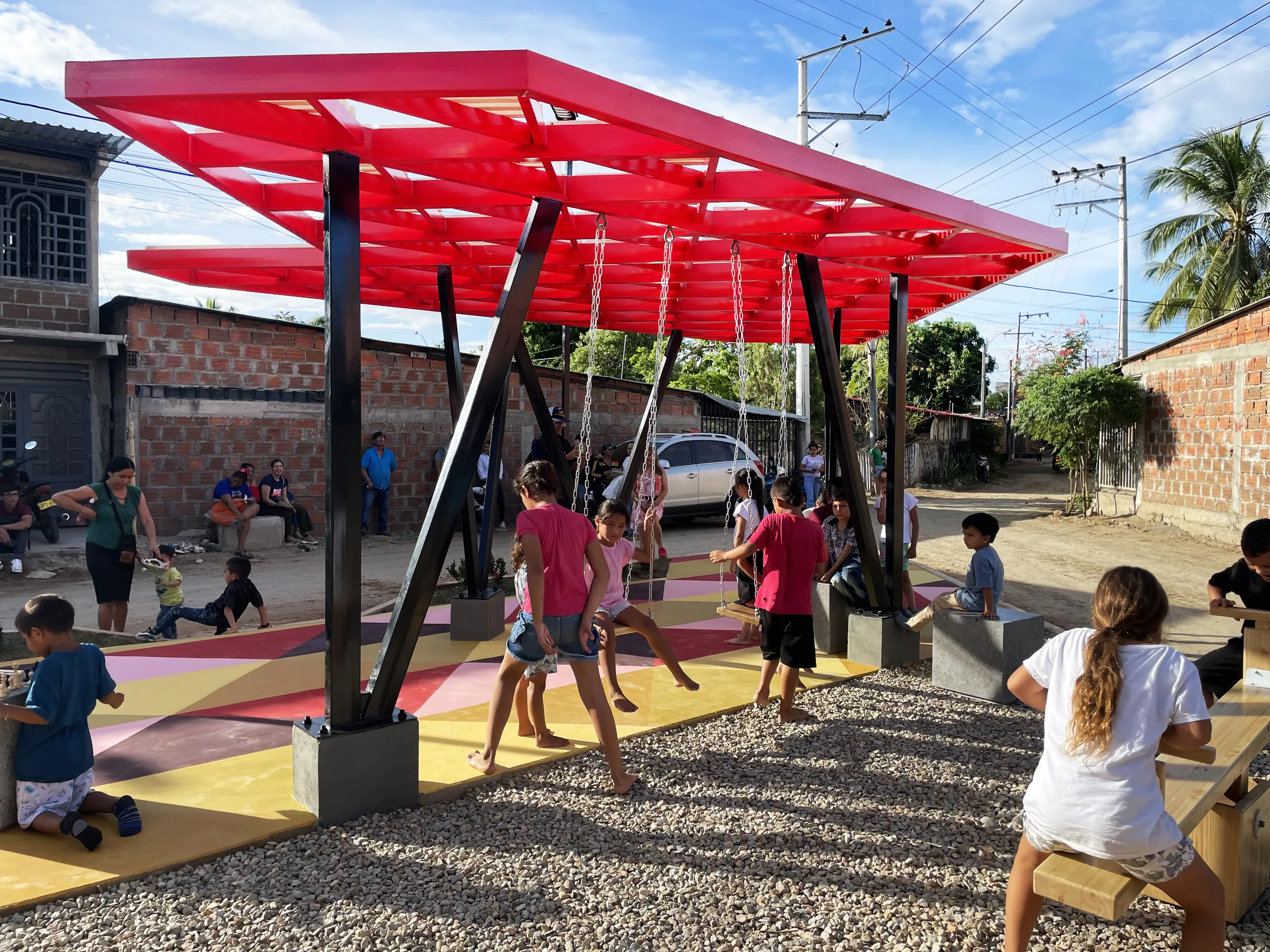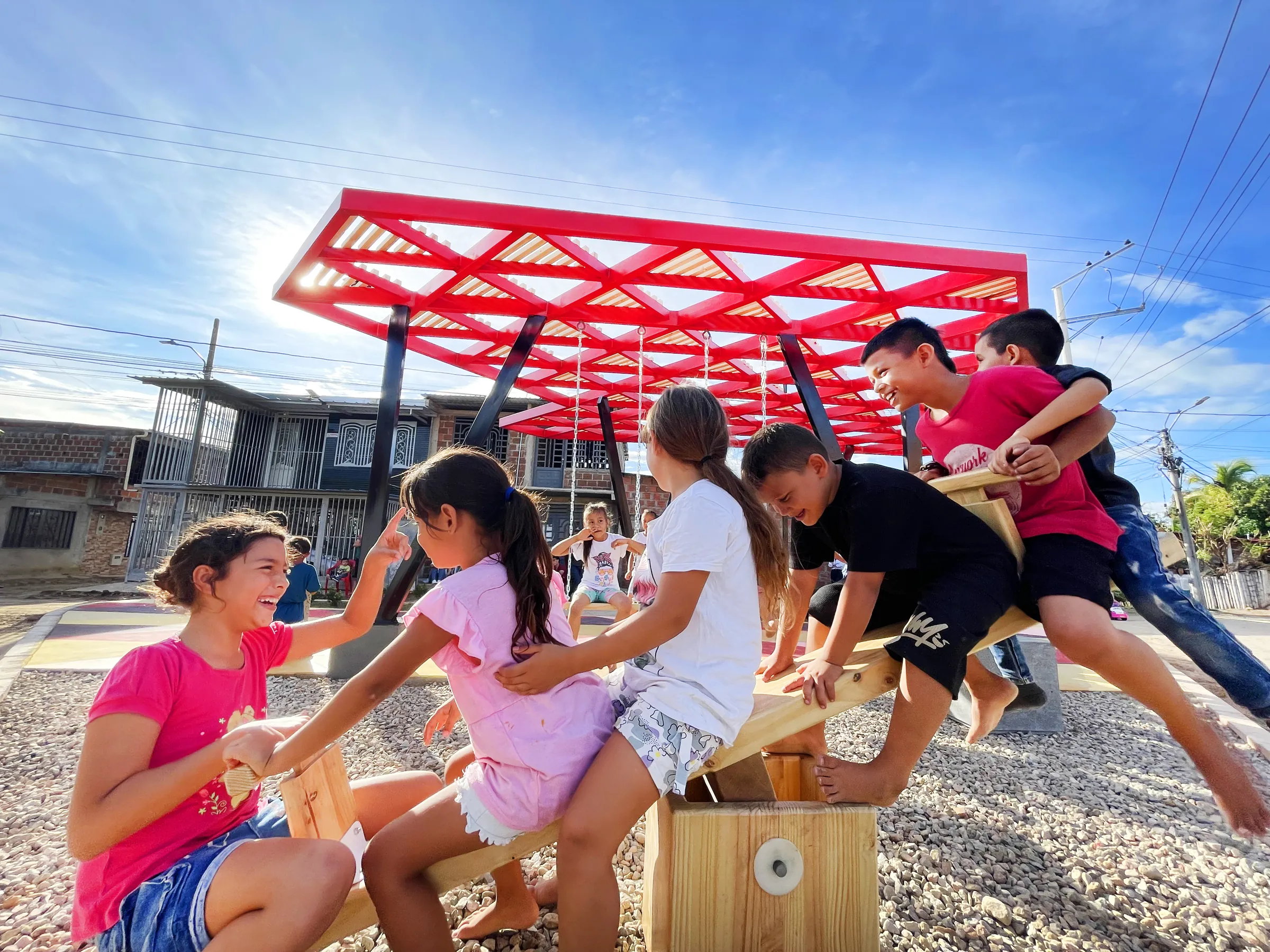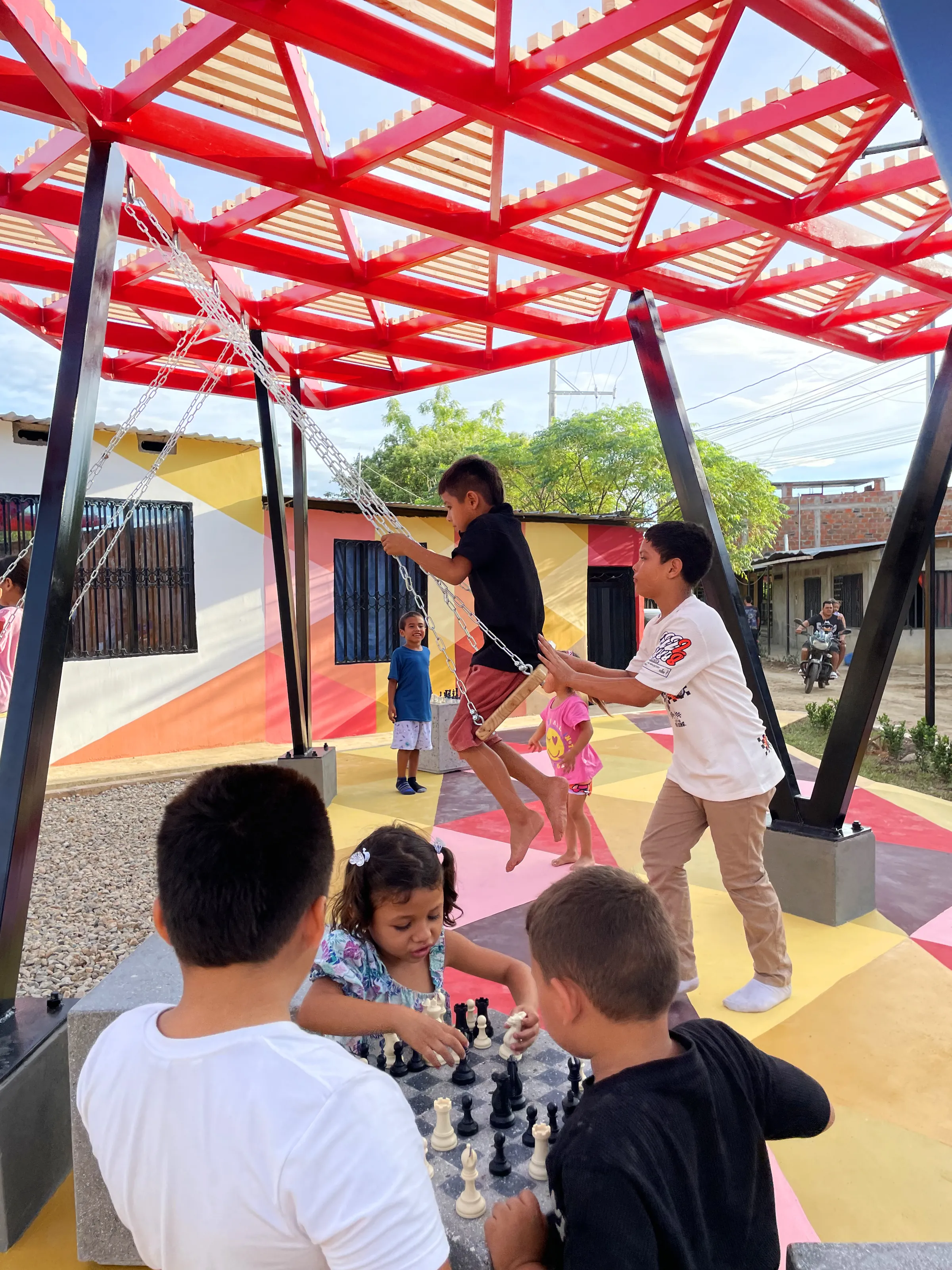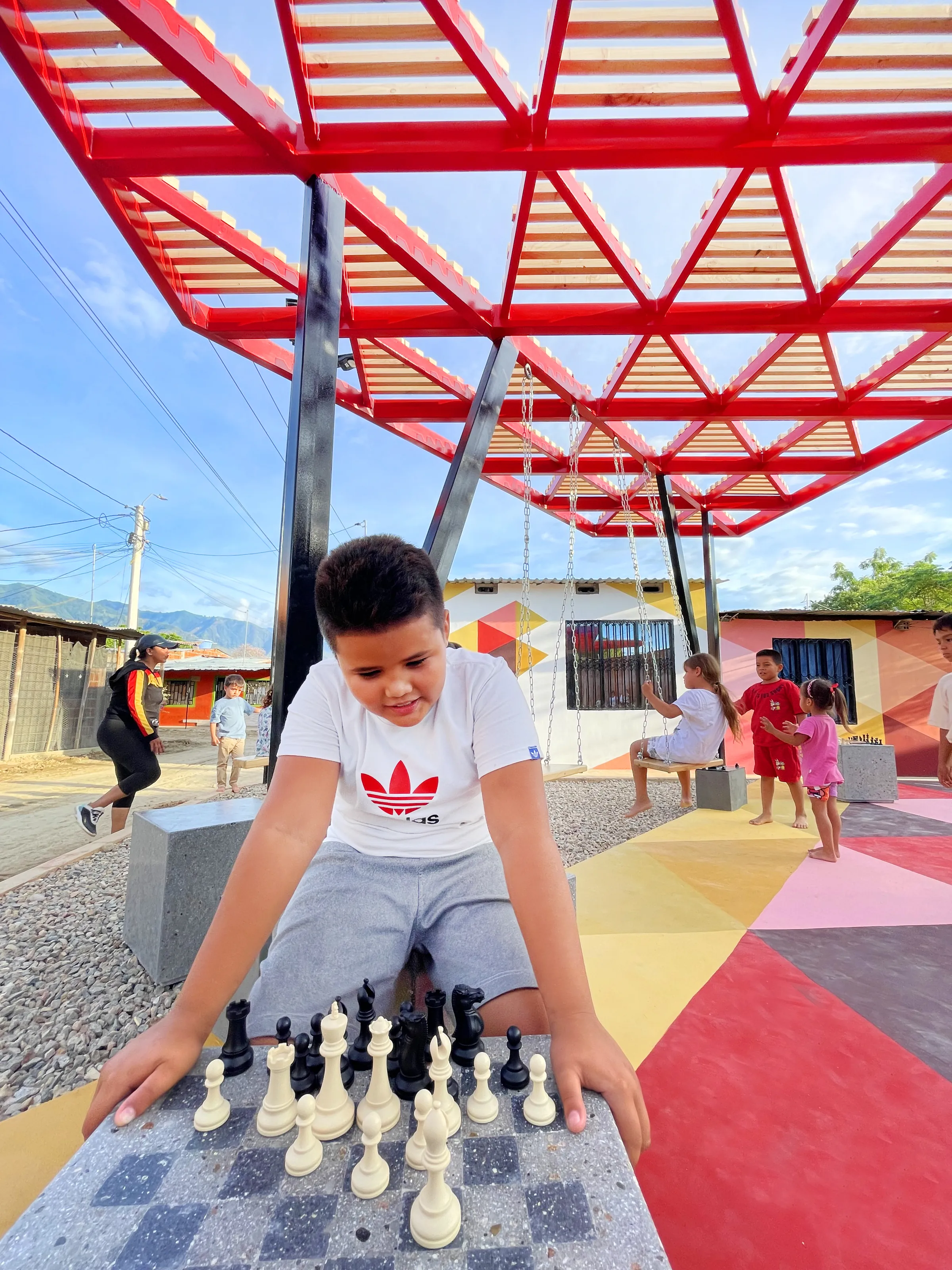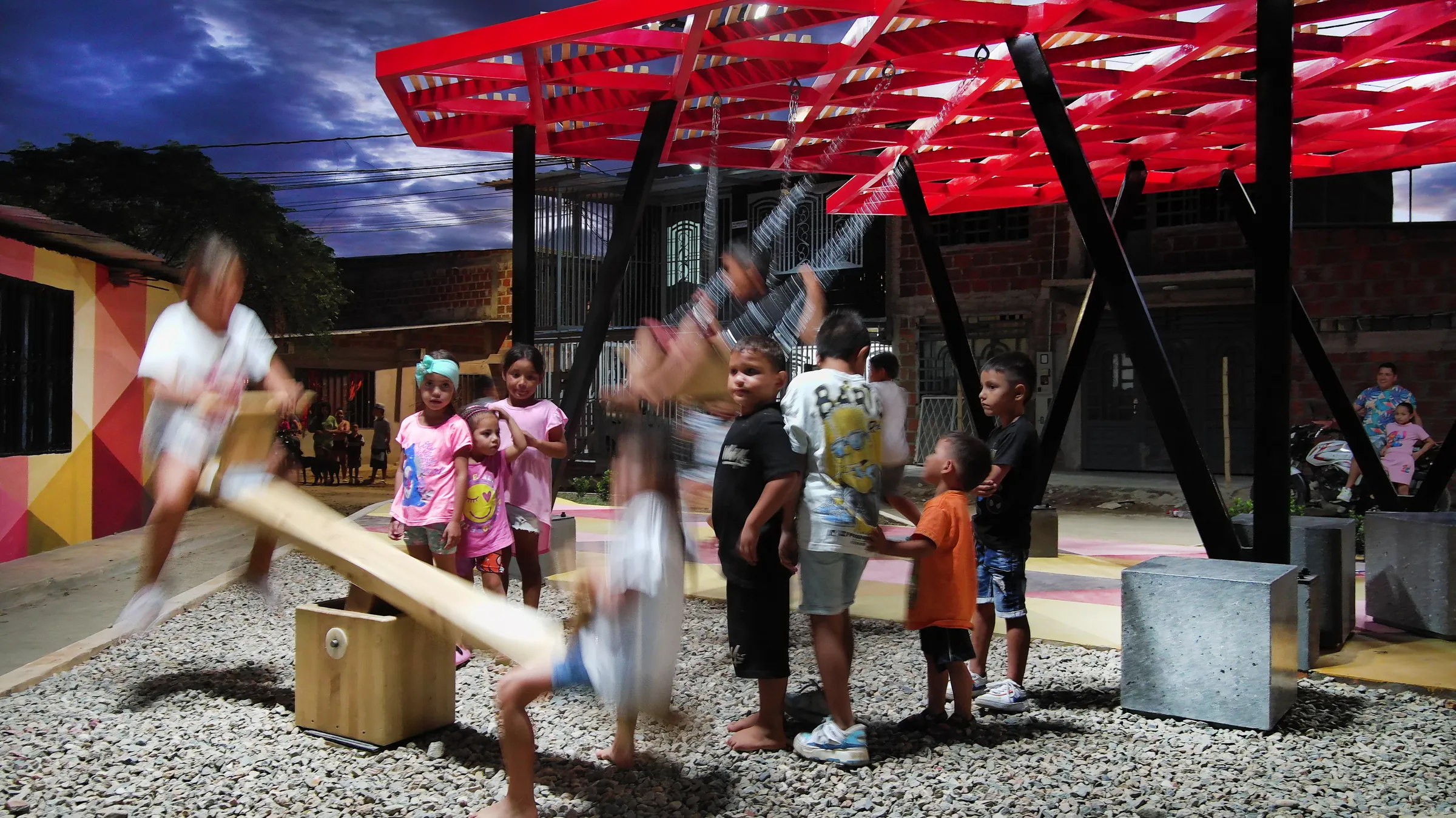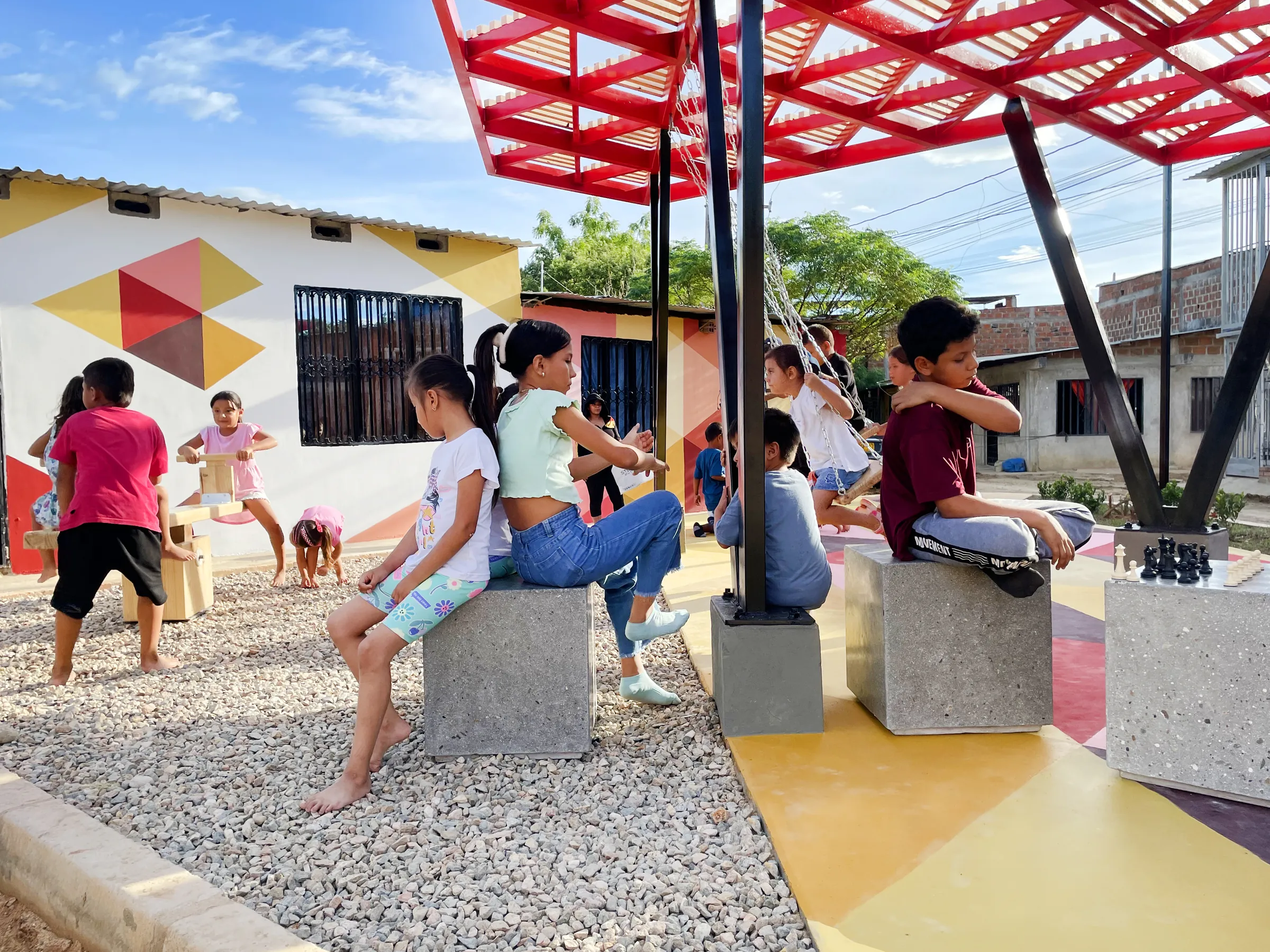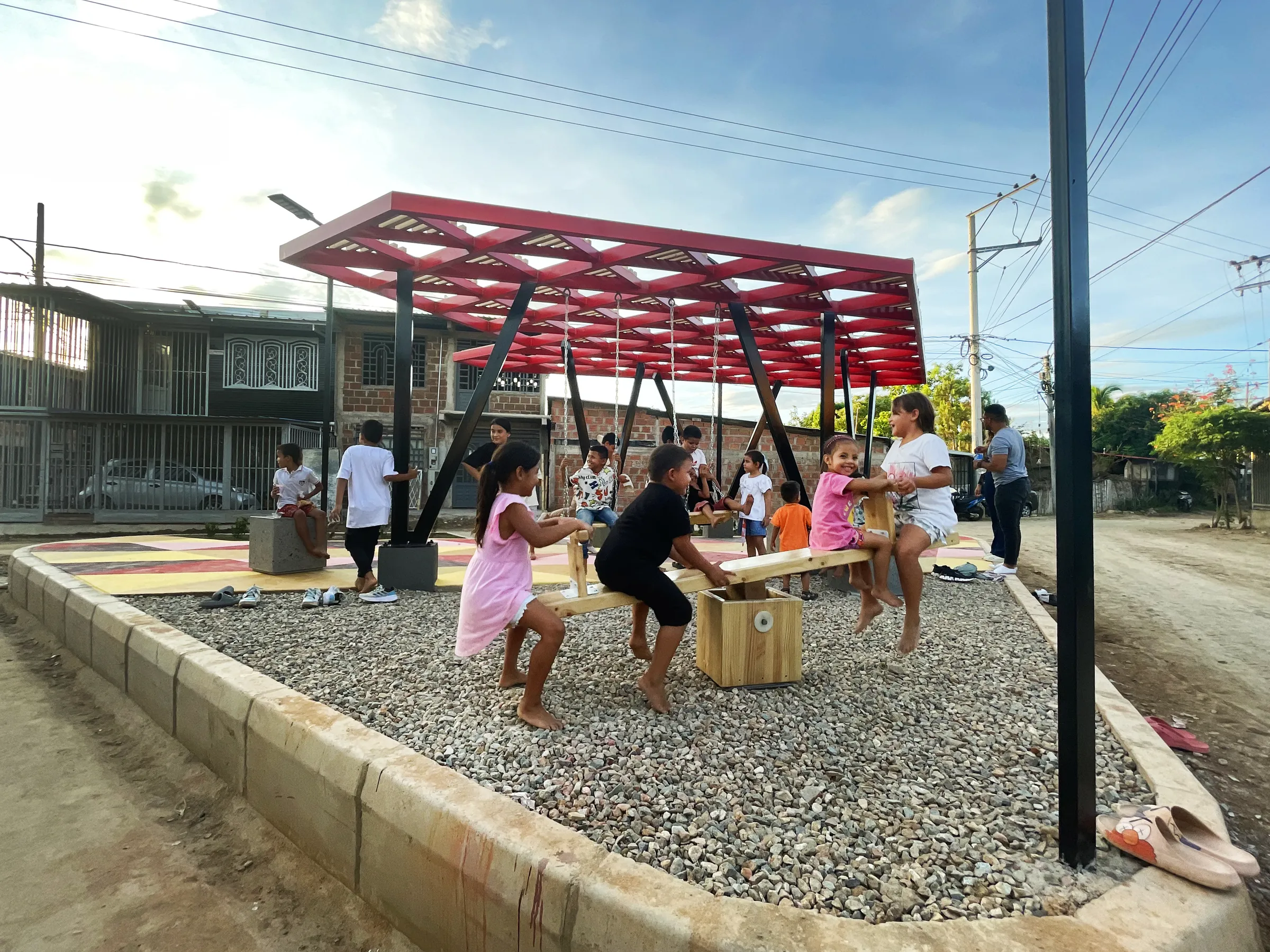
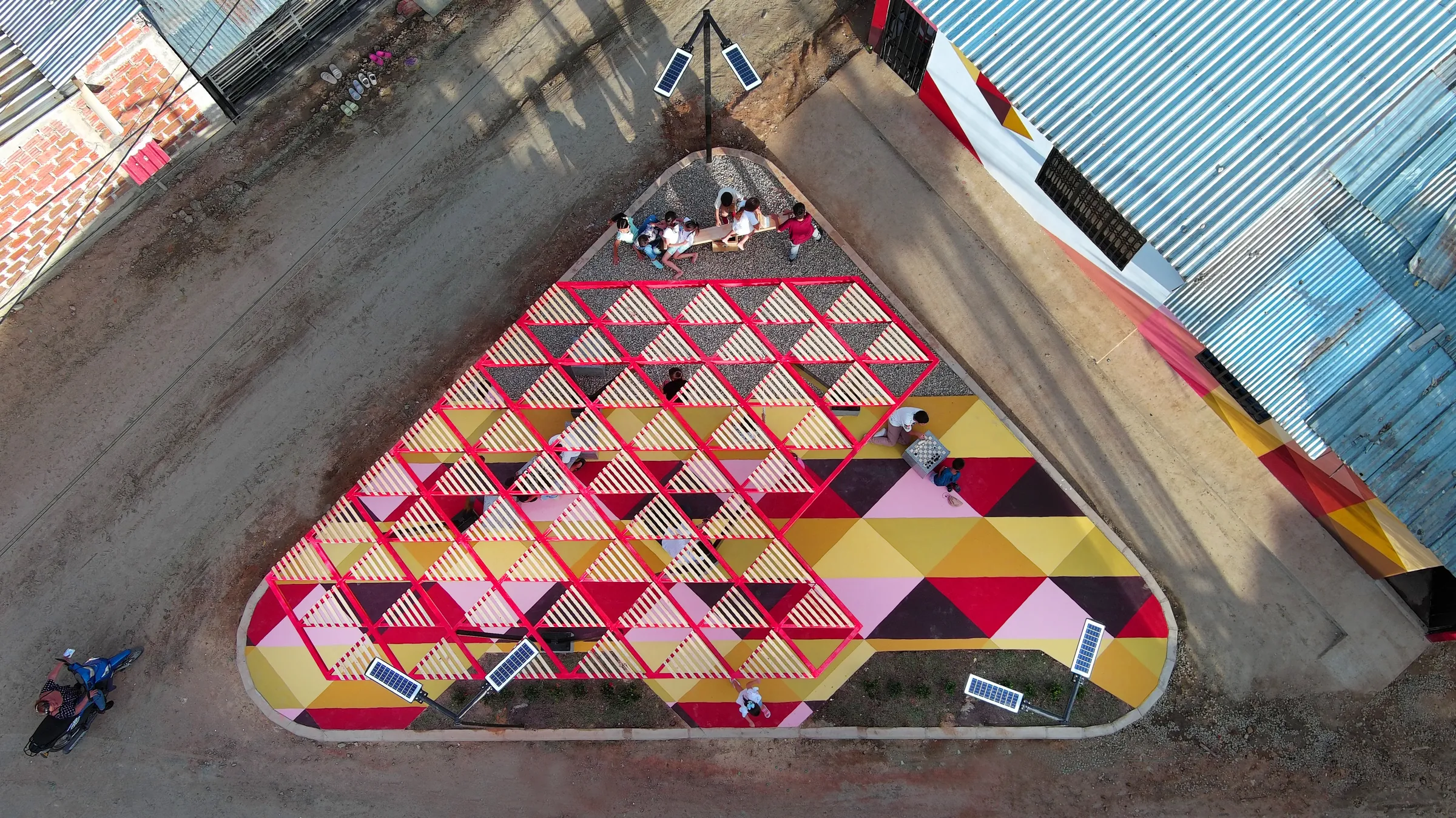
In the Veinte de Mayo neighborhood in Neiva, a small triangular plot of barely 94 m²—once marked by garbage, drug use, and violence—was transformed into the heart of the community through a process of participatory architecture. The park not only addressed the lack of public space in an area with less than 4% coverage, but it also became a manifesto of social resilience, self-management, and urban sustainability.
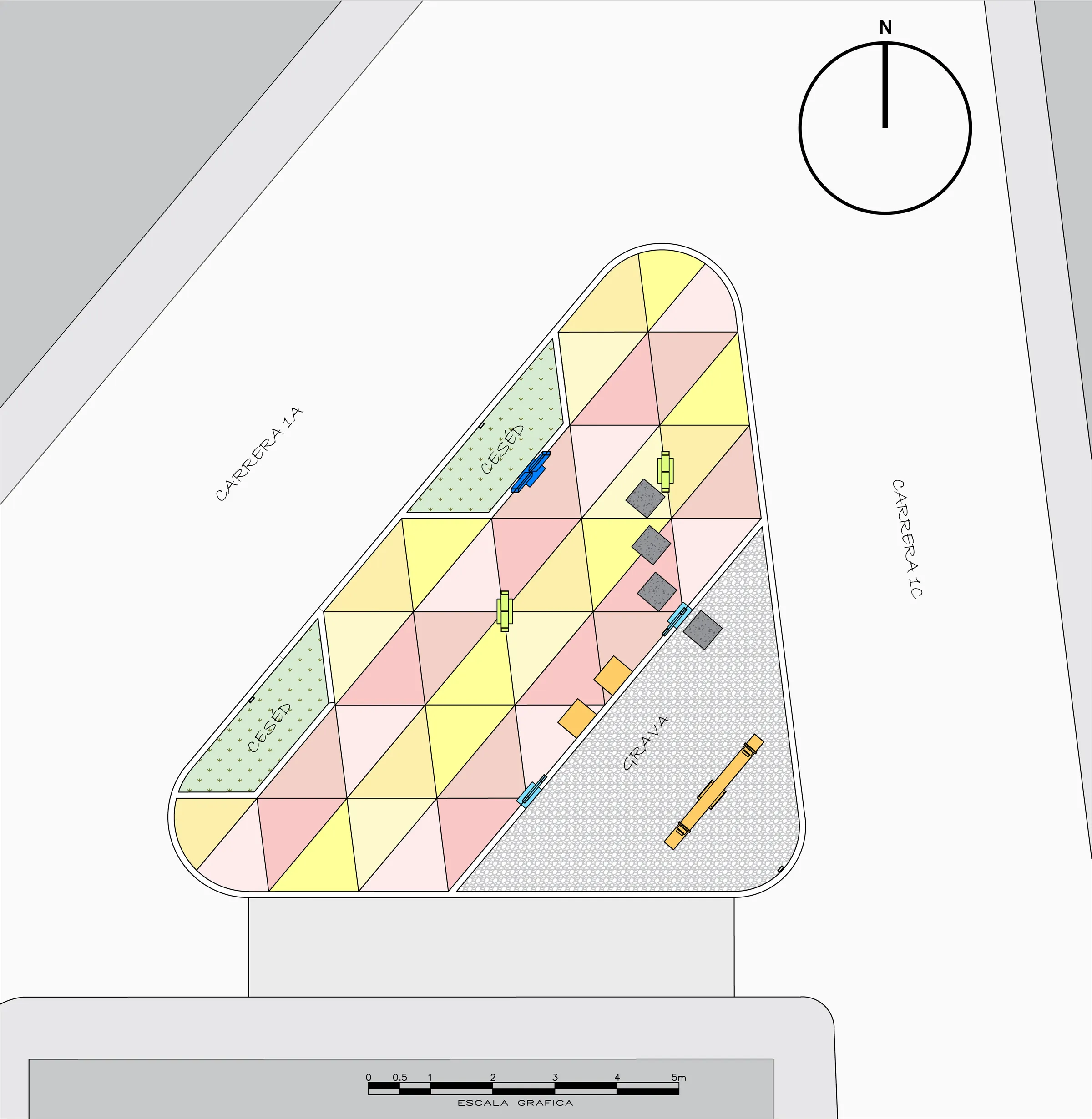
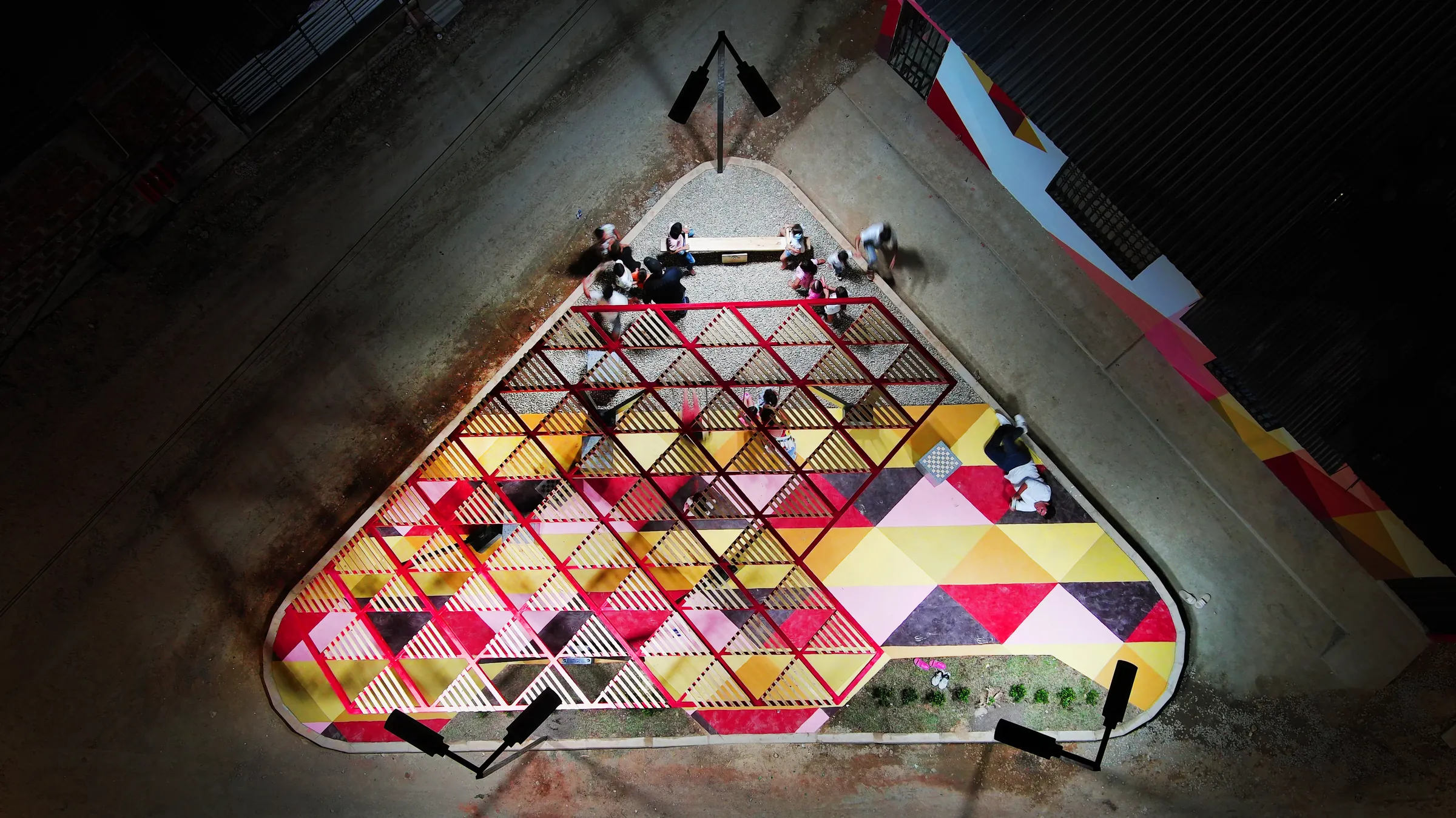
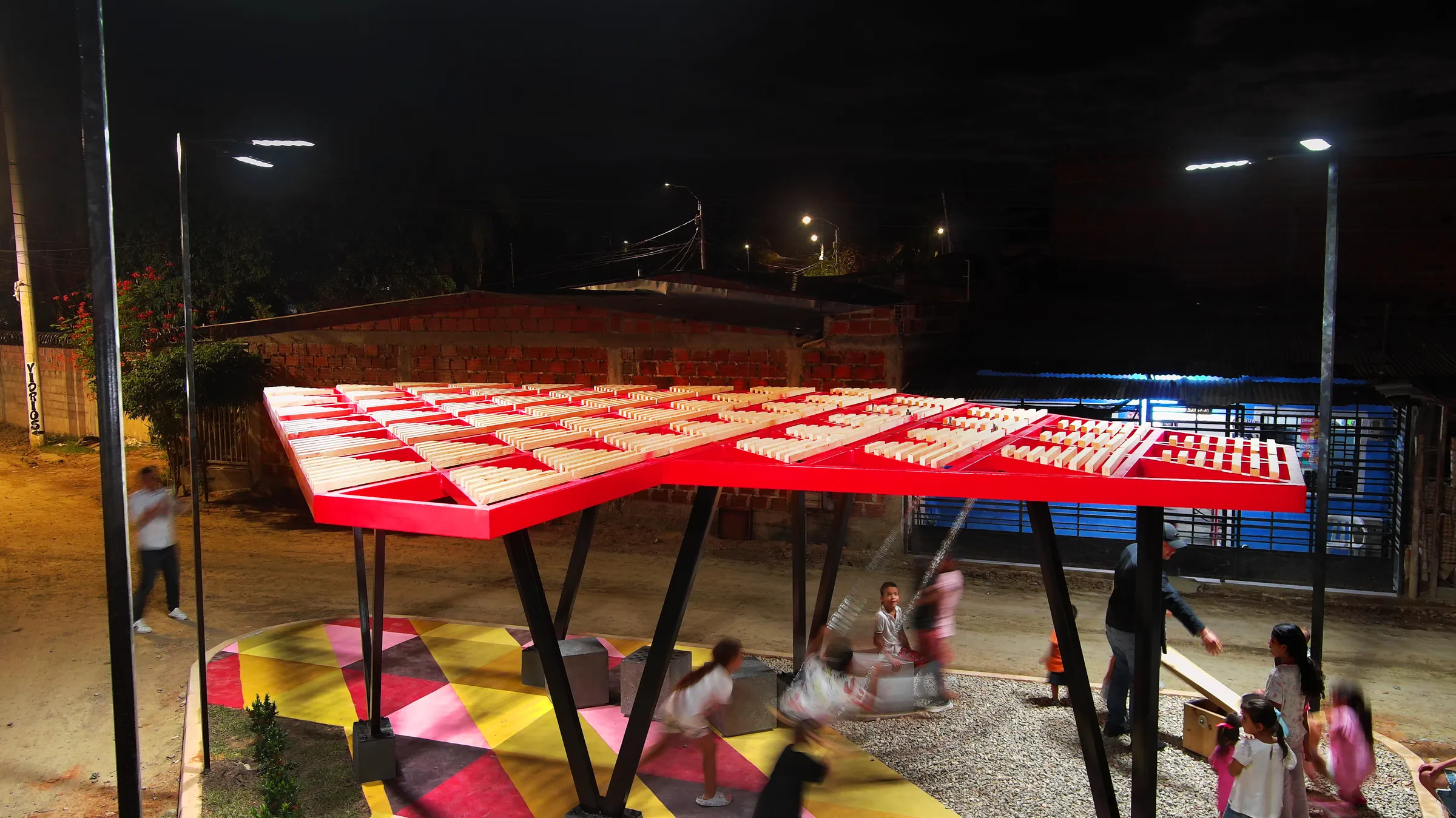
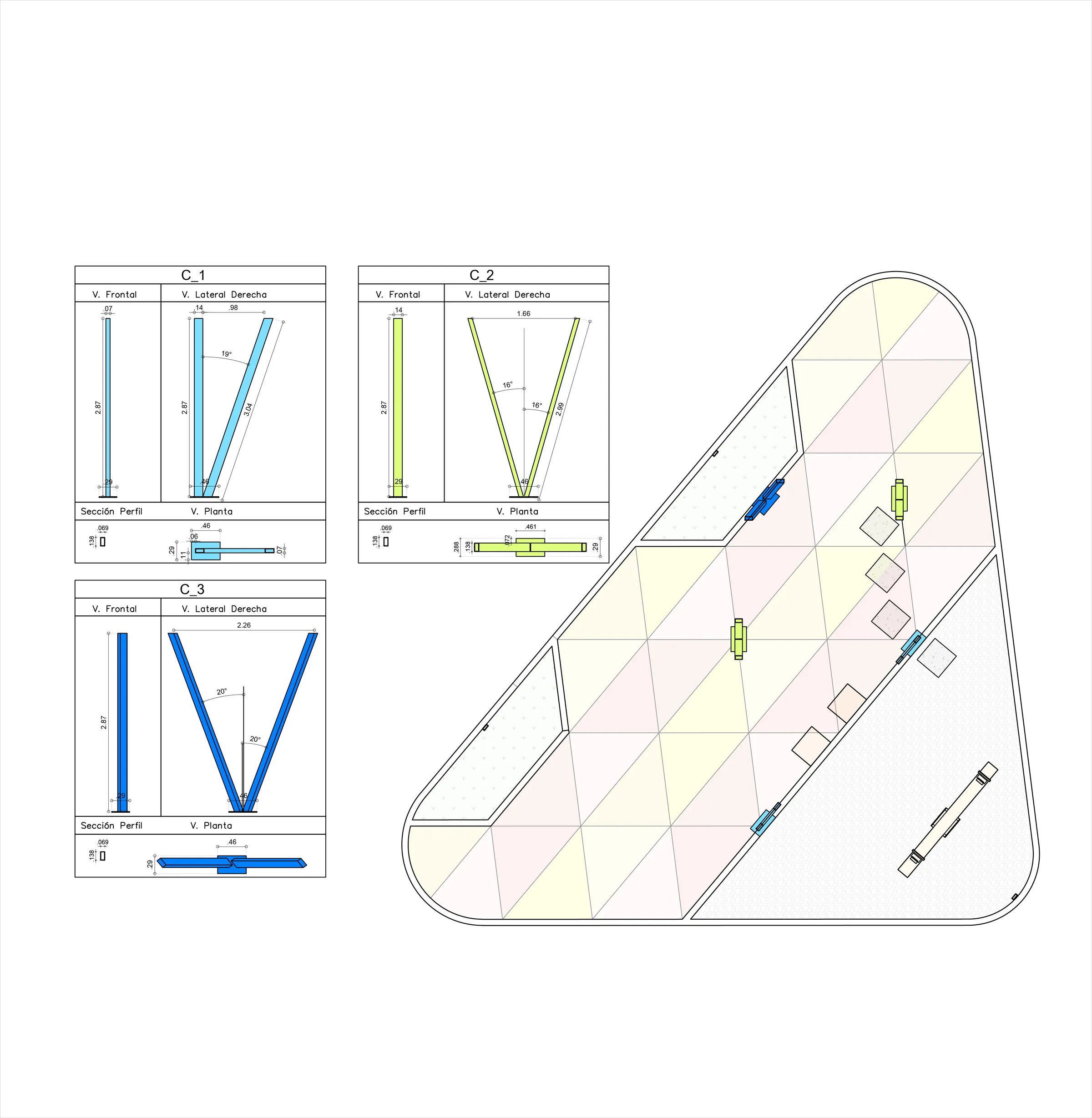
The inspiration arose from the geometry of the site. The triangle, initially perceived as a limitation, became the conceptual matrix of the project. From this form, the hard and green areas, furniture, pergola, and columns were organized. What could have been a simple park was transformed into a symbol of collective identity.
The path was not easy. With a limited budget and scarce materials, the response was self-management. More than 15 families participated in urban mingas (collective work sessions), contributing labor, recycled materials, paint, food, and above all, time and commitment. Neighbors and former occupants of the lot became protagonists of the construction, erasing stigmas and demonstrating that participatory architecture can transform both infrastructure and social relations.
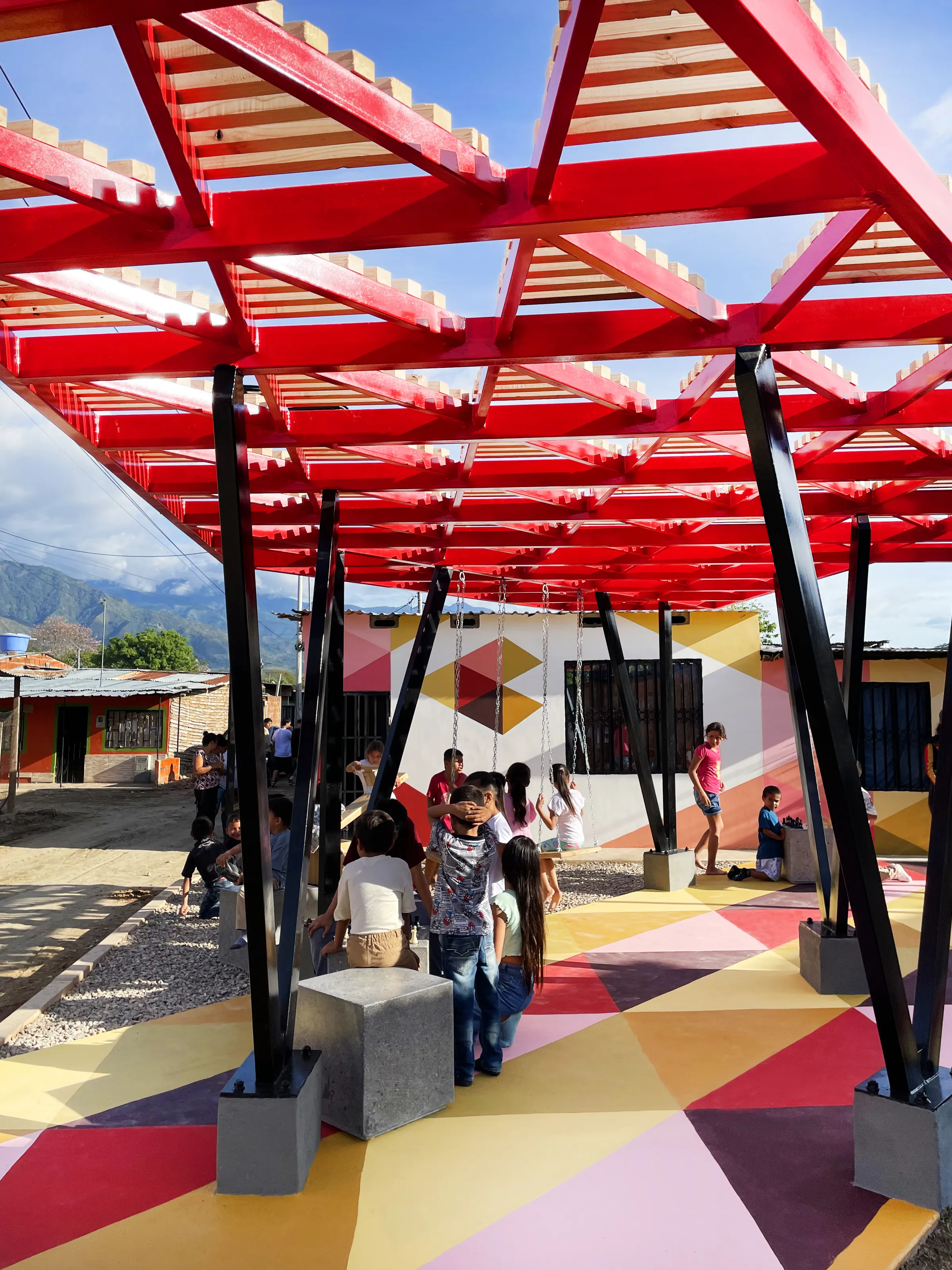
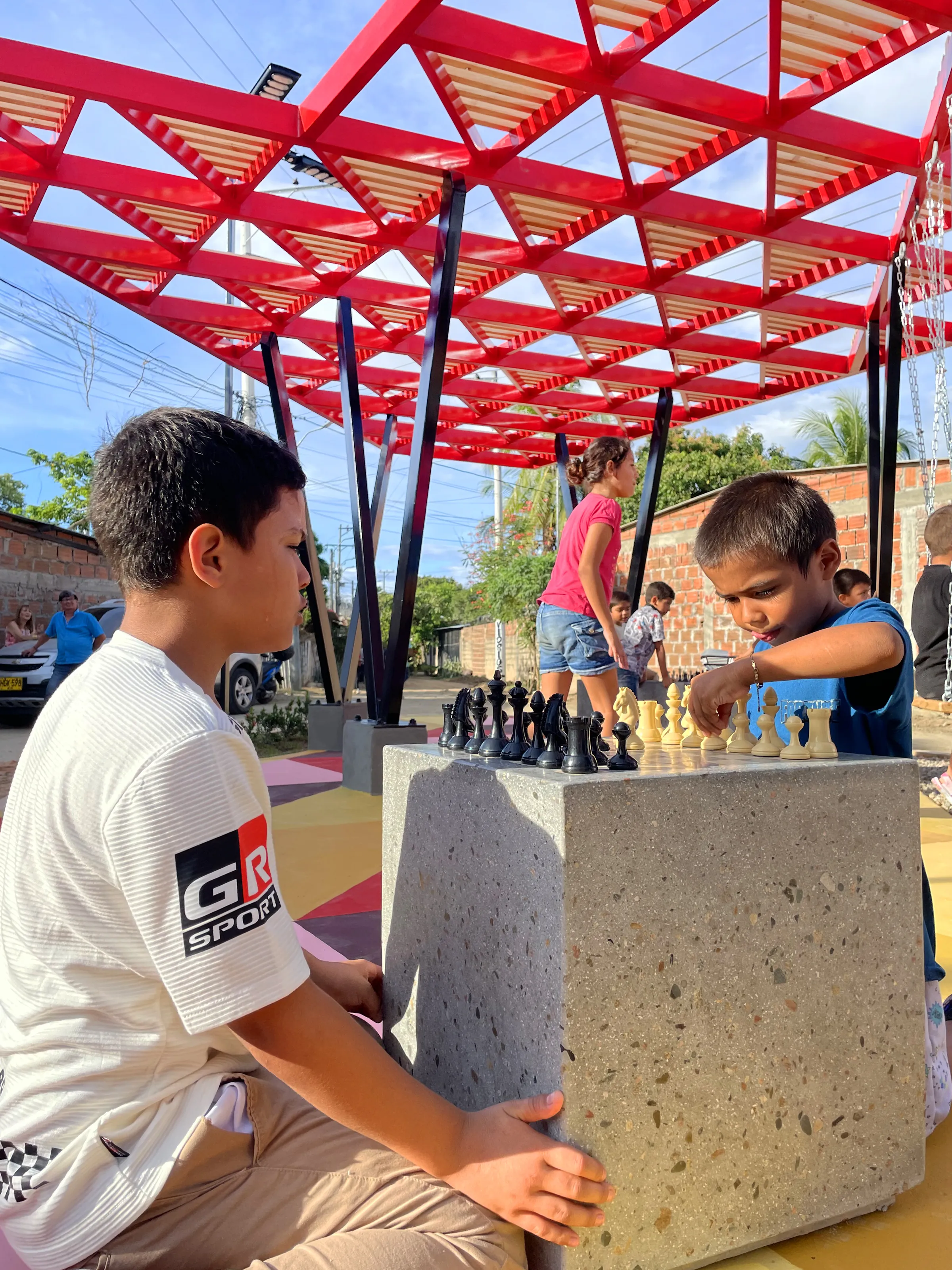
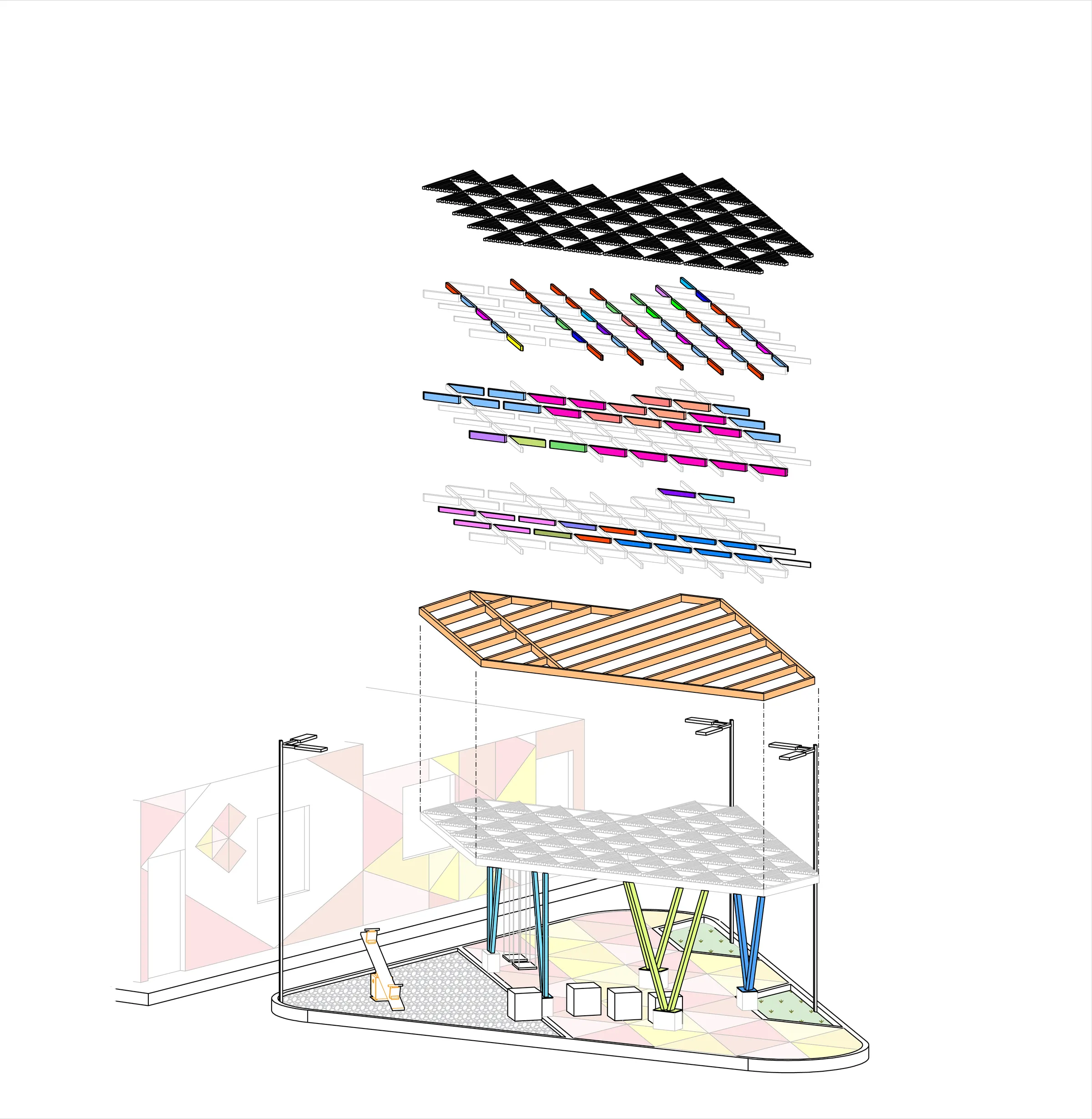
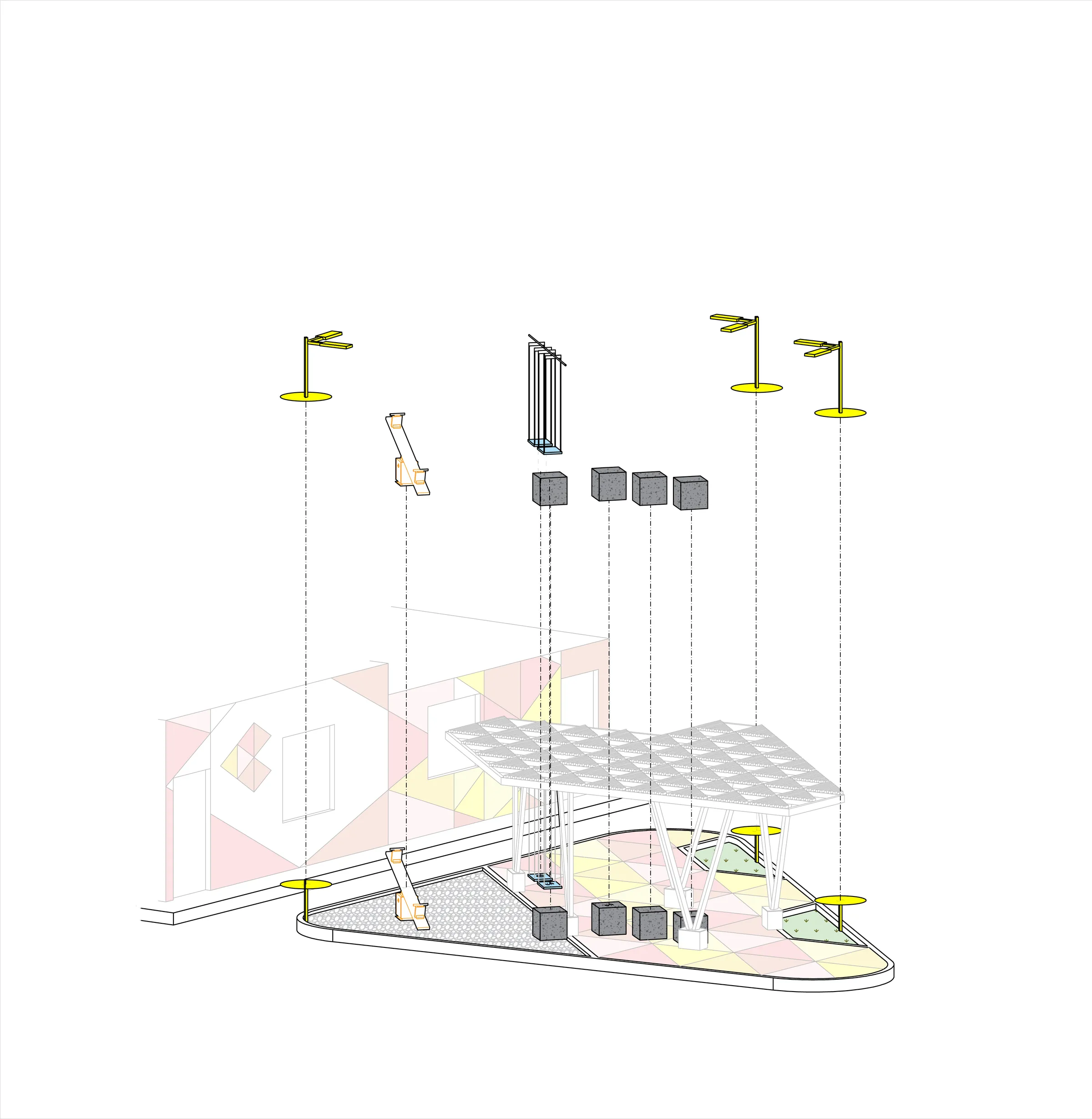
The park’s materiality reflects this logic of circular economy and solidarity. Concrete with recycled aggregates, reclaimed pine wood, metal profiles, paint, and autonomous solar lighting were employed. Each element carries the story of a donation, a neighbor’s contribution, or the creative reinterpretation of what already existed.
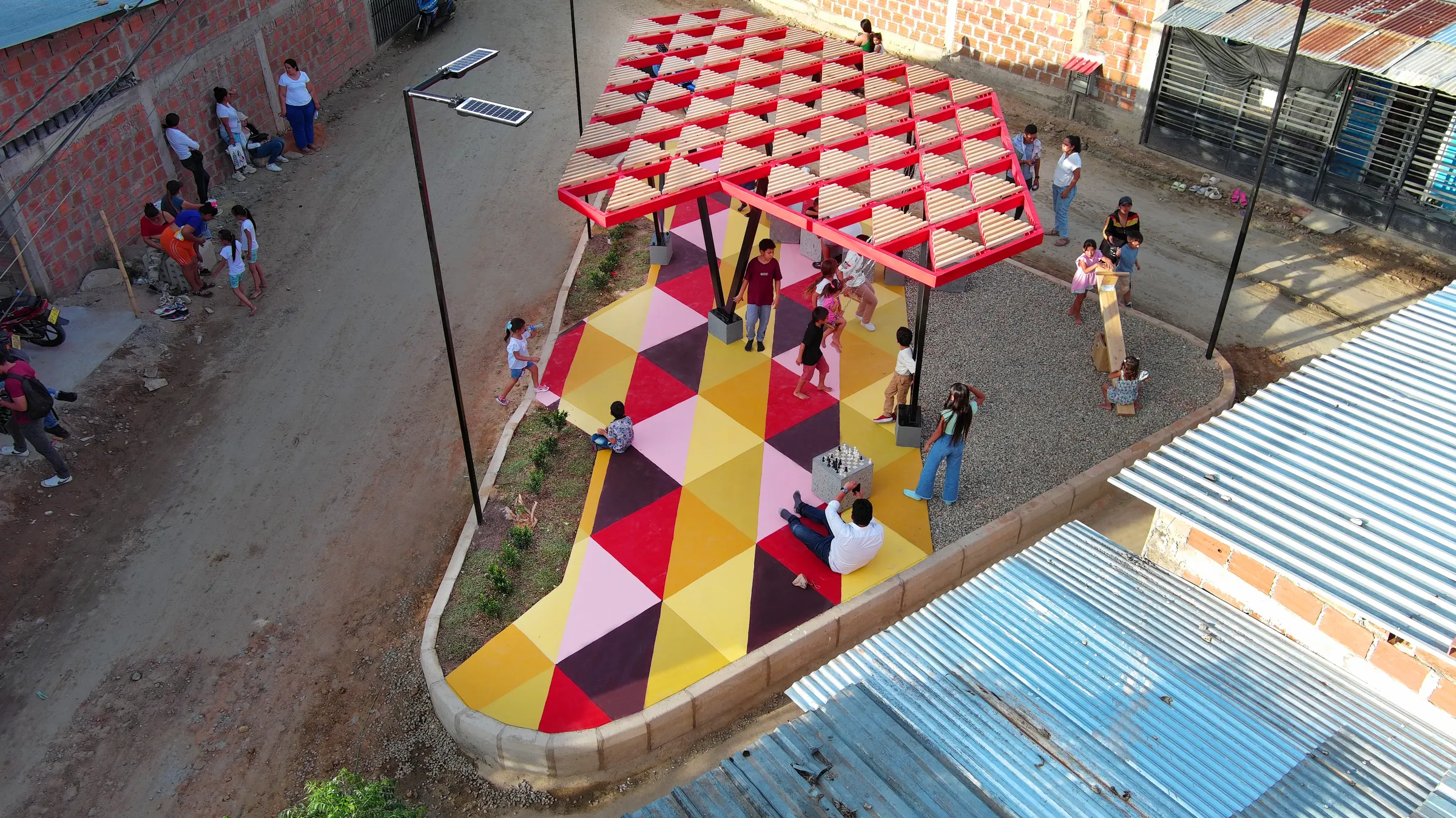
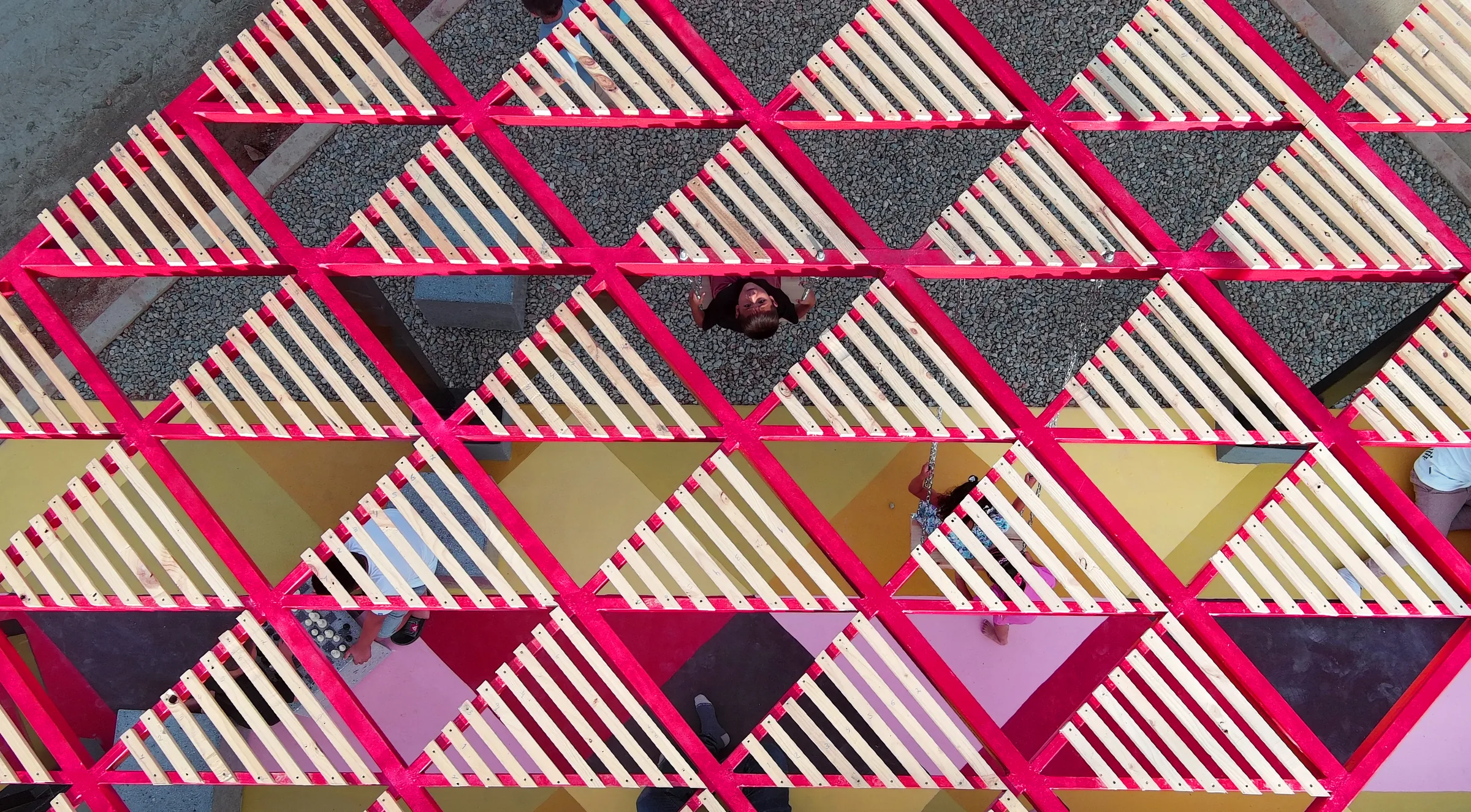
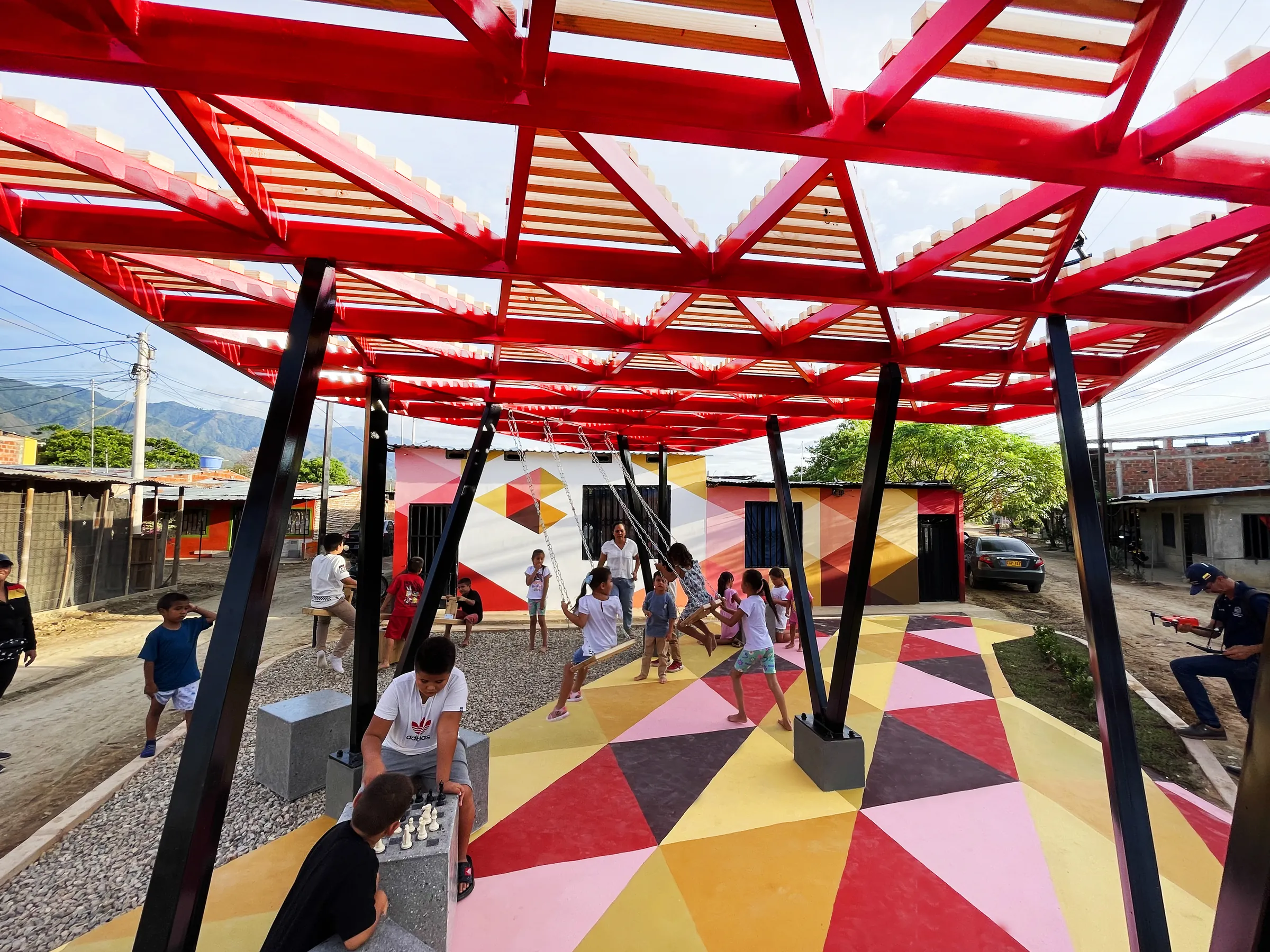
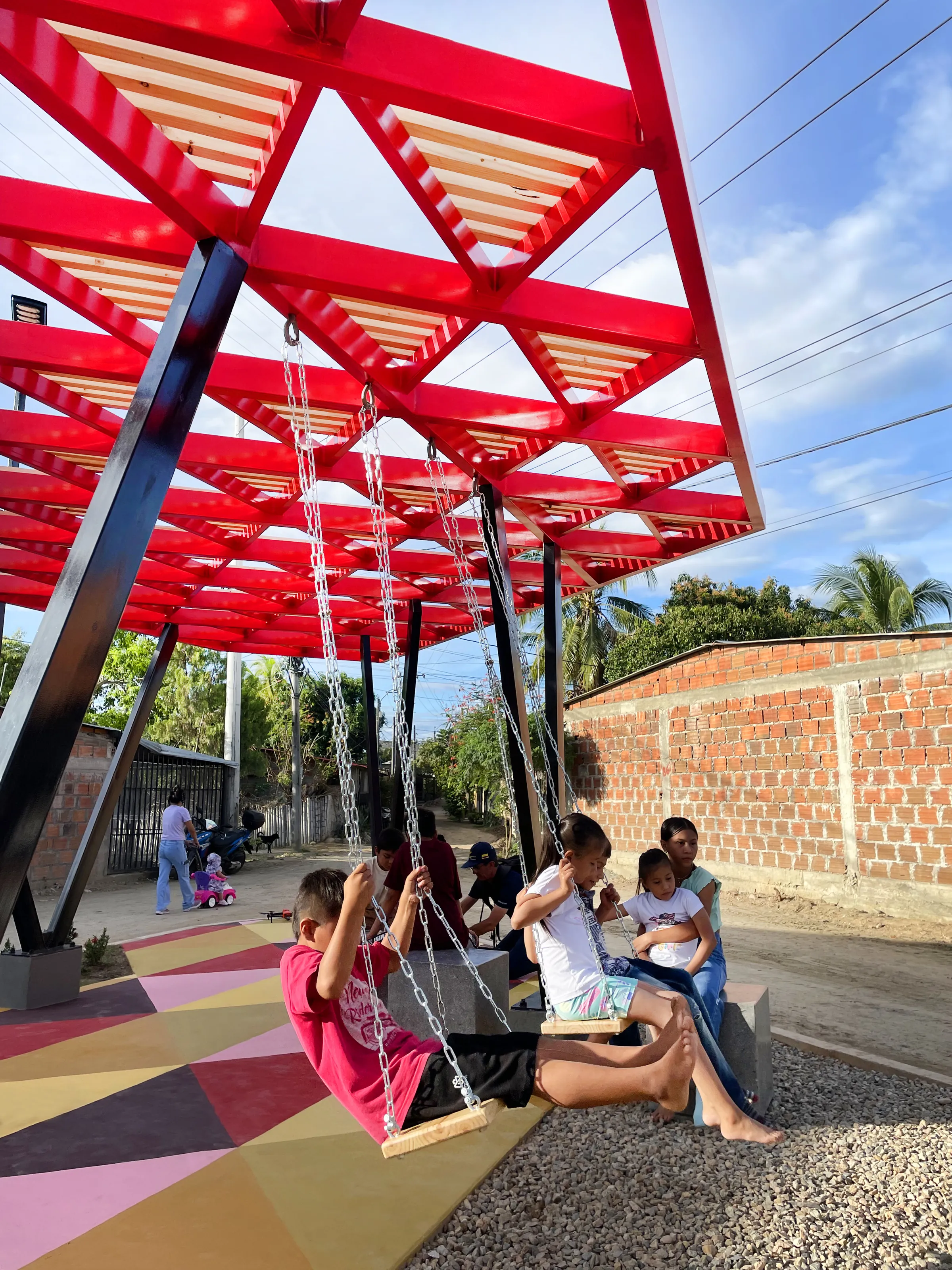
The space was organized with a balance of 50% hard surface and 50% green areas, incorporating planters and lawns with native, low-water-consumption species. Ten cubes emerge from the slab: five serve structural functions and five become urban furniture, including benches with chess boards. The triangular pergola, elevated to 2.60 meters and fragmented to optimize solar control and ventilation, provides shade throughout the day and thermal comfort under Neiva’s warm climate.
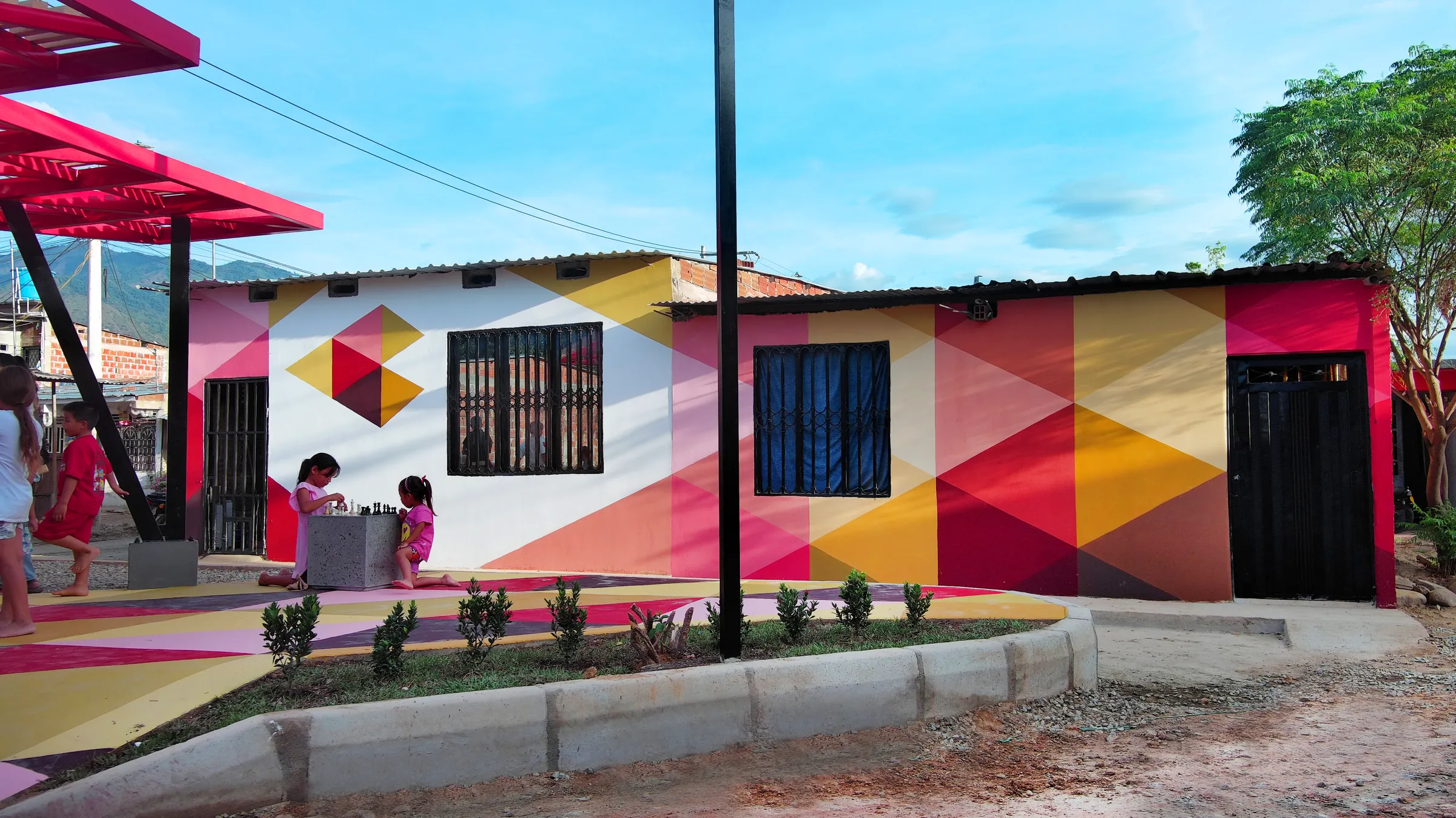
Color played an essential role in the process. A palette of reds, yellows, whites, and blacks was collectively applied to floors, columns, and a community mural, consolidating an aesthetic that reflects the neighborhood’s identity and sense of ownership.
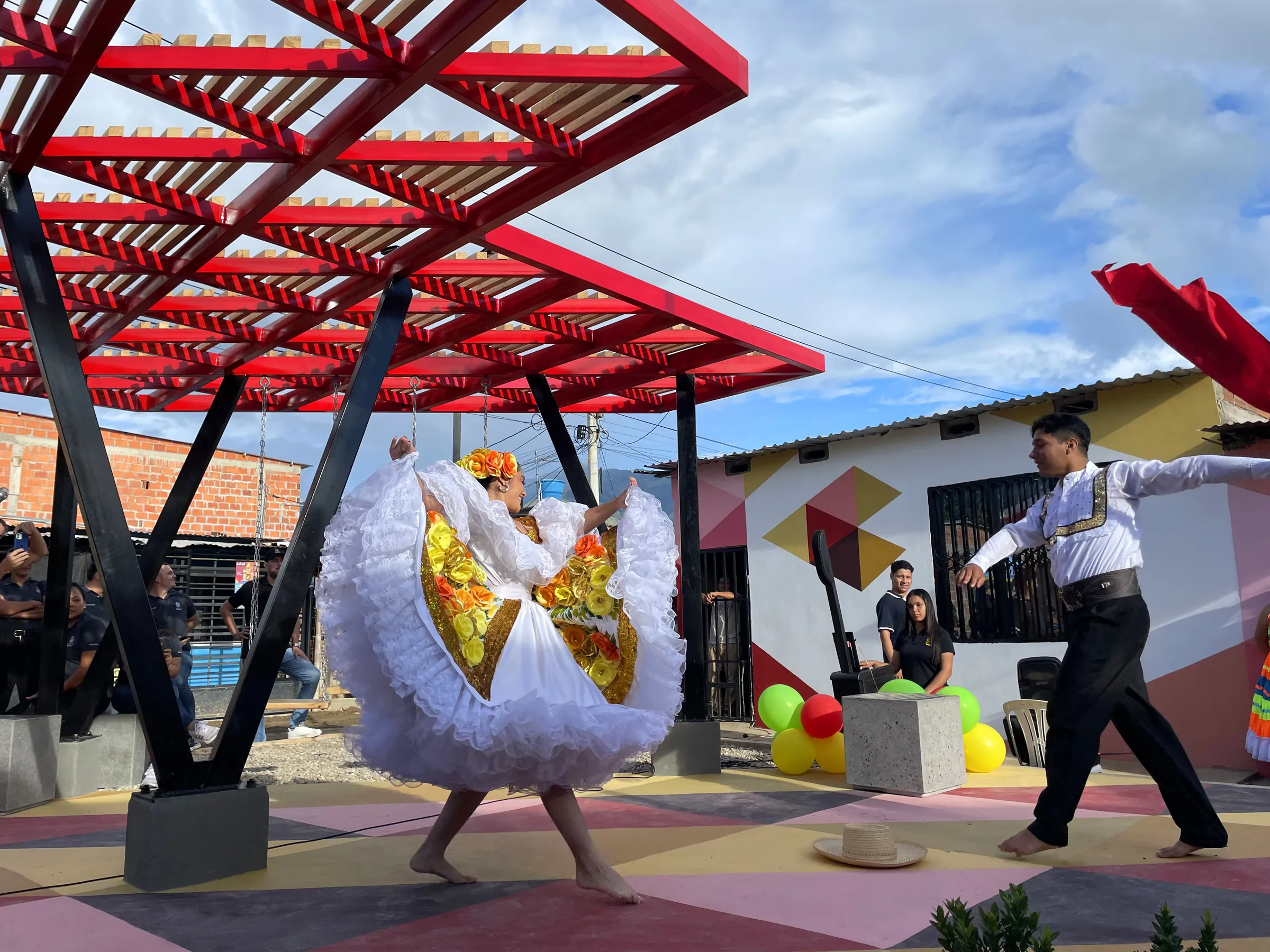
Socially, the park restored trust and dialogue among neighbors, reduced conflictive practices, and created a setting for intergenerational integration. Urbanistically, it expanded the offer of public space in an area with a critical deficit. Environmentally, it incorporated vegetation and permeability, improving the microclimate. Culturally, it was consolidated as a new symbol of neighborhood memory.
The project demonstrates that even within just 94 m², architecture can become a catalyst for cohesion, hope, and citizenship. The strength of this transformation did not come from a large budget or a prestigious firm, but from a community’s ability to design, build, and take ownership of its own urban destiny.