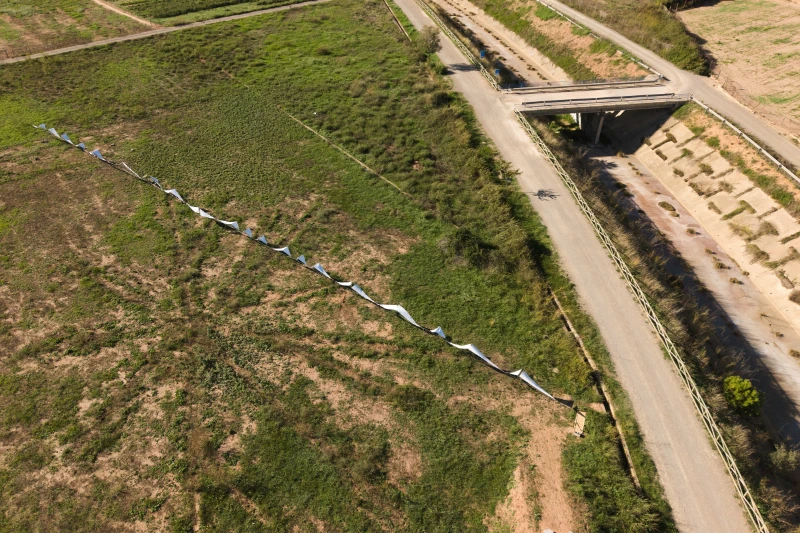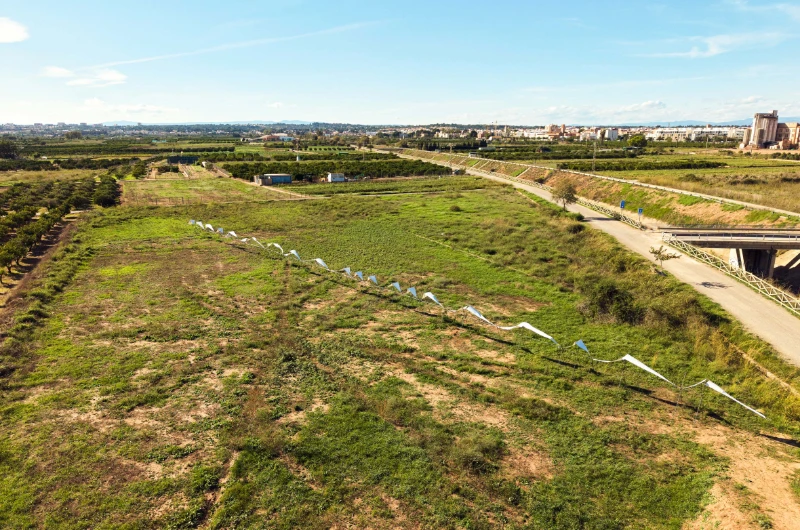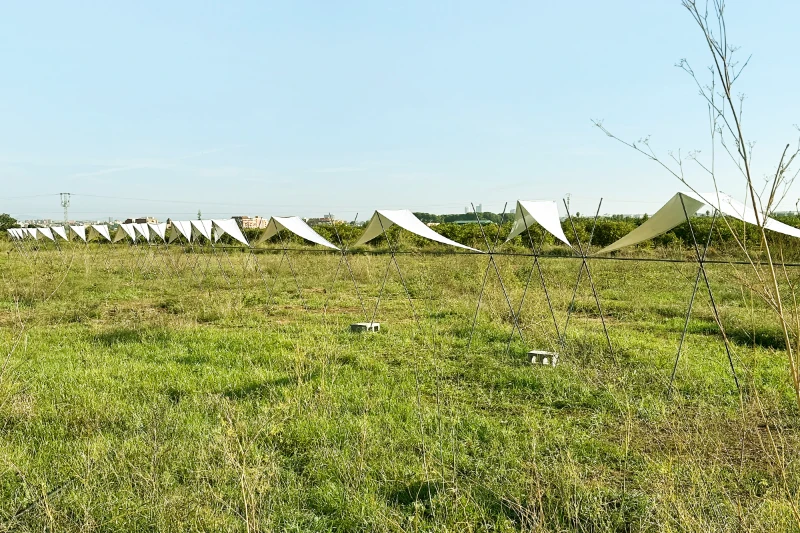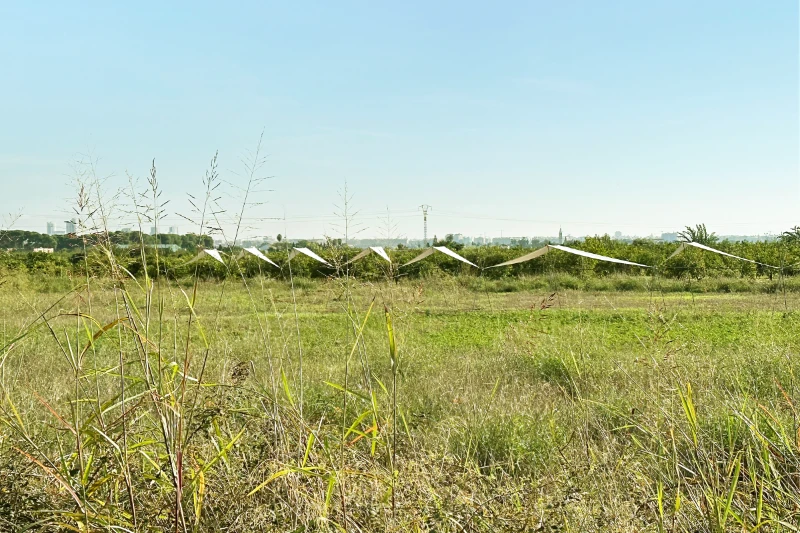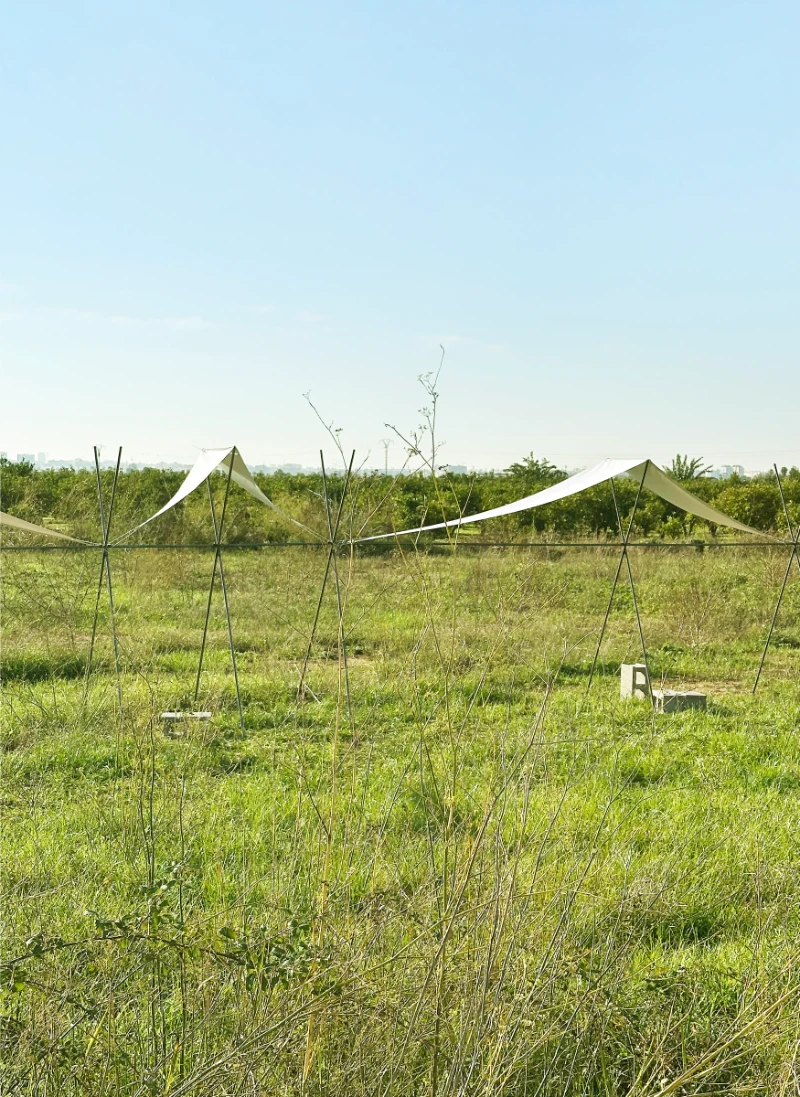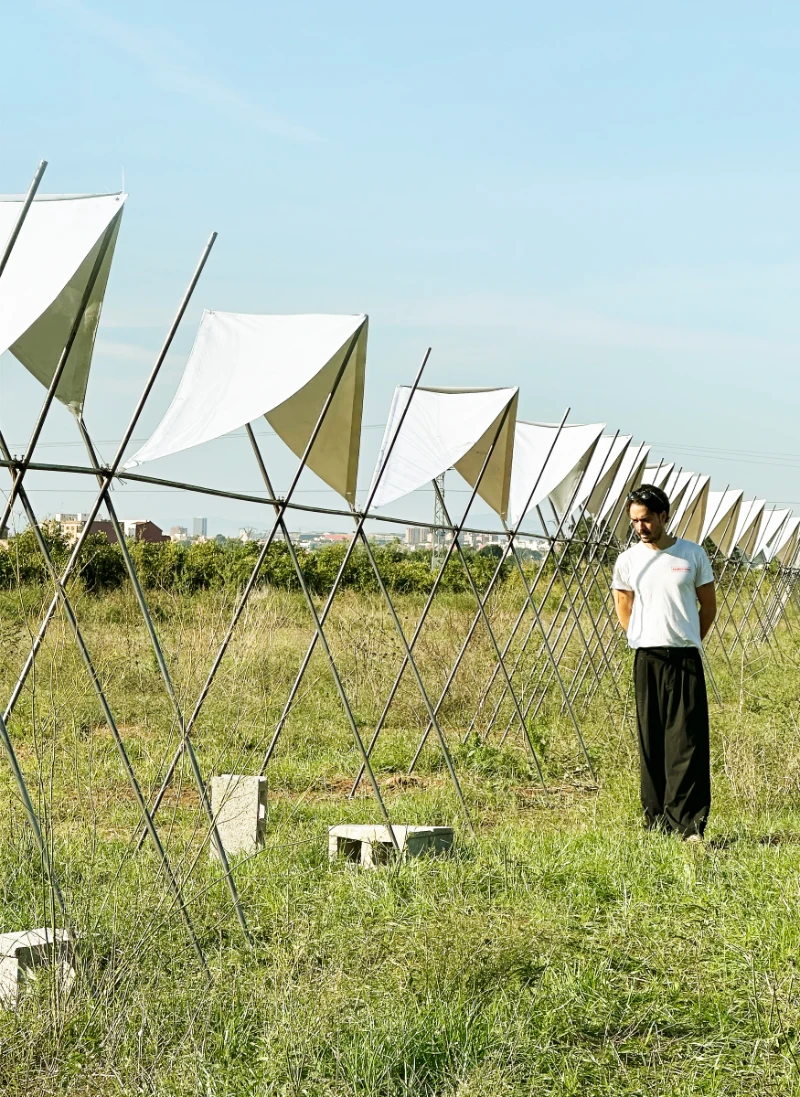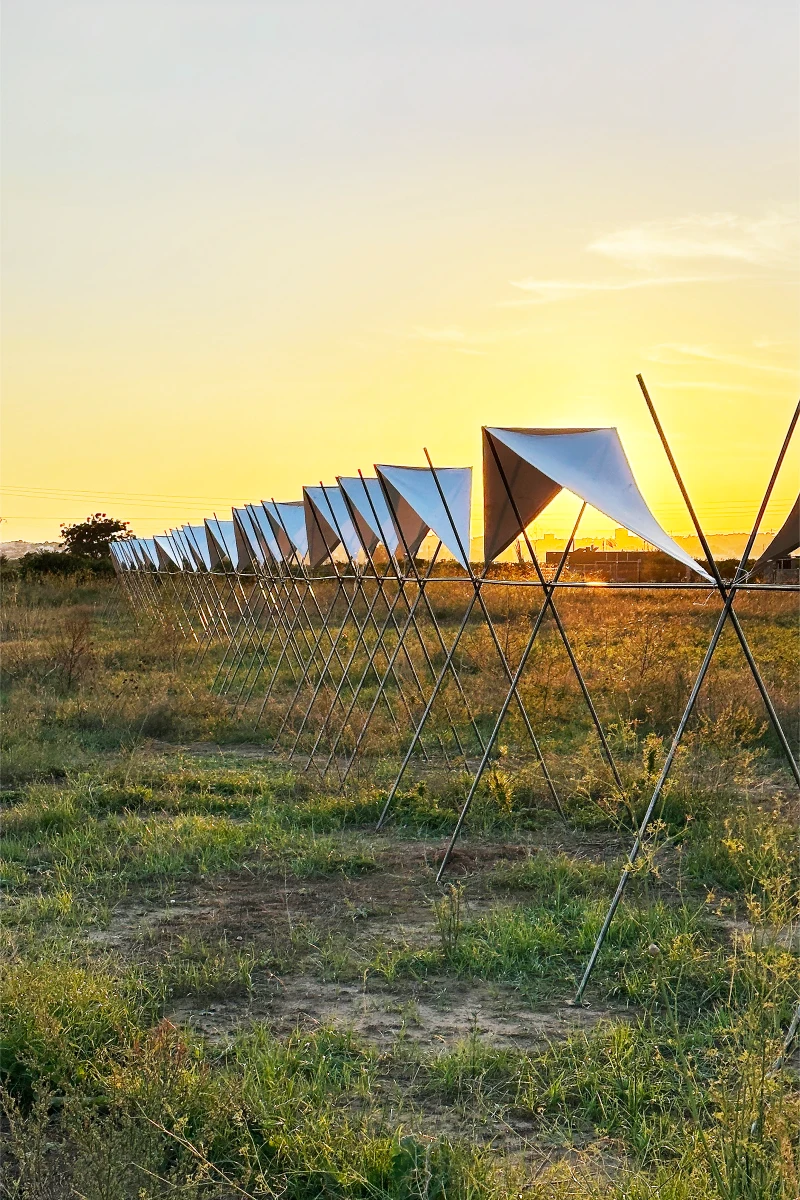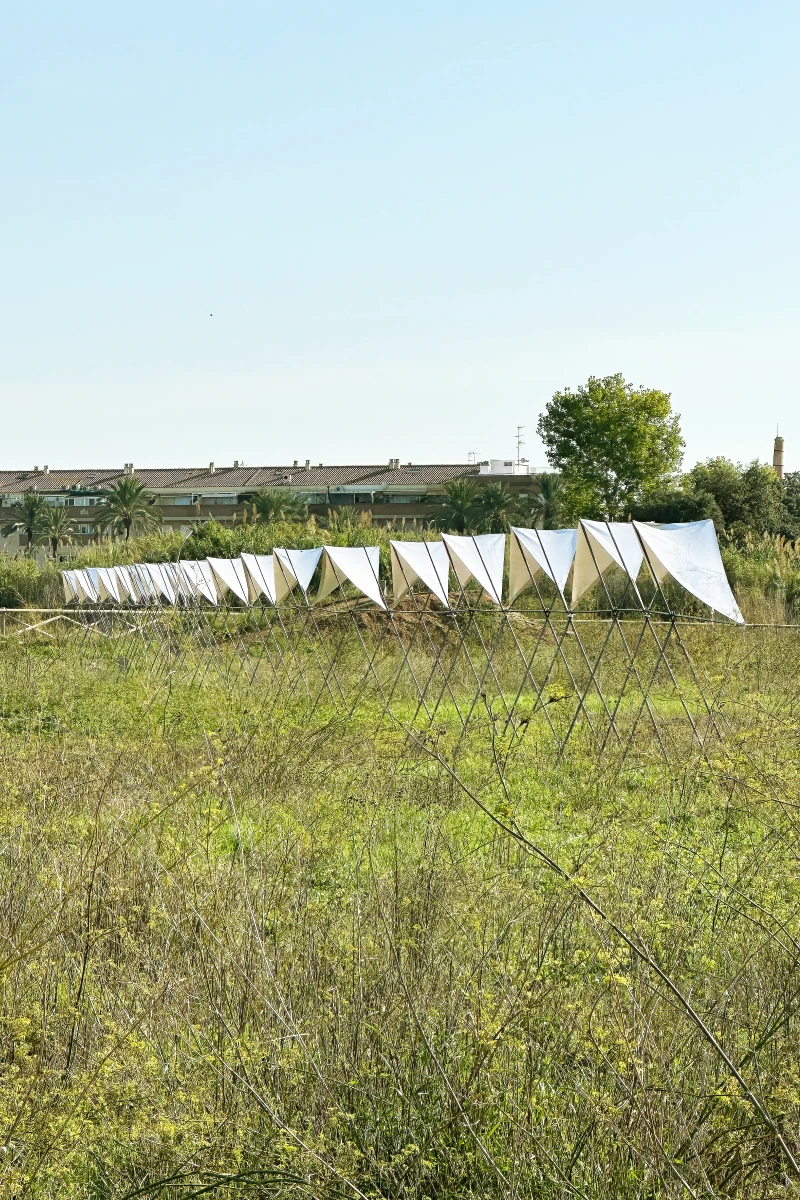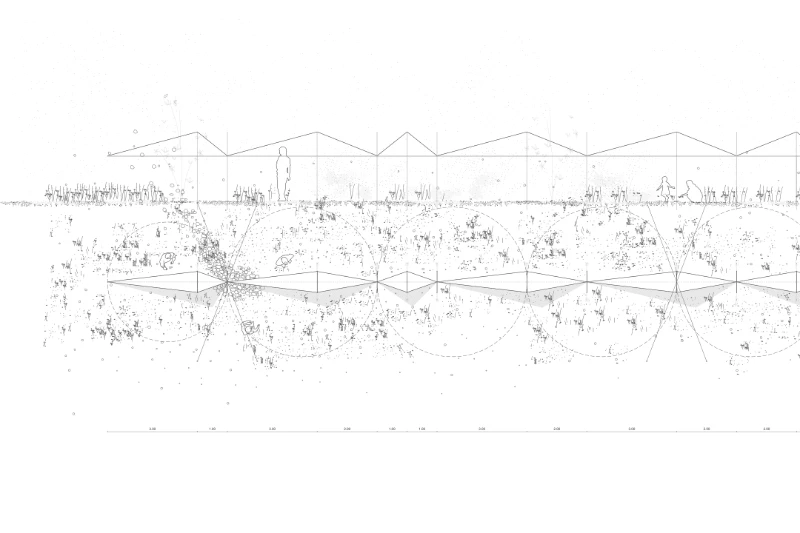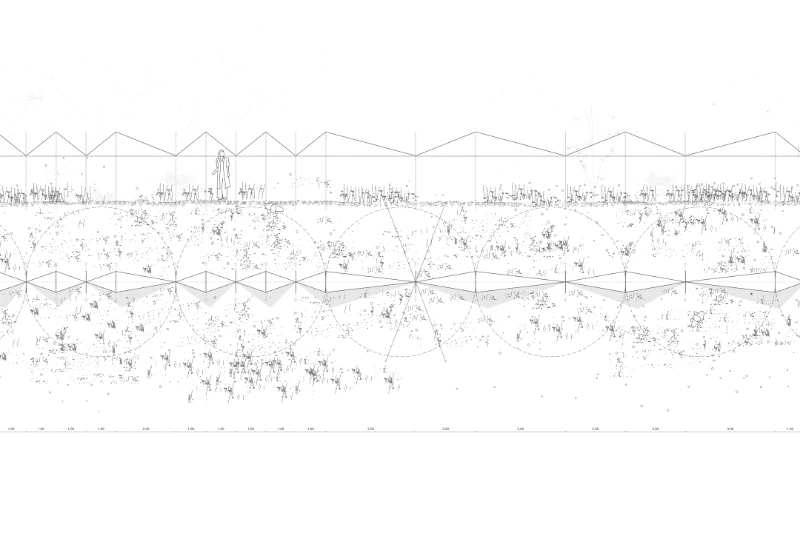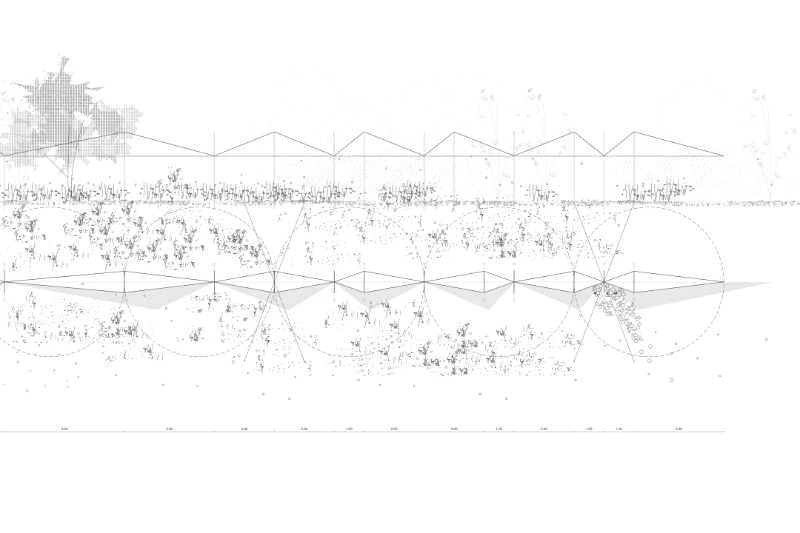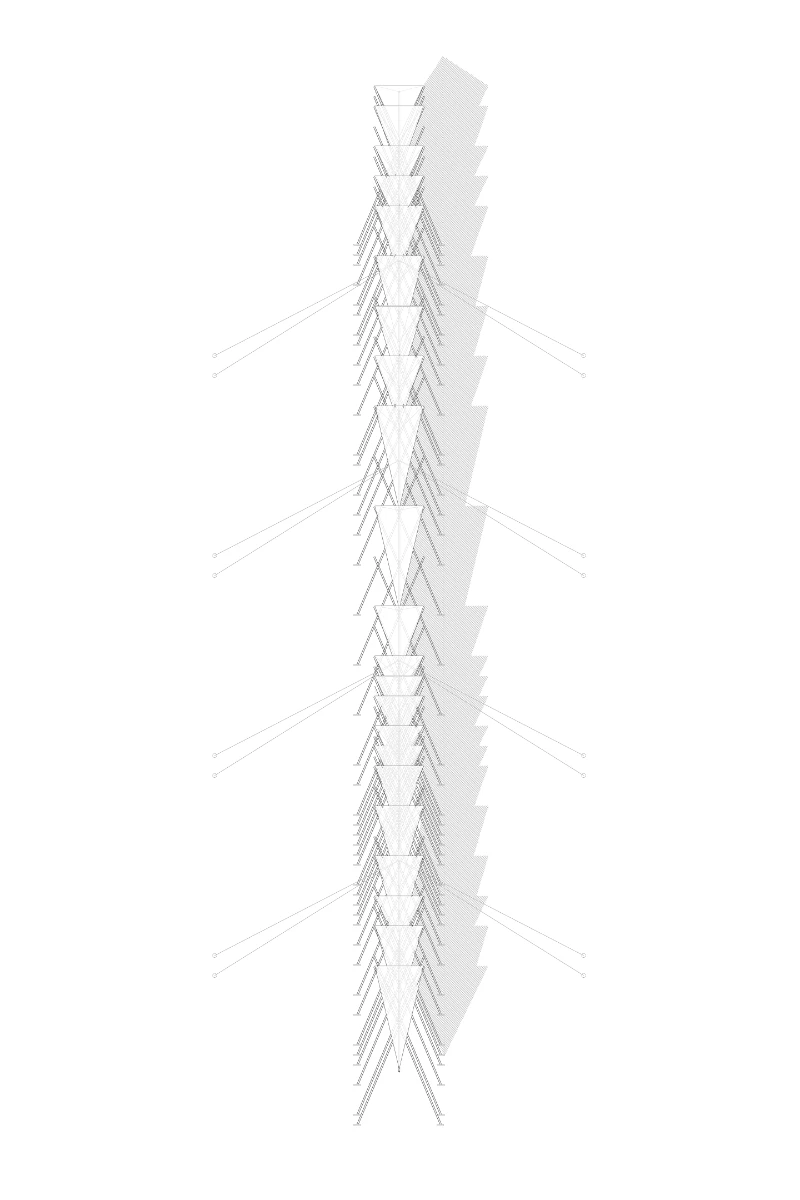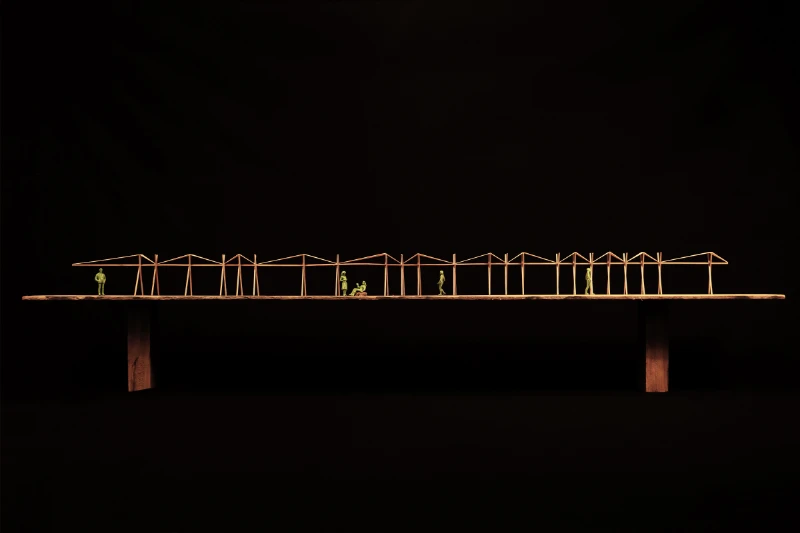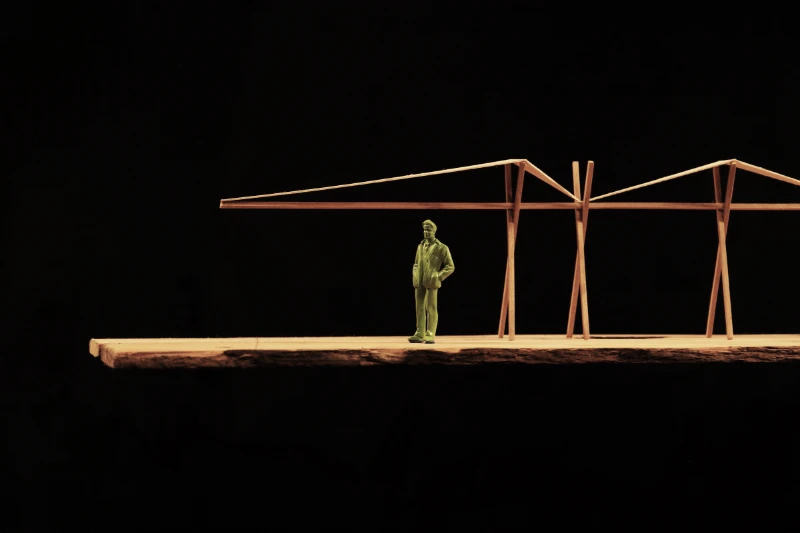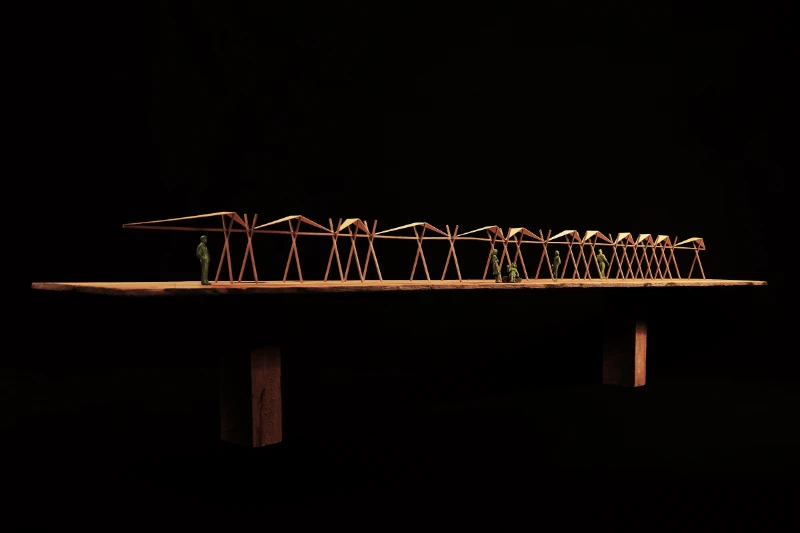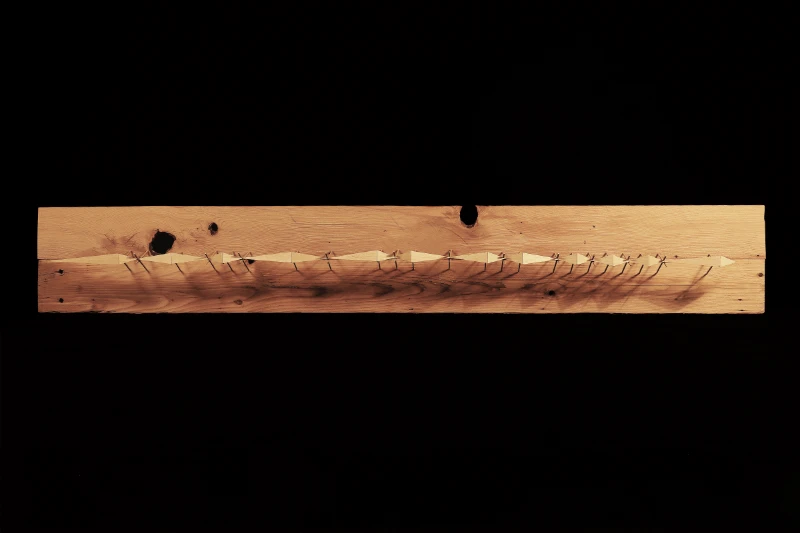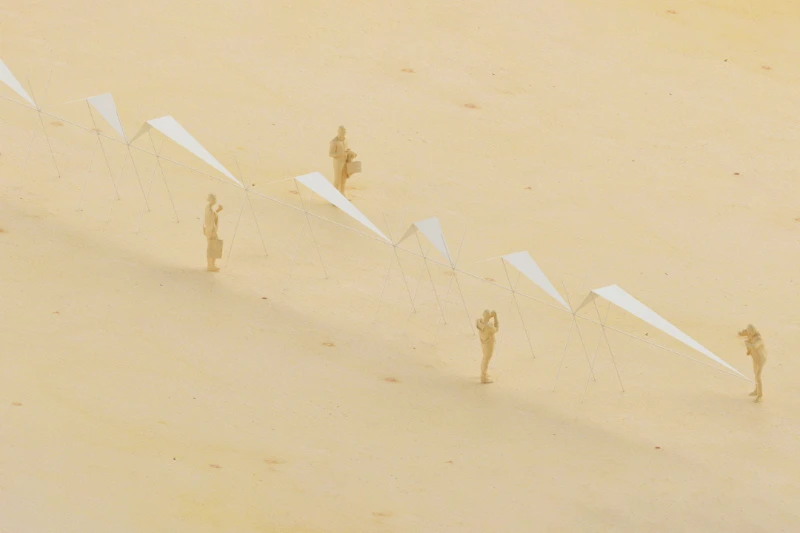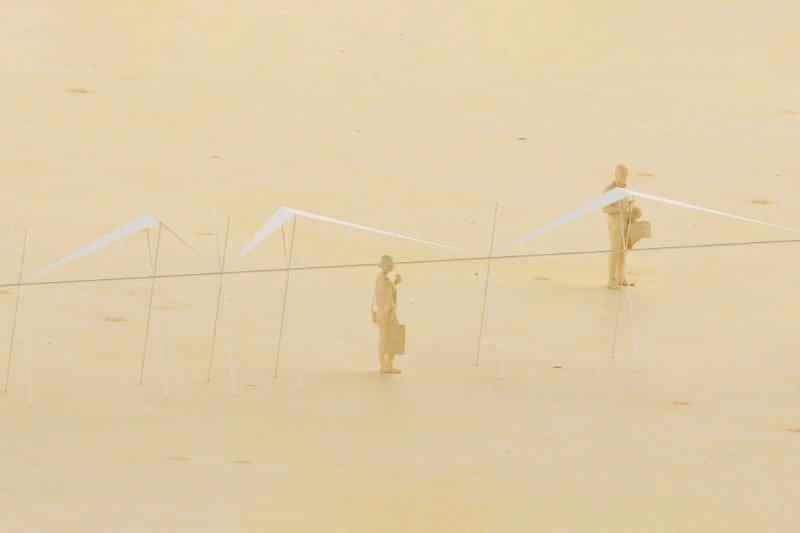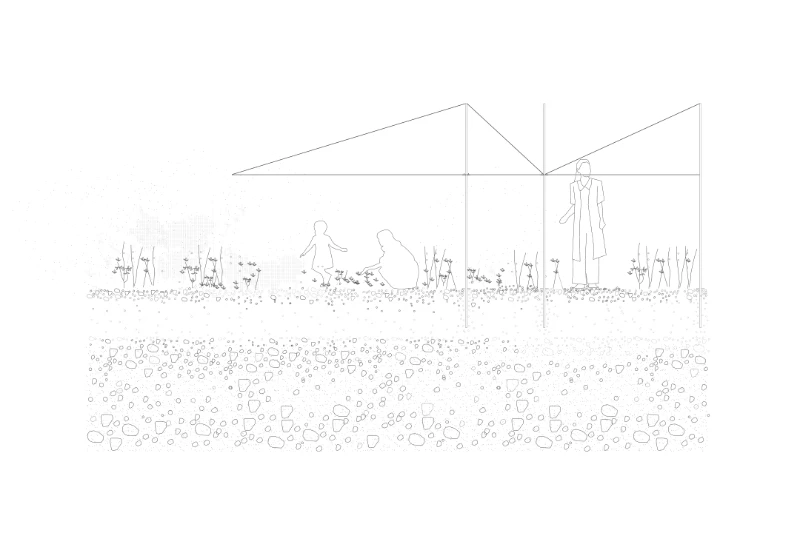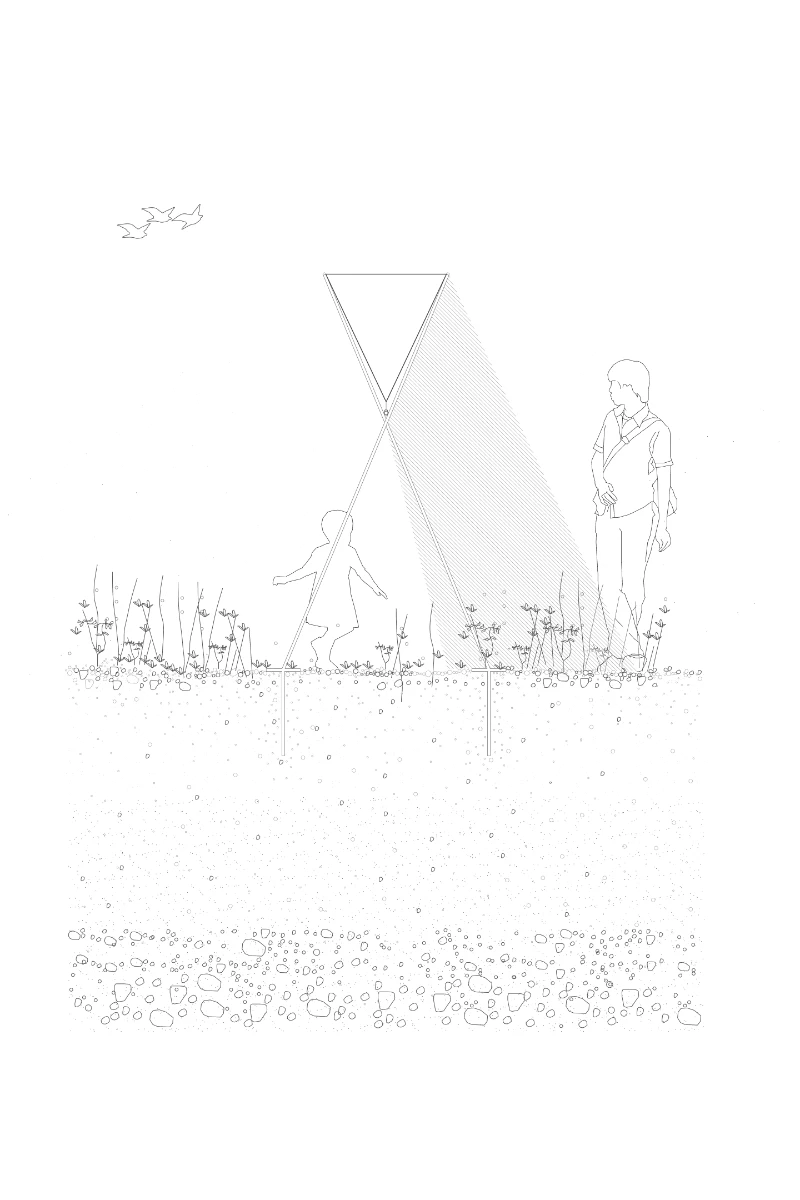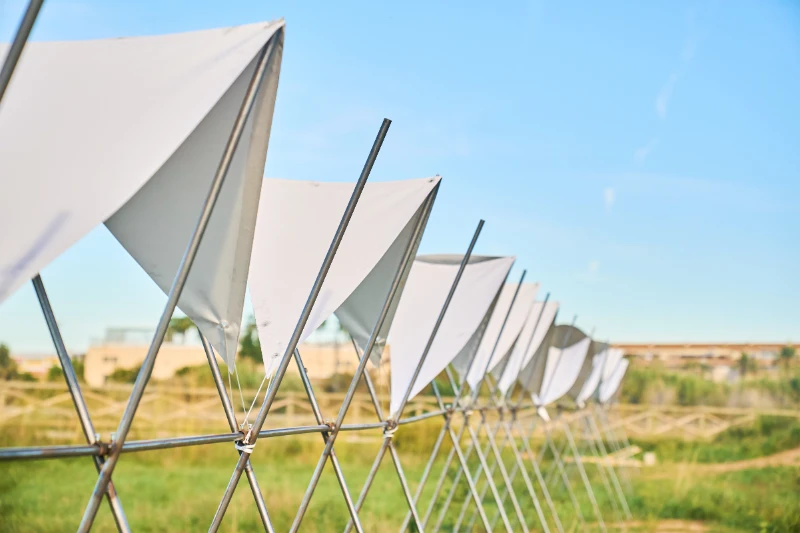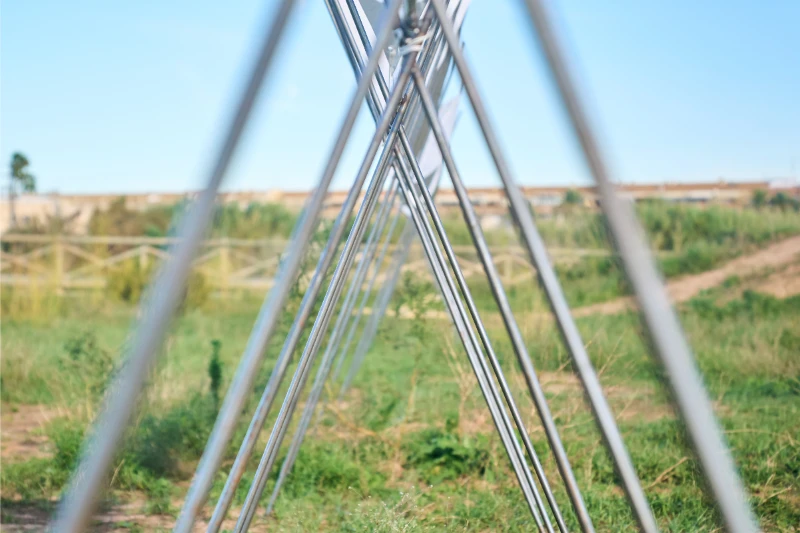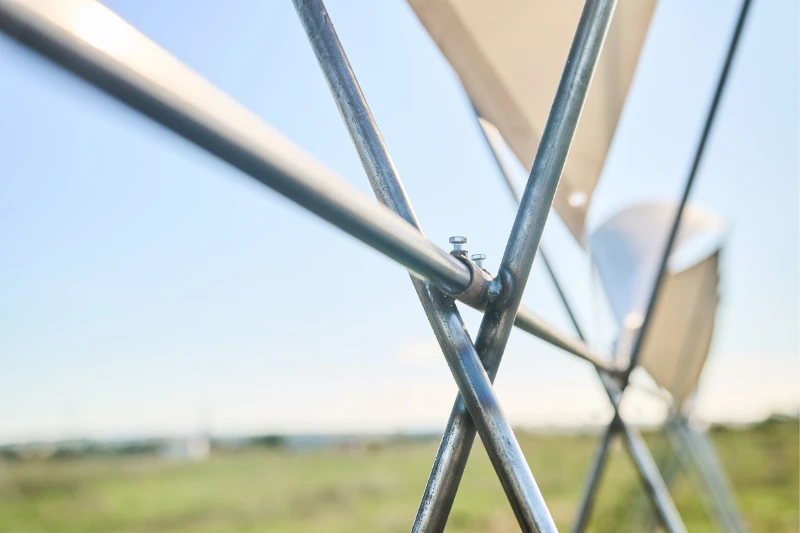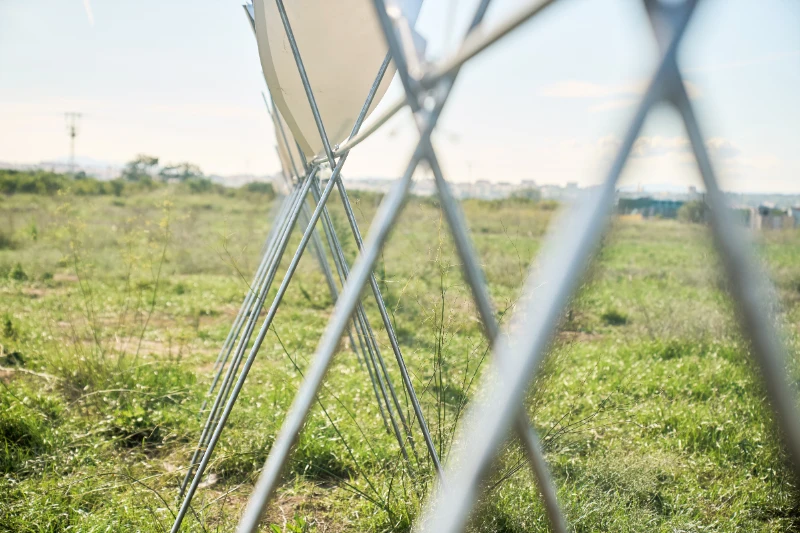
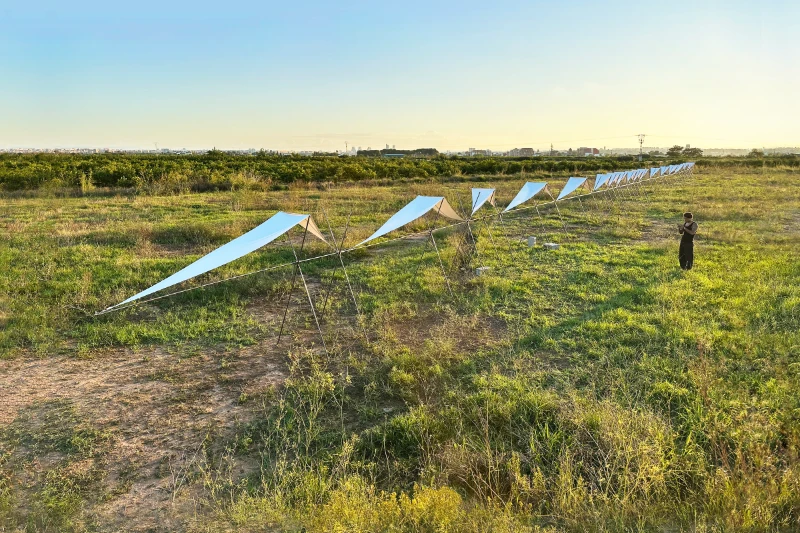
The 100 Linear Meters installation is inserted into the landscape of the Valencian huerta as a subtle and evocative line, built from the rhythmic repetition of a reinterpreted portico. The structure, inspired by the traditional wooden tomato supports that for generations have sustained tomato cultivation in the region, is brought into the present through the use of corrugated steel rods: a contemporary, recyclable, and reversible material that preserves the lightness and constructive honesty of the original.
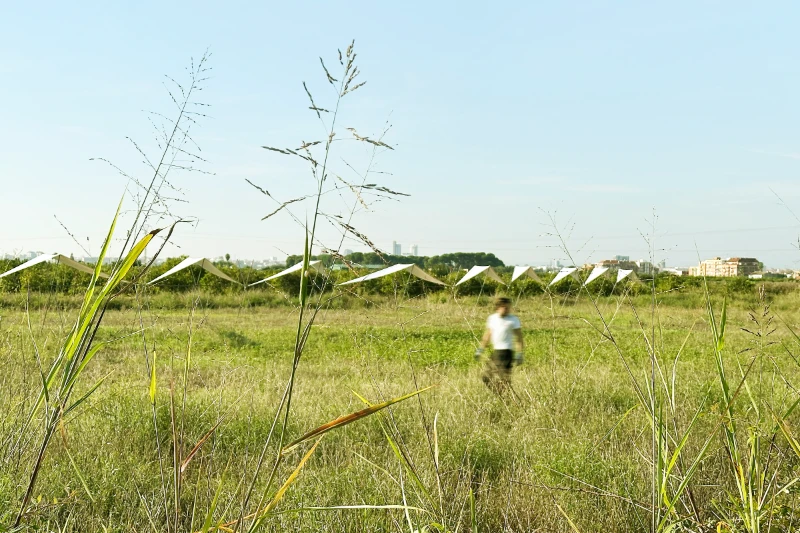
The proposal establishes a dialogue between agricultural memory and contemporary art, articulating a 100-meter line that does not impose a closed form but activates the territory through a minimal yet powerful gesture. This line, constructed by the almost musical reiteration of the module, not only invites visitors to walk along it, but also to look, inhabit, and listen to the landscape of the huerta.
The lightweight, floating textile canopy introduces a second layer of interpretation: that of shade and atmosphere. The fabrics tensioned between the porticos generate a play of light and shadow that recalls the rhythms of cultivation, seasonal protections, and the daily care of the fields. It is not a functional roof, but a symbolic one—an evocation of labor, shelter, and the long timescales of the agricultural landscape.
The project understands that the preservation of agricultural territory is not only about maintaining its physical appearance, but about activating its imagination through a contemporary reading. Reinterpreting agricultural structures is not merely a formal gesture—it is a way of bringing to the present a way of life threatened by urban pressure, rural abandonment, and the climate crisis. The pavilion thus becomes a critical and poetic tool for recovering an emotional and sensory relationship with the territory.
Through its reversible nature and minimal ecological footprint, the installation offers a framework for contemplation and reinterpretation of the landscape. It invites the community to walk through it, inhabit it, and make it their own through a renewed gaze. Far from imposing itself, the intervention accompanies: it merges with the furrows, follows the direction of irrigation, and allows itself to be crossed by wind, sunlight, and the passing of time.
The project, 100 metres lineals, seeks to reactivate heritage memory through fragility, lightness, and repetition. It builds a bridge between tradition and innovation, between the agricultural gesture and the artistic gesture, between what we once were and what we can still become as a community connected to a territory in transformation.