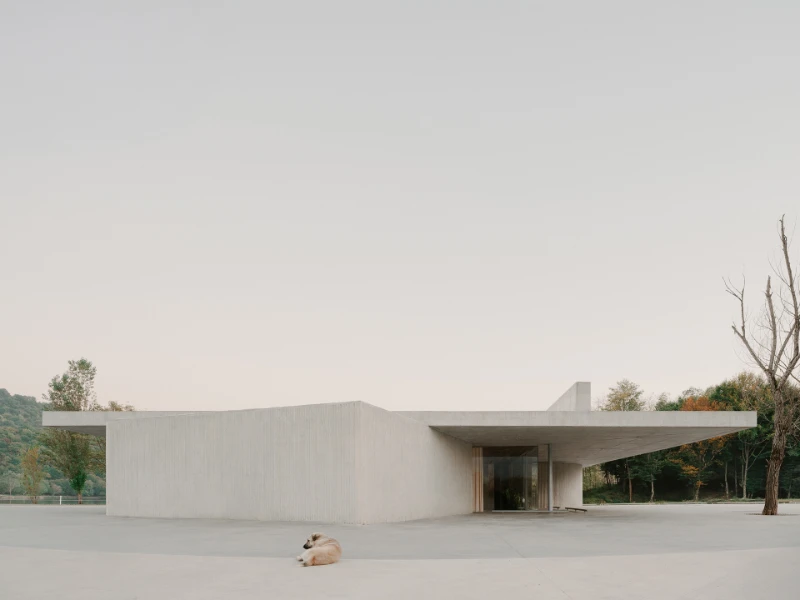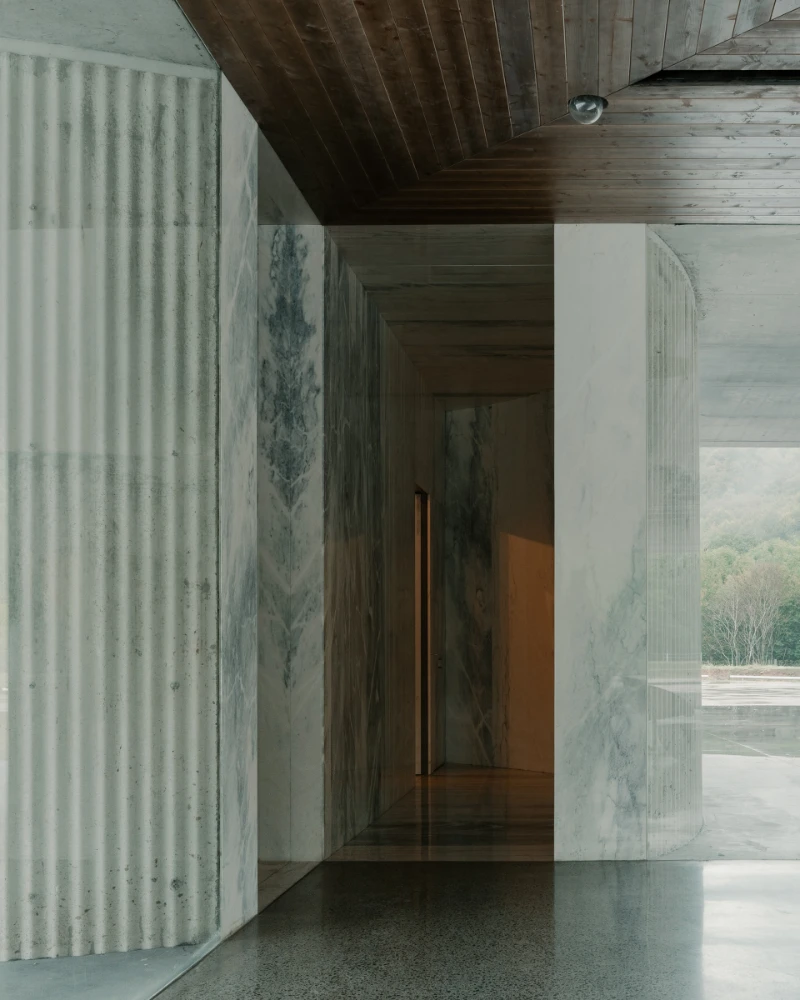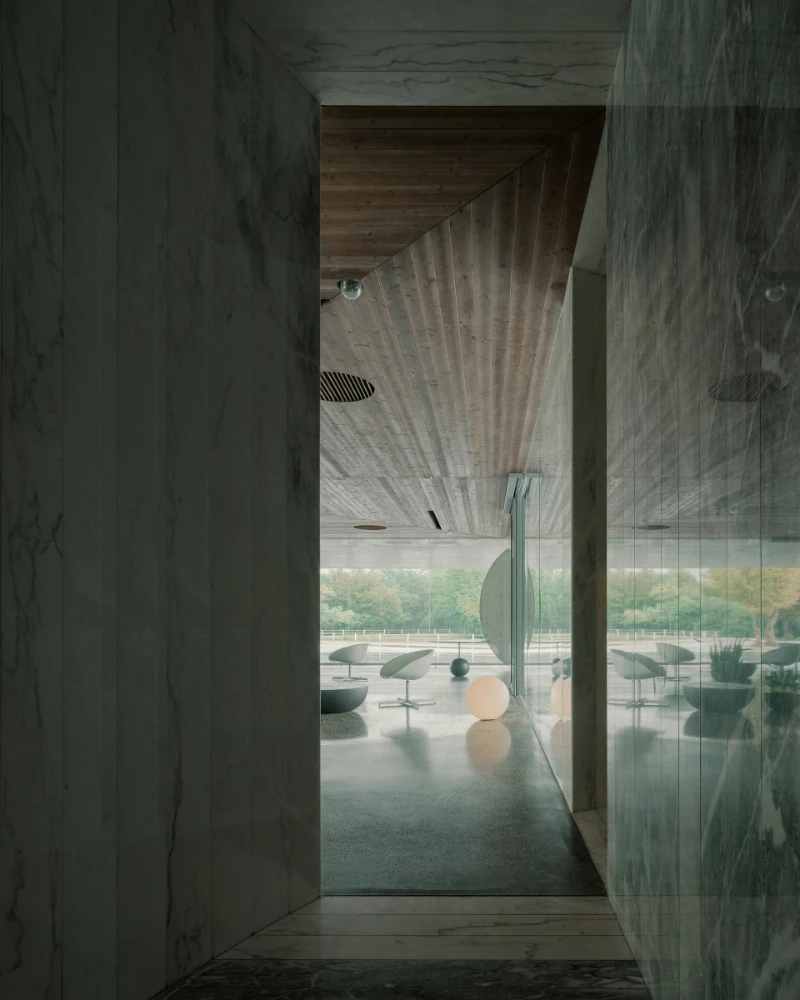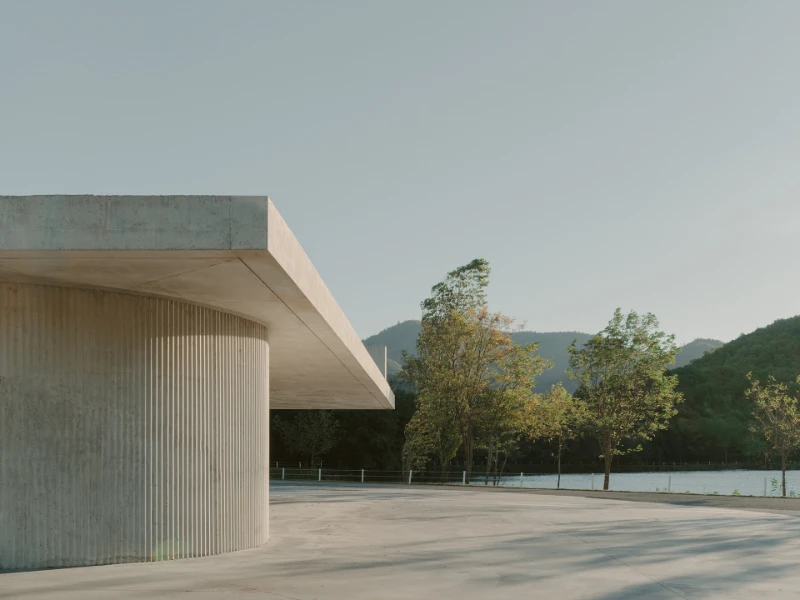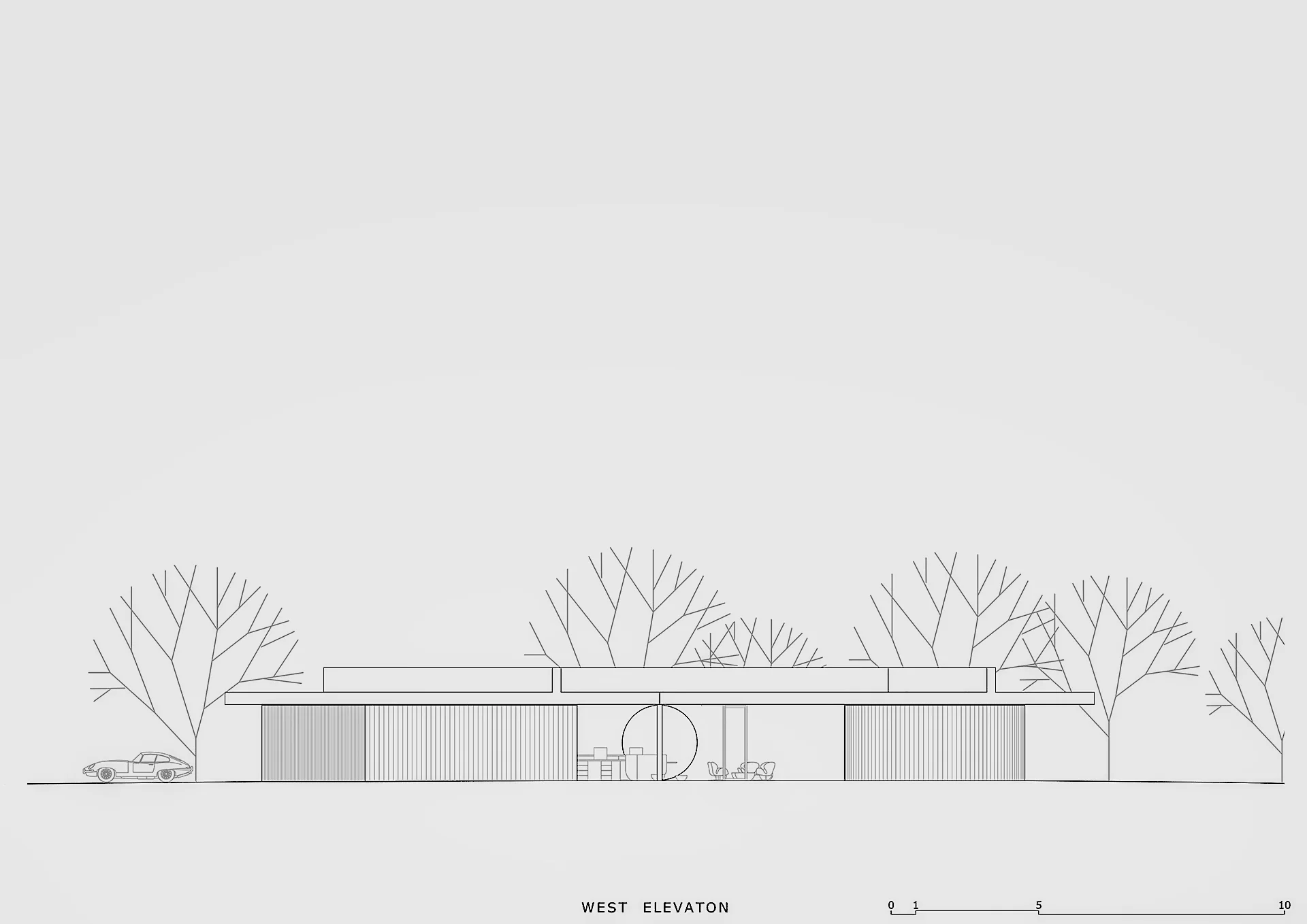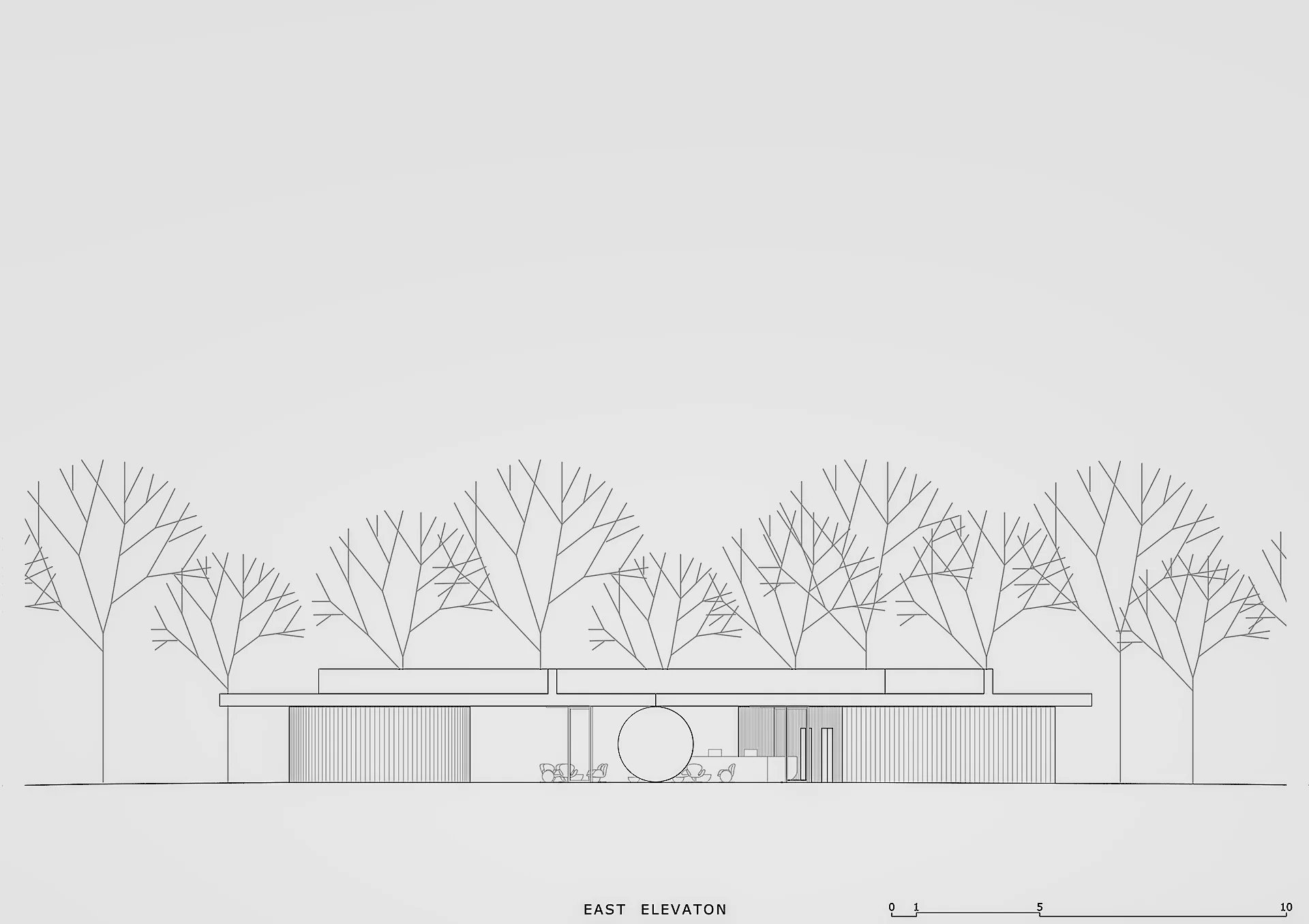
The Reception Pavilion is conceived as an imaginary purgatory — a passage from the polluted urban realm into a landscape of ecological clarity.
It stands both grounded and imaginary kinetic: a tectonic circle in motion, where nature enters from every side and the visitor becomes part of it.
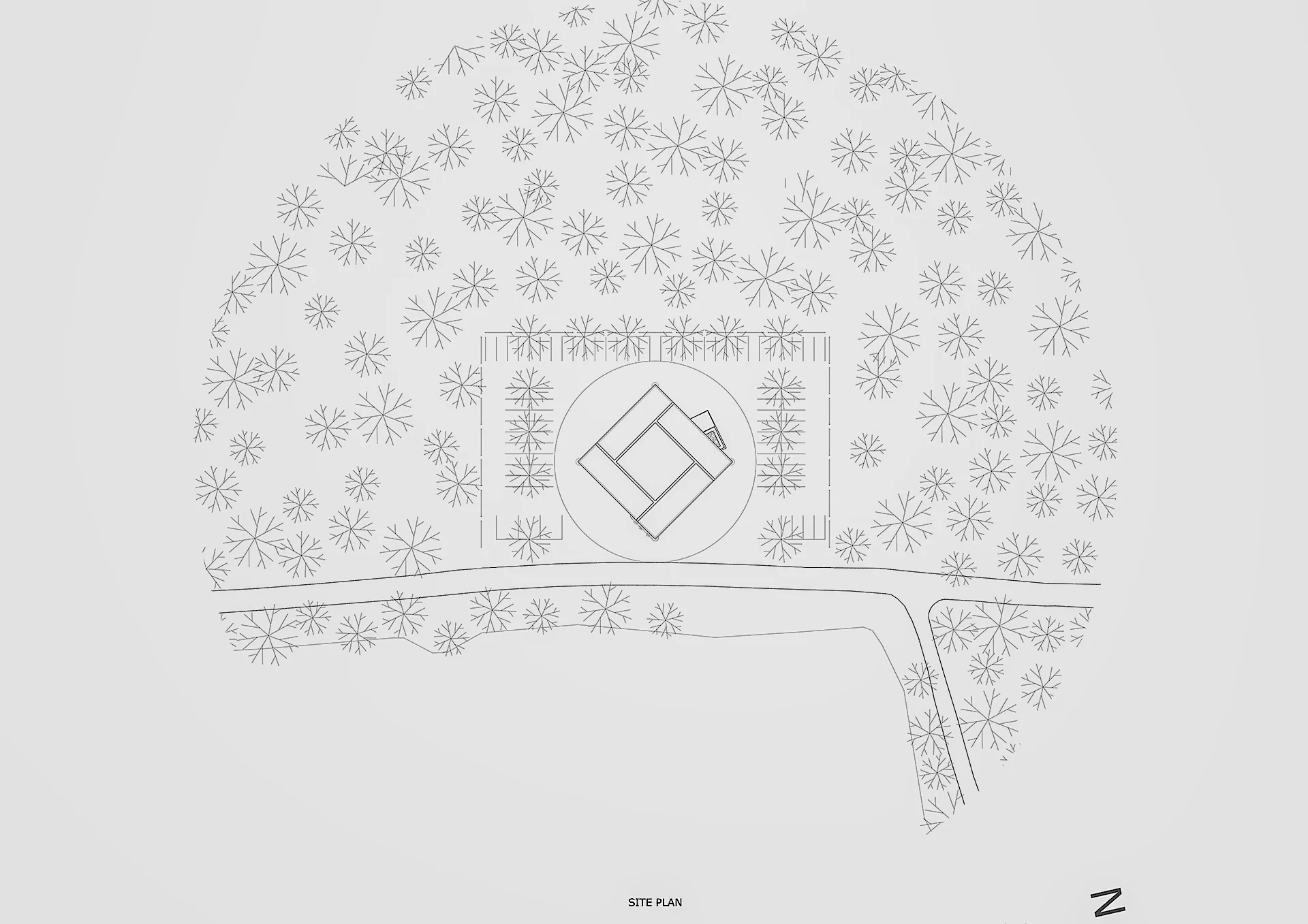
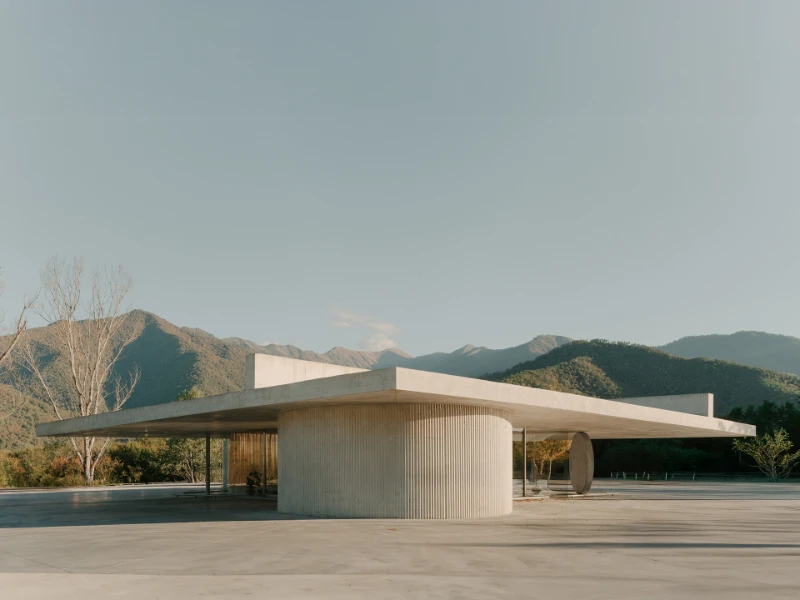
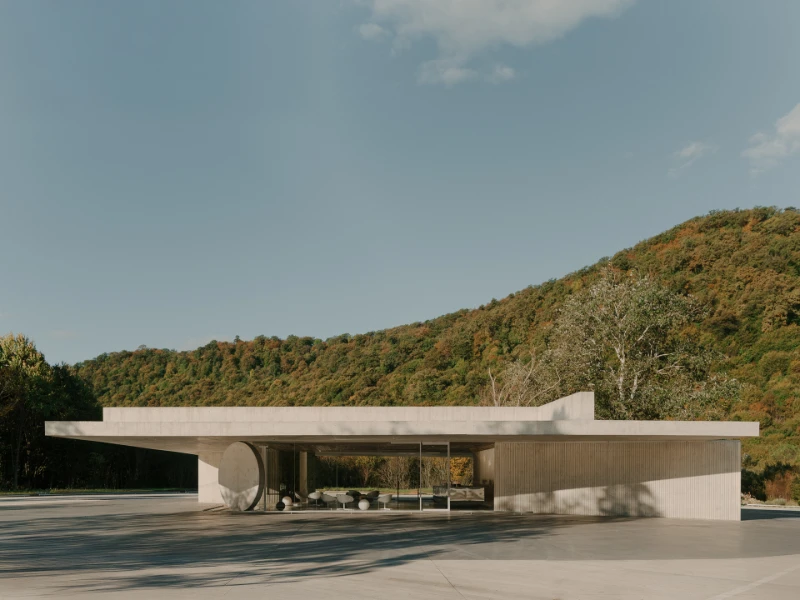
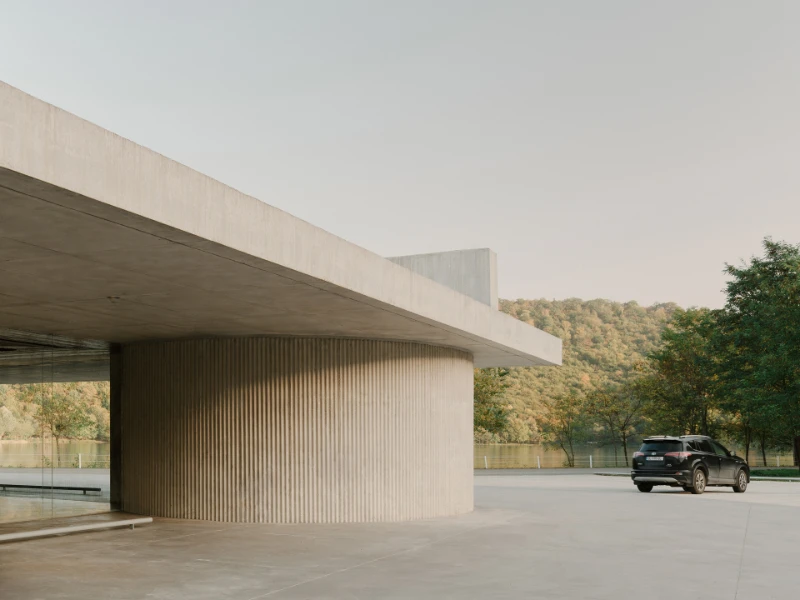
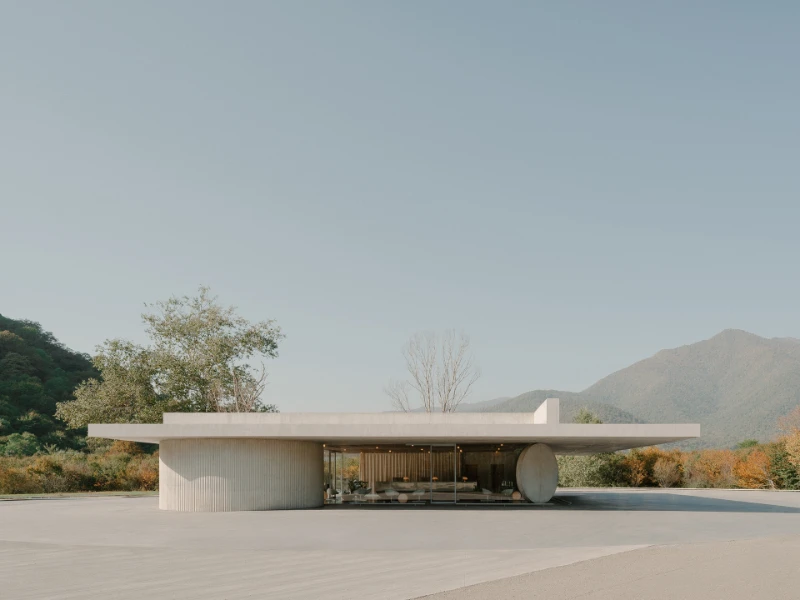
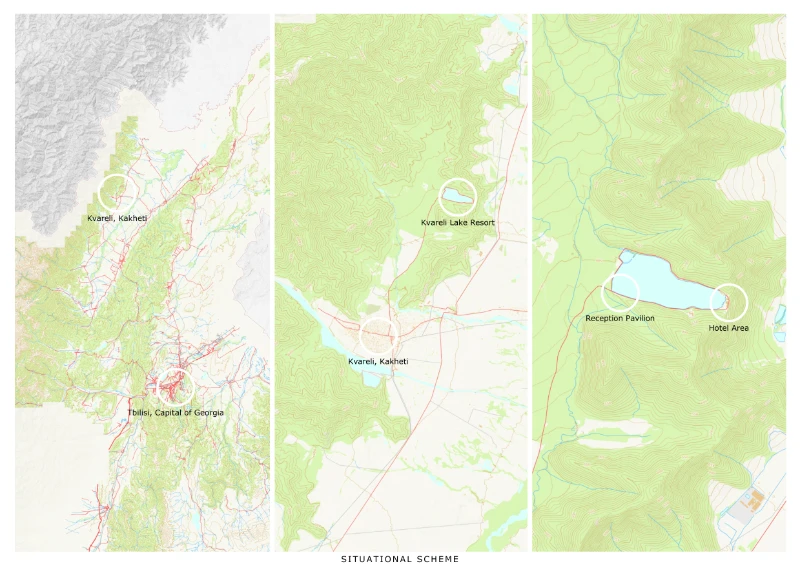
Located in Kakheti, Eastern Georgia, by the gem Kvareli Lake — a natural basin embraced by mountains — the pavilion marks the meeting line of forest and water.
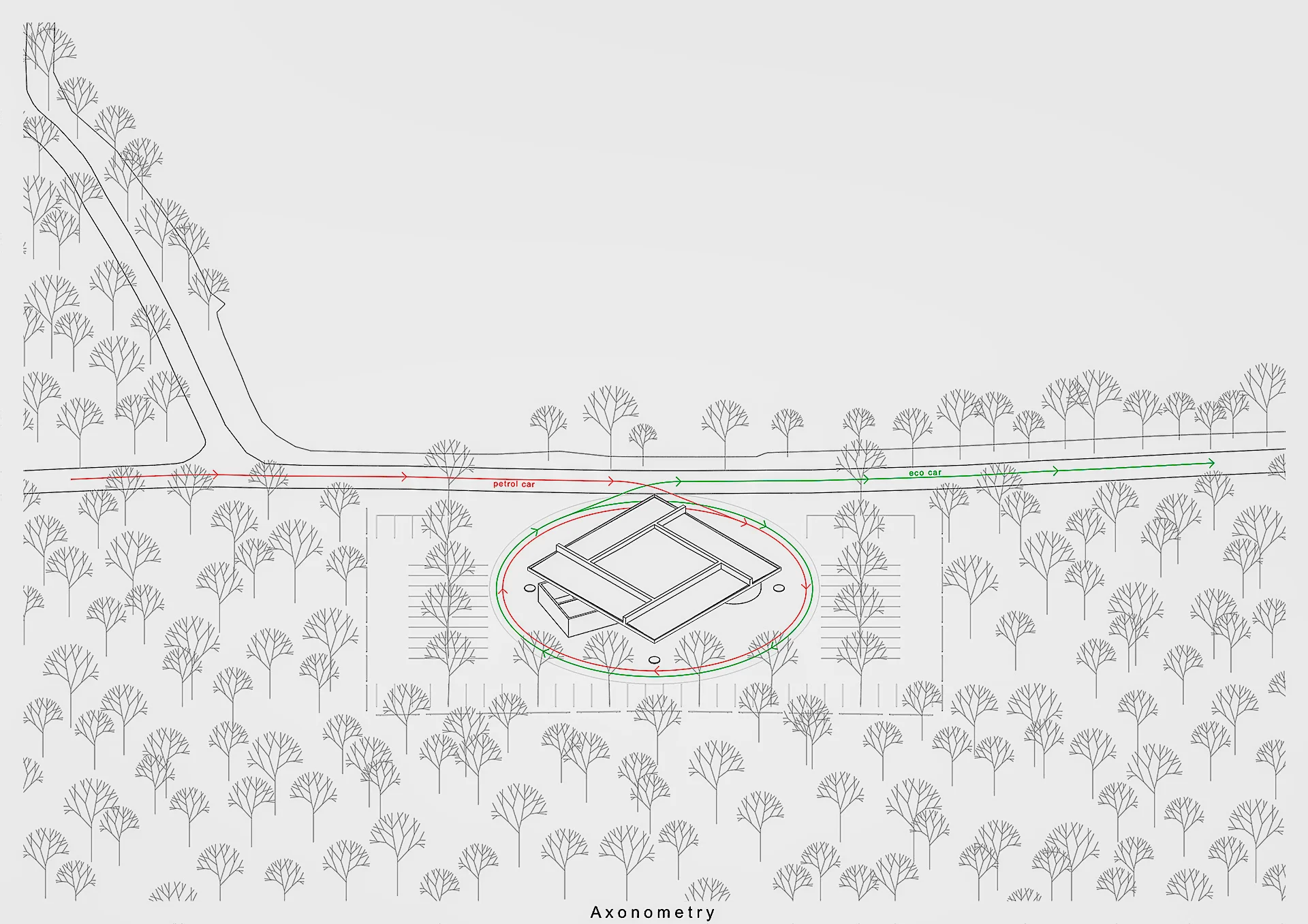
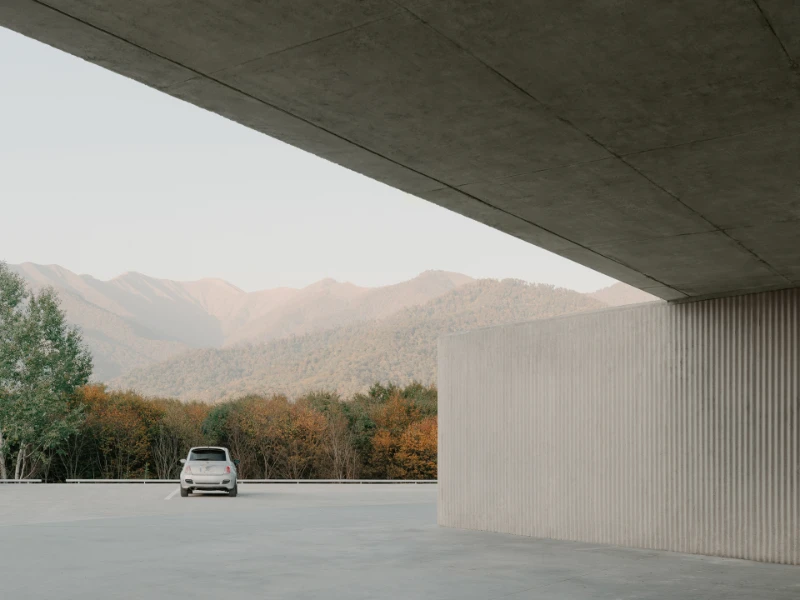
It serves as the reception building of a resort: guests arrive, leave their cars, and transition to eco-transport toward the hotel. The architecture mediates between the lake’s serenity and the density of the woods.
The challenge was to design a reception space that balanced guest comfort, staff efficiency, and environmental sensitivity.
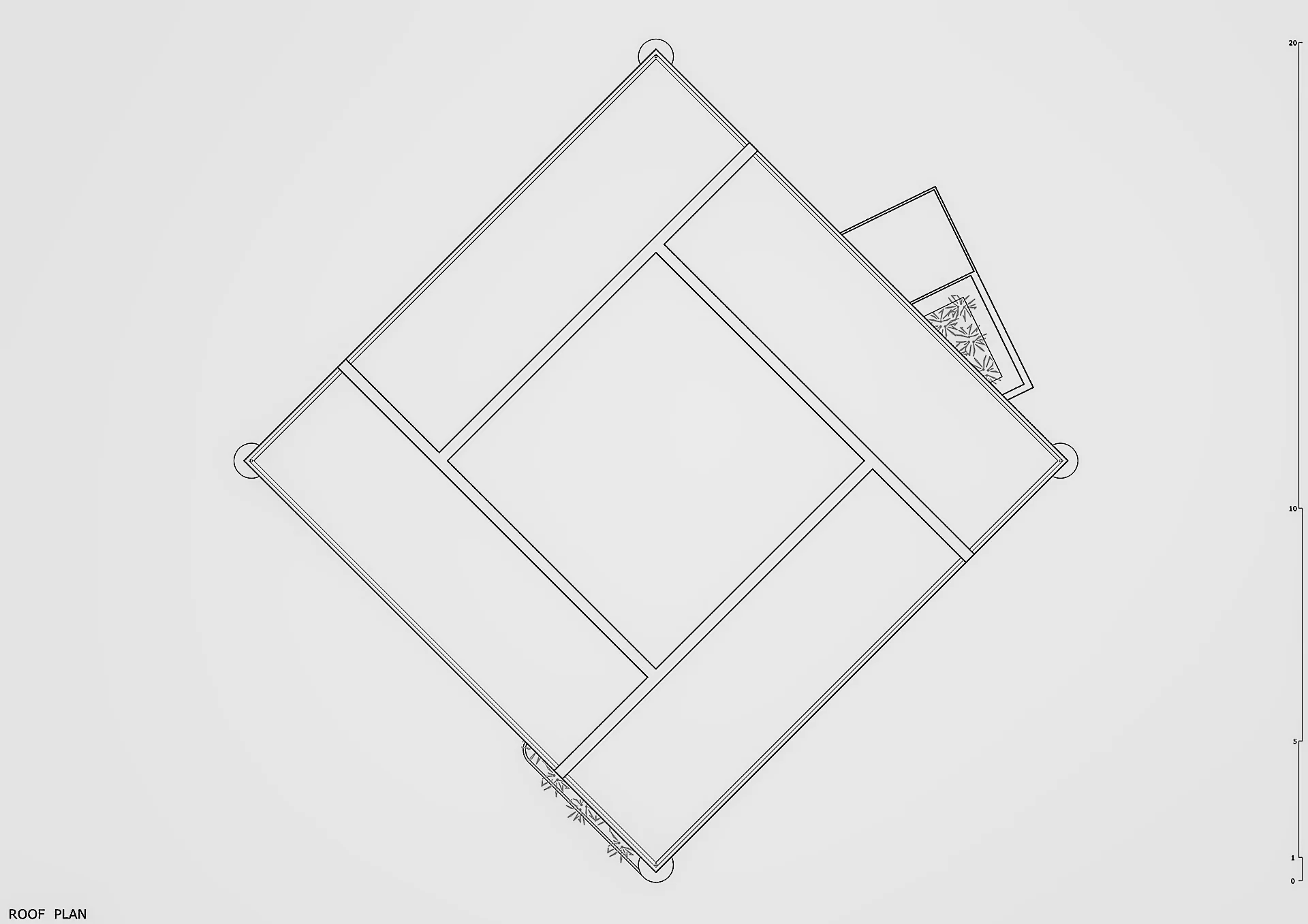
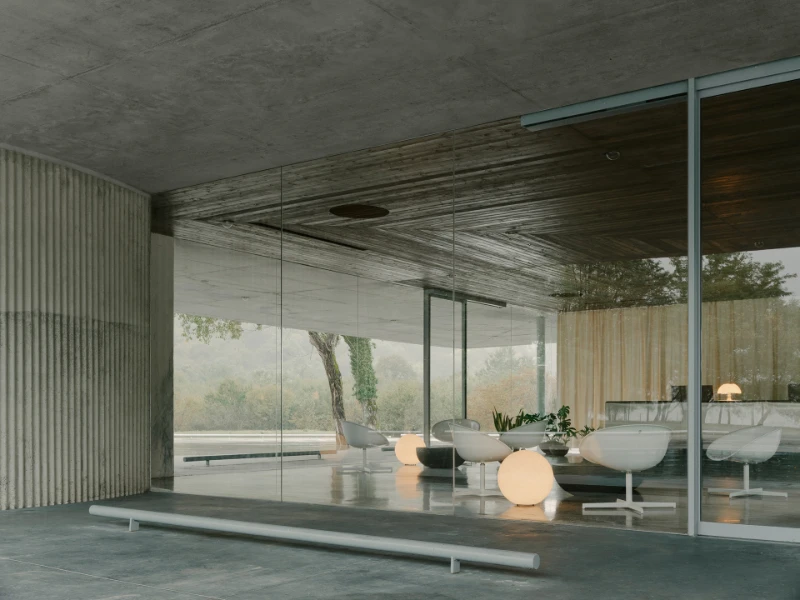
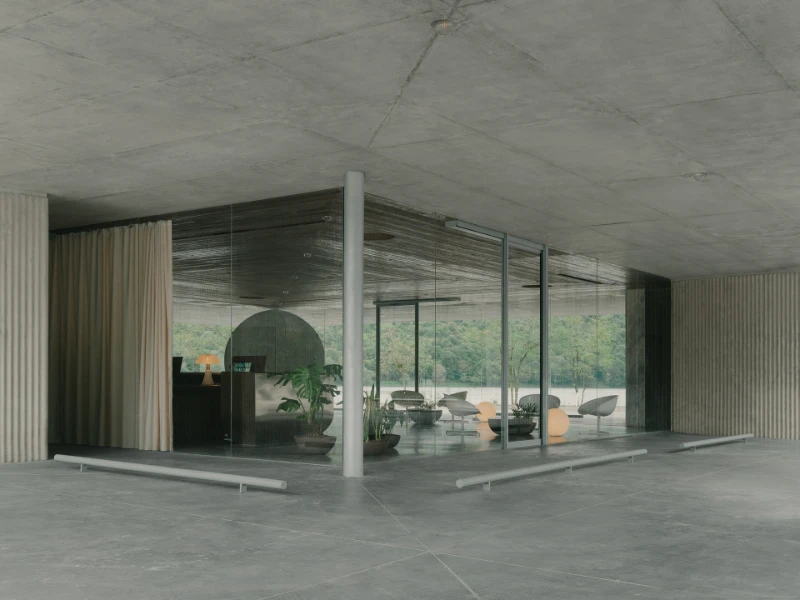
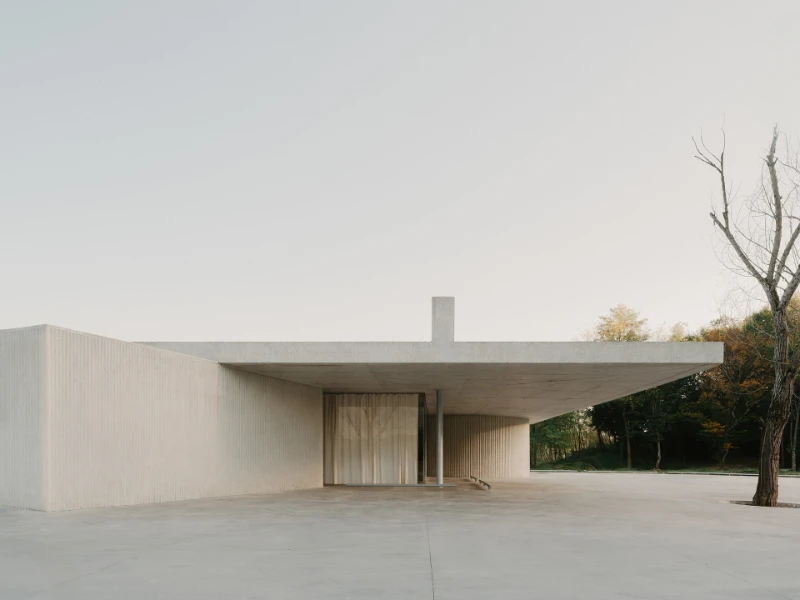
A large parking zone for 75 cars risked isolating the building from nature, so the square volume was rotated 45° to open visual and spatial connections on all sides.
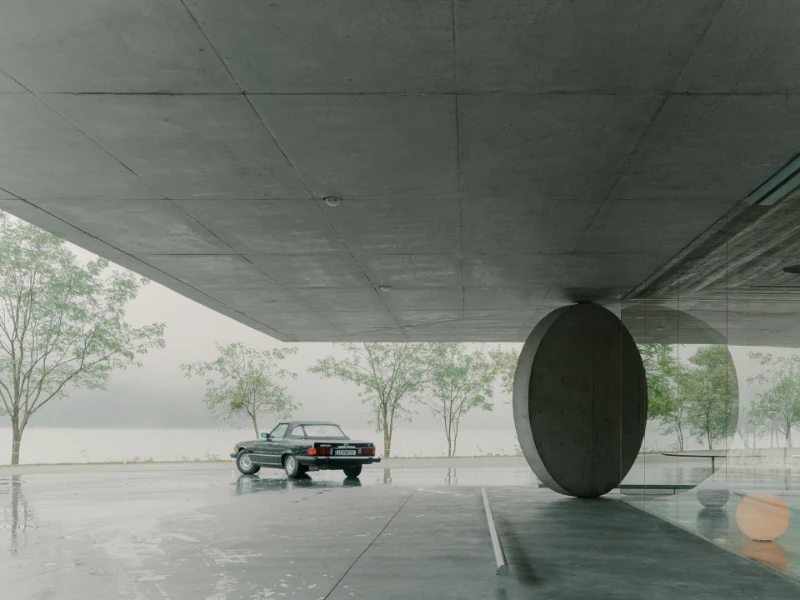
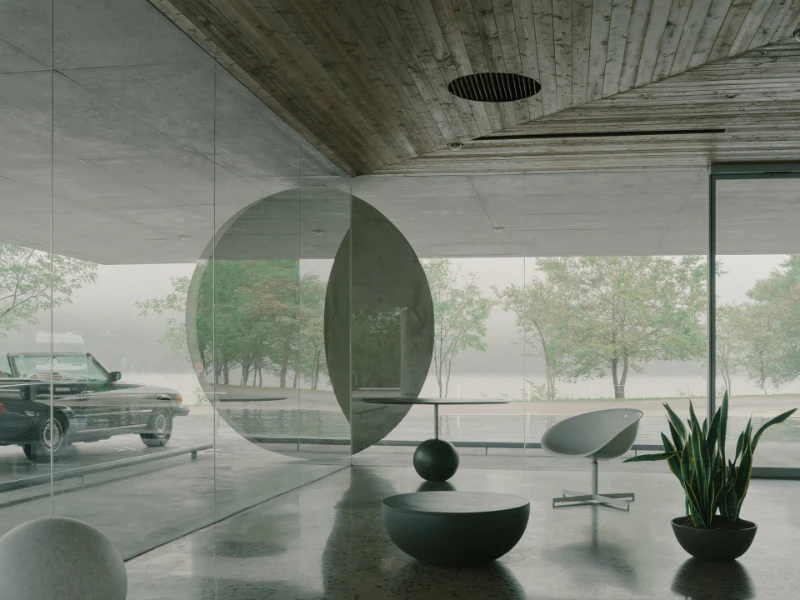
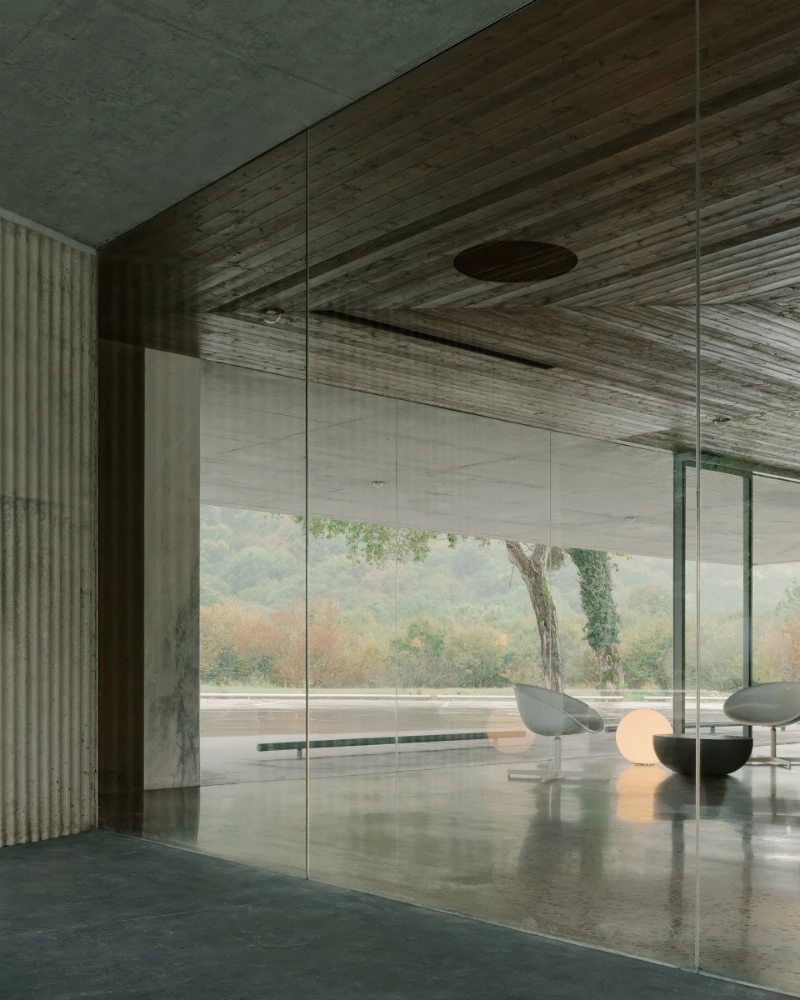
Boundaries between inside and outside dissolve; the pavilion breathes with its landscape.
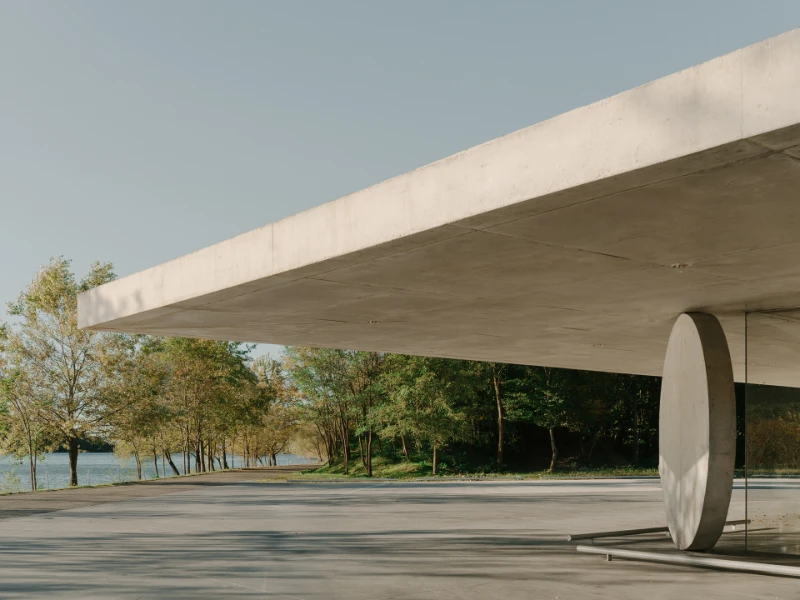
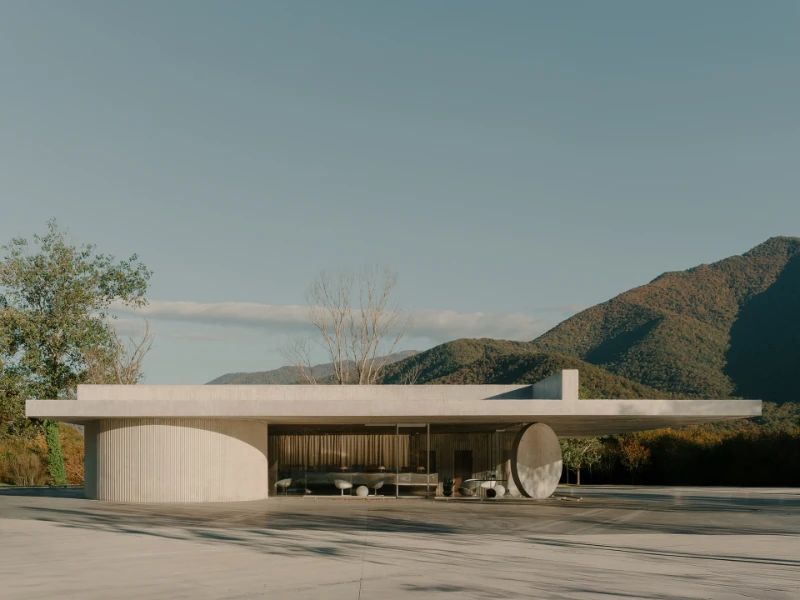
Under a floating concrete roof, open and covered zones merge in a fluid system that allows natural airflow.
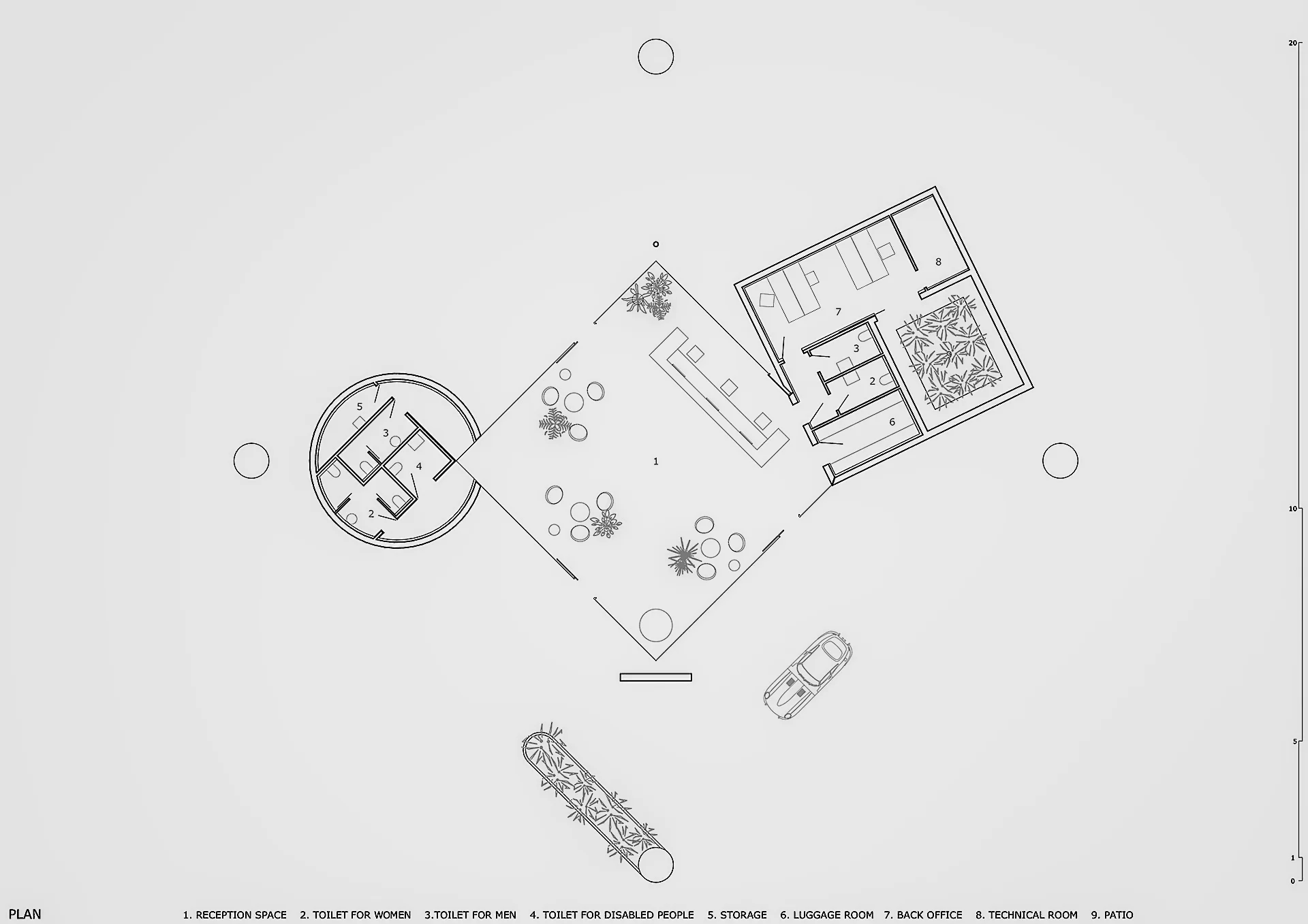
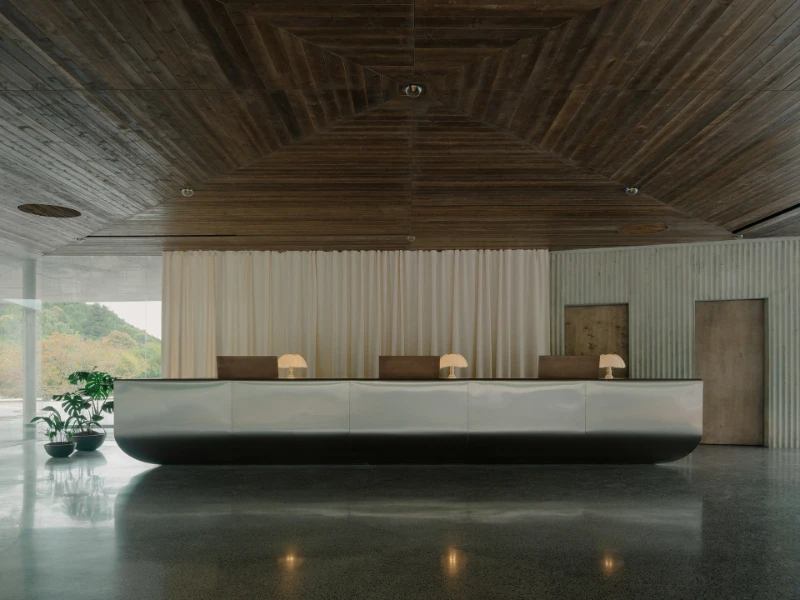
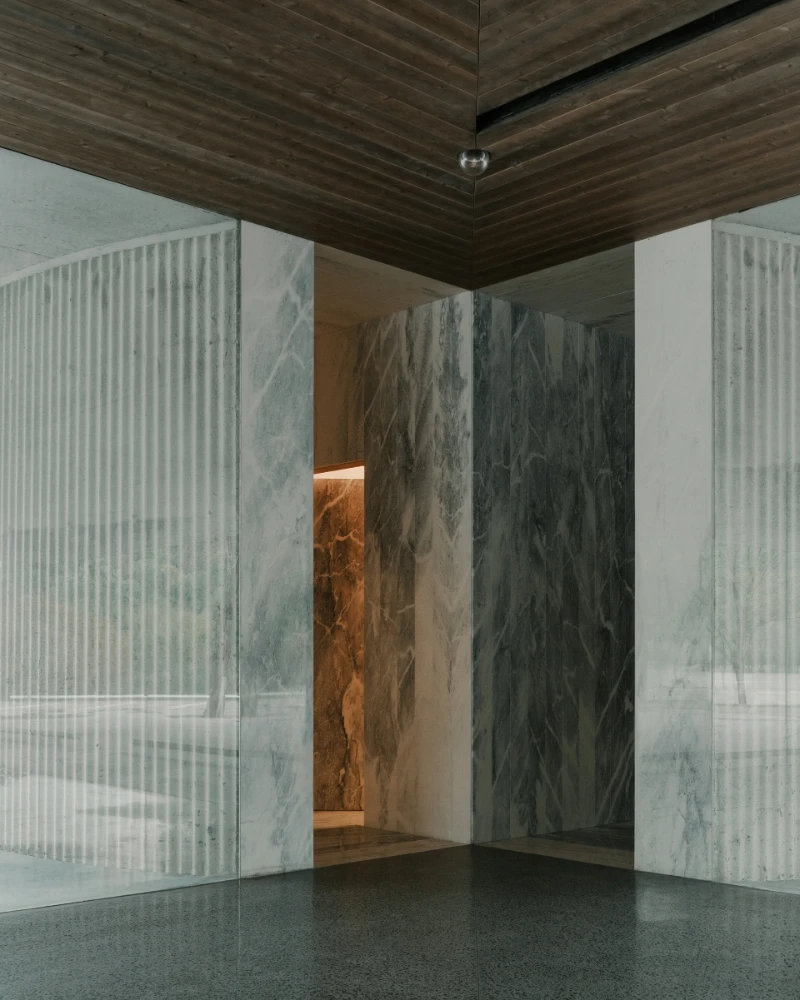
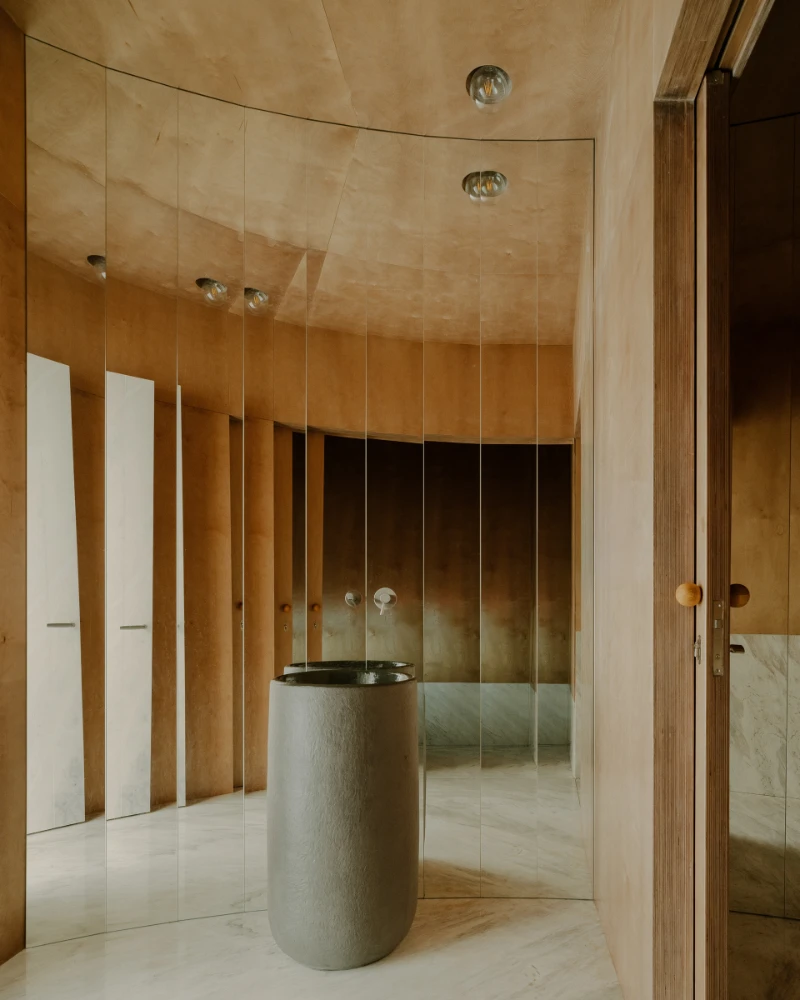
Beneath the roof lie the reception area, guest restrooms, service spaces, and back office — the latter discreetly separated to ensure both operational efficiency and tranquility for visitors.
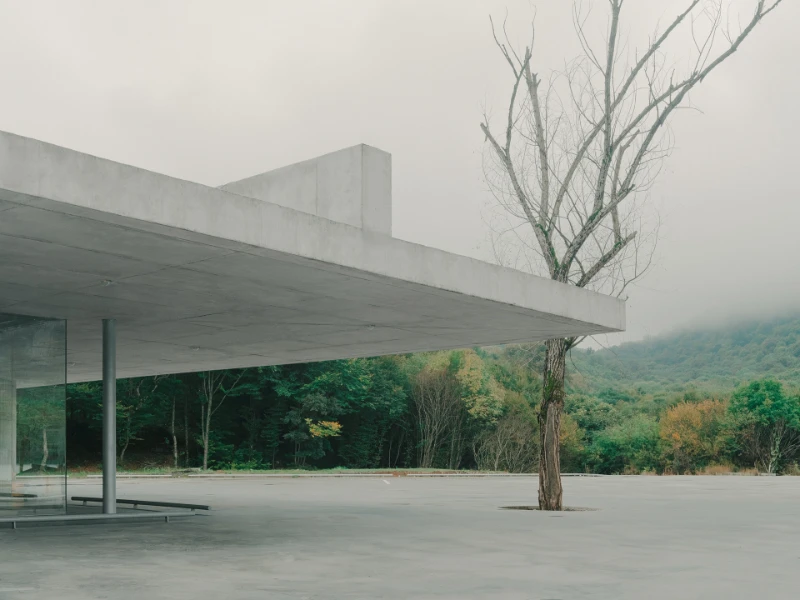
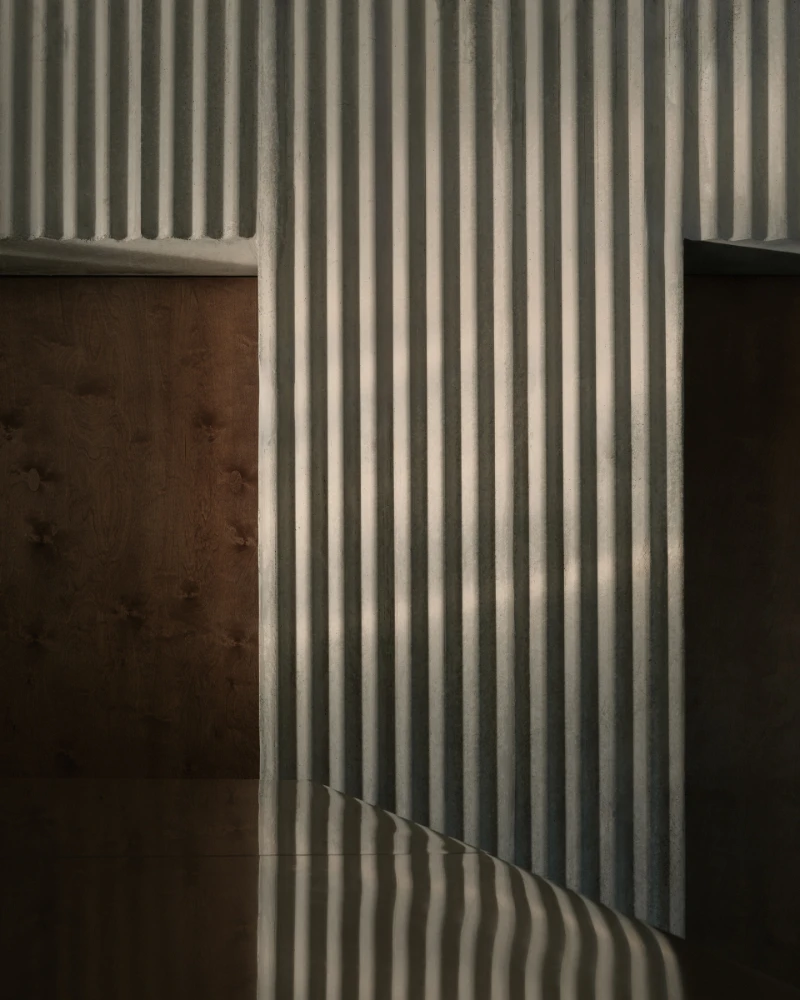
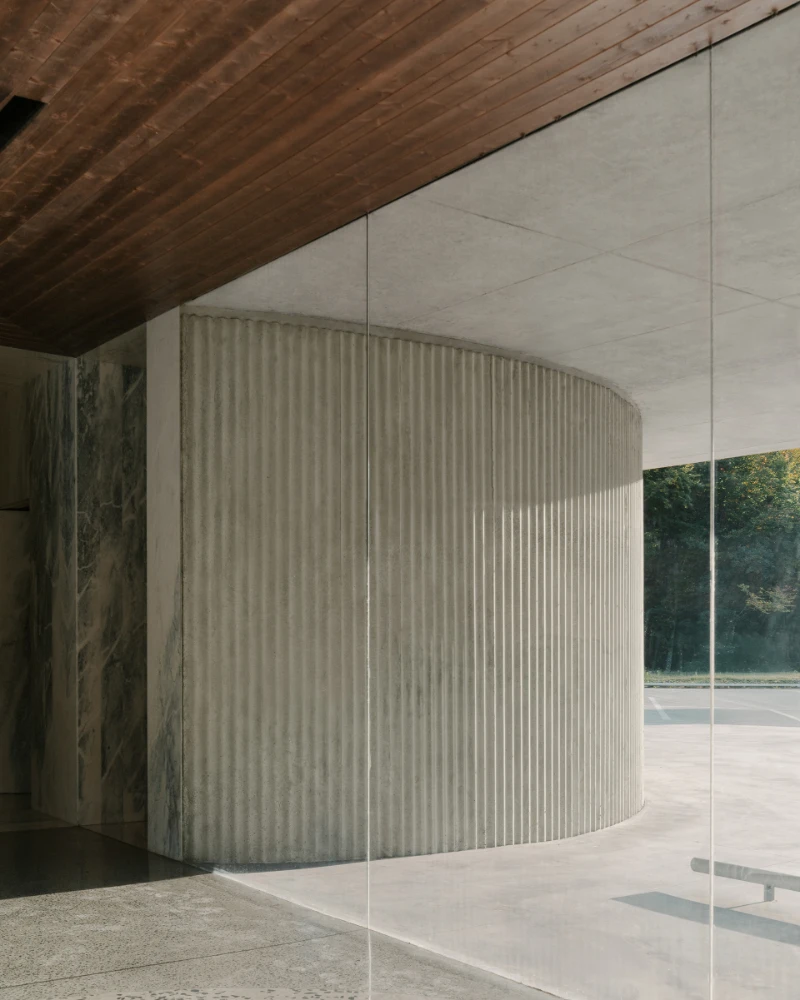
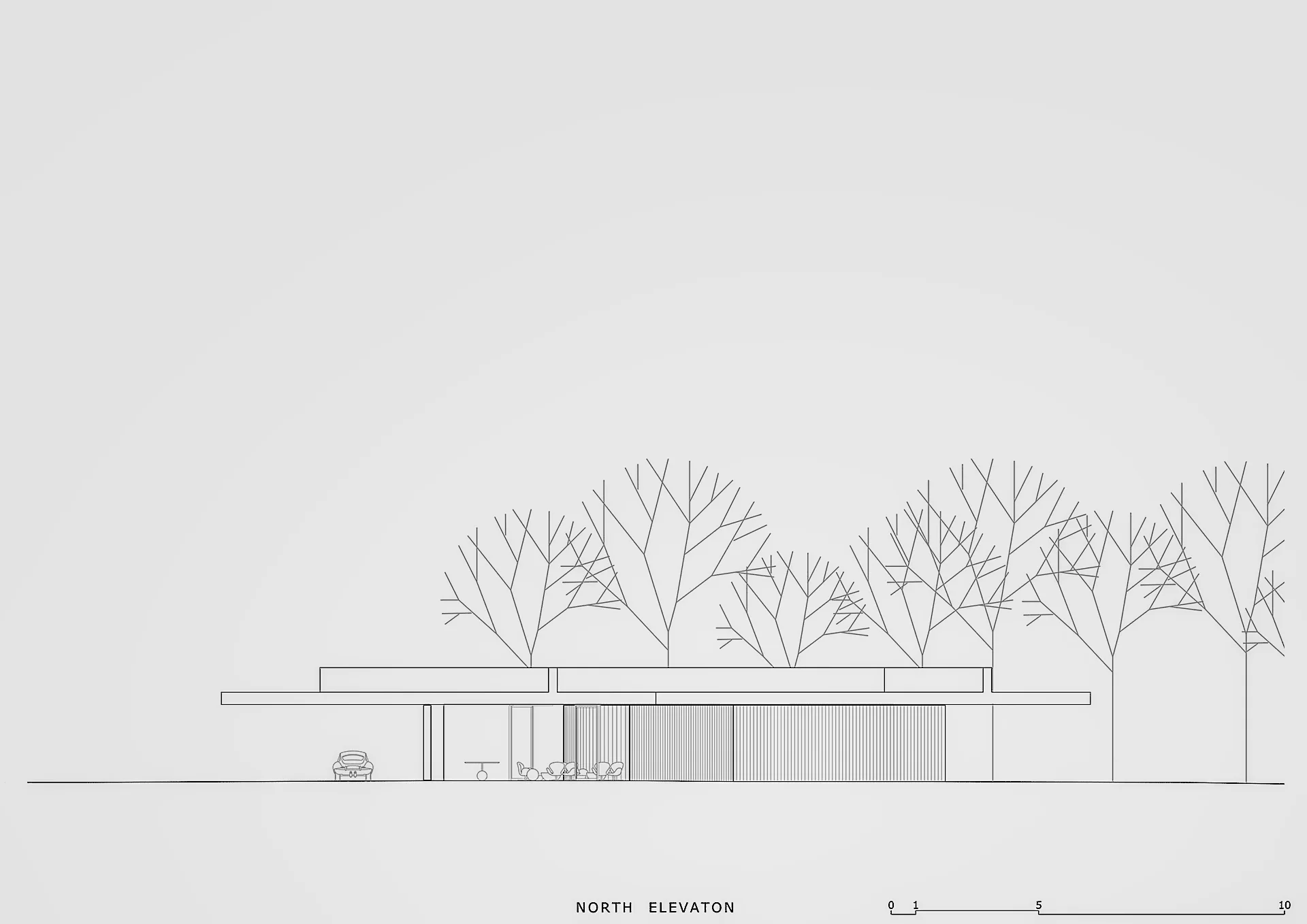
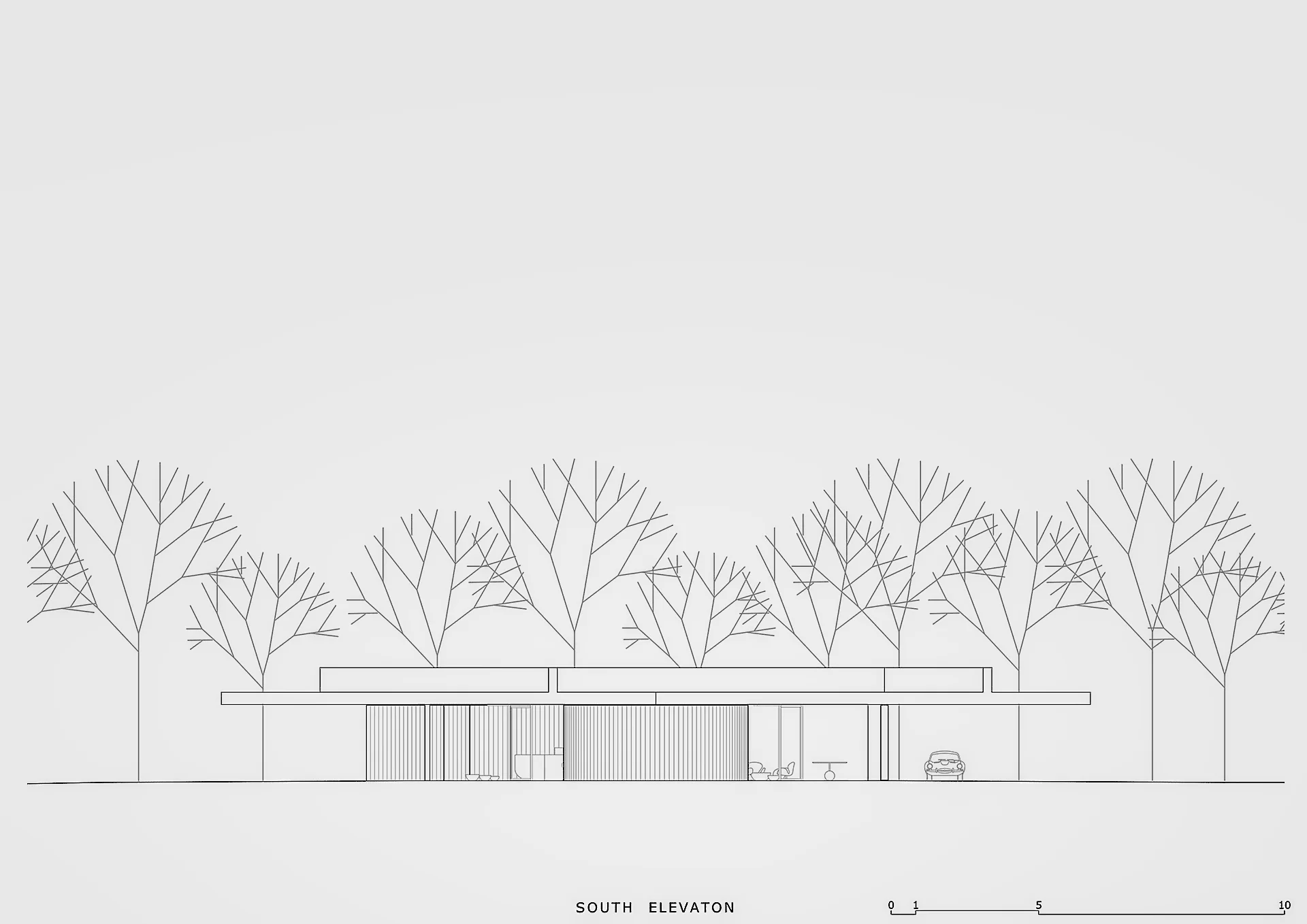
The tectonics are defined by a square reinforced-concrete roof resting on four supports: two enclosed concrete volumes — a circular one for restrooms and a square one for the back office — and two slender columns.
Between these, transparent glazing creates a 360° open main space.
The roof extends as a 6-metre cantilever, its rigidity ensured by a dynamic pattern of four beams.
The simplicity of concrete and glass ensures durability and minimal maintenance, while the structure’s openness allows passive airflow and reduced energy use — a solid frame for an architecture of lightness.