Architecture of the In-Between By Makoto Tanijiri
It’s been nearly 30 years since I first began studying architecture. Throughout that time, I have continued to contemplate the idea of “in-between.” Between the city and nature, between people and objects, between inside and outside, or between function and feeling. I have come to see these spaces not as mere gaps or neutral zones, but as creative frontiers—places where sensitivity and imagination can take root.
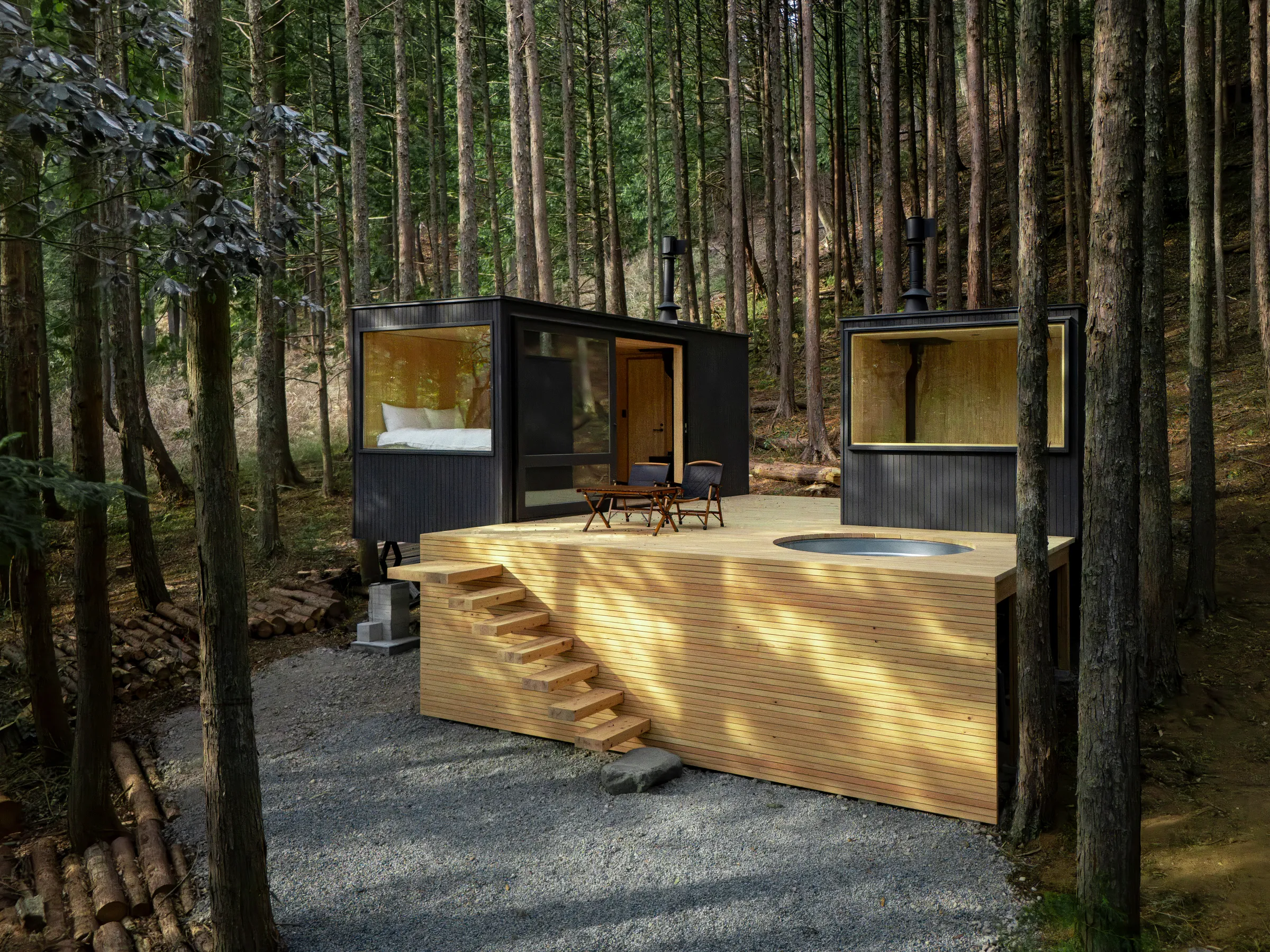
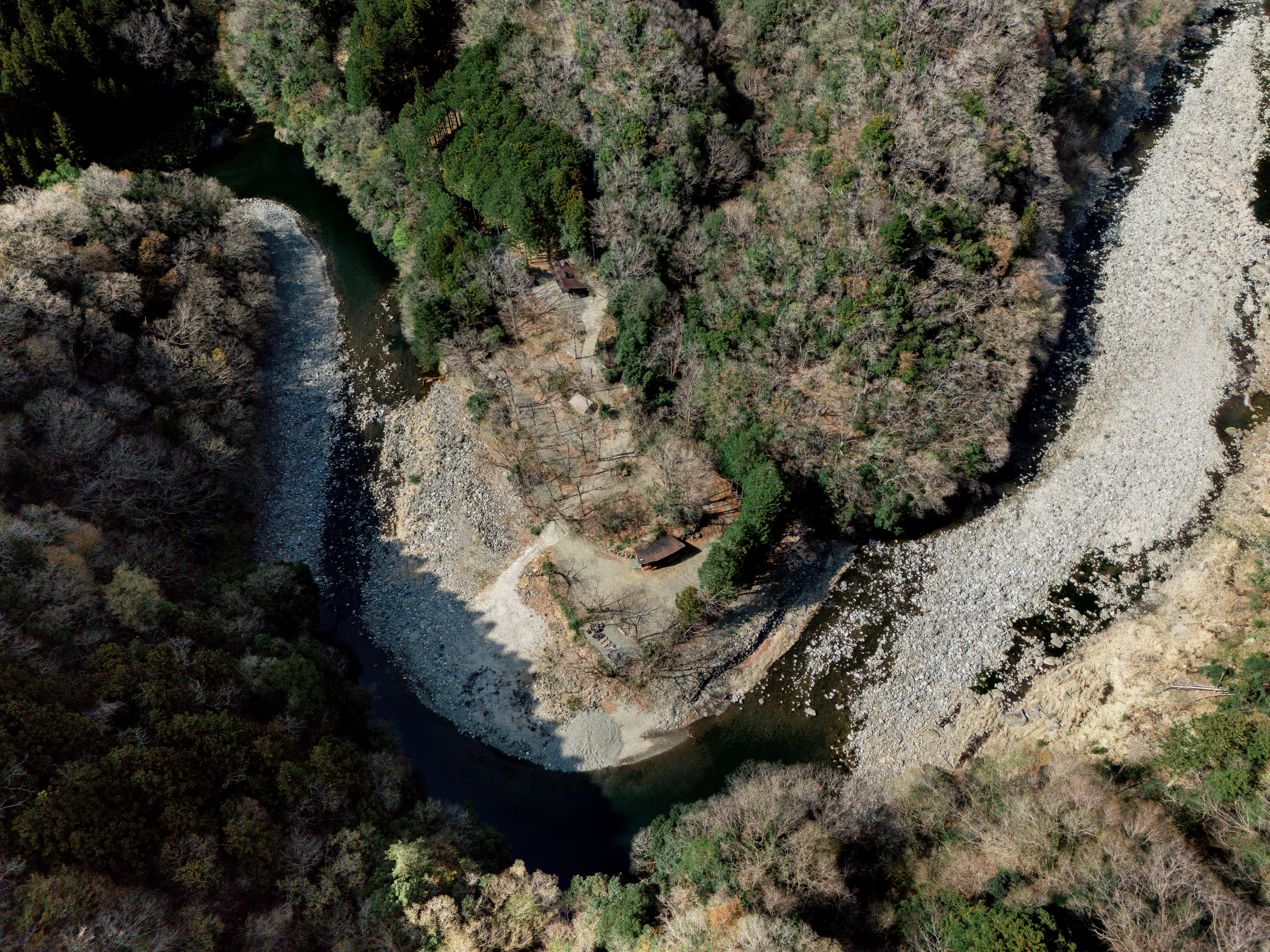
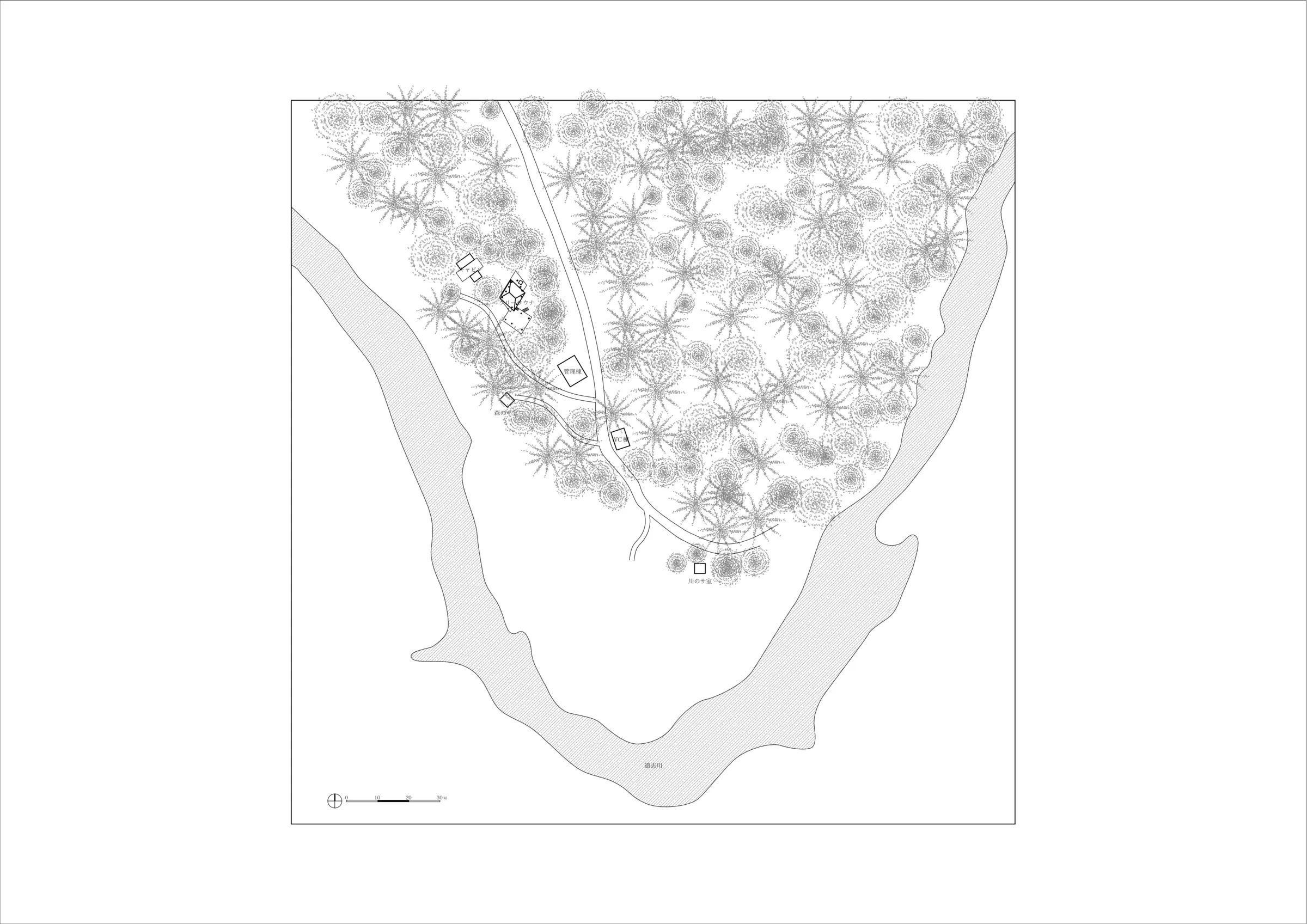
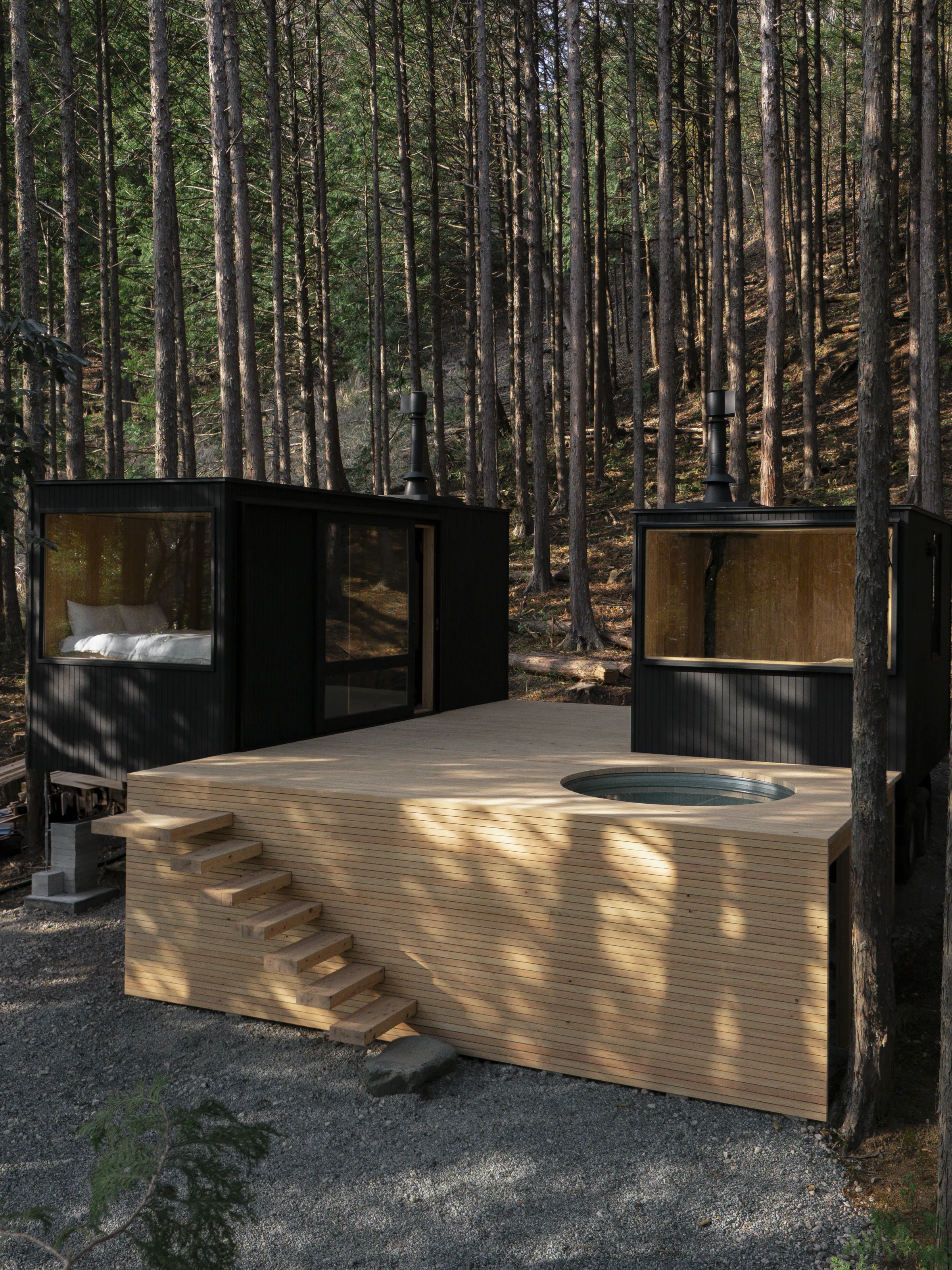
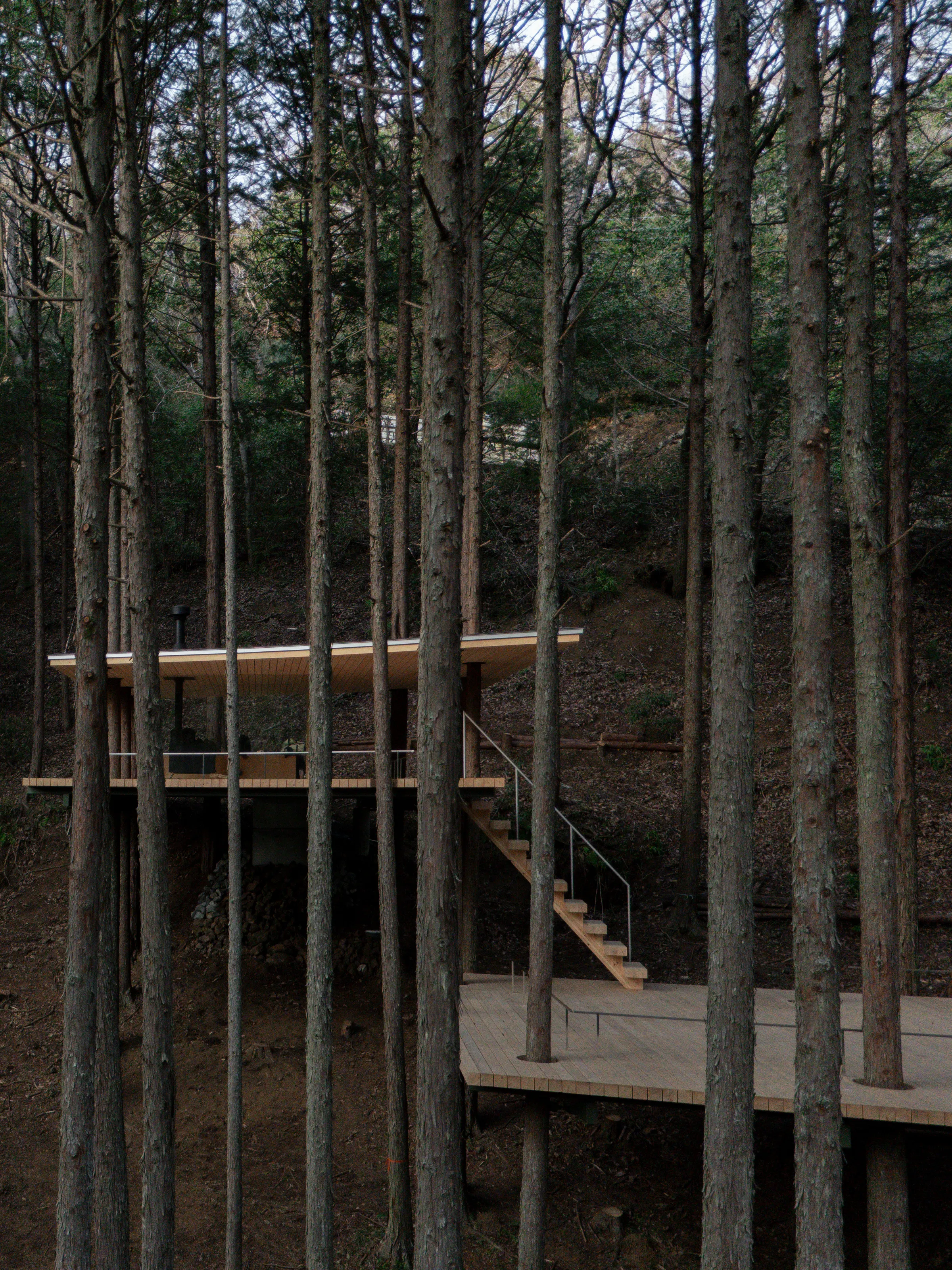
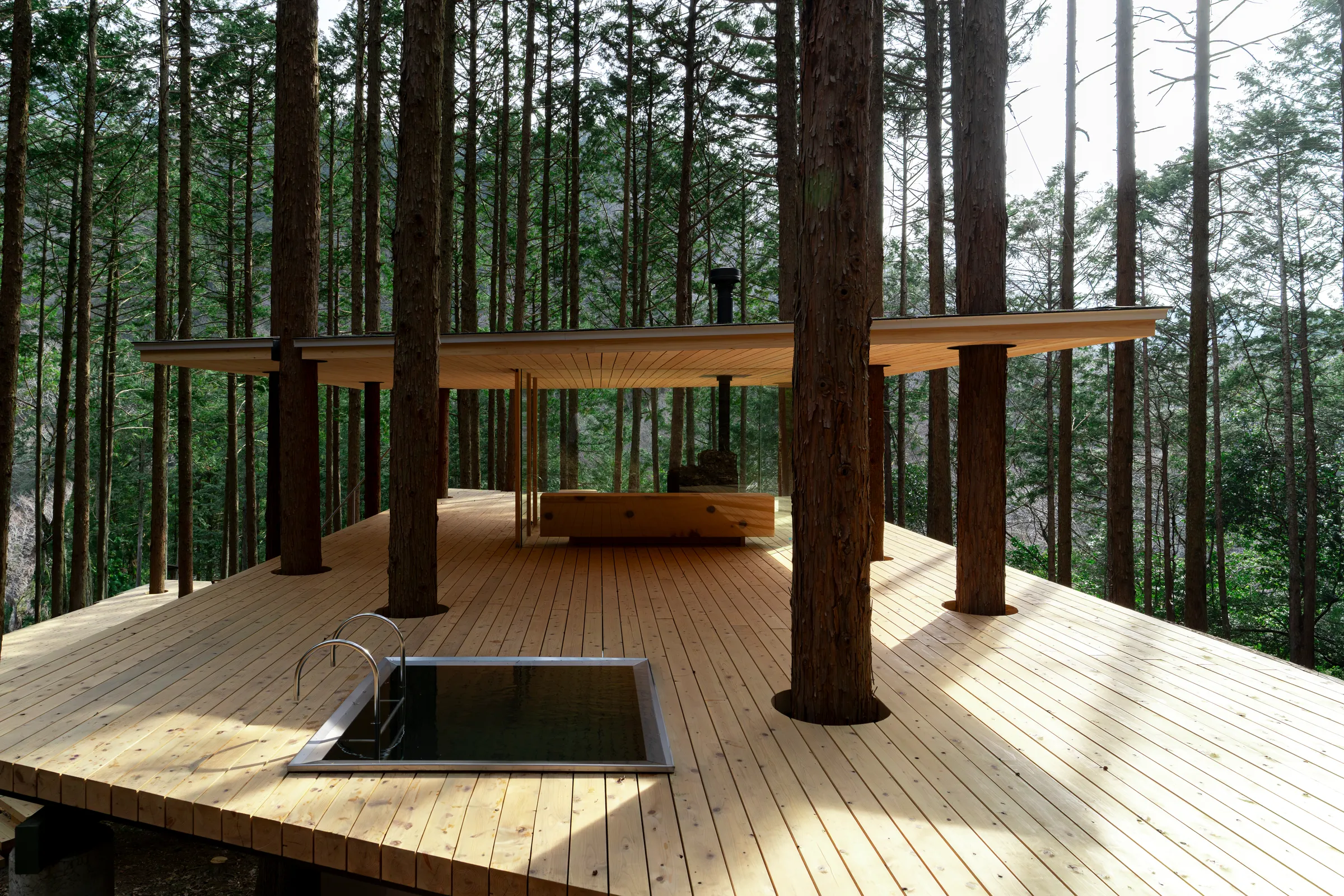
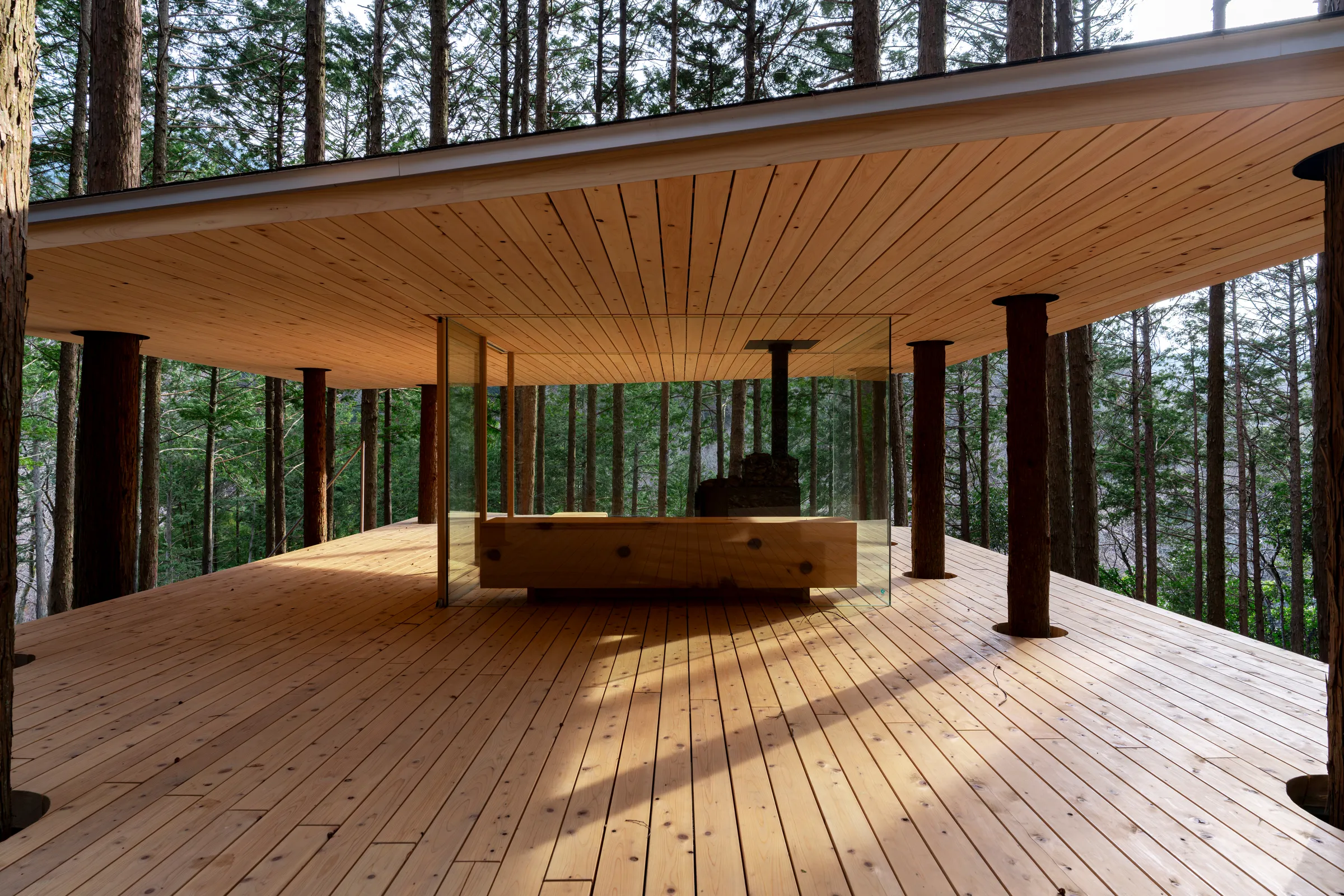
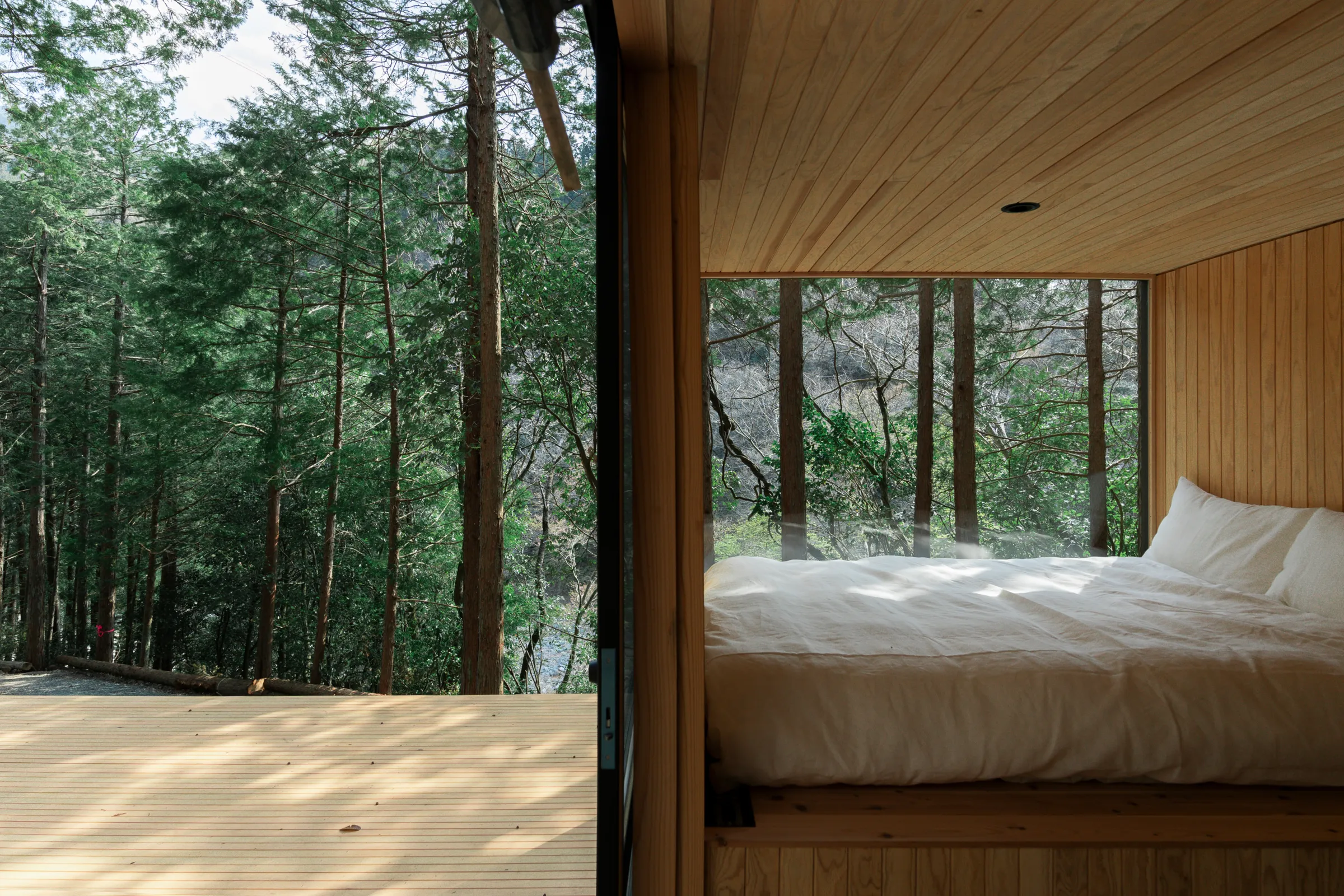
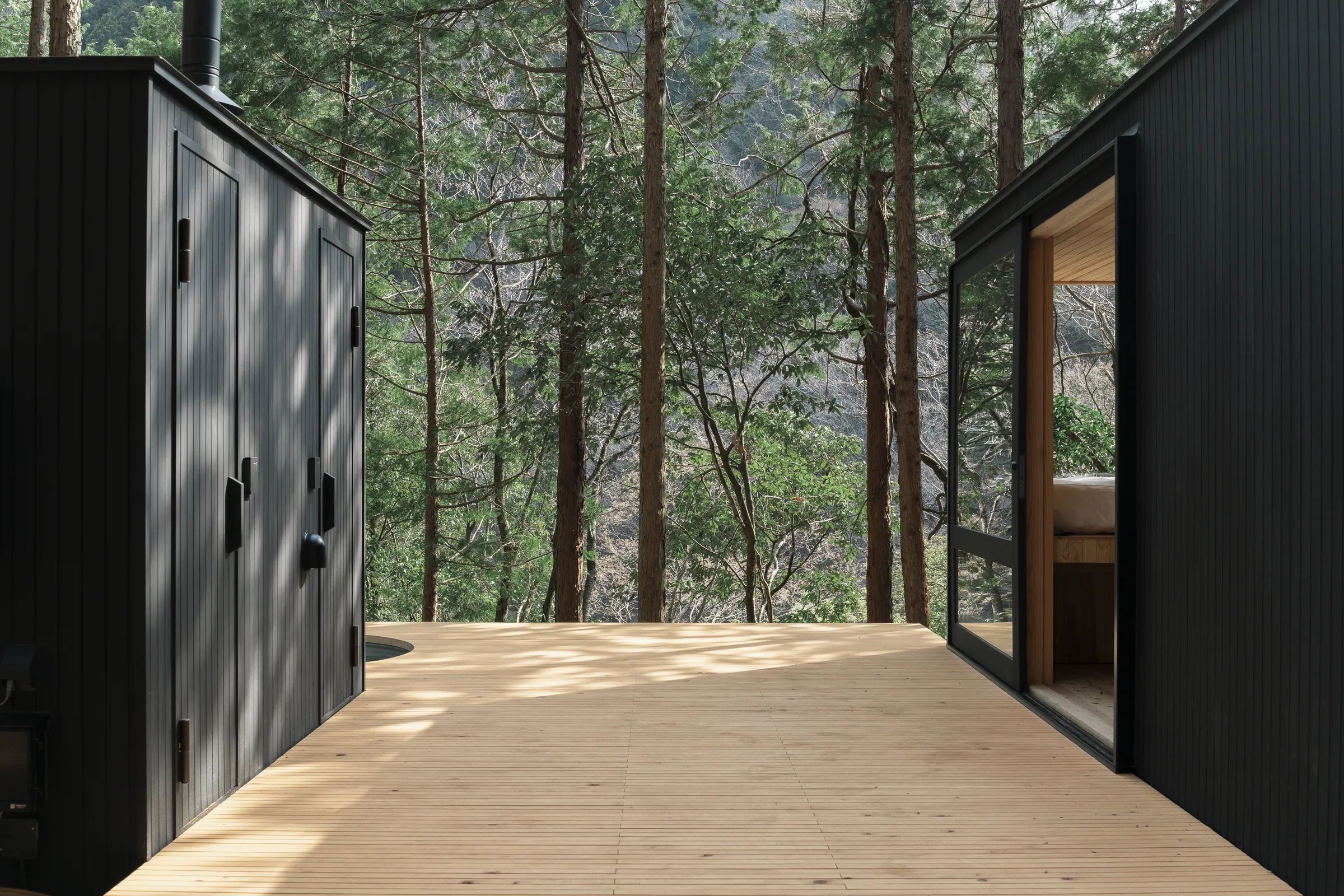
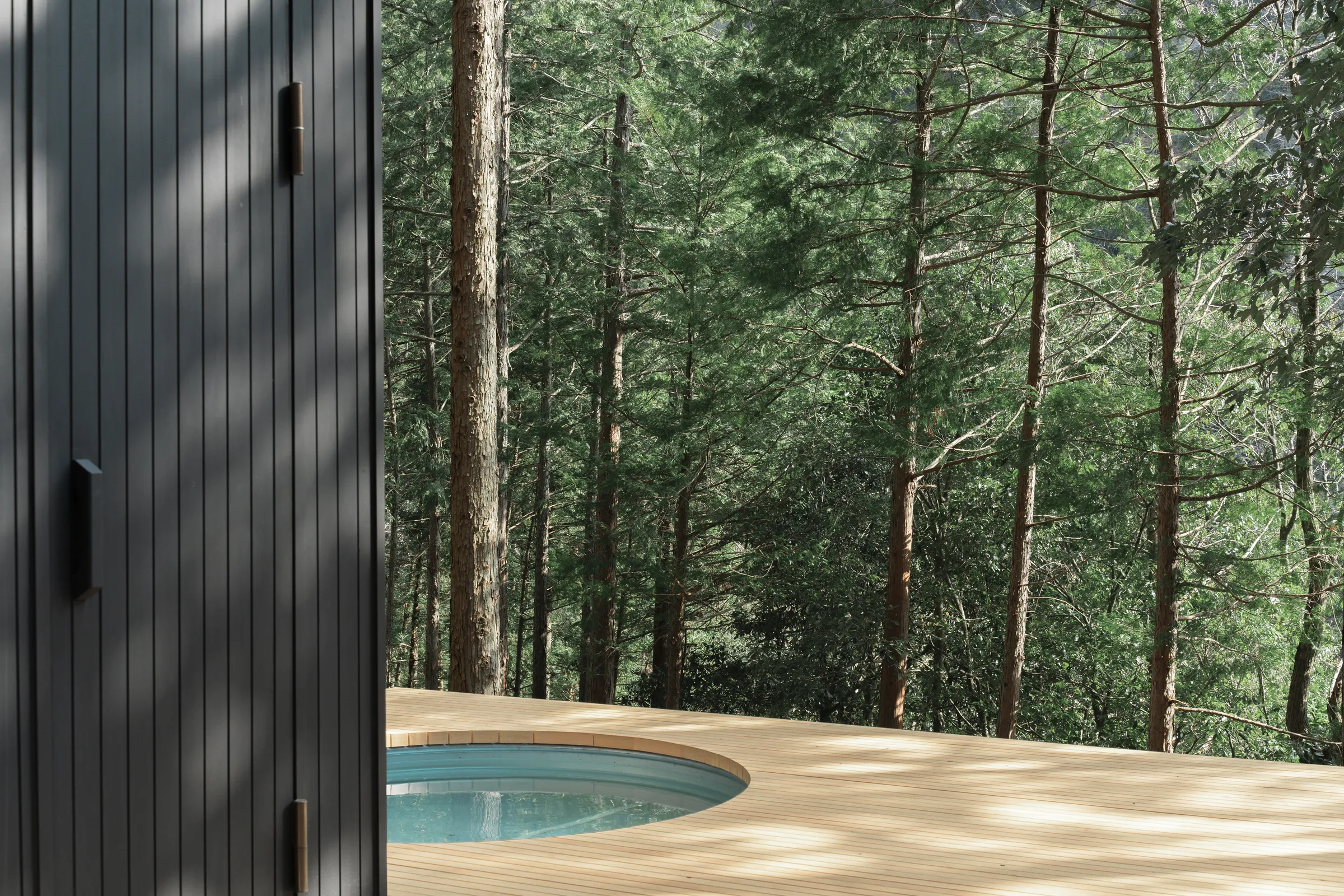
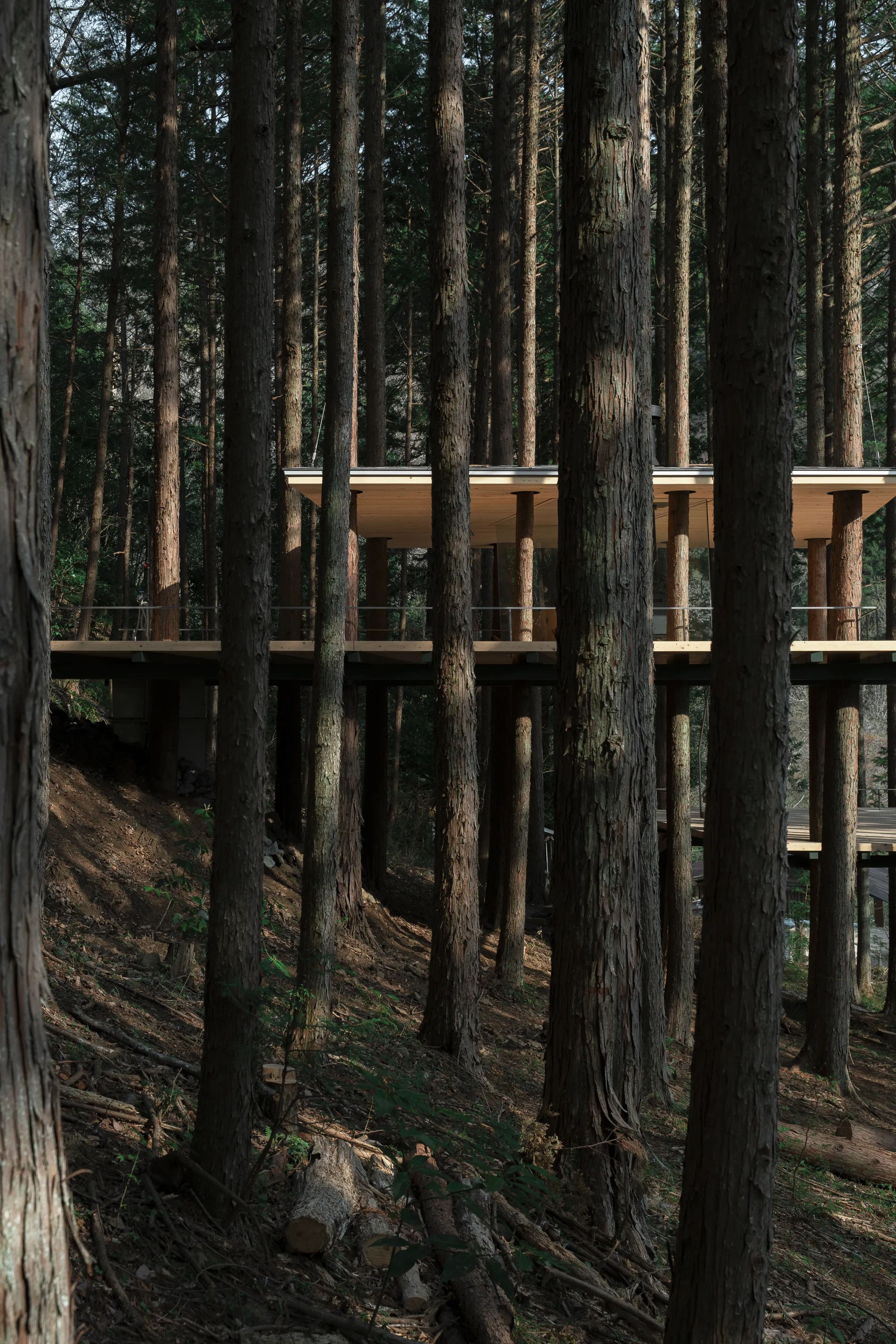
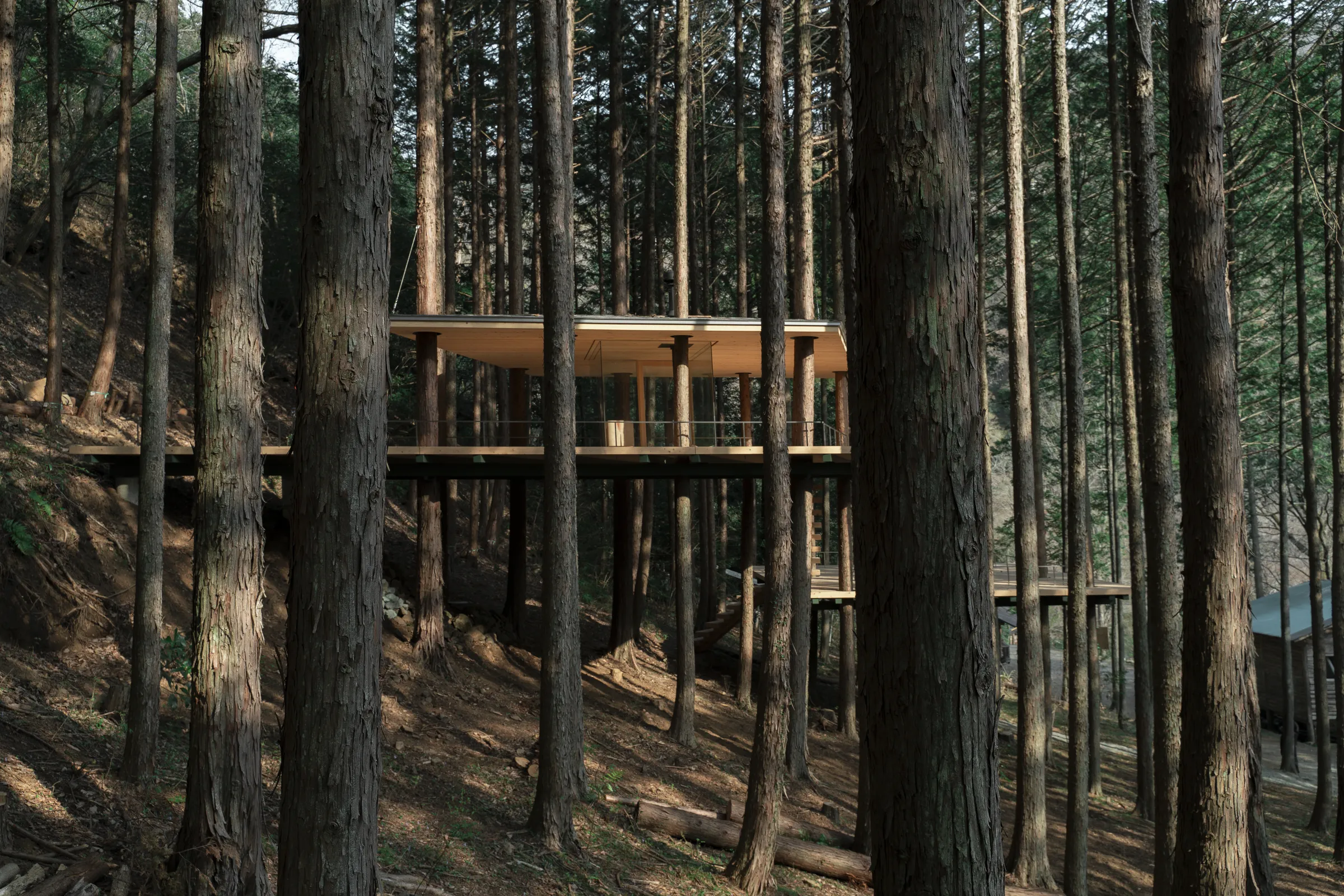
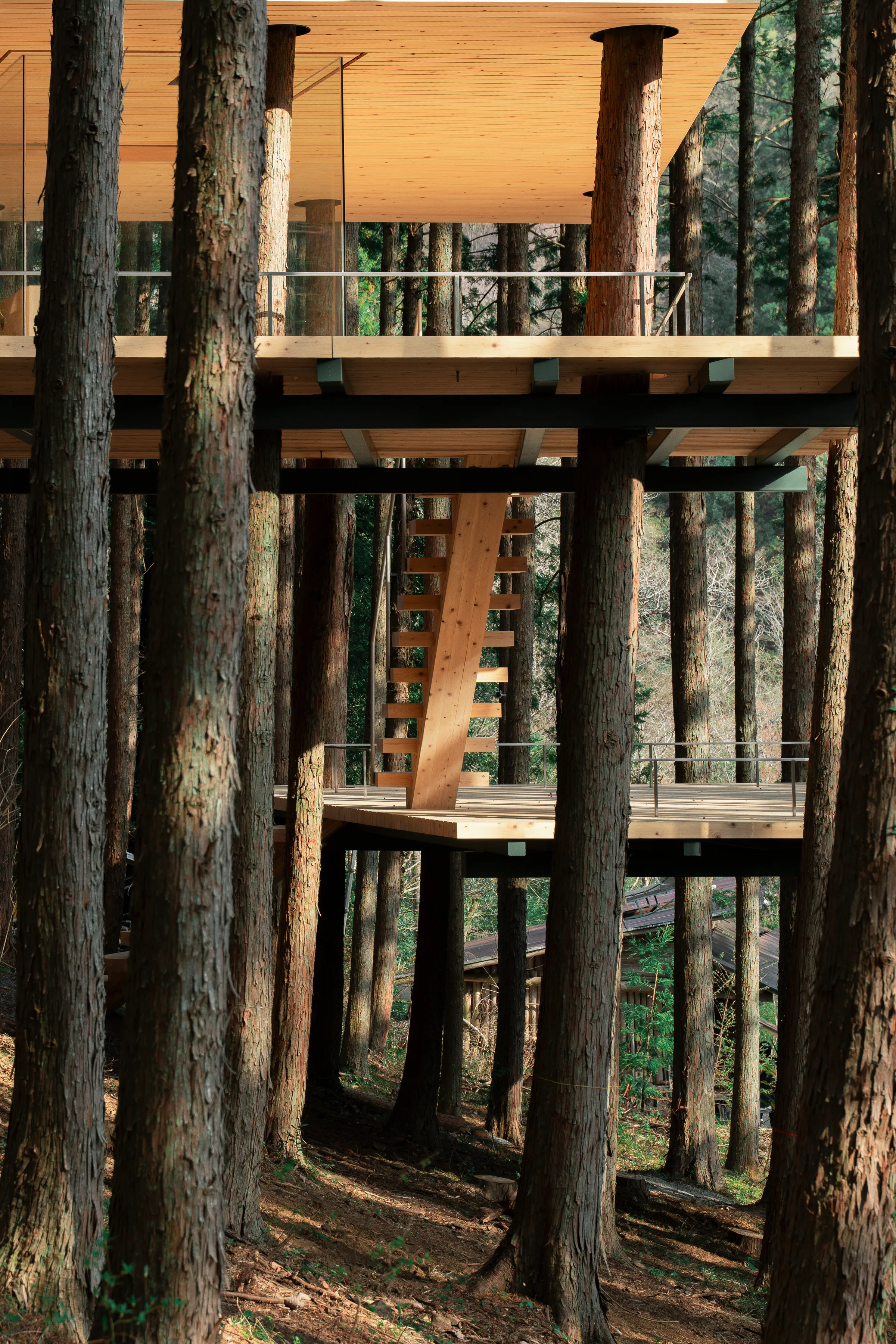
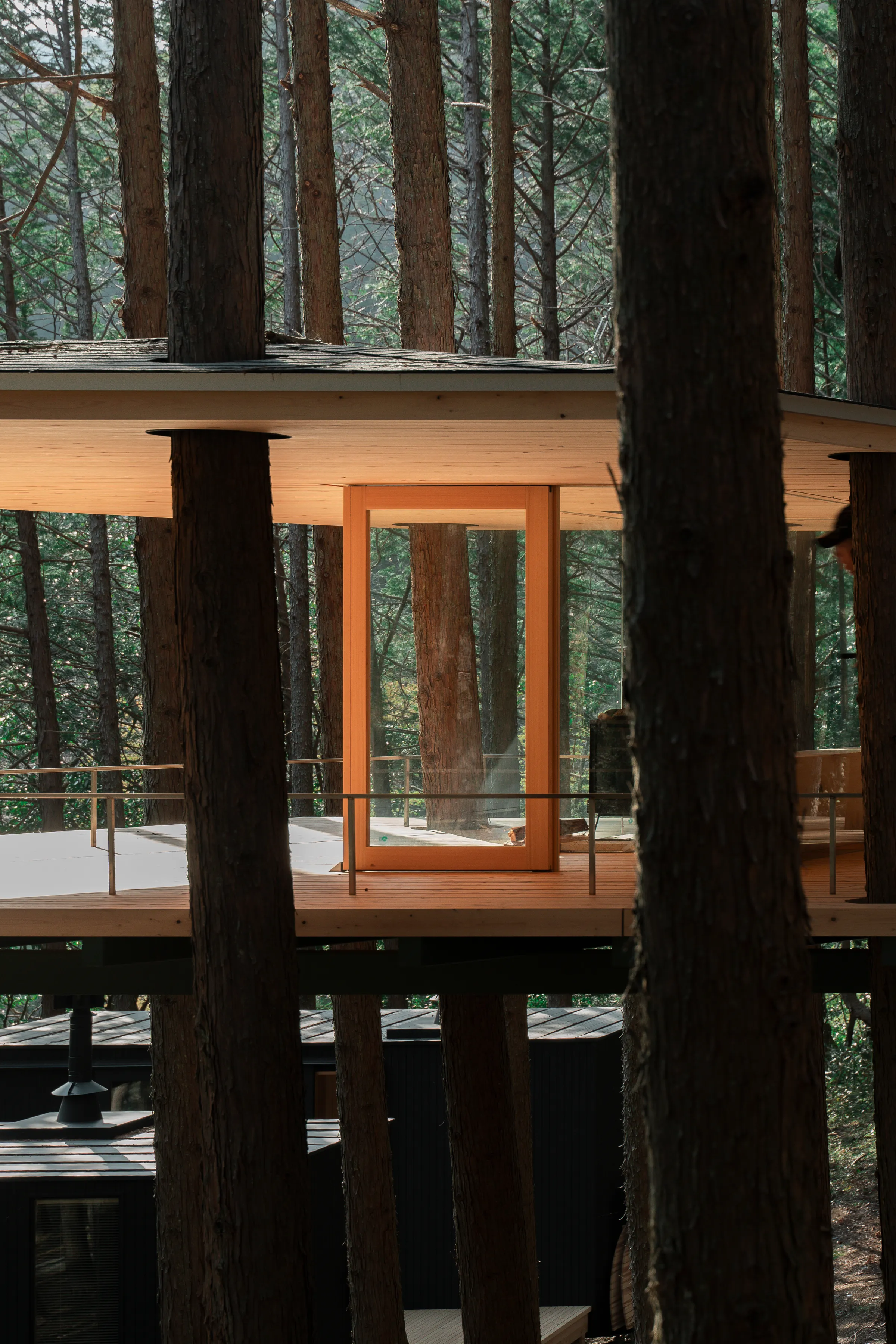
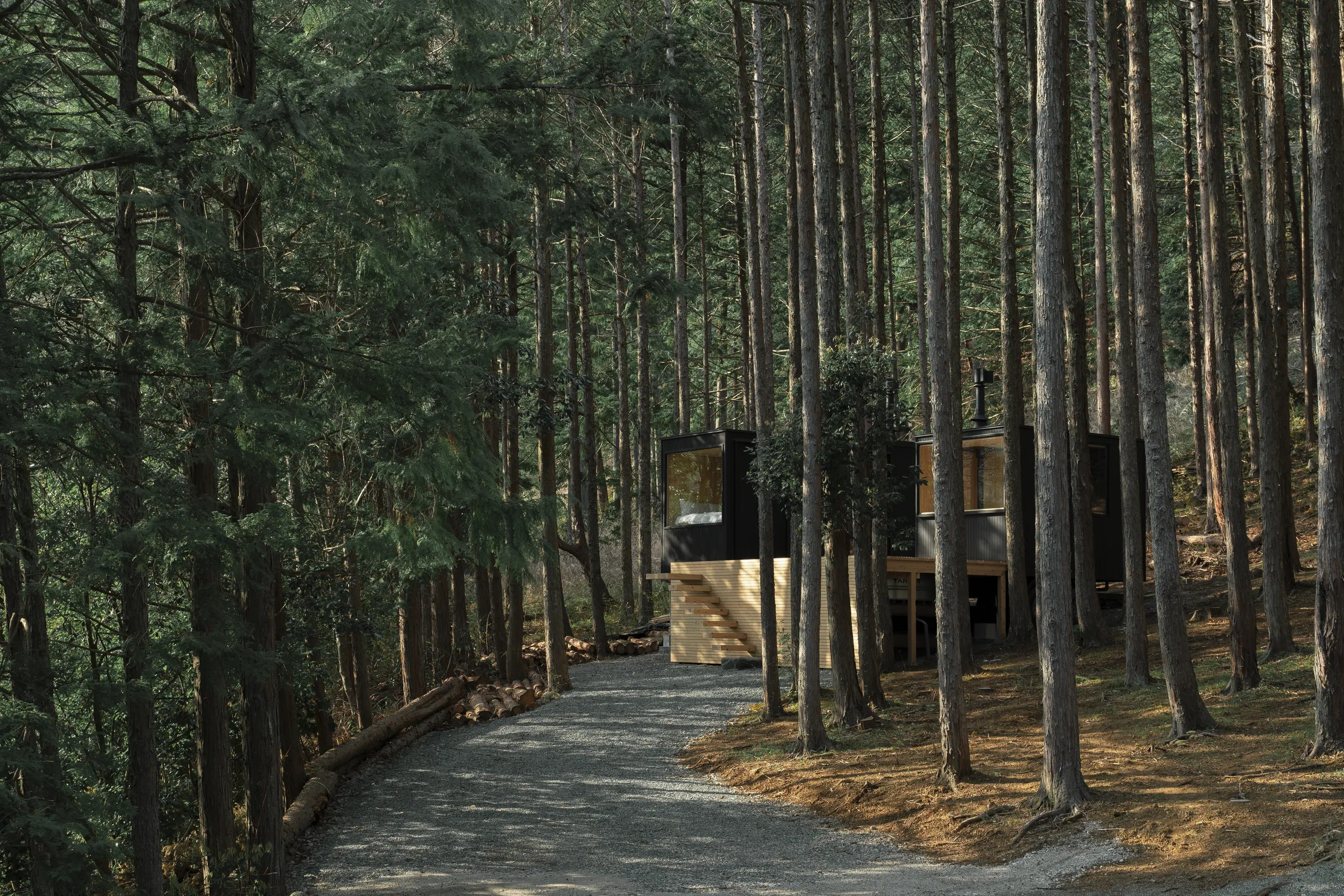
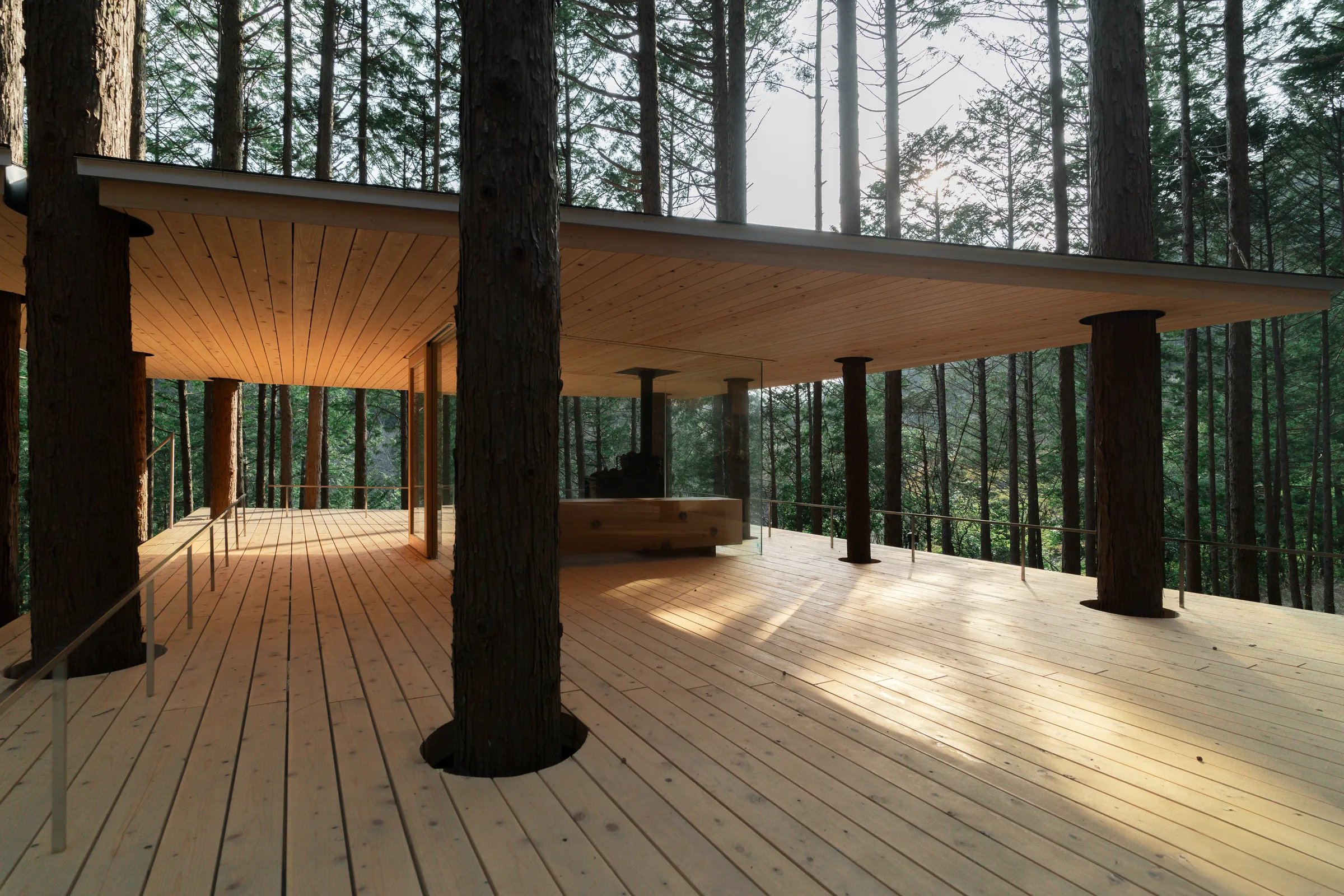
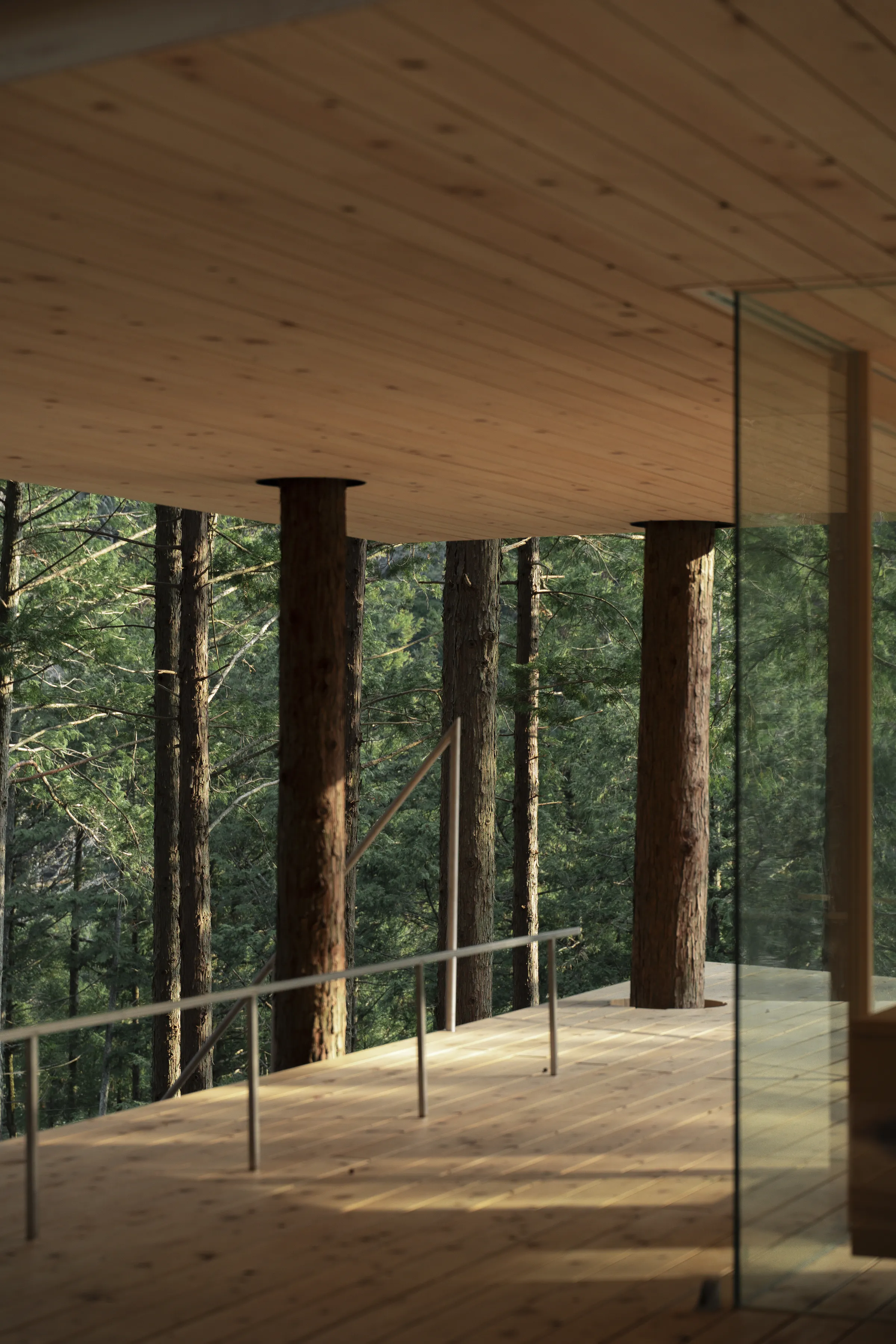
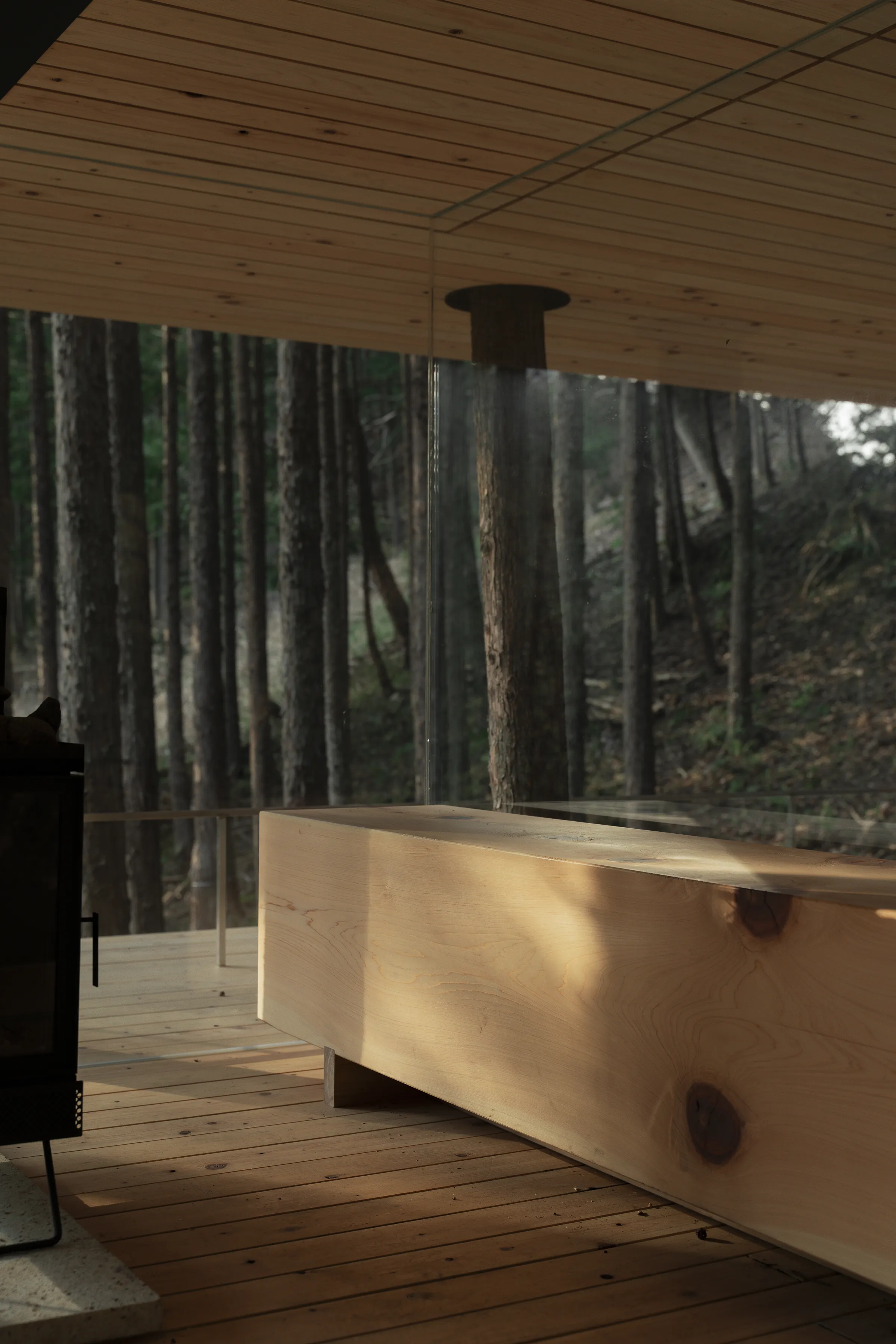
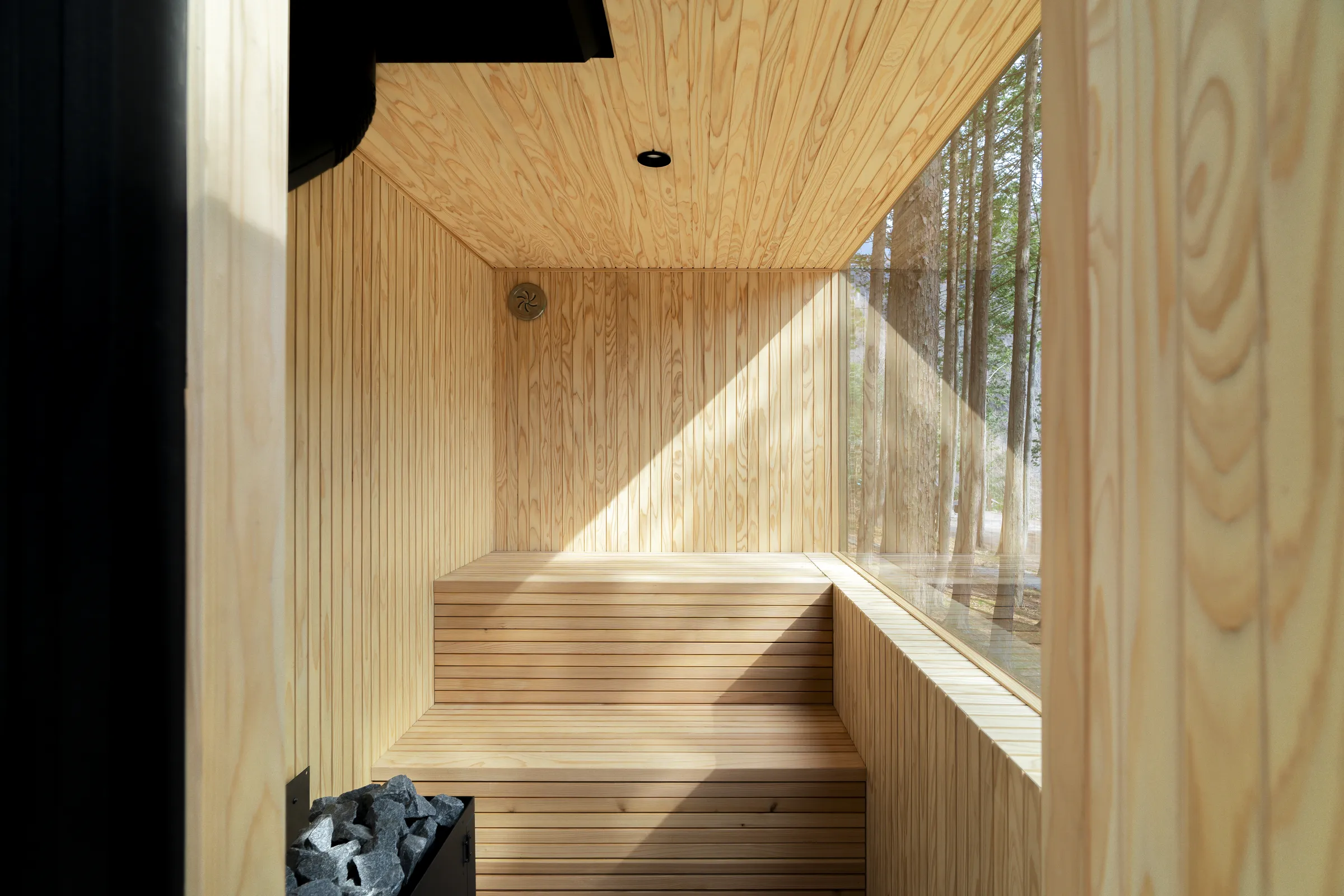
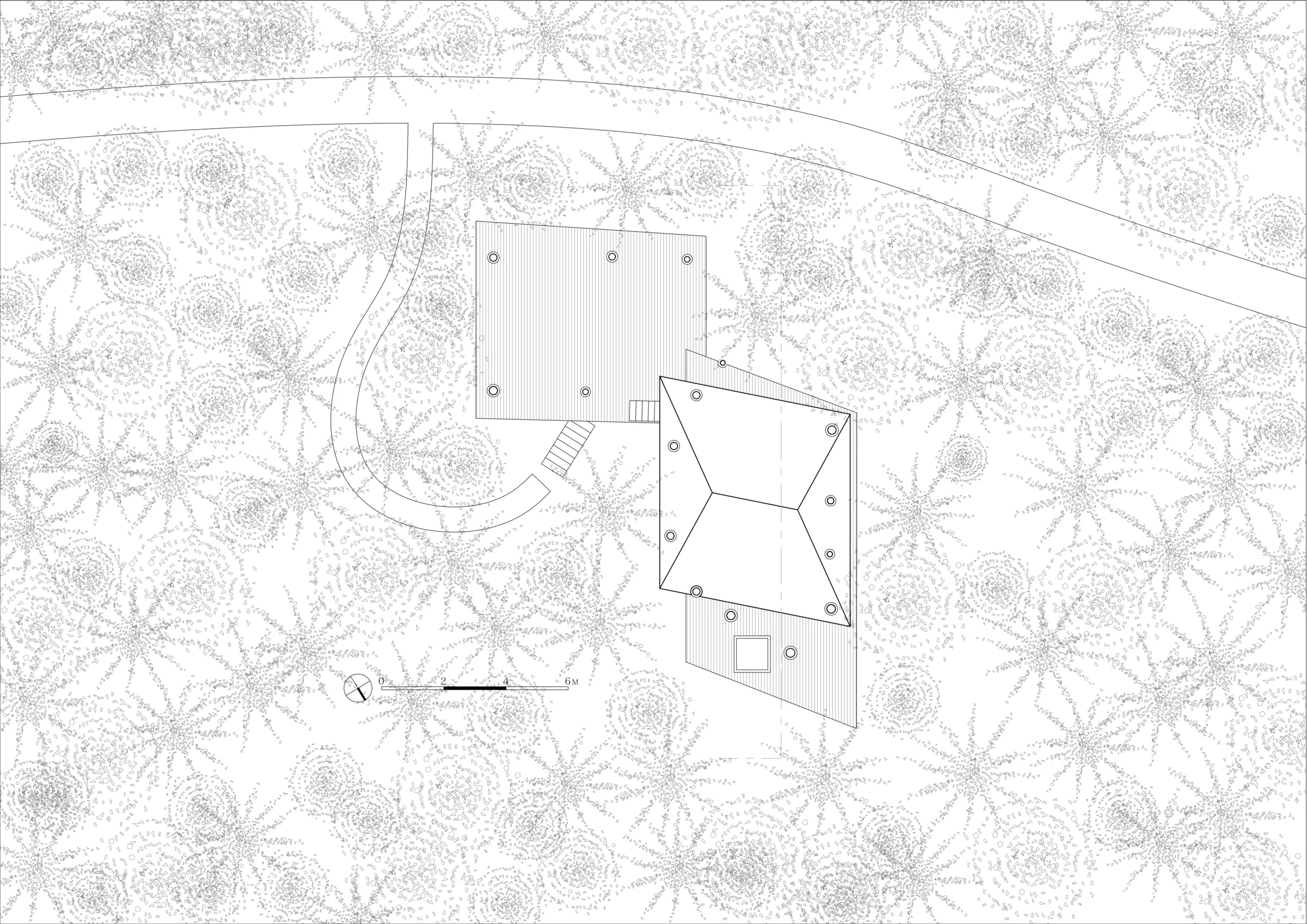
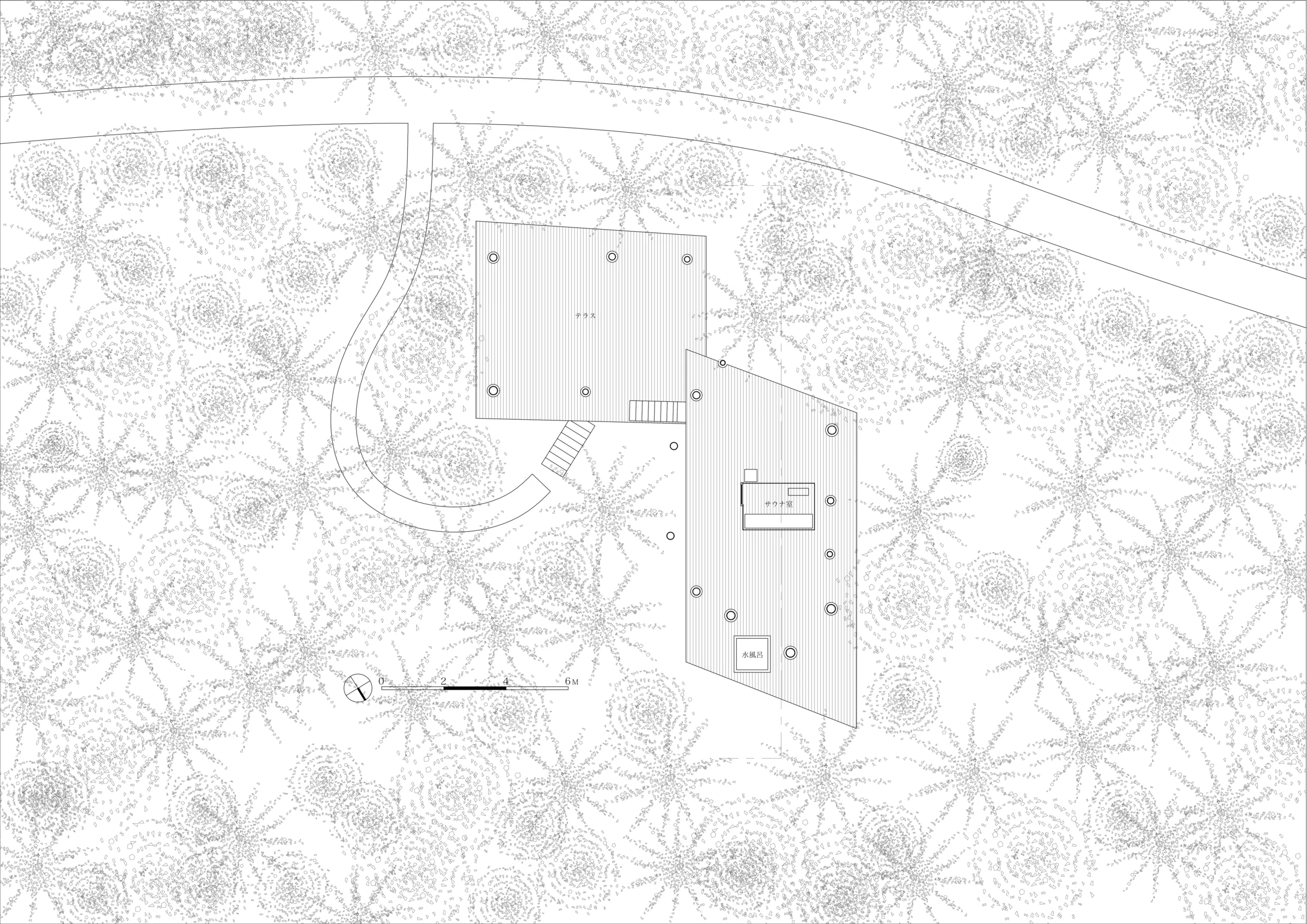
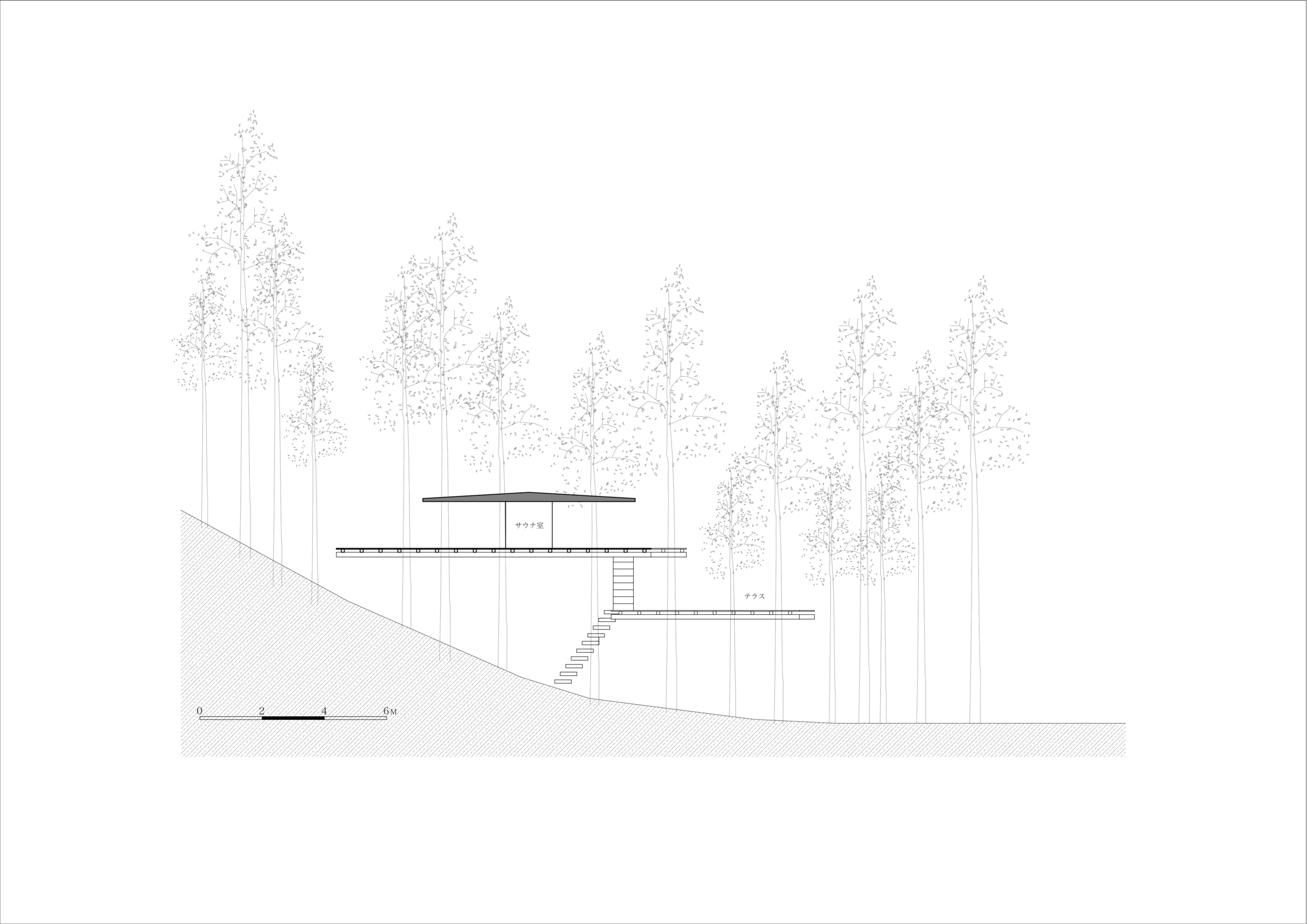
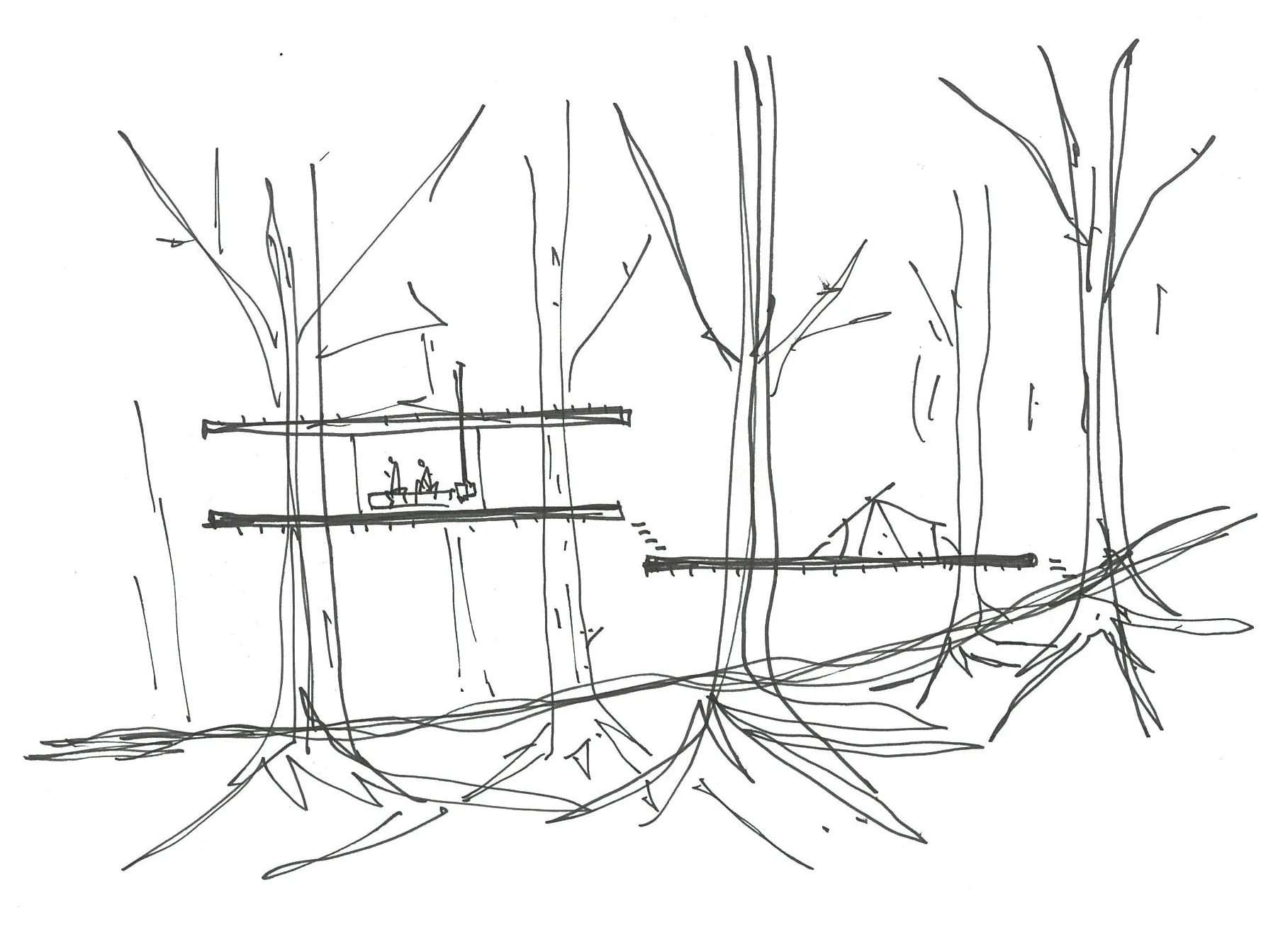
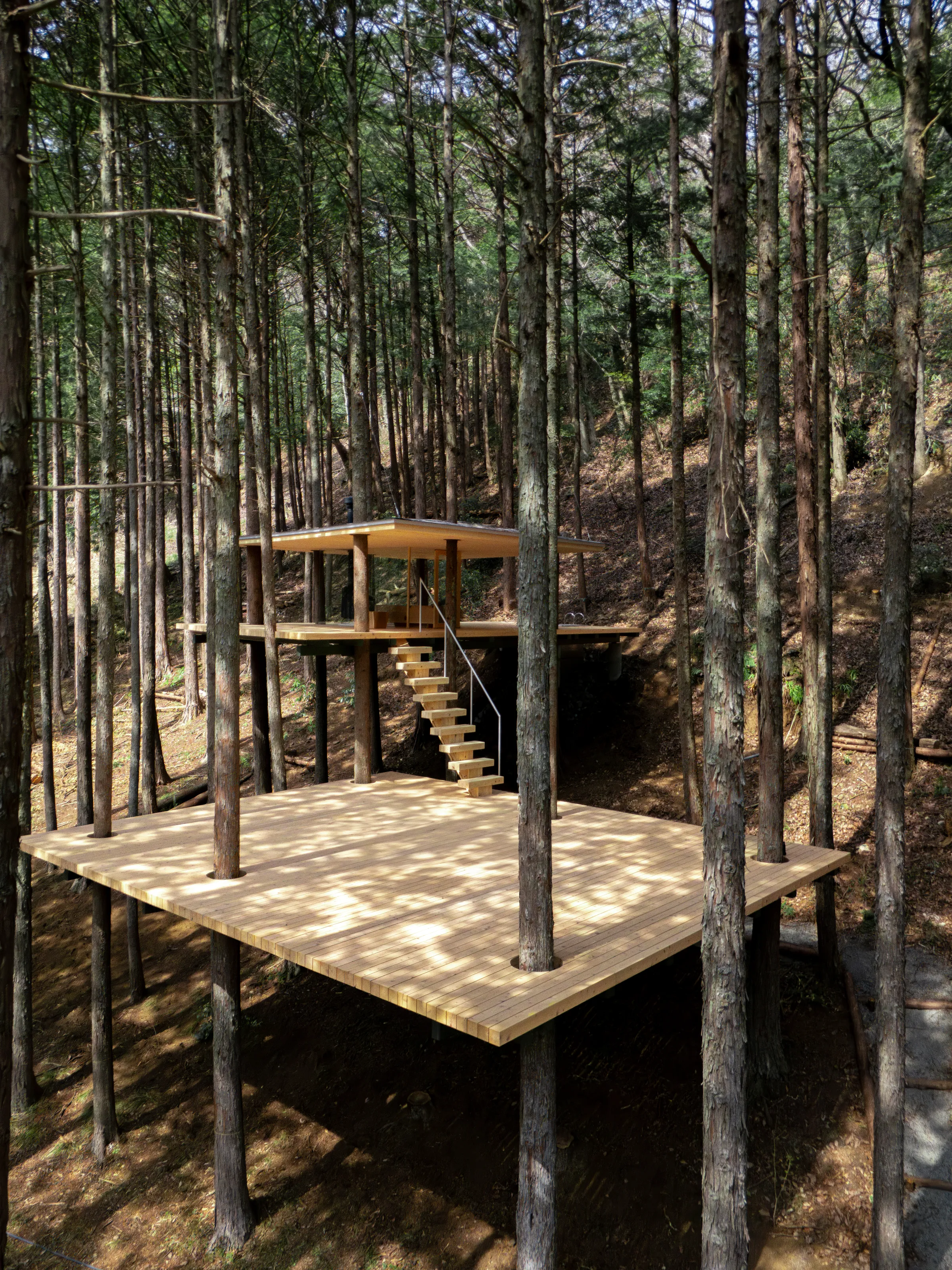
This project occupies such an in-between place—between architecture and nature. It’s a space that becomes both a place to sleep and a sauna, constructed without disturbing the forest’s trees. Architecture is often about clearing land, organizing it, and imposing order. Here, the building conforms to the forest’s rhythms, humbly asking to exist rather than declaring its presence. It’s a quiet proposal that reexamines the relationship between the natural and the man-made.
We have intentionally designed this space with elements of “inconvenience.” For example, it may lack the full guarantees of safety, it adapts constantly to the ever-changing forest, and it has no clearly defined use—asking the user to decide how it should be experienced. These very inconveniences, I believe, enrich the spatial experience. There is a concept known as “benefits of inconvenience”—the idea that, in seeking convenience, we’ve lost certain instincts: to feel, to imagine, to move with our hands. By revisiting inconvenience, we reclaim those primal abilities.
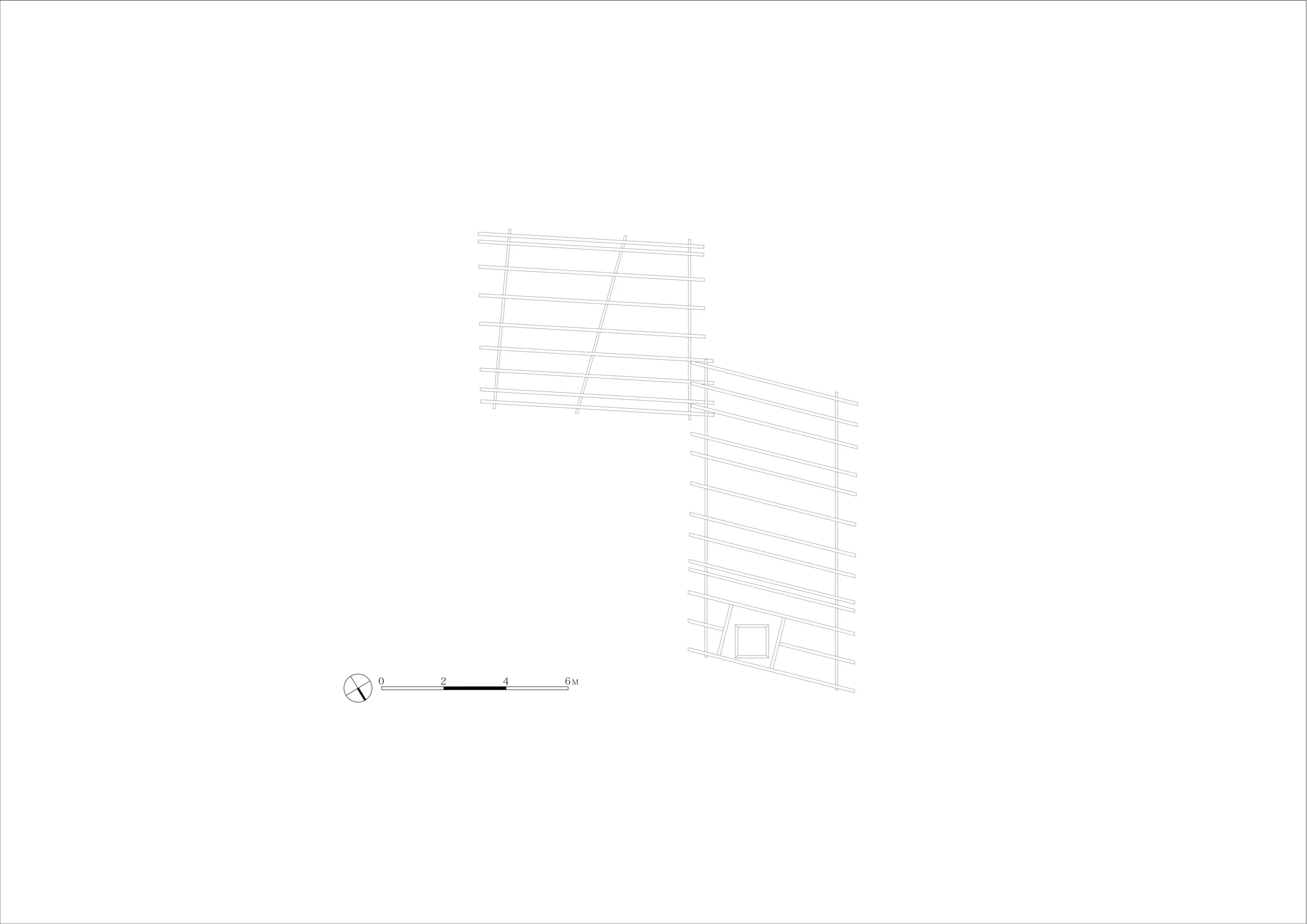
This kind of “inconvenience” shapes the bones of the space. The structure warps, leans, and sometimes breaks in response to the forest’s form. This distortion is not a designer’s manipulation, but the result of a dialogue with nature. It breathes in ways that overly polished spaces never could.
Architecture is often about creating “frames”—to shelter from rain, to shield from wind, to fulfill specific programs. But here, the aim is not to define boundaries, but to design the in-between. To create a place where time, sound, and humidity seep through, where people don’t simply use architecture—but rather, meet nature through it. This reversal challenges what architecture is truly for. Perhaps in moments of inconvenience, we regain the sensitivity lost in the pursuit of comfort. And perhaps, that very inconvenience offers space—deliberate, meaningful openness.
What is architecture, really? Is it something built only for humans? Or should it be something shared with the trees, the wind, and the birds? This place quietly poses those questions.