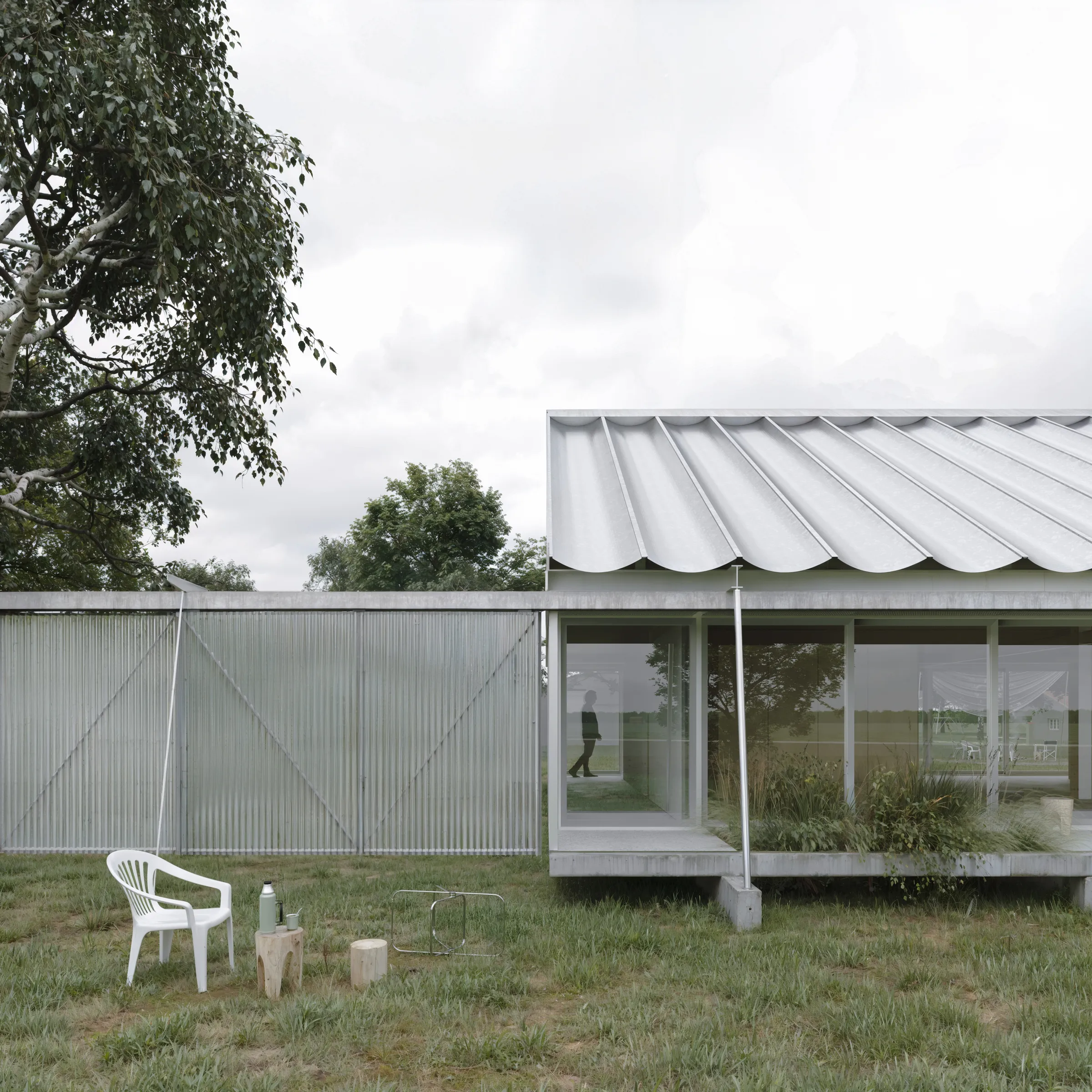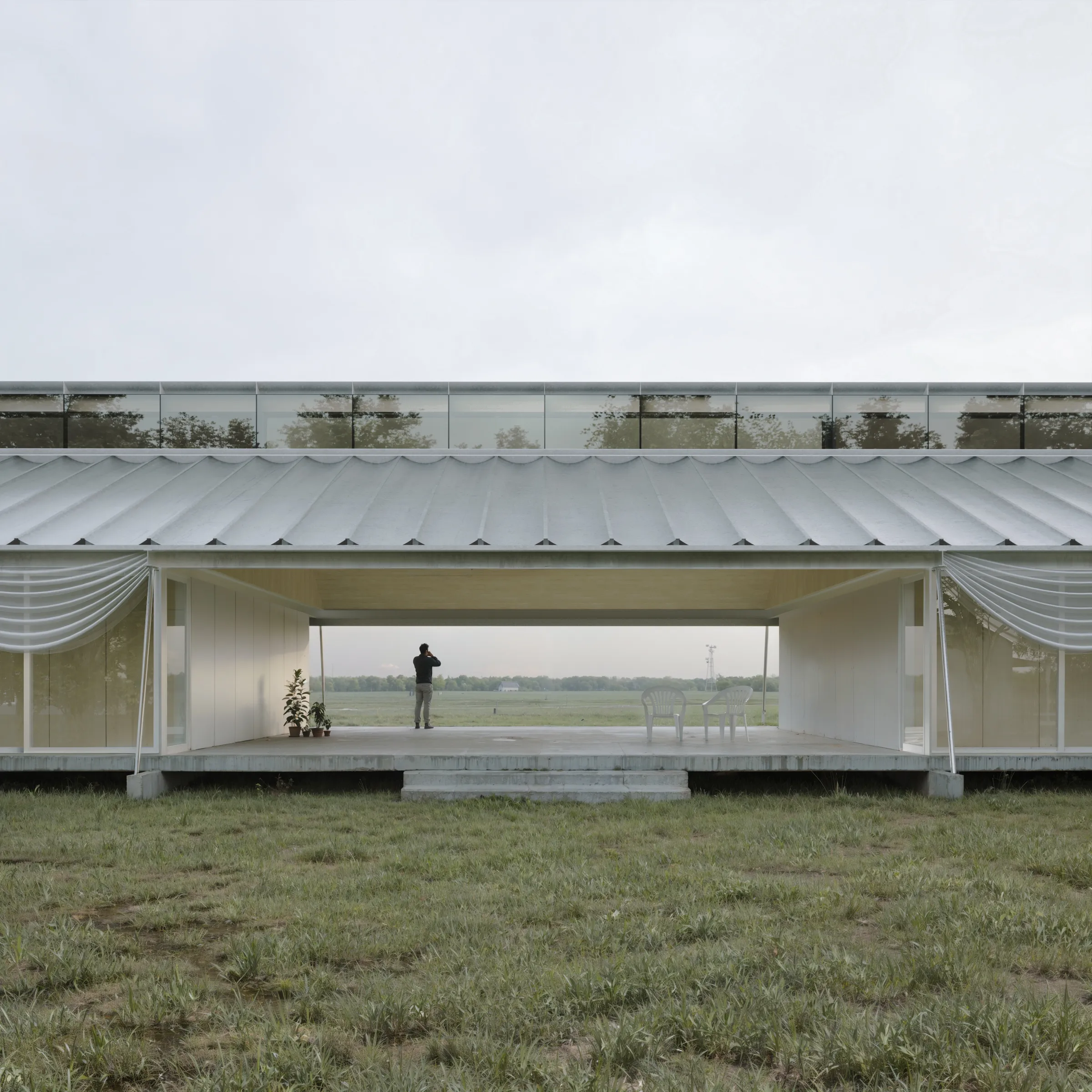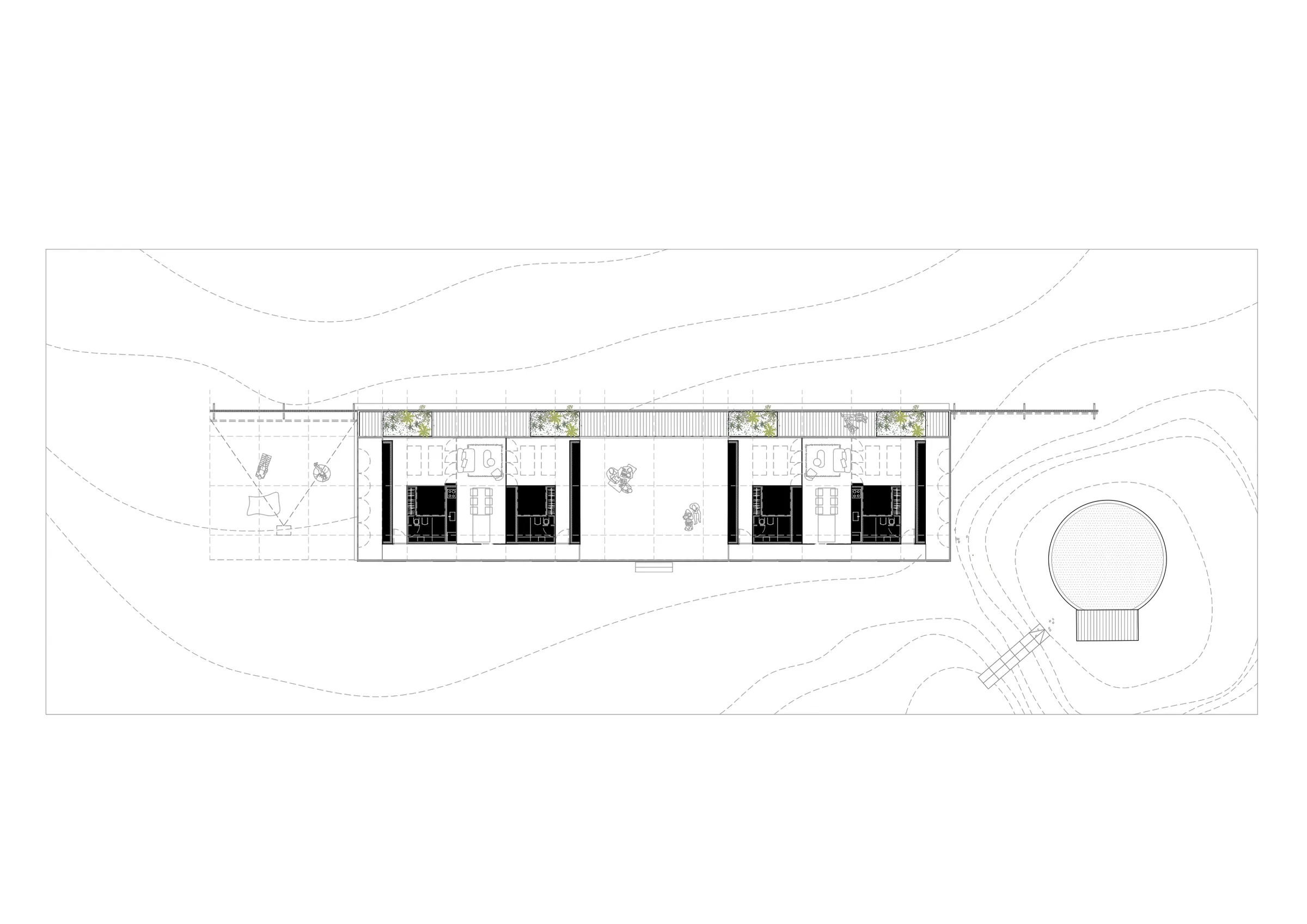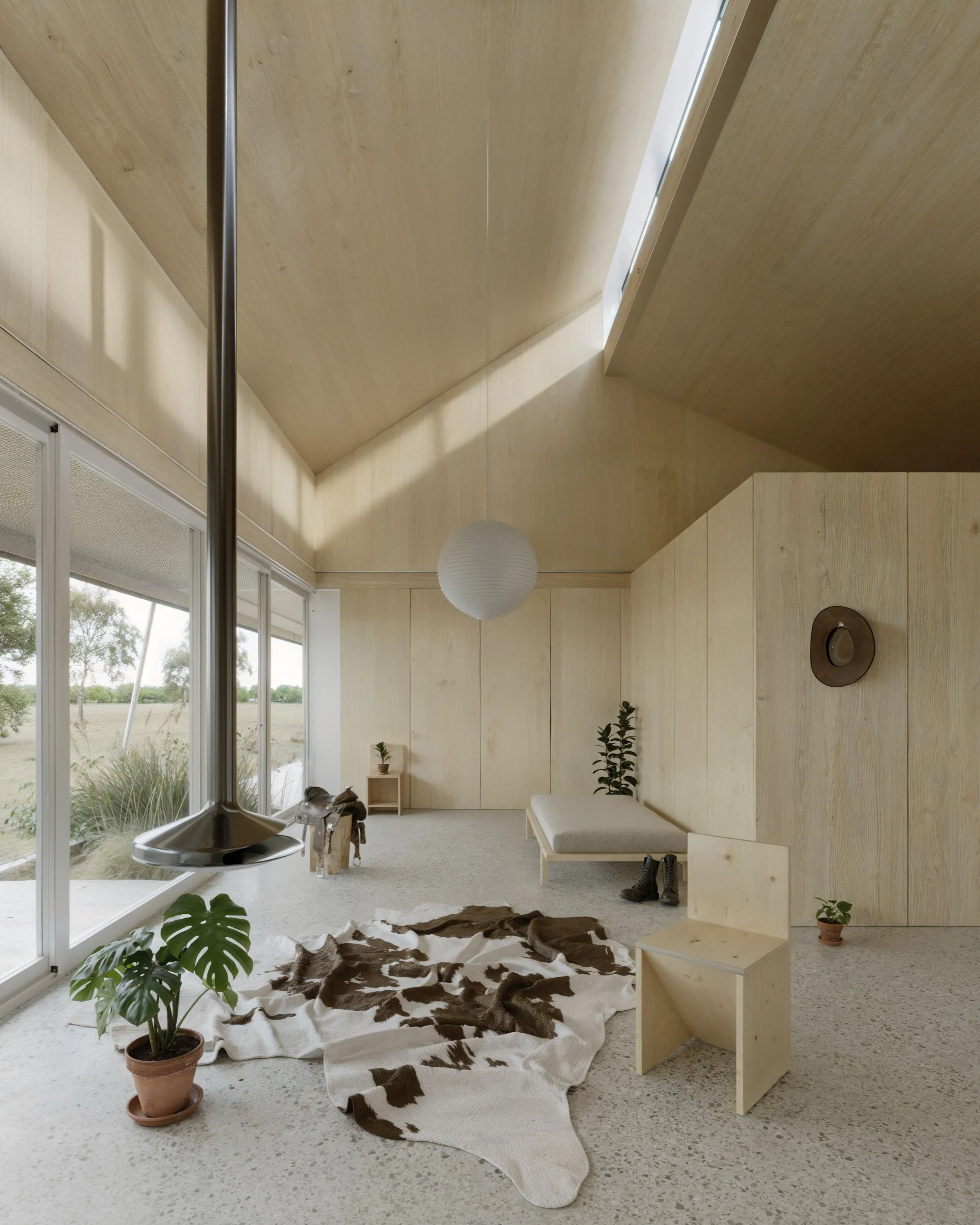
In the Pampas rural territory, the dwelling is not a mere shelter: it is also a cultural fact. Its form, materiality, and construction technique express ways of life, relationships with the landscape, and productive traditions. In this context, the house is conceived as a device for intermediation between living and the territory, capable of integrating domestic life with the productive logic of the contemporary countryside.
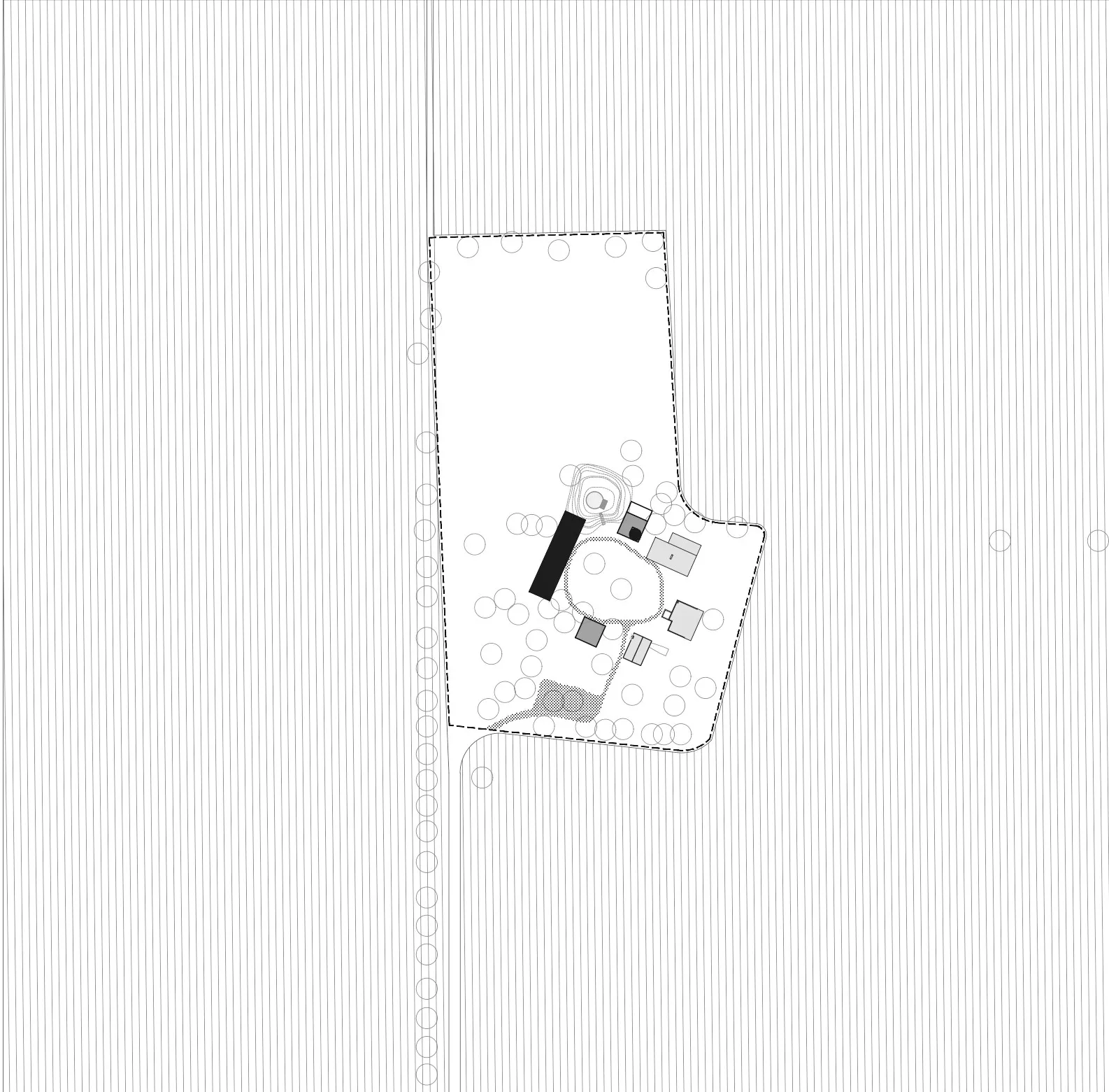
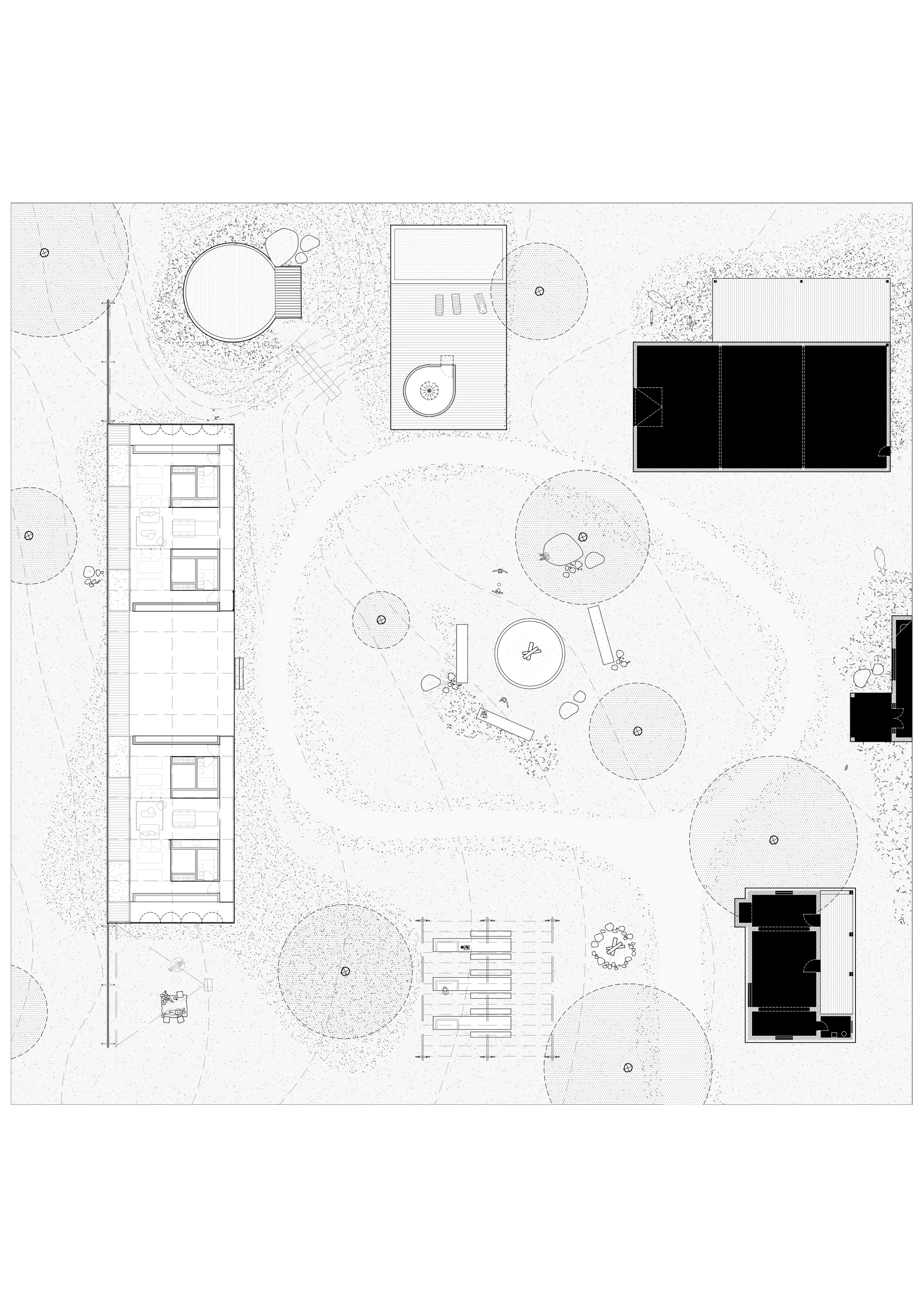
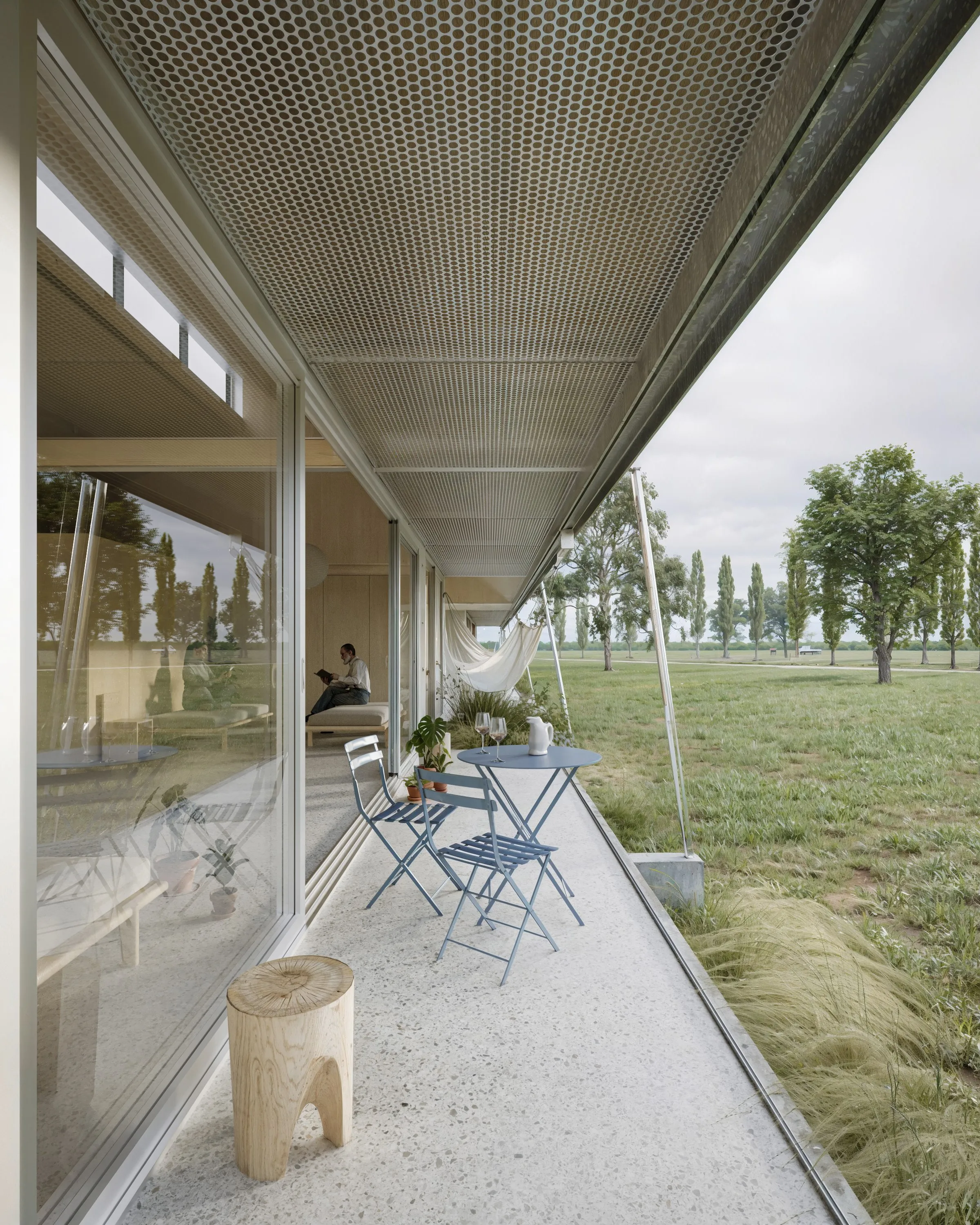
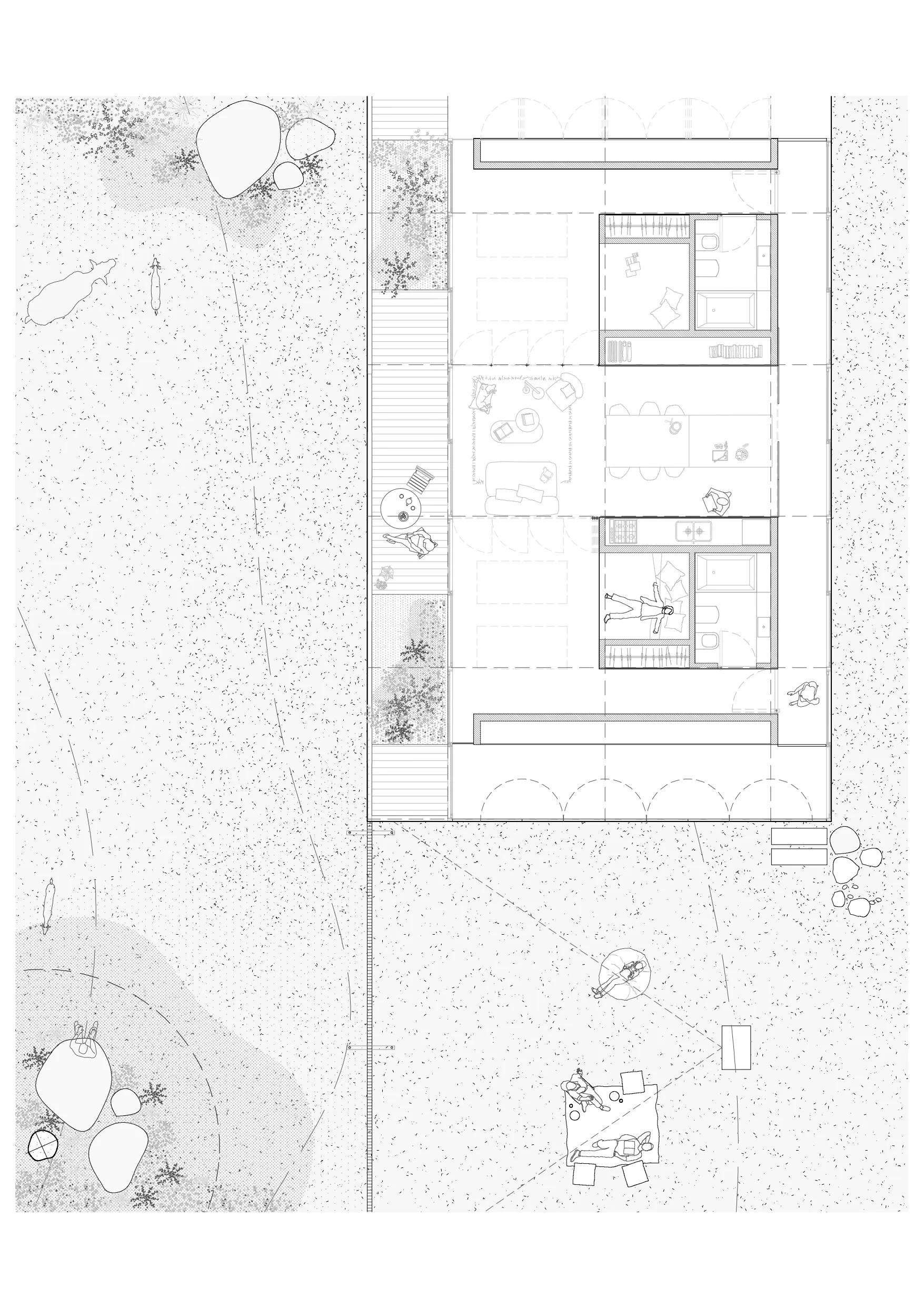
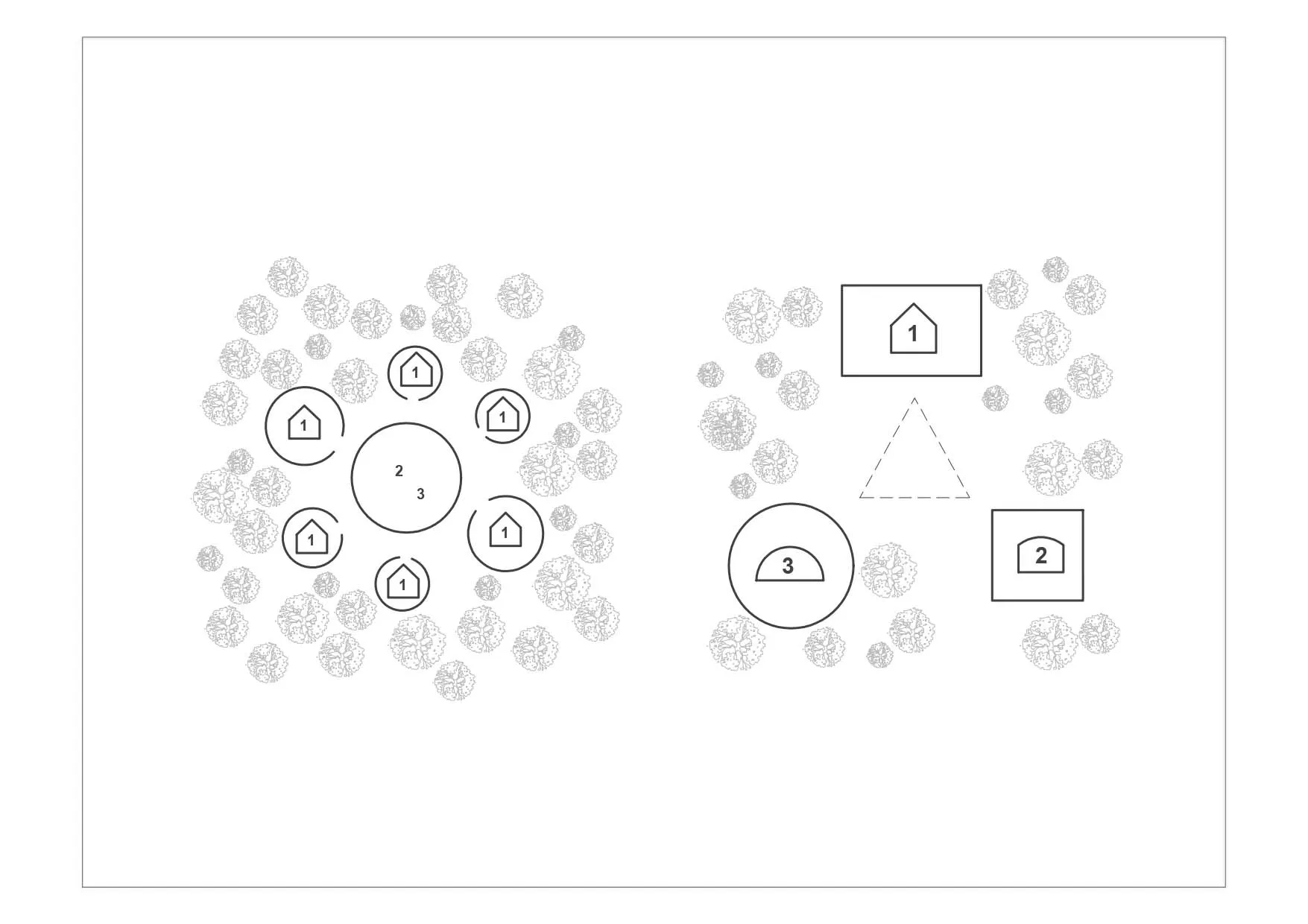
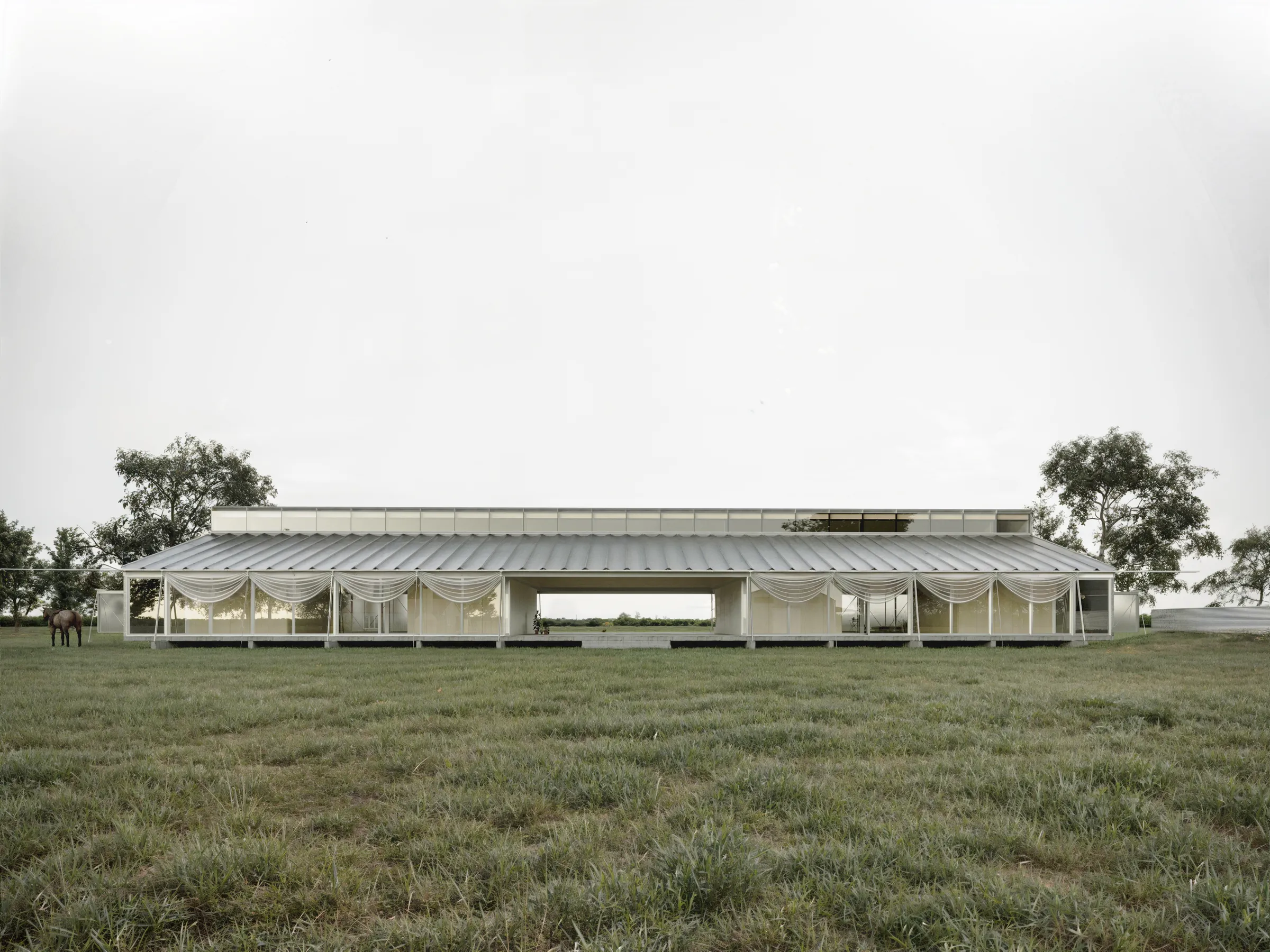
Rural dwelling is understood as a life extended into the landscape, where activities are not concentrated inside the house but are dispersed throughout the grounds. Cooking, drying clothes, repairing tools, gardening, or resting under a porch are actions that occur between the interior and exterior, in a continuous space without clear limits.
The proposal reinterprets that traditional typology organized around a domestic core and a series of dispersed annexes—sheds, chicken coops, storage rooms, corrals—that function interdependently within a productive system. The daily practices of those who inhabit these territories are what ultimately produce the space and shape the landscape.
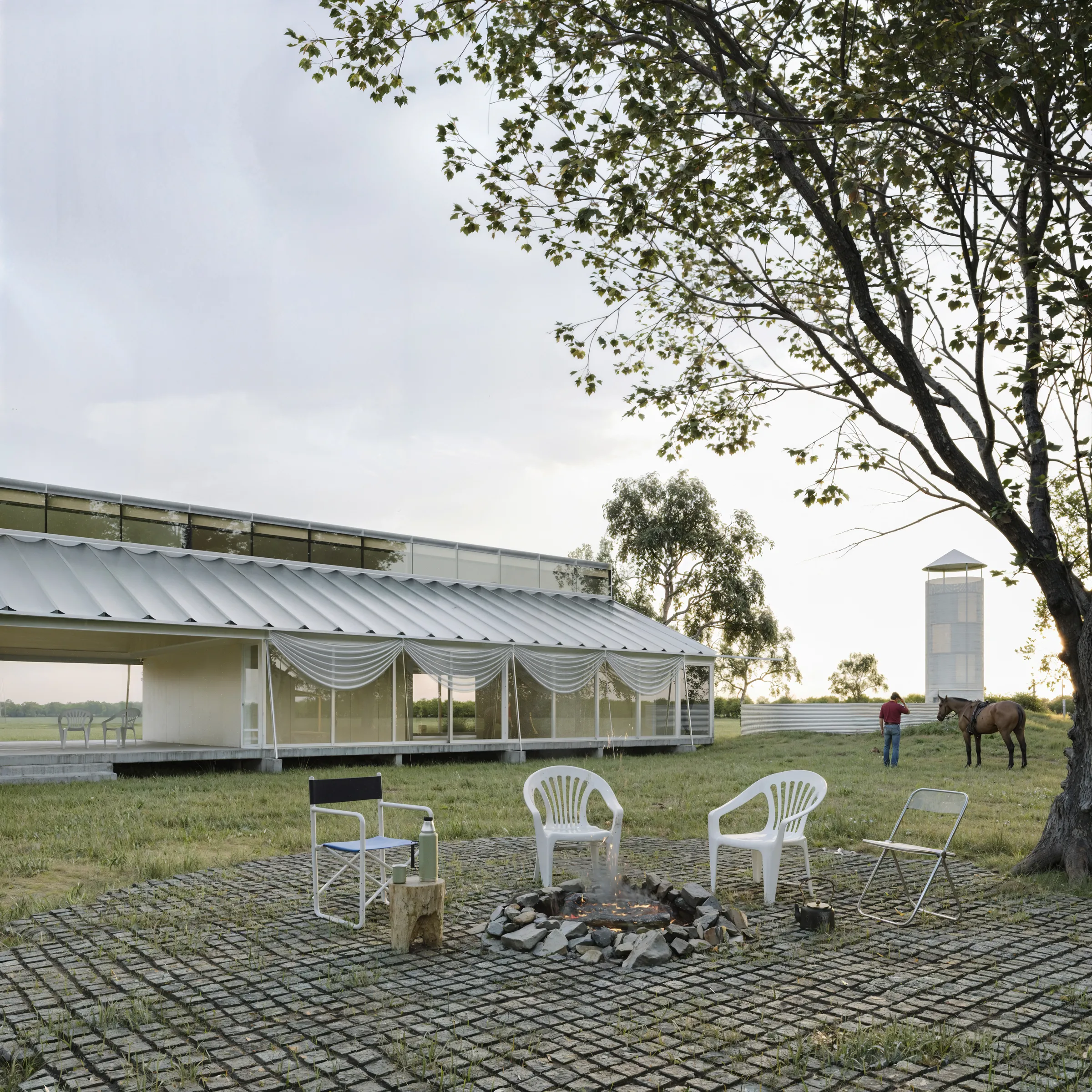
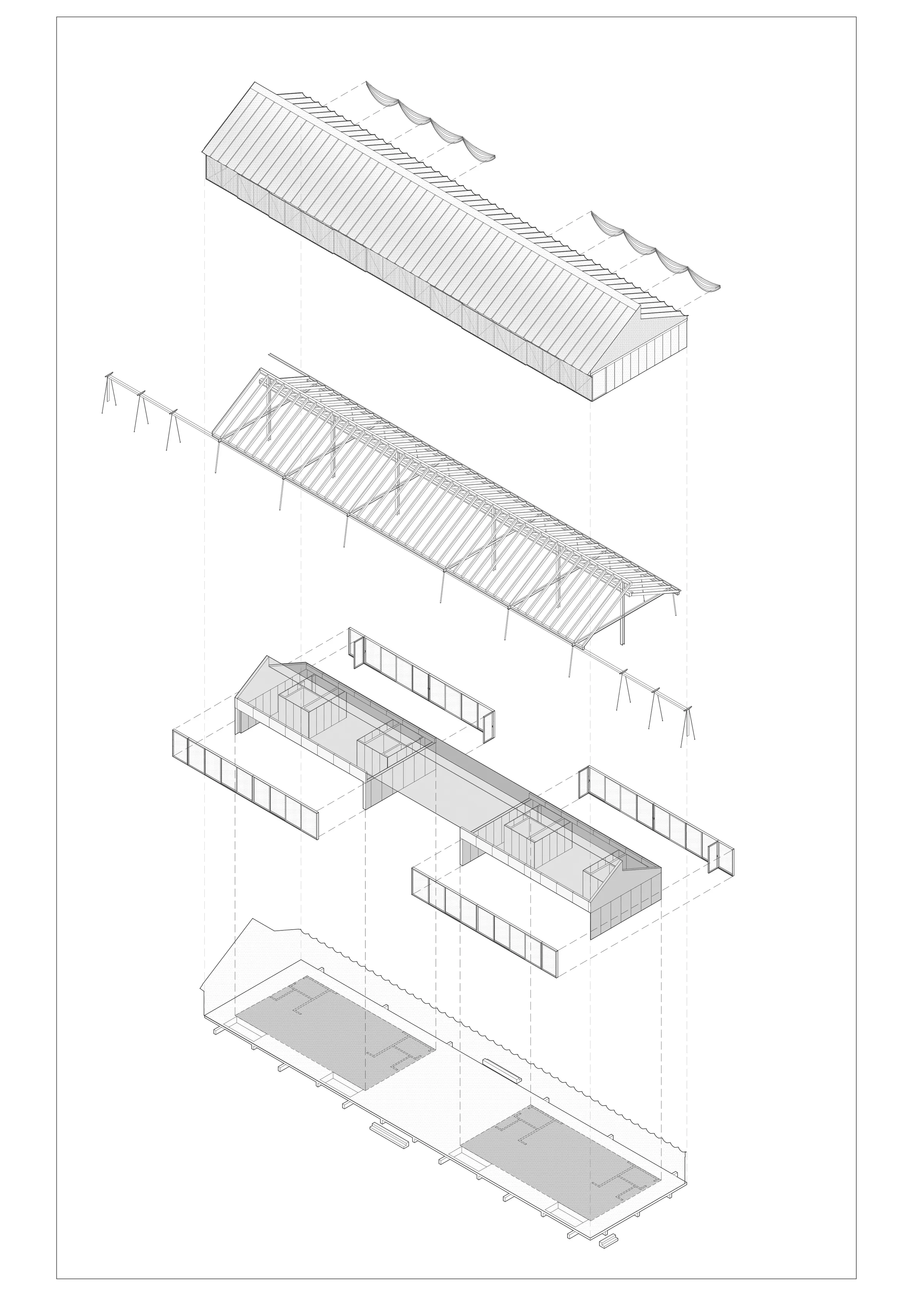
In the Pampa plain, the productive artifacts—silos, large sheds, metal roofing structures — have built an identity where technique became language. Modularity, repetition, and economy of means form an industrial-agrarian aesthetic that has become part of the landscape’s imaginary. Dry-construction systems and lightweight envelopes condense that technical rationality, while also allowing the architecture to adapt to seasonal cycles of use, assembly and disassembly, and the mobility that characterizes current rural life.
The proposed dwelling translates that productive logic into a contemporary key, understanding that the industrialized house, a product of our time, embraces this technical tradition and projects it into the present. Its installation does not require destruction for construction: it can enhance nature, integrating into the landscape without imposing itself, even through aesthetic contrast.
Its technified object does not deny the environment but reveals and enhances it. Instead of seeking camouflage, its presence defines a balance between production and contemplation, between industrial precision and the vitality of the territory.
Its adaptable nature allows for variations in program, extensions, or new additions without losing coherence. Thus, the dwelling ceases to be a fixed object and transforms into a living system, capable of evolving with its inhabitants and with the material and cultural landscape of the Pampa.
The project, therefore, proposes a new rurality where technique and culture, memory and innovation, coexist in balance, recognizing the productive materiality of the countryside as a source of identity and contemporaneity.